
On behalf of the state, public prosecutor K. Nageshwarappa argued that the acquittal was “illegal, invalid, and contrary to the law, evidence, and material on record.” According to him, the lower court failed to properly evaluate the witnesses’ testimony, leading to a miscarriage of justice.
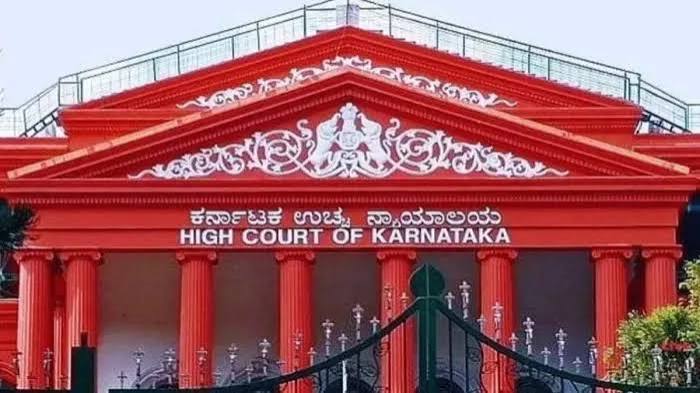
Bengaluru: The Karnataka High Court on October 1 dismissed the state government’s appeal against the acquittal verdict delivered by the Chamarajanagar Special Court. The case relates to a 2009 incident in Bommanahalli village in Gundlupet taluk, in which a portrait of Dr. B.R. Ambedkar and a community hall signboard were vandalized, and members of the Scheduled Castes were assaulted and subjected to casteist abuse.
A single bench of Justice G. Basavaraj delivered the verdict while hearing the case. The appeal was filed by the state government through the Terakanambi police.
According to the prosecution, on June 6, 2009, at around 7 p.m., 29 accused persons formed an unlawful assembly in Bommanahalli village. They were armed with deadly weapons and had gathered with the common intention of rioting. They were alleged to have toppled the signboard of a “community hall” and a portrait of Dr. Ambedkar. According to the prosecution, this act was committed in public with the intention of outraging the sentiments and insulting the Scheduled Caste community.
The accused were charged under sections 143, 147, 148, 341, 323, 324, 506, 427, and 295(A) of the Indian Penal Code and sections 3(1)(x) and (xi) of the Scheduled Castes and Scheduled Tribes (Prevention of Atrocities) Act, 1989.
After the charge sheet was filed, the court took cognizance and issued summons. All the accused appeared and were granted bail. However:
- Accused No. 2 failed to appear in court despite a non-bailable warrant, and a separate Special Case No. 51/2010 was filed against him.
- Accused No. 25 died and the case against him was abated.
The trial court framed charges and read them out to the accused in their own language. The accused pleaded not guilty and expressed their willingness to face trial.
The prosecution presented a total of 13 witnesses, 21 documents (Ex. P1 to P21), and 25 material objects. In their statements recorded under Section 313 of the Code of Criminal Procedure, the accused completely denied all evidence against them but offered no defense. After a hearing, the trial court acquitted Accused Nos. 1, 3 to 12, 14 to 24, and 26 to 29.
The State’s arguments in the appeal
The State’s Public Prosecutor, K. Nageshwarappa argued that the acquittal was “illegal, invalid, and contrary to the law, evidence, and material on record.” According to him, the trial court failed to properly evaluate the witnesses’ testimony, leading to a miscarriage of justice.
He stated that there were seven injured witnesses, and there was no reason to disbelieve them. These witnesses clearly stated that the accused attacked with hands, sticks, and sickles, causing injuries all over their bodies. He also stated that caste-based abuses were hurled and stones were thrown to break the community hall signboard bearing the image and name of Dr. B.R. Ambedkar.
The public prosecutor also argued that atrocities against Dalits are punishable under a special law that serves a social purpose, and therefore, the trial court should not have insisted on a harsh interpretation of the law.
Advocate Manjunath N.D., representing the accused, stated that the trial court correctly evaluated the evidence in accordance with the law and facts, and there was no basis for interfering with the verdict. He sought dismissal of the appeal.
In its order, the High Court cited paragraph 30 of the lower court’s judgment. It states that the complainant is injured, the other witnesses are his son, wife, and his elder brother’s wife, while four separate witnesses belong to the same community. All eyewitnesses admitted that the scene was dark and there was no electricity in the village since 6:45 p.m. that day. The lower court remarked, “None of the eyewitnesses explained how they saw the incident and in what light.” The court also noted that there were several significant contradictions in the evidence, which cast doubt on the occurrence of the incident. In conclusion, the lower court held that “the benefit of the doubt should accrue to the accused” and the prosecution failed to prove the accused’s guilt beyond a reasonable doubt, therefore, all 10 issues were answered in the negative.
The High Court, after re-examining the entire material on record, refused to interfere with the lower court’s findings. Justice G. Basavaraj said in his order, “After re-evaluating, reconsidering, and re-examining the evidence, I do not find any legal or factual error committed by the lower court.” The court thereby dismissed the appeal.
Geetha Sunil Pillai
Courtesy: Hindi News