
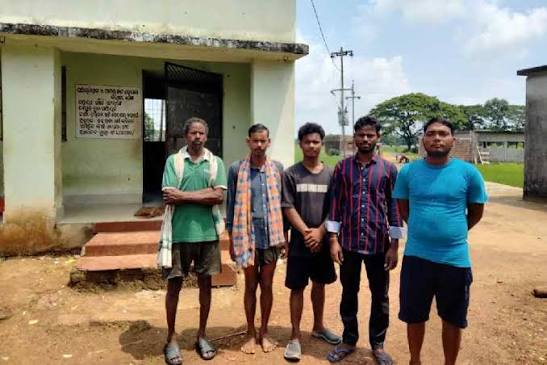
Youths in Puri district invoke the SC/ST Act after salons deny them haircuts, activists say education and reservation have helped them assert their rights
In May, a group of determined Dalit youths from Jorakani Bhoi Sahi under Sauria grampanchayat in Puri district decided to assert themselves by demanding haircuts in salons that had traditionally served only the upper castes.
The youths’ effort failed and set off a legal battle against the practice of untouchability, which continues even 76 years after India adopted a Constitution that guarantees equality, freedom, and justice for all.
The incident stood out at a time when affluent sections have launched a campaign demanding dilution of caste-based reservation and the Scheduled Castes and Scheduled Tribes (Prevention of Atrocities) Act.
There are six salons in nearby Ghoradia market run by barbers, largely OBCs. Traditionally, barbers have held the ceremonial lamp in front of wooden palanquins carrying idols from temples in processions through villages.
Bhagyarathi Kandi, 26, a graduate who ekes out a living by giving tuitions, said all the shops denied them entry. “They (the barbers) said they serve the God in the temple and their caste would be diluted if they cut our hair. They said God would be annoyed too,” Bhagyarathi said.
The Dalit youths filed an FIR at the Delang police station under the SC/ST Act and named the salon owners. People of the dominant Brahmin and Khandayat castes have supported the barbers’ stand to deny entry to Dalits, Bhagyarathi said.
“The upper caste people met the police and demanded no action against the barbers. They said cutting the hair of Dalits means the barbers will no longer enjoy their social status and will not be able to render their services at religious events. We continue to face this untouchability,” Bhagyarathi said.
Nandu Kandi, 30, said the fight would continue till the salons opened their doors to Dalits.
“The boycott of Dalits is not restricted to salons. We are not allowed to attend any village festival. We celebrate our own festivities,” Nandu said, pointing to the Mangala Temple set up by Dalits.
“The Brahmin priest does not come to our temple. One family from our caste is a Vaishnav Gosain (Dalit priest). He performs the rituals at the temple. On Holi or Diwali, we celebrate ourselves,” Nandu said.
Rights activist Akshya Behera said the Dalits of Jorakani gathered courage to fight because many youths among them are now educated.
“If we are able to fight the Savarnas (upper caste), it is because of reservation that helped us get educated. There are five/six graduates in the 25 Dalit families. They are aware of their rights and duties. The barbers, with the support of the Brahmins and Khandayats (a landed warrior caste), had never allowed entry to Dalits. But now this cannot be continued,” Behera said.
He criticised the campaign to abolish caste-based reservation and the SC/ST Act.
“The police are sitting on the FIR. They are not giving it any importance although the case has been filed under the SC/ST Act. The law is not enough. It must be implemented properly. Those who are demanding abolition of caste-based reservation and the scrapping of the SC/ST Act should visit Ghoradia and see how untouchability and atrocities are going on against Dalits,” Behera said.
Basant Kumar Mohanty
Courtesy : The Telegraph
Note: This news is originally published on https:/thetelegraph.com/bha and is used purely for non-profit/non-commercial purposes, especially human rights