
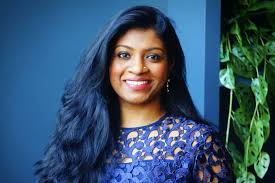
In an interview with Ashikha N for Maktoob, writer and caste-equity strategist Christina Dhanuja discusses her book Dalit Women and the Fullness of Life, challenging reductive representations of Dalit women, the politics of joy and fullness, and the need to centre Dalit authored knowledge in conversations around caste, feminism, and social justice.
What does it mean to imagine a full life for Dalit women in a society that has so often reduced their lives to stories of violence, labour, survival and resilience? Christina Dhanuja’s debut book, Dalit Women and the Fullness of Life, takes up this question by turning attention towards the less discussed dimensions of Dalit women’s lives. The book emerges from Dhanuja’s long engagement with questions of caste, gender, faith and justice, including her work as co-founder of the #DalitHistoryMonth project and as a founding member of the Global Campaign for Dalit Women. The book explores resilience, memory and liberation, while imagining what fullness means for Dalit women in a caste-bound world. Blending memoir with political and social analysis, the book explores Dalit women’s desires, contradictions, vulnerabilities, ambitions and joys and not merely as victims to systemic violence. Across ten chapters–-Identity, Movements, Work, Community, Sisterhood, Body, Desire, Trauma, Faith and Joy, the book moves from the political and collective to the intimate and interior. Dhanuja examines caste, gender, work, relationships, the body, faith and desire, gradually building towards her central idea of “fullness”: the right of Dalit women not only to dignity and survival, but to rest, pleasure, love, fragility, freedom and joy. In doing so, the book challenges the impulse to see Dalit women either as victims of oppression or symbols of resilience, making space instead for them to be seen, in Dhanuja’s words, as “wholesome human beings” entitled to the “full spectrum of possibilities that life has to offer.”
In an interview with Ashikha N for Maktoob, writer and caste-equity strategist Christina Dhanuja discusses her book Dalit Women and the Fullness of Life, challenging reductive representations of Dalit women, the politics of joy and fullness, and the need to centre Dalit authored knowledge in conversations around caste, feminism, and social justice.
Ashikha N: The title of the book itself is striking. What does “fullness of life” mean to you, and why did that phrase become the organizing principle of the book?
Christina Dhanuja: Fullness of Life, in the way I see it, and in the way the book articulates it, is essentially the opportunity for Dalit women, at systemic, collective, and individual levels, to experience the full spectrum of possibilities that life has to offer. That needs far more than just symbolic inclusion and tokenistic representation. It is not enough that Dalit women be ‘included’ and ‘represented’ for the sake of having diversity. It is not okay for Dalit women to have only their most urgent priorities met; that is food, clothing, and shelter. Fullness demands a complete reimagination of the social, political, emotional, spiritual, and material realities under which Dalit women live and are expected to endure. It demands a revision of public and academic discourses, which, in turn, determine a host of other things: from policies to organizational dynamics to healthcare practices to how we run movements.
Ashikha: The book blends memoir with social analysis. How did you decide on the structure of the book? Did you ever struggle with deciding how much of yourself to reveal?
Dhanuja: My political writing has always stemmed from the personal, and, in some instances, the two are quite indistinguishable. At this point, it is more of a habit than a consciously structured process. And I pretty much wrote about everything I wanted to write about. There were a few passages that I edited out, but it was to protect the people I was writing about rather than hide parts of my story. Deciding on the structure of the book was also a pretty straightforward process. I’ve been ruminating on the theme of fullness for a few years now, and I wanted to explore that as a framework for an anti-caste, feminist praxis. So, to talk about the Political (Identity, Movements), the Professional (Work), the Social (Community, Sisterhood), and the Personal (Body, Desire, Trauma, Faith, and Joy) came easily.
Ashikha: What were the most difficult narratives to challenge while writing the book?
Dhanuja:There are very specific narratives I try to dismantle in each chapter, but generally speaking, this book required that I first peel away layers of existing—and limiting—popular and academic discourses before I could centre Dalit women’s rights to fullness. For example, in the Sisterhood chapter, I had to first critique the hyperfocus on Dalit–savarna relationships before I could discuss sisterhood among and between Dalit women. In the Identity chapter, I had to re-establish what intersectionality is, in the way Crenshaw intended it, and then see how we can apply it to caste contexts. I attribute much of this additional labour to the damage caused by academics, intellectuals, and writers—especially those writing from savarna locations—whose ‘expert views’ have ended up pigeonholing Dalit women
Ashikha: What do you think society loses when Dalit women are only seen as symbols of oppression or resilience?
Dhanuja: I think it is not just society in general but South Asian society in particular that has somehow ruined what it means to be human. Caste is our biggest fault line. Although my book centers Dalit women and their right to fullness, it also analyses how caste is extremely life-negating for all of us. Take joy, for example. Why should something as simple as joy be rationed based on one’s caste and gender? Or consider how ‘caste minds’ are sustained through so-called preferences in food and love and everything else. Caste societies have already lost so much, with or without Dalit women..
Ashikha: One of the book’s most powerful interventions is the insistence that Dalit women deserve to be understood beyond suffering. Why do you think joy remains such a radical subject when discussing Dalit lives?
Dhanuja: I wonder if Dalit joy is as much a radical subject as it is a threatening reality. See, caste is essentially anti-joy. A caste mind cannot conceive freedom, love, life, and, on account of all that, joy. So joy in and by itself is considered an exclusivity in caste societies. And a joyous Dalit is the ultimate threat to those whose entire lives—for generations—are built on Dalit labour and drudgery.
Ashikha: You are critical of the way academia often turns Dalit women into “subjects” of study. How can scholars, journalists, and activists avoid reproducing the very stereotypes they claim to challenge? What would a more ethical model of knowledge production look like?
Dhanuja: Those are two different questions. I believe scholars, journalists, and anyone who dabbles with writing and researching must introspect their motivations. Why are they doing what they are doing? Savarnas regularly reach out to Dalits—mostly those who are visible on social media—asking for interviews, contributions to ‘Dalit anthologies’, anonymous quotes, etc., all in the name of being anti-caste. They say this is going to help establish how caste is not a thing of the past; that it will revolutionize how people study and see caste. Why? Are Dalits and their experiences the only avenues available to understand how caste works? And how much of our trauma must we display for oppressors to care?
There are multiple ways to produce knowledge ethically. But I’m not here to suggest a template savarnas can run with and then find a loophole in that too. I’m here to produce and invite Dalit-authored knowledge. I’m here to dismantle structures that continue to treat intellectualism as the preserve of the upper castes.
Ashikha: Your work spans caste equity consulting, grassroots advocacy, research, and writing. How do these different forms of engagement inform one another?
Dhanuja: They all center Dalit women in one way or another. At the Global Campaign for Dalit Women (GCDW), our team’s primary focus is to use everything in our power to build a world where Dalit and other caste-marginalized women are freely able to pursue dignity, safety, access, and justice. I speak more about this in the Movements chapter; Dalit women’s well-being should form the core of anti-caste and feminist movements.
The caste-equity work I do, mostly in the form of consulting and civic engagement, is also focused on how to create workplaces, institutions, and collectives that keep the most marginalized amongst us—often Dalit women who are economically deprived, disabled, or both—at the center of policy design and culture change.
Ashikha: You have spent years working through initiatives like #DalitHistoryMonth and the Global Campaign for Dalit Women. Did these activist experiences shape the questions that eventually became Dalit Women and the Fullness of Life?
Dhanuja: Absolutely. I refer to both the Dalit History Month project and the work of GCDW in my book. In fact, it was the former that essentially made me question the assumptions I held about the women in my community, who are almost always cast as stereotypes rather than as human beings. Although I don’t identify as an activist, my interactions with Dalit women activist-leaders across South Asia and the rest of the world have informed multiple themes of my book. For example, in the Body chapter, I question the oft-repeated discourse—often treated as the only acceptable narrative in grassroots work—that Dalit women’s bodies are merely sites of caste violence, specifically caste-based sexual violence. Why are we unable to expand that discourse to labour, untouchability, or health?
Ashikha: Over the course of your activist journey, how did you come to recognise that conversations about Dalit women were often limited to a narrow set of narratives?
Dhanuja: I’m not an activist, and I don’t think I can ever do justice to that label. But one doesn’t need to do activism to see how conversations about Dalit women often shift from one stereotype to another. Take cinema. Who and where are the Dalit women in it? How are they being portrayed? Take any news channel. How do they cover Dalit women’s success stories? Do they cover them at all? Take academia. Every other upper-caste researcher who is interested in caste is studying Dalit women—and pronouncing them as either victims or superhuman agents of change! Where is the space to be human? And why treat Dalit women as subjects to understand caste?
Ashikha: Having explored the idea of “fullness” in this book, where is your writing taking you next? Could you share a glimpse of your upcoming projects?
Dhanuja: I’m working on two new book projects that I hope to place with the right publishers; one that looks at how caste shapes workplaces and another on lived Dalit Christian feminisms. Perhaps something on Dalit motherhood may also happen.
Ashikha N portrait
Courtesy : Maktoob Media
Note: This news is originally published on https:/maktoobmedia.com/bha and is used purely for non-profit/non-commercial purposes, especially human rights