
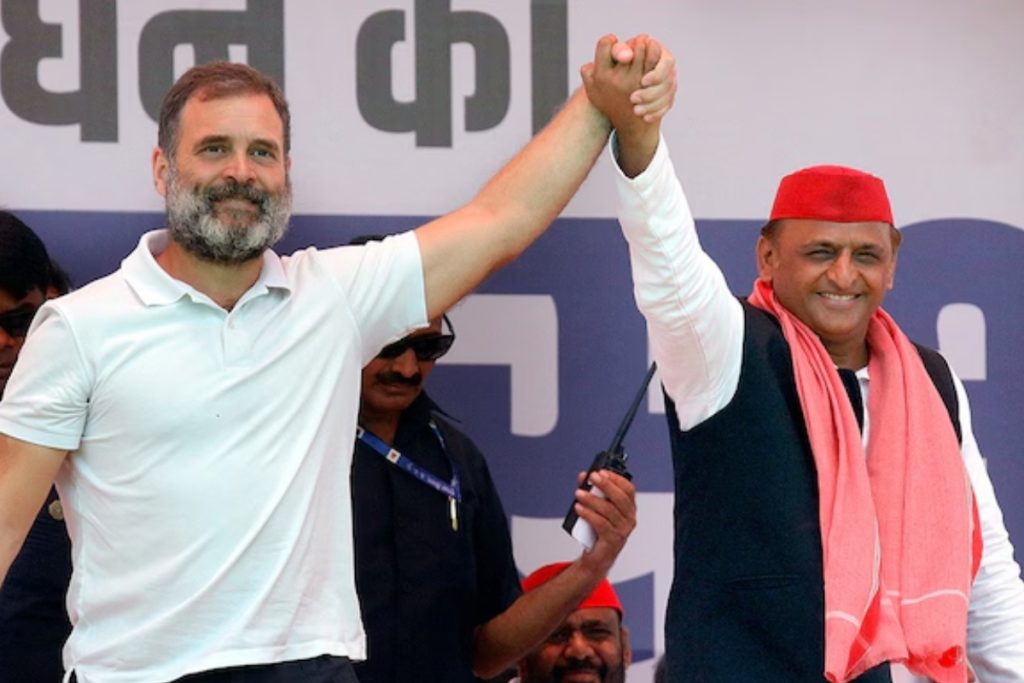
Political parties in Uttar Pradesh have already intensified their preparations for the 2027 assembly elections. Following the BJP, efforts to balance social equations have begun in the opposition camp as well. The Samajwadi Party and Congress have begun giving Dalit and backward class youth key organizational responsibilities. Significantly, Dalit youth are also being appointed in-charge of general assembly constituencies.
Both parties are attempting to connect with youth influenced by socialist and Ambedkarite ideology. These youth are being given the responsibility of strengthening the organization in various assembly constituencies and connecting new members to the party.
Dalit youth given responsibility for general seats
As part of this strategy, the Samajwadi Party has appointed Dalit youth as assembly in-charges for several general seats. Manoj Paswan has been appointed in Unchahar, Shivshankar Saroj in Babaganj, and Ram Karan Nirmal in the Kaushambi-Fatehpur region. Meanwhile, Vineet Kushwaha from Madhuban and Rahul Raj from Kushinagar have also been assigned organizational responsibilities.
These leaders have been primarily tasked with expanding their reach among youth, engaging new workers, and strengthening the party’s ideology. This initiative by the SP is being considered an important step towards strengthening the PDA (Backward, Dalit, and Minority) social equation.
Congress also focusing on youth
Congress has also planned to activate youth at the assembly level. The party has assigned the responsibility of strengthening the organization among youth to Shailendra Dhruv Yadav in Ballia, Murali Manohar in Velthara Road, Subhash Pal in Bilgram, and Tarun Patel in Gaura.
The strategy of opposition parties is not limited to reconnecting with their traditional voters. They are also targeting youth who were once with the BSP or are reportedly dissatisfied with the current political situation.
BSP’s focus on the old Brahmin equation
On the other hand, the Bahujan Samaj Party is also trying to re-establish its old social equation for 2027. Mayawati’s party is once again eyeing the Brahmin community. However, several prominent Brahmin leaders of the BSP have left the party in recent years. Antu Mishra’s expulsion is considered the latest in this trend.
Discussion of the 2007 formula is rekindled.
In the 2007 assembly elections, the BSP fielded a large number of Brahmin candidates. The party gave tickets to over 80 Brahmins, of whom 41 won the elections and reached the assembly. This social equation played a key role in the BSP’s formation of a full majority government.
Now, ahead of 2027, while the SP and Congress are busy strengthening the PDA through Dalit and backward youth, the BSP faces the challenge of recapturing its old Brahmin base. Consequently, social equations may play an even more important role in Uttar Pradesh’s electoral politics in the coming days.
By Asha Sharma
Courtesy: Hindi News