
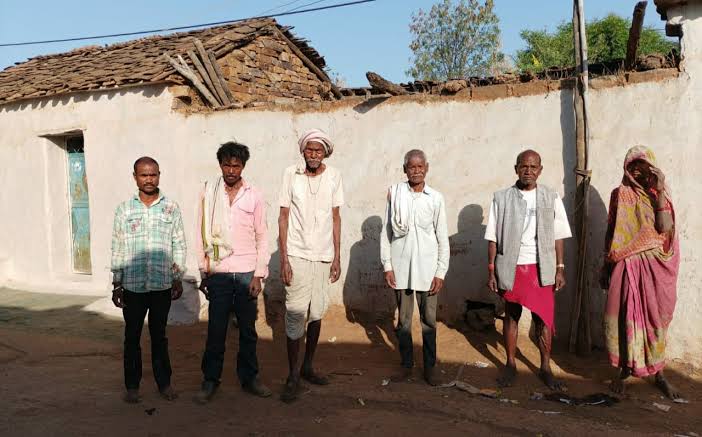
Chura Ahirwar, former sarpanch of Palkonha village, explains, “The main problem with the project is low compensation. In the village, some are being given Rs. 30,000, some Rs. 50,000, and some Rs. 1 lakh for their houses. With such low compensation, people can’t even buy the stones for their houses.” Read this report
The Ken-Betwa Link Project in Madhya Pradesh is a river linking project. The project was approved for implementation under the chairmanship of Prime Minister Narendra Modi. The project involves transferring water from the Ken River to the Betwa River. The project cost is estimated at Rs. 44,605 crore. The project is estimated to irrigate a total of 10.62 lakh hectares annually. Meanwhile, 2.3 million trees will be cut for the project. Approximately 1,913 families will be affected by the project, and approximately 9,000 hectares of land will be submerged.
In such a situation, the people primarily affected by this project are Dalits and tribals. They also face the threat of displacement. The biggest challenge in the project is the need for adequate compensation. For years, affected people have been taking steps like submitting memorandums and protesting to secure adequate compensation. Last April, the demand for compensation for the affected people took the form of a widespread Panchtatva Satyagraha movement.
This movement began on April 5, 2026, and lasted for approximately 12 days. The affected people participated in the Panchtatva Satyagraha by smearing mud on their bodies, lying on pyres, committing symbolic hangings, conducting Jal Satyagraha, fasting, and extinguishing their stoves. During this period, slogans such as “Our village – your arbitrariness will not be tolerated” were raised. Ultimately, the affected people threatened a massive movement and gave the administration time to reconsider the compensation issue.
We visited the rural areas of Panna district to understand the pain of the people affected by this project. These areas include Palkonha, Kadwara, Naiguwan, etc. in the Bijawar tehsil of the district. First, we arrive in Palkonha. Near the main road in this village, we discuss compensation with some villagers. Madanlal Ahirwar (50), a Scheduled Caste member, tells us, “I have been paid 30,000 rupees in compensation for my two-story house. We filed an application complaining about the low compensation, but have received no response. Can 30,000 rupees even lay the foundation for a house today?”
Nanni Bai Ahirwar (70) is left without adequate compensation. She says, “I have two rooms in my house, for which I have not received any compensation. Similarly, my elder son’s house has not received compensation. Everything we have is at stake in this project. How will we manage our lives if we don’t receive adequate compensation?”
Further into the village, near a platform, we meet Rammu Ahirwar (65) and Chura Ahirwar (48). In conversation, Rammu says, “My house cost around 10 lakh rupees. But I only received 4.5 lakh rupees in compensation. With that, we can’t rebuild our house like before.”
He further adds, “Due to the lack of compensation, villagers are unable to go to cities like Indore, Bhopal, Delhi, and Mumbai for livelihood. Those who received little or no compensation are unable to build their own houses or get their sons and daughters married.”
Chura Ahirwar, the former village sarpanch, adds, “The main problem with the project is the low compensation. Some in the village are being given 30 thousand rupees for a house, some 50 thousand rupees, and some 1 lakh rupees for a house. With such low compensation, people can’t even buy the stones for their houses.”
After talking with the villagers of Palkonha, we head to Naiguwan village. We reach Naiguwan in about 30 minutes by bike. In this village, we meet some villagers near a banyan tree.
Shakuntala Saur (40), a tribal woman, earns her living by working as a laborer. Sadly, she explains, “The government provides over 1 lakh rupees under the housing scheme. However, the compensation for our house is only 60,000 rupees. Just imagine, is this justice done to us? Who can build a house with this much? It can’t even build a proper toilet and bathroom.”
As soon as Shakuntala finishes her sentence, Andu Saur (52) adds, “Our two-story house falls in the submergence zone of the project, and we haven’t received any compensation yet. When we complain to the officials about compensation, they say it will come…it will come. But we don’t know when it will come.”
Then, we speak with Bihari Saur (55) about the project’s problems. He says, “The reason we haven’t received adequate compensation under this project is because of the lack of a proper survey. The officials didn’t conduct the compensation survey door-to-door, but instead gathered villagers together in one place. This has led to irregularities in the compensation.”
After learning about the compensation issue in Palkonha village, we headed towards Kadwara village. We reached Kadwara by bike in about 40 minutes. In this village, we chatted with some villagers near a public water tap.
Hakka Ahirwar (40 years old), a Scheduled Caste, says, “Our family, Bablu, Chandu, and I, three brothers, rely on 11 acres of agricultural land for our livelihood. This was acquired for the project. We received compensation of Rs. 5 lakh per acre for this land. However, when we go to buy land, we get Rs. 10-12 lakh per acre. Consequently, we are unable to purchase land. This is the problem faced by the farmers whose land is submerged in the project.” He further says, “We have only had the skill of farming for generations. The government hasn’t given us any other skills, nor has it provided any employment. Meanwhile, the government is paying 5 lakh rupees per acre as compensation for the land. At the same time, it’s deducting 5 lakh rupees from the residential plot being given to us. Is this fair?”
Divya Ahirwar (60 years old) explains, “We received 2 lakh rupees in compensation for our two-story house. I spent 40 thousand rupees seven years ago to get a borewell installed in our house. It’s 300 feet deep. I even showed this borewell to the officials, but I haven’t received any compensation for it.”
As we continue into the village, we reach the house of Kavita Ahirwar (32 years old). She says, “I’ve only received a notice for compensation for my house so far for 34,000 rupees. Similarly, our family owned 5 acres of government leased land that was submerged. Of this, we received compensation for only about 2 acres. The rest remained uncompensated. Furthermore, there are trees and plants planted on this land, but they haven’t received any compensation either.”
Near Kavita’s house stands Prasadi Ahirwar (65), a two-story house. Prasadi says, “I’ve been paid 60,000 rupees in compensation for my two-story house. When someone loses their house to a project, they’re left with nothing. I don’t know where we’ll go if we don’t receive proper compensation.”
Finally, we meet Vinod Ahirwar (36), in Kadwara village. He tells us, “My house has eight rooms. I received compensation of approximately 350,000 rupees for these rooms. Project-affected people like me are not against the government or administration. They simply want proper compensation. Furthermore, the project should take care of public life, including water, forests, land, and wildlife.”
Panna social activist Amit Bhatnagar has been fighting for the rights of those affected by this project. We also spoke with him on this issue. He expressed, “This project will cause widespread damage to public life. People spend their lives building their homes, but the project will snatch everything from them in one stroke. People are grappling with the low compensation provided by the project. The displacement policy is not being properly followed. The administration is applying the project’s rules and regulations arbitrarily. The rights of all these affected people are being violated.”
We also sought the administration’s perspective on this project. We then spoke with the Panna District Collector over the phone. He asked us to discuss the matter in the evening. However, despite repeated calls in the evening and throughout the day, we were unable to contact the District Collector.
Satish Bhartiya (Edited by: Naval/Anil)
Courtesy: Hindi News