
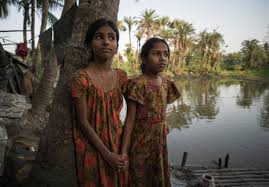
Missing children cases continue to rise in Bihar, with adolescent girls accounting for a majority of victims; investigations reveal a structured trafficking network stretching from villages to major Indian cities.
Patna: A highly organised three-tier human trafficking network is allegedly targeting teenage girls from poor and Dalit families in Bihar’s rural and backward regions, according to recent investigations and rescue operations conducted by police and social organisations.
The network operates through a structured system that lures girls from villages through false promises of jobs, marriage, friendship or a better life before transporting them to major cities across the country. Many victims are subsequently forced into domestic work, bonded labour or marriages against their will.
The revelations come amid growing concern over rising missing children cases in Bihar, which has increasingly been identified as a major source state for human trafficking.
Thousands of Children Reported Missing
Official data indicate that between 12,000 and 14,000 children go missing in Bihar every year. In 2025 alone, the number reached 14,699.
Adolescent girls remain the most vulnerable group. Nearly 60 per cent of all missing children in the state are girls below the age of 18.
The situation was particularly alarming in 2023 when 12,299 children were reported missing. Of them, around 75 per cent were girls, meaning three out of every four missing children were female.
Rescue Operations Continue
Police and social organisations have rescued thousands of girls over the past two years.
During 2024-25, authorities rescued 1,970 girls, while another 1,492 girls were rescued during 2025-26.
These operations have helped investigators understand the structure and functioning of trafficking syndicates operating across Bihar and other states.
How the Three-Tier Network Operates
According to investigators, the trafficking system functions through three interconnected levels.
- Local Agents Identify Targets
At the first level, local youths act as agents and identify vulnerable girls in villages.
Victims are often approached through friendship, romantic relationships, marriage proposals or promises of employment. Agents reportedly work under pressure to recruit girls within a short period.
Once trust is established, the girls are persuaded to leave their homes and villages.
- Transit Networks Move Victims
After leaving their villages, victims are handed over to transportation networks.
Transfers frequently take place at railway stations and bus terminals. In some cases, victims are allegedly drugged or threatened to ensure compliance.
They are then transported to distant cities through long-distance trains and other means of transport.
- Final Buyers Exploit Victims
The final stage operates primarily in metropolitan cities.
Victims are reportedly kept at undisclosed locations, subjected to physical and psychological abuse, and stripped of their identities.
Many are allegedly sold into forced marriages or made to work as bonded labourers.
Rescue Cases Reveal Pattern
Several recent rescue operations have highlighted similar trafficking methods.
A 19-year-old woman from Sahibganj was allegedly taken to Hyderabad after leaving home to update her Aadhaar card. Investigators said she was lured with the promise of employment before being rescued by police.
In another case, a 15-year-old student from Rohtas district was allegedly deceived by a friend and transported to Secunderabad after being drugged. She was later rescued from a railway station.
An 18-year-old girl from East Champaran was reportedly forced into bonded labour in Secunderabad after being lured through a mobile contact provided by a friend. Police rescued her before an alleged forced marriage could take place.
In Gopalganj, a 22-year-old woman who had left home to purchase medicines was allegedly taken to Kolkata under the pretext of marriage and employment. She was recovered after 15 days.
A separate rescue operation led police to Hyderabad, where a 21-year-old woman from Siwan was rescued after allegedly being trafficked through the same network.
Hyderabad-Secunderabad Emerging as Key Destinations
Raju Ojha, Chairman of Bihar Samaj Seva Sangh, said more than six girls had been rescued from Hyderabad and Secunderabad over the past six months with the assistance of police.
According to him, most victims were lured with promises of permanent jobs or marriage. They were initially forced to work for long hours before being prepared for sale into forced marriages.
Police Intensify Monitoring
Suhita Anupam, Additional Director General of Police (Weak Sections Crime Investigation Department), said trafficking hotspots across Bihar are being identified and placed under special surveillance.
She said registration has been made mandatory for orchestra groups and similar institutions as part of preventive measures.
The ADG also said villages witnessing repeated trafficking incidents are being mapped and monitored. Police are working with non-governmental organisations to raise awareness and prevent recruitment by traffickers.
Anupam added that an online monitoring mechanism has been established at the police headquarters level to track trafficking cases more effectively.
She emphasised that public awareness and community vigilance remain critical in preventing human trafficking and protecting vulnerable girls from exploitation.
Courtesy : Patna Press
Note: This news is originally published on https:/patnapress.com/bha and is used purely for non-profit/non-commercial purposes, especially human rights