
AIBE 20 result released at allindiabarexamination.com: Check direct link, more details here
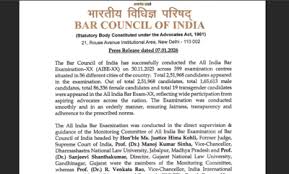
AIBE 20 result: The Bar Council of India has released the result for the All India Bar Examination-XX (AIBE-XX). The link is not yet activated on the official website. The exam was held on November 30, 2025. It took place across 399 centres in 56 cities. A total of 2,51,968 candidates appeared for the test. The overall pass percentage stands at 69.21 per cent. A total of 1,74,386 candidates have qualified, while 77,579 did not clear the examination. The candidate pool showed wide participation. It included 1,65,613 male candidates, 86,336 female candidates and 19 transgender candidates. The Bar Council of India said the examination was conducted in a smooth and orderly manner. It followed all prescribed norms. Fairness and transparency were ensured throughout. Category-wise and gender-wise outcomes Among male candidates, 1,13,063 qualified. The number of qualified female candidates stood at 61,310. Thirteen transgender candidates cleared the exam. Category-wise data shows the highest number of qualifiers from the unreserved category, followed by Other Backward Class, Scheduled Caste and Scheduled Tribe candidates. High-level monitoring ensured smooth conduct The examination was conducted under the direct supervision of the Monitoring Committee of the All India Bar Examination. The committee was headed by Justice Hima Kohli, former judge of the Supreme Court of India. Members included Prof. (Dr.) Manoj Kumar Sinha, Vice-Chancellor of Dharmashastra National Law University, and Prof. (Dr.) Sanjeevi Shanthakumar, Director of Gujarat National Law University. Senior legal academicians served as special invitees. Answer key review led to key revisions Following the exam, provisional answer keys were uploaded and objections were invited. All objections were examined by the Subject Oversight Committee. After detailed scrutiny, the Monitoring Committee withdrew five questions found to be incorrect. For two questions, two answers were accepted as correct. Full marks were awarded in such cases. The final result was calculated out of 95 marks. AIBE 20 result 2026: Steps to download scorecards Candidates can follow the steps elucidated here to download the AIBE 20 result 2026 once the link is activated on the official website: Visit the official website of the Bar Council of India at allindiabarexamination.com. On the homepage, click on the link for AIBE-XX Result. Enter the required login details, such as roll number or registration credentials. Submit the details. The AIBE-XX result will appear on the screen. Download the result and take a printout for future reference. Candidates can click on the link provided here to download the official notice related to the AIBE 20 result release. Courtesy : TOI Note: This news is originally published on https:/timesofindia.com/bha and is used purely for non-profit/non-commercial purposes, especially human rights
Indian Tourist Beaten By Transgender Group In Pattaya After Payment Row, Video Viral

After Raj was injured, a formal complaint was filed, prompting legal action. However, Jasuja has not yet made any public statement regarding the matter. An Indian tourist was assaulted by a group of transgender women in Thailand’s Pattaya following an alleged dispute over payment for sexual services, according to local reports. The incident took place in the early hours of December 27 and was captured on camera. Pulled Out of Car, Beaten in Public The victim, identified as 52-year-old Raj Jasuja, was reportedly dragged out of his car and beaten after he refused to pay the agreed amount. The assault occurred on a public road, with footage of the incident later circulating online. Victim Hospitalised With Injuries Jasuja sustained injuries to his face and head during the attack and was subsequently admitted to hospital for treatment. Details regarding the extent of his injuries were not immediately available. Attacks On Indians On The Rise Lately, attacks on Indian tourists have been on the rise in Pattaya. Pongpol Boonchid, a 19 year-old told police that the quarrel escalated when the two began chasing each other and a physical attack ensued. After Raj was injured, a formal complaint was filed, prompting legal action. However, Jasuja has not yet made any public statement regarding the matter. Several such disputes have been occurring between Indian tourists and transwomen sex workers in Pattaya in recent months. Previously, in September an Indian man was attacked, and in October three transwomen were also accused of assaulting two Indians and fleeing with nearly 24,000 baht in cash. By Sagarika Chakraborty About the author Sagarika Chakraborty Sagarika Chakraborty is a Senior Copy Editor at ABP Live English, where she handles business coverage and key developments in general news, while also actively chasing breaking stories. With a foundation in advertising, she transitioned into journalism to craft in-depth stories and explainers on the economy, real estate, and personal finance. She also engages in interviews and podcasts, bringing out expert insights. Courtesy : abp live Note: This news is originally published on https:/abplive.com/bha and is used purely for non-profit/non-commercial purposes, especially human rights
Indian Man, 52, Beaten On Road Over ‘Unpaid Sex Service’ By Transgender Women In Thailand

The viral video shows a tense situation escalating when the women demanded money from the Indian tourist who allegedly declined to pay. An Indian tourist became the centre of a violent confrontation in Thailand’s Pattaya after he allegedly refused to pay for sexual services that left him injured. The incident, which occurred in the early hours of December 27, was caught on camera and shows the man being beaten by a group of transgender women in a public area. According to a report in Thaiger, the Indian national has been identified as 52-year-old Raj Jasuja. The video shows a tense situation escalating when the women demanded money from Jasuja who reportedly declined to pay. Transgender Women Beat Indian Man In Thailand In the video, three transgender women can be seen confronting Jasuja allegedly over payment for sexual services. When he attempted to leave in his car, one of the transgender women blocked the door to prevent him from driving away. With the assistance of a man nearby and some bystanders, the group pulled Jasuja out of the vehicle. He was then repeatedly kicked and struck by the group before emergency responders arrived at the scene. “No Money, No Honey.” Eyewitness Account As per the report, a local witness, 19-year-old Phongphon, told rescue workers that he saw Jasuja arguing with a transgender sex worker near the entrance to the walking street. The argument escalated and according to the witness, the woman then summoned several friends to assist her. Rescue And Medical Attention Rescue workers from the Sawang Boriboon Dhammastan Foundation received a report at around 5:30 AM after which they immediately rushed to the scene. They found Jasuja with injuries to his face and the back of his head. He was administered first aid at the scene before being shifted to Pattamakom Hospital for further treatment. “Free s*x services give injuries.” What Are People Saying Online The video circulated online and received hundreds of comments with one user writing, “My guy really thought not paying was gonna work out fine.” Another said, “Well deserved,” while someone else remarked, “Someone’s husband and father btw.” Ariana Grande, Amanda Seyfried, Ethan Hawke, Kristen Bell Arrive At The Critics’ Choice Awards; N18G New Parents Sidharth Malhotra & Kiara Advani Glow As They’re Spotted Together Police Response Police later informed the We Love Pattaya Facebook page that they would request Jasuja to file a formal complaint once he fully recovers, Thaigar reported. Further investigation will then proceed according to Thai law. Curated By : Buzz Staff Courtesy : News18 Note: This news is originally published on https:/news18.com/bha and is used purely for non-profit/non-commercial purposes, especially human rights
Riley Gaines takes bold stand to attend Supreme Court hearings on transgender athlete participation in women’s sports

Riley Gaines has once again stepped into the national spotlight. The former collegiate swimmer announced that she plans to attend two major Supreme Court hearings that could shape the future of women’s sports in the United States. The cases focus on whether states can legally restrict transgender athletes from competing in women’s categories. Gaines said the upcoming decisions are extremely important. She believes the rulings will determine whether laws designed to protect women’s sports are constitutional. The hearings involve laws from West Virginia and Idaho. Both cases have drawn national attention and sparked strong opinions on fairness, safety, and equal opportunity in sports. Riley Gaines backs state laws and supports female athletes speaking out — riley_gaines_ (@riley_gaines_) Riley Gaines confirmed she will be present at the Supreme Court in two weeks for the hearings of West Virginia v. B.P.J. and Little v. Hecox. She explained that these cases will decide if states are allowed to protect women’s sports under the Constitution. Gaines also encouraged her supporters to make their voices heard by signing a related petition. The West Virginia case centers on a state law that prevents transgender girls from competing in female sports categories. A middle school athlete named Becky challenged the law, arguing that it violates constitutional rights and Title IX protections. Becky has reportedly been on medication since the start of puberty. Gaines believes the case will have a major impact on youth and school sports nationwide. The second case, Little v. Hecox, involves Idaho’s HB 500 law. This law banned transgender athletes from women’s sports. Lindsay, a transgender college student at Boise State University, was affected by the rule and challenged it in court. The Supreme Court agreed to review both cases. In addition to her legal advocacy, Gaines recently voiced strong support for San Jose State University volleyball player Brooke Slusser. In a Fox News interview, Slusser shared the emotional stress she faced after learning a transgender athlete, Blaire Flemming, was competing on her team. Gaines accused the school of failing to inform female athletes about the situation. Gaines said Slusser only spoke up after realizing she had been living with and sharing hotel rooms with a biological male during team trips. She added that Slusser eventually left school and returned home due to concerns for her safety and mental health. Gaines described the situation as abusive. Slusser later revealed that the experience deeply affected her health. She said the stress led to an eating disorder and caused her to temporarily lose her menstrual cycle. Gaines continues to argue that these stories highlight why women’s voices must be central in discussions about sports policies. Courtesy : TOI Note: This news is originally published on https:/timesofindia.com/bha and is used purely for non-profit/non-commercial purposes, especially human rights
Trans woman found killed in tent

Chennai: A 36-year-old transgender person was found murdered inside a makeshift tent off the Vanagaram service road on Saturday. The deceased, 36, a resident of Chettiyar Agaram near Maduravoyal was a sex worker and frequented the Vanagaram service road, police sources said. She was last seen on the service road on Friday night. Investigators suspect that some people took her to a nearby tin shed in the Indira Nagar area, where she was assaulted and killed. Her body was found lying in a pool of blood inside the makeshift structure on Saturday morning. Upon information from residents, Vanagaram police reached the spot and sent the body to Government Kilpauk Medical College and Hospital for postmortem. Police have registered a case and are combing CCTV footage from the service road and surrounding areas to identify the suspects. Further investigation is underway. TNN Courtesy : TOI Note: This news is originally published on https:/timesofindia.com/bha and is used purely for non-profit/non-commercial purposes, especially human rights
Indian national Raj Jasuja thrashed by transwomen in Thailand after allegedly refusing to pay for escort service

An Indian tourist was hospitalised after he was allegedly attacked by a group of transgender women in Thailand’s Pattaya city following a dispute over payment for sex services, according to the Thaiger.The incident happened on December 27 when rescue workers from the Sawang Boriboon Foundation received a call at around 5.30am about an injured foreign tourist near the beachside entrance of Walking Street. The victim was identified as 52-year-old Indian national Raj Jasuja, with visible injuries to his face and the back of his head, according to the responders who found him at the scene. He was given first aid before being taken to hospital for further treatment. An Indian man who refuses to pay for a “service” is beaten by a group of trans men in Thailand. pic.twitter.com/oSYav9bjg4 — RadioGenoa (@RadioGenoa) January 3, 2026 A 19-year-old Thai witness, Pongpol Boonchid, told police and rescue workers that the altercation began after Raj was seen arguing with a transgender sex worker near the entrance to Walking Street. The dispute escalated when the two began chasing and hitting each other. According to the witness, the transgender woman then called several friends, who joined in and assaulted the Indian tourist as a group. The dispute is believed to have started over money, after the tourist allegedly did not pay the full amount agreed for the service. Raj has not spoken publicly about what happened. Police later told local media that officers would ask the injured tourist to file a formal complaint once he had fully recovered, after which a legal investigation would proceed. Similar incidents involving Indian tourists and transgender sex workers have been reported in Pattaya in recent months, according to the Thaiger. In September, an Indian man was attacked after allegedly touching a transgender woman without consent during a dispute over services. In another case in October, three Thai transwomen allegedly assaulted two Indian nationals at a hotel following an argument over payment and fled with cash worth around 24,000 baht. Thai police said the investigation is ongoing, with officers checking more witness statements and available CCTV footage. Courtesy : TOI Note: This news is originally published on https:/timesofindia.com/bha and is used purely for non-profit/non-commercial purposes, especially human rights
How India Systematically Excludes Its Transgender Population
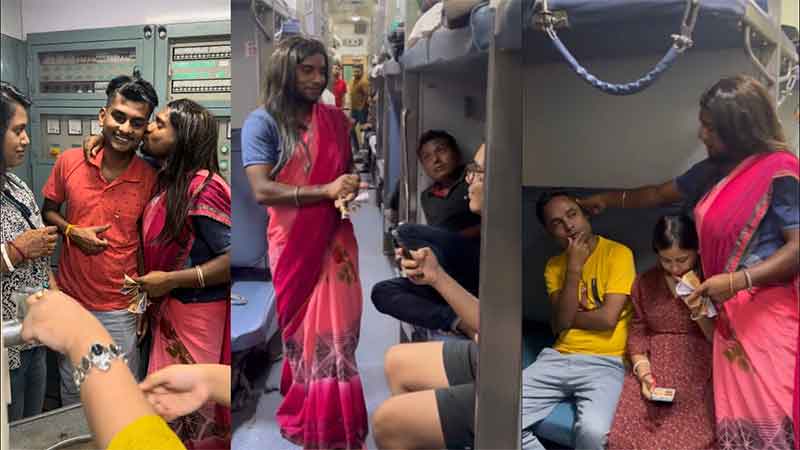
India systematically excludes its transgender population through deep-seated social prejudice, leading to familial rejection, educational dropout, economic marginalization (forcing many into begging or sex work), and barriers in healthcare and housing, despite legal recognitions like the NALSA Supreme Court ruling and the Transgender Persons Act. This exclusion stems from a binary view of gender, cultural stigma, and insufficient implementation of inclusive policies, leaving trans individuals vulnerable to violence, discrimination, and poverty, even as laws offer rights. The Indian Constitution promises equality before law, prohibition of discrimination, and the right to live with dignity. Yet for transgender persons, these guarantees remain largely ornamental. Despite judicial recognition, legislative frameworks, and rhetorical commitments to inclusion, transgender Indians continue to live as citizens without citizenship – visible in census numbers, invisible in policy outcomes, and excluded from the social contract. Their marginalisation is not episodic; it is structural, measurable, and deepened by a stark rural-urban divide. The evidence is unambiguous. According to the National Human Rights Commission, the literacy rate among transgender persons stands at around 56%, nearly twenty percentage points below the national average. Nearly half of all transgender persons never attend school, while many who do are forced to drop out due to relentless bullying, harassment, and institutional hostility. Schools, instead of functioning as sites of social mobility, become early theatres of exclusion. There are few mechanisms for redress, almost no trained counsellors, and little accountability for teachers or administrators who allow discrimination to flourish. This educational exclusion feeds directly into economic dispossession. The NHRC’s findings are staggering: 92% of transgender persons are denied participation in formal economic activity. Even when educated or skilled, they face routine rejection in hiring, promotions, and workplace retention. As a result, nearly 96% are pushed into informal, precarious, or socially stigmatised work — begging, ceremonial performances, sex work, or daily wage labour. Only about 6% have ever accessed formal employment in the private sector or civil society organisations. Income data reinforces the picture: barely 1% earn more than ₹25,000 per month, placing the overwhelming majority far below any threshold of economic security. Housing exclusion compounds this precarity. Transgender persons routinely face discrimination by landlords, are denied rental agreements, or are evicted under social pressure. Many are forced into unsafe shared spaces or community enclaves, while others experience homelessness. Despite being officially enumerated in the Census, transgender persons remain absent from housing policy design. Welfare housing schemes rarely specify transgender beneficiaries, and where state initiatives exist, they are small, urban-focused, and poorly implemented. Health outcomes reveal the human cost of systemic exclusion. HIV prevalence among transgender persons in India is estimated at 3.8%, nearly twenty times the national average. This disparity is not incidental; it reflects forced economic marginalisation, limited access to preventive healthcare, and discrimination within medical institutions themselves. Mental health indicators are even more alarming. Studies suggest that around 31% of transgender persons have attempted suicide, with nearly half doing so before the age of 20. These are not individual pathologies; they are predictable outcomes of sustained social rejection. Judicially, India has acknowledged these injustices. The Supreme Court’s NALSA judgment (2014) recognised transgender persons as a third gender and affirmed their entitlement to fundamental rights, including affirmative action in education and employment. Politically, however, this promise has been diluted. The Transgender Persons (Protection of Rights) Act, 2019 prohibits discrimination but avoids structural remedies. It offers no reservations, weak penalties for violations, and bureaucratic identity certification processes that many transgender persons experience as humiliating and exclusionary. Enforcement remains negligible, and accountability mechanisms are virtually absent. Within this already exclusionary landscape, the rural–urban divide intensifies marginalisation. Urban centres, for all their hostility, provide relative anonymity, access to NGOs, healthcare facilities, legal aid, and occasional employment opportunities. Cities host transgender collectives, shelters, and advocacy networks – uneven and insufficient, but real. Rural India offers almost none of this. Transgender persons in villages face near-total invisibility. Family rejection in rural settings carries harsher consequences, where social surveillance is constant and escape routes limited. Schools, primary health centres, panchayats, and police stations are often deeply uninformed or openly hostile. There are fewer NGOs, no shelters, limited digital access, and virtually no targeted welfare outreach. Documentation barriers – identity cards, residence proof, certificates — further exclude rural transgender persons from schemes that exist largely on paper. This produces a predictable pattern: distress migration. Transgender persons are pushed out of villages into cities, arriving without education, skills, housing, or safety nets. Their subsequent precarity is then moralised and criminalised, rather than understood as the outcome of systematic exclusion. Mainstreaming transgender persons cannot be reduced to symbolic inclusion or occasional welfare schemes. It requires constitutional seriousness. First, the state must honour the Supreme Court’s mandate by introducing reservations in education and public employment, treating transgender persons as a socially and educationally backward class. Second, anti-discrimination provisions must be enforceable, with clear penalties and independent grievance mechanisms. Third, economic inclusion must move beyond skill development to guaranteed job placement, supported by incentives and obligations for employers. Fourth, housing schemes — urban and rural — must explicitly include transgender beneficiaries. Fifth, public healthcare must integrate gender-affirming care and mental health services as standard, not optional, provisions. Equally critical is local governance. Panchayats, ASHA workers, school teachers, police personnel, and district officials must be trained not as benevolent actors, but as constitutional duty-bearers. Without decentralised accountability, rural exclusion will persist regardless of national laws. Finally, data is political. India cannot govern what it refuses to measure adequately. Comprehensive, disaggregated data on education, employment, housing, health, and rural–urban distribution is essential for evidence-based policymaking and democratic accountability. Transgender Indians are not seeking charity or exceptional treatment. They are asking for what the Constitution already guarantees: the right to exist without fear, to learn without humiliation, to work with dignity, and to belong as equal citizens. Until those rights are realised — in villages as much as in cities – their exclusion will remain one of the republic’s most profound moral and political failures. Dr. Ranjan Solomon
Transgender groups clash, 4 injured
Balasore: A violent clash between two transgender groups in Bhadrak town on Tuesday left four persons injured, triggering tense scenes at the Bhadrak Town police station. The incident took place near Charampa when members of one transgender group were returning home after buying vegetables. They were allegedly attacked by members of a rival group armed with sharp weapons. The victims sustained injuries on their heads, backs, ears and other parts of the body. According to complaints lodged with the police, the attackers not only assaulted the victims but also forcibly cut their hair and looted Rs 10,000 in cash along with a mobile phone. Following the incident, a large number of transgender persons gathered at the Bhadrak Town police station demanding the immediate arrest of those involved. The situation turned tense as protesters raised slogans and staged a demonstration on the police station premises. IIC, Bhadrak Town, Prabhanshu Mishra said, “Three persons have been detained for questioning. Statements of the injured have been recorded.” Police sources said the violence appears to be linked to a long-standing rivalry between the two groups, allegedly led by Sanjana Shashmal and Jharanarani. Courtesy : TOI Note: This news is originally published on https:/timesofindia.com/bha and is used purely for non-profit/non-commercial purposes, especially human rights
DH Changemakers 2026 | How a transgender woman is empowering her community through livestock farming
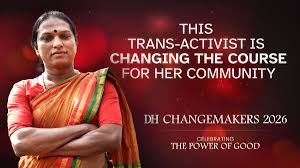
Arundathi, a transgender woman from Karnataka, is creating new opportunities for her community through livestock farming, skills training and legal support. From her small farm near Bharamasagara in Chitradurga, she helps transgender and other marginalised people raise goats and chickens so they can move away from begging and sex work and build steady, dignified livelihoods. Her simple pay-it-forward idea means that once someone becomes self-reliant, they pass on animals to another person in need, slowly spreading opportunity across districts. Along with livelihood support, Arundathi also helps people get Aadhaar cards, voter IDs and access to government schemes, making sure they are seen, recognised and included. Courtesy : DH Note: This news is originally published on https:/deccanherald.com/bha and is used purely for non-profit/non-commercial purposes, especially human rights
Odisha launches Sweekruti scheme for transgenders welfare and empowerment
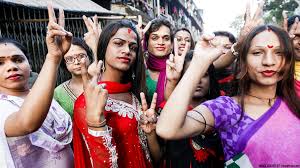
New state initiative provides financial aid, scholarships, skill training, legal support and housing to transgender persons and their families, aiming at social inclusion and dignity BHUBANESWAR: The Odisha government has launched a comprehensive welfare scheme for ensuring social inclusion, dignity and empowerment of transgender persons by addressing long-standing gaps in education, employment, healthcare, housing and legal support. Sources said the scheme Sweekruti, being implemented by the Social Security and Empowerment of Persons with Disabilities (SSEPD) department, has been designed to provide a structured, rights-based framework for the welfare of the transgender community and their families. Odisha, with a total transgender population of around 20,300 (as per the last census), is the first state to give transgender people social welfare benefits aimed at improving their overall socio-economic status. The scheme focuses on a set of key strategies that include financial assistance to parents of transgender children, pre and post-matric scholarships for transgender students, skill upgradation and entrepreneurship development training, strengthening of self-help groups, support for critical healthcare and group insurance, provision of legal aid and counselling. According to a resolution issued by the department, a key feature of the scheme is monthly financial assistance of Rs 1,500 to parents or guardians of transgender children to help them raise their children amid social stigma, discrimination and violence. This support will be provided until the child attains 18 years of age. In order to support education, eligible transgender students from families with an annual income not exceeding Rs 2.4 lakh will receive monthly scholarships ranging from `1,000 to `5,000, depending on the course pursued. Many transgenders are often denied entry into boys’ or girls’ hostels and refused rental housing, forcing them to drop out of education or employment, particularly when they migrate to cities such as Bhubaneswar, Cuttack, Rourkela, Berhampur, Balasore and Sambalpur. Secretary of the department RS Gopalan said Sweekruti will support the setting up of dedicated hostels for transgender persons by colleges, universities, urban local bodies and organisations working with the community. Transgenders will receive a stipend of Rs 3,000 per month for the duration of their studies. “The scheme will help districts set up rehabilitation centres to provide abandoned transgender persons, aged above 18 years and below 60 years, with shelter, basic amenities and capacity-building/skill development training,” he said. Hemant Kumar Rout Courtesy : TNIE Note: This news is originally published on https:/thenewindianexpress.com/bha and is used purely for non-profit/non-commercial purposes, especially human rights