
Tamil Nadu has worst discrimination record against Dalits: Governor RN Ravi
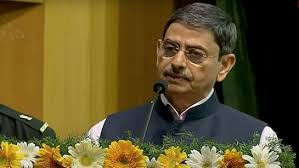
“In our state (TN), this issue remains, and every time, at every forum, I raised this issue. I will continue raising it,” Ravi said. CHENNAI: Governor RN Ravi, who has been claiming that the crime against SCs were rising and that they face persistent hardships, on Thursday charged that TN has the “worst record” as far as social discrimination against Dalits is concerned. The governor made these remarks while speaking at the Gandhi Jayanthi celebrations here. “In our society, there were a lot of distortions, and many sisters and brothers were treated as untouchables. They were not allowed to share public space. And we moved forward. We have done significant work. But, in our state (TN), this issue remains, and every time, at every forum, I raised this issue. I will continue raising it,” Ravi said. “There are schools where there are partitions – one side Dalit students and the other side non-Dalit students. Where are we? In this social discrimination against Dalits, our state has the worst record. And we must wake up, and it is possible (to change this),” he added. He said while the rest of the country has, by and large, addressed this problem, in Tamil Nadu it is an everyday affair. Courtesy : TNIE Note: This news is originally published on https:/thenewindianexpress.com/bha and is used purely for non-profit/non-commercial purposes, especially human rights
Supreme Court to Decide if 50% Quota Cap Applies to Colleges Built Exclusively for SCs
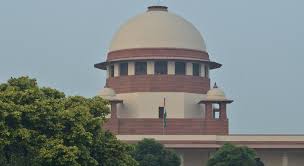
This case stems from an Allahabad High Court decision that struck down 70% reservation for Scheduled Castes in four SCP medical colleges in Uttar Pradesh. The High Court, citing the limit set in the Indra Sawhney case (1992), termed this 70% reservation as unconstitutional. New Delhi- The Supreme Court has decided to consider a very important question. The question is whether the 50% ceiling on reservations also applies to medical and educational institutions created specifically for Scheduled Castes (SCs) under the Special Component Plan (SCP). This case stems from an Allahabad High Court decision that struck down 70% reservation for Scheduled Castes in four SCP medical colleges in Uttar Pradesh. The High Court, citing the limit set in the Indra Sawhney case (1992), termed this 70% reservation as unconstitutional. Students affected by the High Court’s decision approached the Supreme Court. A bench led by Chief Justice of India BR Gavai and Justice K. Vinod Chandran has issued notices to the central and state governments, seeking their responses on the petition. What is the complete issue? The Special Component Plan (SCP) was launched in 1979 for the educational and social upliftment of backward classes, especially Scheduled Castes. Under this, separate hostels, scholarships, and even universities were established specifically for SC students. Four medical colleges were built under this plan in Ambedkar Nagar, Kannauj, Jalaun, and Saharanpur in Uttar Pradesh, where 70% of the seats were reserved for SC students. Funding for these colleges comes from a special central government scheme (DAPSC), which is meant solely for the welfare of the SC community. What do the petitioners say The petitioners argue that the High Court made a mistake. Their main point is that the Indra Sawhney case dealt with reservations in general institutions, not in institutions created specifically for the advancement of SC/STs. They warn that if the High Court’s decision is upheld, the consequences will be severe: It would endanger not only these four colleges in UP but also similar schemes running in states like Karnataka, Telangana, Andhra Pradesh, and Tamil Nadu. It could raise questions about special hostels, scholarships, and even central universities like Babasaheb Bhimrao Ambedkar University (BBAU) built for SC/ST students. It would deal a blow to decades of affirmative action meant to uplift marginalized communities. The Supreme Court’s ruling on this matter will have far-reaching implications. If the Court upholds the High Court’s decision, educational opportunities for students from backward classes could shrink. On the other hand, if the Court rules in favor of the petitioners, it would affirm that reservation exceeding 50% is constitutional in institutions created exclusively for disadvantaged groups. All eyes are now on the Supreme Court’s next hearing. Geetha Sunil Pillai Courtesy : The Mooknayak Note: This news is originally published on https:/themooknayak.com/bha and is used purely for non-profit/non-commercial purposes, especially human rights
BANAE Convention: The New Dalit Intellectuals Are Asking a Different Question Beyond Reservations
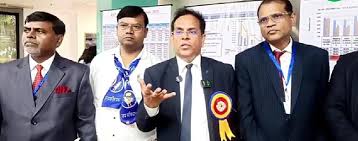
Engineers from 23 States Converge at BANAE Meet, Question Gap Between Policy and Reality New Delhi: In a powerful display of collective concern, engineers and professionals from the Dalit community gathered recently from across India at the national convention of the Babasaheb Ambedkar National Association of Engineers (BANAE). The two-day event, held on 21-22 September at New Delhi, to mark the organization’s 38th foundation year, became a platform for a data-driven critique of the implementation of government policies, highlighting a stark gap between planning and ground-level execution. The convention saw participation from nearly 350 engineers and professionals from 23 states, who engaged in intense discussions on critical issues like education, employment, health, and economic empowerment. Speaking with The Mooknayak, BANAE’s Secretary General, Sanjay Sagar, outlined the primary goal of the gathering. “Our issue was to understand the role of our intellectual group, our engineers,” Sagar stated. “They have gathered from 23 states. Their role is to figure out how we can approach society and the government to further the idea of inclusive growth, so that society can benefit. We have problems, and we want solutions.” He emphasized that the focus was on a factual analysis of government action. “Our aim has been to make people understand what the government’s planning and policies are, what the framework is, and what the implementation status is. We discussed the facts and deliberated on how to develop society, how to develop the mindset of the society, and on many student-related issues.” Sagar detailed that the discussions were comprehensive, covering the intended role of the community, the government’s responsibilities, and constitutional provisions. The underlying theme was to bridge the disconnect between policy intent and outcomes. The convention saw participation from nearly 350 engineers and professionals who engaged in intense discussions on critical issues like education, employment, health, and economic empowerment. For Two Dalit Students, a Dream Was Denied by a Technicality. Here’s How Delhi HC Stepped In. The “Shocking” Education Data: Rising Population, Falling Enrollment A central and alarming point of discussion was the recent data on education. Sagar presented an analysis based on figures from UDISE+ (Unified District Information System for Education), calling the trends “shocking.” “The data that emerged shows how, for decades, the rights of the Dalit, oppressed, and backward classes are being usurped,” he asserted. “This discussion is based on the government’s own data.” He provided a detailed breakdown: “In 2018-19, the total number of children aged 3 to 17 was 37 crore 83 lakh, but the enrollment was merely 26 crore 3 lakh. And by 2023-24, this enrollment dropped to 24 crore 80 lakh. The straightforward point is, if the population is increasing and enrollment is decreasing, it is a major cause for concern.” This data analysis led to a key resolution emerging from the convention. Sagar explained, “The main topic of discussion was that if the population is growing, we must approach the government to establish more and better schools for our children’s education and facilities, so that they can get opportunities for education. This was our aim.” The convention saw participation from nearly 350 engineers and professionals who engaged in intense discussions on critical issues like education, employment, health, and economic empowerment. Supreme Court to Decide if 50% Quota Cap Applies to Colleges Built Exclusively for SCs A positive development at the convention was the presence and commitment of Faggan Singh Kulaste, Chairman of the Parliamentary Committee for the Welfare of Scheduled Castes and Scheduled Tribes. “The most positive aspect was that Mr. Kulaste attended our event,” Sagar shared. “He answered questions on many issues with candour and assured us that he is always with the society. He said he would act as a medium between us and the government to find solutions to these problems.” When asked about the way forward, Sagar was clear about the strategy. “In our future strategy, we want to approach the current government. We want to create a pressure group and tell them that your planning and policies are very good, but inclusive growth is not happening at the grassroots level.” He pinpointed the problem at the implementation stage. “The people who are implementing these policies have a mindset of exclusivity, and they are creating exclusion. Because of this, the implementation at the ground level is not being completed.” Quoting Dr. B.R. Ambedkar, he added, “The constitution will prove good if the people implementing it are good. In today’s date, where the implementers are good, we have seen good implementation of government policies. But in many places, most places, there are people with an old mindset who are not giving opportunities to others, which is creating a hurdle in systemic change.” The convention saw participation from nearly 350 engineers and professionals who engaged in intense discussions on critical issues like education, employment, health, and economic empowerment. Ashoka Vijaya Dashami: Ambedkar’s Historic Explanation on Why He Chose Buddhism Over Hinduism- “We Have Come Out of Hell” Concluding his perspective, Sagar made an appeal to view the nation’s youth as a vital asset. “If the population is increasing and enrollment is decreasing, the government should reassess and review the gap between the Right to Education and the National Education Policy,” he urged. He highlighted the demographic dividend, stating, “In our country, if 66%… two-thirds of the population is under 34 years of age, and our country is called Youth India… if we capitalize on this youth, give them good training and good education, then why can’t we capitalize on them, send them abroad and earn revenue from them, just like other countries are doing? We will try to work on this as well.” The BANAE convention has marked a significant moment, presenting the organized, data-driven, and strategic voice of the educated Dalit professional class, a voice that is no longer limited to grievances but is moving forward with a clear agenda for policy reform and effective implementation. Geetha Sunil Pillai Courtesy : The Mooknayak Note: This news is originally published on https:/themooknayak.com/bha and
Dalit youth dies in police custody: 5 policemen suspended after 4 days of uproar, 27.50 lakh compensation, know how the administration bowed down in Dungarpur?
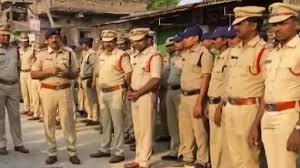
After four days of protests by the victim’s family and the tribal community, the administration relented; the victim’s family was awarded 27.50 lakh rupees, the father was given a contract job, and 5 policemen were suspended. Dungarpur, Rajasthan. The four-day tense situation following the custodial death of a youth at the Dovda police station in the district has finally ended. An agreement was reached between the administration and the deceased’s family late Wednesday evening, ending the days-long protest. What was the whole matter? The controversy began on September 26th when Dovda police detained a youth named Dilip Ahari in connection with a theft case. During police interrogation, Dilip’s health suddenly deteriorated. He was immediately taken to a local hospital in Dungarpur, from where he was referred to Udaipur for better treatment. However, Dilip died while undergoing treatment at a hospital in Udaipur on September 30. According to media reports, news of Dilip’s death sparked outrage among the tribal community and the victim’s family. They launched a protest, accusing the police of serious custodial assault. The protest first began outside the Dowada police station and later reached the district collectorate, leading to a tense situation. Four days of protests and negotiations followed. The angry protesters placed three key demands before the administration: A compensation of ₹1 crore for the victim’s family. A government job for a family member. Immediate and strict action against the accused policemen. Several rounds of negotiations were held to resolve the dispute. Led by Aspur MLA Umesh Meena and BAP MP Rajkumar Roat, the protesters engaged with the administration. On Tuesday, talks were held in the presence of TAD Minister Babulal Kharadi and Udaipur MP Mannalal Rawat, but they remained inconclusive. Finally, on Wednesday, a 10-member delegation led by MLA Umesh Meena met with Additional District Magistrate (ADM) Dineshchandra Dhakad and Additional Superintendent of Police (ASP) Ashok Kumar. After several hours of meetings, an agreement was reached between the two parties. Key Points of the Agreement The following points were agreed upon under the agreement reached between the administration and the victim’s family: Compensation: The victim’s family will receive financial assistance of ₹27.50 lakh. Job: The deceased Dilip’s father, Jivraj Ahari, will be given a contract job as a Class IV employee in the TAD hostel. Action: Five police officers, including Dovada Police Station Officer Tejkaran Singh and Head Constable Vallabhram Patidar, have been suspended for negligence in the case. Restoration of Peace and Funeral Following the announcement of the agreement, Dilip’s body was taken from the Udaipur hospital mortuary for a post-mortem examination. His last rites will be performed in his native village, Kalariya, on Thursday. With this agreement, the tension that had persisted in the area for the past four days has ended and peace has been restored. Rajan Chaudhary Courtesy: Hindi News
Discrimination against Dalit medical students: SC Commission issues notice to AIIMS and Health Ministry; find out what the matter is?
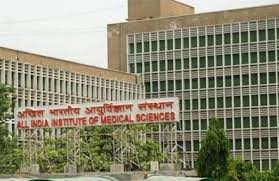
In its notice, the National Commission for Scheduled Castes (NCSC) has sought an action report from the AIIMS Director and the Ministry’s Secretary within 15 days. New Delhi. The National Commission for Scheduled Castes (NCSC) has taken a serious view of the discrimination, inhumane working conditions, and suicides faced by PG (postgraduate) medical students from the Scheduled Caste (SC) community in India’s prestigious medical colleges and universities. The Commission has issued notices to the All India Institute of Medical Sciences (AIIMS), New Delhi, and the Union Ministry of Health and Family Welfare, seeking a response within 15 days. The Commission’s action follows a detailed complaint filed by Dr. Lakshya Mittal, a laparoscopic, general, and laser surgeon from Rajasthan and the National President of the United Doctors Front (UDF). Dr. Mittal sought the Commission’s immediate intervention to protect the rights of PG medical students from the Scheduled Caste community, prevent suicides, and regulate working conditions. What’s in the complaint? In his petition (dated July 8, 2025), Dr. Mittal presented the following problems faced by students from the Scheduled Caste community to the Commission. Inhumane duty hours – PG students in medical colleges are made to work continuously for 24 to 36 hours. In many cases, the duty hours are extended to 72 hours. Violation of fundamental rights – Students are forced to work in conditions that violate Article 21 (Right to Life and Dignity) and Article 42 (Right to Humane Working Conditions) of the Constitution. Caste discrimination and harassment – Scheduled Caste students often face caste-based remarks and discrimination from classmates, roommates, and faculty. Increase in suicides and dropouts – Due to long duty hours and discrimination, dozens of students commit suicide or drop out of courses every year. The Commission said, ‘Respond within 15 days.’ In its notice (File No. SSW-II/BE/HFW/2025/301685), the National Commission for Scheduled Castes has sought an action report from the AIIMS Director and the Secretary of the Ministry within 15 days. The Commission has clarified that if a response is not provided within the stipulated time, it will be considered a violation of the Commission’s powers and the Commission may take action similar to that of a civil court. The NMC Task Force Report is also serious. In his complaint, Dr. Mittal also cited the report of a task force constituted by the National Medical Commission (NMC) in August 2024. This task force, headed by Dr. Suresh Bada Math (NIMHANS), studied the mental health and suicides of postgraduate students. The report clearly stated that continuous 24-hour duty and excessive workload not only seriously impact the mental and physical condition of doctors, but also pose a threat to the safety of patients. To address this problem, the Uniform Central Residency Scheme was created in 1992, but its guidelines have not been properly implemented to date. Rules exist, but they are not enforced. Residency Scheme 1992: This prohibits junior residents from working more than 12 hours continuously and not exceeding 48 hours per week. It also guarantees weekly leave and annual leave. PGMER Guidelines 2023: This states that “PG students will work within reasonable working hours and will be given adequate rest.” It also provides for 20 days of annual leave and weekly leave. But according to Dr. Mittal, both these rules are being completely ignored. The silence of the college management and the NMC has worsened the situation. Shocking Suicide Statistics According to the NMC report (August 10, 2022), 55 PG medical students committed suicide in the last five years, with a significant number of them belonging to the Scheduled Caste category. These cases have come to light in the past: Balmukund Bharti (2012, AIIMS Delhi): Suicide due to caste discrimination. Dr. M. Mariraj (2018, Ahmedabad): Attempted suicide due to discrimination by colleagues. Female MBBS intern (2023, Amritsar): Suicide due to caste-based harassment, case filed against professors and batchmates. JIPMER, Puducherry (2024): Junior doctors accused the head of the department of caste-based discrimination. Lokendra Singh Dhande (2024, Bengaluru): Suicide due to caste-based harassment by classmates. Speaking to The Mooknayak, Dr. Mittal said, “Scheduled Caste students overcome significant difficulties and social barriers to reach medical college. But even after admission, they face serious problems such as discrimination, unequal treatment, and inhumane duty hours. Long and unrelenting duty hours lead to mental and physical breakdowns, which not only impact their careers but also, at times, prove fatal for their lives. The future of these students working in medical education and healthcare can only be secured if the Commission intervenes immediately and concretely in this matter. The Commission’s intervention will not only protect the fundamental rights of these students but can also save the lives and futures of millions of talented young people.” What are the demands? The NMC should immediately implement the Uniform Residency Scheme 1992. Section 5.2(ii) of the PGMER 2023 should be amended to establish a duty limit of 8 hours per day and a maximum of 48 hours per week. An independent third-party monitoring agency should be established to determine fines and penalties for non-compliance. A special committee should be formed to monitor and prevent caste discrimination in medical colleges. This case not only represents a fight for the rights of Scheduled Caste students but also exposes the true nature of India’s medical education system. When students aspiring to become doctors are subjected to discrimination and inhumane conditions, it is a serious warning to both society and the government. Ankit Pachauri Courtesy: Hindi News
Locked Up By ‘Upper Caste’ Women For Entering Home, Dalit Boy Dies By Suicide

The complainant alleged that his wife told him their son was harassed and locked inside a cowshed by three ‘upper caste’ women after he entered their house while playing. Shimla: A 12-year-old Dalit boy allegedly died by suicide by consuming poison after he was reportedly locked inside a cowshed by some so-called ‘upper caste’ women for entering their house at a village in Shimla district, officials said on Wednesday. According to the complaint filed by the father of the boy, he found his son lying unconscious on the bed on the evening of September 16. He took his son to a community health centre in Rohru before being referred to the Indira Gandhi Medical College (IGMC) in Shimla where he died during treatment, the complainant said, adding that the doctors said his son consumed a poisonous substance. The complainant alleged that his wife told him their son was harassed and locked inside a cowshed by three ‘upper caste’ women after he entered their house while playing. The women reportedly claimed that their son “defiled” their house and demanded a goat as a punishment, he alleged. Traumatised by the harassment, the boy consumed some poisonous substance, which led to his death, the complainant said. Police have registered a case against the accused women, who have been granted anticipatory bail by a local court, officials said. The incident outraged the local people, including the Dalit Shoshan Mukti Manch (DSMM), which strongly condemned the incident and demanded police to immediately arrest the accused under the SC/ST (Prevention of Atrocities) Act, 1989. The DSMM also warned to launch a mass movement by mobilising people if no action is taken against the accused. (Except for the headline, this story has not been edited by NDTV staff and is published from a syndicated feed.) Courtesy : NDTV Note: This news is originally published on https:/ndtv.com/bha and is used purely for non-profit/non-commercial purposes, especially human rights
Mathura man gets life for killing 14yo Dalit girl 16 yrs ago

Agra: A special SC/ST Act court in Mathura on Tuesday sentenced a 35-year-old man to life imprisonment for strangling a 14-year-old Dalit girl in 2009, after she objected to sexual harassment and caste-based abuse. The court also imposed a fine of a Rs 13,000 fine on Kumar Singh with non-payment attracting an additional six months in jail. The girl was found dead inside a hut near her home in Mathura’s outskirts and an FIR was filed based on a complaint by her cousin, who said she was out to fetch water from a public tap when Singh, then 19, passed obscene remarks and hurled casteist slurs at her. When she reported the incident, her family confronted the accused, who again issued caste-based threats. Later that afternoon, the girl’s body was discovered. A case under IPC sections 302 (murder), 201 (causing disappearance of evidence), and 506 (criminal intimidation), along with provisions of the SC/ST Act, was registered. The investigation was led by then DSP Gyanendra Singh. “The girl had objected to Singh’s remarks and casteist abuse,” said Suresh Prasad Sharma, special public prosecutor. “Later that day, she was found strangled to death. The postmortem confirmed the cause and ruled out any sexual assault.” Singh surrendered before court and was sent to judicial custody. He was later released on bail during the trial. In March 2010, police filed a chargesheet supported by the postmortem report and depositions from at least 10 witnesses. During trial, Singh denied the charges and claimed he was working in his paddy field with family at the time of the murder. He also alleged that the girl had been killed by her relatives as she was speaking to a boy from another caste. The court rejected both claims and pronounced him guilty. He sought leniency on the grounds that this was his first offence, but the court declined and imposed a life sentence. Courtesy : TOI Note: This news is originally published on https:/timesofindia.com/bha and is used purely for non-profit/non-commercial purposes, especially human rights
“Dhammachakra Pravartan Din” is just two weeks away, but Deeksha Bhoomi is in a state of disrepair due to rain! Baba Saheb Ambedkar’s grandsons have made this demand.
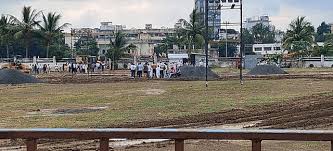
Urge Nagpur administration to immediately address waterlogging and facilities Nagpur – With just two weeks remaining for the historic “Dhammachakra Pravartan Din,” the Ambedkar family has issued an urgent appeal to the Nagpur District Administration regarding the infrastructure crisis at the sacred Deeksha Bhoomi memorial. The situation created by recent heavy rains has jeopardized the safety and convenience of millions of pilgrims. In a letter addressed to the District Collector, Prakash Yashwant Ambedkar, President of the Vanchit Bahujan Aghadi and Buddhist Society of India, and Bhimrao Yashwant Ambedkar, Executive President, express concern over “serious infrastructural and logistical challenges” that could pose difficulties for the millions of pilgrims expected to visit. The letter begins by reminding the profound historical significance of Deeksha Bhoomi. It was here on October 14, 1956, that Dr. B.R. Ambedkar embraced Buddhism along with his over 380,000 followers. This historic event marks the revival of Buddhism in India and a powerful turning point against caste discrimination. Every year, on this day, millions of devotees from India and abroad gather at Deekshabhoomi to pay homage and reaffirm their commitment to the principles of equality, compassion, and non-violence. A large turnout is expected this year as well. Call for Immediate Action, Key Demands The letter presents a list of nine urgent demands to improve the situation: The main event site, where thousands of people gather and spend the night, is currently waterlogged and muddy. The administration is requested to make the area safe and accessible by laying at least 300 trucks of gravel or crushed stone. Ambedkar wrote that the rear portion of the complex, where thousands of people stay, has not yet been inspected by officials. He demanded an immediate site inspection. The provision of large, waterproof awnings and temporary shelters has been requested to protect guests during sudden rains and overnight stays. The provision of a sufficient number of clean and accessible mobile toilets at all key locations is a key demand. The Nagpur Municipal Corporation should install clear information boards outside schools designated for emergency accommodation, displaying the name of the responsible guard/staff and the numbers of two or three contact persons for immediate assistance. The administration is requested to deploy dedicated officers and guards at all key locations, with their names and contact numbers publicly available. Adequate police force has also been requested for crowd management. The designated space for book stalls is also prone to waterlogging. It has been requested that this space be leveled with gravel so that stalls can be set up. Directional signs in Marathi, Hindi, and other regional languages should be installed at prominent locations such as Nagpur Railway Station, Ajni Station, and Mor Bhavan Bus Stop, providing directions to Deeksha Bhoomi and information about essential services such as medical care, food, accommodation, and toilets. Special, free or subsidized shuttle buses should be arranged for visitors from railway stations, bus stops, and the airport to Deeksha Bhoomi. The letter concludes by emphasizing that these steps are not merely for convenience, but are necessary to maintain the “dignity and importance of this national and spiritual event.” Prakash and Bhimrao Ambedkar expressed confidence in the administration and urged “immediate attention” and “necessary action without delay.” Geetha Sunil Pillai Courtesy: Hindi News
October 2nd Special: Gandhi and Ambedkar’s Clashing Thoughts – Find Out Which Ideas Could Never Be Consensual?
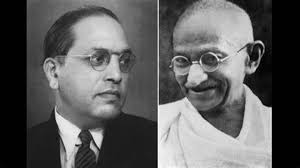
Gandhi and Ambedkar: A Clash of Ideas That Gave a New Direction to Indian Society India’s freedom movement is filled with the ideas and struggles of great leaders. Among them, Mahatma Gandhi and Dr. Bhimrao Ambedkar are two figures whose contributions cannot be forgotten. Gandhiji showed the path to freedom through truth and non-violence. Dr. Ambedkar championed the rights of the weaker sections of society. Both aimed to improve India, but their views differed on many issues. This led to frequent disagreements. Gandhiji is remembered as the “Father of the Nation,” while Dr. Ambedkar is considered the “Father of the Indian Constitution” and the voice of the Dalit community. Their disagreement wasn’t just a personal one; it concerned social order, social justice, and political rights. Today, on October 2nd, as we celebrate Gandhi Jayanti, it’s important to understand the ideas on which Dr. Ambedkar disagreed with Gandhi. Differences on the Caste System Gandhi believed in the fundamental unity of Hindu society. He believed that untouchability and discrimination could be eradicated by reforming Hinduism. Gandhi initiated the Harijan movement and declared that untouchables were also children of God. However, Dr. Ambedkar was not satisfied with this approach. He believed that the caste system was deeply rooted in Hinduism and could not be changed by reforms. Ambedkar wanted complete freedom for Dalits from the caste system. According to him, simply labeling them “Harijans” would not solve the problem. Dalits need equal rights and social justice. Dr. Ambedkar argued that abolishing the caste system was the only solution. Gandhi, on the other hand, emphasized reform and brotherhood. This was a major reason why their paths diverged. Disagreements on Religion and Social Reform Gandhiji sought to bring about social change through religion. For him, Hinduism was a matter of tradition and faith. He carried the messages of the Gita and the Ramayana to the people. He believed that only morality and virtue could reform society. Dr. Ambedkar differed from this thinking. He prioritized reason and social justice. According to him, religion is useful only as long as it promotes equality and freedom. If religion promotes exploitation and discrimination, it should be abandoned. For this reason, he ultimately embraced Buddhism. It is clear here that Gandhiji favored religious reform, while Ambedkar believed in pursuing a religiously distinct path. Untouchability and the Term Harijan Gandhiji began calling the Dalit community “Harijan,” meaning people of God. His intention was to show respect. However, Dr. Ambedkar did not consider this a real solution. He argued that simply changing the name would not solve the problem. Dalits need social, economic, and political equality. Ambedkar wanted Dalits to have the right to their own identity. He considered the term “Harijan” a patronizing approach. It seemed to show pity rather than eliminate discrimination. This very idea led to a deep disagreement between the two. Political Rights and Separate Electorates The biggest conflict between Gandhiji and Dr. Ambedkar occurred in 1932. This is known as the Poona Pact. The British government proposed giving Dalits separate electorates, meaning they could choose their own representatives. Ambedkar was in favor of this decision. He believed that separate representation would ensure the voice of Dalits was heard in politics. However, Gandhiji was against this decision. He felt that it would divide Hindu society. In protest, Gandhiji went on a hunger strike. A compromise was reached with great difficulty. Under the Poona Pact, Dalits were given reserved seats, but not separate electorates. Dr. Ambedkar was unhappy with this compromise, but was forced to accept it. This incident deepened the differences between the two leaders. Differences on Economic Outlook Gandhi believed in simplicity and village self-rule. He believed that if villages were self-reliant, the country would become strong. He did not support big industries. Dr. Ambedkar’s thinking was completely different. He believed that only modern industry and urbanization would lead to social development. According to him, caste-based exploitation and backwardness were only strengthened in villages. Therefore, he emphasized industry, education, and urban infrastructure. Thus, their economic outlook also differed. Differences on the Importance of Education Gandhi valued the spinning wheel, handicrafts, and vocational education. He believed that rural craftsmanship and labor would create a self-reliant society. Ambedkar believed that higher education was the most powerful weapon for achieving social equality for Dalits and backward classes. He advocated, “Educate, organize, and fight.” He wanted the poor and oppressed to rise above modern education. Here too, there was a significant difference in their perspectives. Non-violence vs. Struggle Gandhi’s entire political landscape was based on non-violence and Satyagraha. He believed that only moral strength could change those who perpetrate injustice. But Ambedkar’s thinking was realistic. He believed that eliminating oppression and exploitation through non-violence alone was difficult. Organized struggle for rights was essential. Therefore, Ambedkar created social and political movements. This difference is clearly reflected in their perspectives. Differences on the Definition of Equality Gandhi’s goal was to establish harmony and brotherhood in society. He considered freedom from discrimination a major achievement. For Ambedkar, true equality meant equal participation in education, employment, and politics. He would only be satisfied if the Dalit community received rights and opportunities. Merely demonstrating solidarity would not achieve this objective. What was the outcome of these disagreements? Mahatma Gandhi and Dr. Ambedkar disagreed on many issues. But these disagreements were not detrimental to India. Rather, they strengthened democracy. Gandhiji showed the path of non-violence, morality, and reform. Dr. Ambedkar fought for rights, equality, and justice. Today, independent India stands on a balanced framework because of these two. On one hand, Gandhiji’s spiritual and moral ideology, on the other, Ambedkar’s approach based on logic and justice. The contributions of both are invaluable to Indian society. Remembering Gandhiji on October 2nd, we must also understand the weaknesses that a great man like Dr. Ambedkar pointed out. Disagreement is the true strength of democracy. This legacy of Gandhi and Ambedkar teaches us that despite differing opinions, national interest must be paramount. Rajan Chaudhary Courtesy: Hindi News
Two Dalit Elders Assaulted for Not Greeting Attackers with ‘Ram-Ram’ in UP’s Banda
In Jabrapur village (Fatehganj police station), two Scheduled Caste elders, Bhagat Verma (60) and Kallu Shriwas (70), were attacked on Tuesday evening by a group of people using sticks and a knife. The assault reportedly began after the victims did not stand up or greet the attackers with “Ram-Ram,” according to the allegations. The attackers allegedly used caste-based abuses and looted Rs 500 from one of the elders. The incident occurred while the victims were working in their fields. Bhagat was beaten with sticks, and Kallu was stabbed when he tried to intervene. Villagers nearby did not intervene, and the attackers fled after threatening the victims. Bhagat’s son, Gangaram, lodged a police complaint. Police have registered the case under assault and the Scheduled Castes and Scheduled Tribes (Prevention of Atrocities) Act. CO Praveen Kumar, however, suggested that the complainants may have exaggerated the involvement of the attackers, claiming links to the deceased criminal Ambika Patel alias Thokia, whose gang is reportedly no longer active. The case remains under investigation. Courtesy : TOP Note: This news is originally published on https:/theobserverpost.com/bha and is used purely for non-profit/non-commercial purposes, especially human rights