
Arrest warrants against 3 cops accused of Dalit minor girl’s rape, harassment
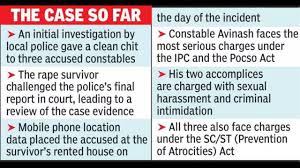
Alwar: A local Pocso court Saturday issued arrest warrants against three constables from Raini police station following allegations of rape and harassment of a minor Dalit girl. The accused — identified as constables Avinash Meena alias Sunny, Rajvendra alias Raju and Man Singh — face charges under various sections of the Indian Penal Code (IPC), the Protection of Children from Sexual Offences (Pocso) Act and the SC/ST Act. Avinash is accused of rape, while the other two are accused of molestation and harassment. The case, which dates to Nov 2023, initially saw Raini police station conducting an investigation and filing a final report (FR) that declared the accused policemen innocent. The case took a turn when the rape survivor challenged the FR in court, prompting a judge to review the evidence presented during the investigation. During later proceedings, the Pocso court demanded multiple pieces of information from the police, including call records and location data of the accused. The evidence unearthed through mobile phone calls and chat messages proved instrumental in the court’s decision to authorise the arrest of the three policemen. Special public prosecutor Vinod Kumar said that the minor girl, who he said was initially threatened by the accused policemen against filing a complaint, eventually took a brave stand against her perpetrators. He said her claims were corroborated when mobile phone location data from the three accused pointed to their presence at her rented residence on the day of the incident. The court subsequently overruled the local police’s clean chit to the accused while emphasising the importance of protecting the rights of minors, particularly of those from marginalised communities. Of the three accused policemen, constable Avinash faces the most serious charges under various sections of the IPC and Pocso Act. He is being charged under IPC sections 354A (sexual harassment), 506 (criminal intimidation), 363 (kidnapping), 366 (kidnapping with intent to compel a woman to marry), and 376 (rape). Stringent sections of the Pocso Act have also been made applicable to him. Constables Rajvendra and Man Singh also face multiple charges under various IPC sections, including sexual harassment and criminal intimidation, together with the Scheduled Castes and the Scheduled Tribes (Prevention of Atrocities) Act. Courtesy : TOI Note: This news is originally published on https:/timesofindia.com/bha and is used purely for non-profit/non-commercial purposes, especially human rights
Shot 5 times, remained in coma for 2 months:Continuously taunted by wife, police in hospital; couldn’t even move, let alone speak
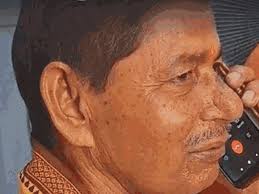
I am Arjun Paswan, from Jamuana village in Jehanabad district of Bihar. We did not own any land. Being Dalit, we survived on the mercy of landlords. We received millet to eat in exchange for working on their land. If we encountered landlords on the road, we would hold our shoes in our hands. Not only this, they kept an eye on our women. We even had separate wells. When famine struck the village, troubled by hunger, I came to Patna. When I opposed the smuggling of kerosene oil here, I was shot five times. I was in a coma for two months. My body could not move, but my mind was alert. I could hear everything—my wife’s sobs, the whispers of doctors and police officers—but could do nothing. Hearing the same kind of things repeatedly made me feel irritable inside. Actually, my story begins in the village, where I endured poverty, starvation, famine, the feudal system, and the caste system. We were a family of seven. I was the eldest among three brothers and two sisters. Therefore, I had the responsibility of running the entire family. I was married at the age of 13. Poverty was so severe that getting enough to eat was all that mattered. For that, I would go with my mother to dig soil from the canal so that water could easily reach the fields of landlords and upper castes. In return, we would get millet to eat. We had to grind the millet after bringing it home. For vegetables, we grew eggplants at home. Not just food, life itself was not easy there. If we encountered landlords while walking on the road, we would take off our shoes and hold them in our hands because wearing shoes was against their honour. Moreover, we had separate wells in the village. Bhumihar, Musahar, Kurmi, Rajput, and Dalits—all had separate wells. Additionally, if powerful landlords liked any woman from our house, they would abduct her. They would rape her. Even if we wanted to protest, we could not. Nobody would listen to us. In the name of justice, we would be given only a handful of grains. Life went on like this. Then in Bihar, there was continuous famine for three years in 1966, 1967, and 1968. The famine was so severe that people were on the verge of dying from hunger. Poor people and animals in our village began to die. To get news about the famine, we would go and listen to the radio at nearby wealthy landlords’ houses. Their rule was that they would sit on chairs in their courtyard while we sat on the ground. One day, the government announced on the radio that people from famine-affected villages should go to Punpun railway station from Jehanabad and bring fodder for their animals from there. Then four more bogies were added to the train for the 50-kilometre journey from Jehanabad to Punpun station. In the morning we would go to Punpun railway station and return by evening with grass for the animals. The entire day would be spent doing this. By then, there was nothing left to eat at home. During that time, for almost a year, our family survived by chewing sugarcane—the same sugarcane that had been brought as animal fodder during the famine. For breakfast, we would soak corn at night and eat it boiled in the morning. During the famine, a landlord falsely accused my father of theft. He was sent to jail. Then we faced new trouble. In a way, our problems were only increasing. At that time, my mother-in-law lived in Patna. She asked me to come to Patna with the family. After father went to jail, it was difficult to run the house. I felt it was better to go to Patna than to die of hunger there. We sold two cows and, with the money from that, I came to Patna with the family. After arriving in Patna, I started living with my mother-in-law in the Pirbamaria area. This is a Dalit settlement. Here, my mother-in-law got me work on the water ships running in the Ganges. These ships used to come from Kolkata to Patna. They carried oil, Dalda canisters, and sacks of sugar. Spices and makhana from Bihar’s Marufganj Mandi would go to Kolkata on these ships. I started working loading and unloading goods on them. Now, upon coming to Patna, there was just this much comfort: we did not have to sleep hungry. After a year, my father was released from jail and returned home. When he started managing the house by doing labour work, I felt that I should study; otherwise, I would have to load and unload goods all my life. I took admission in a school and started studying. I would stay in school from 10 AM to 4 PM, and after that would go to work on the water ship. There, I would work until 10 PM. This way, in 1971, I completed my education up to the 10th standard. After that, I did my intermediate from Bihar National College. During this time, I came under the influence of the leftist movement. Actually, when I was in my village, people in nearby Sikri village were also connected to leftism, whom I had seen in childhood. Here in Patna, the entire area where I lived was under leftist influence. Leftist leader Ram Avatar Shastri had been elected MP three times from here. He kept raising his voice against poverty, starvation, the feudal system, and the caste system, so I also joined them. After joining the movement, I started speaking out against the black marketing of kerosene in my area. The powerful people would loot the kerosene arriving at the depot and sell it at high prices. No one dared protest. My family members tried to stop me from opposing it, but I persisted. During this time, I began receiving threats. One day, when I left home in the morning for
Police dismiss constable over Dalit woman’s death
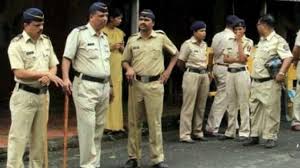
Gadwal: Followingthe death of a Dalit woman named Priyanaka, police constable Raghu Nath Goud was remanded and suspended from police duty in connection with the incident. According to police reports, Goud, a resident of Chinnoni Palli village in Gattu mandal, exploited Priyanka under the pretext of love and failed to marry her. Following Priyanka’s death by suicide, District SP T Srinivasa Rao has confirmed that Raghu Nath Goud will be permanently dismissed from his post as a police constable, ensuring that no one will be shielded by their position. A case has been registered and investigation is underway. The SP reiterated that strict legal action will be taken against all those responsible, sending a strong message that justice will be served. The young woman belonging to the Dalit community from Khammam district reportedly took her own life after being allegedly deceived in a relationship by the constable. According to reports, Priyanka had been in a romantic relationship with Raghu for several years. She had approached him with the intention of marriage, but the constable allegedly refused. Following repeated emotional distress, Priyanka had approached Gadwal police two months ago, resulting in the filing of a cheating case against the constable. Raghu was reportedly jailed and was recently released. Since then, Priyanka had been staying at the constable’s residence. On Friday, distraught over his continued refusal to marry, Priyanka allegedly consumed insecticide. She was admitted to Gadwal Government Hospital for treatment but succumbed to her injuries on Saturday morning after returning to her village. Meanwhile, on Saturday, Telangana Mal Mahanadu state leaders condemned the incident, demanding justice for Priyanka. Courtesy : The Hans India Note: This news is originally published on https:/thehansindia.com/bha and is used purely for non-profit/non-commercial purposes, especially human rights
Dalit Youth Attacked in Rae Bareli Over Loan Dispute, Faces Caste-Based Abuse

A Dalit youth was allegedly attacked in Ali Nagar Askaranpur village in Rae Bareli district after asking for money he had lent. The victim, Ashish, said he had lent ₹100 to a villager named Dheeraj, who refused to repay him. According to Ashish, Dheeraj lured him to a garden under false pretences, forced him to drink alcohol, and then attacked him with a sword used in a gimmick. During the assault, Ashish said he was subjected to caste-based abuse and received death threats. He sustained serious injuries in the attack. Ashish’s family immediately alerted the police by dialing 112. Officers reached the spot and took him to Community Health Center (CHC) Unchahar, where he received first aid. Dr. Iftekhar Ahmed of CHC Unchahar confirmed that Ashish was treated and stabilized. Kotwali in-charge Sanjay Kumar said that the police have received a complaint and the matter is under investigation. “A case will be registered against the accused, and legal action will be taken,” he added. Courtesy : TOP Note: This news is originally published on https:/theobserverpost.com/bha and is used purely for non-profit/non-commercial purposes, especially human rights
Three arrested in Chittoor gang-rape case of minor Dalit girl
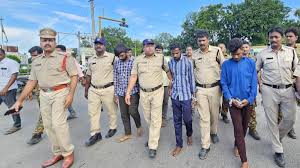
The accused, employed as loan recovery agents, used to target lone women and couples in secluded parks, secretly recording them to extort money, says the SP Chittoor district police on Friday arrested three men in the gang-rape case of a minor Dalit girl at Murakambattu city park on September 25. Superintendent of Police Tushar Dudi said the accused targeted women and couples in secluded parks, filming them to extort money. In some cases, they also resorted to sexual assault. On September 25, the trio, Mahesh (21), Kishore (31), and Hemant Prasad (27), all residents of Chittoor and working as loan recovery agents in a private firm—attacked a girl and her friend, both students, at the park. They assaulted the duo, robbed them of valuables, injured the boy, and raped the girl. The incident came to light on September 29, when the victim lodged a complaint at the Chittoor Taluk Police Station. Cases were filed under the Bharatiya Nyaya Sanhita (BNS), the POCSO Act, and the SC/ST (POA) Amendment Act, 2013. Special teams tracked the absconding accused across Andhra Pradesh, Chennai, and Bengaluru. Acting on a tip-off, police apprehended them at an isolated spot on the outskirts of Chittoor and seized their mobile phones. The accused were paraded from the AR Grounds junction to the Chittoor court complex, drawing crowds along the roadside, before being remanded to the sub-jail. The SP directed the Forest Department to strengthen security in isolated parks, install CCTV cameras, and coordinate with the police to prevent such crimes. K. Umashanker Courtesy : The Hindu Note: This news is originally published on https:/thehindu.com/bha and is used purely for non-profit/non-commercial purposes, especially human rights
Uproar over death of Dalit youth in Jaipur: Naresh Meena, accused of ‘slap incident’, camps in Raisar, protest continues with body
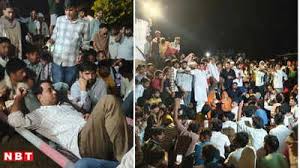
The suicide of Vikram Meena (26), a Dalit youth in the Jaipur rural area, has gained momentum. Naresh Meena arrived in Raisar to protest for justice for Vikram’s family. Along with his supporters, he announced that the protest will continue until Vikram Meena’s family’s demands are met. Jaipur: The suicide case of a Dalit youth in the Jaipur rural area has gained momentum. On Thursday, October 2, 26-year-old Vikram Meena hanged himself from a tree 100 meters away from the police station. The family alleges that Vikram was stripped and beaten by forest officials. Frustrated by the lack of police action, Vikram took his own life. Naresh Meena has now set up camp in Raisar to seek justice for Vikram’s family. Late last night, Naresh Meena arrived in Raisar with his supporters and began a sit-in protest. Naresh Meena announced that they would continue the protest until the demands of Vikram Meena’s family were met. Police fired in the air to disperse the crowd. Vikram Meena’s death angered villagers. They attacked and vandalized the forest office, forcing forest officials to flee. Later, the family and dozens of villagers reached the Raisar police station, demanding action against the forest officials who assaulted Vikram. Former Jamwaramgarh MLA Gopal Meena also joined the protest. A large crowd of villagers gathered outside the police station. Later, when BJP MLA Mahendra Pal Singh arrived, people began protesting. Stones were pelted at the police station. Subsequently, the police resorted to lathi charge, firing several rounds in the air, and dispersed the crowd by firing tear gas shells. Former MLA injured in lathicharge, detained Former MLA Gopal Meena, Aandhi Pradhan Mansi Meena, District Congress Treasurer Bhagwan Sahay Mukkad, District Councilor Vijay Meena, along with several villagers and family members of the deceased Vikram Meena, were injured in the lathicharge by the police. Villagers also pelted stones at the police in protest against the lathicharge. Police subsequently detained former MLA Gopal Meena and Pradhan Mansi Meena. Regarding the seriousness of the incident, several Congress leaders arrived at the scene. Congress MLAs Manish Yadav, Prashant Sharma, former MLA Indraj Gurjar, and Anil Chopra, the Congress candidate from the Jaipur Rural Lok Sabha constituency, also reached Raisar. Family and villagers put forward these demands to the administration: Family and villagers are sitting on a protest with Vikram Meena’s body. Several leaders, including Naresh Meena, are present with them. The family and villagers demand a judicial inquiry into Vikram Meena’s death. The forest officials who assaulted him should be immediately arrested and strict action taken against them. Action should also be taken against the policemen who threatened and drove Vikram away from the police station when he went to lodge a complaint. Action should also be taken against the police officers responsible for the lathicharge on those peacefully protesting demanding justice. Naresh Meena stated that Vikram’s family will negotiate with the administration. When the family agrees, they will end the protest and leave. Edited by: Sudhendra Pratap Singh•Reported by: Ramswaroop Lamrod About the Author Sudhendra Pratap Singh, Principal Content Producer at Navbharat Times Online. His journalism career began in Agra. He began his journey with the local newspaper Agrabharat. From there, the caravan grew through Kalpataru Express, Hindustan Newspaper, and News18, and then reached NBT.com. He currently covers politics, crime, current affairs, and off-beat news in Bihar, Jharkhand, and Rajasthan. Courtesy: Hindi News
‘Punishment’ for visiting a temple: Enraged after seeing the surname on an Aadhaar card, a Dalit laborer was beaten and asked, “How dare you?”

38-year-old Shailesh Solanki, who was visiting the Kaal Bhairav temple near Himmatnagar, Gujarat, was brutally assaulted. The accused assaulted him after seeing his surname on his Aadhaar card; a case has been filed under the SC/ST Act. Ahmedabad: A Dalit laborer in Himmatnagar, Gujarat, was allegedly beaten and threatened simply because he expressed his desire to visit a temple. After the victim showed his Aadhaar card for identification, the accused asked his caste and then attacked him. According to a complaint filed with the Himmatnagar rural police on Thursday, the accused hurled casteist slurs at the victim, beat him, and warned him not to enter the area again. What is the whole matter? Shailesh Solanki, a 38-year-old daily wage laborer from Khedawada Laxmipura village, stated in his FIR that the incident occurred on the evening of September 26th. He was waiting for a vehicle near an intersection in Balochpur to go to the Kaal Bhairav Temple. At that very moment, a man named Bharat Patel, a resident of Dhanupura, arrived on a scooter. He stopped Shailesh, accused him of moving suspiciously, and asked for his identification. When Shailesh explained that he was going to the temple, Patel did not believe him. When Shailesh gave his name, the accused asked him whether he belonged to the general category or the Scheduled Caste. When Shailesh showed his Aadhaar card to confirm his identity, Patel checked his surname. Upon learning that Shailesh was a Dalit, the accused became enraged and began abusing him. Shailesh stated in his complaint, “He asked me why I, a Dalit, had come to visit the temple after dark. He then slapped me several times, using casteist slurs.” Two people intervened Shortly after the attack, Narendra Singh Parmar and Jagat Singh Parmar, residents of Titpur village, arrived on a motorcycle. They intervened and stopped the fight. Despite this, Patel allegedly forced Shailesh onto his scooter, took him a short distance, and dropped him off near Ghorawada. He threatened Shailesh with dire consequences if he was seen in the area again. Shailesh said he informed his family about the incident and later contacted Narendra Singh and Jagat Singh, who offered to be witnesses. Based on Shailesh’s application, Himmatnagar Rural Police registered an FIR against the accused under sections of the Indian Penal Code for assault and intimidation and the SC/ST (Prevention of Atrocities) Act. Further investigation is underway. Rajan Chaudhary Courtesy: Hindi News
Her mother worked as a farm laborer, her father passed away, and she overcame poverty, thus becoming a Dalit daughter, Maheshwari, a DSP officer!
Modumpally Maheshwari of Karimnagar, Telangana, overcame poverty and hardship by passing the TGPSC Group I exam. Learn about her inspiring story. Telangana/Karimnagar: Modumpalli Maheshwari, a 29-year-old Dalit woman from Manakondur in Karimnagar district, has proven that determination and hard work can achieve anything. Overcoming poverty and hardship, she successfully passed the Telangana State Public Service Commission (TGPSC) Group I exam and secured the position of Deputy Superintendent of Police (DSP). Maheshwari’s achievement is a major step towards fulfilling her late father’s dream of seeing his daughter become a civil servant. Maheshwari credits her success to the Telangana SC Study Circle in Hyderabad, where she received coaching for the civil services exam. Maheshwari’s journey has been full of challenges, but financial constraints never hindered her educational and career goals. She completed her undergraduate studies from the Government Women’s Degree College in Karimnagar and then pursued an M.Sc. in Physics from the Satavahana University PG College in Godavarikhani, Peddapalli district. Her father, Lakshmana, worked as a migrant worker in the Gulf and passed away in 2021 due to a heart attack. After her father’s death, her mother, Shankaramma, a farm laborer, inspired her to continue her studies. “My father’s memories always inspire me and give me the strength to work hard to realize my full potential,” Maheshwari says. Maheshwari believes that the key to success in competitive exams is hard work, perseverance, and self-motivation. She explains that joining the Telangana SC Study Circle after her postgraduate studies was a turning point in her career. Speaking about her future plans, Maheshwari wants to promote cybersecurity awareness and work towards women’s empowerment through education. Her next goal is to pass the Civil Services Examination. Rajan Chaudhary Courtesy: Hindi News
No Dalit-Tribal Child in Kerala to be Left Behind in Knowledge-Based Progress: CM Vijayan
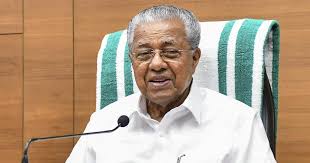
Over 13 lakh students, including 4.5 lakh SC and 80,000 ST students, currently benefit from various pre- and post-matric scholarships under the state’s e-Grants programme, regardless of family income. Kasaragod- Chief Minister Pinarayi Vijayan on Thursday said that no student from Scheduled Castes (SC), Scheduled Tribes (ST), or other marginalised communities should be left behind in the state’s march towards a knowledge-driven new Kerala. Speaking at the event at Durga Higher Secondary School Auditorium, Kanhangad, the Chief Minister said the government’s primary goal is to integrate marginalised sections into the mainstream and provide equal opportunities in education, employment, and social welfare. The campaign, which begins on Gandhi Jayanti, is under the motto: “Leap towards knowledge and employment”, reflecting Gandhiji’s vision of social inclusivity. CM Vijayan highlighted the state’s flagship initiatives aimed at empowering marginalised communities. The Unnathi Scholarship has already enabled over 1,000 SC/ST students to pursue higher education abroad. Technical training programmes under the government’s skill development schemes equip students from these communities to secure employment within six months of course completion. He also pointed to Palakkad Medical College, which admits 72 SC/ST students annually. Since 2014, 413 SC and 15 ST students have graduated as doctors, serving Kerala’s healthcare system. Additionally, the Training for Career Excellence (TRACE) programme provides stipendiary training to more than 5,000 youths in engineering, law, nursing, paramedical, management, and journalism. The CM underlined the Smart Study Room initiative, offering Rs 2.5 lakh per unit, and highlighted the state’s LIFE and SAFE housing schemes, ensuring that marginalised families receive secure homes. Over 13 lakh students, including 4.5 lakh SC and 80,000 ST students, currently benefit from various pre- and post-matric scholarships under the state’s e-Grants programme, regardless of family income. The CM also stressed the importance of ongoing campaigns, covering sanitation, anti-drug drives, healthcare, employment, rights awareness, and disaster preparedness. He said the government’s commitment is to ensure that “the taste of development and touch of welfare reaches every region, leaving no one behind”. (IANS) The CM stressed the importance of ongoing campaigns, covering sanitation, anti-drug drives, healthcare, employment, rights awareness, and disaster preparedness. Courtesy : The Mooknayak Note: This news is originally published on https:/themooknayak.com/bha and is used purely for non-profit/non-commercial purposes, especially human rights
1 dead after Dalit community centre collapses in Muzaffarnagar

Agra: A 55-year-old man, Deshveer Singh, was killed after the lintel of a Dalit community chaupal in Chandedi village of Muzaffarnagar collapsed on Wednesday night, said police on Thursday. Three others, who were present at the time, escaped unhurt. Ajit Singh, a villager, said, “First, the wall of the centre collapsed, after which the roof came down. Deshveer was sitting in the room and was buried under the debris. He was rushed to the hospital, where he was declared dead. The body was sent to the post-mortem house.” The chaupal, a recently constructed community centre used for social and religious gatherings, was built around five months ago. The incident has sparked outrage among villagers, who are demanding accountability for the poor construction quality. Authorities have launched an investigation into the cause of the collapse. DSP (Budhana), Gajendra Pal Singh, said, “The body was handed over to the family after post-mortem. The SDM and Tehsildar have inspected the spot. Further investigation is on, and action will be taken accordingly.” Courtesy : TOI Note: This news is originally published on https:/timesofindia.com/bha and is used purely for non-profit/non-commercial purposes, especially human rights