
Gujarat Man arrested for `illegally converting’ people from Dalit tribal communities

Nadiad, A man has been arrested in Gujarat’s Nadiad town for allegedly converting people from the Dalit and tribal communities to Christianity by offering inducements, police said. Steven Macwan, the accused, was held on September 28 after he was allegedly found attempting to convert 59 persons including nine minors at a seminar, the Kheda police said. He was allegedly involved in these activities for the last three years, and received funds from foreign nationals, police said, adding that a local court remanded him in police custody for seven days. “Investigation is ongoing to determine whether the funds provided by foreign nationals were linked to any foreign organisation,” the police release said. Macwan traveled to other parts of Gujarat, the country and even neighboring Nepal to carry out his activities, it claimed. He was booked under the Gujarat Freedom of Religion (Amendment) Act dealing with conversion through fraud, force, or misrepresentation and `not obtaining prior written permission from the district magistrate for conducting religious conversion’, and relevant sections of the Bharatiya Nyaya Sanhita (BNS). The trust the accused was linked to — Restoration Revival Trust — is also under the police’s scanner. Macwan’s bank account showed transactions of around Rs 1.34 crore in the last three years, and involvement of donors from abroad was also revealed, police said. Of those present at the seminar in Nadiad, the nine minors were shifted to a child protection home, the police said, claiming that one of the girls, belonging to a Scheduled Caste, was baptised at the program without her father’s consent. (This story has not been edited by THE WEEK and is auto-generated from PTI) Courtesy : The Week Note: This news is originally published on https:/theweek.com/bha and is used purely for non-profit/non-commercial purposes, especially human rights
Dalit Girl Gangraped In Chittoor By Men Posing As Forest Officials; Two Arrested, One On The Run

The three men were identified by the police after a group of people convinced the girl’s parents to lodge a complaint. Police arrested two men, who posing as forest department officials gangraped a minor girl in Andhra Pradesh’s Chittoor last week, on Tuesday and has launched a manhunt for another. The incident has led to a political controversy in the state after the Telugu Desam Party (TDP) claimed that the accused are members of the Yuvajana Sramika Rythu Congress Party (YSRCP). The YSRCP has claimed instead that the accused are close to the TDP. The Hindu, which first reported that the accused posed as forest officials in a bid to commit the crime, said in their report that the three men were loan recovery agents. They had first apprehended her and her friend and snatched her gold chain. The newspaper also identified the minor girl as a member of the Dalit community. Both of them had visited the Nagara Vanam recreation park located near a forest area at Murakambattu locality on the outskirts of Chittoor on September 25. Chittoor Deputy Superintendent of Police T. Sainath told the newspaper that the Taluk police registered an FIR on September 29 night based on information provided by the girl’s friend. He added that the victim’s family was initially hesitant to file a complaint, but a special team located them and persuaded them to seek justice. Sources told News18 that M. Mahesh (21), P. Kishore (31) and J. Hemanth Prasad (27), all residents of Chittoor, were identified by the police. Two of the accused, Kishore and Mahesh, have been taken into custody, while a manhunt is underway to trace the third accused, Hemanth. The minor girl’s friend was also thrashed by the trio. Responding to claims that the accused may have recorded video footage of the crime, DSP Sainath told the newspaper that the matter is under investigation and the facts will be clarified in due course. The trio has been booked under the POCSO Act, the SC/ST (Prevention of Atrocities) Act, and other relevant provisions of the Bharatiya Nyaya Sanhita (BNS). Police added that Mahesh and Kishore are married and have children. Curated By : Shankhyaneel Sarkar Courtesy : News18 Note: This news is originally published on https:/news18.com/bha and is used purely for non-profit/non-commercial purposes, especially human rights
Jat-OBC duo replaces Jat-Dalit leadership in Haryana – Congress’s big bet
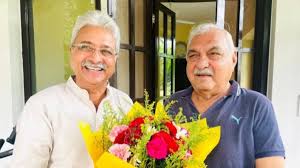
For the first time in 18 years, the Haryana Congress has excluded Dalits from its leadership, raising questions about Rahul Gandhi’s vision of ‘social justice’. Gurugram: The Haryana Congress has made a major change by appointing Bhupinder Singh Hooda as the leader of the Congress Legislative Party (CLP) and Rao Narendra Singh as the president of the Haryana Pradesh Congress Committee (HPCC). Until now, the party’s top positions were held by Jat-Dalit leaders, but this time, a Jat-OBC leadership duo has emerged. For the first time in nearly two decades—more precisely, 18 years—there will be no Dalit face in the Haryana Congress leadership. Since 2007, the positions of Leader of the Opposition/Chief Minister and State President have been held by Jat-Dalit duos. Before the 2024 assembly elections, the Congress had expressed confidence in the Jat-Dalit duo of Hooda and Uday Bhan. The party had hoped to return to power after 10 years in opposition, but the result surprised not only the Haryana Congress but also the high command. The party then took almost a year to appoint new leaders to both positions. The new Jat-OBC leadership was announced on Monday. The Jat-Dalit alliance in the Haryana Congress began on August 7, 2007, when Phoolchand Mulana was appointed state president. The post fell vacant after Bhajan Lal’s resignation in 2006. In 2007, Bhajan Lal formed his own party, the Haryana Janhit Congress. Hooda remained CLP leader and Chief Minister during Mulana’s tenure, a position he held until October 2014. Following this, on February 14, 2014, the Congress appointed Sirsa MP and Dalit leader Ashok Tanwar as state president in Mulana’s place. Tanwar’s tenure lasted 5 years and 202 days. After Hooda stepped down as CLP leader in 2014, Jat leader Kiran Chaudhary held the position from 2014 to 2019, maintaining the Jat-Dalit alliance. Then, on September 4, 2019, Dalit leader Kumari Selja replaced Tanwar, and Hooda became CLP leader and Leader of the Opposition in the Assembly elections held that year. Thus, the Jat-Dalit alliance continued. On April 27, 2022, Dalit leader Uday Bhan replaced Selja, and this alliance continued until the 2024 Lok Sabha and Assembly elections. According to data from the Centre for the Study of Democratic Societies (CSDS)-Lokniti, Haryana’s Scheduled Caste voters were divided between the BJP (40%) and the Congress (42%) in 2024. Of the 17 SC-reserved seats in the Assembly elections, the BJP won eight, while the Congress secured nine. Congress performed better in the Lok Sabha elections held this year. It countered the BJP’s “400 plus” slogan with the Constitution being in danger, garnering 68% of the Dalit vote. The BJP received only 24% of the Dalit vote. But after the Lok Sabha elections, the BJP government attempted to woo the poorest sections, particularly the Valmiki community, by creating sub-categories of Dalits. This severely challenged the Congress’s Dalit vote bank in the assembly elections. Dalits, who constitute 20-21% of the state’s population, have been a key pillar of Congress politics, but cracks are now appearing. Dalits are missing from the Haryana Congress leadership. This is the first time in 47 years that a Jat-OBC alliance has formed a top Congress party. This formula last operated from December 1972 to July 1977. At that time, OBC leader Rao Nihal Singh was the state president, and Jat leader Bansilal was the CLP leader. Bansilal held this position from 1968 to 1975. This year, for the first time, the Haryana Congress will have an OBC leader as its state president. However, the Congress party has never had an OBC Chief Minister. In 1967, Rao Birendra Singh served as Chief Minister for 241 days, representing his own “Vishal Haryana Party.” This decision by the Congress completely excludes Dalits from top party positions. Currently, no party in Haryana has a Dalit leader in a top position. The formation of a Jat-OBC alliance in the Haryana Congress is also surprising because Rahul Gandhi, the Leader of the Opposition in the Lok Sabha, has consistently advocated for the promotion of Dalit leaders since entering politics. In 2010, he visited Mirchpur, where Dalits were attacked by the Jat community. At that time, Bhupinder Singh Hooda was the Congress Chief Minister, and Rahul’s visit made him uncomfortable. Political analyst Jyoti Mishra, an assistant professor of political science at Amity University, Mohali, told ThePrint that the Congress high command, by appointing Rao Narendra Singh as HPCC president, has adopted the BJP’s line of OBC politics, but perhaps underestimated its potential consequences. Mishra said, “This decision cuts the Dalit thread within the party that Rahul Gandhi has painstakingly woven over the years. Even before 2007, the Dalit share was very low.” Before Phoolchand Mulana became state president on August 27, 2007, the Congress had only one Dalit president—Kumari Selja’s father, Dalbir Singh, who held the post for 220 days from November 3, 1979, to June 10, 1980. No Dalit has ever become the Chief Minister of Haryana. Political analyst Kushal Pal, principal of Indira Gandhi National College, Ladwa, told ThePrint that while the decision to appoint Rao Narendra Singh as president may seem like a lesson from the BJP, it was also a compulsion for the Congress as the party’s OBC vote bank has almost vanished. Pal said, “Due to the distance from the OBC community—Yadav, Gujjar, Saini, Kamboj—the Congress concentrated on southern Haryana, namely Gurugram, Faridabad, It has almost completely lost its base in Palwal, Rewari, and Mahendragarh. Nuh is the only district where the party can win, and that too because Meo Muslims do not vote for the BJP.” According to Pal, the coronation of Rao Narendra Singh will also provide personal benefits to Hooda. The Kosli assembly constituency falls within the Rohtak Lok Sabha constituency held by his son, Deepender Singh Hooda. Rao Narendra Singh’s Ahir community has a significant number of voters here. Sushil Manav Courtesy: Hindi News
A 12-year-old Dalit boy was locked in a cowshed, then news of his death surfaced… Major questions raised about the silence of political parties!

The Dalit Shoshan Mukti Manch raised serious questions about the silence of the government and political parties, warning of a major movement if the culprits are not immediately arrested. Shimla: The tragic incident of caste-based harassment of a 12-year-old Dalit boy in Limbara village, Rohru, has spread like wildfire throughout the region. The boy was allegedly locked in a cowshed, after which he took his own life by consuming poison. The Dalit Shoshan Mukti Manch has expressed strong objection to this serious incident and demanded immediate and strict action against the culprits. The Dalit Shoshan Mukti Manch strongly condemned the incident and said that the accused should be immediately arrested and the strictest possible action should be taken against them under the Scheduled Castes/Scheduled Tribes (Prevention of Atrocities) Act (SC/ST Act). The Manch also expressed concern about the safety of the victim’s family. They demanded that the victim’s family be given adequate compensation and full protection, so that they are not pressured to withdraw the case or tamper with evidence. Questioning the government’s attitude, the forum stated that the government’s lack of will to effectively implement the SC/ST Act is contributing to the rise in incidents of caste-based atrocities in the state. The forum also expressed deep disappointment over the silence of major political parties like the Congress and BJP on this issue. The forum believes that these parties prioritize vote bank politics over social justice. Suggesting a concrete solution to prevent caste-based atrocities, the forum said that just as awareness campaigns are run against smoking, a comprehensive campaign needs to be launched about the provisions of the SC/ST Act. Jagat Ram, state convener of the Dalit Shoshan Mukti Manch, said, “It is the need of the hour to protect the rights of Dalits and stop their exploitation. We want to ensure that those who commit caste-based atrocities are brought to justice.” He also announced that the Manch would launch a massive mass movement against the increasing caste-based incidents and to uphold the Constitution. Rajan Chaudhary Courtesy: Hindi News
SC/ST court sentences 16 men to 7 years in jail for attacking Dalit settlement

Jodhpur: Jodhpur: A special court for SC/ST (Prevention of Atrocities) Act cases in Jodhpur sentenced 16 men to seven years’ imprisonment for assault, arson, firing and damaging properties and valuables at a Dalit settlement in Padasla village near Osian town more than 13 years ago. Police presented strong evidence against a total of 19 accused in their chargesheet, three of whom died during the trial. The other 16 accused were convicted and sentenced on Friday. Pronouncing the sentence, special judge Garima Sauda said punishment must always be handed in proportion to gravity of the crime, and must not be determined by religion, caste or socio-economic status of the victim or accused. The convicts had attacked the Dalit settlement on the night of Jan 31, 2012, accusing members of the community of encroaching on their lands. The victims alleged in their complaint that about two dozen persons arrived in three vehicles, vandalised and set ablaze their huts, assaulted them and opened fire. The SC/ST court noted that a case pertaining to the land dispute between the victims and the accused was pending in a civil court, but abstained from interfering in that matter and limited itself to the case at hand. Courtesy : TOI Note: This news is originally published on https:/timesofindia.com/bha and is used purely for non-profit/non-commercial purposes, especially human rights
Dragged by her hair, verbally abused… Dalit engineering student assaulted at Garba event in Gujarat

Mahisagar District Superintendent of Police Safin Hasan stated that the Deputy Superintendent of Police of the SC/ST Cell is investigating the matter. Statements of the victim and the accused are being recorded. Mahisagar: A case of assault on a Dalit student at a Garba event has been reported from Mahisagar district, Gujarat. The incident occurred in Bharaudi village, Virpur taluka. Police have registered a case of assault, derogatory behavior, and casteist slurs against the Dalit girl. Police have filed a case against four women involved in the incident. The accused women include Loma Patel, Roshni Patel, Vrishti Patel, and Meena Patel. The matter came to light when 25-year-old female engineer Rinku Vankar filed an FIR. Rinku is a fourth-year student at the Government Engineering College (GEC) in Gandhinagar. What’s in the complaint? In her police complaint, Rinku stated that on Friday night, she had gone with a friend to attend a Garba event in the village. However, the women present there tried to stop them and used abusive language. Loma, Roshni, and Vrishti Patel first scolded her and then used casteist slurs. They allegedly said that these people were not equal to them and could not participate in Garba. Rinku then had the event’s sound system turned off and complained to Praveen Narsingh Thakor, who was present there. Meena Patel then arrived, and the four women attacked Rinku. Dragged by the hair The complaint states that the accused dragged Rinku out by her hair and when she tried to film the incident, she was stopped. Furthermore, she was hurled casteist slurs and threatened with dire consequences if she returned to Garba. Police have registered a case against the accused under sections 115(2) (voluntarily causing hurt), 54 (offence committed in presence of abettor), 351(1) (criminal intimidation), and 352 (intentional insult with intent to provoke breach of peace) of the Indian Penal Code (IPC). Relevant sections of the Scheduled Castes and Scheduled Tribes (Prevention of Atrocities) Act have also been invoked. Curated by: Rahul Mahajan About the Author Rahul Mahajan is the Principal Digital Content Producer at Navbharat Times Online. He has over 12 years of experience in journalism. He has worked with organizations such as ETV and News18 (Digital) during his journalistic career. Courtesy: Hindi News
Major Decision by Pilibhit POCSO Court: 20 Years for Rapist of Dalit Minor, 10 Years for Conspirator

The special POCSO court in Pilibhit has delivered its verdict in a highly controversial 2018 case. The female accomplice who lured the minor to the scene has also been sentenced to 10 years of rigorous imprisonment. Pilibhit/Uttar Pradesh: A special POCSO court has sentenced a 25-year-old man to 20 years of rigorous imprisonment for raping a minor Dalit girl in 2018. Additionally, a 35-year-old woman, a family friend of the victim, has also been sentenced to 10 years of imprisonment under criminal conspiracy (Section 120B of the Indian Penal Code) for luring the girl to the scene. This significant verdict was delivered by Special Judge (POCSO) Geeta Singh on Tuesday evening. The court also imposed a fine of ₹1 lakh on the convicted, Vipin, and ₹50,000 on his accomplice, Kaushalya Devi. What was the entire case? According to the prosecution, the incident occurred on May 18, 2018. At around 2 p.m., Kaushalya Devi took the 15-year-old victim out of her home in a village in Pilibhit district on the pretext of defecation and asked her to keep watch. Vipin, then 18, was already waiting in a sugarcane field. The court was told, “He dragged the girl inside the field and raped her.” The heinous crime came to light when the victim later narrated the entire ordeal to her mother. Subsequently, based on a written complaint from the victim’s father, the police initially registered an FIR under Section 354 (assault with intent to outrage the modesty of a woman) of the Indian Penal Code, as well as relevant provisions of the Protection of Children from Sexual Offences (POCSO) and the SC/ST Act. The Truth Revealed in the Investigation Government Prosecutor Anil Kumar Sharma explained, “The girl did not disclose the rape when filing her written complaint to protect her dignity. However, when the medical examination confirmed the crime, the police added Section 376 (rape) to the FIR. The girl later emphasized this in her court statement under Section 164 of the CrPC.” After collecting all the evidence and witness statements, the police filed a charge sheet on April 3, 2021. Both Vipin and Kaushalya Devi were arrested the day after the incident but were later released on bail. Court’s Final Verdict The judge also ruled that if the accused fail to pay the fine, Vipin’s sentence will be extended by six months and Kaushalya Devi’s sentence will be extended by three months. The court ordered that the entire fine amount be given to the victim. In addition, the District Legal Services Authority has been directed to provide additional financial assistance to the girl under Rule 7 of the POCSO Act. Rajan Chaudhary Courtesy: Hindi News
Tamil Nadu: Dalit children on their way to school stopped by elderly woman brandishing a stick, video sparks outrage

The video shows a shameful scene, Dalit children insulted by calling them “Eliya Sathi” (aliya sathi). Find out what the whole story is. Thanjavur, Tamil Nadu: A shocking and shameful case of caste discrimination, still deeply ingrained in society, has come to light in Thanjavur district, Tamil Nadu. In Kollanagarai village, some Dalit children were allegedly stopped by an elderly woman brandishing a stick and walking on a dirt road. The video of the entire incident has gone viral on social media, sparking widespread anger. The viral video clearly shows a young man walking with some schoolchildren when an elderly woman, armed with a stick, blocks their path. Despite the young man’s efforts to move the stick aside, the woman repeatedly attempts to stop them from moving forward. Insulted by being called “Eliya Sathi” Reacting sharply to the incident, Tamil Nadu Untouchability Eradication Front state president Chellakannu strongly condemned the act. He explained that the elderly woman used the term “Eliya Sathi” to stop the children, which is a highly derogatory term used for Dalits. What is the entire road dispute? Chellakannu, explaining the incident, explained that the road over which the dispute arose is a normal dirt road. It is listed in government records as “Vandi Pathai,” meaning the road is authorized for vehicular traffic. He further said, “Recently, some locals encroached upon this road by planting banana trees. This blocked the children’s direct route to school, forcing them to take a detour of approximately one and a half kilometers around a reservoir. This continued for 18 days, before some young men from the area intervened.” It is reported that this encroachment was reported to the authorities three months ago, after which the Tehsildar intervened and the road was reopened. Police launched an investigation After the video of the incident surfaced, the police administration swung into action. Police have launched a preliminary investigation into the matter, although no FIR has been filed as of the time of writing this report. Rajan Chaudhary Courtesy: Hindi News
Tamil Nadu: Case filed against woman and her family for obstructing Dalit students

An FIR has been filed against an elderly woman and her family for obstructing Dalit students from using a “public path” in Thanjavur; villagers were forced to walk 1.5 km. Thanjavur, Tamil Nadu: Local police have filed a case against an elderly woman and her family for obstructing Dalit students from using a “public path.” They are accused of allegedly preventing a group of students belonging to the Dalit community from using a nearby public path. The obstruction is visible in the video. The incident occurred on Friday morning in Kollangarai village in Thanjavur taluk. A video that surfaced on social media clearly shows some students wearing school uniforms and carrying school bags walking through a street. An elderly woman, holding a stick in her hand, steps in to stop them. She shouts, warning them not to use that path. Police launch investigation Given the seriousness of the matter, a senior Thanjavur taluk police official confirmed that an FIR has been registered. “An FIR has been registered against the woman and her family members. However, no arrests have been made so far. The investigation is ongoing,” the official told news agency PTI on Saturday. Dispute over ‘vehicle route’ Villagers complained that they were being prevented by family members from using the common path, locally known as ‘vandi pathai’ or ‘vehicle route’. Previously, villagers alleged that they were forced to take a longer route. They had to travel an additional distance of approximately 1.5 kilometers by circling a water body to reach their destination. Rajan Chaudhary Courtesy: Hindi News
Demand for a 1% Separate Quota: Karnataka’s Nomadic, ‘Untouchable’ Communities to Take to the Streets of Delhi on October 2
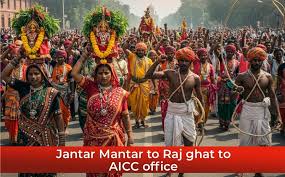
The protest is being organized by the Confederation of Untouchable Nomadic Communities of Karnataka, which represents 59 communities whose traditional livelihoods often still depend on begging, street art, and nomadic labor. New Delhi—Thousands of members of Karnataka’s most disadvantaged communities will gather in the national capital on Gandhi Jayanti to demand the implementation of a separate 1% reservation quota originally recommended by a state-appointed committee. The protest is being organized by the Confederation of Untouchable Nomadic Communities of Karnataka, which represents 59 communities whose traditional livelihoods often still depend on begging, street art, and nomadic labor. This gathering in Delhi is the latest chapter in the fight for reservation within the Scheduled Caste (SC) category in Karnataka. The focus of the controversy is the Karnataka government’s recent internal reservation policy, implemented on August 19th. This policy divided the SC quota into: Category A (SC Left): 6% Category B (SC Right): 6% Category C (Touchable SC): 5% Nomadic communities have been placed in the 5% “Touchable SC” category (Category C). They argue that this contradicts the Justice Nagmohan Das Committee’s recommendation, which specifically recommended creating a separate 1% reservation for them within Category A, ensuring them first priority in government jobs and educational admissions. The communities allege that by placing them in Category C, the state government has effectively deprived them of their legitimate share and priority, forcing them to compete with larger, more influential groups. Frustrated by what they call the “helplessness” of the Karnataka government, led by Chief Minister Siddaramaiah, the communities are now taking their petition to the national opposition. The federation said, “The Delhi mission is a final appeal to the conscience of the nation. This gathering is not just a peaceful delegation; it is a final appeal.” On October 2, the delegation will march to the All India Congress Committee (AICC) office to submit a memorandum to Rahul Gandhi and other Congress leaders. The memorandum will urge them to intervene to ensure the implementation of the separate 1% reservation originally recommended in Karnataka. Geetha Sunil Pillai Courtesy: Hindi News