
South First investigation: A clash with a casteist tag, injured Dalits, deity-less temple, and TN politics
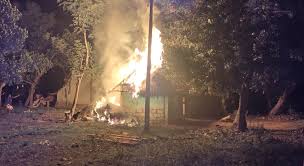
There was a clash between two communities. Several reasons are being cited but a concreate cause is yet to be made public. The Vadakadu violence needs a long-standing solution rather than cosmetic changes. Synopsis: There might be multiple reasons for the violence that left the Vadakadu village in Tamil Nadu’s Pudukkottai district in distress. However, it seems no concerted effort has been made to get to the fundamental, underlying cause or causes and address them for good. Filming violence has become common of late, though not many of those videos get to the root cause of the incident. Videos posted on social media after the clash between two communities at Thiruvalluvar Nagar, a predominantly Dalit settlement in Vadakadu village, in Alangudi Taluk in Tamil Nadu’s Pudukkottai district, too, did not shed light on the developments that had led to the violence. Several reasons have been cited. Police said it was the fallout of a drunken brawl between two youth groups over filling petrol. Some others felt it was a land dispute, many others blamed it on caste discrimination that divides people. The clash occurred on the night of Monday, 5 May, after the chariot procession at the Muthumariamman Temple. Besides local residents, people from other villages, too, have gathered at the temple located in an area dominated by the Mutharaiyar community. Selvarani Kannaiya a resident of Thiruvalluvar nagar, Vadakadu Selvarani Kannaiya, a 66-year-old Dalit, was praying after the procession along with fellow villagers. “We received word from our village that something was happening, and we should return immediately. She left immediately. “Around 50 women and children were with me. While returning, more than 300 youth from the Mutharaiyar community passed her,” Selvarani told South First. The figures she mentioned could not be independently verified. The woman was still in shock when she recalled the incidents of that violent night. “They must have mistaken us for residents of another area,” she continued. Fear had by then gripped the women and children. “After they had passed, we hid in a field. When it seemed clear and safe, we rushed back to our village,” the elderly woman said. She has been living at Thiruvalluvar Nagar. A road separated the village from the area where the temple was located. The women still felt something was about to happen. Along with the children, they hid on the upper floor of a house that was shrouded in darkness. Their fear came true as more than 300 youths from the Mutharaiyar community allegedly stormed Thiruvalluvar Nagar, attacking whoever came their way, setting a hut on fire, damaging houses and vehicles. They recorded their act on mobile phones and later uploaded them, with background music, onto social media. More than 15 residents of Thiruvalluvar Nagar were left injured. Some of the assailants, too, sustained injuries. Those with grievous injuries were admitted to the state-run Medical College Hospital at Pudukkottai. Police version The Pudukkottai police issued a media statement the next morning. The incident had no connection with the temple festival, they said. The violence allegedly stemmed from a drunken altercation over who should be allowed to fill petrol first at a nearby fuel station. The statement warned of action against those who “misrepresent” the incident as festival-related violence. However, on the night of the attack, Tamil Nadu Minister S Regupathy and Tiruchirappalli Range DGP Varun Kumar met with residents of Thiruvalluvar Nagar. They acknowledged that the attack was indeed linked to a long-standing temple-related dispute and that the violence was a continuation of earlier tensions. Whose version is true? On the first night, villagers told the minister one version of the story. The next morning, the police offered a completely different explanation. Long-drawn conflict Vadakadu is a large village, comprising 18 hamlets. While it is home to people from various communities, the Mutharaiyar, an OBC group, form the majority. Thiruvalluvar Nagar, located within Vadakadu, has been home to around 150–200 Dalit families belonging to the Paraiyar community for over seven generations. Growing flowers and jackfruits has been the primary occupation of the residents of Vadakadu. The “Adaikalam Katha Ayyanar” Temple, located on the main Pudukkottai–Alangudi road in northern Vadakadu, is regarded as the clan deity temple of the residents of Thiruvalluvar Nagar. Locals said there was a dispute around this temple. The Ayyanar temple sits on around three acres. Initially, a few youths from another community came to play volleyball there. “Since it seemed harmless, our elders allowed it,” Anandan told South First. Later in the 1990s, the government proposed a police station on that land. Our community protested, saying it belonged to the temple. He claimed that the plan was dropped after a series of negotiations. But ever since, individuals from the other community have been claiming that they too have rights over this land. Escalating the conflict “The issue escalated significantly in 2015. Until then, the temple was just a modest structure built with sand. We decided to renovate and expand it, and when we started digging a pit for the foundation, some people from the other community objected, saying it was their play area and that the land belonged to them.” Both sides went to court, and the case is still pending. “If they had ownership, they would have proven it by now. The problem isn’t about land; it’s about caste pride. Their real concern is how Paraiyars can build and run a temple independently. They can’t tolerate it,” Sethupathi said. Anandan added that more than six peace committee meetings were held to resolve the issue. “But no solution has been reached. I’ve been witnessing this tension since I was 18.” A temple without deity Due to the dispute, the temple has long remained unused for worship. In January this year, when residents of Thiruvalluvar Nagar attempted to clean the premises and celebrate Pongal, members of the other community objected, saying the land was under litigation and could not be used. They blocked the road in protest and prevented the Thiruvalluvar Nagar residents from
Plea to seize bail bond of Rahul Gandhi in defamation case
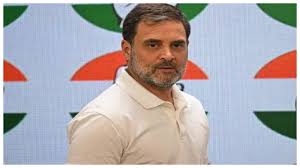
Pune: An application to seize the bail bond of Leader of Opposition in Lok Sabha, Rahul Gandhi, in the criminal defamation case was filed by Satyaki Savarkar, the grandnephew of Hindutva ideologue Vinayak Damodar Savarkar, before a special magisterial court on Friday for not recording his plea to commence the trial. The court directed Gandhi’s lawyer, Milind Pawar, to file a written statement on Satyaki’s plea by May 28. Satyaki’s plea, filed through his lawyer Sangram Kolhatkar, stated that Gandhi wilfully abstained from recording the plea on multiple occasions since he was released on bail on January 10. It mentioned that the court considered Gandhi’s status as a Member of Parliament and Leader of Opposition, and permitted him to be present before the court through video conferencing and allowed him to be represented by his lawyer. The plea also stated that the court imposed the condition that Gandhi would not seek adjournment and his lawyer would be present on every date of the trial. Satyaki’s plea claimed that Gandhi deliberately avoided recording his plea and requested for coercive action against him to secure his presence for the trial. The magisterial court on January 10 granted bail to Gandhi in the case filed by Satyaki over alleged objectionable remarks made by the Congress leader against the Hindutva ideologue in his March 2023 speech in London. Courtesy : TOI Note: This news is originally published on https://timesofindia.com/ and is for use by the non-military/non-commercial community, especially those in the human rights sector.
Savarkar kin says seize Rahul’s bail bond in criminal defamation case
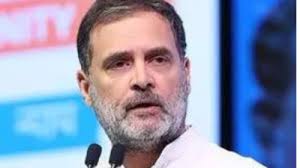
An application to seize the bail bond of leader of opposition in the Lok Sabha Rahul Gandhi in a criminal defamation case was filed by Satyaki Savarkar, grandnephew of Hindutva ideologue Vinayak Damodar Savarkar, before a special magisterial court on Friday for not recording his plea to commence trial. The court directed Gandhi’s lawyer, Milind Pawar, to file a written statement on Satyaki’s plea by May 28. The case has to do with alleged objectionable remarks made by him against Savarkar in a March 2023 speech in London. Courtesy : TOI Note: This news is originally published on https://timesofindia.com/ and is for use by the non-military/non-commercial community, especially those in the human rights sector.
Court junks complaint against Rahul for ‘PM not OBC by birth’ remark
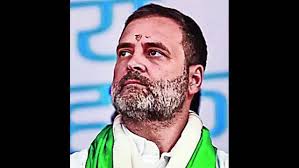
JAIPUR: The court of judicial magistrate No. 11, Metropolitan-II, dismissed the complaint filed against former Congress president Rahul Gandhi for making allegedly casteist remarks against PM Narendra Modi. Presiding officer Diksha Sood stated in her order that the court neither has the jurisdiction to determine anyone’s caste and gotra nor is it the right forum for this, leading to the dismissal of the complaint. The complaint mentioned that the complainant read in a newspaper on Feb 9, 2024 that Rahul Gandhi’s Bharat Jodo Nyay Yatra had reached Chhattisgarh. During this event, Rahul had claimed that PM Modi was not from OBC category by birth, that Gujarat’s BJP govt had made Modi an OBC, and that he could not do justice to the rights and shares of backward classes. The complaint alleged that such a statement by Rahul Gandhi in public was intended to incite various sections and communities of Indian citizens to commit crimes. The complainant, Vijay Kalandar, also alleged that the statement created unrest in the country and endangered its security. He lodged a complaint with police regarding the matter, but the police did not take any action. Consequently, he filed for legal action. Courtesy : TOI Note: This news is originally published on https://timesofindia.com/ and is for use by the non-military/non-commercial community, especially those in the human rights sector.
SubscriberWrites: Caste Census – Political compulsion or need of the nation
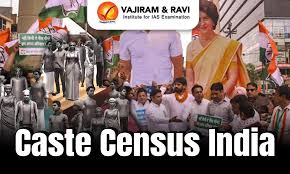
One of the fundamental principles of our constitution is ‘equality for all’. A caste census has the potential to formalise the social stigma connected with SC/ST/OBC/Dalit tagging. The demand for a caste census was a fallout from the infamous slogan credited to Rahul Gandhi – ‘Jitni Abadi, Utna Haq.’ This has to be seen as one of the more absurd arguments ever. The right to all national resources and wealth vests in the nation and it is incumbent on governments not to fritter them away. Instead, they have to use and allocate them judiciously, with the sole aim of multiplying the nation’s wealth continually while ensuring wellbeing of all citizens with focus on ensuring a Minimum Acceptable Standard of Life (MASL) for all. The failure of the nation in not being able to dismantle the caste system is evident in the rising demand for a nationwide caste census. It is a retrograde step in every possible way and yet all opposition political parties are clamouring for it. The aim of the political opposition is to paint the current government as anti-lower castes and anti-backward sections of the society. They hope to veer Dalit/SC/ST/OBC votes to their fold and ride them for a victory in national elections. It is a blatant exploitation of the poor and the less privileged but our political fraternity could not care less. The reality is that all they want is to convert them to vote banks and mark the caste of every Indian on his forehead. It is indeed a pity that the BJP government, despite its known anti caste census stance, has capitulated to this demand. It is not that such caste numbers were not collated earlier. The first such national census was carried out in 1872. In 1901, 1,646 distinct castes were identified, this number increased to 4,147 in 1931. The last figure was also the basis of the Mandal Commission report in 1980. The 2011 census collected caste-based data for the first time after independence, but it was not made public. Reportedly, the Socio-Economic and Caste Census (SECC) of 2011 identified over 4.6 million castes and subcastes in the country. For the record, in ancient India there were only four proper castes Kshatriyas, Brahmins, Vaishyas and Shudras based on Varna (occupation) and not birth. It may be prudent to note that the SC/ST population was estimated to be about 25% at the time of independence. More recently, a report in the Times of India dated 30 July, 2021 published an estimation of current SC/ST/OBC population based on the records of children enrolled in primary schools. It estimated that there were 45% OBC, 19% ST and 11% SC students and rest 25% were upper castes including others. These figures were in line with the data of last census in 2011 with variations limited to one or two percentage points for SC/ST and a bit higher for OBCs. For the record, in 1989-90, the Mandal Commission had estimated the OBC population at about 52%. The data shows that not only have the percentage figures for ST/SC increased over the years, the overall figure for backward classes has shown a quantum jump with addition of OBCs. One major reason for this state of affairs is the underlying principle of once a SC/ST/OBC – always a SC/ST/OBC. The lure of reservations scores over any social stigma and that has resulted in a continual addition of new communities in these categories. One of the fundamental principles of our constitution is ‘equality for all’. A caste census has the potential to formalise the social stigma connected with SC/ST/OBC/Dalit tagging. This goes against the need of the hour which is to remove all forms social tagging and promote equality. All those clamouring for a caste census, normally justify it by saying that with such data in hand, the government can work towards improving their financial status by allocating necessary resources. It is obvious that they have a very limited understanding of the implications of being ‘backward’ in a society. The term ‘backwardness,’ apart from a below par financial status, also reflects a more serious malady of social barriers and distancing that these sections face from others who are better placed in the society. Therefore, aim of addressing backwardness has to include both economic and social upliftment. Perhaps, the latter is more important in the long run for a life of dignity. It is comparatively simpler to define and talk about financial needs as a suitable threshold can be laid out keeping MASL life as the target. This goal can be reached through a judicious mix of doles, freebies and development of such backward people to get jobs or prepare them for other vocations that can help them to earn a decent living. A prudent approach will aim to reduce the freebies and doles with time while increasing their abilities to find jobs or pursuing other remunerative vocations. Does the social status of a Dalit/SC/ST/OBC change automatically if his financial status moves up by a few notches? One will have to be very naïve to answer this in the affirmative. History tells us that social biases continue unabated even if financial status improves. The large volume of complaints in the government services to investigate biases against employees from such communities stands testimony to this hard truth. If this is the harsh reality in educated and well-placed strata of the Indian society, the situation in the underdeveloped and rural areas will be many times worse. This brings us to an important conclusion that removal of social biases is not a function of financial status alone. At the best it can act as a facilitator or a start point. Social distancing or biases are a function of the mind set of both – the one being shunned and the one who shuns. The phenomenon of social bias is a two-way traffic, where both the less privileged and the more privileged are involved. Therefore, both sections of the society have to be educated.
Truce again, Barbers return, villagers vow to shun untouchability in Koppal
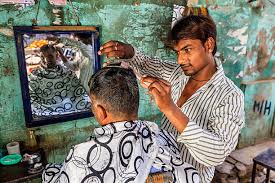
Truce reached in Muddaballi after 50-day boycott; officials urge unity, warn against social evils KOPPAL: Almost 50 days after some eateries and two salon owners shut their shops after some Dalits visited a salon for a haircut, a truce was arrived at between the warring upper caste community and Dalits in Muddaballi village in Koppal district. Barbers carried out their business during this period by visiting houses. The truce became possible after Koppal district administration and police officials visited the village and held meetings with the two groups. The officials succeeded in pacifying the hotel and salon owners, and told them that in today’s digital world, they should root out social evils like untouchability and live together in peace. The officials held a mass meeting with the police, and villagers took an oath that they will not follow untouchability henceforth, and allow everybody into their eateries and salons. Village seniors also played a role in convincing the two parties, following which the barbers came forward and cut Dalit leaders’ hair. However, some leaders say this is a temporary solution and some eatery owners will revert to their earlier stand, and not entertain Dalits. Some villagers, who did not want to be named, said, “We appreciate the efforts of the district administration, but officials should keep vigil as some people will repeat the same thing. The truce will continue for some days and some eatery and salon owners may shut their shops, giving one or other reason out of fear of being targeted. But this time, all villagers have made a promise and let’s hope nobody breaks it.” An official from Koppal district administration said, “We went to Muddaballi village and convinced the villagers. We have also told people to treat all as equal and be a role model for others by maintaining unity. We have spoken to some seniors to intervene if any small disputes arise.” Courtesy : Raghottam Koppar, TNIE Note: This news is originally published on https://thenewindianexpress.com/ and is for use by the non-military/non-commercial community, especially those in the human rights sector.
Man gets 20-yr jail for raping 5-year-old Dalit girl
Jhansi: Special Pocso Court Judge Mohd Niyaz Ahmed Ansari on Thursday sentenced a 32-year-old man to 20 years of rigorous imprisonment (RI) for raping a five-year-old Dalit girl in 2020. The Judge also imposed a fine of Rs 50,000 on him for the offence. According to special public prosecutor for Pocso court, Ajay Kushwaha, the incident occurred on Oct 13, 2020, when the minor was playing outside her house near ITI area under Sipri Bazar police station. The accused, Bharat Yadav, who also lived nearby, lured her to an isolated place and raped her. Fortunately, the girl’s sister arrived at the scene and raised an alarm, causing Bharat to flee. Later, when the minor’s parents went to the accused’s house to confront him, they were assaulted and abused by Bharat, his father Gyan Singh, and his brother Balbir Singh. A police complaint was lodged against the trio under relevant sections of rape, the POCSO Act, and the SC/ST Act. During the trial, Bharat was found guilty of rape, while Gyan and Balbir were found guilty of assaulting and abusing the victim and her family members. On Thursday, Judge Mohd Niyaz Ahmed Ansari convicted Bharat and sentenced him to 20 years of rigorous imprisonment. The Judge also awarded three years of rigorous imprisonment each along with a fine of Rs 7,000 each to Gyan and Balbir. Courtesy : TOI Note: This news is originally published on https://timesofindia.com/ and is for use by the non-military/non-commercial community, especially those in the human rights sector.
Operation Sindoor is going on… Attack on terror, ban on TRF… Who said what in the all-party meeting?
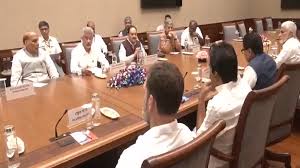
In the all-party meeting held on India’s Operation Sindoor in response to the Pahalgam attack, Defense Minister Rajnath Singh informed that the operation is going on. The opposition said that it will give full support to the government. New Delhi: India carried out Operation Sindoor in response to the Pahalgam attack. An all-party meeting was held on Thursday on this issue. This all-party meeting was held under the chairmanship of Defense Minister Rajnath Singh. After the meeting, Parliamentary Affairs Minister Kiren Rijiju said that all the parties were informed about Operation Sindoor in the all-party meeting. In the meeting, the opposition unanimously said that they would support the government. The special thing about the meeting was that Defense Minister Rajnath Singh said that Operation Sindoor is going on. Kiren Rijiju said that all the leaders gave their suggestions in the meeting. All the leaders have shown maturity at a time when we are all working together. Everyone has praised and congratulated the armed forces for Operation Sindoor. Also said that we will support the government and the armed forces. We have also received some suggestions… The Defense Minister said that we do not form a government just to rule. Our country has taken a big action. It was carried out by our armed forces. We should inform all the parties about the situation, because it is the responsibility of the government and the Prime Minister has instructed us to do so. The whole country is with the armed forces. We are with the government: Rahul Congress leaders and Leader of Opposition showed solidarity with the government in this matter. Congress leader Rahul Gandhi said that we are with the government. Congress President Mallikarjun Kharge said that we are with the government in times of crisis. Kharge said, in the meeting we heard what they (Center) wanted to say. They also said that some confidential information cannot be shared outside. We told them that we are all with the government. Earlier, Union Minister Kiren Rijiju said that the entire opposition is with the government in this matter. Ban on TRF After the all-party meeting, AIMIM chief Asaduddin Owaisi said that I have praised our armed forces and the government for Operation Sindoor. I also suggested that we should launch a global campaign against the Resistance Front (TRF). I also suggested that the government should request the US to designate it (TRF) as a terrorist organization. We should also make efforts to gray-list Pakistan in FATF. The name of The Resistance Force (TRF) came up in the terrorist attack in Pahalgam. This terrorist organization took responsibility for it after the attack. TRF is a proxy organization of Lashkar. About the author Anil Kumar Anil has been active in the media industry for more than a decade. The journey started with reporting from Dainik Jagran Chandigarh in 2009, has reached NavbharatTimes.com via Dainik Bhaskar, Rajasthan Patrika, Amar Ujala, Jansatta.com. He is originally from Bihar but has studied from Delhi. Courtesy : Anil Kumar, : Hindi News
Rahul Gandhi sought Parliament session so that good message goes outside: Mallikarjun Kharge on all-party meet
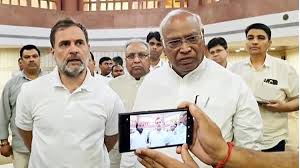
The opposition expressed support for the government and the armed forces at the all-party meeting on ‘Operation Sindoor’, and Rahul Gandhi demanded a Parliament session to give a good message, Congress president Mallikarjun Kharge said on Thursday. Speaking with reporters after attending the meeting, Kharge also expressed disappointment that Prime Minister Narendra Modi did not attend it. “We wanted the PM to participate and briefly talk about the action against terrorism. We salute the jawans who have shown bravery. We wanted him to come and brief us but he did not. He had not even attended the last meeting,” Kharge said. All parties of the INDIA bloc and other parties as well spoke in one voice, and said, “you move ahead and we are with you in the decisions you take and are standing with the army”, the Leader of Opposition in the Rajya Sabha said. ‘As Defence Minister, I will give befitting reply’: Rajnath Singh vows action after Pahalgam attack ‘As Defence Minister, I will give befitting reply’: Rajnath Singh vows action after Pahalgam attack‘As Defence Minister, I will give befitting reply’: Rajnath Singh vows action after Pahalgam attack The PM has stated he has given full authority to the army to take whatever action it wants, Kharge said. “Defence Minister (Rajnath Singh) said this is a sensitive time and in the interest of the country, detailed questions are not to be asked that are defence secrets,” he said. Those present at the meeting also raised the issue of security of the people living in the border areas, he said. Those who have lost their lives in shelling in Jammu and Kashmir, their kin should be taken care of, Kharge added. “The government assured us that they would take all kinds of steps,” he said. Rahul Gandhi demanded that a Parliament session be called so that a good message goes outside, Kharge informed. “If a session is called, MPs can put forward their views and enhance the confidence of the people,” Kharge said, adding the government gave no assurance to that. The government briefed an all-party meeting on Thursday on the success of Operation Sindoor and its aftermath, as top government functionaries and opposition leaders met for a second time in a fortnight amid rising tensions between India and Pakistan following the Pahalgam terror attack on April 22. Union ministers Rajnath Singh, Amit Shah, S Jaishankar, J P Nadda and Nirmala Sitharaman represented the government, while Rahul Gandhi and Kharge from the Congress, Sandip Bandyopadhyay of the Trinamool Congress and DMK’s T R Baalu were among the leading opposition figures in the meeting. Courtesy : TET Note: This news is originally published on https://theeconomictimes.com/ and is for use by the non-military/non-commercial community, especially those in the human rights sector.
‘Full Support To Govt’: Rahul Gandhi After All Party Meet On Operation Sindoor | India Pak Tensions
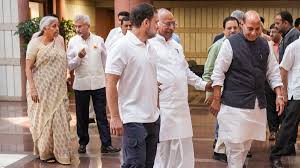
During the All party meeting, which was attended by Leader of Opposition Rahul Gandhi, Congress chief Mallikarjun Kharge and others, Rajnath Singh said that the precision attacks carried out on nine terrorist hideouts killed 100 terrorists, although ‘the counting is still on.’ The central government had called an all-party meet to brief the leaders of the opposition about Operation Sindoor, which targeted terrorist camps in PoK and Pakistan. Courtesy : TOI Note: This news is originally published on https://timesofindia.com/ and is for use by the non-military/non-commercial community, especially those in the human rights sector.