
Congress urges PM Modi to chair all-party meet on India-Pakistan situation
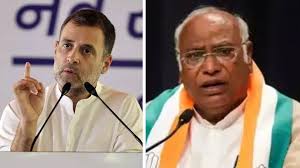
NEW DELHI: On Sunday, Congress called on Prime Minister Narendra Modi to convene an all-party meeting to discuss the recent ceasefire agreement between India and Pakistan. Additionally, Lok Sabha LoP Rahul Gandhi and Rajya Sabha LoP Mallikarjun Kharge wrote to the Prime Minister, urging a special session of Parliament to deliberate on the Pahalgam attack, Operation Sindoor, and the US-announced ceasefire. “It is crucial for the people and their representatives to discuss the Pahalgam terror attack, Operation Sindoor and today’s ceasefire, first announced by US President Trump,” said Rahul Gandhi in his letter. “This will also be an opportunity to demonstrate our collective resolve to meet the challenges ahead.” Congress general secretary Jairam Ramesh also posed several questions to the government, including whether New Delhi has opened the doors to third party intervention between India and Pakistan. “Has New Delhi opened the doors to third-party mediation? Have diplomatic channels with Pakistan been reopened?” he asked in a post on X. His remarks came a day after India and Pakistan announced an immediate halt to all military actions—by land, air, and sea—following four days of intense cross-border missile and drone strikes. The ceasefire understanding was reportedly brokered with announcements first emerging from Washington DC, followed by confirmations from both New Delhi and Islamabad. Referring to a statement by US secretary of state Marco Rubio, who mentioned a “neutral site” for dialogue between the two countries, Ramesh asked whether this signaled a departure from the principles of the Simla Agreement, which firmly opposes third-party intervention in India-Pakistan matters. “Have we abandoned the Simla Agreement? Have we opened the doors to third-party mediation?” he asked. “The Indian National Congress would like to ask if diplomatic channels between India and Pakistan are being reopened? What commitments have we sought and got?” Ramesh cited reported remarks by two former army chiefs, V P Malik and Manoj Narwane, on the understanding reached between India and Pakistan and said that the situation demands for a response from the Prime Minister himself. “Finally, the Indian National Congress believes it is but natural for the country to recall Indira Gandhi for her extraordinarily courageous and resolute leadership in 1971,” Ramesh said. He also referenced a $5.8 billion loan to India from IMF in November, 1981 to which the US had strong objections. He added that however, Indira Gandhi was able to persuade the IMF for the loan. “On Feb 29, 1984, when Pranab Mukherjee presented the Budget she had got him to announce that India had concluded the IMF programme successfully and that it was NOT drawing about $1.3 billion of the amount approved. This is perhaps unique in the annals of IMF’s history,” Ramesh added. Courtesy : TOI Note: This news is originally published on https://timesofindia.com/ and is for use by the non-military/non-commercial community, especially those in the human rights sector.
Government must clarify if it has accepted 3rd party mediation: Congress on ‘pause’
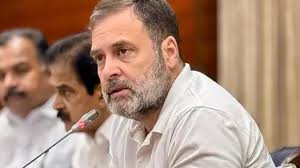
NEW DELHI: Congress on Sunday demanded that govt clarify its stand on whether it has accepted “third-party mediation” on Kashmir after the US made announcements on behalf of India and Pakistan on Saturday. The party also registered its strong objection to attempts to “internationalise” the Kashmir issue and “hyphenate” the two countries. It reiterated its demand for an all-party meeting “in the presence” of PM Narendra Modi and a special session of Parliament for a full discussion on the Pahalgam terror attack, Operation Sindoor and ‘ceasefire announcement’ made from the US first and then by govts of India and Pakistan. Leaders of Opposition in Lok Sabha and Rajya Sabha Rahul Gandhi and Mallikarjun Kharge respectively have written to the PM, reiterating the “unanimous request of the opposition” to convene a special session of Parliament immediately. “This will be an opportunity to demonstrate our collective resolve to meet the challenges ahead,” Rahul said. Congress general secretary Sachin Pilot called the “surprise” announcement of “ceasefire” by US President Donald Trump “unprecedented” and one which gives rise to many questions. P Chidambaram on X said the timeline of ‘events/announcements’ pertaining to the “ceasefire” was “intriguing”. Courtesy : TOI Note: This news is originally published on https://timesofindia.com/ and is for use by the non-military/non-commercial community, especially those in the human rights sector.
Debunking the Lies: Upper Caste Myths on Reservations Exposed
The Truth About Reservations and Caste Privilege For decades, the upper castes have peddled the same tired myths to justify their privilege and undermine the struggles of marginalized communities. From crying “meritocracy” to whining about “reverse discrimination,” their arguments crumble under the slightest scrutiny. The truth? Reservations aren’t about charity—they’re about justice. They’re an attempt to balance centuries of oppression, exclusion, and systemic denial of opportunity. Yet, the privileged continue to gaslight the oppressed, dismissing their struggles while clinging to unearned advantages. This article dismantles the most common upper-caste myths with hard facts and unapologetic truth. If you’ve ever heard, “Reservation destroys merit!” or “Rich Dalits don’t need quotas!”—it’s time to set the record straight. The game has been rigged for too long. Now, the oppressed are speaking up, and the excuses of the privileged won’t hold up anymore. Let’s begin. Merit has been destroyed by reservations! Oh, really? If merit was really destroyed, then how come your community still fills up 90% of the top positions in the country? You think it’s merit that got your great-grandfather his post in the British army, or your family’s decades-old monopoly on top educational institutions? Let’s be honest, you’re not all competing on a level playing field. Your family had centuries to establish itself as “meritorious” while the rest of us were buried in oppression and deprivation. If merit had any real role, it would show in the numbers, not in your unfounded claims. We are being discriminated against now ! Discriminated against? Seriously? Maybe you should try being born into a caste that’s been so oppressed for centuries that we still can’t even drink water from the same well without getting the stink-eye. For you, “discrimination” is being told you can’t sit in the front row of the school bus. For us, it’s being denied the opportunity to even get on the bus in the first place. How about you check your privilege before complaining about a few percentage points in a government job? Why can’t you rich Dalits be satisfied? You’ve had it good! Oh, we’ve had it good, alright. You’ve heard of the “one in a million” story where a Dalit rises to stardom? Well, that’s not the norm, my friend, that’s the exception, and even then, we’re constantly reminded of our place. When a Dalit makes a little bit of progress, you’re quick to point out how we’re “rich.” But the rest of us are still waiting for that mythical treasure chest of wealth that you think we’ve discovered. Guess what? We still can’t even own land without running into a thousand barriers, and you think we’re rolling in gold? Try again. Reservation is reverse discrimination! Reverse discrimination? Oh, the irony is delicious. For centuries, the same people who held the power and wealth are now whining about reverse discrimination because for once, their positions are threatened by the idea of equality. Imagine if the tables were turned and suddenly, you were denied access to basic rights and opportunities for a few hundred years. Would you still call it reverse discrimination, or would you cry for justice? And, by the way, the reservation isn’t a free pass; it’s an attempt to level a playing field that has been tilted against us since time immemorial. If anything, it’s a long-overdue compensation. You’re just using reservation as an excuse for not working hard. I’m sorry, but last I checked, we are the ones who’ve had to work twice as hard just to get in the door. It’s cute when you claim it’s all about hard work, but remember: hard work is a privilege when the path ahead is clear, and the door is unlocked. We’ve been dealing with locked doors and unlevel ground since forever. The fact that we still manage to enter, to rise, to succeed, is proof of tenacity, not an excuse. There are no real ‘poor’ Dalits anymore! Well, tell that to the millions of us still stuck in villages where the toilets don’t flush, the water doesn’t run, and the jobs are worse than slavery. Oh, but sure, there are no real poor Dalits anymore. The rich Dalit family you know—does that represent the entire community? Let’s look beyond your anecdotal “evidence” and examine reality: 45% of SCs still own no land. Compare that to your cozy little inherited piece of real estate. Don’t get me started on the stifling bureaucracy that ensures that SCs can’t access capital. The struggle is real. The only thing that’s changed is that we no longer need to pretend we’re content with the crumbs thrown at us. Stop crying and start integrating! The system is fine! You know what? If the system was “fine,” we wouldn’t be here, still fighting for our right to be treated as equals. Let’s face it—if the system had worked, we wouldn’t still be facing systemic atrocities and caste-based violence every other day. And as for integrating? How about you first stop making it impossible for us to integrate by clinging to the caste system like a safety blanket? Integration doesn’t happen with empty words; it happens when the roots of caste discrimination are pulled out and replaced with something called equality. Courtesy: The Mooknayak Note: This news is originally published on https://en.themooknayak.com and is for use by the non-military/non-commercial community, especially those in the human rights sector.
Life expectancy in India drops for the first time in five decades; 2020-21 saw 2 million excess deaths
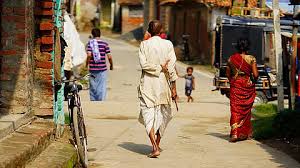
Birth rate registration also sees marginal drop Expectation of life at birth for India has dropped for the first time in 50 years, registering a decrease of 0.2 years in a year. Life expectancy at birth has been estimated at 69.8 years between 2017 and 2021, compared to 2016-2020. For rural and urban areas, life expectancy has declined by 0.1 years and 0.3 years respectively for the same time period. According to the Sample Registration System-based Abridged Life Tables 2017-21, “On an average, female life expectancy at birth is more than male life expectancy at birth by more than two years. Even at age 70 years, this difference is favourable towards females by about one year.” Life expectation at birth was registered highest in Delhi at 73 years for males and Kerala for females at 77.9 years. The lowest was noted in Chhattisgarh with 62.8 years for males and 66.4 years for females. “The maximum per annum average increase in life expectancy for males during the period 1970-75 to 2017-21 has been observed in Odisha and the minimum in Haryana. For females, the maximum annual increase has been recorded in Himachal Pradesh and Odisha and the minimum in Kerala,” the report stated. The report was published by Registrar General of India (RGI), under the Union Ministry of Home Affairs. Three other reports — Vital Statistics of India Based on the Civil Registration System (CRS) 2021, the Sample Registration System (SRS) Statistical Report 2021 and the Report on the Medical Certification of Cause of Death (MCCD) 2021 — were also published on May 7. This decrease in life expectancy coincides with India registering an almost two million jump in deaths during the peak pandemic year 2021, government data has shown. According to the Vital Statistics of India Based on the Civil Registration System (CRS) 2021, the number of registered deaths increased from 8.1 million in 2020 to 10.2 million in 2021. But the government has linked nearly 0.6 million of these deaths to COVID-19 in its report. It stated, “In the age-group 25-34 years, the first two leading causes, Diseases of Circulatory System and Codes for Special Purposes: COVID 19 have contributed to 21.2 per cent and 15.6 per cent respectively.” While in the age-group 35-44 years, the same two leading causes, have shares of 25.9 per cent and 20.3 per cent respectively. The total registered deaths were estimated to increase by 26 per cent. Across 32 states and Union territories that reported higher deaths, Uttar Pradesh, Gujarat, Maharashtra, Tamil Nadu, Madhya Pradesh, Karnataka, Bihar, Andhra Pradesh, Kerala, West Bengal, Odisha, Chhattisgarh, Haryana, Punjab, Telangana, Jharkhand and Delhi have recorded significantly increased number of deaths registered in a year — from 2020 to 2021. The increase in deaths and drop in life expectancy coincide with the peak pandemic years and contrast with the declining death rate the country has been documenting in previous decades. However, the government report has attributed 17.3 per cent of these deaths (574,198) to COVID-19. Of these 160,618 deaths were reported in 2020 while 413,580 deaths occurred in 2021. Leaving COVID-19 deaths aside, there will still be about 1.4 million excess deaths, but not directly associated to COVID-19. Meanwhile, deaths owing to respiratory disease also spiked from 181,160 in 2020 to 305,191 in 2020 and 2021 respectively. Deaths due to diseases of the circulatory system also increased from 580,751 to 714,072 for the same timeframe. Symptoms, signs and abnormal clinical findings also increased marginally from 191,609 in 2020 to 232,430 in 2021. Life expectancy in India drops for the first time in five decades; 2020-21 saw 2 million excess deaths Multiple studies show that COVID-19 and post-COVID-19 conditions cause several health issues including lung and heart abnormalities, increasing risks to heart attacks and lung diseases. On the other hand, as per the SRS report, the death rate in the country increased from 6.0 in 2020 to 7.9 in 2021. This is contrary to the trend where the death rate in India has recorded dramatic decline from 14.9 in 1971 to 6 in 2020. Death rate offers the closest estimate of morality and is measured as the number of deaths per thousand population in a given region and time period. In 2021, the death rate in rural areas increased from 6.4 to 7.9, while in cities it increased from 5.1 to 6.6 between 2020 and 2021 respectively. The birth rate also saw a decline at the all India level, dropping from 36.9 in 1971 to 19.3 in 2021. The factor is a crude determinant of fertility of a population and crucial measure to understand population growth. Birth rate gives the number of live births per thousand population of a given region and year. The birth rate was recorded to have shrunk by 11 per cent in the past decade — from 21.6 documented in 2012 to 19.3 in 2021. The corresponding decline in rural areas (from 23.1 to 20.9) is higher than in urban areas (from 17.4 to 15.9) respectively. Meanwhile, the registered births have also reduced marginally by about 0.1 per cent — from 24.22 million to 24.2 million. Almost all states have seen a decline in registration of births but 12 states — Jharkhand, Karnataka, Assam, Gujarat, Madhya Pradesh, Telangana, Haryana, Chhattisgarh, Delhi, Kerala, Odisha, and Tamil Nadu — have contributed highly to the decrease in registered births in 2021, compared to 2020. Three states — Uttar Pradesh, Bihar and West Bengal — have shown an increase in birth registration during 2020-2021. Courtesy: Down to Earth Note: This news is originally published on https://www.downtoearth.org.in and is for use by the non-military/non-commercial community, especially those in the human rights sector.
How Conversion of Dalits to Buddhism has Helped Dalits in their Emancipation?
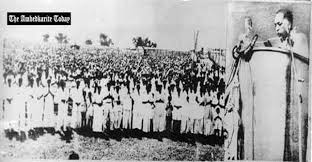
The conversion of Dalits to Buddhism under Dr. B.R. Ambedkar’s guidance, culminating in the mass conversion event on October 14, 1956, in Nagpur, was a pivotal moment in their emancipation. This movement, often called the Ambedkarite or Neo-Buddhist movement, offered Dalits a pathway to break free from the oppressive caste system entrenched in Hinduism, providing social, psychological, and cultural liberation. Here is how it contributed to their emancipation: Rejection of Caste-Based Oppression Hinduism, as Ambedkar saw it, institutionally sanctioned untouchability and caste hierarchy through scriptures like the Manusmriti. By converting to Buddhism—a religion he viewed as egalitarian, rational, and devoid of caste—Dalits could reject the theological basis of their subjugation. This act of conversion was a symbolic and practical renunciation of a system that deemed them “impure,” empowering them to redefine their identity outside the Hindu fold. Restoration of Dignity and Self-Respect Ambedkar emphasized that emancipation was not just about material upliftment but also dignity. Buddhism, with its focus on equality (all beings can attain enlightenment) and ethical living, gave Dalits a new sense of self-worth. The 22 vows he administered during the conversion—such as rejecting Hindu gods and rituals—were a deliberate assertion of agency, encouraging Dalits to shed the internalized inferiority imposed by centuries of discrimination. Cultural and Social Alternative Conversion provided Dalits with a distinct cultural identity rooted in Buddhist values like compassion, wisdom, and community (Sangha). This countered the exclusion they faced in Hindu society, where they were barred from temples and social spaces. By embracing Buddhism, they built their own communities, rituals, and spaces—like viharas—fostering solidarity and pride. Over time, this created a subculture that challenged the dominance of upper-caste norms. Political Consciousness and Mobilization The conversion movement was not just spiritual; it was deeply political. Ambedkar framed it as a revolt against caste tyranny, galvanizing Dalits into a collective force. This heightened their political awareness and strengthened their resolve to demand rights and representation. The Neo-Buddhist identity became a rallying point for Dalit activism, reinforcing Ambedkar’s broader efforts through organizations like the Scheduled Castes Federation. Education and Empowerment Ambedkar saw Buddhism as a rational, scientific faith that encouraged inquiry and education—key tools for Dalit upliftment. By embracing it, many Dalits were inspired to pursue learning, as Ambedkar himself had urged (“Educate, Agitate, Organize”). This shift helped break the cycle of illiteracy and poverty that caste had perpetuated, enabling social mobility. Long-Term Impact on Caste Dynamics The mass conversion—initially involving over 500,000 Dalits and growing to millions in subsequent decades—sent a powerful message to Indian society. It pressured the state and upper castes to confront the injustices of untouchability, accelerating reforms and the implementation of constitutional safeguards. It also inspired future generations of Dalits to resist caste oppression, whether through Buddhism or other means. Practical Outcomes In Maharashtra, where the movement took root most strongly, Neo-Buddhists (often from the Mahar caste, Ambedkar’s own community) saw gradual improvements in education, employment, and political participation, aided by reservations and their newfound assertiveness. While not all socio-economic woes were erased—poverty and discrimination persisted—the conversion gave Dalits a framework to challenge their marginalization more effectively. In summary, Ambedkar’s leadership in converting Dalits to Buddhism was a radical act of emancipation, offering them a spiritual escape from caste, a platform for self-assertion, and a tool for long-term empowerment. It did not end all their struggles, but it planted the seeds for a sustained fight against inequality, reshaping their place in Indian society. Courtesy: Countercurrents Note: This news is originally published on https://countercurrents.org and is for use by the non-military/non-commercial community, especially those in the human rights sector.
Daily weather tracker: Hot & humid weather likely over Assam & Meghalaya on May 10
Hot and humid weather is likely over Assam & Meghalaya on May 10, 2025, the India Meteorological Department (IMD) said in its daily bulletin. “Hot & humid weather is likely to prevail over Odisha during 10th-14th; Assam & Meghalaya on 10th; Tripura on 10th& 11th; Tamilnadu Puducherry & Karaikal during 10th-13th; Kerala & Mahe on 10th & 11th May,” the IMD said. It added that heat wave conditions are very likely in isolated pockets of West Uttar Pradesh on May 15 and 16; eastern Uttar Pradesh during May 14-16; Sub-Himalayan West Bengal and Sikkim on May 10 and 11; Gangetic West Bengal during May 10-14 and Bihar, Jharkhand and Odisha during May 11-14. According to the IMD, the southwest monsoon is very likely to advance into the South Andaman Sea, some parts of Southeast Bay of Bengal and Nicobar Islands around May 13, 2025. “It is likely to advance over some parts of south Arabian Sea, Maldives & Comorin area; some more parts of South Bay of Bengal, entire Andaman & Nicobar Islands and Andaman Sea; and some parts of central Bay of Bengal during subsequent 4-5 days,” the bulletin added. In the west, isolated light/moderate rainfall, accompanied with thunderstorm, lightning and gusty winds at speeds reaching 40-50 kmph and gusting to 60 kmph is likely over Gujarat on May 10, Madhya Maharashtra, Marathwada during May 10-14; with winds speed reaching 30-40 kmph and gusting to 50 kmph over Konkan & Goa on May 10; Gujarat on May 11 and 12. In eastern and central India, isolated to scattered light/moderate rainfall accompanied with thunderstorm, lightning and gusty winds at speeds reaching 40-50 kmph and gusting to 60 kmph is likely over Madhya Pradesh, Vidarbha, Chhattisgarh, Sub Himalayan West Bengal and Sikkim during May 10-14; Gangetic West Bengal during May 11-14 and Odisha on May 11 and 12; and with winds at speeds reaching 30-40 kmph gusting to 50 kmph over Jharkhand on May 11. Courtesy: Down to Earth Note: This news is originally published on https://www.downtoearth.org.in and is for use by the non-military/non-commercial community, especially those in the human rights sector.
28 held in Vadakadu communal clash; plaint filed against VCK leader Thol Thirumavalavan
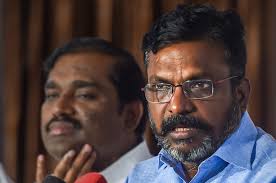
Violence broke out on May 5 when a dispute between Dalits and caste Hindus over rights at a temple festival escalated into an attack in a Dalit residential area. PUDUKKOTTAI: The number of arrests made in connection with the communal clash in Vadakadu rose to 28 with the arrest of two more persons on Saturday. According to police, 20 caste Hindus and 6 Dalits had earlier been arrested in this connection. On Saturday, one person from each group was arrested, taking the total to 28. Violence broke out on May 5 when a dispute between Dalits and caste Hindus over rights at a temple festival escalated into an attack in a Dalit residential area, leaving several people injured on both sides. Following the incident, VCK leader Thol Thirumavalavan alleged that Dalits, traditionally allowed to pull the car of the Muthumariamman temple, were denied that right on May 5. Countering his statement, the ‘Servaikaranpatti servai’, a caste Hindu organisation, claimed a 300-year-old right over the ritual. The organisation filed a complaint in Vadakadu police station accusing Thirumavalavan of spreading false and provocative remarks. Responding to this on Sunday Thirumavalavan said his comments were based on inputs from affected people, and would stand corrected if proven wrong. Courtesy: New Indian Express Note: This news is originally published on https://www.newindianexpress.com and is for use by the non-military/non-commercial community, especially those in the human rights sector.
forces Dalit kids to trek two km daily after school
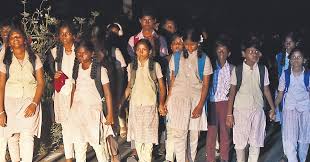
“It is unsafe. We also instruct girl students not to accept rides from any strangers,” said S Priya, a female resident. CHENNAI: With the weight of a school bag on her back, Vinodhini, a Class 11 student at a private school in Gummidipoondi, walks nearly two km daily from the nearest bus stop in Rettambedu to her village, Kuruviagaram, often after sunset due to special classes. The path has no street lights and is also a haven for snakes. She is just one among the scores of girl students from Kuruviagaram, who, equipped with nothing but torchlights, risk their lives every day while returning from school as there are no buses to the village. “It is unsafe. We also instruct girl students not to accept rides from any strangers,” said S Priya, a female resident. Around 1,000 Dalits who live in Kuruviagaram have long been demanding bus services to their village, but have so far not been able to elicit any official action. Around 60 high school students go out of the village to study every day, as Kuruviagaram only has a primary school. One resident, M Kannadasan (20), who is pursuing his masters in social work at the Loyola College, Chennai, said that route number 43 (Gummidipoondi-Pallipalayam) stops at Rettambedu which is two km away from the village. In the evening, there are only two buses, one at 4.30 pm and another service at 6.30 pm. The bus is operated from the Ponneri depot. Students and workers (including women) who take the 6.30 pm bus are left to brave the dark and snakes, he said. Urging the government to extend the bus route till Kuruviagaram, Kannadasan said the move will positively impact around five panchayat villages surrounding Kuruviagaram, with a population of around 2,000. Another resident, V Ramya (33), said that the lack of buses is an obstacle especially during medical emergencies. We have to transport the patient either by two-wheeler or an autorickshaw if the 108 ambulance is not available, she added. Speaking to TNIE, Gummidipoondi MLA TJ Govindarajan said, “Kuriviagaram hamlet has less population. We will do an estimate and depending on the patronage we will talk to the transport department and take steps to extend the bus service to the village” Courtesy: New Indian Express Note: This news is originally published on https://www.newindianexpress.com and is for use by the non-military/non-commercial community, especially those in the human rights sector.
Out to play, 7yo Dalitboy brutally murdered
Agra: A 7-year-old Dalit boy was found brutally murdered at a village in Hathras district on Saturday, police said. The Class 1 student, who had gone missing on Thursday evening when he went out to play, was found dead with limbs tied and injury marks all over the body. DSP (Sadabad) Himanshu Mathur said, “The body was sent for postmortem. The forensic team along with a dog squad were called to the spot where the body was found. Four police teams were formed to work on this case. Investigation is on.” The boy’s father, Rajpal Singh, who runs a flour mill, said that despite efforts to locate him, he did not return, prompting the family to file a missing persons complaint at the local police station. On Saturday, the body was sighted at a nearby farm with his limbs tied and severe injury marks on stomach and chest. A black cloth was also tied to the body, leading family members to suspect a “pre-planned murder”. A case under BNS section 103 (murder) was registered against an “unknown person”. The boy’s grandfather, Prem Singh, alleged the killing appeared deliberate. “The way the body was dumped suggests he was murdered elsewhere. Police must look for the culprit and punish him,” he said. Rajpal Singh lives in Khuntipur Jatan village with his wife and three children. The victim was his only son. Courtesy: Times of India Note: This news is originally published on https://timesofindia.indiatimes.com/ and is for use by the non-military/non-commercial community, especially those in the human rights sector.
The State of Power and Poetry: Vedan, Caste, and the Revolutionary Awakening of Kerala’s Left
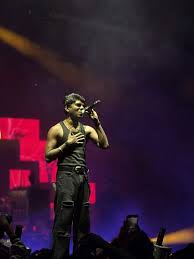
Vedan’s arrest shows what truly frightens the establishment: not weed or wildlife, but a Dalit voice with rhythm, rage, and reach. In the great theatre of Kerala politics, some performances are so overacted that even the audience begins to check if the actors have mistaken the stage for a mirror. Case in point: the Left government’s magical rediscovery of caste, which, until a few days ago, was filed somewhere between ‘British conspiracy’ and ‘bourgeois distraction.’ And what was the trigger for this radical epiphany? Not decades of data, demands for a caste census, or Dalit deaths in custody. No – it was Vedan. A 29-year-old Dalit rapper with verses sharp enough to cut through the haze of ideological gaslighting, and a fanbase that couldn’t be tamed with Marxist lullabies. On April 28, 2025, Kerala police raided a rented apartment in Vyttila, Ernakulam, where Vedan – fast becoming a cult icon among Kerala’s youth – was present with eight others. The officers seized six grams of ganja in total, amounting to less than a gram per person. Despite the nature of the charge (for which the station house officers could grant bail), the news was sensationalised – Asianet News aired it under the distasteful headline ‘The Shirt Stitched with Ganja’, a sarcastic parody of a line from his song that translates as ‘The Shirt Stitched with Sweat,’ evoking his rise from a Dalit ghetto to his current position through immense personal struggle. The law granted Vedan the station bail. However, during the search, officers noticed that he wore a pendant bearing what appeared to be a tiger’s tooth. And then Vedan is, again, arrested over the pendant by the forest department. The state, in a dazzling display of procedural enthusiasm, invokes the Wildlife (Protection) Act. He is jailed, shamed, and paraded like contraband. Abraham and a U-turn And in the backdrop? A scathing high court order had torn into the vigilance department’s handling of a corruption case involving former finance secretary K. M. Abraham – who now holds post-retirement posts as the chief principle secretary to the chief minister and the CEO of the Kerala Infrastructure Investment Fund Board (KIIFB). The court, expressing clear distrust in the vigilance, ordered a CBI probe. Abraham swiftly approached the Supreme Court. But just before that judgement could drop, the news cycle swerved. Suddenly, primetime was consumed not by the looming threat to the government’s credibility, but by the arrest of a very visible, very loud, very Dalit artist. The scandal disappeared, the spectacle took over, and the timing spoke volumes. Of course, the strategy was textbook: create a moral spectacle, weaponise the law, ride the waves of manufactured moral outrage and deflect attention from the haunting issue. Except, this time, the waves didn’t crash where expected. Social media didn’t play along. Neither did the youth. Neither did the left comrades. And neither, eventually, did the facts. Within days, the same Left government that had struck its most pious pose – arms folded, eyes closed, whispering “let the law take its course” – began pirouetting through a series of rhetorical backflips. It was, in short, the kind of U-turn that deserves its traffic signage. But the real showstopper came from the Left’s intelligentsia – those eternal gatekeepers of dialectical purity who’d spent years dismissing caste as “postmodern identity fetish”. Suddenly, they’ve become fluent in the vocabulary of Ambedkarite resistance. Facebook timelines that once shunned Dalit politics for being “divisive” are now gesturing solidarity with Vedan’s cause. Comrades who wouldn’t touch a caste census with a ten-foot pole are now rapping along with Vedan’s lyrics, as if rediscovering the minor inconvenience of systemic discrimination. The same media spaces that never placed a single Dalit face in front of the news camera are now speaking of “double justice” with the urgency of a corporate consultant trying to meet quarterly goals and with the theatrics of a rejected theatre school applicant who suddenly rediscovered the forgotten passion. It’s not conviction, it’s crisis management with hashtags. Let’s not forget: this is the same government that implemented EWS reservations for temple boards long before the BJP turned it into law. The same comrades who defended the idea of economic backwardness among Savarna with a straight face now pretend they’ve always been torchbearers of radical anti-caste politics. You’d almost believe them – if you had the memory of a goldfish and the political literacy of a houseplant. The glorious parallel universe of Savarna celebrity immunity Let’s recap. Vedan is arrested over a tiger tooth pendant—an item that becomes magically illegal when worn by a Dalit. The state, in a dazzling display of procedural enthusiasm, invokes the Wildlife (Protection) Act. He is jailed, shamed, and paraded like contraband. But curiously, when superstar-politician Suresh Gopi sported what looked suspiciously like a tiger tooth pendant on television, no forest officer went sprinting to file a case. No raid. No remand. The law, it seems, doesn’t just take its course – it checks your caste location before deciding which route to take. And lest we forget the precedent: Mohanlal, in 2011, was caught with ivory tusks in his house. The case meandered through a decade of legal somnambulism before the government conveniently moved to withdraw prosecution in 2023. Because apparently, public interest in wildlife protection has a caste and celebrity filter too – it spikes for Dalit rappers but flatlines for award-winning actors with the right social capital. Dalit with a pendant? Jail. Superstar with tusks? Souvenir. That’s the equality of enforcement in the People’s Republic of Casteist Irony. And now, in this theatre of irony, the chief minister and the CPI(M) secretary, two Avarnas themselves, have their historic roles to play When asked about the hunting of Vedan, the chief minister, with a wry smile, offered this gem: “When it is an issue of drug, no question of the abuser being forward or backward. But the tiger claw issue, it should have been dealt more carefully (my translation, listen from the 7.40-minute mark).