
Buddha Purnima 2025: Bollywood’s first silver jubilee film was based on the conflict between Buddhism and Hinduism – 1934’s ‘Amrit Manthan’ had a message of peace and kindness
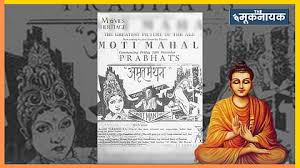
The friendship between the film’s director V. Shantaram and Dr. Ambedkar was very special. Both wanted change in the society. New Delhi- This time Buddha Purnima is on 12 May. This is a very special day for the Buddhist and Bahujan community when they remember the birth, enlightenment and Mahaparinirvana of Lord Buddha. This time the occasion of Buddha Purnima is also special because for about three months, the Mahabodhi Mahavihara Mukti Andolan has been going on, which demands to free the Mahabodhi Mahavihara temple located in Bodhgaya, Bihar from the control of the Mahant Brahmin class and non-Buddhists and hand over the management of the temple to the Buddhist community. The main objective of the movement is to repeal the Bodh Gaya Temple Act of 1949 and ensure full rights over the sacred premises of the temple for the Buddhist community. Currently, Buddhist monks and followers are on hunger strike to demand their demands. The differences between Buddhists and Hindus have remained the same for centuries. Perhaps very few people would know that the story of Bollywood’s first silver jubilee hit film Amrit Manthan (1934) was based on the conflict between Buddhism and Hinduism. The film ran continuously for 25 weeks in theatres and was well liked. This film was made by V. Shantaram who was close to Baba Saheb Ambedkar. Shantaram believed so much in Buddhism that the design of his Dadar-based Plaza Cinema was also inspired by the Sanchi Stupa. There were small marks of Buddhist design in ‘Plaza Cinema’, which showed Shantaram’s respect for Buddhism. Another interesting thing is that the word ‘Silver Jubilee’ was coined by Babu Rao Painter, who used to be the distributor of Shantaram’s company Prabhat Films. Amrit Manthan: Bollywood’s first superhit film The 1930s were a new era of Indian cinema when V. Shantaram made Amrit Manthan with his company Prabhat Films. The film was in Hindi and Marathi and released in 1934. It was so well received that it ran for over 25 weeks in Bombay (now Mumbai). It received the title of Silver Jubilee, which was a big deal at that time. The story questioned the social evils of the time and showed Buddhism’s principles of compassion and equality. The film had brilliant acting, with stars like Shanta Apte, Nalini Tarkhad and Chandra Mohan. Shantaram used new camera techniques such as telephoto lenses to show the priest’s fearful eyes. The film’s song “Kamasini Mein Dil Pe Gham Ka…” was the first Bollywood ghazal, sung by Shanta Apte. All these factors together made Amrit Manthan a landmark film. According to researcher and film historian Vijay Kumar Balakrishnan, the film had all the qualities that managed to mesmerise and attract the audiences of that time. The story revolves around a fictional king who followed Buddhism. The story is about the reformist King Kantivarma, who bans the sacrifice of animals and humans. This angers the fanatic Rajguru (Chandra Mohan), the chief priest of the Chandika cult. The cult meets secretly and the chief priest orders the assassination of the king. Yashodharma is chosen for this job, though he hesitates, the priest orders him to do it. Yashodharma writes a note for his son before leaving that night, informing him about the task planned by Rajguru. After the murder of the king, Yashodharma is betrayed in the court by Rajguru and ordered to kill him. Yashodharma’s two children, Madhavgupta and Sumitra, escape, but Madhav is caught and one of Rajguru’s men gets the letter from him. Sumitra is held captive and Queen Mohini, who ascends the throne after her father’s death, is asked by Rajguru to sacrifice Madhav at the temple. A storm arises and Mohini and Madhav escape into the forest. Madhav later sets out in search of his sister. Vishwasgupta, a trusted minister, tells Mohini and the people of Avanti about Rajguru being the real killer. A crowd of townspeople gather at the temple demanding justice and Rajguru, with his obsessive belief in sacrifice, offers himself to the goddess and cuts off his head as the ultimate sacrifice. Baba Saheb was also against the hypocrisy of Hinduism In an article published in Round Table India, Dr. SPVA Sairam writes that this story was of the time when Dr. Ambedkar was fighting against the caste system and Hindu customs. The film came out in 1934, and in 1935 Ambedkar said at the Yeola Conference, “I was born a Hindu, but will not die as a Hindu.” Later in 1956, he converted to Buddhism. The story of Amrit Manthan was similar to the ideas of Ambedkar, who talked about equality and compassion. The friendship between V. Shantaram and Dr. Ambedkar was very special. Both wanted social change. Shantaram raised issues like caste, women’s rights and religion in his films. Shantaram helped with Buddhist ceremonies. He donated money and film set material for Ambedkar Jayanti and Mahaparinirvana Diwas (6 December). His studio also had a Buddha statue. Shantaram’s daughter Rajshree and actor Jeetendra studied at Ambedkar’s Siddharth College. Shantaram’s friend Master Krishna composed music for Buddha Vandana and learnt the Pali language at Ambedkar’s behest. Courtesy : Geetha Sunil Pillai, Hindi News
Buddha Purnima 2025: Bollywood’s first silver jubilee film was based on the conflict between Buddhism and Hinduism – 1934’s ‘Amrit Manthan’ had a message of peace and kindness
TM Exclusive: Darkness under the lamp in MP Congress, caste balance missing in spokesperson list, tribals zero, Rahul Gandhi’s slogan ignored?
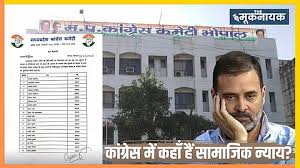
55% of 53 spokespersons get nominal representation from upper caste, backward and Dalit leaders BHOPAL. Madhya Pradesh Congress organization is continuously proving unsuccessful in following the political slogan given by Congress leader Rahul Gandhi “Jiski jitni sankta bhaari, uski utni share” (the number of people is more, the share is more). The latest example of this is the recently announced spokesperson list of the state Congress, in which the basic spirit of social justice and caste representation is not visible. On May 5, the list of 53 spokespersons was released by the head of the media department of Congress, Mukesh Nayak, on the instructions of the president Jitu Patwari. In this list, the dominance of upper castes can be clearly seen, while the backward classes (OBC), scheduled castes (SC), scheduled tribes (ST) and minority communities with large population have not got the expected representation. Dominance of general category According to the list, 18 Brahmins, 6 Thakurs, 6 other general category and 11 leaders from backward class have been appointed as spokespersons. That is, a total of 29 spokespersons belong to the upper caste, which is about 55% of the total list. On the other hand, only 9 leaders of the backward class, which is considered to have about 50% participation in the population of the state, have been given the responsibility of spokesperson. Only 7 representatives of the Scheduled Caste category are in this list and only 6 leaders from the minority category could become spokespersons. The most surprising thing is that the tribals have a participation of 21.10 percent in the state. Congress has not appointed any person from the Scheduled Tribe (ST) category as a spokesperson, while Madhya Pradesh is a tribal dominated state. Questions raised on lack of caste balance Congress has been demanding caste census for a long time and Rahul Gandhi has made it clear while advocating social justice from every platform that the party’s goal is to ensure participation in proportion to the number. But this list of Madhya Pradesh Congress has not only weakened this idea, but has also exposed the neglect of caste representation at the ground level. Opinion of political analysts Political analysts believe that when the Bahujan Samaj will not get proper representation in the organisational structure itself, then how will the public trust the policies of Congress and its slogan of social justice? In a conversation with The Mooknayak, senior journalist Ramesh Sharma said that even though the Congress party talks about giving representation under social justice, but its list does not show representation in proportion to the numbers. List of representatives according to social classes General Category (Total): 30 Thakurs: (6) Ajit Bhadoria, Avnish Bundela, Santosh Singh Parihar, Samar Singh, Himani Singh, Santosh Singh Gautam, Brahmins: (18) Aparajita Pandey, Ambika Sharma, Gunjan Shukla, Jitendra Mishra, Dharmendra Sharma, Neelabh Shukla, Pramod Dwivedi, Priyanka Sharma, Mrinal Pant, Ram Pandey, Sangeeta Sharma, Rahul Raj, Sandeep Sablok, Sunil Mishra, Swadesh Sharma, Vivek Tripathi, Vinod Sharma. Other General Categories: (6) Bhupendra Gupta, Vinay Saxena, Ravi Saxena, Anand Jain Kasiwal, Harsh Jain, Kundan Punjabi. Backward Classes: (Total 11) Abhinav Baroliya, Amit Chourasiya, Anand Jat, Jyoti Patel, Yogesh Yadav, Rajesh Chouksey, Roshni Yadav, Shailendra Patel, Sparsh Chaudhary, R.P. Singh, Samar Singh Scheduled Caste: (SC) (Total 7) Amit Tawde, Praveen Dholpure, Mithun Ahirwar, Mukesh Panthee, Ravi Verma, Vikram Chaudhary, Sitasharan Suryavanshi. Scheduled Tribe (ST): No spokesperson. Minority community: (Total 6) Abbas Hafiz, Noori Khan, Firoz Siddiqui, Shahryar Khan, Sabir Fitwal. When The Mooknayak tried to get a reaction from the newly appointed spokesperson Dr. Vikram Chaudhary on this issue, he refused to comment and was seen avoiding speaking on this subject. SC/ST did not get representation even in Youth Congress elections In this election of Youth Congress, out of a total of 59 posts, only 7 seats have been reserved for the youth of Scheduled Caste and Scheduled Tribe category. This number is very less compared to the share of these classes in the population of the state. The total population of Madhya Pradesh has reached about 3.29 crores, in which Dalit and tribal communities have a large participation, but their share in organizational representation does not seem satisfactory. It is clear that the reservation policy has become a mere formality here. Why is the reduction in representation an important issue? Giving proper representation to social groups in political organisations is not just a game of numbers, it is a matter related to the soul of democracy and constitutional values. Giving leadership opportunities to young leaders of SC/ST community is the basic condition of social justice. When Congress calls itself a supporter of social justice, it is expected that it implements that idea in its organisational structure as well! Courtesy : Ankit Pachauri, Hindi News
Ambedkar month celebrated in 134 villages of UP, public meetings held on Dalit history and constitution; active workers were felicitated
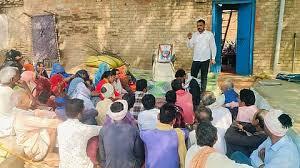
Public dialogue on constitution awareness and Dalit history, public meetings and felicitation of volunteers on the occasion of Ambedkar Jayanti in 134 villages of Bundelkhand Uttar Pradesh/Orai. Celebrating the month of April as ‘Ambedkar month’ and ‘Dalit History Month’, Bundelkhand Dalit Adhikar Manch and Dalit Dignity and Justice Center organized various programs on the occasion of 134th birth anniversary of Dr. Bhimrao Ambedkar in more than 134 villages of the district. Thousands of people were connected through constitution awareness meetings at village and panchayat level, mass recitation of the Preamble of the Constitution and social dialogue. The team that played an active role in this comprehensive campaign was felicitated by presenting “Samman Patra”. Among those who received the honor were Usha Devi, Debendra Anil, Anita, Surendra Kumar, Pradeep Dohre, Adv. Rashmi Verma, Adv. Nikhat Parveen, Adv. Priyanka Ahirwar, Anuradha Bauddh, Ayush Kumar, Sachin Chaudhary, Tinku Chaudhary, Shalini Bauddh, Madhu Anuragi, Kanchan Verma, Dharampal Rajput and Ramkumar Gautam are included. The team members who received the honor described this initiative as historic and said that this honor will keep reminding them of the struggles of Dr. Ambedkar. They said that during this one month, by going from village to village, they understood the real situation of the community and realized that even after 75 years of the implementation of the Constitution, there is a need for comprehensive change at many levels in the society. Highlights of the programme: Ambedkar Jayanti and Constitution awareness programmes in 134 villages/panchayats 92 public meetings organised, direct interaction with 15,490 people Participation of more than 25,000 women, men and children The programme reached more than 1.35 lakh people through social media Applications related to Dalit atrocities and problems received from 49 villages, which will be acted upon Advocate Kuldeep Kumar Baudh, founder and convener of Bundelkhand Dalit Adhikar Manch and Dalit Dignity and Justice Centre, said that this campaign is a historic effort towards documenting Dalit history and spreading awareness about constitutional values. He said, “The team not only celebrated Ambedkar Jayanti by visiting every village, but also compiled the stories of the struggling individuals there. Future generations will definitely remember this work.” The organizations plan to further train the volunteers of these 134 Gram Panchayats so that they can take leadership at the local level and contribute to social change and promotion of constitutional values. Courtesy: Hindi News
Modi, Shah Chair High-Level Meets, Rahul Gandhi To Attend All-Party Meeting On Operation Sindoor
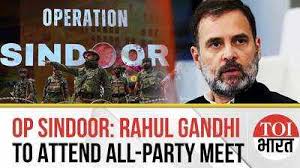
Amid escalating tensions with Pakistan following India’s ‘Operation Sindoor’ against terrorism, the Centre has called an all-party meeting on May 8 to discuss national security. Key government figures including Amit Shah, Rajnath Singh, and Kiren Rijiju will attend, alongside opposition leader Rahul Gandhi. Home Minister Amit Shah also chaired a meeting with chief ministers and officials of states bordering Pakistan and Nepal. Courtesy : TOI Note: This news is originally published on https://timesofindia.com/ and is for use by the non-military/non-commercial community, especially those in the human rights sector.
‘We are crying with happiness’: Pahalgam attack victims’ kin hail Operation Sindoor
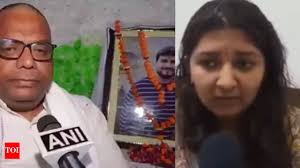
‘We are crying with happiness’: Pahalgam attack victims’ kin hail Operation Sindoor’We are crying with happiness’: Pahalgam attack victims’ kin hail Operation Sindoor NEW DELHI: The Indian Army’s Operation Sindoor in the early hours of Wednesday has brought a sense of justice and emotional relief to the families of those killed in the April 22 Pahalgam terror attack, which claimed 26 lives, including several tourists from Maharashtra. — ANI (@ANI) The strike, aimed at dismantling Pakistan-based terror infrastructure, has been welcomed by the victims’ relatives. Asvari Jagdale, daughter of victim Santosh Jagdale, described her emotions after hearing about the military action. Speaking to ANI, Jagdale said, “We were crying with happiness. Modi has taken revenge, and the way the operation was named, our tears wouldn’t stop. Those sisters whose sindoor (symbol of marital status) was erased by these terrorists–India has struck them at nine locations. It feels truly different, and our tears of joy just won’t stop.” — ANI (@ANI) Sanjay Dwivedi, father of another victim Shubham Dwivedi, said the strike has restored his family’s faith in the government. “I am continuously watching the news. I salute the Indian army and thank PM Modi, who listened to the pain of the country’s people. The way the Indian military has destroyed the terrorism that is flourishing in Pakistan, I thank our military for that. My entire family has been feeling light since we heard this news” he said. Manoj Dwivedi, a relative of Shubham Dwivedi, echoed the sentiment, calling the operation a form of justice. “On 22nd April, when our child lost his life, we said that a revolution is going to come in our country, and we were sure that PM Modi will take the strictest step to finish terrorism. I want to thank PM Modi for the real tribute that the Army has given today to our son.” he told ANI. Meanwhile, locals in Jammu raised patriotic slogans such as ‘Indian Army Zindabad’ and ‘Bharat Mata ki Jai’, expressing their appreciation for the armed forces. “It was very important for the government to give a response to the attack made by Pakistan… we are really thankful to the government and the Indian Army,” a local said. The strike marked India’s deepest incursion into Pakistan’s undisputed territory since the 1971 war, according to sources. The operation, which reportedly struck nine targets, was monitored overnight by Prime Minister Narendra Modi. Indian forces reportedly aimed at key infrastructure used by terror groups Jaish-e-Mohammed (JeM) and Lashkar-e-Taiba (LeT), particularly those involved in planning and executing attacks on Indian soil. In an official statement, the Ministry of Defence said: “In the early hours of Wednesday, the Indian Army launched Operation Sindoor, hitting terrorist infrastructure in Pakistan and Pakistan-occupied Jammu and Kashmir from where terrorist attacks against India have been planned and directed.” “Our actions have been focused, measured and non-escalatory in nature. No Pakistani military facilities have been targeted. India has demonstrated considerable restraint in the selection of targets and method of execution,” the statement added. Courtesy : TOI Note: This news is originally published on https://timesofindia.com/ and is for use by the non-military/non-commercial community, especially those in the human rights sector.
‘Proud of Indian Armed Forces’: Congress hails success of ‘Operation Sindoor’
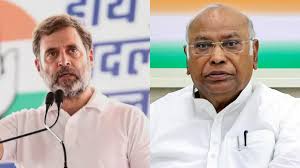
‘Proud of Indian Armed Forces’: Congress hails success of ‘Operation Sindoor”Proud of Indian Armed Forces’: Congress hails success of ‘Operation Sindoor’ NEW DELHI: The Congress on Wednesday heaped praise on the armed forces for their bold and decisive step against terror camps in Pakistan and PoK under ‘Operation Sindoor’ and backed government action taken in the interest of national security. “We had called a meeting of the Working Committee to discuss the incident and the government’s action. We are proud of the Indian Armed Forces, who have given a befitting reply by taking bold and decisive action against the terror camps of Pakistan and PoK under ‘Operation Sindoor’. We salute the courage, determination and patriotism of our brave soldiers,” Congress president Mallikarjun Kharge said after the meeting. Rahul Gandhi, who was also present at the meeting, said the Congress party extends all its support to the armed forces. “We held a discussion in the working committee. Our full support to our forces, best wishes to them, much love to them. Complete support from the Congress party and the Congress Working Committee,” he said. Kharge said from the day of the terrorist attack in Pahalgam, the Indian National Congress has clearly stood in solidarity with the armed forces and the government and supported every decisive action against cross-border terrorism. He said India’s national policy against all forms of terrorism emanating from Pakistan and Pakistan-occupied Kashmir (PoK) is very clear and firm. “Unity at all levels is needed the most to protect the national unity and integrity of the great country of India. The Indian National Congress stands shoulder to shoulder with the brave soldiers of the country. History is witness that our heroes have always given their martyrdom for the unity and integrity of the country, keeping national interest paramount. The entire world knows this,” the Congress chief said. “We will put all our strength behind our soldiers for protecting the country, maintain unity and our freedom. We extend all our support to them. There is no difference on this issue and everyone is united. INDIA alliance partners are also trying to remain united for the unity of the country. This was decided that we reiterate our support to the armed forces on this issue,” Kharge said. Meanwhile, the Congress hoped that Prime Minister Modi would attend the all-party meeting called by the government after today’s strikes. “We expect PM Modi to attend at least tomorrow’s all-party,” Congress general secretary Jairam Ramesh told said. “We had requested for the PM’s presence on April 24th but he did not attend. He should at least attend tomorrow,” Ramesh said adding that Kharge and Gandhi will attend the meeting. (With inputs from agencies) Courtesy : TOI Note: This news is originally published on https://timesofindia.com/ and is for use by the non-military/non-commercial community, especially those in the human rights sector.
Congress hails strikes against Pakistan, reiterates support to Centre
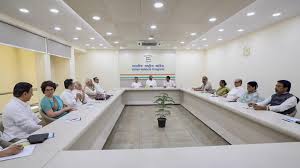
Congress hails strikes against Pakistan, reiterates support to CentreCongress hails strikes against Pakistan, reiterates support to Centre NEW DELHI: Congress on Wednesday hailed the Indian armed forces for their decisive response to the terror emanating from Pakistan, and reiterated its support to the government in the decisions it takes to avenge the Pahalgam killings. In the wake of India’s retaliatory attacks, Congress convened the meeting of its apex body – Congress Working Committee (CWC) – to send out a message of political unity and also suspended all its political programmes for the coming days. The meeting was attended by Congress president Mallikarjun Kharge, Rahul Gandhi, Meira Kumar, Priyanka Gandhi Vadra, KC Venugopal, Sachin Pilot, Rajiv Shukla, Anand Sharma, Randeep Surjewala, Gaurav Gogoi and Ghulam Ahmad Mir. Kharge said, “We are proud of the Indian armed forces which have given a befitting reply by taking bold and decisive action against the terror camps of Pakistan and PoK under ‘Operation Sindoor’. We salute the courage, determination and patriotism of our brave soldiers.” “Full support to our forces, best wishes to them, much love to them, complete support from Congress and the CWC,” Rahul said. Kharge said post-Pahalgam, Congress firmly stood by the government in deciding the response against Pakistan. “India’s national policy against all forms of terrorism originating from Pakistan and PoK is very clear and consistent. Unity at all levels is most needed to protect the national integrity of our great country, India. Congress stands shoulder to shoulder with the brave soldiers of the country,” he added. Many members suggested that the party should put on hold its political programmes, including the Samvidhan Bachao Rallies. It was said the pause should be without any timeline because of the uncertainty ahead. With the government having called an all-party meeting on Thursday, many members lamented that the prime minister does not attend the discussions as happened on April 24 after the Pahalgam attacks, while other parties also send their second-rung leaders. It was then decided that the top Congress duo of Kharge and Rahul will take part in the meeting. Courtesy : TOI Note: This news is originally published on https://timesofindia.com/ and is for use by the non-military/non-commercial community, especially those in the human rights sector.
Indian court denies lower caste legal benefits to Christians
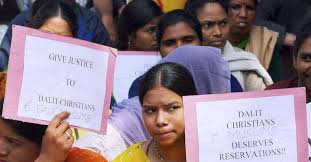
A person converted to Christianity cannot claim to be a member of a lower caste, court says Indian Dalit (Oppressed) Christian and Muslim women hold placards and shout slogans during a rally against the National Commission for Scheduled Castes and Scheduled Tribes for its recent rejection of the demand for reservation for Dalit Christians and Muslims, in New Delhi, 03 March 2007. Indian Dalit (oppressed) Christian and Muslim women hold placards and shout slogans during a rally against the National Commission for Scheduled Castes and Scheduled Tribes over its rejection of a demand for socio-economic reservations for Dalit Christians and Muslims, in New Delhi, on March 3, 2007. (Photo: AFP) An Indian court has denied Christians of Dalit origin legal protections meant for lower caste people, saying a person who converted to Christianity cannot claim to be a member of a lower caste group. The Andhra Pradesh High Court, the highest court in the southern Indian state, issued the ruling in an appeal challenging criminal proceedings against a group of non-Christians, based on a complaint by a Protestant pastor. The pastor, who comes from the Dalit community, officially referred to as Scheduled Caste people, filed the complaint in January 2021 against a group of people who allegedly abused him, violating clauses of the Scheduled Castes and the Scheduled Tribes (Prevention of Atrocities) Act. His complaint said that during an altercation, they used his caste name to denigrate and abuse him, a punishable crime under the law, enacted in 1989. The court’s April 30 ruling dismissed the criminal proceedings, saying a “person converted to Christianity cannot claim to be a member of the Scheduled Caste community”. “The Christian religion does not recognize any caste classifications. All Christians are treated as equals and there is no distinction between one Christian and another of the type that is recognized between members of different castes belonging to the Hindu religion,” the court said, referring to an earlier Supreme Court ruling in a similar case. Father Antonyraj Thumma, secretary of the Office for Dialogue and Ecumenism of the Catholic Bishops’ Conference of India, said the court ruling is “practically discriminatory and violates the fundamental rights of the pastor.” Christian leaders like him argue that conversion to Christianity does not automatically alter the socio-economic circumstances of Dalit people, as society continues to treat them as second-class citizens through subtle practices. Untouchability was outlawed in 1950, but Dalit people, across all religions, continue to face social exclusion, segregation, and even violence in various forms, they say. However, the government officially does not acknowledge the existence of caste discrimination and socioeconomic poverty within Christianity and Islam. In 1950, the government reserved social benefits intended for Dalit people exclusively for Dalit Hindus, viewing the caste system as a reality of Hinduism. This order was subsequently amended twice to include Sikhs and Buddhists, thereby recognizing caste practices within these Indian religions. Christian leaders say that this official government stand should be considered the basis of the court ruling. The court ruling said the “caste system prevails only amongst Hindus or possibly in some religions closely allied to the Hindu religion like Sikhism.” Christianity is a global religion and “nowhere does Christianity recognize caste division.” A Dalit person converted to Christianity ceases to be a Dalit, it reiterated. Christians have opposed this stance. Two decades ago, Christian leaders petitioned India’s Supreme Court to end such discrimination by including Christians of Dalit origin in the state’s affirmative action plans to help improve their social conditions. When the court sought an explanation, the government of Prime Minister Narendra Modi in October 2022 appointed a three-member panel to study the implications of extending benefits to Christians of Dalit origin. The panel is yet to report to the government. Out of India’s 1.4 billion people, 201 million belong to the Dalit community, and nearly 60 percent of India’s 25 million Christians trace their origin to Dalit and tribal communities. Courtesy: UCA News Note: This news is originally published on https://www.ucanews.com and is for use by the non-military/non-commercial community, especially those in the human rights sector.
Caste clash in Tamilnadu’s village, Dalit home torched, vehicle burnt; 14 arrested
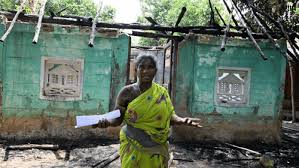
A clash erupted between Mutharaiyar and scheduled caste communities in Tamilnadu’s vadakadu village on Monday leading to damages to public properties and a Dalit’s family hut was set on fire. The youths from both communities who were drunk were arguing over fuel queues at the station. The situation quickly escalated and the youth followed each other to their home. Amidst this chaos, a Dalit home was burned down alongside a vehicle and windows of a government bus were smashed. The video of the clashes went viral on social media. After the clash, police arrested fourteen individuals from both communities and launched a thorough investigation. Injured individuals have been sent to hospitals for treatment. Police have urged the public to avoid sharing misinformation as it could potentially escalate tensions in the region. Courtesy: Muslim Mirror Note: This news is originally published on https://muslimmirror.com and is for use by the non-military/non-commercial community, especially those in the human rights sector.