
Rs 16,500 crore contracts, zero data: Rahul Gandhi questions Centre on Dalit, Adivasi share
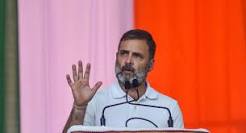
Government says public works contracts are awarded through open tendering processes and no centralised data on Dalit, Adivasi share is kept on the social category of contractors The Centre has told Parliament that it does not maintain data on the share of public works contracts, worth around Rs 16,500 crore, awarded to Dalit, Adivasi and OBC entrepreneurs in the past year, prompting Congress leader Rahul Gandhi on Tuesday to question the transparency and inclusiveness of government spending. Raising the issue on social media, Gandhi, Leader of the Opposition in the Lok Sabha, said he had sought a clear break-up of beneficiaries from marginalised communities in large public works tenders. “The answer was extremely concerning, the government does not keep any such data,” he said. The response assumes significance in light of the Centre’s public procurement policy, which mandates that 25 per cent of purchases be sourced from micro, small and medium enterprises (MSMEs), with 4 per cent earmarked for enterprises owned by Scheduled Castes and Scheduled Tribes. However, the government clarified that this provision is not mandatory for public works contracts, which are typically among the largest and most profitable government tenders. This creates a gap between policy intent and implementation, particularly in infrastructure and construction projects where contract values run high and participation is limited to fewer players. Gandhi argued that the absence of such data is not merely an administrative issue but raises broader concerns about equitable access. He questioned why Bahujan entrepreneurs remain largely invisible in the country’s biggest public contracts. In its written reply, the government said public works contracts are awarded through open tendering processes and that no centralised database is kept on the social category of contractors. Article_Author Shekhar Singh Courtesy : The Tribune Note: This news is originally published on https:/thetribune.com/bha and is used purely for non-profit/non-commercial purposes, especially human rights
‘People don’t see me as a trans candidate, but as a sister’: NTK fields Roshini S from Villivakkam in Tamil Nadu polls
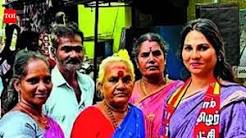
CHENNAI: “Reach for the skies, Villivakkam (vinnai thodum Villivakkam)”, is her campaign slogan. It could as well be her motto in life. Roshini S, 28, is the NTK candidate in the Chennai suburb of Villivakkam and the only transperson contesting the state assembly polls this year. “I was told the party was looking to field a transgender candidate, and I fit their requirements. Today, the people I meet as well as party cadres are convinced by the way I speak and connect with the public,” said Roshini, who joined NTK in Jan. Roshini, a social activist with an interest in environmental issues, is from Trichy. Asked how she ended up as the Villivakkam candidate, she said it was her party’s call. She had an interview with NTK supremo Seeman, where he asked her about her interests and what issues she would take up, after which he offered her the Villivakkam seat. Roshini has been a follower of Seeman for a decade. “We must ensure safety for our future generations, our land and our Tamil culture. I am trying to convey this to the people,” she said. “If I win this assembly election, the people of Villivakkam and I will make history by electing the first transwoman candidate.” Roshini begins her campaign at 9am and spends a couple of hours meeting people. But her main outreach is from 4.30pm till around 10pm, when she goes from door-to-door talking to people about her plans. She wants to identify school dropouts and set up tuition centres to help them, promote women’s entrepreneurial education, encourage forgotten Tamil cultural art forms, campaign against drug use, identify employment opportunities for youth and women, and take up environmental initiatives. Roshini says that she is seen as a sister by the public, rather than a transwoman. “I have barely seen two transgender persons in my constituency. I hope they will vote for me. But people here do not view me as a trans candidate, they see me as their sister,” she said. Roshini is contesting against Karthik Mohan of DMK, S R Vijayakumar of AIADMK, and Aadhav Arjuna of TVK. She is not the first transperson to contest assembly polls in TN. Courtesy : TOI Note: This news is originally published on https:/timesofindia.com/bha and is used purely for non-profit/non-commercial purposes, especially human rights
Transgender community protests: Jamshedpur transgender activists oppose new amendment law; Claim it undermines self-identification rights

Jamshedpur: The transgender community on Monday staged a protest outside deputy collector’s office as part of their ongoing opposition to the Transgender Persons (Protection of Rights) Amendment Act 2026. Claiming that the new Act has changed the definition of the transgenders, they claimed that the law has taken away their fundamental right to self-determination of the gender. “The Act grants state-appointed medical experts the power to determine whether a trans persons’ identity is legally valid. This is against the demands of the decades-long transgender movement in India,” said Amarjeet Singh, founder of the NGO Utthaan Community Based Organization (CBO) which works for the transgenders’ cause. Stating that the amended law violates the 2014 NALSA judgement of the Supreme Court, Singh said that making identity conditional is not a procedural change but exclusion in practice. Organisation member Arpit said that the hard-won rights of the transgenders people of the country have suffered a major reversal with the enactment of the new law. “This law is against the International Human Rights standards which provide for self-declared identity to form the basis for access to social security measures, benefits and entitlements,” Arpit said. He said that in the 2011 census, 4,87,803 individuals were recognised as third gender and so far, only 32,500 have identity cards which is essential for access to the govt welfare schemes. “The amended law will pose fresh obstacles in the identification of the third gender as none would like a medical examination for determining the trans gender,” said Priyanka. Courtesy : TOI Note: This news is originally published on https:/timesofindia.com/bha and is used purely for non-profit/non-commercial purposes, especially human rights
Defiance or sabotage? What AAP’s move in Kerala signals for Congress in assembly polls
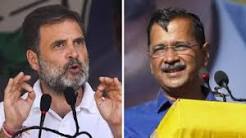
NEW DELHI: Does Aam Aadmi Party not want Congress to win in Kerala assembly polls? INDIA bloc’s inability to form a unified front ahead of the Kerala assembly polls was exposed spectacularly after Arvind Kejriwal’s Aam Aadmi Party (AAP) released successive lists of candidates, signalling its intent to fight a full-scale battle across all 140 seats in Kerala. The southern state, recently rechristened Keralam in a nod to its cultural and linguistic heritage, now stands as the latest battleground where AAP’s ambitions clash head-on with Congress. Kerala’s electoral rhythm has long resisted continuity, with voters mostly denying incumbents a second straight term. That pattern places Congress, the principal opposition, in a seemingly favourable position in the race for power in Thiruvananthapuram. Yet, AAP’s assertive entry adds a twist. Is Kejriwal’s party merely expanding its footprint, or subtly complicating Congress’s path to power? With limited organisational depth in the Malayalam-speaking state, AAP may not hold significant relevance, but with Arvind Kejriwal and his team emerging from the shadow of the Delhi liquor case, their presence could still, if only marginally, alter the political equation in Kerala. WWRpQ-party-wise-seat-share-across-years-in-kerala-assembly- The ruling Left, also part of the broader opposition fold, remains Congress’s primary rival, while the BJP trails as a distant third. In this triangular contest, AAP may not significantly dent the Left or the BJP, but it could influence the margins where elections are often decided, by chipping away at Congress’s vote share just enough to alter the final verdict. Is Delhi’s revenge being served in Kerala? 2025 began with the startling defeat of the Aam Aadmi Party in Delhi. Earlier, the reluctant allies, AAP and Congress had decided to contest separately, with Congress, having little to lose, launching a belligerent campaign against the ruling Arvind Kejriwal-led dispensation. The grand old party also found an opening as the Kejriwal cabinet came under the scanner in the Delhi liquor policy case, with agencies like the CBI and ED probing the matter. Several senior AAP leaders, including Kejriwal and his deputy Manish Sisodia, faced legal trouble, leading to a phase where the government functioned under the chief ministership of party colleague and loyalist Atishi. rBatq-ldf-retained-power-in-the-2021-kerala-state-poll- While AAP’s defeat ultimately came at the hands of the BJP, Congress also played a significant, if indirect, role in preventing its INDIA bloc ally from securing a fourth consecutive term. The “vote-cutting” factor proved crucial in several constituencies, including New Delhi, where Sandeep Dikshit, son of former chief minister Sheila Dikshit, was fielded against Kejriwal. Though he finished a distant third, the votes he secured contributed to Kejriwal’s defeat and helped the BJP’s Parvesh Verma emerge as a “giant killer.” Hypothetically, had those votes gone to Kejriwal, the outcome might have been different. The AAP’s tally fell sharply from 62 to 22 seats, while Congress once again failed to open its account. The herculean efforts that brought AAP and Congress into an arranged marriage to counter the strong force of the BJP in the 2024 Lok Sabha elections, despite years of political bitterness, unravelled once again in the 2025 assembly polls, reflecting a familiar pattern of rivalry. ASSEMBLY POLLS4 (3) AAP, which rose from the India Against Corruption movement led by Anna Hazare, had directly challenged the government led by Sheila Dikshit and went on to establish a dominant hold over Delhi, reducing Congress from a ruling force to total insignificance. The Congress, once under Sheila Dikshit’s strong leadership for 15 years, has failed to win a single seat in the last two assembly elections (2020 and 2025), and has also drawn blanks in three consecutive Lok Sabha polls (2014, 2019, and 2024). Just as Congress dented AAP’s prospects in the Delhi assembly, AAP may now impact Congress’s chances in states like Kerala, as it seeks to maintain its relevance within the national opposition space. Coalition to confrontation Lok Sabha allies turned Assembly rivals, the battle between the estranged partners was anything but graceful. At one rally, Arvind Kejriwal did not hold back: “The problem with Congress is its sense of entitlement. They think they have a divine right to lead the opposition just because of their past, even when they have zero presence on the ground. They are not fighting the BJP; they are fighting regional parties that actually defeat the BJP. In Delhi, Congress is nothing but a ‘vote-cutter’ meant to help the BJP.” Congress, in turn, capitalised on the troubles surrounding the Delhi excise policy case, hitting AAP where it hurt the most. Rahul Gandhi and Priyanka Gandhi Vadra led rallies across Delhi, branding Kejriwal and other AAP leaders as “corrupt.” In one such rally, Rahul Gandhi remarked: “Kejriwal ji keeps lying. The way Narendra Modi lies, Kejriwal lies too. There isn’t much difference between them. But I will tell you one thing—Kejriwal is probably more cunning and sophisticated than even the Prime Minister in how he misleads people.” VSGWw-kerala-assembly-elections- Weeks later, when a Delhi court discharged Kejriwal and his colleagues in the liquor policy case, Congress alleged it was part of a larger BJP strategy of “Congress-mukt Bharat.” Congress spokesperson Pawan Khera attacked the BJP, calling it an “Icchadhari naag” (shape-shifting serpent), and accused it of using central agencies as political tools. Kejriwal retaliated sharply, questioning Congress’s claims and targeting its leadership: “Kejriwal went to jail. Did Robert Vadra go to jail? Sanjay Singh went to jail. Did Rahul Gandhi go to jail? Did Sonia Gandhi go to jail? What is Congress saying? Does it have no shame?” To diminish Congress’s footprint? Congress, the grand old party with roots in the independence movement, has been grappling with vulnerability for over a decade. Beyond Delhi, it has steadily lost ground across multiple states, allowing the BJP to expand its dominance in national politics. This decline has also opened space for other players to challenge its position within the opposition. Among states like West Bengal, Tamil Nadu, Assam, and Kerala which are going to polls, Kerala appears to be the one where Congress still has a
Rahul’s citizenship issue: HC sets hearing on Apr 15

Lucknow: The Lucknow bench of Allahabad high court on Monday heard at length the case related to alleged dual citizenship controversy pertaining to Congress MP and Leader of Opposition in Lok Sabha Rahul Gandhi. The hearing took place in the chamber of the court as it was pointed out by the Central govt that the issue was sensitive. The bench has now fixed April 15 as the next date of hearing in the matter. A bench of Justice Subhash Vidyarthi passed the order on the petition filed by S Vignesh Shishir, a BJP worker of Karnataka. The petitioner has challenged the Jan 28 order of the special MP/MLA court, Lucknow whereby it had rejected his plea to order registration of FIR against Rahul Gandhi. The MP/MLA court had said that it was not competent to decide the citizenship issue. The petitioner seeks registration of FIR against Rahul Gandhi and detailed probe against him in the matter . He has levelled several allegations against Rahul Gandhi under BNS, Official Secrets Act, Foreigners Act and Passport Act. Hearing the matter earlier, the bench had asked the Central govt as to what action was taken by it on a complaint moved against Rahul’s British citizenship. Courtesy : TOI Note: This news is originally published on https:/timesofindia.com/bha and is used purely for non-profit/non-commercial purposes, especially human rights
‘Who Else’ campaign reflects Pinarayi’s arrogance: Rahul

Thrissur/Koz: Congress leader Rahul Gandhi on Monday lashed out at the advertisement campaign of the LDF with the huge portrait of chief minister Pinarayi Vijayan and the tagline ‘Who Else’ and alleged that both Vijayan and Prime Minister Narendra Modi share the arrogant self-perception that only they can rule the state and the country. Addressing public meetings at Kunnamkulam and Mala in Thrissur, Rahul alleged that both Pinarayi and Modi believe that no one else has the capacity to rule the state and the country, and are intolerant to criticisms and strive to smash those who question them. “How can a chief minister go to the people with the question, ‘Who Else’ to rule. It is the height of arrogance. In fact, I would advise the CM to remove those billboards from the streets of Kerala. Every time a Keralite looks at those boards, he or she is made to feel insulted because he or she is being told that he or she cannot rule the state,” Rahul said. “Precisely it is this arrogant mindset that we are fighting. It is the same mindset that Narendra Modi, Amit Shah and Himanta Biswa Sarma (Assam chief minister) have. Leaders must understand that wisdom lies with the people, in the farmers, workers, people who run businesses, and the like. And the job of the leader is to understand this wisdom and work with the people,” he said. Reiterating the allegation of BJP-CPM deal, Rahul said Modi and Pinarayi avoid mutual criticism and support each other. “Pinarayi had tortured those who waved black flags at him. Modi lets the investigating agencies lose against all those who criticise him. Over 30 cases have been slapped against me and I was interrogated for over 55 hours at a stretch by the central agencies. In fact, Modi takes pain not to talk about the Sabarimala gold heist in order to protect Pinarayi,” Rahul said. Signing of the India-US deal indicates that US President Donald Trump controls Modi. No Prime Minister would have signed such an agreement with the US, which has sacrificed all interest of India. Similarly, the Kerala CM is controlled by Modi and Shah, Rahul said. LDF compromised its ideology: Priyanka Meanwhile, Wayanad MP Priyanka Gandhi alleged that LDF has entered into a secret deal with BJP compromising its ideology, accountability and sense of responsibility to retain power. Campaigning for KPCC president Sunny Joseph in Iritty, Priyanka said the people of Kerala have been victims of a corrupt govt. “We have seen massive thefts in Sabarimala but there has been no word from the Prime Minister. All of us who oppose PM and raise our voice against him have ED cases, income tax cases and CBI cases on us but not a single one on the chief minister of Kerala,” she said. Courtesy : TOI Note: This news is originally published on https:/timesofindia.com/bha and is used purely for non-profit/non-commercial purposes, especially human rights
Undoing hard-won transgender rights
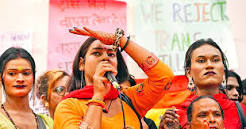
Chittajit Mitra on why the new transgender law is regressive On 13 March, the social justice and empowerment minister Virendra Kumar tabled the Transgender Persons (Protection of Rights) Amendment Bill, 2026 in the Lok Sabha. When I first heard this, I thought, in all my naïveté, they’re finally bringing in the changes the transgender community has been asking for. Provisions for horizontal reservations, for example, or just punishment for the different kinds of violence (against trans people) that had been clubbed together in the 2019 Act. But reality bit hard. The new Bill, instead of expanding the rights of the community, retracts almost all the rights they had won after fighting for decades. Even amid demands by the Opposition that the Bill be referred to a select committee for wider consultation, and a plea by lawyers and activists that the President withhold assent, the regressive provisions are now the new law. Why are these changes regressive? How do the amendments undermine or violate fundamental rights and dilute protections under Article 14 (equality before the law), Article 15 (non-discrimination), Article 19 (freedom of expression) and Article 21 (protection of life, personal liberty, bodily integrity)? First, the new law narrows the definition of ‘transgender person’. It delegitimises self-identification and empowers medical boards and district magistrates to grant recognition. In doing this, it goes against the Supreme Court’s landmark NALSA ruling (of 2014) that recognised the constitutional rights of transgender persons and established the principle of self-identification of gender identity. The system of graded punishments introduced in the new law, ostensibly to criminalise coercion/ deception/ allurement to make someone present themselves as transgender, uses overbroad language where even gender-affirming care can be interpreted as coercion. It ignores the community’s lived realities and potentially criminalises their support systems. I grew up in Uttar Pradesh listening to rumours about the transgender community: they are supposedly people with indeterminate genitals; they are involved in stealing and kidnapping children; they force people to castrate themselves… and so on. This kind of demonisation, which marginalised the community, now has the force of law behind it. In narrowing the definition of ‘transgender person’ to specific socio-cultural identities (kinnar, hijra, aravani, jogta) plus intersex variations, and in folding intersex persons into the transgender category — even though intersex variations are biological and distinct from gender identity — the new law disenfranchises individuals who don’t belong to these socio-cultural groups (what about trans groups like the Nupi Manbi from Manipur?) and non-binary, gender-diverse individuals. It attaches biological markers to ‘transgender-ness’ that contradict internationally accepted definitions of gender identity. As the European Institute for Gender Equality puts it, gender identity is ‘each person’s deeply felt internal and individual experience of gender, which may or may not correspond to the sex assigned at birth, including the personal sense of the body (which may involve, if freely chosen, modification of bodily appearance or function by medical, surgical or other means) and other expressions of gender, including dress, speech and mannerisms’. It reintroduces the formation of district-level medical boards to effectively certify transgender persons. This contentious provision has a history: it was initially proposed in 2016, flagged by activists as medical and bureaucratic gatekeeping and as a violation of the NALSA judgement (2014) and then withdrawn in the 2019 Act. The 2019 Act was far from ideal. Its disregard for the community’s right to dignity was conspicuous in the manner that violent crimes like rape and physical abuse were clubbed with milder offences against the community (like obstructing their use of public spaces) under a catch-all provision, carrying the same light punishment. Is it really, then, about ‘Protection of Rights’ — as the phrasing of the law may have you believe? When transgender members of the National Council for Trans Persons (NCTP) were called from different parts of the country for an urgent meeting with social justice minister Virendra Kumar, he thought it better to skip the interaction and sent bureaucrats instead. Resigning from the NCTP on 25 March (when the bill was passed by Rajya Sabha), Council members Kalki Subramaniam and Rituparna Neog shared what transpired during the deliberations. Asked about the unequal rape laws, for instance, the bureaucrats cited “biological differences” between trans women and cisgender women. This reveals the discriminatory mentality and the bio-essentialism — the belief that biological factors are the essence of who a person is — sitting at the core of the new law. Another treacherous amendment introduces severe punishment (10 years to life imprisonment) for attempts to ‘compel’ any person or child ‘to outwardly present a transgender identity’. The clause may appear harmless, even benevolent, but the overbroad definition of abuse can have a chilling effect on the support systems the community has relied on — NGOs, CBOs (community-based organisations), even traditional groups. Many trans individuals face natal violence and are forced to hide their true self at home. If they run away and seek refuge at any of these institutions, their families can easily file an ‘abduction or allurement’ case against those who gave them a safe space. This archaic understanding that parents or natal families can do no harm to the child has been proven wrong time and again, and yet we are blindly handing over the rights of transgender individuals to the family. Finally, the Indian queer community must understand that politics based on the disenfranchisement of any section of society will one day come round to haunt them as well. A small section of India’s LGBTQ+ has been desperately trying to seek validation from majoritarian forces; the new law should tell them where they stand. The malicious attempt to further marginalise and undercount us in the upcoming Census will not be tolerated. It is time to raise our voices as one. India travel guide Chittajit Mitra Chittajit Mitra (he/they) is a writer and translator based in Allahabad Courtesy : National Herald Note: This news is originally published on https:/nationalherald.com/bha and is used purely for non-profit/non-commercial purposes, especially human rights
Petition filed in SC challenging amended ‘transgender persons’ law
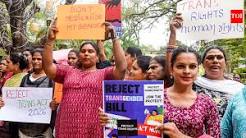
NEW DELHI: In less than a week since the controversial amendments involving definition of transgender persons, omission of “self-perceived identity” as the basis for approval for getting a TG certificate from a district magistrate and introduction of a medical board among other things were notified as law, a writ petition has been filed before the Supreme Court challenging the constitutional validity of the Transgender Persons (Protection of Rights) Amendment Act, 2026. The Bill to amend the 2019 law was passed by Lok Sabha on March 24 and Rajya Sabha on March 25 with a voice vote amid strong objections from the opposition that demanded that the bill be referred to a standing committee for wider consultations. It became law after President of India Droupadi Murmu gave her assent on March 30. The petition challenging the law has been filed by well known transgender rights activists Laxmi Narayan Tripathi and Zainab Patel. At its core, the petition raises a key concern asking whether the state can redefine identity in a way that takes away a person’s right to define themselves.Incidentally, Tripathi and Patel were lead petitioners in the landmark NALSA v. Union of India (2014) case, which recognised the rights of transgender persons under the Constitution. In their current petition the activists have argued that the 2026 amendment changes the foundation of how transgender identity is understood in law. “It moves away from self-identification and replaces it with a narrow, state-driven definition based on fixed categories and medical conditions. In doing so, it departs from what the Supreme Court had already affirmed in NALSA that gender identity is a matter of personal dignity and choice,” the activists highlight. One of the central concerns raised is the replacement of the earlier definition of a transgender person with a closed framework. The petition points out that many transgender persons who do not fall within these categories could be left without legal recognition. The petition challenges the removal of the explicit right to self-perceived gender identity, and flags provisions that blur the line between transgender identity and situations of coercion or trafficking. It raises concerns that existing rights, including identity documents issued under the earlier framework, may be put at risk. The challenge is based on violations of fundamental rights under Articles 14, 15, 19, and 21 of the Constitution, along with established principles in international human rights law. “This law takes us backwards. In NALSA, the Supreme Court affirmed that our identity comes from within, not from a checklist created by the State. Today, that core principle is being undone. As petitioners in that very case, we have returned to the Court because this amendment does not just change definitions, it changes lives. It risks pushing many transgender persons outside the protection of the law itself,” Tripathi and Patel said in a joint statement. “This is not a technical correction. It is a constitutional question about dignity, autonomy, and whether the State can decide who we are,” they said. Both Tripathi and Patel have also previously served as members when the National Council for Transgender Persons – a statutory body under the law. Tripathi is the founder of Astitva Trust and National Network for Transgender Persons and Patel, a ‘Diversity Equity and Inclusion’ strategist who is also the founder of Pride Business Network Foundation. Courtesy : TOI Note: This news is originally published on https:/timesofindia.com/bha and is used purely for non-profit/non-commercial purposes, especially human rights
Tamil Nadu assembly polls 2026: ‘Dalits will not forgive DMK for Vengaivayal,’ says Anbumani Ramadoss

Chennai: Citing reports that dalits of Vengaivayal village in Pudukottai will boycott the elections unless the perpetrators of 2022 issue were arrested, PMK president Anbumani Ramadoss said on Sunday that dalits will not forgive DMK. He alleged that DMK govt failed to act decisively and ignored dalit grievances, warning that the community would “teach a fitting lesson” to the ruling party in the election. “Even after three years, justice has not been delivered. Instead, those affected have been treated as accused,” Anbumani posted on X. The issue dates back to Dec 2022, when human faeces was found mixed in a drinking water tank in Vengaivayal.tnn Courtesy : TOI Note: This news is originally published on https:/timesofindia.com/bha and is used purely for non-profit/non-commercial purposes, especially human rights
UP shocker: Man slits Dalit girlfriend’s throat in Deoria, flees; case lodged

Police officials said that the girl and Shivam Singh were in a relationship for the past four years, adding that some suspects have been detained for questioning. The police are actively searching for the absconding accused. A 17-year-old Dalit girl was allegedly killed by her boyfriend and his associate in Uttar Pradesh following an altercation linked to their relationship, officials said on Sunday. Police have registered a case against the boyfriend and his friend. The incident took place in Deoria district on Saturday night, when the accused allegedly slit the victim’s throat. According to Circle Officer Sinti Sanjay Reddy, Anjali, a resident of Nautan Hathiyagarh village, was killed by Shivam Singh and his accomplice. On Saturday night around 8 pm, Anjali went out with her younger sister and brother to get a mobile phone repaired near Sahodar Patti Chowk. Two youths on a motorcycle confronted them and started beating the three siblings. Seeing the knife, the children tried to escape. However, the accused chased them into a wheat field, caught Anjali, and stabbed her on the neck. When the siblings tried to run towards their home, the attackers slit Anjali’s throat and fled the scene. By the time the family reached the spot, Anjali had died. Later, police arrived at the crime scene and sent the body for post-mortem. Police officials said that the girl and Singh were in a relationship for the past four years, adding that some suspects have been detained for questioning. The police are actively searching for Singh, who is on the run. Based on the family’s complaint, Singh and his associate have been booked for murder under the SC/ST Act. Courtesy : India Today Note: This news is originally published on https:/indiatoday.com/bha and is used purely for non-profit/non-commercial purposes, especially human rights