
As temperatures soar, water woes for tribals rise
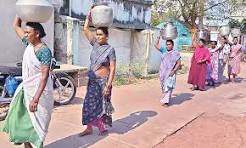
Anakapalli: Astemperatures soar, tribals of a few villages near Devatamma area and neighbouring hamlets at Ravikamatham mandal have to think twice before using water for their daily needs as taps installed four years back turned into mere showpieces. For the tribals residing at Ravikamatham mandal of Anakapalli district, in Kothakota panchayat centre water woes continue to trouble them. Over 200 Dalit families living across Devata Amma area and neighbouring tribal villages are facing severe hardship due to inaccessibility to safe drinking water. What makes the situation more alarming is that the issue is not new but reflects years of neglect, broken promises and apathy of the officials concerned. Even as public water taps were installed in the area four years ago, followed by household pipeline connections three years ago, respite to residents did not last for long. Under the ambitious Jal Jeevan Mission, the Central government sanctioned funds amounting to Rs 6 crore to ensure a reliable water supply system for every household. Initially, water was supplied for 15 days on a trial basis, raising hopes among residents but the supply abruptly stopped, leaving families disappointed. Today, tribals in the area are forced to ration water to an extent that bathing is possible only once every two days. Many are compelled to travel to distant areas in search of water, carrying it back home in containers and pots, an exhausting routine that has become their daily norm now. Pointing out that despite multiple protests and appeals over the years, tribals express anguish that no permanent solution has been provided to fix their water woes. The infrastructure now stands as a stark reminder of administrative failure, with water pipelines lying unused. Officials had recently performed a groundbreaking ceremony for the construction of a new water tank, assuring residents that water supply would resume soon. However, those promises remain unmet. Unable to bear the apathy, Dalit women took to streets carrying empty pots in a display protest, symbolising both their daily struggle and demand for immediate action. Demanding justice and immediate intervention, the protest saw participation from local Dalits, including CPM district executive member K Govinda Rao, along with Dalit women leaders Eshwaramma, K Lavatalli, G Kalyani and Peddamma. The unfolding crisis in Kothakota indicates how access to safe drinking water for the villagers remains elusive. By Vasu Potnuru Courtesy : THI Note: This news is originally published on https:/thehansindia.com/bha and is used purely for non-profit/non-commercial purposes, especially human rights
Babu Jagjivan Ram’s life is an inspiration to all: Bharath

Kurnool: Paying rich tributes on the birth anniversary of Babu Jagjivan Ram, State Minister for Industries, Commerce and Food Processing TG Bharath Gupta described the veteran leader as a towering personality who dedicated his life to the upliftment of marginalized communities. The minister garlanded the statue of Jagjivan Ram at RS Road in Kurnool city on Sunday and participated in the commemorative events organized to mark the occasion, drawing the presence of local leaders and supporters. Speaking at the event, the minister highlighted that Babu Jagjivan Ram played a crucial role in shaping the nation’s political landscape and stood firmly for the rights of the underprivileged. He said Jagjivan Ram’s lifelong struggle for social justice and equality significantly contributed to empowering Dalits and other weaker sections, ensuring their rightful place in society. His leadership and vision, the minister added, continue to serve as a guiding force in India’s democratic journey. The minister further noted that Jagjivan Ram’s dedication to public service, administrative excellence, and commitment to inclusive growth made him one of the most respected leaders in Indian history. He emphasized that the values upheld by such great personalities remain relevant even today, especially at a time when society continues to strive for equality and justice across all sections. Urging the younger generation to take inspiration from such stalwarts, Bharath called upon youth to study the lives and contributions of eminent leaders like Babu Jagjivan Ram. He stated that understanding their struggles and ideals would not only instill a sense of responsibility but also help in building a more equitable, progressive, and united society. Courtesy : THI Note: This news is originally published on https:/thehansindia.com/bha and is used purely for non-profit/non-commercial purposes, especially human rights
‘Hate-spreading CM’: Rahul Gandhi slams Himanta Biswa at Assam poll rally

NEW DELHI: Congress MP and leader of opposition in Lok Sabha Rahul Gandhi on Sunday launched a sharp attack on Assam chief minister Himanta Biswa Sarma, calling him the ‘most corrupt and hate-spreading CM’. He alleged that his party’s ‘Babbar Shers’ would put him in jail. Addressing a poll rally in Assam’s Biswanath, Rahul Gandhi said: “Assam has the most corrupt, hate-spreading chief minister of India. He knows the ‘Babbar Shers’ of the Congress party are going to put him in jail.” He also outlined key promises made by Congress for the state, focusing on welfare measures and community recognition. Rahul Gandhi said that the party would grant Scheduled Caste/Scheduled Tribe status to six communities in Assam and improve wages for tea workers. “We are clearly saying that we will give SC/ST status to Assam’s 6 communities. We have also clearly mentioned in the manifesto that we will give Rs 450 per day to the tea workers,” he said. Highlighting economic and social support initiatives, Rahul Gandhi said the Congress government would roll out multiple schemes within a short time frame if voted to power. “As soon as we form the government in Assam, we will implement the six decisions taken for Assam. Every woman will receive a monthly cash transfer into her bank account without any conditions, and those who want to start a business will be given Rs 50,000. We guarantee that within 100 days, we will punish the accused in the Zubeen Garg case and action will be taken.” Targeting the central leadership, Rahul Gandhi also alleged that Assam’s governance is being controlled from New Delhi. “Donald Trump controls Narendra Modi, and Narendra Modi and Amit Shah control your CM. Assam is run from Delhi.” He further intensified his attack on Sarma, alleging corruption involving his family and warning of strict action. “He (CM Himanta Biswa Sarma) also made a blunder by including his family in the corruption, now even his family will get accused.” The Congress leader also invoked noted Assamese singer Zubeen Garg, drawing a contrast between the party’s ideology and what he described as the BJP’s divisive politics. He said the party stands for unity and harmony. “Zubeen Garg worked his entire life to unite people of Assam, he never misbehaved with anyone. The Congress philosophy is also like that, to spread love against hatred,” he said. He added that legal action against the chief minister would proceed even if an apology is offered. “Let him speak for some more days. After that, the Congress will form government in Assam and legal action will follow even if he asks for forgiveness,” the Congress leader said. The Assam state assembly elections are scheduled for 9 April, with results to be declared on 4 May. Courtesy : TOI Note: This news is originally published on https:/timesofindia.com/bha and is used purely for non-profit/non-commercial purposes, especially human rights
The missing contest: Why 2026 elections are not about PM Modi and Rahul Gandhi

As nearly 17.4 crore voters prepare to cast their ballots across Assam, Kerala, Tamil Nadu, West Bengal, and Puducherry in the coming weeks, the familiar contours of electioneering are visible — Prime Minister Narendra Modi’s high-decibel rallies and Rahul Gandhi’s ideological messaging in the poll-bound states. Yet, the election discussion remains far from the two national leaders. The 2026 assembly election battles are decisively centred on regional leadership, local welfare models and state-specific political equations, rather than on a PM Modi vs Rahul Gandhi binary. The power test of regional satraps In the upcoming elections, the spotlight is firmly on Mamata Banerjee in West Bengal and MK Stalin in Tamil Nadu. At the same time, contests in Kerala and Assam, featuring Pinarayi Vijayan and Himanta Biswa Sarma, are expected to be equally intense. Though these battles are unfolding in different political arenas with distinct players, they are tied together by a common theme: it’s do-or-die for regional leaders. For the BJP, these elections represent an opportunity to expand its footprint in states that have traditionally resisted it. However, for regional parties the stakes are significantly higher. This time, the elections are not just about retaining power, but will also decide their influence within the INDIA bloc at the national level. Mamata Banerjee In West Bengal, the contest is once again centred on Mamata Banerjee’s entrenched political base, including strong support from Muslim voters, who make up roughly a third of the electorate, alongside backing from other sections. For Mamata Banerjee, Bengal is not just a state – it is her core political identity and power base. The TMC has little presence outside Bengal. Losing here would mean losing national relevance overnight. After years of resisting the BJP’s rise, another strong challenge tests whether her grip remains intact or is beginning to loosen. A reduced mandate, even if not a loss, weakens Mamata’s stature within the opposition space as well. The BJP, while firmly established as the principal challenger, continues to grapple with converting its earlier gains into a decisive advantage. MK Stalin For MK Stalin and his Dravida Munnetra Kazhagam (DMK), the 2026 Tamil Nadu election is not a routine electoral test — it’s a decisive moment that will define both political longevity and legacy. Having come to power in 2021 with a strong mandate, Stalin now faces the weight of governance. This election is less about promises and more about performance. Welfare delivery, administrative control, and economic management will be closely scrutinised. Even a reduced majority could signal early signs of voter fatigue, altering the perception of DMK’s dominance. The stakes are amplified by Tamil Nadu’s political history of alternating regimes. A second consecutive victory would allow DMK to break its own jinx of now coming to power consecutively. For DMK, it’s not just about winning election this time, but to also perform with high strike rate to keep an upper hand over Congress in the alliance. Edappadi K Palaniswami Complicating matters further for Stalin is Edappadi K Palaniswami. and the All India Anna Dravida Munnetra Kazhagam (AIADMK) that remain a key challenger. But for EPS, the election is about being relevant. Since the death of J Jayalalithaa, the AIADMK has struggled to retain its earlier dominance. EPS has gradually consolidated control within the party, but this election is his first full-scale test as the undisputed face of the organisation, especially when his arch-rival O Panneerselvam has joined hands with MK Stalin. A strong performance would validate his leadership and re-establish AIADMK as a credible alternative to the ruling DMK. A weak showing, however, could reopen internal fault lines and leadership questions. regional leaders2 Seeman For Seeman and the Naam Tamilar Katchi (NTK), this election is not about immediate power but about breaking the ceiling of relevance. Over the past few elections, NTK has carved out a distinct political identity rooted in Tamil nationalism. However, this support has largely remained a vote share without seats. In the 2021 elections, the NTK got 6.6% vote share, more than the BJP and the Congress. The central question this time is whether that support can finally translate into seats. For Seeman, the stakes are deeply personal and political. His appeal as a mobiliser, especially among sections of youth and first-time voters, has kept NTK visible. But repeated failure to win seats risks creating a perception of the party as a permanent outsider, strong on rhetoric but weak on electoral conversion. Pinarayi Vijayan For Pinarayi Vijayan and the Communist Party of India (Marxist)-led Left Democratic Front, the 2026 Kerala election is a defining test of durability rather than emergence. Vijayan made history in 2021 by breaking Kerala’s long-standing pattern of alternating governments, securing a rare consecutive term for the Left. That victory raised the stakes for 2026. A third straight win would not only cement his leadership but also mark an unprecedented political shift in a state known for its cyclical mandates. This election is also a referendum on governance. Vijayan’s tenure has been marked by an emphasis on welfare delivery, infrastructure, and crisis management, but it has also faced criticism over issues ranging from financial stress to allegations of administrative overreach. With anti-incumbency likely to accumulate over two consecutive terms, the margin for error is significantly narrower. Beyond Kerala, the outcome carries symbolic weight. Vijayan is one of the most prominent Left leaders in the country and a victory would reinforce the relevance of Left politics in India’s current political scenario. A defeat, on the other hand, means the end of the Left governance in India, ironically on the eve of Karl Marx’s birthday. N Rangasamy For N Rangasamy and the All India NR Congress (AINRC), the 2026 Puducherry election is about political survival and relevance in a tightly contested Union Territory. Rangasamy, often seen as Puducherry’s most recognisable regional face, has built his appeal on a governance-first image and personal credibility. However, leading a relatively smaller regional outfit, his political space is inherently fragile. A strong mandate would reaffirm his
Dalit Father and Son Beaten in Mainpuri; Thugs Unleash Violence Over Ribbon-Cutting at Fair

It is alleged that the *Pradhan* (village head) and his supporters were armed with illegal weapons; following the assault, they fled the scene after openly issuing death threats. Both the father and son sustained serious injuries in the incident. In Mainpuri, Uttar Pradesh, a Dalit father and son were beaten by a group of thugs over a dispute regarding the ribbon-cutting ceremony at the Radha-Krishna Fair. The incident took place in Lakhanmau village, under the jurisdiction of the Barnahal police station, where the *Pradhan* and his supporters assaulted the Dalit father and son. Despite the presence of the police, the thugs brutally beat and intimidated the victims without any hindrance. In Mainpuri, Uttar Pradesh, a Dalit father and son were brutally beaten by a group of thugs over a dispute concerning the ribbon-cutting ceremony at the Radha-Krishna Fair. A video of this entire incident is rapidly going viral on social media. It is reported that the *Pradhan* and his supporters took strong offense to a member of the Dalit community performing the ribbon-cutting ceremony at the Radha-Krishna Fair, which was organized in Lakhanmau village under the Barnahal police station area. Enraged by this, the thugs launched a violent assault on the Dalit youth and his father. Shockingly, the entire incident unfolded in the presence of the police; however, the thugs were so emboldened that they showed no regard for anyone. Throughout the assault, the young victim kept pleading for mercy, but the accused remained unmoved. **Injured Father and Son Referred to Saifai** It is alleged that the *Pradhan* and his supporters were armed with illegal weapons; following the assault, they fled the scene after openly issuing death threats. Both the father and son sustained serious injuries in the incident; they were initially admitted to a local hospital but were subsequently referred to Saifai after their condition deteriorated. **Case Registered Against 5 Named Individuals and Others** The victims have filed a formal complaint at the police station against five named individuals and several unidentified persons. Currently, the police are engaged in investigating the entire matter. Reported by: Pramod Kumar, Edited by: Abhishek Pareek Courtesy: Hindi News
Congress Targets Rajasthan Govt Over Ajmer Dalit Rape Case
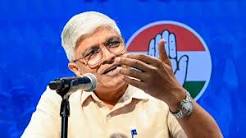
New Delhi: The Congress on Saturday launched a sharp attack on the Rajasthan government, alleging that those accused in the gang rape of a 15-year-old Dalit girl in Ajmer are being shielded and that the victim’s family has been left without adequate protection. The party also flagged what it described as a broader rise in atrocities against Dalits in BJP-ruled states. Speaking at a press conference, Rajendra Pal Gautam said the handling of the case reflects serious lapses by the police. He stated that the incident occurred in July 2024 but came to light only after the minor became pregnant. A Zero FIR was initially registered in New Delhi and later transferred to Ajmer. Despite the victim recording her statement before a magistrate under Section 164 of the CrPC, Gautam alleged that no arrests were made for nearly eight months. He said that out of the three accused, only one has been arrested so far, while the other two were briefly detained under preventive provisions and subsequently released. Gautam further alleged that on March 16, just ahead of a scheduled court hearing, the victim’s family was attacked with axes after they refused to agree to a compromise. He added that a counter-FIR was filed against the family, though it was later closed. Raising legal concerns, Gautam pointed to alleged violations of the Scheduled Castes and Scheduled Tribes (Prevention of Atrocities) Act. He said the authorities failed to provide protection to the victim as mandated under Section 15(A) and did not take action against officials responsible for negligence under Section 4. He demanded immediate security for the victim and her family, adequate compensation, and strict legal action, including the arrest of police officials found to have violated the law. Highlighting a wider trend, Gautam cited data claiming that 76 percent of reported atrocities against Dalits are concentrated in five BJP-ruled states. He said Uttar Pradesh, Madhya Pradesh and Rajasthan account for the highest number of such cases, followed by Bihar and Maharashtra, and argued that the figures point to a systemic issue requiring urgent attention. The Congress also referred to related political developments, noting that Rahul Gandhi has written to the Prime Minister seeking withdrawal of cases linked to the 2018 protests held to protect the SC/ST Act. Gautam said this reflects the party’s continued focus on safeguarding the rights of marginalised communities. He also announced that Rahul Gandhi will flag off a “Run for Ambedkar, Run for Constitution” marathon in Delhi on April 12 to mark the birth anniversary of B. R. Ambedkar, calling on people to participate in large numbers. The Congress maintained that the Ajmer case underscores the need for accountability, stronger enforcement of laws, and timely justice for victims, warning that failure to act decisively would further erode public trust in the system. By Purna Singh Courtesy : THI Note: This news is originally published on https:/thehansindia.com/bha and is used purely for non-profit/non-commercial purposes, especially human rights
Vengaivayal: Non-dalits announce poll boycott

Pudukottai: Tensions surrounding the 2022 Vengaivayal water contamination case have resurfaced, with residents of Erayur village in Muttukadu panchayat announcing they will boycott the upcoming election. Non-dalit Hindus of the village erected flex banners in this regard on Friday night. It may be recalled that human waste was found mixed in an overhead water tank supplying water to the dalit village, triggering outrage across the state. Subsequently, CB-CID registered a case alleging involvement of three Vengaivayal residents, ruling out a caste motive. They said it was done due to personal enmity. However, villagers have strongly opposed the charges, claiming innocence and alleging that people from neighbouring Erayur and Muttukadu areas could be responsible. The differing claims have since led to repeated friction between residents of the two villages. In their banners erected on Friday night, Erayur villagers listed several demands, including arrest of the actual culprits in the case, withdrawal of cases filed against them under Scheduled Castes and Scheduled Tribes (Prevention of Atrocities) Act, and other civic issues. Revenue and police officials have begun inquiries into the banner protest. Sources said residents of Vengaivayal have also indicated they may boycott the upcoming polls. Courtesy : TOI Note: This news is originally published on https:/timesofindia.com/bha and is used purely for non-profit/non-commercial purposes, especially human rights
76% of Dalit atrocities in 5 BJP-ruled states: Congress
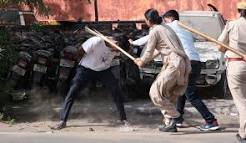
The Congress on Saturday accused the BJP government in Rajasthan of shielding the perpetrators in the gang rape of a 15-year-old Dalit girl in Ajmer and a subsequent life-threatening attack on her family. Addressing a press conference, AICC SC Department Chairman Rajendra Pal Gautam said the police had failed to act and added that atrocities against Dalits were rising in BJP-ruled states. Citing data, Gautam said 76 per cent of cases of atrocities against Dalits were reported from five BJP-ruled states, with Uttar Pradesh, Madhya Pradesh, and Rajasthan topping the list, followed by Bihar and Maharashtra. He said the crime took place in July 2024 but came to light only after the minor became pregnant, following which a Zero FIR was registered in New Delhi and later transferred to Ajmer. Gautam noted that despite the victim recording her statement before a magistrate under Section 164 of the CrPC, no arrests were made for eight months. Article_Author Tribune News Service Courtesy : The Tribune Note: This news is originally published on https:/thetribune.com/bha and is used purely for non-profit/non-commercial purposes, especially human rights
Identity vs dignity: Virudhunagar Dalits to boycott TN polls over caste-based village name

Because of the village name – “Paraicheri” – residents say they are forced into a position of humiliation even at workplaces. Synopsis: Over 60 Dalit families in North Achamthavilthan, Virudhunagar, face daily humiliation as their locality is officially recorded as “Paraiyar Cheri.” Despite petitions for 15 years, the caste-marked name persists in voter lists, Aadhaar, and bank records. Frustrated by inaction, residents have resolved to boycott the 2026 Assembly elections, demanding dignity through a permanent name change. “Hey Suryakala, come here” — this is how Kannan (name changed), a 30-year-old man, calls out to Suryakala, who is over 60 years old, without even a trace of respect. Ironically, Kannan studied in school with Suryakala’s daughter. Not just Suryakala — over 60 families from North Achamthavilthan village in Srivilliputhur taluk of Virudhunagar district have been facing such disrespect and humiliation for years, solely because they belong to the Dalit community. What is more troubling is that not only the general public, but even government records refer to their locality as “Paraicheri,” explicitly marking their caste identity. The residents say that wherever they go, this name subjects them to humiliation and caste-based discrimination. For over 15 years, they have submitted petitions—from local Tahsildar to the Chief Minister—requesting a change in the village name. But as no action has been taken so far and the indignity continues, the residents of North Achamthavilthanhave now announced that they will boycott the 2026 Assembly elections. Village carrying burden of caste humiliation North Achamthavilthan is located in Achamthavilthan revenue village under Achamthavilthan panchayat in Srivilliputhur taluk of Virudhunagar district. While multiple intermediate communities live across the broader village, over 60 families belonging to the Dalit Paraiyar community reside in the northern part. Because of this, the area has come to be referred to as “Paraicheri” — not just by neighboring villagers but also in official records. This name appears in documents such as voter lists, bank records, Aadhaar, and PAN cards. However, in land patta records, the village is still officially recorded as Achamthavilthan. Thus, while some government documents mention Achamthavilthan, others continue to use “Paraicheri.” A Abi, a native of this village who is currently pursuing a PhD in Chennai, shared how this caste-based naming has affected her since childhood. “I did all my schooling in and around my village. We had to go to a neighboring village for school, where students from other communities also studied. They would mock us by calling out our village name, and even write it on classroom desks to ridicule us,” she said. She added that upon hearing the name of their village, some students from certain intermediate castes would even avoid speaking to them. “Not just students, even today, elders from those communities expect us to address even their children with respect, using ‘vaanga, poonga.’ But they, from children to adults, never extend the same respect to us,” she said. Even though Suryakala is over 60, she, and others from her community, are still addressed disrespectfully by people from intermediate castes in the same village, often being called by name without basic courtesy. Abi noted that while the intensity of such behaviour may have reduced over the past decade, it still continues. 15-year-long struggle Because of the village name, residents say they are forced into a position of humiliation even at workplaces. SV Kumar, a resident, has been leading the fight to change the name for over 15 years. “When children go to school, they hesitate to even say the name of our village. Even when we go to work, if someone asks where we are from, we say Achamthavilthan. But those who know will immediately correct it and say ‘No, they are from Paraicheri.’ At that moment, we feel deeply humiliated. We lose the sense of being free individuals and are pushed into a mindset of inferiority, as if we are slaves to others,” he said. Despite years of suffering, residents continue to fight for change. While in manual processes at local offices they manage to get the name recorded as North Achamthavilthan, digital government services like Aadhaar and tax records still reflect “Paraicheri.” “In some cases, during Aadhaar enrolment or updates, we insist and get the name corrected. But many people who cannot argue are left at the mercy of e-service operators, who continue to enter ‘Paraicheri,’” Kumar said. He added that even when opening bank accounts, despite submitting the name as North Achamthavilthan, officials, often local and from other communities, override it and record “Paraicheri.” Even the Election Commission’s voter list continues to carry the caste-based name. This is despite residents submitting forms with the correct name during the recent Special Intensive Revision. “We have submitted petitions to everyone, from the Tahsildar to the Chief Minister. There is no one we haven’t approached. Yet nothing has changed,” Kumar said. Over the past decade, resolutions demanding the name change have been repeatedly passed in the gram sabha. Petitions have been sent at every level. Seeking accountability, Kumar even filed RTI queries with the district collector’s office. According to the RTI response, in March 2023, the Srivilliputhur revenue divisional officer recommended changing the name from “Paraicheri” to North Achamthavilthan and forwarded it to the Virudhunagar district collector. In July 2025, the collector forwarded the recommendation to the Commissionerate of Revenue Administration and Disaster Management in Chennai. However, Kumar says the RTI reply revealed that the request is currently pending at that department. “Our village has central government employees, award-winning teachers, and highly educated graduates. Yet, wherever we go, we are humiliated because of our village name,” said Abi. “No matter how far we progress, the moment we say our village name, people’s perception of us changes. We feel like we are not free individuals. Changing the name will give us the dignity of being equal citizens of this country. It will free the next generation from the humiliation we have endured for years,” Kumar said. “When people hear our village name, some look at us with ridicule,
NCTP representatives file plea in SC challenging Transgender Amendment Act
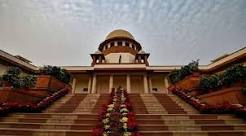
The plea raised certain constitutional question, as to whether the State, through legislation, can define who a person is by substituting biological or socio-medical classifications for a person’s lived and self-perceived identity. NEW DELHI: National Council for Transgender Persons (NCTP) Chairperson Laxmi Narayan Tripathi and member Zainab Patel have and filed a petition in the Supreme Court challenging the Constitutional validity of the Transgender Persons (Protection of Rights) Amendment Act, 2026 which introduced many changes to the legal framework governing the recognition, rights and protection of transgender persons. The amendment was passed by the Parliament recently, taking away the right to self-determination of gender, the plea claimed. The law had received presidential assent recently on March 31. The petition filed by Tripathi and Patel, is expected to come up for hearing within a week in the top court, a senior official from the Supreme Court registry told TNIE. “Keeping in view the sensitivity of the case, the plea will likely to come up for hearing in a week or so,” he said. It is to be noted that the controversial law amends the Transgender Persons (Protection of Rights) Act, 2019. It redefines who qualifies as a “transgender person,” while also strengthening penal provisions to address serious offences such as forced identity and bodily harm. The petition challenged the Amendment Act, as causing “irreparable constitutional injury” to the fundamental rights of transgender persons guaranteed under Articles 14, 15, 19 and 21 of the Constitution. The plea raised certain constitutional question, as to whether the State, through legislation, can define who a person is by substituting biological or socio-medical classifications for a person’s lived and self-perceived identity. “The amendments dismantle the principle of self-identification of gender recognised as a fundamental right by the Supreme Court in the landmark National Legal Services Authority (NALSA) v. Union of India judgment. The petitioners submit that the Court is now called upon to protect a right that it had previously declared to be intrinsic to dignity and personal autonomy under Article 21,” the plea stated. It further submitted that the Parliament has, by the stroke of a legislative pen, repealed the statutory right that this Court held to be a fundamental right under Article 21. “The impugned deletion does not even require elaborate constitutional analysis to expose its unconstitutionality: a provision that directly codifies a right declared fundamental by this Court cannot be omitted by ordinary legislation without violating Article 21 and the doctrine of non-retrogression of fundamental rights,” the plea says. After the new legislation was made, it was being severely criticised by pposition parties and LGBTQIA+ (Lesbian, Gay, Bisexual, Transgender, Queer, Intersex and Agender etc) communities. Those who opposed the legislation have argued that they were not consulted at all prior to the introduction of the Bill in parliament. Two members of the NCTP, Kalki Subramanium and Rituparna Neog, resigned from their posts the day the Rajya Sabha passed the Bill. Suchitra Kalyan Mohanty Courtesy : TNIE Note: This news is originally published on https:/thenewindianexpress.com/bha and is used purely for non-profit/non-commercial purposes, especially human rights