
‘Why are Bahujan entrepreneurs excluded?’ Rahul Gandhi targets Centre over contract data gap
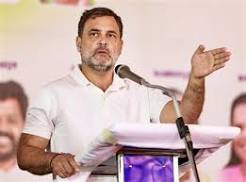
NEW DELHI: Rahul Gandhi has asked the Modi government why no data is maintained on the share of public works contracts worth over Rs 16,500 crore awarded to Dalit, Adivasi and OBC-owned businesses, accusing the Centre of fostering a “deliberately constructed system of exclusion” after Parliament told him that no such records exist. In an unstarred question in Lok Sabha, Gandhi sought details on public works and infrastructure contracts awarded by the central public works department (CPWD) and under the ministry of housing and urban affairs over the past five years, specifically asking how many were secured by SC, ST and OBC-owned enterprises. Government’s response In a written reply, minister of state for housing and urban affairs Tokhan Sahu stated that while the government could provide the total number and value of contracts awarded year-wise, “there is no existing mechanism to track contracts awarded to enterprises owned by persons belonging to scheduled castes (SC), scheduled tribes (ST) and other backward classes (OBC).” The government also clarified that all such contracts fall under construction contracts, and maintaining caste-based data is “not mandatory” for them. On the question of increasing procurement mandates for SC/ST-owned enterprises, the minister replied: “In view of the above, the question does not arise.” ‘Deliberate exclusion’: Rahul Gandhi Responding to the government’s reply on social media, the leader of the opposition said the response was “deeply concerning.” “The government does not maintain any data in this regard,” Gandhi said. “The policy mandates that 25% of public procurement must be sourced from MSMEs, of which 4% is earmarked for dalit and adivasi entrepreneurs. However, when it comes to the largest and most lucrative contracts, public works, the government asserts that this requirement is not ‘mandatory.’” He argued that this is “not merely an administrative lapse; it is a deliberately constructed system of exclusion, fostered through the policies of the Modi government, that undermines social and economic justice.” “The question is straightforward: Why are Bahujan entrepreneurs being excluded from the country’s largest public contracts?” he added. Rahul Gandhi further points in his post that the government’s Public Procurement Policy for MSMEs mandates that 25 per cent of purchases by central ministries and public sector undertakings be sourced from micro, small and medium enterprises, with four per cent specifically earmarked for SC/ST-owned enterprises. However, the government has now clarified in Parliament that this provision is not mandatory for public works contracts, which are typically among the largest and most profitable government tenders. These contracts are awarded through open tendering processes, and no centralised database is maintained on the social category of contractors. The exchange comes ahead of assembly elections in several states. Gandhi’s office said the absence of such data raises broader concerns about equitable access and transparency in government spending. “The Modi government will have to answer for this,” Gandhi said. Courtesy : TOI Note: This news is originally published on https:/timesofindia.com/bha and is used purely for non-profit/non-commercial purposes, especially human rights
Rahul Gandhi’s absence fuels alliance friction buzz
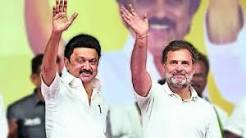
CHENNAI: In the last two months, PM Narendra Modi has visited Tamil Nadu thrice, campaigning for BJP and its allies, and is scheduled to visit the state again on April 15 and seek votes for the NDA candidates at Nagercoil. In sharp contrast, Congress’s Rahul Gandhi has not campaigned even once in the state so far. His absence has sparked a strong buzz that all is not well in the Congress-DMK alliance. Poll watchers contrast this with the previous assembly election, when he kickstarted his campaign with a three-day Tamil Nadu visit in Jan 2021. Congress functionaries in state said Rahul’s campaign schedules are yet to be firmed up, but as per the tentative plan, he will visit after the first phase of polls in Assam, Kerala and Puducherry. Rahul visited Puducherry only on Monday, the penultimate day of campaigning. And, even as he sought support for “Congress candidates and alliance candidates”, he studiously avoided mentioning alliance partner DMK and its functionary M K Stalin. Stalin, too, was in Puducherry the same day, but their campaign schedules were planned in a way that they didn’t cross paths. While Rahul campaigned in the morning, Stalin visited in the evening. “Rahul did not even mention Stalin’s name in his speech,” said a DMK functionary. Nor did Stalin mention him. Political observers said this could be a fallout of the friction between the two parties during the seat-sharing talks. A DMK functionary said there was no attempt from DMK’s side for a meeting between Rahul and Stalin. DMK organisational secretary, R S Bharathi, said the two allies had planned their public meeting well in advance and couldn’t alter it at the last minute to hold a joint meeting. However, the two would campaign together shortly, he said. A senior Congress functionary said Rahul has planned to visit TN after April 10. Courtesy : TOI Note: This news is originally published on https:/timesofindia.com/bha and is used purely for non-profit/non-commercial purposes, especially human rights
Sachin, a Dalit laborer from Amroha, went to collect his wages from Naushad, Haseen, and Samuddin; what the trio did to him will leave you shuddering.

UP News: In Amroha, a Dalit laborer named Sachin went to Naushad, Haseen, and Samuddin to collect his wages. The treatment he received for simply demanding the money due to him has caused a massive uproar. In Amroha, UP, a Dalit worker named Sachin was working as a laborer in Dhawarsi village, located in the Adampur area. He was employed by Naushad, Haseen Khan, and Samuddin. However, asking for his wages proved to be a costly affair for Sachin. Upon demanding his pay, he was beaten with extreme brutality. He was subjected to a severe physical assault; his clothes were torn to shreds, and he was verbally abused with vile language. A video capturing this act of barbarism against Sachin is now going viral. **The Brutality Captured in the Video** The video shows three individuals restraining him; they are holding both of his arms while physically assaulting him. His clothes are being ripped apart. The three youths beat him with extreme ruthlessness, all while hurling expletives and insults at him. This video is reported to be from last Sunday. **What Happened to the Perpetrators?** Following the viral spread of the video, the victim, Sachin, has filed a case against the accused. The police have registered a case against Naushad, Haseen Khan, and Samuddin on charges of assault, verbal abuse, and the use of caste-based derogatory language. A case has also been registered under the Scheduled Castes and Scheduled Tribes (Prevention of Atrocities) Act. All three individuals have been arrested. The police have stated that they will take strict action in this matter. The incident has sparked widespread outrage among the public. The manner in which Sachin was beaten is shocking. The sheer barbarism displayed by the dominant figures—Naushad, Haseen Khan, and Samuddin—against Sachin, simply for demanding his rightful wages, is utterly shameful. B.S. Arya Courtesy: Hindi News
Why many Dalits in Punjab who convert to Christianity do not change names, religion in records

Practice of not changing names or religion is more prevalent among those under the influence of self-styled pastors of Pentecostal churches In Punjab, many Dalits are embracing Christianity, but official records often remain unchanged. The trend has come under focus after a recent Supreme Court decision upheld that Dalits who convert to Christianity or Islam are no longer entitled to SC reservations, highlighting the immediate socio-economic consequences of changing one’s religion in documents. Many people in Punjab who have embraced Christianity are not changing their names or religion in official records. They want to keep their Scheduled Caste (SC) certificates so they can continue getting reservation benefits in jobs and education. The same trend is seen across Doaba — Jalandhar, Kapurthala, and Hoshiarpur. Churches are full, but the change of faith is not shown in official records. Even some popular Christian leaders are following the same names, just as the former Chairperson of the Christian Welfare Board Punjab, Amandeep Gill, or Christian Youth Punjab leader Charanjit GIll. Hailing from a village of Jalandhar Cantonment, Mangat Ram and his family embraced Christianity about two years ago. He attends the holy mass every week in the church of his village. His daughter Sunita took wedding vows as per Christian rituals. But the family has neither changed their names nor altered anything in the official records. Their SC certificates are still intact. Article_Author Deepkamal Kaur Courtesy : The Tribune Note: This news is originally published on https:/thetribune.com/bha and is used purely for non-profit/non-commercial purposes, especially human rights
2 Accused Arrested in Murder of Dalit Teenager in Deoria: Attacked En Route to Get Mobile Repaired; Suspicion of Love Affair Cited as Motive

Acting swiftly in the case involving the murder of a Dalit teenage girl in Nautan Hathiagarh village, Deoria, the police have arrested two accused individuals. On Monday, both were produced before the court, from where they were remanded to judicial custody. The police have also recovered the knife used in the murder. The incident occurred on Saturday night. The teenager was on her way to Sahodar Patti Chowk with her brother, Anish, and elder sister, Gudia, to get a mobile phone repaired. During the journey, she was attacked while still on the road. Following the crime, the accused fled the scene. **Acquaintance Formed During Visits to Maternal Relatives’ Village** Police investigations revealed that Aditya Singh—alias Shivam Singh—a resident of Shahbazpur, has maternal relatives in Nautan Hathiagarh village. Consequently, he was a frequent visitor to the village. During these visits, he became acquainted with Anjali, a local intermediate-level student, and a romantic relationship developed between the two. **Dispute Escalated Due to Suspicion, Leading to Murder** It is reported that over the past few days, Aditya had begun to harbor suspicion regarding the teenager. This suspicion led him to frequently scold and reprimand her. On Saturday night, acting in collusion with his accomplice, Rakesh Kumar Gaur, he attacked the teenager with a knife, resulting in her death. **Accused Attempting to Flee to Bihar via Kushinagar** Upon receiving information about the incident, the police registered a case of murder and launched a manhunt for the accused. Under the leadership of Station House Officer (SHO) Ashwani Pradhan, a police team conducted a late-night cordon-and-search operation. The police apprehended both accused individuals near Patnawa Bridge while they were attempting to flee to Bihar via Kushinagar. During interrogation, the knife used in the murder was also recovered based on the information provided by the accused. **Last Rites Performed with Tearful Eyes Following Post-mortem** Late on Sunday night, following the post-mortem examination, the family members brought the body back to the village, where the final rites were performed in the presence of the police. On Monday evening, around 8 PM, on the banks of the Chhoti Gandak River, the father, Malkha Prasad, lit his daughter’s funeral pyre. During the last rites, the mother—Mansa Devi—along with her brothers, Ankit and Anish, and sister, Gudiya, were inconsolable with grief. The eyes of the villagers present at the scene also welled up with tears. Following the incident, an atmosphere of mourning and outrage prevails throughout the entire village and the surrounding area. Police Statement: We Will Ensure Strict Punishment for the Guilty Police officials have stated that strict action will be taken in this case. By strengthening all available evidence, every effort will be made to ensure that the accused receive severe punishment. Anugrah Narayan Shahi | Deoria Courtesy: Hindi News
Wherever Indians go, caste travels with them: Scholar | Off The Beaten Track

Scholar-author Suraj Yengde explains how caste persists across global Indian diaspora, influencing identity, discrimination and politics beyond India’s borders “Caste is not something Indians consciously carry abroad—but it travels with them as part of their cultural instinct,” said Suraj Milind Yengde in an interaction, underlining the central argument of his book Caste: A Global Story. As debates around caste intensify within India—from court rulings to political mobilization —his work expands the conversation beyond national borders, showing how caste persists and evolves across diasporas. In this episode of Off The Beaten Track, The Federal spoke to Yengde, an Indian scholar, author and activist known for his work on caste and race. He is also an assistant professor of history and African Studies and a Ford Foundation Presidential Fellow at the University of Pennsylvania. Does caste follow Indians abroad like a birthmark—something inescapable regardless of geography or profession? I think the migratory aspects of caste were actually documented early on by SV Ketkar, an anthropologist from Cornell. He wrote a succinct text on caste in the early 20th century. Dr BR Ambedkar also picked up on this theory—that caste remains attached to the Indian body politic. In my research, I’ve covered nearly 15 countries. I’ve interviewed descendants of indentured labourers from Bihar, Uttar Pradesh, Bengal, and Odisha, as well as Gulf migrants and contemporary IT professionals. Across all these groups, caste persists. When people leave India, they don’t consciously think they are carrying caste. They carry it as part of their cultural identity, a kind of ‘lightweight carry-on’. But it shapes interactions, relationships, and hierarchies abroad as well. Caste also evolves in conversation with global structures—colonial histories, white societies, and economic systems. The global caste dynamic is not isolated; it is constantly interacting with other power structures. How does caste discrimination—especially against Dalits—play out abroad? And what about Dalits who converted to Christianity or Islam? If you look at history, caste has remained persistent across time and geography. That’s why you can talk about 19th-century Caribbean societies like Trinidad and connect them to contemporary India. In Trinidad, for example, Dalits and other lower castes were assimilated into a broader national religious identity. Religion there often reflected culture more than rigid hierarchy. But conversion does not erase caste. Along India’s coastal belt—from Odisha to Andhra Pradesh to Tamil Nadu—many Dalits converted to Christianity over 150 years ago. Yet caste identity continues. Even within Sikh communities abroad, we see caste divisions. In Canada, on remote islands, you find separate congregations formed due to caste discrimination. Over generations, identity evolves. Diaspora communities become ‘hyphenated’—IndianAmerican, Indian-Canadian—but caste consciousness doesn’t disappear. In fact, in recent decades, caste awareness has intensified, partly influenced by developments in India. How are upper-caste diaspora communities responding to growing Dalit assertion globally? From what I’ve observed, many professionals in the diaspora—especially those from technical fields—come from environments shaped by anti-reservation sentiment. Some dominant caste individuals resist acknowledging caste discrimination. Their common argument is that they were treated unfairly themselves. At the same time, second- or third-generation diaspora communities often treated caste as an ‘innocent identity marker’ because Dalit assertion was less visible earlier. Now, as Dalit communities assert themselves—demanding dignity and equality—this creates discomfort. But assertion is not about pushing anyone back. It is simply about claiming equal space. The challenge is that many diaspora communities still operate with a frozen image of India —often shaped by post-1947 narratives. When they encounter the realities of caste and inequality, it can be jarring. Have Dalit movements abroad influenced institutional or legal changes, such as anticaste policies in universities and cities like Seattle? Yes, there has been significant movement. I witnessed early discussions at universities like Brandeis, where students shared experiences of caste discrimination. These efforts led to institutional responses—task forces, policies, and broader recognition of caste as a form of discrimination. While Dalit voices triggered these discussions, the movement expanded into a broader human rights concern among South Asian academics. You now see Ambedkarite student groups across the world. Even in places like Kyrgyzstan, students celebrate Ambedkar Jayanti. This is not just resistance—it’s assertion. Students are saying: ‘This is our culture, our history, our identity. We deserve space too.’ Did your own experience as a Dalit shape how you encountered caste abroad? Yes, very much. Stigma is not something you can easily shed—it requires deep psychological unlearning. I grew up in a Dalit colony with open sewage and extreme marginalisation. That environment shapes your consciousness. For years, I hid my identity—telling people I was from Pune or Mumbai instead of Nanded. It took time to reclaim that identity. My work reflects this journey. I call it a kind of ‘cosmopolitan Dalit universalism’—a worldview shaped by marginality but connected globally. My upbringing also exposed me to global Black movements. My father admired figures like Kofi Annan. That influenced how I understood solidarity between Dalit and Black struggles. You draw parallels between Dalit struggles and Black movements. How has this played out globally? The Dalit movement has long relied on literature, poetry, and cultural expression as tools of resistance. Dalit literary conferences are major events—spaces where communities gather, share, and assert identity. This mirrors Black cultural movements globally. These spaces are not just artistic—they are political and deeply rooted in dignity and resistance. For me, growing up in that environment naturally led to comparative thinking. It wasn’t forced—it was part of lived experience. You describe an ‘irony’ during the global protests after the George Floyd protests. What did you observe? It was striking. Many Indian elites in the US participated in protests after George Floyd’s killing. But I asked: What have you done to address caste inequality in your own society? There is an irony here. By aligning with Black struggles, some elites seek recognition as ‘oppressed minorities’ in the West—while ignoring caste privilege. Caste creates a worldview where one centres oneself and ignores others’ struggles. That contradiction was very visible during those protests. How does the Indian diaspora respond to caste violence and
Rs 16,500 crore contracts, zero data: Rahul Gandhi questions Centre on Dalit, Adivasi share
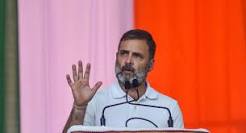
Government says public works contracts are awarded through open tendering processes and no centralised data on Dalit, Adivasi share is kept on the social category of contractors The Centre has told Parliament that it does not maintain data on the share of public works contracts, worth around Rs 16,500 crore, awarded to Dalit, Adivasi and OBC entrepreneurs in the past year, prompting Congress leader Rahul Gandhi on Tuesday to question the transparency and inclusiveness of government spending. Raising the issue on social media, Gandhi, Leader of the Opposition in the Lok Sabha, said he had sought a clear break-up of beneficiaries from marginalised communities in large public works tenders. “The answer was extremely concerning, the government does not keep any such data,” he said. The response assumes significance in light of the Centre’s public procurement policy, which mandates that 25 per cent of purchases be sourced from micro, small and medium enterprises (MSMEs), with 4 per cent earmarked for enterprises owned by Scheduled Castes and Scheduled Tribes. However, the government clarified that this provision is not mandatory for public works contracts, which are typically among the largest and most profitable government tenders. This creates a gap between policy intent and implementation, particularly in infrastructure and construction projects where contract values run high and participation is limited to fewer players. Gandhi argued that the absence of such data is not merely an administrative issue but raises broader concerns about equitable access. He questioned why Bahujan entrepreneurs remain largely invisible in the country’s biggest public contracts. In its written reply, the government said public works contracts are awarded through open tendering processes and that no centralised database is kept on the social category of contractors. Article_Author Shekhar Singh Courtesy : The Tribune Note: This news is originally published on https:/thetribune.com/bha and is used purely for non-profit/non-commercial purposes, especially human rights
‘People don’t see me as a trans candidate, but as a sister’: NTK fields Roshini S from Villivakkam in Tamil Nadu polls
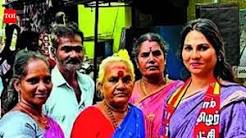
CHENNAI: “Reach for the skies, Villivakkam (vinnai thodum Villivakkam)”, is her campaign slogan. It could as well be her motto in life. Roshini S, 28, is the NTK candidate in the Chennai suburb of Villivakkam and the only transperson contesting the state assembly polls this year. “I was told the party was looking to field a transgender candidate, and I fit their requirements. Today, the people I meet as well as party cadres are convinced by the way I speak and connect with the public,” said Roshini, who joined NTK in Jan. Roshini, a social activist with an interest in environmental issues, is from Trichy. Asked how she ended up as the Villivakkam candidate, she said it was her party’s call. She had an interview with NTK supremo Seeman, where he asked her about her interests and what issues she would take up, after which he offered her the Villivakkam seat. Roshini has been a follower of Seeman for a decade. “We must ensure safety for our future generations, our land and our Tamil culture. I am trying to convey this to the people,” she said. “If I win this assembly election, the people of Villivakkam and I will make history by electing the first transwoman candidate.” Roshini begins her campaign at 9am and spends a couple of hours meeting people. But her main outreach is from 4.30pm till around 10pm, when she goes from door-to-door talking to people about her plans. She wants to identify school dropouts and set up tuition centres to help them, promote women’s entrepreneurial education, encourage forgotten Tamil cultural art forms, campaign against drug use, identify employment opportunities for youth and women, and take up environmental initiatives. Roshini says that she is seen as a sister by the public, rather than a transwoman. “I have barely seen two transgender persons in my constituency. I hope they will vote for me. But people here do not view me as a trans candidate, they see me as their sister,” she said. Roshini is contesting against Karthik Mohan of DMK, S R Vijayakumar of AIADMK, and Aadhav Arjuna of TVK. She is not the first transperson to contest assembly polls in TN. Courtesy : TOI Note: This news is originally published on https:/timesofindia.com/bha and is used purely for non-profit/non-commercial purposes, especially human rights
Transgender community protests: Jamshedpur transgender activists oppose new amendment law; Claim it undermines self-identification rights

Jamshedpur: The transgender community on Monday staged a protest outside deputy collector’s office as part of their ongoing opposition to the Transgender Persons (Protection of Rights) Amendment Act 2026. Claiming that the new Act has changed the definition of the transgenders, they claimed that the law has taken away their fundamental right to self-determination of the gender. “The Act grants state-appointed medical experts the power to determine whether a trans persons’ identity is legally valid. This is against the demands of the decades-long transgender movement in India,” said Amarjeet Singh, founder of the NGO Utthaan Community Based Organization (CBO) which works for the transgenders’ cause. Stating that the amended law violates the 2014 NALSA judgement of the Supreme Court, Singh said that making identity conditional is not a procedural change but exclusion in practice. Organisation member Arpit said that the hard-won rights of the transgenders people of the country have suffered a major reversal with the enactment of the new law. “This law is against the International Human Rights standards which provide for self-declared identity to form the basis for access to social security measures, benefits and entitlements,” Arpit said. He said that in the 2011 census, 4,87,803 individuals were recognised as third gender and so far, only 32,500 have identity cards which is essential for access to the govt welfare schemes. “The amended law will pose fresh obstacles in the identification of the third gender as none would like a medical examination for determining the trans gender,” said Priyanka. Courtesy : TOI Note: This news is originally published on https:/timesofindia.com/bha and is used purely for non-profit/non-commercial purposes, especially human rights
Defiance or sabotage? What AAP’s move in Kerala signals for Congress in assembly polls
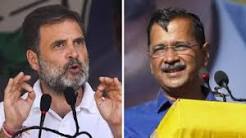
NEW DELHI: Does Aam Aadmi Party not want Congress to win in Kerala assembly polls? INDIA bloc’s inability to form a unified front ahead of the Kerala assembly polls was exposed spectacularly after Arvind Kejriwal’s Aam Aadmi Party (AAP) released successive lists of candidates, signalling its intent to fight a full-scale battle across all 140 seats in Kerala. The southern state, recently rechristened Keralam in a nod to its cultural and linguistic heritage, now stands as the latest battleground where AAP’s ambitions clash head-on with Congress. Kerala’s electoral rhythm has long resisted continuity, with voters mostly denying incumbents a second straight term. That pattern places Congress, the principal opposition, in a seemingly favourable position in the race for power in Thiruvananthapuram. Yet, AAP’s assertive entry adds a twist. Is Kejriwal’s party merely expanding its footprint, or subtly complicating Congress’s path to power? With limited organisational depth in the Malayalam-speaking state, AAP may not hold significant relevance, but with Arvind Kejriwal and his team emerging from the shadow of the Delhi liquor case, their presence could still, if only marginally, alter the political equation in Kerala. WWRpQ-party-wise-seat-share-across-years-in-kerala-assembly- The ruling Left, also part of the broader opposition fold, remains Congress’s primary rival, while the BJP trails as a distant third. In this triangular contest, AAP may not significantly dent the Left or the BJP, but it could influence the margins where elections are often decided, by chipping away at Congress’s vote share just enough to alter the final verdict. Is Delhi’s revenge being served in Kerala? 2025 began with the startling defeat of the Aam Aadmi Party in Delhi. Earlier, the reluctant allies, AAP and Congress had decided to contest separately, with Congress, having little to lose, launching a belligerent campaign against the ruling Arvind Kejriwal-led dispensation. The grand old party also found an opening as the Kejriwal cabinet came under the scanner in the Delhi liquor policy case, with agencies like the CBI and ED probing the matter. Several senior AAP leaders, including Kejriwal and his deputy Manish Sisodia, faced legal trouble, leading to a phase where the government functioned under the chief ministership of party colleague and loyalist Atishi. rBatq-ldf-retained-power-in-the-2021-kerala-state-poll- While AAP’s defeat ultimately came at the hands of the BJP, Congress also played a significant, if indirect, role in preventing its INDIA bloc ally from securing a fourth consecutive term. The “vote-cutting” factor proved crucial in several constituencies, including New Delhi, where Sandeep Dikshit, son of former chief minister Sheila Dikshit, was fielded against Kejriwal. Though he finished a distant third, the votes he secured contributed to Kejriwal’s defeat and helped the BJP’s Parvesh Verma emerge as a “giant killer.” Hypothetically, had those votes gone to Kejriwal, the outcome might have been different. The AAP’s tally fell sharply from 62 to 22 seats, while Congress once again failed to open its account. The herculean efforts that brought AAP and Congress into an arranged marriage to counter the strong force of the BJP in the 2024 Lok Sabha elections, despite years of political bitterness, unravelled once again in the 2025 assembly polls, reflecting a familiar pattern of rivalry. ASSEMBLY POLLS4 (3) AAP, which rose from the India Against Corruption movement led by Anna Hazare, had directly challenged the government led by Sheila Dikshit and went on to establish a dominant hold over Delhi, reducing Congress from a ruling force to total insignificance. The Congress, once under Sheila Dikshit’s strong leadership for 15 years, has failed to win a single seat in the last two assembly elections (2020 and 2025), and has also drawn blanks in three consecutive Lok Sabha polls (2014, 2019, and 2024). Just as Congress dented AAP’s prospects in the Delhi assembly, AAP may now impact Congress’s chances in states like Kerala, as it seeks to maintain its relevance within the national opposition space. Coalition to confrontation Lok Sabha allies turned Assembly rivals, the battle between the estranged partners was anything but graceful. At one rally, Arvind Kejriwal did not hold back: “The problem with Congress is its sense of entitlement. They think they have a divine right to lead the opposition just because of their past, even when they have zero presence on the ground. They are not fighting the BJP; they are fighting regional parties that actually defeat the BJP. In Delhi, Congress is nothing but a ‘vote-cutter’ meant to help the BJP.” Congress, in turn, capitalised on the troubles surrounding the Delhi excise policy case, hitting AAP where it hurt the most. Rahul Gandhi and Priyanka Gandhi Vadra led rallies across Delhi, branding Kejriwal and other AAP leaders as “corrupt.” In one such rally, Rahul Gandhi remarked: “Kejriwal ji keeps lying. The way Narendra Modi lies, Kejriwal lies too. There isn’t much difference between them. But I will tell you one thing—Kejriwal is probably more cunning and sophisticated than even the Prime Minister in how he misleads people.” VSGWw-kerala-assembly-elections- Weeks later, when a Delhi court discharged Kejriwal and his colleagues in the liquor policy case, Congress alleged it was part of a larger BJP strategy of “Congress-mukt Bharat.” Congress spokesperson Pawan Khera attacked the BJP, calling it an “Icchadhari naag” (shape-shifting serpent), and accused it of using central agencies as political tools. Kejriwal retaliated sharply, questioning Congress’s claims and targeting its leadership: “Kejriwal went to jail. Did Robert Vadra go to jail? Sanjay Singh went to jail. Did Rahul Gandhi go to jail? Did Sonia Gandhi go to jail? What is Congress saying? Does it have no shame?” To diminish Congress’s footprint? Congress, the grand old party with roots in the independence movement, has been grappling with vulnerability for over a decade. Beyond Delhi, it has steadily lost ground across multiple states, allowing the BJP to expand its dominance in national politics. This decline has also opened space for other players to challenge its position within the opposition. Among states like West Bengal, Tamil Nadu, Assam, and Kerala which are going to polls, Kerala appears to be the one where Congress still has a