
‘Vulgar and insulting’: Priyanka Gandhi flags Assam CM Sarma’s remarks on Kharge, seeks PM Modi’s clarification

Congress MP Priyanka Gandhi on Wednesday rebuked Assam chief minister Himanta Biswa Sarma for using “rude” and “derogatory” language against Congress president Mallikarjun Kharge, calling it “utterly shameful and unacceptable.” She also called on Prime Minister Narendra Modi to clarify whether he supports what she called an “insult to crores of Indians.” Sarma’s remarks came a day earlier, targeting senior Congress leader Kharge. He said, “Kharge is ageing and is speaking like a ‘pagal’ (madman). You insult the people first and then say you will ask the external affairs minister for verification?” The comments followed Kharge’s call for central agencies to probe allegations against the Assam chief minister. ‘Insult to crores of people’: Priyanka Gandhi Posting on X, Priyanka Gandhi described Sarma’s statements as “derogatory,” “indecent,” and “unacceptable.” She wrote, “Kharge ji is one of the seniormost leaders of the country. He is not only a representative of the Congress party but also an enlightened voice for the Dalits and marginalized sections of the nation. By insulting him, the BJP’s Chief Minister has insulted crores of people across the country.” She added, “Prime Minister Narendra Modi ji must clarify before the nation: Does he agree with this insult to crores of Indians?” Rahul Gandhi’s demand Congress leader Rahul Gandhi also spoke out on X on Tuesday. He said Sarma’s “derogatory language” against Congress president Mallikarjun Kharge was an insult to the entire SC/ST community. He added that Prime Minister Modi’s silence “is not helplessness, it is consent.” Rahul wrote, “If the Prime Minister sees an attack on the dignity of crores of Dalits in the country and does not speak up – he is not only shirking his responsibility, but is also a party to that insult.” He further accused the BJP-RSS of having an “old and premeditated mindset” against Dalits. He added, “Whenever a Dalit leader speaks the truth, they stoop to humiliating him. This is the party’s true character and face.” Courtesy : TOI Note: This news is originally published on https:/timesofindia.com/bha and is used purely for non-profit/non-commercial purposes, especially human rights
‘Sincere regret’: After BJP backlash, Mallikarjun Kharge apologises for ‘people illiterate in Gujarat’ remark
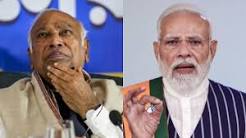
NEW DELHI: Congress President Mallikarjun Kharge on Wednesday apologised for his recent remarks targeting people of Gujarat, saying his comments were ‘deliberately misinterpreted’ and that he never intended to hurt sentiments. In a post on X, the Congress president said, “Some remarks of mine in a recent election speech in Keralam are being deliberately misinterpreted. Even so, I express my sincere regret. It was never my intention to hurt the sentiments of the people of Gujarat for whom I have always had and will continue to have the highest of respect.” The apology comes amid a political row triggered by his remarks during an election rally in Kerala’s Idukki district. Addressing a rally ahead of the assembly elections, Kharge had said that people in Kerala were ‘educated and clever’ and could not be misled, unlike those who were ‘illiterate’ in Gujarat and some other places. The statement sparked sharp reactions from the Bharatiya Janata Party (BJP), which termed the remarks insulting and unacceptable. Senior BJP leader Ravi Shankar Prasad criticised Kharge’s statement, calling it “shameless, demeaning and utterly despicable.” He also asked Congress leaders Rahul Gandhi, Sonia Gandhi and Priyanka Gandhi Vadra to clarify whether they agreed with the remarks. Prasad questioned whether Kharge deserved to remain Congress president, saying the post had historically been held by leaders such as Jawaharlal Nehru and Sardar Vallabhbhai Patel and demanded that the Congress leadership distance itself from the comment. He further highlighted Gujarat’s literacy rate and contribution to the country, arguing that such remarks insult the people of the state. The BJP also demanded an apology to the people of Gujarat, Bihar and Uttar Pradesh. Reacting to the controversy, Congress MP Shashi Tharoor said that political discourse should not deteriorate and emphasised the need to maintain standards in public debate. He highlighted that political leaders should focus on constructive arguments rather than using language that lowers the quality of discourse. Meanwhile, Gujarat deputy chief minister Harsh Sanghavi strongly criticised Kharge’s remarks, calling them an insult to the people of the state and its legacy. He said Gujarat, which has produced leaders like Mahatma Gandhi and Sardar Patel, would not accept such comments. Courtesy : TOI Note: This news is originally published on https:/timesofindia.com/bha and is used purely for non-profit/non-commercial purposes, especially human rights
Annamalai sees rift between DMK and Congress
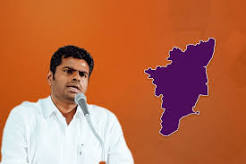
Coimbatore: Former BJP state president K Annamalai on Wednesday alleged that there was a growing rift between DMK and Congress in the Secular Progressive Alliance, which came evident during the final phase of campaigning in Puducherry. “Both Congress leader Rahul Gandhi and DMK president and chief minister M K Stalin didn’t mention each other’s name during their separate campaigning in Puducherry, though both are allies in the Union Territory,” Annamalai said while addressing media at the Coimbatore Airport. Annamalai said, “Rahul Gandhi remains an uninterested and disinterested politician when it comes to Tamil Nadu. Rahul Gandhi, who flew to Coimbatore Airport from Palakkad recently, did not even consider campaigning for his party’s candidate in one of the constituencies, which is Singanallur, just next to the airport.” Annamalai urged the Election Commission (EC) to deploy additional security force to manage the massive crowds gathering for TVK leader Vijay’s rally, questioning whether state officials are operating independently or under the DMK influence. “The ECI must act with integrity and grant necessary permissions for his campaign without bias,” he stated. Turning to his own record, Annamalai challenged sceptics to investigate his past candidacy in Aravakurichi. “I challenge anyone to find a single instance where I distributed money to voters. I will personally bear the bus fare for anyone willing to conduct an on-the-spot inquiry,” he said. Courtesy : TOI Note: This news is originally published on https:/timesofindia.com/bha and is used purely for non-profit/non-commercial purposes, especially human rights
UP govt launches Dr B R Ambedkar Murti Vikas Yojana
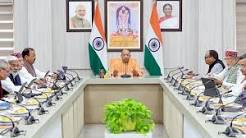
With a push on Dalit issues barely a week ahead of the birth anniversary of Dr B R Ambedkar, Uttar Pradesh government on Tuesday launched a new ” Dr. B R Ambedkar Murti Vikas Yojana”. With a push on Dalit issues barely a week ahead of the birth anniversary of Dr B R Ambedkar, Uttar Pradesh government on Tuesday launched a new ” Dr. B R Ambedkar Murti Vikas Yojana”. UP backward welfare Minister Asim Arun stated that under the “Dr. B.R. Ambedkar Murti Vikas Yojana Scheme”, umbrellas, boundaries, and beautification work would be carried out around statues of Dr. Bhimrao Ambedkar. The minister said 10 memorials will be developed in each Legislative Assembly, with a cost of ₹10 lakh per memorial. Thus, a total expenditure of ₹403 crore is expected for the development of 10 memorials in 403 Legislative Assembly constituencies. The new scheme was approved by the state cabinet here on Tuesday. According to officials, under this scheme, statues of great personalities, national social reformers, and cultural figures and important symbols of our nation’s historical, cultural, and social heritage will be covered. These statues represent public memory, social values, and respect for national and local contributors. Currently, many statues are installed in accordance with prescribed legal standards, but lack walls and guardrails. Consequently, these statues are highly vulnerable to weather, encroachment, and neglect. The lack of adequate security and glazing also compromises the statues’ beauty and visual appeal. Officials said keeping the above circumstances in mind, this plan has been prepared, the objective of which is to ensure the safety of such existing statues installed till December 31, 2025 and to provide them a protected and respectable form by sanctifying the area around them. Besides, the physical security of the statues and the preservation of cultural and historical heritage will be ensured, and the statue sites will be beautified and enhanced. This will make the statue sites informative and useful to the public. With the launch of Dr. B.R. Ambedkar Statue Development Scheme, the site around the statues will be developed and boundary walls will be constructed, which will lead to employment generation. Courtesy : The Statesman Note: This news is originally published on https:/thestatesman.com/bha and is used purely for non-profit/non-commercial purposes, especially human rights
Dalit mason assaulted for asking Rs 1.5L pending wages; 3 held

BIJNOR: A 24-year-old Dalit labourer was allegedly stripped and brutally beaten for demanding Rs 1.5 lakh in pending wages in Dabarasi village of Hasanpur area in Amroha district on Sunday. After a video of the assault started circulating on social media, police registered a case and arrested three accused men. The FIR was registered at Adampur police station under BNS sections 115(2), 351(2) and 352, along with Section 3(2)(Va) of the SC/ST Act against the accused. According to police, Sachin Kumar, a resident of Dhabarsi village under Adampur police station, is a mason and is engaged in installing ceiling at an under-construction house. He works along with his two brothers. On Sunday morning, the two brothers arrived to take Sachin to work at another place. Before leaving, he demanded unpaid wages from the employer, and this led to an argument. The dispute soon turned violent, and the accused allegedly cornered Sachin on the road and assaulted him. A bystander recorded the assault and posted it online. SP Lakhan Singh Yadav confirmed that three accused — Mohammad Nausad, Samayuddin and their father Haseen Khan — have been arrested in connection with the assault and caste abuse case. Courtesy : TOI Note: This news is originally published on https:/timesofindia.com/bha and is used purely for non-profit/non-commercial purposes, especially human rights
Student Harassed by Molesters Sets Herself on Fire; Molesters Also Beat Her Father After Complaint Was Filed

In Sagar, a 14-year-old Dalit student, tormented by harassment, set herself on fire following a brutal assault on her father. The molesters had beaten her father after he filed a complaint with the police. A case has been registered against four minors. Student Tormented by Harassment Sets Herself on Fire A deeply tragic and harrowing incident has come to light from the Sagar district of Madhya Pradesh. In the Malathone (Khurai) police station area of the district, a 14-year-old Dalit student—a 9th-grader—who was tormented by the harassment of local miscreants, poured diesel over herself and set herself ablaze. The student was driven to take this horrific step because, after she complained about the molesters, the accused individuals had severely assaulted her father right in front of their home. The critically burnt student has been admitted to the Bundelkhand Medical College in Sagar for treatment. Molester Had Been Harassing Her on the Bus for a Long Time The victim’s father stated that his daughter studies at a government school in Malathone and commutes daily by bus. A boy from a nearby village, Kapil Lodhi, had been harassing her for the past three months, frequently calling her on the phone and pressuring her to talk to him. When the molester refused to desist despite being reasoned with, the father filed a complaint against him at the Malathone police station. Upon Complaint, Accused Came to House and Beat Father According to the father, on the evening of April 5—after he had filed the police complaint and returned home with his daughter—the accused, Kapil, was standing outside their house along with three accomplices. The four began hurling abuses, and when the father objected, they brutally beat him with kicks and punches. As they left, the accused also issued death threats. Terrified by Her Father’s Beating, Daughter Sets Herself on Fire Witnessing her father being beaten right before her eyes, the innocent student became utterly terrified. She ran inside the house, doused herself with diesel, and set herself on fire. Hearing the child’s screams, family members rushed to the scene and used a bedsheet to extinguish the fire; however, by that time, her neck, the right side of her chest, and both hands had already sustained severe burns. The family members immediately transported her to a hospital with the assistance of the ‘Dial 112’ and ‘108’ ambulance services, from where she was subsequently referred to Sagar for further treatment. **Case Registered Against All Four Minor Accused; Investigation Underway** Additional Superintendent of Police (ASP) Lokesh Sinha stated that the police had promptly registered a case regarding the assault on the girl’s father. In her statement, the victim also corroborated the allegations of molestation and the physical assault on her father. The police have registered a case against four individuals—including two who were specifically named—under various sections of the Bharatiya Nyaya Sanhita (BNS) and the SC/ST Act. All four accused are reported to be minors. The matter is currently being investigated with the utmost seriousness. By: Vinod Arya, Sagar Courtesy: Hindi News
SC reservations for Dalit Christians sought
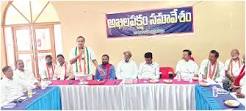
Rajamahendravaram: A nall-party meeting convened by the Congress party strongly criticised the current governance in the country, alleging that the rights granted to citizens under the Constitution by Dr BR Ambedkar were being undermined. The meeting demanded restoration of Scheduled Caste reservations for Dalit Christians. It was held on Tuesday under the leadership of Rajahmundry Urban District Congress president Balepalli Muralidhar, with participation from leaders of various political parties, representatives of Christian organisations, pastors, and leaders from BC, SC, ST and minority communities. Congress Rajahmundry Parliament coordinator T K Visweswara Reddy, CPI state leader T Madhu, CPM district secretary T Arun, coastal districts’ traders association leader Ashok Kumar Jain, Praja Sanghala Aikyavedika founder Desireddy Balarama Naidu and Congress state leader Talluri Vijayakumar were among those present. Leaders from CPI, CPM and Aam Aadmi Party also attended. Speakers at the meeting urged the Central government to take steps for a review of the Supreme Court judgment on the issue. They expressed strong objection to the ruling, stating that while the Constitution guarantees the right to practice any religion, denying reservations based on religion was unjust. They called for a discussion in Parliament and a constitutional amendment to ensure Scheduled Caste reservations for Dalit Christians. The leaders appealed for a nationwide movement on the issue and stressed that democratic rights of the people should not be curtailed. Describing the loss of reservations upon religious conversion as a major conspiracy, the speakers demanded that Chief Minister N Chandrababu Naidu respond immediately and pass a resolution in the State Assembly. They made it clear that the all-party committee would continue its agitation until reservations for Dalit Christians are restored. The meeting also passed a resolution seeking the immediate conduct of elections to the Rajamahendravaram Municipal Corporation. Senior Congress leaders Martin Luther, Dr Vadayar, Bezawada Rangarao, and leaders from various parties, including Pawan, Kondalarao, K Rambabu, Poornima Raj, Sandhya Rani, Srinivas, Yalla Veerabhadra Rao were present. Courtesy : THI Note: This news is originally published on https:/thehansindia.com/bha and is used purely for non-profit/non-commercial purposes, especially human rights
Stop State Repression: Citizens Urge Odisha CM to Halt Violence Against Adivasis and Dalits in Sijimali Region

To Sri Mohan Majhi, The Chief Minister of Odisha Bhubaneswar, Odisha Subject: Urgent Appeal to Take Immediate Steps To Curb State Violence on Adivasis and Dalits of Raygada and Kalahandi Dear Sir, As concerned citizens, we express our collective condemnation of the brutal violence unleashed on the villagers of Kantamal in Kashipur block of Raygada district from late night to the wee hours this morning. Both the police and senior district officials were present. We are deeply concerned that in a democracy, Adivasis and Dalits opposed to the mining operations of Vedanta Limited and its contract company Maithri, have been subject to ceaseless violence and arbitrary arrests since mid-2023. Now, to begin construction work, the violence has escalated targeting the leaders of Ma Mati Mali Surakhya Mancha, the people’s local forum. It is to be noted that people have adopted all democratic means to protect their land, livelihood, water and air while also holding on to their cultural heritage and the abode of Tij Raja their scared deity. This entire area is protected under the Fifth Schedule Area of the Indian Constitution. In order to reject the proposed mining project, Ma Mati Mali Surakhya Mancha has appealed to all authorities from the local administration to the state government and from the concerned union ministers to the President of India. They have asserted their objections against mining in testimonies in the public hearings of the Odisha Pollution Control Board. In the same way, as per the FRA provisions, villagers organised Gram Sabhas in which they have clearly and unanimously rejected the mining project and the required forest clearance to protect their lives, livelihood and cultural identity. However, in this Scheduled Area, the state administration has resorted to repression to push through Vedanta Limited’s mining project. As a result, hundreds of criminal cases have been foisted on the people and almost a hundred of them have undergone incarceration and many still continue to languish in jail. Repression on the people has escalated sharply in the last few months. We urge your attention to a few incidents: On the night of March 10, after a local village conflict, hundreds of police descended on Talaampadar village in the middle of the night and picked up 21 adivasis, including 10 women. They raided houses and damaged people’s houses and belongings. Among the women, there is a nineteen-year old who is pregnant and some with small children at home. They are now languishing in District Jail of Bhawanipatna of Kalahandi district. On 25 March, Lingaraj Azad and Suresh Sangram of Samajwadi Jan Parishad were arrested and are today in Raygada Jail. The actions of the police and administration instead of being in accordance with the law clearly seems to be aiding the company. On February 26, 27 and 28, around 200 police and paramilitary forces caused much terror and intimidation under the cover of executing arrest warrants issued by the SDM Rayagada and JMFC Kashipur on the walls of some members of “Ma Mati Mali Surakhya Mancha”. Sagabari, Bantej, Bondel, Kantamal and Talaampadar are witnessing a massive presence of armed police and vehicles, drones flying on the area, and police on the lookout for leaders. Drones are followed by 18 to 25 vehicles and marches of armed police through the area along with private persons. Adivasi peasants and wage workers are losing out on earnings and cultivation work. They can no longer go out to the forest and river for nature’s call or other daily chores because of the surveillance done by drones flying overhead as it violates their privacy. People are now carrying water to their houses to do the daily chores. They can neither buy medicines nor go to shops to buy essentials from sheer intimidation. On 3rd April, the police and administration announced prohibitory orders from loud speakers. People were prohibited from assembling in more than four within 100 meters of the approach road being constructed to the mining area. As construction work began with a massive presence of police force, villagers stood ground and refused them entry from April 4 to 6. After three days of peaceful disobedience of prohibitory orders, the police resorted to violence by entering Kantamal village at midnight of April 7. They fired tear gas shells. They killed a cow. People came rushing out; many were injured by police lathis. Two women have sustained head injuries. People are unable to seek medical assistance. Sir, as local Adivasi and Dalit communities continue to live under a climate of terror and constant fear, we urge you to take the following steps without delay: Revoke the prohibitory orders issued by the Rayagada SDM under Section 163 of the BNSS. Revoke the proposed mining lease in Sijimali and ensure the protection of the jal, jangal and jameen of the Adivasis of the region. Ensure that the proposed approach road to the mining area is stopped immediately. Withdraw the entire police force in the area and immediately stop all drone surveillance. Withdraw all criminal cases foisted on villagers who are opposed to bauxite mining. Ensure the immediate release of all those in prison. Implement properly the PESA and FRA in Fifth Schedule areas. We urge you, in your capacity as Chief Minister and Chairperson of the Tribal Advisory Council, to intervene urgently and ensure that all necessary steps are taken to protect and uphold the constitutional and democratic rights of the people of this region. Thanking you, On behalf of Concerned Citizens Forum, Odisha Ananta Lokmukti Sangathan, Jharsuguda Asutosh Parida, Poet, Bhubaneswar Archana Rath, Analyst Akankshya Mahapatra, Writer and Researcher Balabhadra Mallick, Chasi Mali Surakhya Samiti, Kandhamal Bibhrant Biswajit, Mulnivasi Student & Youth Front (MSYF) Bichitra, TUCI Biswapriya Kanungo, Advocate British Kumar, Khandualamali Sthai Surakhya Samiti, Kalahandi Damodar Behera, Dalit Adhikar Andolan, Kalahandi Dandapani Mohanty, Political Activist Deba Prasad Rai, Lohia Academy Debaranjan, Gantantrik Adhikar Surakhya Sangatha, Bhubaneswar Debati Behera, AICCTU Dr Bijay Bohidar, Retd Professor, Bhubaneswar Dr Birendra Nayak, Retd Professor, Bhubaneswar Dr Biswajit, Gandhi Peace Foundation, Odisha Dr Randall
A Dalit Was Beaten, The Court Said He No Longer Was One in Annihilate Caste
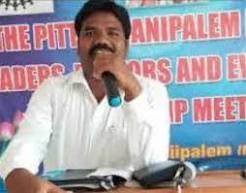
In the villages of Andhra Pradesh’s Guntur district, where Madiga families have for generations tanned hides and buried the dead, Chintada Anand thought the law might finally see him. A Dalit by birth, he had converted to Christianity and become a pastor. When oppressor caste men assaulted him in 2021, dragging him by his collar and hurling slurs, he filed a complaint under the Scheduled Castes and Scheduled Tribes (Prevention of Atrocities) Act. An FIR was filed and the case reached the Supreme Court. On 24 March 2026, Justices Prashant Kumar Mishra and Manmohan delivered their verdict in Chinthada Anand v. State of Andhra Pradesh where the bench ruled that “conversion to Christianity meant immediate and complete loss of Scheduled Caste status”. No certificate. No Prevention of Atrocities Act shield. No reservations in education or jobs. Clause 3 of the Constitution (Scheduled Castes) Order, 1950, they reminded the country, is “categorical and absolute.” The judgment was not new law but a reiteration which simply slammed shut a door that Dalit Christians and Dalit Muslims (Arzals and Pasmandas) have been rattling for 76 years. Estimates place Dalit-origin Christians at around 25-30 million and Dalit Muslims in similar numbers, though precise census data remains elusive because the state refuses to count them as such (National Commission for Minorities reports; Deshpande & Bapna, 2008). In a secular republic that guarantees equality before the law, the most powerful tool of affirmative action, the Scheduled Caste status, remains chained to three religions: Hinduism, Sikhism, and Buddhism. To trace how we arrived here, one must return to the Constituent Assembly’s anxious drafting in the shadow of Partition of ‘47. Article 341 empowered the President to notify communities suffering untouchability as Scheduled Castes. The 1950 Order listed hundreds of castes and tribes, but Paragraph 3 added a fatal line: “no person who professes a religion different from the Hindu religion shall be deemed to be a member of a Scheduled Caste.” The logic, offered in parliamentary whispers and later judicial glosses, was pragmatic. Untouchability was framed as a peculiar Hindu affliction; other faiths, at least in doctrine, rejected it. When Sikh leaders pressed their case, Parliament relented in 1956. When lakhs followed Dr. B. R Ambedkar into Buddhism after 1956, the 1990 amendment brought them in. Christianity and Islam, however, remained foreign imports, their converts presumably cleansed the instant they crossed the threshold of the church or mosque. Yet this legal scaffolding crumbles against historical facts. Dalits were never inside the varna system; they were its exiles— the avarnas, panchamas, those whose touch polluted the fourfold order. Historians and Dr. Ambedkar himself described them as “broken people,” performing labour no varna would touch: scavenging, leatherwork, corpse disposal. Their oppression was existential, enforced by custom and violence long before scriptures codified it. Citizen activist and journalist Cynthia Stephen, who has documented these realities for decades from Bangalore, captured the absurdity of this reiteration, “Dalits were never part of the varna system. They were the “outsiders”, the untouchables whose very existence challenged the purity of caste. So what religion did they originally belong to that conversion could erase it? What proof do we have they were all Hindus?” Colonial censuses separated Dalits from “clean” Hindu castes. Many converted precisely to flee ritual degradation— molten lead in ears for learning to read, separate burial grounds, sexual violence framed as right. “A change of religion never guaranteed relief from prejudice, discrimination, or violence,” Stephen continued. “Walk any village in Karnataka or Tamil Nadu. The Dalit Christian is still called by their caste name. Their church may have a separate entrance. The state pretends conversion dissolves caste. It doesn’t. It never has”. Organisations like Evidence, the Madurai-based Dalit rights group founded by A. Kathir, have documented hundreds of cases where faith made no difference. In a 2011 study of 336 atrocity cases across southern districts of Tamil Nadu, Evidence recorded 44 brutal murders with conviction rates at a shocking 3.9 per cent. Many victims were Paraiyar or Pallar Christians. In an incident in Melur, in 2011, Dalits hoisting a political flag were attacked not for creed but for asserting dignity. Churches were burned, pastors assaulted, Dalit Christian women gang-raped— all under the shadow of caste. As recently as March 2026, Evidence’s fact-finding in Nanguneri, Tirunelveli, revealed police refusing to invoke the Atrocities Act against attackers of a Dalit Christian because “the victim is Christian.” Kathir has intervened in over 1,800 cases since 2006, repeatedly noting that separate temples, separate water sources and social boycotts persist regardless of baptism. The National Campaign on Dalit Human Rights’ (NCDHR) fact-finding missions and its 2026 report on five years of caste-based atrocities highlight “double marginalisation” for Dalit Christians and Muslims: caste violence from society, legal invisibility from the state. UN treaty bodies like International Convention on the Elimination of All Forms of Racial Discrimination (ICERD), which India has ratified, have repeatedly urged India to apply the Atrocities Act to Dalit Muslims and Christians, noting that social exclusion does not respect religious conversion. The Ranganath Misra Commission (2007) and Sachar Committee (2006) had already reached the same conclusion: indicators for these oppressed groups— poverty, literacy, landlessness, violence, all mirror or exceed those of Hindu Dalits. Yet the law renders their suffering invisible. It is this lived reality that Dr Ruth Manorama, a member of the National Federation of Dalit Women and the Christian Dalit Liberation Movement, confronted head-on when we spoke in the verdict’s immediate aftermath. “What you have given in the name of caste, you are now taking away in the name of religion.” Dr. Manorama expressed. “Dalits have faced systemic violence and exclusion for centuries. So the Constitution provides benefits—education, reservations, opportunities—to help them rise.” Conversion, she stressed, was survival. Dalit identity, she stressed, is not monolithic. “I am a Dalit Christian. My mother converted… Generations before us may have converted, not randomly, but to escape caste oppression.” In India’s 600,000 villages, every Dalit colony endures untouchability. “Even today, atrocities don’t stop just because
Transgenders protest Amendment Bill in Aligarh
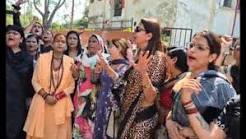
Agra: A large number of the transgender community members staged a protest against the Transgender Persons (Protection of Rights) Amendment Bill, 2026, in the Civil Lines police station area in Aligarh on Tuesday. They said the bill is a violation of fundamental rights, and an attack on their identity and dignity. Dressed in black, they later submitted a memorandum addressed to prime minister Narendra Modi through the local administration. The protesters objected to the provisions mandating medical examinations, stating that such requirements would create discomfort and impose severe mental and physical strain, particularly on elderly members of the community. Community representative Suraj said, “The proposed amendments are against our religious beliefs and traditions. Our identity cannot be determined through certification or medical examination,” he said, adding that the community has historically held a place of respect in society. Hina, another representative, added, “These provisions are humiliating and we will not submit to such procedures. The transgender community should not be clubbed with the broader LGBTQ grouping because of its distinct cultural and social identity,” she added. The protesters said that though the demonstration was peaceful, they will intensify the agitation if their demands are not met. Courtesy : TOI Note: This news is originally published on https:/timesofindia.com/bha and is used purely for non-profit/non-commercial purposes, especially human rights