
Attempt to Encroach on Land Under Court Stay: Dalit Woman and Family Attacked in Para; Casteist Abuses Hurled

In the Para police station area of Lucknow, an attempt was made to forcibly encroach upon a plot of land, despite a standing court order to the contrary. When this attempt was resisted, a Dalit woman and her family were attacked. The incident occurred on Wednesday morning, around 9:00 AM, near the Kamakhya Temple in the village of Para. Mayawati Gautam, a member of a Scheduled Caste community, has alleged that several named accused individuals—along with approximately 100 unidentified persons—arrived at her land in multiple vehicles, disguised as lawyers. According to the victim, the accused had arrived with a premeditated plan and immediately began attempting to take possession of the land. When Mayawati Gautam objected to their actions, the accused began verbally abusing her, using derogatory casteist slurs. As the altercation escalated, the accused assaulted Mayawati Gautam, her widowed daughter, and her younger son, beating them with sticks and clubs. All members of the family sustained serious injuries in this attack. Mayawati Gautam has further alleged that as the attackers were leaving the scene, they issued death threats to the entire family. The land at the center of this dispute is currently the subject of a pending legal case in court. A “status quo” order—mandating that the existing state of affairs regarding the property be maintained—is currently in force. The attempt to encroach upon the land, in blatant disregard of the court’s directive, is being viewed as a serious criminal offense. Several individuals have been named as accused in this case. Additionally, the involvement of approximately 100 unidentified persons is also under suspicion. The Assistant Commissioner of Police (ACP) for Kakori stated that an investigation into the matter is underway and that appropriate legal action will be taken. Yuvraj Gautam | Banthra (Sarojininagar), Lucknow Courtesy: Hindi News
Dalit Widow in Mulnapur Accuses Lekhpal: Case of Encroachment on Disputed Land; Appeals to DM for Justice
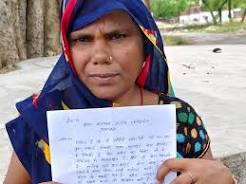
In Mulnapur village—located in Utraon, Handia (Prayagraj)—a Dalit widow has leveled serious allegations against a *Lekhpal* (revenue official). The woman claims that the *Lekhpal*, acting in collusion with the opposing party, is facilitating the encroachment upon her disputed land. According to the aggrieved woman, Geeta Devi, there is a plot of land situated near her home, the ownership of which is currently sub judice (pending) in court. It is alleged that, through the connivance of the *Lekhpal* and the *Kanungo* (senior revenue official), the opposing party is making persistent attempts to seize control of this disputed land. Geeta Devi further stated that the opposing party—who belong to the Yadav community—are subjecting her to verbal abuse and physical assault. When contacted regarding this matter, *Lekhpal* Mithilesh Pandey stated that an investigation into the case is currently underway. He added that once the investigation is complete, the land will be remeasured, and the matter will be resolved. In light of these events, the aggrieved woman has written letters to the District Magistrate (DM) and the Police Commissioner, appealing to them for justice. Brijesh Kumar Gautam | Baudai (Phulpur), Prayagraj (Allahabad) Courtesy: Hindi News
Dalit Youth Attacked with Bottle; Struck on Head: Police Accused in Sultanpur of Releasing Accused from Custody
In the Sultanpur district of Uttar Pradesh, a Dalit youth has been attacked due to an old feud. The victim’s family alleges that the police released the accused from custody without taking any action, leaving them now living in fear. The incident took place in the village of Kasamau, within the jurisdiction of the Goshainganj police station in Sultanpur. A resident, Brajesh Kumar, has written a letter to the Superintendent of Police, pleading for justice. According to Brajesh, the incident occurred on April 1st when he went to his tube well. It is alleged that Arbaz, a local resident, verbally abused him over an old grudge and struck him on the head with a broken glass bottle. Brajesh lost consciousness as a result of the attack. The police have registered a case in this matter under various sections of the law, including the SC/ST Act. The victim alleges that while the police did bring the accused, Arbaz, to the police station, he was released that very evening without any concrete action being taken against him. The victim, Brajesh, and his family are now terrified. They state that the accused is continuously issuing death threats against them. Brajesh has demanded that the Superintendent of Police of Sultanpur immediately arrest the accused, send him to jail, and provide them with legal protection. Courtesy: Hindi News
Sub-Inspector Accused of Violating Widow’s Privacy: BKU Swaraj Submits Memorandum to SP in Kannauj, Demanding Inquiry and Action
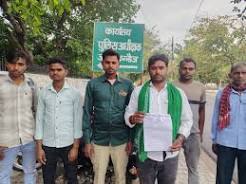
On Wednesday, the Bharatiya Kisan Union (Swaraj) visited the office of the Superintendent of Police (SP) and leveled serious allegations against a Sub-Inspector (SI) stationed at the Talgram police station. Led by District President Pushpendra Singh Rathore, the organization’s members and farmers submitted a four-point memorandum—addressed to the Chief Minister and the Director General of Police—to the Superintendent of Police. The memorandum accuses the Sub-Inspector of behaving inappropriately with women, engaging in corruption, and being involved in unethical activities. The Union alleged that on March 26, 2026, the Sub-Inspector forcibly entered the home of a widow residing in the Girikuan locality of Talgram without permission or prior notice. At the time, the woman was bathing, resulting in a violation of her privacy. When the woman expressed her outrage over this incident and lodged a complaint, the Sub-Inspector, acting out of a spirit of vendetta, initiated proceedings against her brother and another individual for disturbing the peace. The Union has demanded that these proceedings be quashed. Furthermore, the Sub-Inspector faces allegations of negligence and collusion in another separate case. In December 2025, a young man died in the village of Kalkattapurwa (Kudra) within the Talgram area after consuming a poisonous powder provided by a gym operator. An FIR was registered in this matter; however, it is alleged that the Sub-Inspector colluded with the accused gym operator, failed to arrest him, and allowed the investigation to remain pending. Additionally, negligence is reportedly being shown in the completion of necessary legal formalities. Through the memorandum, the Union has put forward four key demands. These include the immediate transfer of the Sub-Inspector out of the district; a swift and impartial inquiry into all allegations leveled against him, accompanied by departmental action; the immediate arrest of the accused gym operator involved in the Kalkattapurwa (Kudra) case; and the immediate revocation of the proceedings initiated against the widow’s brother and the other individual for disturbing the peace. The organization has warned that if their demands are not met in a timely manner, they will be compelled to stage protests and sit-ins in solidarity with the victims, farmers, and women. Several activists, including Santosh Kumar, Akshay Kumar, Yogendra Rajput, Rajkumar, Vineet, and Pramod, were present on this occasion. Station House Officer (SHO) Vinay Sharma stated that the matters in question would be investigated, and further action would be taken once the investigation report is received. Sanjeev Kumar | Bamrauli (Chhibramau), Kannauj Courtesy: Hindi News
Farmer Beaten by Thugs in Hamirpur; Attempted Murder: Locked in Tubewell Room and Nearly Hanged with a Rope
Bharua Sumerpur: In the village of Bank within this region, a Dalit farmer was brutally beaten by a group of thugs following a dispute over the installation of thorny fencing along a farm embankment. The accused also attempted to kill the farmer by locking him inside a tubewell room and trying to hang him with a rope. The police have registered a case regarding this incident. Raghuvar Prasad, a resident of Triveni Maidan in the town, has filed a complaint with the police. He stated that he was in his ancestral village, Bank, installing thorny fencing along the farm embankment to protect his fruit-bearing trees. During this time, Babu Kushwaha, Nokhelal, Chhote, Rajkumar, and others—all residents of Bank—stormed onto the scene. It is alleged that these individuals hurled caste-based slurs at Raghuvar Prasad and, drawing a country-made pistol, rushed at him with the intent to kill. To save his life, Raghuvar Prasad fled into the nearby tubewell room. The attackers followed him inside, where they brutally beat him with kicks and punches, leaving him covered in blood. Subsequently, they placed a rope around Raghuvar Prasad’s neck and attempted to hang him. The police have registered a case against the accused under the Dalit Atrocities Act (SC/ST Act), along with other relevant sections of the law. The police are currently investigating the matter and have launched a search for the accused. Deepak Kumar | Kalauli Teer (Hamirpur) Courtesy: Hindi News
PIL seeks SIT probe into dalit man’s death in Bengaluru

Bengaluru: The high court Wednesday issued notice to the state govt, police, and the Karnataka State Human Rights Commission in response to a public interest litigation (PIL) filed by the People’s Union for Civil Liberties–Karnataka. The petition seeks the constitution of a Special Investigation Team (SIT) to probe the death of 24-year-old Darshan, a Dalit and resident of Vivek Nagar, who died in Nov last year within the limits of Madanayakanahalli police station. He was allegedly picked up by the police on accusations of brandishing a machete to intimidate a Zomato delivery agent. The petitioner organisation contended that the incident amounted to custodial death and required investigation by SIT, arguing that the CID—currently probing the case—would not ensure justice, as no police personnel have been taken into custody so far. In addition to seeking a speedy trial, the petitioner has sought compensation of Rs 50 lakh for Darshan’s legal heirs. It has also requested directions to provide protection to his family members and witnesses in the case. Courtesy : TOI Note: This news is originally published on https:/timesofindia.com/bha and is used purely for non-profit/non-commercial purposes, especially human rights
‘Forced into death for wages’: Dalit sanitation worker dies cleaning drain without safety gear in Delhi
Rahul (32), a contractual sanitation worker from the Valmiki community, died on March 30 while manually desilting an 8–to 10-feet-deep drain in Tahirpur, Dilshad Garden, allegedly without any safety gear, supervision, or mechanised support. The incident, which occurred under the jurisdiction of the Public Works Department, has raised serious questions about illegal manual scavenging practices, caste-based labour exploitation, and institutional accountability. According to findings by a fact-finding team from Dalit Adivasi Shakti Adhikar Manch (DASAM), Rahul had gone to collect two months of unpaid wages on the morning of the incident but was allegedly coerced into cleaning the hazardous drain, with payment conditional on completing the task. Witnesses and family members claim that he was forced to enter the toxic environment without protective equipment, exposing him to lethal gases such as methane and hydrogen sulphide. Rahul and a co-worker began the work from 8 am and by 2 pm, he was found unresponsive inside the drain. Rescue operations reportedly took nearly two hours, and he was declared dead on arrival at Guru Teg Bahadur Hospital. His family was informed only hours later, around 5 pm by an unknown person, raising concerns about official delay and insensitivity. Police initially registered a case at Seemapuri Police Station but did not include key provisions of the Prohibition of Employment as Manual Scavengers and the Rehabilitation Act, and the SC/ST (Prevention of Atrocities) Act. These sections were reportedly added later following pressure from the family and civil society groups. Authorities have since invoked provisions under the Bharatiya Nyaya Sanhita, including Section 106 (causing death by negligence), but no arrests had been made at the time of reporting. Family members have alleged that Rahul’s death was not accidental but the result of toxic gas exposure and unsafe working conditions. They also raised suspicions of evidence tampering, noting that his body was found in clean clothes, contrary to standard conditions of sewer work. “We sent Rahul at 8 in the morning to collect his pending salary, but instead of paying him, the contractor told him to first clean the drain and only then he would get his two months’ wages”, Rahul’s sister said in conversation with DASAM. “We never imagined this would lead to his death. This tragedy happened because of toxic fumes, hazardous conditions, and the negligence of the contractor and the PWD”, she added. “It has been three days, and no one has come to us, not from the department, not any official, not even the contractor. We received his body on March 31”, she further said. “He was found dead in the drain around 2 p.m., and the police took nearly two hours to recover him and bring him to Guru Teg Bahadur Hospital, where he was declared dead. We were not informed by anyone, neither the contractor nor co-workers. Someone else told us around 5 pm and we were asked to rush to the hospital.” Rahul’s brother Vijay said, “When people clean drains, they usually wear only underwear, but Rahul was found in full clothes, and they were clean. He was forced into death for wages. We suspect the contractor tried to remove evidence,” said Vijay.” A sewer worker, Jayvir said, “Workers were given no safety equipment at all,” noting that Rahul earned just 350 rupees a day. “He was the youngest in our family, with five brothers and one sister, and he was unmarried. Some people even threatened us to remove the contractor’s name, but the best officer assured us that justice would be done. The police kept pushing for cremation, but we refused until we were given assurance of 30 lakh rupees compensation”, Vijay said. The case has drawn attention to the continued existence of manual scavenging despite its legal prohibition and repeated judicial interventions. In its 2023 ruling, the Supreme Court of India increased compensation for sewer deaths to 30 lakh rupees and reiterated the state’s obligation to eradicate the practice. Activists argue that Rahul’s death highlights a persistent gap between legal safeguards and their implementation. The fact-finding report by DASAM also points to a multilayered system of contractors and subcontractors, allowing state agencies to deflect responsibility. “While the work fell under the PWD, officials have reportedly distanced themselves by attributing operational control to private contractors, a practice critics say enables systemic evasion of accountability”, National Coordinator of the organisation, Mohsina Malik told Maktoob. She added, “We along with the family demanded compensation, accountability, and the immediate arrest of the contractor, but the authorities kept refusing. It was only after sustained pressure from the SDM, MLA Kuldeep, and organisations like DASAM that the administration began to respond and included the appropriate sections in the FIR.” Malik said, “So far compensation had been promised but not disbursed. No arrests had been made. The investigation remains ongoing.” The fact-finding team recommended immediate arrest of all responsible contractors and officials, along with the payment of ₹30 lakh compensation in line with guidelines laid down by the Supreme Court of India. It also called for interim financial relief and rehabilitation support for the family, strict enforcement of the Prohibition of Employment as Manual Scavengers and the Rehabilitation Act, and mandatory mechanisation of all sewer and drain cleaning work. The recommendations emphasised the need to eliminate informal subcontracting chains and clearly fix principal employer liability, while ensuring provision of safety gear, proper training, and supervision. Further, it urged formalisation of employment through written contracts, timely payment of wages, and access to social security and insurance for workers. The report also demanded criminal liability for officials permitting illegal manual scavenging, regular independent audits of sanitation work, and public disclosure of contractor details and working conditions. Additionally, it called for awareness campaigns on the prohibition of manual scavenging, training for police and municipal authorities, and community-level initiatives to promote safe sanitation practices. Rahul, the youngest of six siblings, earned between 300 and 400 rupees per day under precarious employment conditions. His family delayed his cremation until assurances of compensation were made. The last rites were
Clinical Psychology Society Flags Concerns Over Transgender Persons Amendment Bill, 2026
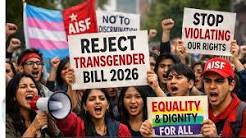
The Clinical Psychology Society of India has raised concerns over the Transgender Persons Amendment Act, 2026, criticising the removal of self-identification rights and mandatory medical certification. It said such provisions contradict legal and global norms and could harm mental health and access to care for transgender individuals. Mumbai: The Clinical Psychology Society of India (CPSI) has issued a formal position statement expressing concern over key provisions in the Transgender Persons (Protection of Rights) Amendment Bill, 2026, which received Presidential assent on 31 March 2026. The organisation stated that its intervention is guided by its ethical obligation to safeguard the wellbeing, dignity and access to care of vulnerable populations. Removal of Self-Identification Right Violates NALSA Judgment In its statement dated 7 April 2026, CPSI criticised the removal of the right to self-identification and what it described as the arbitrary introduction of recent amendments that redefine gender classification. The body argued that such provisions run contrary to the landmark NALSA v. Union of India (2014) judgment, which recognised the right to self-identify one’s gender as a fundamental aspect of dignity, autonomy and inclusion. The organisation further highlighted that the World Health Organization’s International Classification of Diseases (ICD-11), adopted in 2019 and widely followed in India, acknowledges gender identity as a natural variation in human experience rather than a mental disorder. CPSI noted that this global shift towards more affirming and rights-based approaches is reflected in contemporary clinical practice, where diverse gender identities and expressions are recognised and supported. Raising additional concerns, CPSI warned against processes mandating medical certification or review as prerequisites for recognising gender identity. It stated that such measures could function as gatekeeping mechanisms, potentially creating further barriers for individuals already navigating systemic inequities and minority stress. These barriers, the organisation cautioned, could adversely affect mental health outcomes, help-seeking behaviour and access to essential care services. Reaffirming its professional commitments, CPSI underscored the importance of ethical standards in mental healthcare, including the right to dignity, confidentiality, informed consent and access to the least restrictive care. It cited provisions under the Mental Healthcare Act, 2017 as foundational to its approach. The statement concluded with a call for policies that are trauma-informed, inclusive and aligned with both constitutional principles and international best practices, emphasising the need for legal and social systems that respect and respond to gender diversity. Courtesy : TFPJ Note: This news is originally published on https:/thefreepressjournal.com/bha and is used purely for non-profit/non-commercial purposes, especially human rights
Delhi HC seeks Centre’s stand on petitions challenging amended transgender law

The Delhi High Court on Wednesday sought the Centre’s stand on two petitions challenging provisions of the Transgender Persons (Protection of Rights) Amendment Act, 2026, for taking away one’s right to a self-perceived gender identity. A bench of Chief Justice DK Upadhyaya and Justice Tejas Karia issued notice on petitions by Chandresh Jain and Lakshay Jain and asked the central government to file its reply within six weeks. The Transgender Persons (Protection of Rights) Amendment Bill, 2026, was passed by Parliament on March 25 and received President Droupadi Murmu’s assent on March 30. Petitioner Chandresh Jain said the Act “removes and dilutes” self-perceived gender identity and instead introduces a regime of State-controlled verification, certification and screening of gender identity, which violates rights to dignity, privacy and decisional autonomy under Article 21 of the Constitution. His petition further said that the amendment Act is manifestly arbitrary and disproportionate, and it infringes Article 19(1)(a) by restricting the expression of gender identity. Lakshya Jain’s petition said that the amendment altered the existing statutory framework by replacing self-perceived gender identity with a regime of medical and administrative verification, including scrutiny by a district magistrate (DM). His plea said that such a requirement was ex facie violative of the law laid down by the Supreme Court in National Legal Services Authority versus Union of India, which held that gender identity is a matter of self-identification and psychological identity must take precedence over biological attributes. Chandresh Jain’s plea emphasised that the apex court has already held that gender identity is an integral part of dignity, autonomy and personal liberty under Articles 14, 19(1)(a) and 21, and every individual has the right to a self-identified gender. The case would be next heard on July 22. Courtesy : The Pioneer Note: This news is originally published on https:/thepioneer.com/bha and is used purely for non-profit/non-commercial purposes, especially human rights
Why activists see the imprint of Hindutva in the new transgender law

The law foregrounds trans identities that lie broadly within Hindu society, and cuts off paths to recognition for a range of others. What is common between khwaja sira in Punjab and Kashmir, thirunar in Tamil Nadu and nupi maanbi in Manipur? These are some of India’s traditional trans communities whose legal standing is left uncertain under the new transgender law passed in March. The law in force earlier, the Transgender Persons (Protection of Rights) Act, 2019, contained a wide and inclusive definition of a transgender person. It began by stating that a transgender person was someone “whose gender does not match with the gender assigned at birth”. This included a “trans man or trans woman”, irrespective of whether or not they had undergone a medical procedure such as a sex reassignment surgery, someone “with intersex variations” and “genderqueer” individuals. Apart from these categories, the 2019 law also included individuals “having such socio-cultural identities as kinner, hijra, aravani and jogta”. Further, it accorded all transgender individuals “a right to self-perceived gender identity”. In contrast, the new law has a far more restrictive definition of a transgender person. It foregrounds the four socio-cultural identities of kinner, hijra, aravani and jogta, adding “eunuch” to the list. The other categories it includes are individuals who have “intersex variations”, “a congenital variation” in certain sexual characteristics, or have been “by force, allurement, inducement, deceit or undue influence” been put through one of several medical procedures. The 2026 law leaves out all other categories. Its statement of “objects and reasons” notes that the act’s aim is “not to protect each and every class of persons with various gender identities, self-perceived sex/gender identities or gender fluidities”. Activists are alarmed at this dramatic reduction of the scope of the definition of transgender individuals. They fear that the prominence given in the definition to the four specific socio-cultural categories, combined with the complete omission of self-determined identities, represents a grave threat to numerous other traditional transgender communities in the country, including the khwaja sira in Punjab and Kashmir, thirunar in Tamil Nadu and nupi maanbi in Manipur. These identities are Muslim, syncretic or unaffiliated with any particular religions – in contrast, the four specifically named socio-cultural groups are broadly located within Hindu society. Thus, activists argue that the new law is, in effect, an extension of the Bharatiya Janata Party and the wider Sangh Parivar’s Hindutva agenda. As a statement by the All India Students’ Association noted, the act was restricting the definition to communities that were “already culturally legible to the state”. It observed that the hijra, kinnar, aravani and jogta communities were “historically visible through ritual roles at births, weddings, and religious spaces” and so “may be tolerated within this framework”. The queer feminist academic Jennifer Loh made a similar argument in a 2022 book chapter, noting that the “Hindu right favours Hindu trans (feminine) identities above other less visible, non-homonormative trans identities and Muslim trans people”. Loh argued that this was because Hindu trans feminine identities such as hijras align with the “broader goals of promoting Hindu ideologies, through the reinforcement of existing gender and religious norms”. A statement by the All India Students’ Association noted that the hijra, kinnar, aravani and jogta communities were “historically visible through ritual roles at births, weddings, and religious spaces”. Photo: Sam Panthaky/AFP The writer and filmmaker Rayyan Monkey argued that even the traditional communities mentioned in the act were in a sense limited by it. “While the hijra and kinnar communities do want to sustain their place in the spiritual ecosystem of India, they also want to get into schools, colleges and jobs,” she said. Scroll spoke with experts and trans activists in Manipur, Nagaland, Tamil Nadu and Punjab to learn about the traditional identities that are at increased risk of exclusion under the new act. Thirunar, thirunangai, thirunambi in Tamil Nadu Activists from Tamil Nadu explained that the late chief minister, M Karunanidhi, had introduced the terms thirunar, thirunangai and thirunambi in the late 2000s, to refer to trans persons, trans women and trans men, respectively. They noted that the positive intent underlying the move was evident in the fact that the word “thiru” translates to “respected” in Tamil. Many activists prefer this term to others, like aravani and “third gender” that are also used in the state. Negha, a trans activist and actor, noted that the former term, used for trans women, is rooted in Hindu mythology. The traditional aravani community worships the Mahabharata character Aravan – the son of Arjuna, who marries Krishna in the form of a woman, Mohini, before going to war and dying. Not all trans women in Tamil Nadu participate in the rituals of the aravan community, Negha noted. “The term aravani is not an inclusive word,” she said. “Many trans women are concerned about being pushed to assume a Hindu identity. Not everybody believes in the Ramayana and Mahabharata.” In comparison, she said, the terms thirunar, thirunangai and thirunambi were rooted in the legacy of the state’s self-respect movement, which promoted social justice and gender equality, and challenged caste-based oppression. Karunanidhi “researched Tamil literature and then came up with the words thirunar and thirunangai,” Negha said. “It is an inclusive word which can be used by Hindus, Buddhists and Dalits regardless of caste and religions. This amendment will erase and invisibilise these words.” Activists and members of these and other communities are also anxious about the fact that the new act lays emphasis on medical procedures and clearance from authorities before a transgender individual is accorded recognition, such as with an identity certificate recognising them as transgender. Negha explained that these identities were not typically linked to gender reassignment surgeries or other medical procedures, but were based on individuals’ self-perception. Under the previous law, a transgender individual could obtain such a certificate by applying through an online portal to the district magistrate – the rules of the act only required that they furnish a self-attested affidavit, along with identity documents