
Rare Modi-Rahul interaction breaks the internet
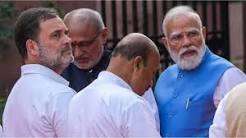
NEW DELHI: Prime Minister Narendra Modi and the leader of opposition in Lok Sabha, Rahul Gandhi, on Saturday exchanged pleasantries and talked briefly at an event, a rarity in the otherwise cold and indifferent equation between them. It is not often that Rahul joins ministers and high functionaries like Lok Sabha Speaker Om Birla to greet the PM at commemorative events often held in Parliament complex but he did so on Saturday at a programme to pay tributes to reformer Jyotirao Phule. As he acknowledged greetings from everyone, Modi appeared to ask Rahul something and both then chatted for a while as they waited for Vice-President C P Radhakrishnan and President Droupadi Murmu. The exchange went viral on social media and piqued interest in political circles. There were suggestions that Modi inquired about the health of Rahul’s mother Sonia Gandhi who was recently admitted to a hospital. However, there was no official word on what transpired between them. Rahul has often in the past skipped such events and has often been accused by BJP of not giving due regard to state events and high dignitaries. Congress, too, in turn has often alleged govt does not accord protocol that is due to the LoP. Unsurprisingly, the pleasantries exchanged between Modi and Rahul created a buzz. Govt has announced a two year-long programme in the run-up to Phule’s 200th birth anniversary next year. To oversee the nationwide commemoration starting from 11 April 2026 to 11 April 2028, govt has set up a high-level committee under the PM’s chairmanship. Courtesy : TOI Note: This news is originally published on https:/timesofindia.com/bha and is used purely for non-profit/non-commercial purposes, especially human rights
Cow dung slurry poured over Dalit man for ‘preparing’ beef in Odisha

A clip captured a police officer observing the incident without intervening. Kalahandi: Self-proclaimed cow vigilantes in Odisha’s Kalahandi district humiliated a Dalit man by parading him with a garland of shoes and pouring cow dung slurry on him for allegedly preparing beef. A video of the incident surfaced on Thursday, April 9, from Bhawanipatna town, where the cow vigilantes were seen publicly humiliating the man. Videos circulating online showed the unidentified victim sitting on the ground with a garland made of shoes around his neck and a large amount of meat placed in front of him that he allegedly prepared. As the villagers took his videos, a person approached the victim and placed a steel bowl over his head, drawing laughter from the crowd. Another person sprinkled white dust on his face when a resident carrying a bucket of cow dung slurry poured it over the victim. The clip also captured a police officer observing the incident without intervening. The Odisha Police did not immediately respond to a request for comment. Odisha Indian National Congress leader Amiya Pandav shared the video on social media, accusing Hindutva group Bajrang Dal of attacking the Dalit man. Courtesy : The Siasat Daily Note: This news is originally published on https:/thesiasatdaily.com/bha and is used purely for non-profit/non-commercial purposes, especially human rights
Row erupts at Telangana University over ‘Urban Naxal’ allegations against Dalit professor , student
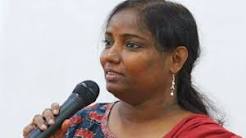
Hyderabad: A controversy has broken out at Satavahana University in Telangana after a Dalit woman professor and a student were allegedly labelled as “Urban Naxals.” The allegation drew criticism from academics and rights groups. Seeking immediate intervention, the Telangana Save Education Committee called the allegations baseless and detrimental to the academic environment. In a statement, the committee identified Surepalli Sujatha, Head of the Sociology Department and Principal of the Arts College, and Karike Mahesh, an Economics student, as those targeted. According to the committee, a group of students submitted complaints to local authorities, including the district Collector and a Member of Parliament, while also circulating allegations in print and on social media linking the two to Maoist organizations, as reported by The observer Post. Senior members of the committee condemned the allegations and stated that any move against the professor, despite her qualifications and responsibilities, would be unjustified and that any actions risked sending a negative message to marginalised communities within educational institutions. The committee also expressed concern that the controversy could affect the university’s academic atmosphere, as it caters to students from rural, Dalit and Adivasi backgrounds. It also criticised the Vice-Chancellor for not responding to the situation and called for steps to safeguard institutional autonomy and academic freedom. Courtesy : Vartha Bharati Note: This news is originally published on https:/varthabharati.com/bha and is used purely for non-profit/non-commercial purposes, especially human rights
Dhar: ‘Aditya’ Revealed to be Abdul; Aadhaar Card Exposes ‘Love Jihad’ Plot—Accused Was Exploiting Woman Under Pretext of Marriage

Dhar: A case involving the concealment of identity to establish a relationship with—and subsequently rape—a Dalit woman has come to light in Dhamnod, located in the Dhar district. The accused’s true identity was exposed through his Aadhaar card. After the truth was revealed, the accused pressured the woman to convert her religion and threatened to kill her if she refused to comply. A case of ‘Love Jihad’ has surfaced in Dhar, a tribal-dominated district in Madhya Pradesh. The accused had befriended a young woman from the Dalit community at a mobile phone shop. Subsequently, posing under a Hindu name, he gave the woman false assurances of marriage, took her to a hotel, and raped her. However, while at the hotel, the woman spotted a photocopy of the accused’s Aadhaar card in his pocket, which listed his name as Abdul Hadi Pathan and his father’s name as Hussain Pathan. When his true identity was exposed, the accused threatened the woman and pressured her to undergo religious conversion. Meanwhile, the victim, accompanied by her family, reached the police station, where the police have registered a case against the accused under various sections of the law and have initiated an investigation. A police team was also dispatched to Khargone in search of the accused, but he has not yet been arrested. **The Story Began at a Mobile Shop** At the Dhamnod police station, the victim informed the police that approximately two years ago, she had met a young man named Aditya Thakur at a mobile shop located near the Maheshwar bus stand. The accused concealed his true identity and befriended the woman. During their conversations, the woman had disclosed to the accused that she belonged to the Balai community. Despite this, the accused continued to hide his identity and maintained the pretense of being in love with her. **How Was the Case Exposed?** According to the complaint, on December 10, 2025, the accused took the woman to the Deepak Hotel & Lodge, located at Maheshwar Phata in Dhamnod, where he raped her against her will. When she resisted, the accused claimed that both of them were Hindus and would soon get married. Subsequently, using the false promise of marriage as a pretext, he continued to sexually exploit the woman repeatedly. Subsequently, the accused intimidated and coerced her into accompanying him to the Mahakali Hotel and Lodge, where he raped her once again. During this incident, the young woman discovered a photocopy of an Aadhaar card in his pocket, which exposed his true identity. ‘Convert to Islam, and I will marry you’ When the young woman confronted him regarding his deception, the accused retorted threateningly, “So what if I am a Muslim? You simply change your religion and become a Muslim; I will then marry you.” When she resisted, the accused further threatened to kill her. Case Registered Against the Accused Acting on the victim’s complaint, the Dhamnod police have registered a case against the accused, Abdul Hadi Pathan, under sections pertaining to fraud, forcible rape, criminal intimidation (threats to life), the SC/ST Act, and the Freedom of Religion Act. Station In-charge Praveen Thackeray stated that the victim had approached the police station to lodge her complaint. Her statement has been officially recorded in the presence of a female police officer. It was revealed that the accused had befriended the young woman by concealing his true identity and using a false name. A formal case has been registered, and appropriate legal action is currently underway. Courtesy: Hindi News
Policing the Self: A Law That Subjects Transgender Identity to Certification and Surveillance

A democratic law on transgender rights would begin by trusting the person—recognising self-identification without bureaucratic mediation The 2026 amendment shifts transgender identity from a matter of self-determination to state certification, deepening bureaucratic control and surveillance. It conflicts with Supreme Court jurisprudence affirming dignity, privacy, and self-identification, particularly in NALSA and subsequent landmark rulings. By narrowing definitions and excluding “self-perceived sexual identities,” the law reflects an ideological push toward fixed, state-sanctioned identities. The Transgender Persons (Protection of Rights) Amendment Act, 2026, is being projected as a measure for protection and clarity. In substance, however, it does something more sinister: it recasts transgender existence as a matter to be policed, certified, monitored, and ideologically contained. It does not proceed from the premise that gender identity is a domain of personal autonomy protected by the Constitution. Rather, it proceeds from suspicion. It imagines the transgender person not as a rights-bearing citizen but as a problematic social figure requiring state management. In this sense, the Act is not merely flawed legislation. It is the legal expression of a deeper political morality—one that is profoundly consonant with the Hindutva project of enforcing a disciplined social order built around fixed identities, patriarchal family norms, and suspicion of all forms of embodied difference. On the one hand, this case brings forward certain issues regarding the position of the US on the international arena, namely whether the country can still play an influential role or if it is now experiencing the period when its decisions are doubted. – Anupam Sai The 2026 amendment must be read alongside the already discredited architecture of the 2019 Act. The original Act had been widely criticised for violating the very principles the Supreme Court had affirmed in National Legal Services Authority v. Union of India (NALSA), where the Court held that gender identity is rooted in self-identification and is inseparable from dignity, liberty, and equality. The amendment does not cure that foundational defect. If anything, it sharpens it. It tightens the state’s hold over identity and, in doing so, reveals the ideological discomfort that the present regime has with the transgender concept itself. What is especially alarming is the amendment’s move to remove the Act’s broader definition of “transgender person” and instead list categories of persons included, while explicitly stating that the law does not include, and never included, persons with “different sexual orientations and self-perceived sexual identities.” PRS Legislative Research notes this as one of the Act’s key changes. The same summary also notes that the Act makes a revised certificate mandatory after surgery and requires the medical institution to furnish information about such surgery to the District Magistrate. This is not mere drafting. It is an attempt to redraw the field of legitimate gender identity in a way that makes it narrower, more surveillable, and more governable. At the heart of the constitutional problem lies a very simple question: who owns identity? In a constitutional democracy, identity belongs to the person. In this Act, identity belongs to the state. The core vice of the amendment is that it remains fundamentally incompatible with the doctrine of self-identification laid down by the Supreme Court. In NALSA, the Court recognised the right of persons to determine their gender identity as male, female, or third gender, and treated that right as intrinsic to dignity and freedom. Later constitutional developments only strengthened this logic. In Puttaswamy, privacy was recognised as including decisional autonomy and bodily integrity; in Navtej Johar, the Court held that identity, orientation, dignity and intimacy cannot be subordinated to majoritarian morality. The Court also made clear that constitutional rights cannot depend on social approval, and that constitutional morality must prevail over popular or sectarian moral codes. The amendment stands against this entire constitutional trajectory. It does so first by preserving the logic that identity must be mediated by official certification, and second by deepening the state’s role in tracking bodily transition. Even before this amendment, the 2019 framework had been criticised for forcing transgender persons into a bureaucratic recognition regime under the District Magistrate. The draft rules had gone so far as to require a psychologist’s report and residency proof, until criticism forced some softening. PRS had pointed out that such requirements were incompatible with self-perceived identity and especially burdensome for a community often facing homelessness, ostracism and unstable residence. A member of Lesbian Gay Bisexual Transgender and Queer (LGBTQ) community wearing a t-shirt that reads “Yes, we exist India” as seen outside August Kranti Maidan, celebrating 16 years of the official pride march in Mumbai. The rainbow flag signifies joy but the march remains a protest at its core demanding the fundamental rights still denied to the LGBTQ community in India. – null The amendment intensifies the same logic by making revised certification mandatory after surgery and by requiring the medical institution to report the surgery to the District Magistrate. That move is constitutionally indefensible. It converts one of the most intimate dimensions of personhood into a matter of administrative reporting. It effectively deputises hospitals into a surveillance chain. It assumes that the state has a legitimate interest in being notified when a person’s body changes in ways relevant to their gender identity. That is not protection. That is biopolitical supervision. No comparable burden is imposed on cisgender citizens to establish or continually validate the coherence between their body, identity and state records. The transgender citizen alone is made to pass through documentary and institutional checkpoints. That asymmetry offends Article 14 not only because it is unequal, but because it is irrationally unequal. It burdens a vulnerable class precisely in the domain where the Constitution demands maximum protection. The amendment is equally vulnerable under Article 21. Gender identity is not an external administrative category like land ownership or vehicle registration. It is bound up with selfhood, bodily autonomy, dignity, privacy, and the right to live without humiliation. A law that allows the state to mediate or monitor this sphere invades the core zone of decisional autonomy that the Court has
Transgenders In Madhya Pradesh Seek Separate Public Toilets, Horizontal Reservation

The Madhya Pradesh Social Justice Department is drafting a transgender policy expected by year-end, focusing on documentation, infrastructure and welfare issues. Community members have demanded separate public toilets and horizontal reservation, citing barriers in identity documents and employment. Officials said consultations are underway with stakeholders, including the Transgender Board. Bhopal (Madhya Pradesh): The social justice department is drafting a comprehensive transgender policy, expected by the year-end, to address the systemic challenges faced by the community in Madhya Pradesh. Based on direct feedback from community members, the policy aims to streamline access to essential documents and improve public infrastructure to ensure a more dignified life for transgenders. Atal Bihari Institute of Policy Analysis is likely to be roped in by the department to prepare the policy. A senior officer of the social justice department told Free Press that a convention was held recently where members of the community expressed the need for separate public toilets, as they feel uncomfortable using existing facilities in public places such as markets. As they are often disowned by families, many do not have birth certificates. This leads to a multitude of problems. Moreover, they face significant hurdles in obtaining Aadhaar cards, particularly after undergoing sex reassignment surgery. Regarding reservation, the government currently includes them in the Other Backward Class (OBC) category. However, community members point out that many among them also belong to Scheduled Castes and Scheduled Tribes. In such a situation, they argue that OBC reservation is not justified and are demanding horizontal reservation instead of vertical. Social stigma also creates obstacles in securing accommodation and employment. The department has recorded 1025 transgenders in the state. Consultations on policy begin Principal Secretary, social justice department, Sonali Ponkshe Vayangankar told Free Press that the Madhya Pradesh government has constituted a Transgender Board, which held its meeting on March 30. Minister Narayan Singh Kushwah chaired the meeting, where various important issues were discussed. The Minister directed all departments to ensure speedy disposal of issues related to the community. A transgender policy will be drafted by consulting stakeholders by the year-end. Courtesy : TFPJ Note: This news is originally published on https:/thefreepressjournal.com/bha and is used purely for non-profit/non-commercial purposes, especially human rights
14 transgenders become beauticians in Ramgarh

Ramgarh: Fourteen members from the transgender community were handed certificates for completing beautician courses here on Friday. The certificates were handed over to them by Ramgarh deputy commissioner Faiz Aq Ahmed, local MLA Mamta Devi and deputy development commissioner Ashish Agarwal. “The transgender community members received beautician training at a centre in Bhurkunda from March 16 to April 2. This is for the first time that transgenders became trained beauticians,” Ahmed said. Courtesy : TOI Note: This news is originally published on https:/timesofindia.com/bha and is used purely for non-profit/non-commercial purposes, especially human rights
Puducherry elections 2026: Personality politics dominates as NDA and INDIA bloc battle for power
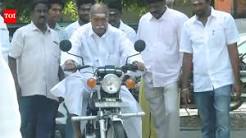
PUDUCHERRY: Though the demand for statehood featured in the campaign rhetoric of almost all parties, the battle for Puducherry unfolded less along strict party lines and more as a contest shaped by the personal clout of candidates with influence over specific constituencies. The main fight is between chief minister N Rangasamy’s All India NR Congress (AINRC)-led NDA and the Congress-led INDIA bloc. Seeking a second straight term, the AINRC-BJP alliance is banking on Rangasamy’s personal appeal. But the presence of actor-turned-politician Vijay’s Tamilaga Vettri Kazhag am (TVK) and Senthamizhan Seeman’s Naam Tamilar Katchi (NTK) has added an element of uncertainty, with both seen as potential vote-splitters. Spread across Puducherry, Karaikal, Mahe, and Yanam, the UT’s 30 elected assembly seats will shape the 33-member House, which also includes three members nominated by the Centre. Seat-sharing reflects the bipolar nature of the contest: AINRC is contesting 16 seats, BJP 10, and allies ADMK and LJK two each. In the opposition camp, Congress is in the fray in 16 seats and DMK in 14, with one of DMK’s seats allotted to Viduthalai Chiruthaigal Katchi. Prime Minister Narendra Modi, Union home minister Amit Shah, BJP national president Nitin Nabin, and Union minister J P Nadda campaigned for the NDA in the final stretch. For the INDIA bloc, MP Rahul Gandhi, Tamil Nadu chief minister M K Stalin, and minister Udhayanidhi Stalin headlined rallies. The alliance targeted the incumbent govt by alleging that the UT was being run at Delhi’s behest rather than by a govt that reflected the people’s mandate. Both camps have also had to manage internal strains. Congress faces rebellion in at least five constituencies, where dissidents are contesting against DMK nominees. On the NDA side, friction surfaced over accommodating Latchiya Jananayaga Katchi (LJK), led by Jose Charles Martin, son of lottery baron Santiago Martin. Rangasamy was reportedly reluctant to concede seats to the ally and agreed only after pressure from BJP. Political observers say Puducherry’s electoral politics have been steadily changing. “For the last two decades, Puducherry has seen a departure from strict party ideologies. The focus has shifted towards strong personalities who hold significant sway over specific constituencies,” said political analyst D Santhosh. “In this landscape, Rangasamy has emerged as the central figure. In the absence of a strong, unifying opposition leader, the electoral narrative has consistently circled back to his personal popularity and leadership style,” he added. The real test may lie in whether Rangasamy’s personal standing can once again carry the alliance through, whether BJP can deepen its footprint in the UT, or whether the opposition can overcome its own challenges. The answer will come on May 4, when the suspense over Puducherry’s next govt ends. Courtesy : TOI Note: This news is originally published on https:/timesofindia.com/bha and is used purely for non-profit/non-commercial purposes, especially human rights
‘Grave consequences’: Mallikarjun Kharge at CWC meet says government’s women quota move violates poll code
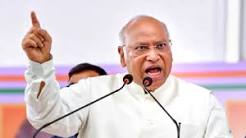
NEW DELHI: Congress president Mallikarjun Kharge on Friday claimed that the Narendra Modi-led government’s proposed move to amend the women’s reservation law and expand the number of parliamentary seats could violate the Model Code of Conduct and have “grave consequences”. He also asserted that the opposition will move unitedly on this. Addressing a meeting of the Congress Working Committee (CWC), Kharge said the issue required deeper consultation and that the opposition would respond collectively. “Therefore, following this meeting, we will formulate a collective strategy by holding discussions on these issues with our colleagues in the opposition as well. We will move forward unitedly,” Kharge was quoted as saying by news agency PTI. The Congress chief also questioned the timing of the special Parliament session scheduled from April 16 to 18, alleging it was aimed at political gain. “The Modi government is convening Parliament’s sittings with the sole intention of securing political advantage and is keen to pass the Constitutional Amendment Bill in utmost haste,” Kharge said. He noted that the proposed amendments could significantly impact India’s electoral system and therefore warranted “very deep deliberation”. “Based on the information we have received so far, the government wants to implement women’s reservation starting from the 2029 elections … it wants to increase the number of seats in the Lok Sabha from 543 to 816,” Kharge said. Raising concerns over the delimitation exercise, he added, “This delimitation proposal will have serious consequences. Therefore, there is a need for very deep deliberation on delimitation.” Kharge further alleged that the government had ignored the opposition’s request to hold an all-party meeting after the conclusion of polling in West Bengal. “This constitutes a violation of the Model Code of Conduct … we harbour no expectation that [the Election Commission] will even take cognisance of these violations,” he said. The meeting, attended by senior leaders including Rahul Gandhi and Priyanka Gandhi Vadra, discussed the government’s proposal on women’s reservation, delimitation, and the broader political context ahead of upcoming elections. In a Facebook post, Rahul Gandhi said, “The Congress remains steadfastly committed to ensuring women’s empowerment and social justice.” The government is expected to introduce bills during the special session to implement the Women’s Reservation Act before the 2029 general elections and increase Lok Sabha seats, with a significant share reserved for women. Courtesy : TOI Note: This news is originally published on https:/timesofindia.com/bha and is used purely for non-profit/non-commercial purposes, especially human rights
Dalit Family Assaulted Over Land Dispute: Several Named Individuals and 100 Unknown Persons Accused of Illegal Encroachment
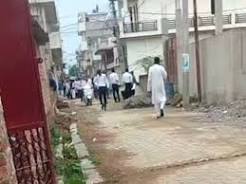
A case involving intimidation and physical assault over a land dispute came to light on Wednesday morning within the jurisdiction of the Para Police Station. A Dalit family has accused several named individuals—along with approximately 100 unidentified persons—of attempting illegal encroachment, using caste-based slurs, and issuing death threats. The victim has demanded that action be taken in this matter under the SC/ST Act. According to reports, the complaint was lodged by Mayawati Gautam (wife of the late Fekka), a member of the Scheduled Caste community residing near the Kamakhya Temple in Para village, within the Para region. She alleges that on the morning of April 8, 2026, at approximately 9:00 AM, Jitendra Lodhi, Bhupendra Lodhi, Manni Lodhi, Rajvardhan, Kuldeep (alias Kala Yadav), Shiva Thakur, Vishal Chaurasia, and Ankit Singh arrived at her property—accompanied by about 100 unidentified associates—with the intent of forcibly seizing the land. According to the victim, all the accused arrived at the scene in 4–5 vehicles, disguised as lawyers, and proceeded to attempt to take possession of the land. When the family objected to this, the accused allegedly used caste-based slurs and assaulted Mayawati Gautam, her widowed daughter, and her son with sticks and clubs, causing them injuries. It is further alleged that the attackers threatened to kill the entire family. Mayawati Gautam stated that the dispute regarding the land in question is currently sub judice (pending) in court, and a stay order is in effect, directing that the *status quo* be maintained. Despite this, the accused attempted to encroach upon the land in blatant defiance of the court’s order. The victim has demanded that a case be registered against all the named and unidentified accused persons—covering charges of illegal encroachment, assault, criminal intimidation, and violations under the SC/ST Act—and has called for strict punitive action. She has also appealed for measures to ensure the safety and security of her family. In response to this matter, Inspector Suresh Singh of the Para Police Station stated that he was not yet aware of the details of the case. He gave an assurance that once a formal complaint is received, an investigation will be conducted, and necessary legal action will be initiated. Courtesy: Hindi News