
‘I never said PM is a terrorist’: Kharge clarifies remark, says ‘Modi always threatens’; BJP calls Cong chief ‘frustrated’
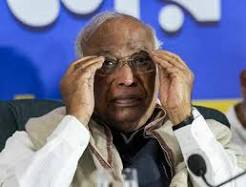
NEW DELHI: Congress president Mallikarjun Kharge on Tuesday referred to Prime Minister Narendra Modi as a “terrorist” and later issued a clarification, in remarks expected to trigger political controversy during the ongoing election season. Kharge made the statement in Chennai at a press conference on the final day of campaigning for the Tamil Nadu assembly elections, scheduled for Thursday. He was criticising the opposition AIADMK over its alliance with PM Modi’s BJP. “How can they (AIADMK) join with Modi? He is a terrorist. And he doesn’t believe in equality. His party won’t believe in equality and justice. And these people are joining with them, it means that they are weakening democracy, they are weakening the philosophy of Annadurai, Kamaraj, Periyar, Kalaignar, and Baba Saheb Ambedkar,” he said. “The Congress-DMK alliance will continue to deliver welfare, inclusive growth, quality education, and accessible healthcare,” he added. When questioned on the context of his remarks, the Congress chief said he meant that the prime minister always “threatens” and pointed to the alleged “misuse” of agencies by the BJP-led central government. “I want to clarify that Modi always threatens. The institutions like ED, I-T and CBI are in his hands. Therefore I say, in that context, I say he is terrorising people and political parties,” the veteran politician stated. Reacting to Kharge’s remarks, BJP IT cell head Amit Malviya criticised the Congress leader, calling it a “yet another crass display” in a post on X. “This isn’t the first time Kharge has dragged public discourse to such lows. But with this remark, he hasn’t just diminished himself, he has exposed what is a stated approach of the Congress: abuse and vilification of India’s most popular leader instead of meaningful debate. When politics is reduced to name-calling, it reflects not strength, but a deep frustration and lack of credible alternatives,” Malviya posted. AIADMK, an arch-rival of the ruling DMK, joined hands with the BJP in April 2025 after breaking away from the alliance ahead of the 2024 Lok Sabha elections, in which both parties failed to win any seats in Tamil Nadu. The DMK and its allies had swept the state in that election. Counting of votes for all 234 assembly constituencies in Tamil Nadu is scheduled for May 4. Courtesy : TOI Note: This news is originally published on https:/timesofindia.com/bha and is used purely for non-profit/non-commercial purposes, especially human rights
‘Submit public apology’: BJP moves EC against Mallikarjun Kharge over ‘terrorist’ remark, seeks action under poll code
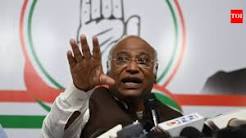
NEW DELHI: The Bharatiya Janata Party (BJP) on Tuesday wrote to the Election Commission of India (EC) seeking action against Congress president Mallikarjun Kharge over his “terrorist” remark against Prime Minister Narendra Modi. The party called Kharge’s remark a “grossly derogatory” statement and a violation of the Model Code of Conduct (MCC). In a formal complaint to the poll body, the BJP wrote: “As widely reported, Shri Kharge has while addressing a conference called Hon’ble Shri Narendra Modi ‘He is a terrorist.’ The remark has been circulated widely in print, television, and digital media, with substantial potential to vitiate the electoral atmosphere.” The party argued that such remarks amount to “extreme personal vilification” and violate the standards of campaign discourse mandated under the MCC, which is in force in poll-bound Tamil Nadu. Earlier in the day, Kharge sparked controversy after calling PM Modi a “terrorist” during a press conference, while criticising the AIADMK-BJP alliance in Tamil Nadu. However, later, the Congress chief clarified saying he meant the PM was “terrorising people and political parties” and insisted he had not literally called him a terrorist. Now the BJP has responded sharply by moving to the EC with its five-point demand. The BJP urged the EC to “take immediate cognizance of the statement being a prima facie violation of the Model Code of Conduct” and sought directions for Kharge to issue “a public apology/retraction” or face appropriate campaign restrictions. It also called for penal action under provisions of the Bharatiya Nyaya Sanhita, including Sections 175, 171/174, and 356(1). The party stated: “Calling a contesting political leader a ‘terrorist’ is not mere policy criticism; it is a grave imputation touching personal character and conduct.” Further, the BJP requested the EC to “direct immediate cessation of further dissemination of the impugned statement in campaign material and digital publicity” and to instruct media and social media platforms to take down such content. It also urged the poll body to “pass such further orders as may be necessary to preserve the dignity of the electoral process and ensure a free, fair, peaceful, and issue-based campaign.” “Such rhetoric lowers the level of campaign discourse, inflames passions, and undermines free and fair elections,” the letter stated. The party further claimed that “branding a political opponent in criminal-terror terminology before voters amounts to an attempt to distort voter choice through fear, demonisation, and false personal branding rather than lawful political persuasion.” The complaint comes hours after an intensyfied campaign in Tamil Nadu ended in on Tuesday evening. The EC has not yet issued a response to the BJP’s letter. Courtesy : TOI Note: This news is originally published on https:/timesofindia.com/bha and is used purely for non-profit/non-commercial purposes, especially human rights
Rahul rallies in Kolkata, Serampore cancelled as police denies nod
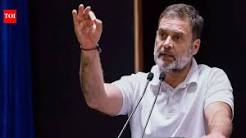
KOLKATA: Police have denied permission for Rahul Gandhi’s rallies in Kolkata and Serampore, scheduled on April 23, Bengal Congress secretary Roahan Mitra said Tuesday. Congress planned three rallies for Gandhi. For the Kolkata rallies, permission had been sought for Ramlila Park or Park Circus ground, and Metiabruz. A separate permission was sought for holding a rally at Serampore stadium. “Police have not given us permission for a single rally while others are allowed to hold rallies,” Mitra said, adding that the rallies planned for April 23 have been cancelled. Asked for a response, Bengal mantri Shashi Panja said, “Caretaker govt in the state cannot answer for the cancellation of his visit, EC can answer that.” Courtesy : TOI Note: This news is originally published on https:/timesofindia.com/bha and is used purely for non-profit/non-commercial purposes, especially human rights
Play documenting stories of oppression showcased in Bengaluru
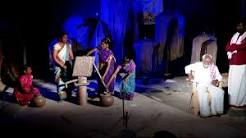
The 33-minute Kannada documentary traces the many socio-political realities faced by Dalits in contemporary India. ‘Song of Ghetto’ (Keri Haadu), directed by Chandrashekara K and produced by city-based arts collective Jangama, won the Best Documentary Award at the P K Rosy Film Festival. The festival is organised as part of the Vaanam Art Festival, an annual initiative during Dalit History Month by acclaimed filmmaker Pa Ranjith’s Neelam Cultural Centre The 33-minute Kannada documentary traces the many socio-political realities faced by Dalits in contemporary India. The film focuses on the lives of a Dalit community in Dindagur of Hassan district — their resistance against untouchability and their fight to claim their fundamental right to enter their village temple The film shows how discrimination persists — from being denied access to temples and eateries to them being barred from drinking water from public tanks, and how caste segregation seeps in like DNA, with children from privileged castes refusing to mingle with their Dalit counterparts. Even as many believe education is a way out, caste continues to shadow their lives when they return to their hometowns. There is significant evidence to show that such practices are seen across the country and not limited to Dindagur. Chandrashekara shot the entire film on his mobile phone. During a workshop conducted by Jangama in the village, he began documenting people’s stories, eventually shaping 17 hours of footage into this documentary. He aims to document more such instances of caste-based oppression across villages. Pranati A S Courtesy : DH Note: This news is originally published on https:/deccanherald.com/bha and is used purely for non-profit/non-commercial purposes, especially human rights
Dalit voters of Villupuram share support across parties over lack of development and emanicpation

Even cadres within the DMK raised opposition to Lakshmanan canvassing in GRP Street, alleging that he betrayed former MLA S Pushparaj by not facilitating him a seat in Vanur in this Assembly election. VILLUPURAM: With just a day to go for the election, the voter mood in Villupuram town is swaying in a three-cornered contest between the DMK, AIADMK and TVK. With the last leg of campaign rallies under way in the town, residents expressed dissent against the DMK government for not providing basic amenities in Dalit residential areas such as Valudareddy and GRP Street. Both areas, which have nearly 3,000 voters each, still lack proper drinking water facilities, roads and infrastructure. With dense populations and cramped housing, the localities almost sink during peak monsoon periods, but mitigation has not been carried out through proper infrastructure development. A Arumugam (55), a resident of Annai Indira Nagar, said, “We need to fetch water from a common pipe, so we go there as early as 4 am. This lifestyle, driven by lack of amenities, makes us wonder if we really live in the modern era.” Meanwhile, young supporters of TVK in both areas criticised the DMK and AIADMK for playing “cunning” politics over the years. They are also influencing their parents to vote for actor-turned-politician Vijay’s whistle symbol, seeking “a fresh political space devoid of caste equations”. “Both parties ruled us for so long, but I am still stigmatised for coming from a ‘colony’. My neighbourhood is not hygienic, decent or healthy. Whose fault is it, and why should we choose them again now? They claim social justice and equality, but in reality they do not live up to it. We don’t want to support such cunning politics,” said Kumudha (22, name changed), a resident of GRP Street and a member of TVK. Even cadres within the DMK raised opposition to Lakshmanan canvassing in GRP Street, alleging that he betrayed former MLA S Pushparaj by not facilitating him a seat in Vanur in this Assembly election. Several supporters of the latter pointed out that Dalit emancipation has not been enabled by either AIADMK or DMK leaders in Villupuram due to casteist intentions. In a video circulating on social media, a DMK supporter was heard saying, “Only he (Lakshmanan) wants to be minister and MLA. Why not a Scheduled Caste person come to power?” “Pushparaj, a Dalit politician, is a resident of Villupuram. If he becomes an MLA in Vanur, that would mean social empowerment of Dalits not only in Vanur but also in Villupuram town. This is essentially a problem for dominant caste politicians in Villupuram, and the town is entrenched in casteist politics that does not allow a Dalit person to rise within party structures, especially in the DMK,” said P K Diwakar (32). This is no different in the AIADMK. “I have been working in the party for the last 19 years, but former minister C Ve Shanmugam has not visited or even asked me about deaths in my family. Their Dalit aversion is so evident that I decided to quit politics altogether,” said a 56-year-old Dalit block-level cadre in the AIADMK from Villupuram (on condition of anonymity). Speaking to TNIE, Viduthalai Chiruthaigal Katchi (VCK) district secretary R Periyar said the current DMK MLA had provided welfare measures to Valudareddy, including an anganwadi building, two fair price shops, a cremation shelter and borewell mechanisms that are yet to be made operational for public use. He added that though development for Dalit residents in the town is not adequate, it is important to consider the consequences of supporting the AIADMK, which would indirectly mean supporting the BJP. “VCK cadres will work for the victory of the DMK-led Secular Progressive Alliance in Villupuram constituency,” he said. Though there is a broader sentiment favouring the DMK, such nuanced emotions among Dalit residents, whose votes could decide the outcome in Villupuram, cannot be overlooked. With youngsters leaning towards TVK, some elders shifting support to the AIADMK, and growing dissent against the DMK MLA, the contest is likely to be closely fought with narrow margins. Krithika Srinivasan Courtesy : TNIE Note: This news is originally published on https:/thenewindianexpress.com/bha and is used purely for non-profit/non-commercial purposes, especially human rights
‘Rahul Gandhi se chalne wala nahi hai’: Tej Pratap Yadav backs Priyanka Gandhi Vadra as INDIA bloc face

PATNA: Tej Pratap Yadav on Tuesday sparked a political debate by backing Priyanka Gandhi to lead the Congress, while expressing doubts over Rahul Gandhi’s ability to run the party. “Only Priyanka Gandhi can run it; she is like Indira Gandhi. Rahul Gandhi cannot run it, by going on a yatra, by sitting on a Bullet, it won’t make a difference” he said, dismissing Rahul Gandhi’s political outreach efforts and questioning their effectiveness. His remarks came in response to Rahul Gandhi’s criticism of Nitish Kumar, whom he had called “compromised” after the JD(U) leader’s recent political moves. Following this, BJP leader Samrat Choudhary took over as Bihar chief minister. Questions over Rahul Gandhi’s leadership have surfaced earlier as well. Former Congress leader Shakeel Ahmed had recently alleged a lack of internal democracy within the party, claiming that senior leaders were being sidelined. Ahmed said Rahul Gandhi was uncomfortable working with seasoned leaders and alleged that decision-making in the party had become highly centralised, with his word being final. He also claimed that the youth wings were being promoted to replace the old guard in the party. Courtesy : TOI Note: This news is originally published on https:/timesofindia.com/bha and is used purely for non-profit/non-commercial purposes, especially human rights
Odisha Reconstitutes State Transgender Welfare Board to Strengthen Inclusive Governance

In a significant move towards inclusive development, the Government of Odisha has reconstituted the State Transgender Welfare Board, aiming to enhance welfare initiatives and ensure better coordination for the transgender community across the state. New Structure to Improve Governance The earlier board, constituted on May 15, 2025, with a three-year term, has been dissolved within a year and replaced with a newly structured body. Under the revised framework, the Chief Secretary of Odisha will now serve as the Chairman, marking a shift towards stronger administrative leadership. The Secretary of the Social Security and Empowerment of Persons with Disabilities Department has been appointed as Vice-Chairperson, while the Director of the department will act as the Member Secretary. Multi-Departmental Representation To ensure comprehensive policy implementation, the reconstituted board includes senior officials from key departments such as: Health and Family Welfare Women and Child Development Panchayati Raj and Drinking Water Housing and Urban Development Skill Development and Technical Education Higher Education School and Mass Education Additionally, the Director General of Police and senior administrative officials are part of the board, reinforcing inter-departmental collaboration. Community Representation Ensured The board places strong emphasis on representation from the transgender community. Notable members include Dipti Mohapatra, the state’s first third-gender doctorate recipient, and Soumya Das, a prominent rights activist. Representatives from organizations such as the Transgender Suraksha Trust in Bhubaneswar and the Chetana Organization in Balugaon have also been included, ensuring grassroots-level participation. District-Level Participation To strengthen regional representation, District Collectors from Balangir, Angul, and Khordha will serve as members on a rotational basis. Focus on Welfare and Inclusion The reconstituted board is expected to improve implementation of schemes related to: Education and skill development Healthcare access Social security Livelihood opportunities This initiative reflects the state’s commitment to promoting dignity, equality, and empowerment for transgender persons through inclusive governance. By Ananya Pattnaik Courtesy : Pragativadi Note: This news is originally published on https:/pragativadi.com/bha and is used purely for non-profit/non-commercial purposes, especially human rights
Transgender guru builds ₹85 lakh Shiva temple using ‘badhai’ earnings

Gorakhpur: A 75-year-old kinnar (transgender) guru, Prema, from the Padri Bazar area has constructeda grand Shiva temple by spending over ₹85 lakh — all sourced from traditional ‘badhai’ (ceremonial blessings) earnings. The temple is set to be consecrated on Apr 24, with preparations in full swing and the entire locality brimming with enthusiasm, guru Prema said. Residents have been visiting the site in large numbers, praising Prema’s unique initiative that blends faith with social welfare. Prema, who has been living in the area for nearly six decades, said her aim is to connect society with spiritual values. “When people worship, they move towards the path of righteousness. Those who follow the right path contribute to building a strong nation,” she said. Apart from temple construction, Prema has been actively involved in community service. She has funded road construction and supported the marriage of several underprivileged girls. Families she once helped nowinvite her to ceremonies, treating her with deep respect. Sustaining herself through agriculture, orchards and traditional ‘badhai’ collections during weddings and childbirth celebrations, Prema has consistently reinvested her income into social causes. Deeply rooted in the community, she continues to draw people seeking her blessings. “All religions deserve respect; ultimately, there is one supreme power,” she said, summing up her inclusive belief system. Courtesy : TOI Note: This news is originally published on https:/timesofindia.com/bha and is used purely for non-profit/non-commercial purposes, especially human rights
People of goodwill urged to come together to fight caste-based injustice

“Thirteen Dalits are murdered every week across India due to ever-increasing caste-based violence. Yet many incidents of horrific caste-based discrimination and violence go unreported due to fear, social pressure and lack of support,” said Sister Manju Devarapalli, a Carmelite religious sister and General Secretary of National Dalit Christian Watch in India. Sister Devarapalli was speaking at a conference organised by The Christian Network Against Caste Discrimination (CNACD) at the London Jesuit Centre last Thursday 16th April. She said: “The caste system is not a relic of the corrupt past, it is an indictment of a present in which millions are being exploited and abused. It is carried out in plain sight and perpetuated by wealth, influence and an instinct to defer to those at the top.” Sister Devarapalli urged not passive sympathy but an active response: “Legal reforms that bury abuse; international advocacy and financial support.” She explained how India’s caste system of social stratification became a central mechanism of British colonial governance. Despite being officially outlawed at independence in 1947, it stubbornly endures. Within this system, the Dalits – categorised as ritually unclean ‘untouchables’ – are condemned to a harsh life of segregation and exploitation. They are obliged to use separate water sources, cremation and burial grounds, and to live in marginalised communities. Their access to places of worship is restricted. Social ‘transgressions’ – such as wearing footwear or riding a horse – can be brutally punished. Those crimes which are reported against Dalits occur every 18 minutes. Less than ten per cent of marriages are inter-caste and, in rural north India in particular, women who defy such social stigma are vulnerable to murder (the grotesquely misnamed phenomenon of ‘honour killings’). According to Sister Devarapalli, hate speech in general is on the rise in India, with the Hindu nationalist majority, including its leadership, targeting Muslims and Christians. She explained that the ‘upper castes’ such as Brahmins and Rajputs dominate key economic and political positions and have disproportionate ownership of the land. Conversely, most Dalits remain landless labourers and 1.3 million are ‘manual scavengers’ – responsible for cleaning dry latrines, despite a 1993 banning of this degrading work. Other Dalits carry out leather work and waste collection. Fifty million Dalits are estimated to exist under conditions of modern slavery. Sister Devarapalli concluded by saying, “Desmond Tutu warned: if you are neutral in situations of injustice, you have chosen the side of the oppressor.” In a video address, the Catholic cross-bench peer David Alton lamented the endless daily atrocities of the caste system which, like the Apartheid system, deprived the Dalits of essential humanity. He said, ‘We must learn from the Anti-Apartheid movement and apply economic sanctions, boycotts and diplomatic isolation.’ Dr Anderson Jeremiah, the Anglican Bishop of Edmonton, and a Dalit from Tamil Nadu, spoke of the crippling educational barriers for his community. He himself endured humiliation and obstruction, made to sit at the back of the class and only able to learn English when aged 20, but ‘I saw the power that knowledge brings.’ He also decided to become a priest. ‘I saw the Church has the capacity to provide transformation, to bring dignity, humanity and freedom to people.’ He noted that 75 per cent of Christians in India are from Dalit communities although the leadership structure is generally still from the ‘higher’ castes. He applauded the fact that the Catholic church now had a Dalit cardinal and two Dalit bishops. Fr Roy Sebastian SJ from India, who works alongside the Dalits, spoke of the grim reality of funds for Dalit development being withheld by government, of rampant violence, and of exclusion of Dalit Christians by other Indian Christians. More positively, he was able to report of the training of 6000 community leaders thanks to Church support. Meena Varma, Executive Director of the International Dalit Solidarity Network, spoke of the struggle to ‘get the UK government to fulfil its responsibilities’ by providing legislative protection for the Dalits, because the caste-based system remains a lived reality in the South Asian diaspora (7.5 per cent of the UK population). It is estimated, that world-wide some 260 million people suffer from discrimination based on caste. Some 25 million are estimated to have migrated from South Asia to other countries. Caste-based prejudice and discrimination are operative in more than 100 countries where South Asians have migrated, including the UK. Following general discussion, the conference advocated intersectional solidarity with all people of goodwill. It urged ongoing fact-finding and the need to give voice to the Dalits in the struggle to provide justice and dignity. A synodal approach should be maintained: both the Bishops’ Conferences in Britain, and the Roman conference with bishop synodal presidents reporting to Pope Leo in the autumn, should discuss this issue as a matter of serious and urgent ongoing concern. The CNACD warmly invites people to contact it in the hope of instilling fresh momentum into its crucial work. Dr Philip Crispin Courtesy : ICN Note: This news is originally published on https:/independentcatholicnews.com/bha and is used purely for non-profit/non-commercial purposes, especially human rights
Road Construction Halted in Jaunpur; Dalit Families Protest: Interlocking Road Being Built via Village Fund; Justice Sought from DM
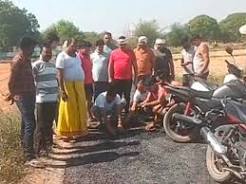
On Tuesday, hundreds of men and women staged a protest within the Collectorate premises in Jaunpur’s Pariyawa village, opposing the halting of work on an interlocking road project being constructed using the Village Fund. The protesters chanted slogans demanding, “DM Sir, give us justice,” and submitted a memorandum to City Magistrate Indra Nandan Singh. Village Head S.P. Manav alleged that the construction of the interlocking road had been initiated using the Village Fund. He claimed that certain opposing parties forcibly obstructed the work, thereby disrupting the commute of approximately 150 Dalit families residing in the village. The Village Head stated that this pathway is nearly 100 years old. Between 2010 and 2015—during the tenure of former Village Head Prabhavati Devi—a 600-meter *kharanja* (stone-paved road) was constructed at this site. Currently, this *kharanja* has fallen into a completely dilapidated state and is in urgent need of reconstruction. On Monday, the incumbent Village Head commenced the work of constructing the interlocking road using the Village Fund. However, certain opposing parties and neighboring landowners prevented the work from proceeding. At the site, the width of the existing *kharanja* was reported to be 9 feet. Upon receiving information, a police team—contacted via the ‘112’ emergency helpline—arrived at the scene, but the construction work was still not allowed to move forward. The following day, Tuesday, a team from the Revenue Department along with police personnel reached the site. The team assessed the width of the previously constructed *kharanja* and issued directives to continue the construction work. Despite this, the opposing parties allegedly resorted to physical aggression and once again brought the work to a halt. The Village Head and the affected Dalit families maintain that this is their sole route for commuting, and it is being forcibly blocked. They have demanded that legal action be initiated against the opposing parties to ensure the unhindered movement of the 150 Dalit families, thereby allowing the road construction project to be completed. Ankit Srivastava | Jaunpur Courtesy: Hindi News