
Kerala Dental Student’s Suicide: 52 Dalit Organisations Call Hartal On April 28; Demand HC-Monitored Probe

Council demanded ₹10 crore compensation for Nithin Raj’s family, cancellation of the college’s affiliation, strict action against faculty and a transparent and time-bound investigation. Thiruvananthapuram: A joint action council comprising 52 Dalit organisations in Kerala has called for a statewide hartal on April 28, alleging serious lapses in police investigation into the death of Nithin Raj R L, 22, a first-year student of Kannur Dental College in Anjarakandy, and that the probe has been inadequate and biased. The dawn-to-dusk shutdown is scheduled from 6 AM to 6 PM. The action council spearheading the protest has demanded a judicial probe under the supervision of the Kerala High Court, claiming that the police are attempting to shield those responsible. General convener Sunny M Kappikkad, addressing the media here on Tuesday, alleged that key evidence has been ignored and that there has been a deliberate attempt to attribute the death to unrelated factors such as loan app harassment. The council demanded immediate government intervention to ensure a fair and impartial investigation while citing a lack of progress in the case. The JAC has also planned to organise preparatory protest meetings scheduled across districts on April 24. The organisations have raised serious concerns over the handling of the case and demanded a probe under the supervision of the Kerala High Court. The council has demanded ₹10 crore as compensation for Nithin Raj’s family, cancellation of the college’s affiliation, strict action against those found guilty and called for a transparent and time-bound investigation. Son of a daily-wage labourer from Uzhamalakkal here, Nithin, succumbed to his injuries after a fall from the fifth floor of the college building on April 10. Nithin joined the college only in September last year when he secured a BDS seat after repeated attempts at the NEET examination. The incident took a serious turn when family members and fellow students alleged sustained caste-based harassment by faculty members. Later, the college suspended two faculty members – Dr M K Ram, Head of the Department of Oral Pathology, and Dr K T Sangeetha Nambiar, who went absconding after police turned the heat. The action council accused the police of failing to register an FIR based on the complaint filed by Nithin Raj’s parents. It also alleged possible political interference in the case, pointing to the college management’s lack of response and previous allegations against its authorities. “We’re not satisfied with the current police investigation and accused authorities of attempting to shield those responsible,” Sunny M Kappikkad said. He claimed that crucial aspects of the case were being overlooked and that efforts were being made to attribute the death to unrelated factors such as alleged loan app issues. The action council further alleged that the student had faced caste- and colour-based harassment prior to his death. It also claimed that several individuals, including members of the college administration, should be brought under the ambit of investigation. However, according to the council, no meaningful progress has been made so far. Courtesy : ETV Bharat Note: This news is originally published on https:/etvbharat.com/bha and is used purely for non-profit/non-commercial purposes, especially human rights
The Architecture of Erasure: A Constitutional Critique of the Transgender Persons (Protection of Rights) Amendment Bill, 2026

A critical legal analysis of the 2026 Amendment, its impact on identity rights, NALSA judgment, and constitutional violations. The passage of the Transgender Persons (Protection of Rights) Amendment Bill, 2026, by both Houses of Parliament on March 25, 2026, marks a watershed moment—not for progress, but for the systematic dismantling of a decade of hard-won legal recognition. Cleared by the Lok Sabha on March 24 and the Rajya Sabha the following day, the amendment represents a fundamental ideological retreat. By shifting from a “rights-based model” to a “pathological model”, the state has effectively legislated out of existence those it once claimed to protect. Deconstructing the Definition: From Psyche to Chromosomes The most egregious feature of the 2026 Bill is its attempt to “tighten” the definition of a transgender person. In National Legal Services Authority (NALSA) v. Union of India (2014 INSC 275), the Supreme Court unequivocally rejected the “Biological Test” in favour of the “Psychological Test”, stating:Immigration Law Advice “Gender identity… forms the core of one’s personal self, based on self-identification, not on surgical or medical procedure.”Legal Consultation Services The 2026 Bill effectively overrules this by deleting Section 4(2) of the 2019 Act, which guaranteed the right to self-perceived identity. By limiting the definition to specific congenital sex characteristics and socio-cultural groups (Kinner, Hijra, etc.), it excludes the following: Excluded Groups Under The Amendment Trans men and trans women who do not belong to traditional socio-cultural groups. Genderqueer and non-binary individuals who rely entirely on self-perception. Post-SRS individuals who have already transitioned but do not fit the “congenital variation” criteria. The Retrospective Trap The Bill’s proviso stating the category “shall not include, nor shall ever have been so included” persons with different sexual orientations or self-perceived identities is a legislative anomaly. It creates a “limbo population” of over 32,000 certificate holders whose legal identity is now retrospectively delegitimised. This violates the doctrine of legitimate expectation and the principle against retrospective withdrawal of vested rights.Consumer Court Information The Bill also runs afoul of the Doctrine of Non-Retrogression, as articulated in Navtej Singh Johar v. Union of India (2018). This doctrine mandates that the state cannot withdraw a right or a standard of protection once it has been recognised. By retrospectively delegitimising thousands of identities, the Bill is a textbook example of ‘Constitutional Retrogression’, effectively shifting from a progressive understanding of identity back to a regressive, colonial mindset. Key Constitutional Violations Doctrine of Legitimate Expectation Principle against retrospective withdrawal of vested rights Doctrine of Non-Retrogression Constitutional protection of identity and dignity The Medical Board: A Violation of Bodily Autonomy The Bill mandates a two-stage medical filter: a state-appointed medical board (headed by a CMO) followed by the district magistrate’s discretion. This is a direct affront to the right to privacy established in K.S. Puttaswamy v. Union of India (2017). Furthermore, in Jane Kaushik v. Union of India (2025 INSC 1248), the Court emphasised that gender identity is intrinsic to human dignity. By subjecting individuals to physical examination to “prove” their gender, the state treats the trans body as a “research subject” rather than a citizen. This creates a “chicken-and-egg” trap: one cannot access gender-affirming care without a certificate, but one cannot get a certificate without proving they have a “biological condition” that likely requires that very care.Immigration Law Advice Absence of Appellate Mechanism Critically, the bill is silent on an appellate mechanism. By granting the District Magistrate and the Medical Board the absolute power to decide a person’s identity without providing a specialised tribunal for appeal, the Bill violates the principles of natural justice (Audi Alteram Partem). An administrative power that is absolute and unreviewable is ‘prima facie’ arbitrary and ultra vires to the Constitution. Key Legal Concerns Violation of Right to Privacy Infringement of bodily autonomy and dignity Lack of appellate safeguards Arbitrary and unreviewable administrative power III. The Penal Paradox: Section 18 vs. Bharatiya Nyaya Sanhita (BNS) The bill introduces severe penalties (up to life imprisonment) for “coercing” or “alluring” individuals into a transgender identity. This narrative mimics the colonial Criminal Tribes Act, 1871, which presumed the community to be “habitual kidnappers”.Consumer Court Information However, a glaring “omissive discrimination” exists when compared to the BNS, 2023. Comparison: BNS vs Transgender Persons Act As argued by Jane Kaushik (2025), the state’s failure to provide equal protection under the law for trans-victims of sexual violence constitutes a violation of Article 14. The Bill’s focus on “criminalising” the community rather than protecting it from violence is a testament to its regressive intent.Legal Consultation Services Doctrine of Vagueness Concerns Furthermore, the use of terms like ‘allurement’, ‘inducement’, and ‘deception’ in the context of gender identity violates the Doctrine of Vagueness, established in Shreya Singhal v. Union of India (2015). In criminal law, a provision must be clear enough to give a citizen ‘fair notice’ of what is prohibited. Without a clear definition, these terms become tools for arbitrary policing and the targeted harassment of community support systems and NGOs. Key Issues in Penal Framework Omissive discrimination against trans persons Inadequate legal protection for sexual violence Vague and overbroad criminal provisions Risk of arbitrary enforcement and misuse Constitutional Infirmity: The Test of Manifest Arbitrariness The Bill fails the Doctrine of Manifest Arbitrariness as laid down in Shayara Bano v. Union of India (2017). There is no “intelligible differentia” in protecting only those with “biological conditions” while excluding those with “self-perceived identities”, as both face the same societal exclusion and violence.Immigration Law Advice The 2026 Bill remains silent on the most critical demand of the community: horizontal reservation. In NALSA and reaffirmed in Jane Kaushik, the courts directed the state to treat transgender persons as a “Socially and Educationally Backward Class” (SEBC). By narrowing the definition, the Bill ensures that even if reservations were granted, they would reach only a fraction of the community. This is a classic case of “romantic paternalism”—claiming to protect the “genuine” oppressed while using law as a tool for moral cleansing and surveillance. Global Comparison and Legal Position The Bill
Dalit Woman Alleges Custodial Assault, Caste Abuse in MP’s Sidhi On Ambedkar Jayanti
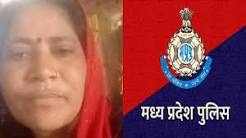
Dalit woman in Sidhi accuses constable and others of assault and caste slurs during Ambedkar rally. A serious allegation of custodial assault and caste-based abuse has emerged from Sidhi, where a Dalit woman has accused a police constable and three others of brutally attacking her during an Ambedkar Jayanti event. The incident, reported on April 14, has triggered public outrage and renewed concerns about police conduct and caste sensitivity in the region. What the complainant alleges The victim, identified as Pankali Saket, said she had gone to the Amaliya police station area to take part in an Ambedkar Jayanti rally when she was allegedly surrounded and attacked. According to her complaint, a police reservist and three men in civilian clothes assaulted her with sticks, causing injuries to her head, back, hands, and legs. She also alleged that casteist slurs were used during the attack. If proven, the allegations would fall under provisions of the Scheduled Castes and Scheduled Tribes (Prevention of Atrocities) Act, 1989. Medical and procedural concerns The woman further alleged that she did not receive proper treatment at a local hospital and had to purchase medicines herself despite visible injuries. She reported symptoms including dizziness and vomiting following the assault. A written complaint has been submitted to the Superintendent of Police in Sidhi, along with photographs of her injuries. Names of accused and investigation status One of the accused has been named as Saurabh Shukla, while the identity of another person remains unknown. The woman has also alleged involvement of a police personnel, identified as Abhishek. As of now, police authorities have not issued an official response or confirmed the registration of an FIR, which has added to public concern. Political and social reactions The case has gone viral on social media, drawing criticism from activists and political leaders. Sunil Asteya of the Azad Samaj Party questioned the state government, pointing out the contradiction between welfare schemes for women and alleged violence against Dalit women. He has demanded strict action under the SC/ST Act and warned of protests if no action is taken. Courtesy : TOP Note: This news is originally published on https:/theobserverpost.com/bha and is used purely for non-profit/non-commercial purposes, especially human rights
Stories that spill past fiction at Verchol Dalit Literature Festival 2026

Two Dalit writers reclaim myth, memory and emotion, challenging demands for realism and the privilege of stories placed above human rights The Pamba river moves as its many droplets touch the lands they pass. It doesn’t stop. As the river completes its journey, it carries some from one bank to the other, holds some in its coolness. But at times, the river tricks too. It hides large rocks, and deep holes beneath the surface. The consequence? People slip and are taken away into the gushing water. The villagers residing on the bank of Pamba had a different story of the river. A powerful man who once created nuisance for the community was drowned there by the people. As he went under, he dragged 40 others with him. The river now holds 41 ghosts, and they pull the living down. Aleena, a Dalit poet and Ambedkarite feminist from Kerala, told this story at Muthamizh Peravai on Saturday, during the Verchol Dalit Literature Festival 2026, held as part of the fifth edition of Vaanam Art Festival organised by Neelam Cultural Centre. “People found the idea of a group conspiring against someone scarier than the danger of the river itself. These magical explanations reveal what people fear, what they value, and what they consider important,” she said. The session, moderated by writer and translator Reena Shalini, brought together Aleena and writer Vinil Paul for a conversation on Dalit history and fiction. Reena opened by reading a Tamil translation of a poem from Aleena’s collection of 91 poems, Silk Route, which received recognition from the Kerala Sahitya Akademi. The poem follows a woman who cannot attend a wedding because she has no proper sari, and the ghost of her absence haunts the celebration like silk draped over grief. The conversation turned quickly to what fiction is permitted to do. Aleena observed that Dalit writers face a persistent demand for realism, even in their imaginative work. “People ask which real incident a character refers to,” she said. “That is why Dalit autobiographies are celebrated more than fiction. Reality itself is seen as powerful.” Meanwhile, she argued, dominant groups treat their own stories as history worth protecting, sometimes above human rights. She pointed to the Ram temple dispute and the founding of Israel as examples of fictional or mythological narratives used to legitimise displacement and violence. “To place stories above human rights is privilege,” she said. On the question of emotional range in Dalit writing, Aleena shared, “Life is a mix of generational trauma and inherited pleasures.” She described pressure from audiences who expect Dalit writers to write only about suffering, and pushed back against it. “There is celebration, happiness, hope, small joys and big joys. People still do not believe we experience the full range of emotions.” Vinil, whose book Adimakeralathinte Adrishyacharithram examines the history of slavery in Kerala, turned to structural power. He cited Dr BR Ambedkar’s warning that India risked becoming an oligarchy and named Kerala as its clearest example. Two communities, Nairs and Syrian Christians, dominate the state’s political parties, media, cinema, and educational institutions, he said. “For almost 35 of Kerala’s 69 years of governance, the chief ministers have come from the Nair community.” Reservation functions as a token gesture in most institutions. Even KR Narayanan, who studied at the London School of Economics and became the President of India, faced caste barriers when he returned to Kerala. On Malayalam cinema’s celebrated recent run, Aleena offered little applause. “It is not democratic in terms of capital,” she said. “People who control the industry extract stories from marginalised communities, profit from them, and do not share that capital with the communities those stories come from.” She highlighted the film Lokha: Chapter 1 featuring Adivasi characters as examples of surface representation without genuine understanding. “I have always felt a lot of hypocrisy in Malayalam filmmakers when they deal with marginalised stories,” she noted. What the afternoon made clear is that the fight is not only over who tells the stories, but over who profits from them. When Aleena had arrived at the festival, she said she felt something rare. “Usually, I feel like I am given a chair in a place where I do not belong. This is the first time I feel like I belong to the entire space.” Vaanam Art Festival was a space Dalits had built for themselves, and that, as Aleena made clear, makes all the difference. Courtesy : TNIE Note: This news is originally published on https:/thenewindianexpress.com/bha and is used purely for non-profit/non-commercial purposes, especially human rights
Police rescue dalit woman trying to end life after rape

Rural police saved a 26-year-old dalit woman from Paratwada who attempted to commit suicide on Monday by jumping in Wazzar Dam after allegedly being raped on the pretext of marriage. This was her sixth or seventh suicide attempt, said rural LCB PI Kiran Wankhade, reports Anil Jadhav. According to him, the woman was in a relationship with the rape accused. But when he refused to marry her, the woman lodged a complaint with Paratwada police who registered a case of rape and arrested the accused. Later, the accused assured to marry the woman. After woman’s submission, the court granted bail to the accused. But the accused backtracked soon after coming out of jail. As a result, the woman slipped into depression. SP Vishal Anand said the case has no connection with Paratwada sexual exploitation case which the rural police are investigating. Courtesy : TOI Note: This news is originally published on https:/timesofindia.com/bha and is used purely for non-profit/non-commercial purposes, especially human rights
Write Mind | TCS Nashik Scandal: A Case For Muslim Society To Stand In Solidarity With Dalits

The case prompts fresh reflection on the often-highlighted slogan “Jai Bheem-Jai Meem,” first popularised by AIMIM leader Asaduddin Owaisi. At the Tata Consultancy Services BPO unit, eight women employees along with one male colleague have come forward with serious complaints of systematic sexual harassment, mental coercion, and alleged attempts at forced religious conversion. Nine complaints have been registered with the Nashik City police, leading to the arrest of seven individuals -mostly team leaders and an HR functionary – including people with names such as Tausif Attar, Danish Sheikh, Shahrukh Qureshi, Raza Memon, Asif Ansari, Shafi Sheikh, and Nida Khan. The incidents, reported from 2022 into early 2026, allude to a perpetual disturbing pattern rather than motley and scattered incidents: the complainants being young Hindu women and the molesters, Muslim men. Details emanating from the official complaints and the ongoing SIT investigation reveal a calculated approach. The accused, who held supervisory positions, purportedly focused on young Hindu women, largely between 18 and 25 years old and raised in financially challenged and socially backward backgrounds. These selections were not serendipitous. Police have unearthed a documented trail of evidence of internal WhatsApp groups that acted as coordination points, where “hunting lists” were reportedly maintained. They purportedly discussed the victims’ financial struggles, family issues, and emotional isolation, etc., and planned grooming strategies. Promises of career growth or adjustments linked to participating in Ramzan-related practices often served as entry points. Victims have admitted to being implored to join namaz during office hours, observe roza, consume beef, or recite the kalma, sometimes under the shadow of professional consequences or blackmail involving private photographs. One male employee claimed he was told his father’s illness was tied to his Hindu faith and could only improve through conversion. Repeated complaints to HR were allegedly ignored or downplayed, allowing the pattern to continue unchecked for years. This Machiavellian case is not to be misconstrued as a run-of-the-mill workplace issue. It raises questions about an unprecedented abuse of corporate structure for Islamist radicalisation and indoctrination. TCS has acted by suspending the accused employees, restating its long-standing zero-tolerance policy against any form of harassment or coercion, and launching an internal review led by its COO, Aarthi Subramanian. Chairman N Chandrasekaran has called the matter deeply concerning. The moot question remains on pondering if this response addresses the issue or sidelines the elephant in the room. The case also prompts fresh reflection on the often-highlighted slogan “Jai Bheem-Jai Meem,” first popularised by AIMIM leader Asaduddin Owaisi and taken up in certain political quarters. Presented as a bridge between Dalit aspirations, drawing on Dr BR Ambedkar’s legacy, and Muslim political identity, the phrase has been offered as a symbol of progressive unity and social justice. Yet the Nashik allegations bring forward some uneasy questions. The victims largely belong to the very economically and socially backward Hindu communities that the “Bheem” part of the slogan claims to uplift – young people from these sections entering corporate roles with hopes of stability and growth. This naturally leads to an honest inquiry: does the Meem-Bheem framework truly serve to empower backward classes, or does it sometimes create conditions that fragment them along new lines for electoral convenience? And importantly, what about Muslim civil society groups and everyday Indian Muslims who have have consistently distanced themselves from extremist elements? The point here is not to paint an entire community with one brush but to encourage thoughtful self-examination where it matters. Muslim organisations and leaders – bandying the flag of Dalit-Muslim unity – who have long presented themselves as guardians of constitutional principles and minority interests now have a cogent chance. By offering clear and open support to the victims – daughters from the very backward classes often invoked in Meem-Bheem talk – they can show that a common Indian identity matters more than narrow calculations. Such a step would help mend social bonds rather than weaken them. In doing so, they would move beyond any slogan towards a deeper commitment – one in which every Indian, regardless of faith, can chase their aspirations feeling secure under the national flag. That kind of shared understanding, more lasting than any rallying cry, would genuinely honour the backward classes and help weave a stronger national fabric. Additionally, the lack of public condemnation from those who champion this slogan highlights a certain selectivity when it comes to issues of marginalisation. Also, there is a cabal that has long tom-tommed itself as the shining beacon, a trailblazer and a saviour of feminism. One wonders where these usual voices championing women’s dignity and safe workplaces have been on this matter. Then there are media outlets and commentators who pretend to stand up for secular values and communal harmony but have consumed fevicol since this dastardly scandal broke out. In a country where discussions on injustice often spread quickly, the relatively subdued reaction to the plight of these young women, many from Dalit and backward backgrounds, feels noticeable. The Maharashtra government has pushed for a thorough probe, and the SIT continues its work. Yet the true measure lies in how society at large responds. At its core, any form of forced conversion or harassment strikes at the constitutional promises of religious freedom and equal dignity. Will this episode become just another internal corporate machination, or will it encourage earnest dialogue across communities? Objectivity makes it imperative that we ask whether the response would look different if the roles of faith were reversed. Genuine solidarity, after all, cannot depend on convenience or political calculation; it must stand up for the vulnerable no matter who is involved. This bone-chilling scandal that has unfolded in the bustling IT hub of Nashik sends ripples of concern across the country. It is at the forefront of a debate: Are we petrified to call a spade a spade? Is Bharat at the cusp of a nefarious Islamist machination aimed at slyly changing the demography of our democracy? Is this the time to confront the radical Jinn being unleashed upon us
Amravati: Dalit Woman Rescued After Suicide Attempt Following Alleged Rape

Police rescued a 26-year-old Dalit woman from Wazzar Dam in Amravati after an alleged suicide attempt linked to rape and promise of marriage case. A 26-year-old Dalit woman from Paratwada in Maharashtra’s Amravati district was rescued by rural police after she allegedly attempted suicide by jumping into Wazzar Dam on Monday. Police said this was reportedly her sixth or seventh suicide attempt. According to officials, the woman was in a relationship with the accused, who allegedly raped her on the promise of marriage. When he later refused to marry her, she filed a complaint at Paratwada police station, following which a rape case was registered and the accused was arrested. Accused Promised Marriage, Then Backtracked After Bail Police said that after the arrest, the accused assured the woman he would marry her. Based on her statement, he was granted bail by the court. However, once released, he allegedly withdrew from the promise again. A senior police officer, Rural LCB PI Kiran Wankhade, said, “The woman was in a relationship with the accused. After he refused to marry her, she lodged a complaint. The accused was arrested, but later assured marriage. After his bail, he backtracked, which led to her depression.” Following this, the woman reportedly slipped into severe mental distress and repeatedly attempted suicide. Police Rescue and Ongoing Investigation Rural police managed to rescue her in time before the suicide attempt at Wazzar Dam. Authorities confirmed that she is now safe and under observation. Superintendent of Police Vishal Anand clarified that the case is not connected to any other ongoing investigation in the region, including separate allegations of sexual exploitation being probed by rural police. Officials also said that counselling and further support are being provided to the woman. Courtesy : TOP Note: This news is originally published on https:/theobserverpost.com/bha and is used purely for non-profit/non-commercial purposes, especially human rights
‘Forced to Favour Upper-Caste Accused’: Karnataka Dalit Inspector Alleges Bias in Directorate of Civil Rights Enforcement

A serious controversy has emerged within the Directorate of Civil Rights Enforcement (DCRE) in Karnataka after an inspector alleged caste-based harassment by senior officials in the department responsible for handling atrocities against SC/ST communities. Inspector T. R. Srinivas has accused senior officers of targeting him and other Dalit personnel, raising concerns about functioning and accountability within the department. Allegations of Pressure and Targeting In a letter addressed to Director General of Police Umesh Kumar and shared with the media, Srinivas claimed that he was pressured to act in favour of upper-caste accused in certain cases. In a video statement, he named DCRE Superintendent of Police Karibasangouda and Deputy Superintendent of Police Maheshwaragouda, alleging harassment and misuse of authority. “They forced me to act in favour of upper-caste accused. When I did not comply, false complaints were entertained against me and I was harassed in the name of inquiry,” Srinivas said. Claims of Fake Documents and Rule Violations Srinivas further alleged that although he was not officially relieved from his post, senior officers created “fake documents” to show that he had been relieved, which he said violated an order of the Karnataka Administrative Tribunal. He added that despite serving for 20 years without any adverse remarks, he is now being targeted. “Working for Dalits and serving in the police department itself seems to have become a mistake,” he said, expressing concern over lack of protection for Dalit officers. Appeal to Government In his video, Srinivas also alleged lack of transparency in the department and claimed that decision-making is dominated by upper-caste officials. He appealed to the state government to intervene, warning that if the situation continues, responsibility would lie with top authorities, including the Chief Minister, Home Minister, and the DGP. Narendra Modi Jhalmuri Video Shared by The Observer Post Restricted on Facebook, Instagram “Pursuant to Indian Law” Srinivas had recently been transferred from the DCRE but secured a stay on the transfer from the Karnataka Administrative Tribunal. Department Denies Allegations Meanwhile, SP Karibasangouda has denied all allegations made by Srinivas. Courtesy : TOP Note: This news is originally published on https:/theobserverpost.com/bha and is used purely for non-profit/non-commercial purposes, especially human rights
‘Nitish Kumar was compromised’: Rahul Gandhi’s big claim on NDA’s decision behind ‘Sushasan Babu’s’ Bihar exit

NEW DELHI: Lok Sabha leader of the opposition Rahul Gandhi on Monday launched a fierce attack on the NDA, making a strong claim about the recent exit of BJP ally Nitish Kumar from the chief minister’s post in Bihar, a position he held for the longest period in the state. Rahul alleged that the former Bihar CM was “compromised” during his Tamil Nadu poll campaign. Campaigning for the ruling DMK–Congress alliance in Thoothukudi, Rahul targeted JD(U) supremo Nitish Kumar, saying, “Nitish Kumar did not say a word; he silently went to the Rajya Sabha.” The Congress leader also trained his guns on the BJP, asserting, “We will never allow the BJP to have a government they can control in Tamil Nadu.” He added, “The BJP wants a government in Tamil Nadu that it can fully control, a chief minister who does exactly what they say.” Recently, veteran politician Nitish Kumar entered the Rajya Sabha as a debutant, in a move widely seen as a farewell phase to his long tenure in Bihar politics. Nitish Kumar’s exit from Bihar marks a significant turning point in the state’s political history, formally ending the Lalu–Nitish duopoly and paving the way for the BJP to form its first-ever government in the state under the leadership of Samrat Choudhary. The Bihar assembly elections held in November resulted in a landslide victory for the NDA. Despite years of incumbency, the Nitish-led alliance emerged victorious, with the BJP, for the first time, securing a higher seat tally than its longtime “big brother” in the state, JD(U). Courtesy : TOI Note: This news is originally published on https:/timesofindia.com/bha and is used purely for non-profit/non-commercial purposes, especially human rights
Opposition netas denied women their rights: CM

Patna: CM Samrat Choudhary launched a scathing attack on Congress leader Rahul Gandhi and RJD chief Lalu Prasad as their parties did not support the 131st Constitution Amendment Bill in the Lok Sabha last week to implement 33% reservation for women in Parliament and state legislative assemblies. Addressing the ‘Jan Akrosh Mahila Sammelan’, organised by BJP at Gandhi Maidan here on Monday, Samrat said: “The opposition leaders want their own daughters and wives to become members of the Lok Sabha, whereas (PM) Modi Ji thinks of the women of the entire nation. Had the Women’s Reservation (Amendment) Bill been passed, 122 women from Bihar would have been elected as legislators.” He alleged that certain politicians desire only their own women family members to gain entry into Parliament. Rahul Gandhi, for instance, wishes for his sister alone to become a member of Parliament; similarly, in Bihar, Lalu Prasad desires for his wife to become the leader of the opposition and his daughter to become an MP. He also took aim at the Samajwadi Party (SP) for promoting women from the party chief’s family. CM Samrat said there would be absolutely no compromise regarding the dignity and respect of “Nari Shakti”. He emphasised that the NDA has been committed to the cause of women’s empowerment from the very beginning and will continue to strive towards this goal in the future. He said the opposition’s stance exposed their anti-women face for all to see. The CM also highlighted how the NDA govt in Bihar gave 50% quota to women in panchayati raj institutions and urban local bodies. Samrat said anyone who attempts to instil insecurity among women in Bihar will be hunted down. The CM assured the women that PM Narendra Modi’s govt would enact the necessary legislation for the welfare of women and would actively work to ensure they receive justice. He noted that in 1977, when India’s population stood at 70 crores, there were 543 Lok Sabha constituencies. “PM Modi sought to increase the number of seats reserved for women by granting “Nari Shakti” a 33% reservation. Had the elections in Bihar been conducted based on the new delimitation boundaries, the current count of 29 women MLAs would have surged to at least 122. However, individuals associated with the Congress and the RJD deprived women of these rightful entitlements. BJP state president Sanjay Saraogi said the NDA would stage protests at all district headquarters to expose the opposition. Braving the summer heat, thousands of women attended the rally. Former minister Shreyasi Singh said the INDI Alliance leaders have lost all respect in the eyes of women. JD(U) leader and former minister Leshi Singh said by failing to pass the “Nari Shakti Vandan Adhiniyam” , the opposition has snatched away the rights of women. BJP leader Renu Devi said the opposition’s double standards have been exposed. Rashtriya Lok Morcha MLA Snehlata Kushwaha said the women of the country will never forgive the opposition. HAM(S) MLA Jyoti Devi said the opposition has never harboured the mindset to empower or propel women forward. Targeting RJD, she said, “What would they know about the meaning of respect for women? Their very identity is defined by the humiliation of women.” Courtesy : TOI Note: This news is originally published on https:/timesofindia.com/bha and is used purely for non-profit/non-commercial purposes, especially human rights