
From India to US, how gender self-identity battles State control

India’s amended transgender law and the US Supreme Court’s ruling on conversion therapy for minors signal a shift towards institutional scrutiny of gender identity Over the past one month, three developments across continents converged with unusual clarity. In India, a newly amended transgender law diluted a foundational principle laid down over a decade ago: the right to self-identify one’s gender. Almost in parallel, the Rajasthan High Court, on April 21, issued notices to the Centre on a public interest litigation (PIL) challenging certain provisions of the Transgender Persons (Protection of Rights) Amendment Act, 2026. Earlier, the same court had pushed for affirmative action for transgender persons. On the other hand, the United States Supreme Court opened the door to legal challenges against bans on conversion therapy for minors, foregrounding free speech arguments over blanket prohibitions. These developments together point to a global recalibration of how gender identity is being understood, validated and regulated. The shift is significant: from self-declared identity towards institutional scrutiny. At the heart of this churn lies the question: who defines gender, the individual or the State? The PIL in the Rajasthan High Court contends that the requirement of the chief medical and health officer (CMHO) examining a transgender to submit a report to the local magistrate to issue gender identity certificate exposes an individual’s gender identity. It also takes away the right to self-perceived gender identity. The 2014 NALSA (National Legal Services Authority) judgment was widely seen as a landmark affirmation of dignity and autonomy. It recognised the right of individuals to self-identify as male, female or transgender without requiring medical intervention or bureaucratic validation. It was, in essence, a rights-based framework rooted in personal liberty. The recent amendment law marks a departure from that philosophy. By introducing certification through state-appointed medical boards, it effectively reintroduces institutional gatekeeping into the process of identity recognition. The definition of “transgender” is also being narrowed, raising concerns about exclusion and standardisation. Critics argue that this amounts to re-medicalisation of identity. Supporters, however, point to the practical challenges of policy implementation. Welfare schemes, reservations and targeted benefits require definitional clarity. Without some form of verification, they argue, the system risks misuse or administrative paralysis. This tension is now playing out in courtrooms as well. The Rajasthan High Court’s intervention reflects it. While advocating for reservation and welfare measures for transgender persons, it has also questioned the viability of unrestricted self-identification under the amended framework. The message: the State is willing to extend benefits but on terms it seeks to define. The United States presents a different legal landscape but arrives at a similar crossroads. The US Supreme Court’s willingness to entertain challenges to bans on conversion therapy—particularly on grounds of free speech—signals a shift in how gender identity, especially among minors, is being framed. The debate here is not about certification but intervention. Should gender identity be affirmed unconditionally or can it be subject to exploration, counselling or even attempts at change? By allowing such challenges, the court has legitimised the argument that identity, particularly in younger individuals, may not be entirely beyond scrutiny. Overlay this with political developments, such as the push in some quarters to recognise only binary gender categories, and a pattern emerges. Across jurisdictions, there is a growing discomfort with the idea of gender as purely self-defined and infinitely fluid. This shift is not occurring in a vacuum. It is being driven by a mix of social change, policy dilemmas and political calculation. Over the past decade, gender identity has expanded far beyond the traditional male-female binary. Non-binary, gender-fluid and other identities have gained visibility and, in some cases, legal recognition. This expansion has been empowering for many, but it has also introduced complexities that legal and administrative systems are struggling to manage. Consider the design of reservation systems. If identity is entirely self-declared, how does the State ensure that benefits reach intended groups without misuse? Or take the question of minors. Should they be allowed to make irreversible decisions related to gender without oversight? In spaces like prisons, sports and public facilities, how should competing claims of identity, privacy and safety be balanced? So, what is being witnessed is a transition—from recognition to regulation. The first phase of gender rights was about visibility and legitimacy. It sought to correct historical injustices by acknowledging identities that had long been marginalised or erased. Courts and legislatures played a crucial role in this phase, often stepping ahead of public consensus. The current phase is about integration into systems—welfare, law enforcement, healthcare, education. And systems, by design, demand categories, definitions and verifiability. This is where friction arises. A framework built on fluidity encounters institutions built on fixed criteria. The result is a push towards standardisation. India’s move towards certification and the US debate over therapeutic interventions are both expressions of this broader shift. The central question, then, is whether this shift represents necessary governance or creeping control. Proponents of regulation argue that medical oversight and certification provide safeguards, ensuring that individuals, particularly minors, are protected from premature or coerced decisions. They also see it as essential for designing effective welfare policies. Critics, however, view the same mechanisms as barriers. Requiring individuals to “prove” their gender to a medical board risks humiliation, exclusion and bureaucratic delay. It also undermines the principle that identity is deeply personal and not subject to external validation. Is all of this reflection of a broader cultural moment? Gender, once seen as a fixed biological category, is now understood by many as a spectrum. This shift has been driven by activism, academic work and personal narratives. High-profile cases and growing visibility have brought these conversations into the mainstream. The debate is clearly far from settled. Courts will continue to interpret laws, governments will tweak policies and societies will negotiate new norms. What is clear, however, is that the era of uncomplicated affirmation is over. Gender identity is no longer just a question of recognition—it is becoming a site of negotiation between individual rights and institutional
Tamil Nadu: Dalits protest seeking temple access

The Pattalamman temple is located in the village of Narayana Devanpatti in Uthampalayam taluk, Theni district. THENI: Members of the Arunthathiyar community and Tamil Puligal Katchi staged a protest in front of the Uthamapalayam RDO office on Monday, demanding the eviction of encroachments in front of the Pattalamman temple in the district. The members came in a procession to the Revenue Divisional Officer’s office and staged a protest to draw the revenue officials’ attention to their plight. They said they were unable to enter the Pattalamman temple because of stone pillars and barbed wire installed in front of the shrine. The Pattalamman temple is located in the village of Narayana Devanpatti in Uthampalayam taluk, Theni district. The temple is frequented by the community for generations. They had recently filed a complaint with the revenue and police to restore the path. Courtesy : DT Next Note: This news is originally published on https:/dtnext.com/bha and is used purely for non-profit/non-commercial purposes, especially human rights
Dalit Woman Raped and Murdered in UP; Body Found Hanging from Tree; Akhilesh Yadav Slams Yogi Government, Calls Claims of Women’s Safety ‘Hollow’
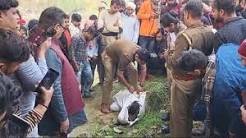
Lucknow: Samajwadi Party (SP) President Akhilesh Yadav on Monday targeted the Bharatiya Janata Party (BJP) government in Uttar Pradesh over the incident involving the rape and subsequent murder of a young woman from the Dalit community in Pratapgarh. Speaking on the social media platform ‘X’, Yadav stated that the news of the heinous murder of a Dalit woman in Pratapgarh is deeply distressing and condemnable. ‘The “Wandering Honorable” Should Cast a Glance at the Plight of UP’s Daughters’ Linking the incident to the PDA (Pichhde—Backward Classes, Dalit, and Alpsankhyak—Minorities) demographic, he asked, “The question is: why does the series of murders of PDA women continue unabated in Uttar Pradesh? Are the BJP government’s claims regarding women’s safety merely hollow rhetoric, or is there discrimination even in the provision of women’s safety?” Taking an indirect dig at Chief Minister Yogi Adityanath—who has been actively campaigning for the West Bengal Assembly elections—Yadav remarked, “Once the ‘Wandering Honorable’ finds a moment of respite from election campaigning, he should cast a glance at the plight of the daughters of his own Uttar Pradesh. Although, apart from injustice and atrocities, no sister, daughter, or mother in the state expects anything else from him.” **Details: What is the Full Case?** A case involving the rape and subsequent murder of a young Dalit woman has come to light in the Manikpur area of Pratapgarh. Additional Superintendent of Police (West), Brijnandan Rai, stated in a press release that the police have detained a juvenile offender in connection with the murder of a young woman in Kakraha Miria village, located within the jurisdiction of the Manikpur police station in Pratapgarh. He informed that on Sunday, April 26, a resident of Manikpur reported to the police that his 19-year-old sister was sleeping on the veranda of their home when an unidentified person murdered her and hung her body from a tree. Rai added that, acting on this information, a case was immediately registered at the police station. The subsequent post-mortem examination of the body revealed that the young woman had been raped and subsequently strangled to death. He stated that the investigation into the case revealed that the girl used her father’s mobile phone and was involved in a romantic relationship with a minor boy who was her own relative. The Additional Superintendent of Police further informed that the inquiry established that, on the night of the incident, the girl had gone to the orchard, where the minor boy and his friends perpetrated the rape and murder. He added that the minor boy accused of the crime has been taken into custody, and the remaining accused individuals will also be arrested shortly. Edited By Purnima Singh, Courtesy: Hindi News
Bengal Elections 2026: Why Political Parties are Averse to the Dalit Question
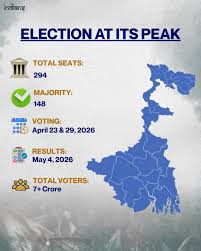
There is a broad consensus among the Bengali upper caste bhadraloks of the Left, Right and Centre that Dalit aspirations and autonomous Dalit politics should not re-emerge. Bengal’s dominant political and cultural discourse often disassociate themselves from Dalit history and anti-caste assertions. The hegemonic common sense prevalent in the state has been, Bengal is a “casteless society”. Such a narrative is rooted in denial of social recognition of Tapashilis, who are categorised as Scheduled Caste (SC) and their historically transformative anti-caste politics in undivided Bengal. Even the social justice icon Dr B R Ambedkar is not celebrated in the state beyond the few assertive independent Dalit groups while he is duly acknowledged with remarkable state honours in rest of the country. If selective amnesia had not engulfed the Bengali upper caste “bhadraloks” at large, it wouldn’t be tough to remember Ambedkar’s long association with Bengal. It was his All India Scheduled Castes Federation (AISCF), whose Bengal branch was headed by Jogendranath Mandal, a prominent leader from SC community in 20th century Bengal. The association of Mandal with Ambedkar grew so unwaveringly loyal that, in 1946, Ambedkar turned to Bengal to be elected to the Constituent Assembly of India. Mandal and six other Dalit MLAs of the Bengal legislative assembly secured the seat for him. Ambedkar later went on to be the chairman of Constitution Drafting Committee. The glorious role of Bengal and its autonomous Dalit leadership in sending the main architect of Indian Constitution to the Constituent Assembly is today grossly erased institutionally. The caste question and Ambedkarite politics too, despite its powerful legacy in Bengal, is relegated to the background through coercion and social misrecognition. Bengal has sixty constitutionally recognised scheduled caste communities, which is 23.51% of state’s total population according to the 2011 Census. Bengal comes second after Punjab among Indian States in size of Dalit population. And yet, the question of Dalit political aspirations and substantive caste representation doesn’t find any resonance in the Bengal assembly elections. At the same time, the Dalit factor is one of the driving factors in every Punjab assembly elections Interestingly, 19th and early 20th century’s popular historiography of Bengal was largely shaped by majoritarian Hindu upper caste supremacism camouflaged as nationalist movement and deeply influenced by ‘’practicing Hindu rituals and glorification of Hindu kings’’. Sumanta Banerjee in his book ‘Unravelling the Bengali Identity’ writes, how the Bengali upper caste hindu intellectuals of the 19th century tended to put emphasis on the Brahminical, Sanskrit oriented elements in that culture, while the same century had contemporaneously witnessed Dalits’ progressive assertions against upper caste Bengali bhadraloks’ caste supremacism. Dalit assertions in Bengal From early 19th century onwards, a host of Dalit social reformers started challenging the blatant casteism of Brahminical Bengali bhadraloks. In fact, the absence of Dalit sensibilities in Bengali nationalists’ anti colonial struggle had been looked at with suspicion by Dalit political leadership. Harichand Thakur (1812-1878), Benimadhab Halder (1858-1923), Panchanan Barma (1866-1935), Raicharan Sardar (1876-1942), Mahendranath Karan (1886-1928), Guruchand Thakur (1846-1937), Anukul Chandra Das Naskar (1894-1947), Basanta Kumar Das (1898-1984), Rajendranath Sarkar (1903-1979) are some of anti-caste stalwarts being pushed out of the mainstream by the Bengali upper caste historiographers. The hostility of Bengali upper caste bhadralok intellectuals towards the Dalit reformist movement against casteism is a well calculated move to sustain the former’s complete social and political dominance in post-colonial Bengal. The Hindu Mahasabha, Communists and Congress in undivided Bengal were deeply antagonistic towards autonomous Dalit politics. The political parties in post-colonial Bengal has also retained the narrative of Bengali exceptionalism entrenched in castelessness that depoliticised Dalit social and political aspirations in contemporary Bengal. It is a well concerted effort of the upper-caste political class of Bengal to sustain complete political dominance of Brahmins, Baidyas and Kayastha bhadraloks. The possibilities of Ambedkarite Dalit autonomous politics once launched by Jogendranath Mandal remains a perpetual threat to the Right, Left and Centrist political forces. Therefore, radical Dalit political consciousness observed in Maharashtra, Uttar Pradesh and some pockets of Southern India are consciously suppressed in the mainstream Bengali polity, society and academia. Bengal: A caste conscious society A Pratichi India Trust report of 2005 studied ‘’Cooked Mid-day Meal Programme in West Bengal – A study in Birbhum district’’ found out explosive caste bias among the Caste Hindu Savarna Parents and their children’s attitudes towards marginalised caste students and Dalit mid-day meal cooks. The study has shown how Dalit and Adivasi students benefited immensely from mid-day meal scheme but the upper-caste students disliked the scheme while their parents had reservations about Dalit cooks cooking the mid day meal. In fact. the practicing of endogamy is also high in West Bengal, with inter-caste marriages being very low in the state, a fact that doesn’t sit well with its progressive claims. A mere 9.5% of the marriages happening in the state are inter-caste. The social backwardness of Bengali Dalit communities due to upper-castes’ hegemony is so stark that the state has never thought of implementing Scheduled caste special component plan like other states such as Andhra Pradesh, Telangana, and Karnataka. It is only recently, that the the huge deletion of Dalit voters in Bengal through the Special Intensive Revision (SIR) exercise the of Election Commission of India (ECI) prompted the Bharatiya Janata Party (BJP) top leadership of prime minister Narendra Modi and home minister Amit Shah to pacify them with the promise of citizenship and restoring their names once they come to power in the state. The Trinamool Congress (TMC) has since last few years started the corporate style ‘Tapashilir Sanglap’(interaction with the Scheduled Castes) outreach campaign during election season, which is purely an electoral connect programme with Dalits. Even though the BJP is very careful this time in addressing the Scheduled Castes of Bengal, they are trying to broadly mobilise the Hindu vote bank cutting across the castes. The communal campaign around ‘ghuspaithiye’ (infiltrators) is very willfully advanced by the BJP to mobilise and appropriate Dalits so that independent Dalit political agency never grows in
MP: Social Boycott and ₹11,000 Fine Imposed After Dalit Groom Enters Temple

A decree was issued during a village *panchayat* (council meeting) stating that if any farmer or laborer in the village were to employ any member of this Dalit family, that individual would face a financial penalty of ₹11,000. In Padlya Gawli village of Madhya Pradesh’s Khargone district, the village *panchayat* decreed a social boycott against a Dalit family after a young Dalit man entered the local temple. Consequently, all social ties with the family were severed, and a ban was imposed on selling them goods at village shops, dairies, and ration outlets. According to a report by *The Mooknayak*, Nirmal Kanade (belonging to the Balai caste), a resident of the village, got married on April 20. The groom recounted that after the wedding, when the newlyweds went to the Hanuman temple to offer prayers, they were denied entry as the doors were shut. It is alleged that the groom was barred from entering the temple solely because he was a Dalit. The temple doors were even padlocked, subjecting the newlywed couple to humiliation. They were instructed to offer their prayers from outside the temple premises. However, the groom was eventually granted entry into the temple later, under police supervision. Subsequently, the situation escalated further. It is alleged that certain villagers convened a *panchayat* with the specific intent of “teaching the Dalit family a lesson.” During this *panchayat*, held on April 24, the following resolutions were passed: A decision was taken to cut off the Dalit family’s “Hukka-Pani” (social interaction/access to basic necessities)—meaning no one was permitted to touch their water or maintain any social relations with them. An announcement was made throughout the village via public proclamation (*dhindhora*) stating that no shopkeeper was to sell rations, milk, or any other goods to this family. Anyone found violating this order would also face a social boycott. If any farmer or laborer in the village were to employ members of this Dalit family for work (daily wage labor), that individual would be subject to a financial penalty of ₹11,000. The silence maintained by the Khargone district administration and police regarding this entire episode has raised serious questions. Activists and supporters of the Bhim Army have strongly criticized this caste-based decision on social media. They have stated that they will soon visit the village to hold a meeting with the locals and, while protesting against this decision, will raise their voices against those responsible. Condemning this incident in the strongest terms, Bhim Army leader Sunil Astey posed a question to Chief Minister Mohan Yadav. He asked whether, under his administration, depriving Dalits of basic amenities—such as temple entry, water, and rations—is what is to be considered “law and order.” Or will the government continue to disregard the sanctity of the Indian Constitution in this manner, bowing to the pressure of a “Manuvadi” (casteist) mindset? It is noteworthy that incidents involving caste-based discrimination and humiliation against Dalit grooms are frequently coming to light in Madhya Pradesh. In many instances, young men are targeted simply because they wish to take out their wedding processions (barats) while riding a mare—a traditional custom. Sunil Astey alleges that the administration’s response is often lax, which emboldens the perpetrators. He warned that if strict action is not taken against the culprits—specifically under the SC/ST Act and the NSA—the Azad Samaj Party and the Bhim Army will launch a large-scale agitation. It is worth noting that similar incidents have surfaced in the past, involving disputes over the entry of Dalits into temples. Earlier this year, in February, a man was arrested in a village in Karnataka’s Tumakuru district on charges of forcibly evicting a newlywed Dalit couple from a temple. The police confirmed this information to the media. According to a report by the *Hindustan Times*, the incident took place at the Arasamma Temple in Goni Tumakuru village, located in the Turuvekere taluk—the home district of the state’s Home Minister, G. Parameshwara. The couple, identified as Pankaja and Puneeth, had visited the temple after their wedding to seek blessings when they were confronted by a man named Narayanappa. According to the police, Narayanappa allegedly feigned being possessed by the deity and began shouting at the couple, thereby preventing them from entering the temple. In a video of the incident, he can allegedly be heard saying, “Dalits cannot enter the temple. Go worship somewhere else. Leave this place immediately.” Officials stated that the newlywed couple subsequently went to the police station on their own. A senior police officer remarked, “Pankaja’s younger brother, Jagdish, filed a complaint at the Turuvekere police station. Based on the complaint, the police registered a case under the Scheduled Castes and Scheduled Tribes (Prevention of Atrocities) Act and arrested Narayanappa.” Meanwhile, a controversy erupted in Somayajulapalli village—located in the Orvakal Mandal of Kurnool district, Andhra Pradesh—after a Dalit woman was allegedly denied entry into the Sunkulamma temple. In this instance, a complaint was lodged with the police under the Scheduled Castes and Scheduled Tribes (Prevention of Atrocities) Act. According to the complaint, Malathi—a government employee belonging to the Mala community—had visited the temple to offer prayers. It is alleged that a priest named Janardhan prevented her from entering the temple premises. The woman stated that the priest told her she had certain “boundaries” and could not be granted entry. During this exchange, the priest’s son, Vamsi, also allegedly sided with him. Malati stated that when she asked for the reason, the priest told her that she could complain to anyone she pleased, but she would not be granted entry into the temple. This incident sparked an altercation within the temple premises, creating an atmosphere of tension in the village. Ultimately, Malati lodged a complaint at the Orvakal Police Station and demanded action under the SC/ST Act. Speaking to the media, she remarked that facing caste-based discrimination in this day and age is deeply distressing. She asserted, “Everyone is equal before God. Denying entry to a temple on the basis of caste is absolutely wrong.” Courtesy :
High command to decide on leadership change or cabinet reshuffle, says Parameshwara
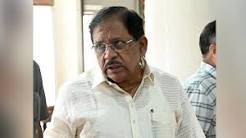
Speaking at a press conference here, G. Parameshwara said the Congress high command is aware of all developments and will take a decision shortly, which everyone will abide by. KALABURAGI: Karnataka Home Minister G. Parameshwaraon Tuesday said the Congress high command will soon take a decision on whether there will be a change of guard in the State or a cabinet reshuffle. Speaking at a press conference here, G. Parameshwara said the Congress high command is aware of all developments and will take a decision shortly, which everyone will abide by. Replying to a question on the frequent visits to New Delhi by groups aligned with Chief Minister Siddaramaiah and Deputy Chief Minister D. K. Shivakumar to meet the party high command, Parameshwara said ministers visit the national capital to hold discussions with Union ministers and senior officials of various departments regarding development works and to seek funds for their respective departments. He added that it is natural for them to meet the party high command during such visits, as Congress leaders treat the high command as their temple. “Whenever they meet the party high command, they will discuss several things, including politics. What is special in it?” he asked, adding that he is not going to Delhi as of now. On the demand to make a Dalit leader the Chief Minister of Karnataka, the Home Minister said it was the desire of the people, including Dalits. Responding to another question on whether ministers in the Siddaramaiah cabinet were lobbying for a Dalit Chief Minister, he denied the claim. On Dalit ministers meeting frequently over dinner, Parameshwara said, “Yes, we are meeting frequently for dinner and the Chief Minister Siddaramaiah has also joined the dinner meeting. Do you consider it wrong?” He added, “During dinner, we discuss many subjects, including politics. There is nothing wrong in it, and we have not asked the high command to make any one among Dalit leaders the Chief Minister. It is left to the Congress high command.” Minister for Medical Education Dr. Sharanaprakash Patil, Kalaburagi North MLA Kaneez Fatima, Kalaburagi South MLA Allamaprabhu Patil, Afzalpur MLA M. Y. Patil, and MLCs Jagadev Guttedar and Tippannappa Kamaknoor were present at the press conference. Ramakrishna Badseshi Courtesy : TNIE Note: This news is originally published on https:/thenewindianexpress.com/bha and is used purely for non-profit/non-commercial purposes, especially human rights
Dalit Organisations’ Hartal Over A Dental Student’s Suicide Disrupts Normal Life In Kerala
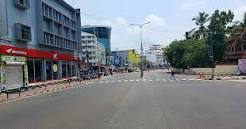
Action council demands arrest of teachers accused of caste discrimination and harassment THIRUVANANTHAPURAM: A dawn-to-dusk hartal called by Dalit/Adivasi organisations to protest the delay in arresting those accused in the death of BDS student Nithin Raj at Kannur Dental College disrupted normal life in several parts of Kerala. Organized by the Nithin Raj Action Council, comprising 56 Dalit and Adivasi groups, the protest affected public transport, businesses, and both private and government offices across many districts. Nithin, a first-year BDS student belonging to the Scheduled Caste community, died on April 10 after falling from a building, sparking outrage across the state. His family accused faculty members of caste- and colourbased discrimination. A case was filed against Dr M.K. Ram, Head of the Dental Anatomy Department, and Associate Professor Dr Sangeetha Nambiar under the SC/ST (Prevention of Atrocities) Act, but no arrests have been made so far. Nambiar has secured interim bail from the Thalassery Additional Sessions Court. Dalit organisations have called for the arrest of the accused teachers, the implementation of the Rohit Vemula Act, and financial compensation of Rs 10 crore for the victim’s family. Traffic disrupted Traffic came to a halt on national and state highways in several areas as protesters blocked roads. Passengers arriving at the Inter-State Bus Terminus in Thiruvananthapuram, as well as at railway stations and bus stations across Kerala, were stranded for hours without access to buses or taxis Students appearing for the NEET examinations were hit hardest, with many unable to reach their exam centres on time. Despite the Vyapari Vyavasayi Ekopana Samithi announcing that shops and markets would stay open, hartal supporters forced many to close. Reports from Kasaragod, Kannur, Kozhikode, Palakkad, Thrissur, Ernakulam, Alappuzha, Idukki, Kottayam, Pathanamthitta, Kollam, and Thiruvananthapuram indicated that the hartal disrupted normal life, affecting public transport, businesses, and various institutions. Although the Action Council stated that vehicles would not be forcibly stopped, supporters blocked traffic on highways. Police intervened in several areas to remove protesters and restore movement. Essential services like milk supply, newspapers, hospitals, and weddings were exempted. Kerala HC initiates contempt proceedings The Kerala High Court on Tuesday initiated Suo motu contempt proceedings over the hartal organised by Dalit and Adivasi groups, directing the DGP (Law and Order) to submit a report by evening on the reported violence and blockades, and issued notices to those who called for the hartal. Courtesy : Deccan Chronicle Note: This news is originally published on https:/deccanchronicle.com/bha and is used purely for non-profit/non-commercial purposes, especially human rights
Andhra MLA appoints transgender woman as personal assistant

Amaravati (Andhra Pradesh) In the bustling streets of Guntur, where traffic signals often become silent witnesses to untold struggles, Varsha’s life once stood still, defined by survival, not dignity. Born with dreams but pushed to the margins of society, Varsha, a well-educated transgender woman, found herself with no choice but to beg for a living. Like many in her community, rejection followed her everywhere, from job interviews to everyday interactions. Society saw her identity before her ability, but destiny took a turn when she crossed paths with Galla Madhavi, the legislator from Gunturu West. The Gunturu West MLA said, “Many times I felt pained seeing transgender persons begging at traffic signals. I wanted to do something meaningful, not just offer sympathy. Recognising Varsha’s education and determination, I appointed her as a Personal Assistant in my office. A role that not only provides employment but restores dignity and self-worth. Varsha said, “She didn’t just give me money like others do. “She spoke to me, understood me, and gave me an opportunity. I will prove myself worthy of this trust” Varsha said Today, instead of standing at traffic signals, Varsha walks into an office at the Secretariat with pride, her identity no longer a barrier, but a symbol of resilience. Varsha’s journey is not just personal; it reflects the silent aspirations of thousands in the transgender community. Meanwhile, Kalpana, a doctor from Guntur, speaking to ANI, said,” Galla Madhavi, Guntur West MLA, appointed transgender Varsha as her PA. It is well appreciated by the community because transgender people are also normal human beings. They have all the rights of a human being. All transgender by birth born in equal ratios. As Versha grew up, at the age of 13-14 years, she recognised she was not developing a secondary sexual character of a male. Her mindset and heart were telling her that she is female. So, she told the entire story at home. Everybody, her friends and family, thought she was a boy, but later everybody come ot know she is a girl. The decision taken by the MLA, I, as a doctor and activist, appreciate taking transgender people into jobs.” From the harsh glare of traffic signals to the dignified corridors of governance, her story proves one powerful truth: Sometimes, all it takes is one person to see potential where others see difference. This is not just a story of employment, it’s a story of dignity, inclusion, and hope. A reminder that real change begins when society chooses empathy over indifference. Posted by Ashhar Alam Courtesy : Awaz The Voice Note: This news is originally published on https:/awazthevoice.com/bha and is used purely for non-profit/non-commercial purposes, especially human rights
Tamil Nadu: Surya Crowned ‘Miss Koovagam 2026’ At Vibrant Transgender Festival In Villupuram

The Koovagam festival, held annually during the Tamil month of Chithirai, is a major cultural and spiritual gathering for the transgender community. Villupuram: At the annual beauty pageant, held as part of the famed Koovagam Festival at the Koothandavar Temple that celebrates transgender people, Surya Kutty from Coimbatore was crowned ‘Miss Koovagam 2026’ on Monday (April 27). The event, hosted at the Villupuram Municipality Grounds, drew participation from transgender individuals across India and abroad, reflecting the festival’s global significance. Nisha from Malaysia secured the second position, while Ananya from Puducherry finished third. The Koovagam festival, held annually during the Tamil month of Chithirai, is a major cultural and spiritual gathering for the transgender community. Thousands of participants from Tamil Nadu, Karnataka, Maharashtra and Andhra Pradesh, along with international attendees from Singapore and Hong Kong, took part in the festivities. A total of 25 contestants competed in the ‘Miss Koovagam’ pageant, which featured three rounds assessing confidence, talent, and stage presence. Surya’s standout performance in the ramp walk and her articulate responses, helped her clinch the coveted title. Earlier, in the ‘Miss Thirunangai 2026’ competition, participants from Chennai dominated the top three positions, with Omana winning first place, followed by Sai Sri and Sukhi. Addressing the gathering after the event, the winners highlighted the importance of family acceptance for transgender individuals and voiced concerns over the proposed Transgender Bill 2026. The event also honoured seven individuals with the ‘Young Achiever Transgender Award,’ presented by the South Indian Transgender Federation. Cultural performances and celebrity presence, including playback singer Velmurugan and actor Bala, added to the festive atmosphere, with financial incentives awarded to achievers from the community. The celebration once again underscored Koovagam’s status as a powerful platform for visibility, empowerment, and solidarity within the transgender community. Courtesy : ETV Bharat Note: This news is originally published on https:/etvbharat.com/bha and is used purely for non-profit/non-commercial purposes, especially human rights
Rahul Gandhi talks to tribal leaders in Campbell Bay over Great Nicobar Project concerns
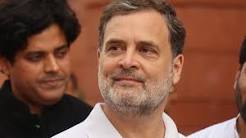
Congress leader Rahul Gandhi, who is on a visit to Andaman and Nicobar Islands, on Tuesday met tribal leaders who are raising concerns over the mega infrastructure project in the Great Nicobar region. He, along with local Congress leaders, went to Campbell Bay on Tuesday to understand the concerns of the tribal people related to the Great Nicobar projects. A section of tribal communities in Campbell Bay in Nicobar district has been alleging lack of transparency, environmental risks, and neglect of tribal rights in the project. The project includes building a transhipment port, an integrated township, a dual-use civil and military airport, and a power plant. On April 26, Rahul Gandhi arrived here in Andaman and Nicobar Islands and had a meeting with the party leaders. Congress leader Rahul Gandhi, who is on a visit to Andaman and Nicobar Islands, on Tuesday met tribal leaders who are raising concerns over the mega infrastructure project in the Great Nicobar region. A section of tribal communities in Campbell Bay in Nicobar district has been alleging lack of transparency, environmental risks, and neglect of tribal rights in the project. The project includes building a transhipment port, an integrated township, a dual-use civil and military airport, and a power plant. On April 26, Rahul Gandhi arrived here in Andaman and Nicobar Islands and had a meeting with the party leaders. He, along with local Congress leaders, went to Campbell Bay on Tuesday to understand the concerns of the tribal people related to the Great Nicobar projects. Gandhi criticised the alleged corporate influence in the archipelago and stressed that development should prioritise local needs rather than corporate interests. During his visit, he interacted with members of the Nicobarese tribal community and others in Campbell Bay. The Congress leader also visited Indira Point, the southernmost tip of India, and paid floral tribute to former Prime Minister Indira Gandhi, after which the spot was named. Tribal communities alleged that they are facing considerable hardship due to the proposed Great Nicobar projects and demanded that the central government take their concerns into account. Titus Peter, First Captain (village head) of Pulobhabi village, said that people of Campbell Bay expressed apprehension about the impact on the Shompen tribe, a Particularly Vulnerable Tribal Group (PVTG), claiming that increased outside contact could expose them to diseases and threaten their survival. Peter also warned of ecological damage, saying the Great Nicobar project could adversely affect endemic species unique to the island. While thanking Rahul Gandhi for understanding their concern, Peter alleged that the administration has not maintained transparency over the project, leaving tribal communities unaware of the full scale and implications of the project. Andaman’s senior Congress leader G Bhasker, who is accompanying Gandhi, alleged that the government had ”cheated” the tribal communities by obtaining their No Objection Certificate (NOC) without disclosing the full facts about the project. ”In its present form, the project raises significant environmental and social concerns, and we want urgent attention in this matter,” Bhasker said. (This story has not been edited by Devdiscourse staff and is auto-generated from a syndicated feed.) Courtesy : Devdiscourse Note: This news is originally published on https:/devdiscourse.com/bha and is used purely for non-profit/non-commercial purposes, especially human rights