
Fuel prices may rise after April 29, says Rahul Gandhi; govt denies any hike plan amid polls

Gandhi further alleged that the government had benefited when crude prices were low but would now shift the impact of rising costs onto the public. Petrol and diesel prices could rise after April 29, Congress leader Rahul Gandhi warned on Tuesday, accusing the government of passing on the burden of higher global crude oil prices to consumers once elections conclude. In a post on X in Hindi, Gandhi said, “Election relief over, inflation’s heat is on its way! After April 29th, watch out – petrol, diesel, everything will get expensive.” He further alleged that the government had benefited when crude prices were low but would now shift the impact of rising costs onto the public. “When (crude) oil was cheap, the Modi government pocketed the profits. Now that it’s expensive, it’ll dump the burden on you,” Gandhi said. “A government that loots when it’s cheap – leaving the public to bear the brunt of inflation,” he added. His remarks come ahead of the second phase of polling in West Bengal scheduled for April 29. Assembly elections in Tamil Nadu, Kerala, Assam and Puducherry have already concluded, with results due on May 4. Meanwhile, global crude oil prices have surged amid tensions in West Asia. Israel and the United States attacked Iran on February 28 and since then the global oil supply chain has been disrupted due to the closure of Strait of Hormuz. The government has no plans to raise petrol and diesel prices, a senior official said on Tuesday, dismissing speculation of a hike after polling in West Bengal ends on April 29. Retail petrol and diesel prices have remained unchanged for a record fourth year, even as conflict in West Asia has pushed crude oil costs up more than 50 per cent over the past two months. The widening gap between input costs and pump prices has left state-run fuel retailers incurring heavy losses – with some estimates pegging daily loss at about Rs 2,400 crore – fuelling speculation of an imminent price hike after politically charged assembly elections in Tamil Nadu, West Bengal, Assam, Kerala and Puducherry conclude on Wednesday. “There is no proposal to increase petrol and diesel prices,” Sujata Sharma, Joint Secretary in the Ministry of Petroleum and Natural Gas, said at a news briefing on the fallout of developments in West Asia. Courtesy : TNIE Note: This news is originally published on https:/thenewindianexpress.com/bha and is used purely for non-profit/non-commercial purposes, especially human rights
Panchayat secretary declares two widows, Dalit man living in MP village dead

Two widows, along with a Dalit man, were denied benefits of the widow pension and Dalit welfare schemes, respectively as a panchayat secretary in the Chhatarpur district of Madhya Pradesh issued death certificates in their names. Two widows, along with a Dalit man, were denied benefits of the widow pension and Dalit welfare schemes, respectively as a panchayat secretary in the Chhatarpur district of Madhya Pradesh issued death certificates in their names. Following separate complaints lodged by the trio, and the finding of a preliminary inquiry, Amar Singh, the panchayat secretary of the Chandrapura village panchayat, was suspended by District Panchayat Chief Executive Officer (CEO) Namah Shivay Arjaria on Saturday. The action followed complaints filed on April 17 by Ramabai Raikwar, Girja Vishwakarma and Kallu Ahirwar, who alleged they were wrongly declared dead in official records and their death certificates had been duly made. In their complaints, Ramabai and Girja stated that their widow pension had been stopped after the duo was declared dead. Ahirwar stated that he was unable to reap the benefits of government schemes meant for Dalits as he has been declared dead. According to officials, prima facie it was found that the panchayat secretary’s act constitutes serious misconduct under the Madhya Pradesh Panchayat Service (Conduct) Rules, 1996. Officials said the suspension was carried out under the Madhya Pradesh Panchayat Service (Discipline and Appeal) Rules, 1999. During the suspension period, Amar Singh will be attached to the Janpad Panchayat Gaurihar office and will receive subsistence allowance. Courtesy : The Statesman Note: This news is originally published on https:/thestatesman.com/bha and is used purely for non-profit/non-commercial purposes, especially human rights
Karnataka: What the Revision of Internal Reservation for Scheduled Castes Means for the Community

Siddaramaiah stated that the earlier notifications issued under a scrapped 6:6:5 ratio will be withdrawn, and new notifications will be issued to start the recruitment process immediately. New Delhi: The Karnataka Cabinet on Friday (April 24) approved a revised internal reservation matrix for Scheduled Castes within the 15% quota, paving the way to resume stalled government recruitment. After a special Cabinet meeting at the Vidhana Soudha chaired by chief minister Siddaramaiah, the state government announced the sub-classification formula for 101 Scheduled Caste (SC) communities. The decision modifies the recommendations of a technical committee, formed on April 16 and headed by the chief secretary, which had initially suggested a distribution of 5.3%, 5.3% and 4.4%. The immediate implementation of this revised matrix will allow the state to begin filling 56,432 government vacancies announced in the budget. Siddaramaiah stated that the earlier notifications issued under a scrapped 6:6:5 ratio will be withdrawn, and new notifications will be issued to start the recruitment process immediately. BREAK UP: The Revised SC Quota Matrix (15% Total) Category 1 (5.25%): Dalit Left factions (Edagai), primarily consisting of Madiga and Adi Jambava allied castes. Category 2 (5.25%): Dalit Right factions (Balagai), primarily consisting of Holeya and Adi Karnataka allied castes. Category 3 (4.5%): Other SC communities, including Bhovi, Lambani, Koracha, Korama, and 59 nomadic (Alemari) groups. Historical and socio-political context The demand for internal reservation stems from historic disparities among Dalits. The most backward groups (the SC ‘left’) have long argued for better opportunities, noting that the blanket 15% quota was disproportionately availed by more dominant sections, such as the SC ‘right’. Historically, Right-hand groups were often linked to landholding and skilled occupations, while Left-hand groups were associated with marginalised work and faced greater social disadvantages. The government’s decision has come amid concerns raised by the Dalit right and “touchable” communities in Category 3, who felt the sub-classification restricted their opportunities in public education and employment. Tracing the background, Siddaramaiah noted that the move fulfils a promise made in the Congress party’s 2023 election manifesto and follows a consensus reached at a Chitradurga convention representing 101 SC communities. He added that the state had previously relied on the findings of the Justice A.J. Sadashiva Commission and the Justice H.N. Nagamohan Das Commission. While the latter’s recommendations were enacted into law, they faced implementation hurdles regarding the roster system. Legal constraints and the ‘backlog’. The state government had previously attempted to implement a 17% SC quota and a 7% Scheduled Tribe (ST) quota. However, to comply with the 50% reservation ceiling mandated by the Supreme Court in the 1992 Indra Sawhney case, the current implementation is capped at 15% and 3%, respectively. Siddaramaiah stated that the additional proposed quota (2% for SCs and 4% for STs) will be maintained as a backlog. “The 6% kept aside will remain as a backlog until the final court decision,” he said, referring to the ongoing case in the Karnataka high court regarding the state’s overall 56% reservation policy introduced by the previous government. Nomadic safeguards and roster rules Addressing concerns from the 59 nomadic communities placed in Category 3 — who had approached the Karnataka high court against the earlier sub-classification — the government stipulated that one in every five posts reserved for this category will be dedicated exclusively to them. If no candidate from a nomadic community is available, the post will revert to other groups within Category 3. Social Welfare Minister H.C. Mahadevappa clarified the roster rules to address previous administrative confusion, noting that “some people instigated and created confusion.” He stated that internal reservation requires adequate vacancies to ensure opportunities for all three categories. If the total number of SC-reserved posts in a recruitment drive is below 15, the internal sub-quotas will not apply, and the posts will be open to all SC candidates based on merit. Political unanimity The chief minister, flanked by Dalit Cabinet colleagues, stated the decision was unanimous. Ministers present included K.H. Muniyappa, G. Parameshwara, H.C. Mahadevappa, Priyank Kharge, and Satish Jarkiholi. Law and parliamentary affairs minister H.K. Patil stated that the law was framed by taking all communities and the House into confidence. The move makes Karnataka the third state, after Haryana and Telangana, to implement SC sub-quotas since the Supreme Court permitted sub-classification. Home minister G. Parameshwara noted that while Haryana, Punjab, Telangana and Andhra Pradesh have similar models, Karnataka’s case is unique due to its 101 distinct SC communities. “The Karnataka model may be emulated as we have shown how to implement it legally, politically, and administratively,” he stated. Courtesy : The Wire Note: This news is originally published on https:/thewire.in/bha and is used purely for non-profit/non-commercial purposes, especially human rights
Temple, shops reopened for Dalit families in Khargone village

Khargone: Two days after a newly married Dalit couple was denied entry into a temple and three families faced social boycott in Padliya Gavli village of Khargone district, the boycott was revoked on Sunday after multiple rounds of discussions between the two sides. Khargone Superintendent of Police Ravindra Verma told TOI that the matter was settled after three rounds of talks involving both communities and local authorities. “As part of the agreement, restrictions imposed on three Dalit families have been lifted. They are now free to enter the temple and resume purchasing goods from local shops, which had earlier been denied to them. Both sides have clarified before officials that their differences have been resolved, and normal activities have resumed from Sunday,” Verma said. On Friday, a Dalit family had organized a wedding ceremony in the village. After the ceremony, the newlywed couple visited a Hanuman temple for darshan but their families complained that the couple was denied entry. Following police intervention, the temple was opened and the couple was allowed to perform rituals. Gogawa police station in-charge Deepak Yadav said that members of three Dalit families allegedly used objectionable language against elders of the other communities, leading to resentment. In response, the other side decided to socially boycott the three families and restrict their access to shops and community resources. Courtesy : TOI Note: This news is originally published on https:/timesofindia.com/bha and is used purely for non-profit/non-commercial purposes, especially human rights
Dalit couple denied temple entry, family faces social boycott in MP’s Khargone

An OBC-led panchayat boycotted the Dalit family and two others, imposing a Rs 11,000 fine on anyone interacting with or selling goods to them. BHOPAL: A newly married Dalit couple were allegedly denied entry into a Hanuman Temple in Madhya Pradesh’s Khargone district on Friday when they went to offer prayers. The couple later entered the temple and offered prayers after police intervention. However, a panchayat of other castes, mostly from OBC communities, later declared a social boycott of the Dalit family and two other Scheduled Caste families associated with them. The panchayat also announced that anyone engaging with the three families or selling anything to them would have to pay a penalty of Rs 11,000. The incident began on Friday afternoon when the newly married SC couple went to the Hanuman Temple in the village. “I went to the Hanuman Temple with my wife to offer prayers, but the temple was locked and we were not allowed entry. We were asked by the people of other castes to offer prayers from outside. We informed the matter to the police, after whose intervention we were allowed entry into the temple followed by prayers there,” the newly married youth Nirmal Kanade alleged in the video posted on social media. “Just a few hours after we entered the temple and offered prayers there, the Panchayat of elders from other castes, including the Banjara and Patels, decided to socially boycott our family and two other families associated with us. No one is doing any transaction with these three families, including us. I appeal people to share this video as much as possible to render us justice,” Kanade was seen saying in the video. Police later held multiple discussions with all sides on Saturday and Sunday and resolved the issue. According to a senior Khargone district police officer, “The issue has been resolved following talks between all sides related to the matter. Restrictions imposed on the three families have been lifted and normalcy is back.” Sources said the Hanuman Temple usually remains closed during afternoon hours due to past theft incidents and to prevent stray dogs from entering the premises. “After the couple offered prayers inside the temple, those related to at least three SC families, including the newly married couple’s family, abused the other caste villagers, which prompted the calling of the panchayat of the other castes the same day. The same village houses around 40 SC families, recently another newly married Dalit couple had without any restriction offered prayers inside the same temple, as that couple was there in those hours when the temple remains opened. Even some SC families had supported the call to boycott the three Dalit families, particularly as members from those three families used abusive and intimidating language for the other castes people on Friday,” an informed source said. Recently, in Madhya Pradesh’s Damoh district, a Dalit groom was allegedly assaulted and pulled from a horse by OBC Lodhi caste men during his pre-wedding rituals. Four men were later booked by police on a complaint filed by the groom’s uncle. Courtesy : TNIE Note: This news is originally published on https:/thenewindianexpress.com/bha and is used purely for non-profit/non-commercial purposes, especially human rights
Jully slams govt over Dalit boy’s assault, law and order

Jaipur: Leader of Opposition Tikaram Jully Sunday criticised the alleged assault of a minor Dalit boy in Bhiwadi, accusing the state’s BJP govt of failing to maintain law and order and protect vulnerable communities. Referring to the incident, Jully said the brutal beating of Lokesh, a minor from Jhiwana, by police personnel was “deeply condemnable” and raised serious concerns about governance under the BJP. He alleged that atrocities against the poor, Dalits and tribals were rising and taking a “horrifying form”. Calling the incident a reflection of “dictatorial functioning”, Jully urged chief minister Bhajan Lal Sharma to take immediate cognisance and ensure strict action against those responsible. Calling it a blot on humanity, he said the rule of law in the state completely collapsed and the functioning of the police is now crossing the limits of barbarity. Lokesh, who was allegedly assaulted by police, is currently undergoing treatment in the ICU of a hospital and remains in critical condition. Jully further alleged that the victim’s family is being pressured, and their complaint has not been formally registered. Jully said he spoke with the Bhiwadi SP regarding the matter and apprised him of the gravity of the case. He also spoke with the victim’s family members over the phone. “When the protectors themselves become predators, where does the common man go? Under the BJP’s rule, incidents of atrocities against Dalits, the poor and women have now become a daily affair,” he said. Jully further criticised the govt, claiming that incidents of crime and oppression were steadily increasing while the administration remained indifferent. Citing data from the Union Home Ministry, he said that between 2025 and March 15, 2026, 18 custodial deaths were recorded in Rajasthan, which is the highest in the entire country after Bihar. Courtesy : TOI Note: This news is originally published on https:/timesofindia.com/bha and is used purely for non-profit/non-commercial purposes, especially human rights
Galla Madhavi Appoints Transgender PA Wins Praise from Lokesh

Guntur West MLA Galla Madhavi appoints a transgender personal assistant, earning appreciation from Minister Nara Lokesh, who calls it a strong step toward empowerment and inclusive governance. Galla Madhavi appoints transgender PA in Guntur West creating inclusive governance example Nara Lokesh praises Galla Madhavi decision on transgender empowerment and leadership Galla Madhavi transgender PA appointment highlights employment opportunities for marginalized communities A decision by Galla Madhavi, MLA from Guntur West, has sparked widespread appreciation across Andhra Pradesh, with many calling it a meaningful step toward inclusivity in public life. By appointing a transgender woman as her personal assistant, the MLA has set an example that is now being discussed well beyond her constituency. Minister Nara Lokesh publicly lauded the move, stating that true leadership lies in empowering marginalized communities. He highlighted that such decisions reflect a progressive mindset and help create real opportunities for those who are often left out of the mainstream workforce. The appointment came after a transgender woman, who had completed a BCom degree, approached the MLA’s office seeking employment. Recognizing her qualifications and need for a stable livelihood, Galla Madhavi decided to offer her the role without delay. The MLA later shared that witnessing the daily struggles faced by transgender individuals in public spaces deeply influenced her decision. She also indicated that the issue of employment for transgender communities would be raised with Chief Minister Nara Chandrababu Naidu, with a focus on bringing broader policy support for their welfare. The move is being seen not just as an individual act, but as a push toward institutional change. Observers note that this initiative could encourage others in leadership roles to take similar steps, reinforcing the idea that governance can directly contribute to social dignity and equal opportunity. Courtesy : The South India Times Note: This news is originally published on https:/thesouthindiatimes.com/bha and is used purely for non-profit/non-commercial purposes, especially human rights
TMC-BJP clash as Mamata Banerjee and Suvendu Adhikari rallies run parallel in Bhabanipur
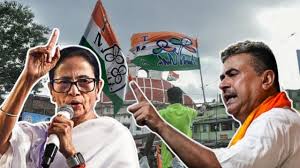
KOLKATA: Clashes broke out between supporters of the Trinamool Congress (TMC) and the Bharatiya Janata Party (BJP) in Kolkata’s Bhabanipur area on Saturday. Police and Rapid Action Force (RAF) personnel to intervene and separate the two groups. The incident occurred days before polling on 29 April, as campaigning for the second phase of the West Bengal assembly elections intensified. Chief minister Mamata Banerjee and leader of the opposition Suvendu Adhikari held election meetings in close proximity, adding to the political tension in the constituency. According to officials and eyewitness accounts, the situation escalated on Chakraberia Road after Banerjee abruptly ended her speech and left the stage. She later alleged that high-decibel loudspeakers from a nearby BJP rally disrupted her address, calling it “intentional disturbance”. Expressing frustration, Banerjee apologised to her supporters before leaving the venue. Shortly after, groups of TMC workers moved towards the BJP rally site, where they confronted BJP supporters. The exchange quickly turned heated, with both sides raising slogans of “Jai Bangla” and “Jai Shri Ram”, according to news agency ANI. Security forces, including RAF personnel, formed a human chain to prevent the confrontation from turning violent. Police said the situation was brought under control without any serious injuries reported. Suvendu Adhikari, who is contesting from Bhabanipur as well as Nandigram, reached his rally site after the incident. He criticised the TMC’s reaction, describing it as politically motivated. “This is goonda raj, jungle raj. We are trying to end it. Whatever TMC does will backfire. This time it will not be one-sided. Drive away the goons, save Bengal,” Adhikari said. He also referred to the TMC’s protest as a sign of “jungle raj”. The confrontation highlights the increasingly sharp rivalry between Banerjee and Adhikari, who was once a senior leader in the TMC before joining the BJP. Bhabanipur, which Banerjee has represented since 2011, is seen as a politically significant constituency for both parties. The BJP has described the seat as a key target in the 2026 state elections, while for Banerjee it remains central to her political standing in Kolkata, often referred to by her supporters as her “Kolkata throne”. A victory for Adhikari here would be seen as a major political breakthrough, following his 2021 win against Banerjee in Nandigram. The constituency is considered demographically diverse, with significant Bengali, Gujarati, Marwari and Sikh populations, making it a closely watched battleground. With polling due on 29 April, security has been tightened across Bhabanipur and adjoining areas. Officials said drone surveillance and paramilitary deployment have been increased to maintain order during the final phase of campaigning. According to the Election Commission of India, Phase I polling concluded earlier this week with a turnout of 91.78%. The remaining phases are scheduled to continue under heightened security arrangements, with counting set for 4 May. Courtesy : TOI Note: This news is originally published on https:/timesofindia.com/bha and is used purely for non-profit/non-commercial purposes, especially human rights
‘Not democracy, but TMC’s reign of thuggery’: Rahul Gandhi over killing of Congress worker
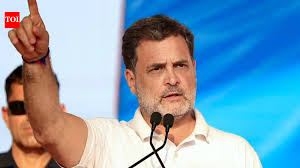
NEW DELHI: Rahul Gandhi on Sunday condemned the killing of a Congress worker Debdeep Chatterjee after the phase-1 polling was held in the state, blaming ‘TMC thugs’ for the incident. “The murder of Congress worker Debdeep Chatterjee by TMC-affiliated thugs after the elections is utterly reprehensible. My deepest condolences to his bereaved family,” said the Congress leader on X. Stepping up his attack on the ruling All India Trinamool Congress, he alleged that “thuggery” had replaced democracy in the state, accusing the party of intimidation and violence against political opponents even after voting. “In West Bengal today, it is not democracy that prevails, but TMC’s reign of thuggery. Intimidating, attacking, and silencing opposing voices after votes are cast—this has become TMC’s defining character. Congress’s politics has never been rooted in violence, nor will it ever be. We too have lost our workers, yet we have always chosen the path of non-violence and constitutionalism. This is our legacy, this is our resolve,” he added. Calling for punishment, the Leader of Opposition in Lok Sabha said, “The demand is clear—immediate arrest of all the guilty, the harshest punishment, and full security and compensation ensured for Debdeep’s family. We will not bow before this politics that stains India’s non-violent tradition. Justice will be done.” According to West Bengal Congress, Chatterjee was was known to be working closely with Asansol North Congress candidate Prasenjit Puitandi. The party claimmed that he was attacked and beaten by “miscreants linked to the TMC” in a post-poll incident in Asansol and later succumbed to his injuries. The state unit termed the killing a sign of “complete collapse of law and order” and flagged concerns over the safety of opposition workers. It claimed that no FIR had been registered at the time of reporting and demanded immediate arrests, a fair and time-bound probe, and adequate compensation and protection for the victim’s family. Courtesy : TOI Note: This news is originally published on https:/timesofindia.com/bha and is used purely for non-profit/non-commercial purposes, especially human rights
Telangana: RTC Under Pressure as Strike, Suicide Attempts, and EV Contracts Raise Privatization
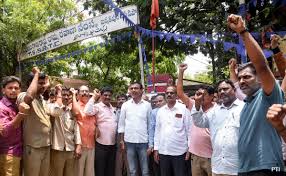
Hyderabad, Telangana RTC is facing one of its most serious crises in recent years, as an ongoing statewide strike, repeated suicide attempts by employees, and growing controversy over electric bus contracts have raised larger concerns about the future of public transport in the state. More than 38,000 RTC employees are currently participating in the strike, leading to a near stand still in bus operations across Telangana. With an estimated 60 to 70 lakh passengers relying on RTC services every day, the disruption has created major inconvenience for commuters and highlighted the scale of the conflict. Justice News The human cost of the crisis has become even more alarming. Several RTC employees have reportedly attempted suicide during the strike period. In Narsampet, a driver sustained severe burn injuries after a self-immolation attempt and is undergoing treatment. Another driver in Miryalaguda was stopped by colleagues before he could carry out a similar act. Reports of comparable incidents have also emerged from Nalgonda and Khammam, reflecting the extreme emotional and financial distress among staff. Employees say their frustrations have been building for the last one to two years over unresolved wage revisions, lack of fresh recruitment, pending dues, and demands for stronger job security. Union representatives claim that over Rs 2,500 crore in dues remain unsettled, while staff shortages and increased workload have worsened conditions for the existing workforce. A major flashpoint in the dispute is the introduction of electric buses under a private operating model. Under this system, private companies procure and supply EV buses to RTC, which then runs them under rental agreements. Around 500 such buses are already operating in Telangana, with payments reportedly ranging from Rs 40 to Rs 60 per kilometer. Major Points: Over 38,000 RTC employees are on strike, severely disrupting bus services across Telangana. Around 60 to 70 lakh passengers who depend on RTC daily are being affected. Multiple suicide attempts by RTC staff during the strike have intensified public concern. Employees say unresolved wage revisions, job security, and pending dues have pushed them to the edge. The Central Government’s Rs 36 lakh subsidy per EV bus is allegedly benefiting private operators instead of RTC directly. Around 500 electric buses are already running under private contracts at Rs 40 to Rs 60 per km. RTC is reportedly spending Rs 10 to Rs 12 crore on charging stations and substation facilities at 96 depots. Unions argue the overall model points toward gradual privatization of RTC operations. What has sparked sharper criticism is the role of Central Government funding. Under clean mobility initiatives, each EV bus receives a subsidy of approximately Rs 36 lakh. According to unions, this subsidy is effectively flowing to private companies that manufacture or supply the buses, rather than strengthening RTC’s own fleet ownership. Employees argue that while public funds are being used to support the EV transition, the long-term financial gains are being directed toward private operators. At the same time, RTC itself is reportedly spending between Rs 10 and Rs 12 crore on charging stations, substations, and maintenance infrastructure at depots. Across 96 RTC depots in Telangana, these facilities are being established to support EV operations. However, unions allege that private operators are not paying rent for using depot land and infrastructure, adding to concerns that public assets are being leveraged for private business interests. The broader concern among employee groups is that this is not merely modernization, but a structural shift in how public transport is managed. They believe the current model reduces RTC’s operational control while increasing dependence on private firms, creating what they describe as a slow but steady path toward privatization. While the government maintains that EV adoption is part of modernization and environmental sustainability efforts, employee unions remain unconvinced. From their perspective, the combination of central subsidies, private contracts, and public infrastructure investment paints a troubling picture. Looking at the present situation, many within RTC feel that the system is moving toward indirect privatization. Whether framed as reform or modernization, the operational model increasingly appears to place private players at the center, while RTC bears the burden of infrastructure and workforce challenges.