
Siddaramaiah calls himself champion of Dalits, BCs
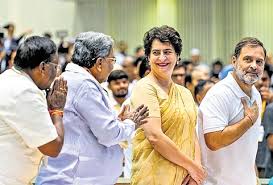
We have also commenced a survey of various Scheduled Castes to provide internal reservation proportional to their population. BENGALURU: Karnataka Chief Minister Siddaramaiah is going from strength to strength, and seems to be cementing his position to continue as CM for the full five years of the Congress government’s term. In a reflection of his rising stature, on Saturday, he shared the dais with Leader of Opposition in the Lok Sabha Rahul Gandhi at the AICC Legal Department’s ‘Constitutional Challenges: Perspectives and Pathways’ conclave held at Vigyan Bhavan in New Delhi. In his speech, he called himself a leader of both Dalits and backward classes, claiming to have protected their interests by ensuring social justice. He said the Scheduled Caste survey his government conducted by appointing the Justice HN Nagamohan Das commission is to provide internal reservation. He also claimed to have implemented 32% reservation to backward classes, going beyond the Mandal commission report. “My government has ordered a survey to identify communities that are still socially and educationally backward and provide them with reservation to achieve real equality. We have also commenced a survey of various Scheduled Castes to provide internal reservation proportional to their population. Through these affirmative actions as envisaged in our Constitution, I am sure we are on the right path to achieving social justice, real equality and fraternity,” he said. “Karnataka is the pioneer in apportioning funds exclusively to the SC/STs, proportionate to their population through the SCP/TSP Act,” he stressed. On the legacy of Dr BR Ambedkar’s Constitution, he said, “Finest prime minister of this nation Jawaharlal Nehru put India on the path of social justice. Leaders like Indira Gandhi used affirmative action to uplift the backward classes and marginalised sections through reforms, such as the 20-point programme and nationalisation, while Rajiv Gandhi ensured reservation for backward classes at the panchayat level through the 73rd and 74th constitutional amendments,” he recalled. “To those who believe in our Constitution, its objective will be achieved when we have real equality and fraternity as a matter of course, which is nothing but social justice. Equality requires proactive intervention by the state and not just passive nondiscrimination. The guarantee of social justice is a positive duty on all of us to ensure real equality. The commitment of my government and my party is to fulfil the objective of the Constitution and ensure social justice and we remain on that path,” he elaborated. With Rahul backing Siddaramaiah, the other leaders were found readily greeting him and they included AICC legal department head Abhishek Manu Singhvi, AICC General Secretary Priyanka Gandhi Vadra and Rajya Sabha member P Chidambaram among others. Devaraj B Hirehalli Courtesy : TNIE Note: This news is originally published on https://thenewindianexpress.com/bha and is used purely for non-profit/non-commercial purposes, especially human rights.
Jagdeep Dhankhar forced out by government as he decided to go by book: Mallikarjun Kharge
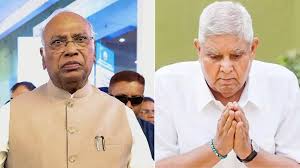
NEW DELHI: Congress president Mallikarjun Kharge on Saturday claimed that former vice-president Jagdeep Dhankhar was forced out by the Modi govt because after years of “harassing” the opposition, he suddenly decided to move by the book. The decision to admit the notice to remove Justice Shekhar Yadav, along with the one against Justice Yashwant Varma, riled the govt, and PM Narendra Modi gave Dhankhar the option of either withdrawing his order or face action, Kharge alleged. He said Dhankhar opted to resign. Speaking at Congress’s annual legal conclave, Kharge recounted the “harassment” of the opposition at the hands of Dhankhar. He mentioned that Dhankhar had suspended a record number of MPs from Rajya Sabha, while Congress MP Rajni Patil was suspended for seven months, lamenting “this is their democracy”. But then, he said, Dhankhar one day woke up to his constitutional role because he realised that his tenure would be remembered in history if he worked as per rules, rubbing the PM and BJP the wrong way. The Congress brass, including Rahul Gandhi and Priyanka Gandhi Vadra, attended the conclave themed “Constitutional Challenges: Perspectives & Pathways”. A message from Congress parliamentary party chairperson Sonia Gandhi was read out by senior leader Salman Khurshid. “Today, the Constitution is under siege. BJP-RSS, which never fought for freedom or upheld equality, now uses its power to dismantle the very framework it long opposed,” Sonia Gandhi said. “Now, they seek to erase socialism and secularism, pillars of Ambedkar’s vision of equal citizenship. This is not reform but an ideological coup replacing our democratic republic with a theocratic corporate state serving the powerful few,” she added. “We will oppose every attempt to undermine the Constitution, in Parliament, in courts, and on the streets. Our mission is clear – to reclaim the republic and protect the rights of each and every person,” Sonia Gandhi said. Kharge alleged that when Dhankhar started asserting that he was independent and allowed a notice for the opposition’s motion to remove Varma, he was “threatened and pressured” by the govt. This is the first time that the Congress brass linked Dhankhar’s resignation, which it called sacking, to govt pressure on constitutional offices. Earlier, whenever Kharge was asked about the reason for Dhankhar’s resignation he would respond saying he had no information and it was for Dhankhar to tell what happened since it was a matter between him and Prime Minister Modi. Courtesy : TOI Note: This news is originally published on https://timesofindia.com/bha and is used purely for non-profit/non-commercial purposes, especially human rights.
‘He has his reasons’: Shashi Tharoor sidesteps Rahul Gandhi’s ‘dead economy’ remark; raises trade concerns
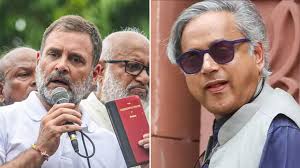
NEW DELHI: Congress MP Shashi Tharoor on Saturday refused to comment on Rahul Gandhi’s endorsement of US President Donald Trump’s remark calling the Indian economy “dead.” Tharoor said the leader of opposition in Lok Sabha may have had his “own reasons” for saying so, but stressed that maintaining economic ties with the US is vital for India. When asked about Rahul Gandhi’s statement, Tharoor said, “I don’t want to comment on what my party leader has said. He has his reasons for saying so. My concern is that our relationship with the US, as a strategic partnership and economic relationship, is important for us. We are exporting around 90 billion worth of goods to America. We can’t be in a position to lose that or have it diminish significantly.” He added, “We must wish our negotiators strength to get a fair deal for India. We should also be talking to other regions for exporting our goods. Then we could make up for some of what we might lose in the US. We have to support our negotiators.” — ANI (@ANI) Tharoor’s response came after Rahul Gandhi, on Thursday, agreed with Trump’s description of the Indian economy. Gandhi had said, “Yes, he is right. Everybody knows this except the prime minister and the finance minister. Everybody knows that the Indian economy is a dead economy. I am glad that President Trump has stated a fact. The entire world knows that the Indian economy is a dead economy. BJP has finished the economy to help Adani.” Trump had made the comment on Wednesday through his social media platform, Truth Social. In that post, he announced a 25 per cent tariff on Indian goods and warned of additional penalties in response to India importing oil from Russia. Courtesy : TOI Note: This news is originally published on https://timesofindia.com/bha and is used purely for non-profit/non-commercial purposes, especially human rights.
‘Let departed rest in peace’: BJP slams Rahul Gandhi over Arun Jaitley ‘threatened’ him claim; Rijiju asks ‘how much can one lie?’
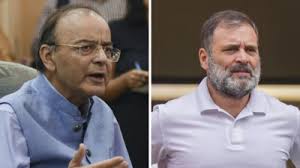
NEW DELHI: Congress leader Rahul Gandhi has triggered a fresh row after claiming that former finance minister Arun Jaitley had “threatened” him for opposing the Modi government’s now-repealed farm laws. While speaking at the Congress-organised Annual Legal Conclave 2025, Rahul said, “I remember when I was fighting against the farm laws, Arun Jaitley was sent to threaten me. He said, ‘If you continue down this path, opposing the government and fighting us on the farm laws, we’ll have to take action against you.’ I replied, ‘I think you don’t know who you’re talking to. We’re Congress people, we’re not cowards. We never bend. The British couldn’t bend us.’” The BJP immediately dismissed the claim, pointing out that Jaitley passed away in August 2019—over a year before the farm laws were brought to Parliament. The party accused Rahul of “throwing baseless allegations” even at those who are no longer alive. ‘He was a staunch democrat’ Arun Jaitley’s son, Rohan Jaitley, led the attack against Rahul and said that it was not in his father’s nature to threaten anyone over an opposing view. Taking to X, Rohan said, “Rahul Gandhi now claims my late father, Arun Jaitley, threatened him over the farm laws. Let me remind him, my father passed away in 2019. The farm laws were introduced in 2020. More importantly, it was not in my father’s nature to threaten anyone over an opposing view. He was a staunch democrat and always believed in building consensus. If at all such a situation was to occur, as it often does in politics, he would invite free and open discussions to arrive at a mutually acceptable solution to all. That was simply who he was and that remains his legacy today.” “I would appreciate Rahul Gandhi being mindful while speaking of those not with us. He attempted something similar with Manohar Parrikar ji, politicising his final days, which was in equally poor taste. Let the departed rest in peace,” he added. ‘How much one can lie?’ Reacting to the Congress leader’s claim, Union minister Kiren Rijiju wondered, “How much one can lie?” He pointed out that Jaitley died over a year before the three farm laws were introduced in Parliament. “Whole day I was thinking… how much one can lie? Late Arun Jaitley ji died on 24 August 2019! Three agriculture-related bills were introduced in Lok Sabha on 14th Sept 2020. How can late Arun Jaitley ji meet Shri Rahul Gandhi for farm laws when he is no more alive!!!!” Rijiju wrote on X. ‘Remarks against Jaitley despicable’ Finance minister Nirmala Sitharaman, who succeeded Arun Jaitley in the Union Cabinet after his demise, also attacked Rahul and said that throwing baseless allegations at people is becoming a personality trait in the Congress leader. “If irresponsibility has a face, it is Rahul Gandhi, Leader of Opposition in LS. To throw baseless allegations at people in public life, even those who are no longer with us, is becoming a personality trait in him. His remarks on late Shri Arun Jaitley are despicable. India needs a strong opposition party. An irresponsible leadership hurts his party, Congress, and the country. But does he care?” Sitharaman said. “This is a blatant lie—what he (Rahul Gandhi) has said about such a respected leader who was finance minister and is no longer among us,” she added. ‘Rahul only hurts his own credibility’ Meanwhile, SAD MP Naresh Gujral, whose party broke the alliance with BJP over the farm bills, said that Rahul Gandhi is damaging his own reputation with such remarks and advised him to be more careful in future. “I am truly shocked and very pained to hear about what Mr Gandhi has to say about my late dear and close friend Arun Jaitley ji. The whole world knows that he was a true democrat. Everybody knows he was a gentleman who would never use this kind of threat or this kind of dialogue. When Mr Gandhi says things like that, he only hurts his own credibility,” Gujral said. “I have worked with Mr Jaitley for almost 20 years. You would recall that the Akali Dal was part of the NDA, and we left the government on the issue of the farm laws. No BJP leader ever threatened us, forget about Arun Jaitley, who was a thorough gentleman. So when the Leader of the Opposition speaks like this, he only damages his own credibility. I would urge him to be more careful in the future,” he added. ‘Shredded all standards of decorum in public life’ Education minister Dharmendra Pradhan also accused Rahul of “shredding all standards of decorum in public life” “Rahul Gandhi has utterly shredded all standards of decorum in public life. The former Union Minister and senior leader, the late Arun Jaitley ji, is no longer among us. Yet, Rahul Gandhi’s immature and childish, hateful mindset has insensitively spread falsehoods in the name of the late Arun Jaitley ji to further his own agenda, disregarding the facts related to the agricultural laws. The agricultural laws were introduced in Parliament in 2020, while Jaitley ji’s tragic passing occurred in August 2019,” Pradhan said. “Rahul Gandhi’s opportunistic, hateful, and baseless rhetoric has once again proven that Congress members have no connection with sentiments like empathy; their so-called ‘shop of love’ is filled only with ‘hateful words’. Rahul Gandhi’s language is miles away from that of a dignified person; he seems to have forgotten how to speak or conduct himself on a public platform! For this shameful and deplorable language, Rahul Gandhi should immediately apologise to Jaitley ji, his family, and his supporters,” he added. Courtesy : TOI Note: This news is originally published on https://timesofindia.com/bha and is used purely for non-profit/non-commercial purposes, especially human rights.
Dalit techie murder: Sub-inspector father of accused arrested; family accepts body after 5 days of protest
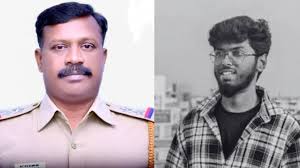
In an alleged caste killing case of 23-year-old Dalit techie Kavin Selvaganesh, the Tamil Nadu police have arrested Saravanan, a serving sub-inspector and the father of the main accused Surjith. The arrest came after days of public outrage and continued protest by Kavin’s family, who had refused to receive his body until all suspected individuals were held accountable. Subashini, the sister of the accused and Kavin’s partner, denied her parents’ role in the murder. In a viral video, she clarified, “We were in true love. Since we wanted some time to settle down, we didn’t say much about our relationship to my parents. On May 30, Surjith, my brother, informed my father about my relationship with Kavin. But when my father asked, I didn’t disclose anything as Kavin asked me for time.” The family of the deceased techie finally took possession of his body on Friday, after five days of protest. The handover took place at Tirunelveli Government Medical College Hospital, where Municipal Administration Minister KN Nehru and District Collector R Sukumar paid their respects. Earlier, the Tamil Nadu police had transferred the case to the Crime Branch–CID for an independent probe following widespread public anger. The accused, Surjith, was arrested on the same day as the crime and has been booked under charges of murder, along with provisions of the SC/ST (Prevention of Atrocities) Act and the Goondas Act. Tamil Nadu DGP Shankar Jiwal stated, “Preliminary investigation reveals the murder was over the relationship between the accused man’s sister and the victim.” Kavin was killed near a Siddha centre in Tirunelveli, where his girlfriend worked and his grandfather was under treatment. CCTV footage reportedly shows Surjith taking Kavin away on his motorcycle shortly before the brutal attack. Kavin’s body was later found with severe injuries. The victim’s family had earlier demanded the arrest and remand of the accused’s parents. “Surjith has been booked as A1. Our only demand is his parents ought to be remanded. With that demand, we protested the other day and we’ve not collected the body. This is a clear case of honour killing. There’s provision to remand them based on the FIR,” said Selvam, a relative of Kavin. Political voices also weighed in on the incident. Rajya Sabha MP and Makkal Needhi Maiam chief Kamal Haasan condemned the killing and urged political unity against caste violence. “Stringent punishment must be ensured. Casteism must be eradicated through collective political will,” he posted on X. Maktoob Staff Courtesy : Maktoob Media Note: This news is originally published on https://maktoobmedia.com/bha and is used purely for non-profit/non-commercial purposes, especially human rights.
Minister Parameshwara to meet Dalit MLAs to chalk out strategy to handle fallout of SC Survey
The meeting is likely to discuss probable repercussions of the report as it would trigger controversies over the population of the communities and per centage of quota allotted to them in the report. BENGALURU: Home Minister Dr G Parameshwara has called a meeting of the Dalit legislators at his residence here on August 2 over high tea to discuss various issues, including the Scheduled Caste communities’ survey which was carried out by the Justice HN Nagmohandas Commission to provide the internal reservation. The Commission is likely to submit its report to the government on August 4, according to sources, which may escalate tension among various SC communities. The report is likely to consist of recommendation of the classification of the quota among the 101 castes under SC category proportional to their population. “The survey is complete and I have sought the time of the chief minister to submit my report to the government,” Nagmohan Das told TNIE. RDPR minister Priyank Kharge confirmed that Parameshwara has called a meeting to discuss the survey. The meeting is likely to discuss probable repercussions of the report as it would trigger controversies over the population of the communities and per centage of quota allotted to them in the report. Courtesy : TNIE Note: This news is originally published on https://thenewindianexpress.com/bha and is used purely for non-profit/non-commercial purposes, especially human rights.
More trans people should join politics for real change: Kalki Subramaniam
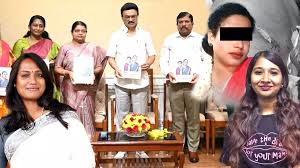
In an interview with The Federal, the activist points out certain lacunae in Tamil Nadu government’s policy while saying why Kerala shows the way In a major policy move, the Tamil Nadu government recently released a comprehensive policy for transgender persons, aiming to institutionalise inclusivity in education, employment, and healthcare. While it has been hailed as a progressive step by many, some have argued that it lacks key elements such as reservation and full inclusion of transgender men. In a candid conversation with transgender rights activist Kalki Subramaniam, The Federal explores where the policy does things right, where it falters, and why the fight for dignity and equality must continue. Which section of Tamil Nadu’s new transgender policy stood out most for you? The initiative that really stood out to me is the focus on sensitising teachers and educational institutions. Gender non-conforming children often face bullying, discrimination, and stigma in schools. This pushes many of them to drop out, which becomes a lifelong setback. Without education, you lose the opportunity to dream, to become a graduate, and to have a dignified life. So, creating an inclusive environment through trained and empathetic teachers is a crucial step forward.The policy touches upon several areas—health, property rights, banning forced conversion therapy. How effective do you think these measures will be? When I read the policy, I noticed that almost 70 per cent of its provisions are already covered in the transgender protection Act of 2019. The state is essentially amplifying what’s already there, which is not a bad thing since it reassures us of the Act’s relevance. The policy also borrows from the central government’s Equal Opportunity Policy, which focuses on eliminating workplace discrimination and creating safe and inclusive environments for transgender persons. That’s a good sign. However, is there anything genuinely new? Perhaps the school-level education initiative is a fresh addition. The policy also promises the formation of committees, but we’ll have to wait and see how effectively they function. A trans woman named Samantha was brutally attacked in Tenkasi just days after the policy was launched. Does the policy do enough to ensure safety for transgender persons? Absolutely not. Transgender women continue to be murdered across the country. Last year, Sangeeta—a successful entrepreneur who started a restaurant in Coimbatore—was murdered. While the accused was identified, we never heard of any punishment. None of the previous murder cases involving transgender persons have witnessed justice. The media only covers the murder as sensational news but doesn’t follow up. More importantly, there’s a clear lack of safety, security, and sensitisation among police officers. They remain unaware of the transgender protection Act, Section 377, and other legal provisions that safeguard us. You’ve written an open letter to the Tamil Nadu chief minister listing critical omissions in the policy. Why are these demands urgent? Education is a transformative tool for the transgender community, especially young people. It ensures dignity, equality, and economic independence. But even when corporate jobs are available, transgender applicants are often rejected outright because of binary reservations —only for men and women. Reservation in education and jobs is crucial. Sadly, this policy doesn’t even mention it. Despite years of advocacy and multiple meetings with the chief minister, deputy chief minister, and the social welfare minister, there’s no reference to reservation. That’s a major setback, especially for Tamil Nadu, the first state in India to officially recognise transgender people. Are there state models Tamil Nadu could learn from? Yes. Kerala has made remarkable progress. When I first spoke about trans-inclusion in Kerala media and universities over two decades ago, there was rampant transphobia. But today, many transgender students are pursuing education at the universities of Kerala and Calicut. Kerala may not have reservation yet, but it’s making sincere efforts. For instance, a transgender man received Rs 25 lakh from the government for pilot training in South Africa. Our neighbour Karnataka has already introduced one per cent reservation for transgender people. Tamil Nadu, once a pioneer, is now lagging behind. Why is the exclusion of trans men in this policy a concern? It’s shocking. Trans men are completely overlooked. Though some are represented on the state’s transgender welfare board, the policy is largely framed around trans women with minimal reference to trans men. This erases their life experiences, especially in areas such as healthcare, documentation, and employment. It also shows ignorance of the policymakers. I’m part of the national transgender council, and I was never consulted. No officer from the Tamil Nadu social welfare department ever called to ask for inputs. That speaks volumes. There are allegations that even committee members weren’t informed before the policy’s release. Do you think that’s true? I believe so. This is not just ignorance but also a lack of care and understanding. This happens when people who are completely disconnected from transgender realities sit down to draft such an important policy. It affects thousands of lives. The omission of trans men and reservation is inexcusable. Even courts—like the Madras High Court—have recommended reservation. The Supreme Court’s 2014 judgment in the NALSA vs Union of India case also affirms this. Tamil Nadu is ignoring all of that while Karnataka is moving ahead. That’s deeply disappointing. Do you plan to engage the government further on these gaps? Yes, absolutely. I will be writing to the social justice minister as well. Activists will come together and take powerful and collective action. We are very disappointed, especially about the lack of reservation and the invisibilisation of trans men. You spoke about representation. As elections approach, trans persons like Apsara Reddy and Ganga Nayak have entered politics. Why is political participation important for the community? It’s essential. I’ve had offers from various parties but remain in a dilemma because of how poorly women are treated in politics. Still, I support Apsara Reddy, Ria, and Ganga Nayak. But representation should translate into influence—especially in policy matters. We need more trans people across political parties—DMK, ADMK, TVK, BJP, Congress. I’m hopeful we’ll soon have a
Transgender Admissions Improve In Indian Schools, Universities; Details Here

Transgender student enrolment in schools and universities has risen, with UP and Bihar leading. From 155 in 2021–22 to 965 in 2023–24, inclusion shows promise despite remaining gaps. Transgender student enrollment in Indian schools and higher education institutions has risen dramatically in the last three academic years, with Uttar Pradesh and Bihar having the most in 2023–24, as per information tabled by the Ministry of Education in the Rajya Sabha. In Indian schools, the transgender student population grew from a mere 155 in 2021–22 to 965 in 2023–24—a six-fold increment. Uttar Pradesh had the highest number with 327 enrolled, followed by Bihar with 282 students during that year. However, states like Rajasthan and West Bengal recorded decreasing figures, with Rajasthan having 107 students earlier but decreasing to 77 and West Bengal’s count dropping from 211 to 62 transgender students enrolled in schools in that period. In higher education, there has been a noteworthy advancement. Provisional AISHE figures indicate that transgender student enrolment in universities and colleges increased from 302 in 2020–21 to 1,448 in 2022–23. The numbers among states vary, with Uttar Pradesh still holding the top position with 369 students, followed by Maharashtra (158), Madhya Pradesh (124), Telangana (104), Tamil Nadu (98), Rajasthan (101), and Karnataka (73). Experts attribute this upward trend to increasing awareness, policy reforms, and outreach efforts that aim to narrow the access gaps transgender youth experience in education. Many, however, contend that inclusion is more than numbers—it is safe campuses, support infrastructure such as transgender cells, and data-based monitoring of participation. In places such as Delhi University, the failure to enrol any transgender students when a “third gender” option was provided indicates entrenched stigma and meagre institutional support. In Maharashtra, on the other hand, special transgender cells in all colleges have been made mandatory to provide counselling, academic assistance, and anti-discrimination safeguards. Sakshi Gupta Courtesy : TFPJ Note: This news is originally published on https://thefreepressjournal.com/bha and is used purely for non-profit/non-commercial purposes, especially human rights.
‘Farm laws introduced in 2020’: Arun Jaitley’s son reacts to Rahul Gandhi’s accusations of his father
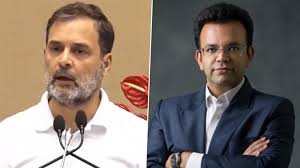
— rohanjaitley (@rohanjaitley) NEW DELHI: Arun Jaitley’s son, Rohan Jaitley, on Saturday rebutted Congress leader Rahul Gandhi’s claim that the late Finance Minister had been sent to “threaten” him for opposing the Modi government’s now-repealed farm laws. Speaking at the Congress-organised Annual Legal Conclave 2025, Gandhi recalled a tense exchange, saying, “I remember when I was fighting against the farm laws, Arun Jaitley was sent to threaten me. He said, ‘If you continue down this path, opposing the government and fighting us on the farm laws, we’ll have to take action against you.’ I replied, ‘I think you don’t know who you’re talking to. We’re Congress people, we’re not cowards. We never bend. The British couldn’t bend us.’” Gandhi’s remark quickly drew a sharp rebuttal from Jaitley’s son, Rohan Jaitley, who accused the Congress MP of misrepresenting facts and politicising the memory of the deceased. “Rahul Gandhi now claims my late father, Arun Jaitley, threatened him over the farm laws. Let me remind him, my father passed away in 2019. The farm laws were introduced in 2020,” Rohan Jaitley said in a statement. — rohanjaitley (@rohanjaitley) Calling the claim factually incorrect and in poor taste, Rohan further added, “More importantly, it was not in my father’s nature to threaten anyone over an opposing view. He was a staunch democrat and always believed in building consensus.” He described his father’s approach to politics as one that welcomed open discussion rather than confrontation. “If at all such a situation was to occur, as it often does in politics, he would invite free and open discussions to arrive at a mutually acceptable solution to all. That was simply who he was and that remains his legacy today.” Rohan Jaitley also urged Gandhi to exercise caution while speaking about deceased public figures. “I would appreciate Rahul Gandhi being mindful while speaking of those not with us,” he said, recalling a previous instance where Gandhi had allegedly politicised the final days of former Defence Minister Manohar Parrikar. “He attempted something similar with Manohar Parrikar ji, politicising his final days, which was in equally poor taste. Let the departed rest in peace,” he added. Gandhi’s broader speech at the conclave included allegations of voter fraud in the 2024 Lok Sabha elections, criticism of the Election Commission of India, and remarks about constitutional decline under the current government. Courtesy : TOI Note: This news is originally published on https://timesofindia.com/bha and is used purely for non-profit/non-commercial purposes, especially human rights.
Rajnath slams Rahul’s ‘atom bomb’ claim: Calls past allegations ‘damp squib’; defends EC’s integrity
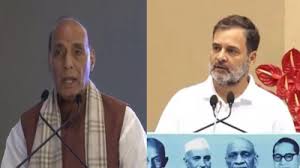
NEW DELHI: Defence minister Rajnath Singh on Saturday criticised Congress leader Rahul Gandhi over his claim of possessing “atom bomb of evidence” that would allegedly expose the election commission’s malpractice of “vote theft” in Bihar, according to the news agency PTI. Singh was addressing a function in Patna, where he referred to the upcoming Bihar polls as one at a crossroad, “with one path (under NDA) leading to further progress and another (under the INDIA bloc) taking Bihar back to its old era of lawlessness and caste strife”. “Rahul Gandhi says he is in possession of an atom bomb. If it is so, he should detonate it at once. He should just ensure that he is himself out of harm’s way”, the defence minister added. The former BJP president went on to say the country hasn’t forgotten earlier claims of the leader of opposition, all of which turned out to be nothing but letdown. “He had threatened Parliament of an earthquake, but when he spoke, it turned out to be a damp squib,” the BJP leader said, as quoted by the news agency. The veteran leader reaffirmed the trust in the election commission, saying the commission’s institutional integrity is widely respected, and it is working to make the upcoming elections free and fair. “It is pulling out all the stops to ensure that the upcoming assembly polls in the state are held in a free and fair manner. It does not behove the Leader of the Opposition to make frivolous statements about a constitutional body,” Singh said. The union minister also called out Gandhi for Congress’s history saying, “his own party has blood on its hands, having tried to murder democracy in 1975 with the imposition of Emergency”. He also praised alliance partner Nitish Kumar for playing a key role in transforming the state during his 20-year tenure in Bihar. “Under the leadership of Nitish Kumar, Bihar is no longer seen as a basket case. Even an internationally reputed magazine like The Economist, which had once condemned the state as the armpit of India, is now taking note of its turnaround”, said Singh, quoted PTI. Courtesy : TOI Note: This news is originally published on https://timesofindia.com/bha and is used purely for non-profit/non-commercial purposes, especially human rights.