
‘Desh ka raja kaisa ho, Rahul Gandhi jaisa ho’ slogans at Congress conclave. Here’s how he reacted – video
NEW DELHI: Congress leader Rahul Gandhi was greeted with an unexpected chant at the party’s high-profile Legal Conclave in New Delhi on Saturday: “Desh ka raja kaisa ho, Rahul Gandhi jaisa ho.” But the Leader of opposition in Lok Sabha was quick to shut it down. As Rahul took the stage to speak at the event titled “Constitutional Challenges: Perspectives and Pathways”, party workers broke into chants of “Desh ka raja kaisa ho, Rahul Gandhi jaisa ho” (“What kind of king should the country have? One like Rahul Gandhi!”). In response, Rahul said, “Nahi… Nahi… Main raja nahi hoon. Raja banna bhi nahi chahta hoon. Main raja ke concept ke against hoon.” (“No, no… I am not a king. I do not want to become a king. I am against the concept of kingship.”) — PTI_News (@PTI_News) The Congress leader used the platform to launch a scathing attack on the Election Commission of India (ECI), alleging that the 2024 Lok Sabha elections were “rigged” and that India’s electoral system is “already dead”. “The truth is that the election system in India is already dead. The Prime Minister of India holds office with a very slim majority. If 15 seats were rigged—and we suspect that the number is over 70 to 80—he would not have been the Prime Minister of India,” Rahul claimed. He also alleged that the Congress had undertaken a six-month investigation which revealed large-scale electoral fraud. Citing one Assembly seat in Karnataka, the congress leader claimed that out of 6.5 lakh voters, 1.5 lakh were “fake”. “You will see the shockwave that is going to go through the electoral system when we release this data. It is literally like an atom bomb,” he said. Rahul further alleged that the ECI has been “obliterated and taken over”. “We have such proof that will show the whole country that the institution of the Election Commission does not exist. It has disappeared,” he said. Reiterating that he had suspected electoral wrongdoing since 2014, the LoP recalled the BJP’s sweeping wins in Gujarat, Madhya Pradesh, and Rajasthan, where Congress failed to win even a single seat. He cited the case of Maharashtra, where he said one crore new voters appeared in the run-up to the Assembly elections—most of whom backed the BJP. He concluded by asserting, “I say with absolutely no doubt that we have proof. And whoever I have shown it to has fallen off the chair. They literally said how can it be possible. But it is possible. It’s happening. Literally.” The conclave was hosted by the AICC’s Department of Law, Human Rights and RTI. Courtesy : TOI Note: This news is originally published on https://timesofindia.com/bha and is used purely for non-profit/non-commercial purposes, especially human rights.
Dispute Over Dalit Man’s Cremation In Himachal’s Hamirpur Triggers Caste Tensions

Rain renders Nanawan cremation ground unusable; local opposition at alternative site highlights ongoing caste-based segregation. Residents of two villages in the Barsar area of Himachal Pradesh’s Hamirpur district were involved in a dispute over the cremation of a Dalit man’s body, prompting intervention from the local administration and police. The dispute took place at the Bhevad Saheli crematorium in Kadasai Panchayat on Tuesday, when villagers from Bhevad Saheli and Nanawan confronted each other over the performance of last rites. The issue began after the designated cremation ground for the Scheduled Caste community of Nanawan village became unusable due to rain and a rapidly flowing ravine. As a result, the deceased’s family turned to the nearby Bhevad Saheli crematorium, which was opposed from the local residents and led into a heated argument between the two groups. Later, as tensions escalated, the police and local authorities were informed about the matter, and with their intervention, the matter was resolved peacefully, allowing the cremation to proceed. The dispute arose due to the existence of caste-based cremation grounds. According to the representatives of the Kadasai Panchayat, residents of Nanawan village had earlier sought permission to use the Bhevad Saheli cremation site during the monsoon season. However, the Panchayat declined the request due to lack of consensus among the villagers. Sub-Divisional Magistrate Rajendra Gautam confirmed the peaceful completion of the rites and assured that a permanent solution would be sought. “The local administration has been directed to identify government land and build a separate crematorium for Nanawan village at the earliest,” he added. Courtesy : Outlook India Note: This news is originally published on https://outlookindia.com/bha and is used purely for non-profit/non-commercial purposes, especially human rights.
Dalit IT Engineer’s Murder: Filmmaker Pa. Ranjith Urges Tamil Nadu Govt to Declare Atrocity-Prone Areas
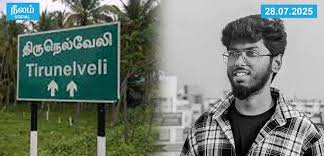
He highlighted that Scheduled Caste communities are forced to protest for minimal justice, as seen in Kavin’s parents’ ongoing struggle. Chennai- Filmmaker Pa. Ranjith, founder of the Neelam Cultural Centre, has strongly condemned the Tamil Nadu government and police for their inaction following the brutal honour killing of Kavin Selvaganesh, a 27-year-old software engineer, in Tirunelveli on July 27. In a statement, Ranjith demanded transparent investigations, immediate arrests, and the designation of districts like Tirunelveli, Sivagangai, Pudukkottai, and Thoothukudi as “Atrocity-Prone Areas” under the Scheduled Castes and Scheduled Tribes (Prevention of Atrocities) Act. Kavin, the son of Tamilselvi and Chandrasekar, a government school teacher couple from Arumugamangalam in Thoothukudi district’s Eral Taluk, was hacked to death in broad daylight near the home of his lover, Subashini, who worked at a private hospital in Tirunelveli. Subashini’s parents, Saravanan and Krishnaveni, both police personnel, opposed the couple’s relationship. Despite their objections, the relationship continued, leading to the fatal attack by Subashini’s brother, Surjit. Initially, only Surjit was named as the accused. Following protests and road blockades by Kavin’s family and relatives, who alleged the involvement of Subashini’s parents, the authorities included them as accused. However, Saravanan and Krishnaveni have not yet been arrested, raising concerns about the investigation’s impartiality given their police affiliations. Ranjith criticized the government for failing to follow the Prevention of Atrocities Act, which mandates that the District Collector meet victims immediately after such incidents. The Collector has not yet visited Kavin’s family. He highlighted that Scheduled Caste communities are forced to protest for minimal justice, as seen in Kavin’s parents’ ongoing struggle. The statement accused the current DMK government of continuing the previous administration’s indifference in handling Dalit-related cases. Ranjith expressed doubts about the case’s handling, given the accused’s police connections, and urged the government to conduct a transparent investigation and arrest Surjit’s parents immediately. Ranjith emphasized the rising caste-based crimes in Tamil Nadu, calling for districts with high caste-related issues to be placed under special surveillance and declared as “Atrocity-Prone Areas” with dedicated police stations. He noted that basic legal protocols, such as filing First Information Reports (FIRs) promptly and transferring investigations to a Deputy Superintendent of Police, are often ignored, as recently pointed out by the Madras High Court. The Neelam Cultural Centre condemned the police practice of circulating alternative narratives in the media to deflect attention from such crimes and demanded strict action against officers involved. Ranjith called for a committee led by a retired judge, Dalit activists, and intellectuals to investigate honour killings, analyze social factors, and prevent their recurrence. He also strongly criticized the DMK government and its allies for ignoring demands for a separate law against honour killings, urging immediate action to address this issue. Geetha Sunil Pillai Courtesy : The Mooknayak Note: This news is originally published on https://themooknayak.com/bha and is used purely for non-profit/non-commercial purposes, especially human rights.
Mumbai: SC Upholds Bombay HC Order To Register FIR In 35-Year-Old Dalit Law Student’s Custodial Death Case
The SC has upheld a Bombay HC order to register an FIR in the custodial death case of Somnath Suryavanshi, a 35-year-old Dalit law student who died on December 15, 2024, while in judicial custody in Parbhani, Maharashtra. Mumbai: The SC has upheld a Bombay HC order to register an FIR in the custodial death case of Somnath Suryavanshi, a 35-year-old Dalit law student who died on December 15, 2024, while in judicial custody in Parbhani, Maharashtra. His mother, represented by Vanchit Bahujan Aghadi chief Prakash Ambedkar, grandson of Dr BR Ambedkar, and two other advocates, had moved the SC. Suryavanshi had been arrested following violent protests triggered by the desecration of a replica of the Constitution in the region. Dalit organisations alleged he was tortured while in police custody. His mother approached the Aurangabad bench of the High Court seeking accountability and action against the police officials involved. “The Supreme Court upheld the High Court’s order directing registration of an FIR. However, no FIR has been filed yet despite the court’s July 4 deadline. We brought this non-compliance to the attention of the apex court, which also questioned the delay,” Ambedkar told reporters in Delhi on Wednesday. He further criticised the government-run JJ Hospital in Mumbai for issuing a second medical opinion on the cause of death without fully assessing all relevant facts. “We intend to seek action against the doctors involved. A second opinion in such cases must not be issued without court sanction,” Ambedkar said. The matter now awaits further judicial directions, potentially including contempt proceedings against police officials for failing to act on the High Court’s orders. Courtesy : TFPJ Note: This news is originally published on https://thefreepressjournal.com/bha and is used purely for non-profit/non-commercial purposes, especially human rights.
SC Commission committed to protecting Dalit rights: Jawahar
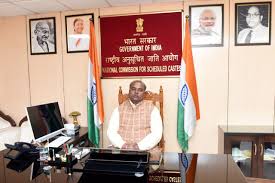
Vijayawada: SC Commission chairman Kothapalli Samuel Jawahar on Wednesday reiterated the commission’s unwavering commitment to safeguarding the rights of Dalits. Speaking at a press conference at the SC Commission office in the NTR Administrative Block here on Wednesday, Jawahar said the commission is continuously working towards building an egalitarian and caste-free society. Jawahar expressed concern over trend of officials neglecting registering atrocity cases. “We are working with the goal of protecting Dalit rights,” he stated. “Officials should not be apathetic in matters of atrocity cases. Police must stand by the victims and register FIRs.” The chairman, presenting data illustrating the issue, said that a total of 135 atrocity cases have been reported this year, with 78 cases coming in over the last three months alone. Specifically, in NTR district, out of 13 atrocity cases, only 3 were registered. “This clearly shows that even when atrocity cases are reported, officials are not registering them,” Jawahar asserted. He criticised some officials for their “indifferent” behavior in case registration, noting that FIRs are not being filed when complainants approach police stations. Jawahar urged a change in this situation, stressing that officials must act responsibly. “When someone in distress comes to them, an FIR must be registered, and a detailed report should be sent,” he stated. He affirmed the extensive powers vested in the Commission Chairman, declaring “no compromise” in resolving the rights of Scheduled Castes. He also called on the police to accept complaints related to land re-surveys. Addressing concerns about residential hostels, Jawahar noted a high demand for seats, with 3,000 students applying for just 300 available spots, urging officials to address this disparity. Courtesy : THI Note: This news is originally published on https://thehansindia.com/bha and is used purely for non-profit/non-commercial purposes, especially human rights.
UP govt depriving Dalit, poor of basic edn, opening liquor shops
New Delhi: SP members in the Lok Sabha on Wednesday accused the Uttar Pradesh government of depriving Dalits and poor children of the right to education by closing and merging state-run schools and in-stead focussing on opening liquor shops in every village. Raising the issue during the Zero Hour, the Samajwadi Party’s (SP) Dharmendra Yadav alleged there is autocracy in the state at a time when the entire country is celebrating 75th years of Independence. “Even though we have Right to Education law, in Uttar Pradesh 1.26 lakh schools are being closed down while 5,000 are getting merged. Recruitment of more than 2 lakh teachers too have been stalled,” Yadav said. While the children of Dalits, and poor families are being deprived of primary education because of the UP government’s ‘school pairing’ policy, the state is seeing opening of more than 27,000 liquor shops. Neeraj Maurya (SP) lamented that government-run schools are in “grave state” in Uttar Pradesh and they are being closed down. “When Akhilesh Yadav was the chief minister of Uttar Pradesh, students were being given laptops. Now the state is getting liquor shops,” Maurya said. He demanded from the government to ensure that state-run schools are not closed and instead Kendriya Vidyalaya and Navodaya Vidyalaya be opened. Naresh Chandra Patel (SP) said while the state government on the one hand is saying that education is the fundamental right of every child, on the other hand it is implementing policies of merging schools for which students will have to travel longer distance of 2-3 km. “Is this ‘New India’ where liqour shops are being opened in every village, whereas schools are being shifted away from village,” Patel said. The Uttar Pradesh government has been facing criticism over its move of pairing schools with fewer attendance, which some fear will lead to increased travel distances for young students. The government’s decision to pair schools aims at optimising resources and enhancing pre-primary education for children aged three to six years. Courtesy : THI Note: This news is originally published on https://thehansindia.com/bha and is used purely for non-profit/non-commercial purposes, especially human rights.
In Raebareli, the old road of Dalit colony was dug up by JCB: In the interlocking dispute, the bullies took action as soon as the Tehsildar left, movement of Dalit families disrupted.
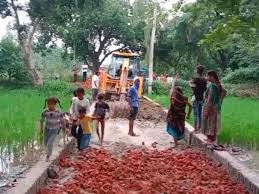
A centuries-old road in Baherwa Majra Mirganj of Unchahar police station area of Raebareli district has been dug up by the bullies with a JCB. Due to this, the movement of Dalit families living there has been disrupted. The matter is of interlocking construction. Shiv Sharan, Gayatri, Sheetal Din and Raj Kumar of the village said that this is a road that has been in use for hundreds of years. There was already a construction of pavement on it. The current Pradhan was getting the work of interlocking done on this road. Meanwhile, Ankit, a resident of the village, claimed that interlocking is being installed on his Bhumadhari land. On the complaint of the villagers, Naib Tehsildar Sambhu Sharan Pandey inspected the spot. After measuring the land, he refused to do interlocking on Ankit’s Bhumidhari land. Also said not to stop the movement of the villagers. But as soon as the Naib Tehsildar left from there, the construction of interlocking started. After this, the people of the opposition Ankit’s family called JCB and got the road dug up. The villagers made a video of the road being dug up by JCB and made it viral. The villagers have also informed the higher officials about this matter. But no official has reached the spot again yet. The villagers say that all Dalit families live in this Purva. If the road is not opened, the movement of all the people will be disrupted. In this case, the dominance of the bullies is more visible than the law. The villagers are demanding immediate action from the local administration. On this matter, SDM Rajesh Kumar said that the information about the case has been received from the villagers. He assured that legal action will be taken after inspecting the spot. Mehtab Ahmed | Dinshah Gaura, Courtesy: Hindi News
She forced my son to meet, family killed him: Dalit man’s father claims caste hatred
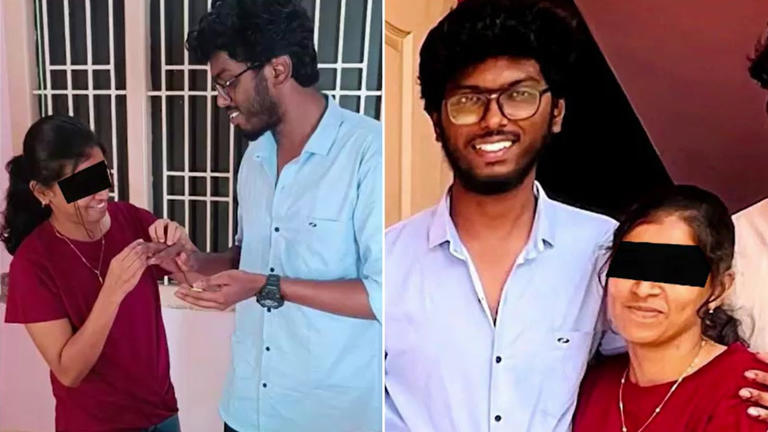
A 27-year-old Dalit man was hacked to death in broad daylight in Tamil Nadu’s Thirunelveli district, in what his family alleges to be a caste-based honour killing. The victim, Kavin Selva Ganesh, a software engineer, was employed at a leading IT firm in Chennai and was reportedly in a long-term relationship with a woman from an Other Backward Class (OBC) community. Speaking to reporters in Thoothukudi, the victim’s father, Chandrashekar, said, “My son had finished engineering and was working in Chennai. They were in love since the time they were in 11th standard. The girl was the one who was torturing my son into meeting her. He would not go. We are from the Scheduled Caste (SC) community and they are from the Thevar community. The girl’s parents and brother made my son meet them and killed him. We demand justice and the partners should be arrested.” The murder took place outside a private hospital in KTC Nagar, Thirunelveli, on Sunday. The victim, Kavin Selva Ganesh, was visiting his partner, when her brother Surjeet allegedly lured him away under the pretext of a conversation. Police say Surjeet then pulled out a sickle and hacked Kavin to death around 200 metres from the hospital premises. Surjeet initially fled the scene but later surrendered at Palayamkottai police station and has been detained under the Goondas Act. Police sent Kavin’s body for post-mortem to the District Government Hospital and collected CCTV footage from the area as part of the investigation. Kavin’s family had refused to accept his body, demanding the arrest of not just Surjeet but also his parentsâSaravanan and Krishnakumariâboth serving Sub-Inspectors in the Tamil Nadu Police. They allege the girl’s entire family plotted and carried out the murder. The police department has since suspended both officers. The Palayamkottai police have registered a First Information Report under Sections 296(b), 103(1), and 49 of the Bharatiya Nyaya Sanhita, read with Sections 3(1)(r), 3(1)(s) and 3(2)(v) of the Scheduled Castes and Scheduled Tribes (Prevention of Atrocities) Act, 2015. The incident has sparked outrage across Tamil Nadu, with several political leaders and public figures condemning the murder and the rising trend of caste-based violence. AIADMK chief Edappadi K Palaniswami called it another example of the ruling government’s failure to uphold social justice. “Under Stalin’s so-called ‘Failure Model’ government, caste-based honour killings are alarmingly on the rise. Caste clashes and violence against marginalised communities continue unabated I strongly condemn this Failure Model government,” he said in a post on X. Actor-politician Kamal Haasan said the killing was “shocking” and urged the Tamil Nadu government to ensure the culprits receive severe punishment. “All political movements must unite against the social disgrace of caste-based atrocities. We must recognise that caste is our primary enemy,” he said. Zoho founder Sridhar Vembu wrote, “This senseless murder of Kavin Selvaganesh, a young man who rose from humble rural roots to become a software engineer, is shocking. The fact that this murder was allegedly at the behest of a couple who work in the police force is even more shocking We have to do more work at the roots of our society.” AIADMK spokesperson Kovai Sathyan said the killing was symptomatic of growing caste violence under the DMK rule. “The Sub-Inspector mother and father behind the murder show the caste-based aberrations. For DMK, social justice and equality are only on paper.” Arumugam, a local Scheduled Caste community leader, echoed the family’s allegations. “A boy named Kavin has been killed in the name of honour. He had finished engineering and was working in TCS. The girl had called him and along with her family brutally killed him. We condemned the killing and protested since morning. The Deputy Superintendent of Police, Inspector and Assistant Commissioner said they will arrest the girl’s parents who are both Sub-Inspectors. Believing that, we are leaving from here. Today fifty of us have come. Tomorrow hundreds of us will come and protest.” Further investigation is ongoing. Story by Anagha Courtesy : MSN Note: This news is originally published on https://msn.com/bha and is used purely for non-profit/non-commercial purposes, especially human rights.
Promises unfulfilled: How Ayushman Bharat leaves the transgender community behind
Three years after the inclusion of gender-affirmative healthcare in the AB-PMJAY scheme, the community is unable to avail its benefits. The Transgender Persons Act 2019, mandates provision for coverage of medical expenses by a comprehensive insurance scheme. Arvinda dreams of becoming a psychologist. But the 21-year-old transwoman from Hyderabad had to discontinue her education in 2023, after finishing her polytechnic diploma, so she could work and raise money for her sex reassignment surgery. That’s the price she had to pay for living as her true self. Arvinda now earns ₹25,000 a month after taking a job at a BPO, of which around ₹12,000 goes towards repaying the loan she took to cover her medical expenses and afford other gender-affirming healthcare, including regular hormone treatments. “I had to take a loan just to be who I am,” she says, lamenting the lack of government support to ease such a financial burden. She is not alone in this struggle. The transgender community continues to face challenges in accessing healthcare, especially procedures that would help affirm their gender identity. In 2022, the Ministry of Social Justice and Empowerment (MoSJ&E) signed an MoU with the National Health Authority to launch a comprehensive health package for transgender persons under the Ayushman Bharat-Pradhan Mantri Jan Arogya Yojana (AB-PMJAY) scheme. The scheme promised health insurance coverage for transgender healthcare, including gender affirmation surgeries. However, there’s no relief for the community due to a lack of implementation of the scheme. Three years on, many like Arvinda are waiting for help, struggling to pay lakhs of money for their gender affirming healthcare. When Kalki Subramanian, Southern representative of the National Transgender Council, raised the issue of the delay, she received a positive response, but no action was taken. The council is an advisory body under the MoSJ&E, which evaluates and gives recommendations on existing policies. “The ministry has conducted a few meetings, where we demanded speeding up the process,” Kalki says. What is gender-affirming care? Gender-affirming care, as defined by the World Health Organization, encompasses a range of social, psychological, behavioural, and medical interventions designed to affirm an individual’s gender identity when it conflicts with the gender they were assigned at birth. It includes medical and psychological support, such as surgeries, hormone therapy, and counselling, that help transgender individuals align their bodies with their gender identity and improve overall mental and emotional well-being. The cost of gender affirming surgeries could range anywhere from ₹2 lakh to ₹8 lakh, and the cost for hormone treatments and therapy could range between ₹48,000 and ₹72,000 a year. What was promised The Ayushman Bharat scheme, launched on September 23, 2018, aims to provide health insurance to underprivileged rural families and selected urban worker groups based on the Socio-Economic Caste Census (2011). As of now, the AB-PMJAY dashboard reports over nine crore hospital admissions under the scheme. More than 41 crore Ayushman cards have been issued, including 4.57 lakh cards for individuals identified under the gender category marked as ‘other’. While this card could help transgender persons access general healthcare, it excludes gender-affirming services. Meanwhile, the special package announced in 2022 introduced the Transgender Healthcare (TG Plus) card, which allows transgender individuals to access over 50 medical procedures and treatments free of cost. The ministry will fund ₹5 lakh worth of health insurance per person each year under this scheme. However, the revised list of health benefit packages, released in November 2021 (before the announcement to include transgender healthcare), does not include any gender-affirming procedures. Neither has a new list of services been released. Delay in implementation The community seems to have lost hope in the scheme. “There is no step-by-step plan on how this will be implemented,” says Koyel Ghosh, Managing Trustee at Sappho for Equality, a Kolkata-based organisation working for the rights and social justice of individuals with non-normative gender-sexual orientations. Detailed information about the implementation—how to get these cards, what medical procedures are covered, etc.—is missing, Koyel adds. Obtaining the TG Plus card is essential to get gender-affirming healthcare benefits. Neither the AB-PMJAY website nor the National Portal for Transgender Persons has a provision to apply for the card. Instead, beneficiaries with a transgender certificate from the portal must visit any empanelled hospital to get a TG Plus card. This process makes the scheme inaccessible to many. “We have provided the ministry with a list of medical procedures and cost estimations last year, but there has been no progress,” said Dr Sanjay Sharma, CEO and Managing Director of the Association for Transgender Health in India (ATHI). Moreover, the requirement to possess a certificate and to visit an empanelled hospital gatekeeps many from accessing the benefits, experts suggest. Gatekeeping access to welfare Zainab Patel, a trans activist and one of the petitioners in the landmark NALSA case and the marriage equality case, says that the issue of entitlement should be separated from identity. “We have been rallying behind the government to ensure that access to welfare is not contingent on proving one’s identity. But they are making the transgender certificate/ID Card incumbent on getting the entitlement,” Zaineb says. This also goes against the Transgender Persons (Protection of Rights) Act, 2019, which does not mandate a transgender certificate to get gender affirming healthcare. Transgender certificates issued Number of applications and transgender certificates issued so far. Chart: National Portal for Transgender Persons Transgender individuals can apply for a certificate online through the National Portal for Transgender Persons or at the nearest Social Welfare Department office, using an affidavit or medical certificate. However, the process is slow, and community awareness remains low. Arvinda, despite updating all her identity documents, including her Aadhaar card to reflect her transgender identity, is still unaware of how to obtain the certificate or ID card. According to the 2011 Census, 4.8 lakh individuals identified as ‘other’ gender. But this number has grown considerably, as reported by Down to Earth. Despite this, only around 27,300 certificates have been issued so far, and more than 5,000 applications are pending approval. Because
Dept plans shelter homes for transgender community
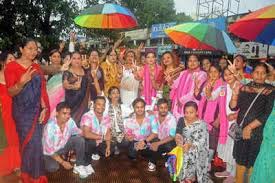
Bhubaneswar: The social security and empowerment of persons with disabilities (SSEPD) department has prepared a plan for the construction of shelter homes in districts for the transgender community. During a meeting held on July 23, officials discussed Sweekruti, a scheme for the promotion of transgender equality and justice. A five-year action plan and tentative budget under different programme components of the Sweekruti scheme were proposed for the financial years from 2025-26 to 2029-30, according to minutes of the meeting shared by the department on Wednesday. “The construction of transgender shelter homes in districts may be provisioned for from any suitable scheme of the department where the transgender population is more or education, vocation and employment opportunities are most sought after,” read the minutes. Official sources said the proposed shelter homes will accommodate destitute and abandoned transgender people and provide them basic amenities like food, medical care and recreational facilities. Besides, the shelter homes will provide support for the capacity-building/skill development of transgender people. Officials also suggested the creation of self-help groups (SHGs) for the transgender community for better appreciation of the rights of equality and optimum delivery of scheme benefits. Banks may be roped in by the district administrations for facilitating loans after proper assessment of skills such as driving, geriatric care and making incense sticks, the minutes stated. “The sensitisation of society at college, vocational institutions/public offices, service centres along with the provision of stalls and activities during govt functions, local gatherings, festivals and melas may be taken up on a wider scale for the community,” the minutes added. Courtesy : TOI Note: This news is originally published on https://timesofindia.com/bha and is used purely for non-profit/non-commercial purposes, especially human rights.