
‘He portrays all members of the SC/ST section as criminals, thieves’: Dalit activist files complaint against Adoor Gopalakrishnan for ‘casteist’ remarks
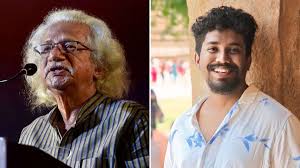
Dinu Veyil labelled Gopalakrishnan a “casteist”, and filed a complaint with the Thiruvananthapuram Museum Police Station, accusing the filmmaker of encouraging ill-will Dalit activist Dinu Veyil has filed a complaint against filmmaker Adoor Gopalakrishnan for portraying members of the Scheduled Caste and Scheduled Tribes as “criminals, thieves or prone to corruption”. Veyil, founder of the non-governmental organisation Dhisha Kerala, took to Facebook to inform that an official complaint was filed at the Thiruvananthapuram Museum Police Station and SC/ST Commission. As per the post, Veyil accused Gopalakrishnan of encouraging ill will. “Portraying the SC/ST group as “Take the money and run” as taking away the money provided by the government schemes by SC/ST community links to dishonesty/IMMORALITY/corruption, thereby creating ill-will (dislike) against SC/ST community is likely to grow in the minds of others [sic],” he penned. Veyil further labelled Gopalakrishnan’s comments as “intentional humiliation”. “Although not personally targeted, Adoor’s statement insults the individuals who belong to the SC/ST category who were present in the platform, the people who belong to the ST category who applied for the present fund so far, and the people who belonged to the SC/ ST category who are watching this through social media and TV channels.” The human rights advocate had earlier bashed Gopalakrishnan and questioned the filmmaker on the genuineness of his claims. “Under what data is it said that the money given to SC/ST will create a way for corruption?” He further called the filmmaker a “casteist”. During the Kerala Policy Film Conclave held on Sunday, Gopalakrishnan took centre stage to comment that the ₹1.5 crore grant provided to SC/ST could pave the way for corruption. Though he appreciated the initiative, the filmmaker suggested that those receiving it must undergo three months of intensive training before making films. Courtesy : The Week Note: This news is originally published on https:/theweek.com/bha and is used purely for non-profit/non-commercial purposes, especially human rights.
How will Congress manage to win over Dalits in Bihar, how big a blow is Ashok Ram’s departure for Rahul’s campaign
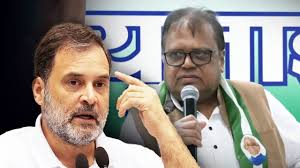
Congress leader Rahul Gandhi is trying to win over Dalit vote bank in Bihar. But in the meantime, Ashok Ram, a big Dalit face in the state, has shocked the party and joined JDU. Rahul will try to recover from this blow. On one hand, Rahul Gandhi is trying to win over Dalit voters for Congress’ victory in Bihar elections, while on the other hand, a prominent Dalit leader of the state has left the party. Rahul Gandhi has been trying to bring Dalit voters with him for a long time. During his nearly half a dozen visits to Bihar this year, his focus has been on Dalit voters, but the way former minister and 6-time MLA Dr Ashok Kumar Ram left the party and joined Janata Dal United is a big blow to Congress and Rahul’s preparations. Before leaving Congress, Ashok Ram alleged that Dalits are being ignored in the party, whereas his association with the party has been for nearly four decades. Ashok Ram, who has served as the working president of Congress, was said to be angry with his neglect in the party. It is also being said that he was not getting along well with Krishna Alavaru, the new in-charge of Congress in Bihar. Relation with a big political family of Bihar Doctor Ram belongs to a big political family. His father Baleshwar Ram was also a veteran Congress leader. He was an MLA and MP 7 times from 1952 to 1977. Not only this, he was made a state minister in Indira Gandhi’s government. Like his father, Dr. Ashok himself was an MLA 6 times and was made a minister in Rabri Devi’s government in the year 2000. He has been winning elections from the reserved Rosda assembly seat located in Samastipur district. His departure from the party just before the elections is being considered a big blow for the Congress because he was the Dalit face of the Congress for decades. He strengthened the concept of social justice for the party in the state. But in order to woo Dalit voters, Congress handed over the command of Bihar state to Rajesh Ram instead of Akhilesh Prasad Singh. He himself wanted to become the Congress President! It is being told that Dr. Ashok Ram was said to be angry with this decision. He himself wanted to come to this post, but his dream could not be fulfilled. Before Dr. Ram, Bihar minister Ashok Chaudhary was also in Congress, but a few years ago he went to JDU. Rahul Gandhi has been busy creating an environment for Congress among Dalit voters in Bihar for the last several months. In February, Congress celebrated the 130th birth anniversary of famous Pasi leader Jaglal Chaudhary with great pomp. Rahul Gandhi himself also participated in this program. He made Dalit leader Rajesh Ram the President of Bihar state and another Dalit leader Sushil Pasi the co-in-charge of the party in Bihar, trying to portray the party as a well-wisher of this community. Rahul engaged in the campaign of Dalit voters Apart from this, during his Bihar tour in June, Rahul Gandhi went to the village of Mountain Man Dashrath Manjhi to meet his family members. There he also paid his tribute at the Dashrath Manjhi memorial, and also met his son Bhagirath. He also drank coconut water with him. Bhagirath then demanded a permanent house for himself from the Congress leader, and Rahul fulfilled this demand by building a 4 room permanent house for his family. Bhagirath was earlier in Janata Dal United, but now he has joined Congress and he has also demanded a ticket from Rahul to contest elections. About 19 percent of the population in Bihar is Dalit and once it used to be the traditional vote bank of Congress. But with the passage of time these voters started drifting away. Congress had to bear the brunt and the party could not capture power on its own for more than 3 decades. Now Rahul Gandhi is engaged in an exercise to remove the resentment of Dalit voters and keep them with him. How important are Dalit voters in Bihar Dalit voters are important in Bihar because out of the 243 seats in the assembly, 38 seats have been reserved for Scheduled Castes and 2 seats for Scheduled Tribes. In 1990, the vote percentage of Congress here used to be 24.78 percent, which fell to single digit. Even after contesting the last two assembly elections together with the Rashtriya Janata Dal, the Congress could not touch the double digit figure. In 2015, the vote percentage of Congress was 6.7, while in 2020 it improved marginally and became 9.48 percent. The round of allegations and counter-allegations also continues After former working president of Bihar Congress Dr. Ashok Kumar Ram left the party and joined Janata Dal United, JDU is claiming that ‘there is a stampede in the Congress. Many leaders of the party are still in touch with us. At the same time, Congress is also attacking Ashok Ram’s allegations. Congress termed him as a ‘high opportunist’ for joining JDU. While Dr. Ram claims that many more leaders from Congress are going to leave the party. While Congress is accusing Dr Ram of being an opportunist, he is accusing the party of neglecting Dalits. Such allegations have been made during the election season, but while trying to gain a foothold among Dalits, Leader of Opposition in Lok Sabha Rahul Gandhi will have to ensure that there is not much division in the party. If he fails to stop the division, it will send a wrong message to Dalit voters and he will have to work hard to make his political ground in Bihar. Surendra Kumar Verma Courtesy: Hindi News
Shibu Soren Death: He was a grassroots leader… PM Modi expressed grief over the death of Shibu Soren, other leaders also reacted
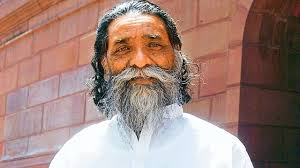
Former Jharkhand Chief Minister and tribal leader Shibu Soren passed away at Gangaram Hospital in Delhi. Many leaders including Prime Minister Narendra Modi and Home Minister Amit Shah have condoled his death. Shibu Soren fought for decades for the rights of tribal society and their empowerment. PM Modi reacted to the death of Shibu Soren New Delhi: Former Jharkhand Chief Minister and tribal leader Shibu Soren passed away today at Gangaram Hospital in Delhi. After his death, a wave of mourning spread across the country including Jharkhand. His son Hemant Soren, while informing about the death, said that respected Dishom Guruji has left all of us. Today I have become zero… Many other leaders including Prime Minister Narendra Modi have also condoled the death of Shibu Soren. At the same time, the proceedings of the Rajya Sabha have also been adjourned till 11 am on August 5. PM Modi called him a grassroots leader Prime Minister Narendra Modi posted on his X handle saying that Shibu Soren was a grassroots leader who touched heights in public life with his unwavering dedication to the people. He was particularly dedicated to the empowerment of tribal communities, the poor and the underprivileged. His demise was saddening. My condolences are with his family and fans. Spoke to Jharkhand Chief Minister Hemant Soren ji and expressed condolences. Om Shanti. Amit Shah expressed grief At the same time, Union Home Minister Amit Shah also expressed grief and wrote on his X handle that the news of the demise of former Jharkhand Chief Minister Shri Shibu Soren ji is extremely sad. He struggled for decades for the rights and empowerment of the tribal society in Jharkhand. He connected with the people with his spontaneous personality and simple nature. May God give place to the departed soul in his lotus feet and give strength to the bereaved Soren family and their fans and supporters to bear this sorrow. Om Shanti Shanti Shanti Rahul Gandhi expressed condolences Rahul Gandhi expressed condolences and said that he was deeply saddened to hear the news of the demise of former Chief Minister of Jharkhand and senior JMM leader Shibu Soren ji. A strong voice of the tribal society, Soren ji fought for their rights and entitlements throughout his life. His role in the creation of Jharkhand will always be remembered. I express my deepest condolences to Hemant Soren ji and the entire Soren family as well as all the supporters of Guruji. Rajnath Singh expressed condolences Defense Minister Rajnath Singh posted on his X handle and wrote that former Chief Minister of Jharkhand and one of the seniormost leaders of the country, Shibu Soren ji was counted among those stalwart leaders of Jharkhand who fought lifelong for the rights and empowerment of the weaker sections of the society, especially the tribal society. He always remained connected to the land and the people. I too had a long acquaintance with him. I am deeply saddened by his demise. My condolences to his family and supporters. Om Shanti! UP CM Yogi Adityanath expressed grief Uttar Pradesh Chief Minister Yogi Adityanath expressed grief and said that the demise of former Jharkhand Chief Minister Shri Shibu Soren ji is very sad. Humble tribute to him! He dedicated his life to the upliftment of tribal society. I pray to Lord Shri Ram to grant salvation to the departed soul and give strength to his bereaved family to bear this immense grief. Babu Lal Marandi expressed grief Former Jharkhand CM Babu Lal Marandi expressed grief and said that the news of the demise of JMM patron Shri Shibu Soren ji is very sad. His departure is an irreparable loss for Jharkhand. I pray to God for peace of his soul and strength to the bereaved family to bear this grief. Om Shanti! Curated by: Sanjeev Kumar About the author Sanjeev Kumar is a Senior Digital Content Producer at Navbharat Times Online. He has more than 6 years of experience working on national, politics, current affairs and Bihar-Jharkhand news. He is currently covering national news, politics and Delhi news in Navbharat Times Online. Sanjeev Ku Courtesy : Hindi News
In the Vice Presidential election, the ruling party and the opposition are preparing to face off. The decision will be taken in the INDIA Block meeting at Rahul’s house.
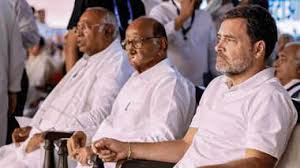
India Bloc Meet Rahul Gandhi Residence: An important meeting of opposition parties is going to be held at the house of Congress MP Rahul Gandhi. It is believed that further strategy can be made on important issues including the Vice Presidential election in this meeting. The biggest question is about the SIR process of the Election Commission, on which the opposition is attacking. What is the agenda of the opposition meeting at Rahul Gandhi’s house? New Delhi: Political turmoil continues in the Parliament. Apart from the discussion on Operation Sindoor, the proceedings of both the houses have not been able to run properly so far in this monsoon session. On the other hand, the dates for the Vice Presidential election have also been announced. In this election, the ruling party and the opposition are preparing to face off. This is the reason why an important meeting of the INDIA Block, an alliance of opposition parties, is going to be held. This important meeting is going to be held on August 7 at the house of Congress MP and Leader of Opposition in the Lok Sabha, Rahul Gandhi. Big meeting at Rahul Gandhi’s house on August 7 According to the information, in this meeting the opposition parties will also formulate a strategy for the Vice Presidential election. Rahul Gandhi will present evidence of alleged ‘vote theft’ in this meeting. The opposition parties will also consider joint agitation and legal options in Bihar. Many important issues will be discussed in this meeting to be held in Delhi. Opposition parties are concerned over the removal of a large number of names from the voter list after the Special Intensive Revision (SIR) in Bihar. They are planning to raise this issue in other states as well. These will be the agenda in the INDIA Block meeting Congress and some other opposition parties have raised questions on the functioning of the Election Commission. They allege that ‘vote theft’ has taken place in many elections. The opposition parties will formulate a strategy together on all these issues. Some leaders said that in the meeting to be held at Rahul Gandhi’s house, Congress MPs will give a presentation about the alleged electoral irregularities in Bengaluru. After this, they will present evidence about ‘vote theft and the role of the Election Commission’ in the INDIA Block meeting. Discussion on further strategy on SIR The opposition’s next strategy regarding the ongoing deadlock in Parliament and the Vice Presidential election will also be discussed in the meeting at Rahul Gandhi’s house. In this, the possibility of starting a joint movement in Bihar and across the country regarding the SIR process will also be discussed. Tejashwi Yadav had earlier talked about boycotting the Bihar Assembly elections. However, some opposition leaders believe that the SIR case is still in the Supreme Court. Apart from this, there are also provisions for complaining and getting redressal in SIR. In such a situation, all options should be considered before taking big steps like boycotting the election. Along with this, people whose names have been removed from the voter list should also get a chance to register their complaint. Confusion also over candidature in the Vice Presidential election The last date for filing nominations for the Vice Presidential election is August 21. Opposition parties will also discuss whether to field a candidate in the election or not. This election is considered easy for the BJP-led NDA, as they have a clear majority. Opposition parties are carefully considering every aspect. They want to ensure that the rights of voters are protected and the election process is fair. What will be the opposition plan on SIR next Opposition parties believe that irregularities in the voter list is a serious issue. This can affect the fairness of the election. They will spread awareness among the public about this issue and put pressure on the government to take appropriate action in this matter. The unity of opposition parties is important in this fight. He says that the Election Commission should ensure that there is no error in the voter list and all eligible citizens get the opportunity to vote. Curated by: Ruchir Shukla About the author Ruchir Shukla has been associated with Navbharat Times Online since February 2020. Started his career with a news agency in 2011. During this time, he broke big news through reporting. Specializes in political, social, crime, positive news. Courtesy: Hindi News
Bihar Election 2025: Now Manjhi has made a statement on Rahul Gandhi that will make NDA ‘uncomfortable’, know what he said
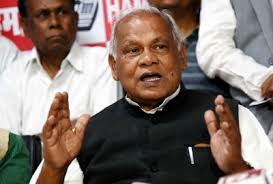
Bihar Assembly Election 2025: Union Minister Jitan Ram Manjhi attended the closing ceremony of ‘Sampoorna Abhiyan’ in Gayaji. On Rahul Gandhi’s Bihar visit, he said that in a democracy, everyone has the freedom to travel, so no one should object. Gayaji: Union Minister Jitan Ram Manjhi on Sunday attended the closing ceremony of ‘Sampoorna Abhiyan’ in Gayaji. During this, he reacted to the upcoming Bihar visit of Leader of Opposition in Lok Sabha Rahul Gandhi. NDA may be uncomfortable with this statement of his. No one should object to Rahul Gandhi’s visit – Manjhi Union Minister Jitan Ram Manjhi said that no one has any objection to Rahul Gandhi’s padayatra. Talking to the media, he said, ‘There is democracy in the country. Everyone has the freedom to move, speak and travel. Rahul Gandhi is also moving around, there is nothing big in it. This is a good initiative, he should come and travel. No one should have any objection.’ Manjhi honoured panchayat representatives Employees of various departments and panchayat representatives were honoured in the closing ceremony of ‘Sampoornata Abhiyan’. Union Minister Jitan Ram Manjhi encouraged the employees, Mukhiya and Sarpanchs who did excellent work by giving them certificates and symbols. He appealed to the people being honoured to maintain continuity in their work. This will help in the future. Manjhi gave information about the ambulance On this occasion, representatives of many panchayats including DPO, DPM Nilesh Kumar of the Education Department were present. Head of Bhataura Panchayat Dilip Kumar Yadav was specially honoured. He told that since 2016, free ambulance service is being run for pregnant women in his panchayat area. He was honoured by the Union Minister for this work. The DPO of the department was also called on the stage and honoured for better work in the field of education. District Magistrate Shashank Shubhankar also participated in the programme and congratulated those who did excellent work. On the closing occasion, all the honoured representatives took a pledge to improve their work further. Edited by : Rishikesh Narayan Singh About the author Rishikesh Narayan Singh is the Bihar-Jharkhand in-charge of Navbharat Times Digital. 20 years of journey in journalism from Janmat TV, IBN7, ETV Bihar-Jharkhand, News18 Bihar-Jharkhand to Times Internet. Courtesy : Hindi News
Man gets life term for raping Dalit woman, sharing obscene photos

Agra: A 38-year-old man was sentenced to life imprisonment for raping a Dalit woman and circulating her obscene photos to her relatives. The SC/ST court in Agra, presided over by Judge Pushkar Upadhyay, also imposed a fine of ₹90,000 on the convict. Additional district govt counsel (ADGC) Hemant Dixit said on Saturday that the 30-year-old woman’s mother, a farmer, had filed a police complaint against the accused in March 2022. “My daughter and the man were friends and used to speak regularly. After her engagement, we asked her to stop talking to him. But around Jan 2021, he convinced her to meet him one last time. During that meeting, he took obscene photos of her and forcefully did wrong things. My daughter returned home and told me everything. Out of shame, we didn’t report it and got her married,” the mother told the court during the trial. She added, “After the wedding, the man began sending my daughter’s obscene photos to our relatives, including to the mobile phone of my brother-in-law’s son-in-law. The pictures were sent to many relatives.” Based on the FIR, police booked the accused under IPC sections 376 (rape), 504 (intentional insult to provoke breach of peace), 506 (criminal intimidation), 509 (insulting the modesty of a woman), along with section 67 of the IT Act and relevant provisions of the SC/ST (Prevention of Atrocities) Act. The man was arrested shortly after and remained in jail throughout the trial. A chargesheet was filed weeks later. “After examining all witnesses and material evidence, the SC/ST court convicted the accused on Thursday and sentenced him to life imprisonment,” ADGC Dixit said. Courtesy : TOI Note: This news is originally published on https://timesofindia.com/bha and is used purely for non-profit/non-commercial purposes, especially human rights.
Dalit activist faces judicial custody with two associates
Hisar: Dalit rights activist and advocate Rajat Kalsan and his two companions, Deepak Saini and Pravesh, have been remanded in 14-day judicial custody. The three of them appeared in court on Saturday after being arrested for allegedly assaulting a police team in Hisar’s auto market. They were allegedly under the influence of alcohol at the time. City police apprehended his associates during his one-day police remand. A bail application for all the three accused was submitted during court proceedings. The court sought a response from the police and scheduled the bail hearing for Monday. On Thursday, Narnaund police arrested advocate Kalsan in a separate case registered about six months ago, involving a social media post allegedly supporting the accused in the murder of a woman at Budana village. Kalsan was granted bail by a Hansi court in the case. However, soon after his release, Hisar Police arrested him in the latest case related to the alleged assault. The FIR against advocate Kalsan was registered at the City Police Station on the complaint of Hansi special staff sub-inspector Ravikant under various non-bailable charges. According to the complaint, Kalsan was named in an FIR lodged at Narnaund Police Station on July 29. On the night of July 30, at around 10PM, police found three individuals allegedly consuming alcohol inside a parked car in the old auto market, with Kalsan in the driver’s seat. When police served him a notice to join the investigation, an altercation ensued. Kalsan and his companions allegedly exited the vehicle and attacked the officers, injuring a sub-inspector. Advocate Kalsan has been a prominent figure in Dalit activism, recently joining protests after the death of a youth named Ganesh in a DJ-related dispute in Hisar. He has also advocated for justice in the Bhatla case in Hansi and was a key legal representative in the high-profile 2010 Mirchpur Dalit atrocity case in the Narnaund region. Complaint submitted to NHRC Hisar-based advocate and social worker Bajrang Indal has submitted a joint complaint to the National Human Rights Commission (NHRC) and the National Commission for Scheduled Castes regarding the manner of Rajat Kalsan’s arrest. In his memorandum, Indal alleged that Kalsan—known for his advocacy in landmark Dalit rights cases like the Mirchpur massacre—was arrested on July 29 by police in plain clothes. He described it as a “kidnapping-style” operation. He also claimed that Kalsan was held in police custody without access to legal counsel or family visits and was not provided a copy of the FIR. The complaint went on to accuse the police of deliberately taking and circulating humiliating photos of Kalsan in a “criminal posture,” which Indal said, was a violation of human dignity and an affront to both the Dalit community and the legal profession. He has called for a judicial inquiry into the episode. Courtesy : TOI Note: This news is originally published on https://timesofindia.com/bha and is used purely for non-profit/non-commercial purposes, especially human rights.
Congress dalit figures in Karnataka close ranksahead of internal quota report
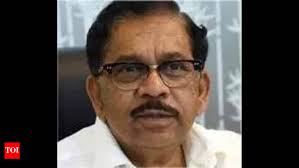
Bengaluru: With the Justice HN Nagamohandas commission set to submit its report on internal reservation for scheduled castes (SCs), senior dalit functionaries of Congress, including ministers and legislators, have resolved to remain united and avoid infighting over expected discrepancies in the caste-wise data. Home minister G Parameshwara, who chaired a closed-door meeting with SC ministers and legislators at his Sadashivanagar residence in the city Saturday, said the participants agreed to prioritise long-delayed quota reforms over internal differences. “We have been waiting for the internal reservation for many years. If there are conflicts about the report, it may lead to further delays. So, we have decided to stay together by ignoring small differences,” he added. The meeting comes ahead of the submission of the Nagamohandas commission report, which has collected empirical data on 101 scheduled castes to guide sub-quota distribution within the community. The report, which is expected to be submitted to CM Siddaramaiah on Aug 4, is likely to recommend revised shares for various sub-castes based on population and backwardness, raising concerns of potential discontent. “There are no MLAs or ministers from many sub-castes. So, we have decided to bring all socially and educationally backward groups into the mainstream. Everyone should get justice,” Parameshwara added, while urging all SC communities to stand together when the report is released. Ministers KH Muniyappa, HC Mahadevappa, RB Thimmapur, Shivaraj Tangadagi, deputy speaker Rudrappa Lamani, and several MLAs and MLCs participated in the meeting. Among them were KS Basavanthappa, AC Srinivas, Darshan Dhruvanarayan, Nayana Motamma, Roopakala Shashidhar, HV Venkatesh and Dr Thimmaiah. They resolved to meet Siddaramaiah once the report is submitted and press for a Cabinet decision ensuring fair representations for all SC communities. “If we are divided, the implementation will get delayed again. That should not happen,” Parameshwara said. “We have discussed staying together after the commission submits its report. We will meet again to decide the course of action to give justice to all the communities within the SC,” Pulikeshinagarr MLA, AC Srinivasa, said after the meeting. Courtesy : TOI Note: This news is originally published on https://timesofindia.com/bha and is used purely for non-profit/non-commercial purposes, especially human rights.
Dalit student’s suicide at CUK triggers outrage, allegations of cover-up
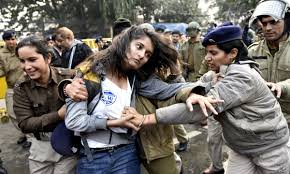
Kalaburagi: The alleged suicide of Jayasri Nayak, 20, a student from Odisha, has raised many questions about the educational atmosphere at Central University Karnataka (CUK) here. As authorities broke the door of the room — where the body was found — without informing police, activists suspect efforts to destroy evidence. Since the student belonged to the Dalit community, casteism is also being suspected. Agitation regarding the death is getting traction by the day. P Nandakumar, who was a student for 8 years from UG to PhD and was president of Ambedkar Vidyarthi Sanghatane at CUK, told TOI that atrocities against Dalit students have been ongoing in the varsity since its inception. “However, there was space to agitate when a Dalit student committed suicide in 2017. For the past 3-4 years, even our right to protest has been suppressed. If we insist, an FIR is filed against us. It started in 2019 when Rahul, a student, questioned performing religious rituals on campus when the varsity is a secular place. Earlier, the varsity’s SC/ ST cell provided financial assistance of Rs 20,000 for Dalit students intending to present their papers at national and international platforms. Now, it has been stopped. Even the OBC cell is shut. So is the case with the book bank and computer facility for Dalit students preparing for competitive exams. Now, SC/ST researchers are forced to pay fees on a par with general students. A caste column was introduced in the attendance sheet. Though they announce in press releases that accommodation and food are free for SC/ ST students, rent and fees are collected. Only when we oppose it, it gets refunded. Though Article 28/1 says there should not be any religious symbol in educational institutions, they have installed a Saraswati statue long before the installation of an Ambedkar statue. There are hundreds of cases to prove our allegations,” he explained. Dwarakanath CS, former chairman of Karnataka State Commission for Backward Classes, said he was prevented by security personnel from delivering a speech on Ambedkar last year. “I’m told there have been clashes between Dalit students and the varsity management for years. When we visited the campus at the request of Dalit students, we just offered a garland to the Ambedkar statue but were not allowed to speak about him. Many Dalit students shared that they are depressed by the casteist atrocities. Now, both the govt and the varsity management should consider the suicide of a Dalit student seriously,” he said. K Neela, a social activist in Kalaburagi, alleged that the varsity is turning anti-women and anti-minorities too in recent years. When contacted, prof Battu Satyanarayana, CUK vice-chancellor, said: “The anti-women allegation is false. Girl students outnumber boy students in our varsity. We are providing all facilities to all students irrespective of caste and creed. During admission, we follow reservation rules. It is our duty to provide equal opportunities to all. We have not introduced caste columns in attendance. We will ask caste and category only during the admission to follow the reservation system. There is no caste-based discrimination in the campus. We are following UGC guidelines and norms specified by the Constitution.” Responding to the recent suicide case, the VC said they did not know the student’s caste until it was raised. “Security personnel might have broken the room door assuming that she might be alive and needed immediate medical care. After learning about her death, we immediately informed the police, who in turn informed her parents. Her parents informed us that she had some health issues,” he stated. Courtesy : TOI Note: This news is originally published on https://timesofindia.com/bha and is used purely for non-profit/non-commercial purposes, especially human rights.
Dihuli Massacre Full Story: When 24 Unarmed People Were Brutally Killed, Justice Delivered After 44 Years
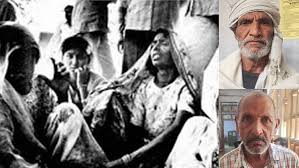
Read the full history of the 1981 Dihuli massacre in Uttar Pradesh, where 24 unarmed Dalits were killed. After 44 years, a Mainpuri court delivered justice with death sentences to three convicts. Dihuli Massacre Full Story Dihuli Massacre History: On the dark evening of November 18, 1981, the small village of Dihuli in Uttar Pradesh became the site of a horrifying tragedy that its residents can never forget. In the Jasrana police station area of Firozabad district (then part of Mainpuri), the sound of relentless gunfire claimed the lives of 24 innocent Dalits—men, women, children, and even infants. The Dihuli massacre was so brutal that it shook not just Uttar Pradesh but the entire nation. From Prime Minister Indira Gandhi to Opposition leader Atal Bihari Vajpayee, leaders visited the village to share the grief of the victims’ families. Finally, 44 years later, in March 2025, a special court in Mainpuri sentenced three convicts—Captain Singh, Ramsevak, and Rampal—to death, marking a significant step toward justice, though delayed for decades. This is the story of that dreadful night, the reasons behind the massacre, the long legal battle, and the final verdict that gave a glimmer of justice to the bereaved families. The Horrific Night of Dihuli Dihuli, a modest village largely inhabited by Dalits, survived on farming and daily labor. On November 18, 1981, around 4:30 pm, a gang of 17 armed dacoits led by Santosh Singh alias Santosha and Radheshyam alias Radhe stormed into the village, dressed in police uniforms, misleading the villagers at first. They specifically targeted the Dalit settlement and unleashed a frenzy of gunfire that lasted three to four hours. The attackers dragged people out of their homes, killing children, women, and the elderly without mercy. Twenty-three villagers died on the spot, and one more succumbed in the hospital, raising the death toll to 24. Among the dead were a six-month-old infant and a two-year-old girl. The police charge sheet later revealed the revenge motive behind this attack. Earlier, a Dalit youth Kunwarpal had been associated with the gang and was reportedly friendly with a woman from an upper-caste family—something that angered some gang members. After Kunwarpal’s murder, the gang suspected that Dihuli’s Dalits had informed the police. Seeking vengeance, and driven by deep-rooted caste hatred, the gang executed the Dihuli massacre. Panic and Terror in the Village The sounds of continuous gunfire sent shockwaves through the village. Survivors fled to nearby fields and forests, while the attackers remained in the village for hours, even hosting a feast after the killings, which made the environment more terrifying. The massacre sparked nationwide outrage. Leaders rushed to the site: Indira Gandhi, the Prime Minister, assured justice and security. Chief Minister Vishwanath Pratap Singh and Union Home Minister BP Singh visited the village. Atal Bihari Vajpayee undertook a solidarity march from Dihuli to Sadupur. The terror, however, lingered for years. Many Dalit families abandoned the village, while those who stayed lived under constant fear. Police and PAC camps were set up for months, and a permanent outpost was established. Yet, the psychological scars never faded. The Long Legal Battle The FIR was filed on November 19, 1981, based on Laik Singh’s complaint, naming 17 accused. Initially, the case ran in Firozabad court, then moved to Allahabad Sessions Court, and finally, in 2009, to a Special Dacoity Court in Mainpuri, where it lingered for 15 more years. By the time of the verdict: 13 out of 17 accused had died One, Gyan Chand alias Ginna, remains absconding Only 3 accused survived to face justice Banwari Lal, whose father Jwala Prasad was the first victim, became the key witness. He lost multiple family members—his brothers Manish Kumar and Bhure Singh, and cousin Mukesh—yet stood firm in court. Other witnesses like Laik Singh, Vedram, Harinarayan, and Kumar Prasad also faced intimidation but never retracted their statements. Even after all witnesses died over the years, their testimonies and the police charge sheet sustained the case. On March 11, 2025, Judge Indira Singh of Mainpuri’s Special Dacoity Court found Captain Singh (60), Ramsevak (70), and Rampal (60) guilty. March 18, 2025: The court sentenced them to death by hanging, along with ₹50,000 fines each and additional fines up to ₹2 lakh. The court classified the massacre as a “rarest of the rare” crime, justifying the death penalty. Hearing the verdict, the convicts wept in court, pleading innocence. The Voices of the Victims For the surviving families, justice is bittersweet. 90-year-old Jai Devi, who survived by hiding, said: “The pain of losing my family never fades. Justice came after 44 years, but late.” Malti Devi, who lost her husband and three sons, added: “The court’s decision is like a balm on our wounds.” Sharda Devi revealed that the convicts lived in the village, keeping survivors in fear for decades. After the verdict, villagers celebrated with Holi colors, seeing it as a symbolic closure. Sanjay Singh, another victim’s relative, said: “We want to see the killers hanged. Only then will our souls find peace.” Social and Political Impact The Dihuli massacre exposed the deep-seated caste violence and systemic social discrimination in rural India. The incident shook state politics, prompting debates on Dalit rights and police efficiency. Many Dalit families were forced to migrate, leaving only three families in Dihuli today. Special Prosecutor Rohit Shukla called it a historic judgment, proving that “no criminal can escape the law.” Yet, survivors like Jai Devi feel that justice after four decades is incomplete, as most accused died naturally. The convicts still have 30 days to appeal in the High Court, but the verdict stands as a powerful reminder: Justice may be delayed, but the Constitution eventually hears every victim’s voice. Lessons from Dihuli The Dihuli massacre is not just a story of one night—it is a stark reminder of caste prejudice, systemic failure, and the importance of social unity. After 44 years, the long-awaited justice offers some solace to the souls of the 24 who perished in that night of