
Dalits boycott polls in Vengaivayal, hoist black flags over 2022 water contamination case

The people demanded justice in the 2022 drinking water contamination case and opposed the CB-CID findings. PUDUKKOTTAI: Black flags were hoisted at the entrance of Vengaivayal as majority of Dalits boycotted polling on Thursday, demanding justice in the 2022 drinking water contamination case and opposing the CB-CID findings. Polling remained minimal in the village coming under Muttukadu panchayat, which has over 65 Dalit voters. Only eight persons cast their vote — five of them natives who had migrated but returned to vote, and three current residents. The rest of the Dalits stayed away, adhering to the boycott. The booth at Vengaivayal elementary school has over 549 voters, including people from Erayur village, mostly cast Hindus. They had announced a poll boycott earlier, but came cast their votes. “We are the ones who suffered. Instead of finding those responsible, they have named people from our own community. We cannot accept this,” said KR Murugan. Officials held peace talks during the polling, assuring steps to address the issue. However, the talks failed. Pearson Lenekar SR Courtesy : TNIE Note: This news is originally published on https:/thenewindianexpress.com/bha and is used purely for non-profit/non-commercial purposes, especially human rights
Rahul Gandhi says TMC graft & polarisation created way for BJP to enter West Bengal
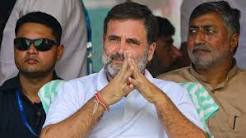
NEW DELHI: As elections in West Bengal enter the final lap, Congress neta Rahul Gandhi attacked his INDIA bloc partner, CM and Trinamool supremo Mamata Banerjee, alleging that polarisation and corruption have created a way for BJP to enter the state. “If Mamata ji had run a clean govt, and had she not polarised West Bengal, there would have been no way for BJP to make inroads into Bengal,” Rahul said on X, appealing to people to vote for Congress. “In this battle of ideologies, only Congress can defeat BJP,” he said. “BJP steals elections. SIR is their way to steal elections. There is a direct fight between Congress and BJP’s ideologies,” the leader of the opposition in Lok Sabha said in a video message. “BJP works against West Bengal’s culture, history, and Bengali language. BJP netas say ‘one nation, one language, one religion’. In this country there are many languages, religions, and ideologies. While we are trying to protect the Constitution, BJP is trying to destroy it,” he said. Courtesy : TOI Note: This news is originally published on https:/timesofindia.com/bha and is used purely for non-profit/non-commercial purposes, especially human rights
Maharashtra: Bangladeshi transgender Ayan Khan arrested for kidnapping and sexual exploitation of a minor boy

Maharashtra Police arrested Bangladeshi transgender Ayan Khan in Mumbai for allegedly kidnapping a minor, forcing him into begging, and sexually abusing him. The case has also exposed illegal infiltration, property accumulation, and a suspected cross-border financial network linked to Bangladesh Vashi: On April 19, the Maharashtra Police arrested a 30-year-old Bangladeshi transgender individual, Ayan Khan, alias Guru Maa or Babu Hijra, from Vashi. Khan is accused of kidnapping a 17-year-old boy from Shivajinagar in Govandi, with the help of an accomplice identified as Safde alias Jara, and forcing him into begging while subjecting him to sexual abuse. The arrest was made by a joint team of local police and the Crime Branch following a complaint filed by the boy’s father. Khan had previously been arrested around six months ago for illegally residing in Mumbai. During the latest investigation, police found that despite being an illegal infiltrator, Khan had acquired properties in Mumbai worth several lakhs of rupees. The abducted minor was rescued and reunited with his family, who were shocked to find him dressed in women’s clothing. Initially hesitant and fearful, the boy reportedly claimed he wanted to live as a girl. However, he later disclosed the abuse and coercion he endured between 10 March and 1 April 2026. Khan has now been booked under the Protection of Children from Sexual Offences (POCSO) Act, along with relevant provisions of the Transgender Persons Act. He remains in police custody as investigations continue. Authorities are also probing a possible larger network that may have facilitated Khan’s illegal entry into India, his continued stay, and the transfer of funds to Bangladesh. According to reports, Khan, who presented as a transgender “guru,” operated under multiple aliases, including Guru Maa and Jyoti Maa, and lived in Rafiq Nagar Part 2 in Shivajinagar, Govandi. In the area, Khan reportedly had influence over more than 300 followers. Originally from Basatpur village in Bangladesh, Khan’s arrest has led to the detention of several other Bangladeshi nationals residing illegally in the city. Investigators have also uncovered a cross-border financial trail linking earnings from alleged illegal activities in India to investments in Bangladesh. Police sources indicate that Khan used money earned in India to fund real estate and commercial ventures in Bangladesh. Despite living illegally in India for over three decades, Khan reportedly owns a house and is involved in constructing a shopping mall in Bangladesh. “During the investigation, we found documents and photographs suggesting that the accused built a house in Bangladesh using money earned here. We also recovered images related to a bhoomipujan ceremony for a mall project,” a senior Mumbai Police official said. Courtesy : Organiser Note: This news is originally published on https:/organiser.com/bha and is used purely for non-profit/non-commercial purposes, especially human rights
FBI’s rare Cuba mission: Agents fly to Cuba to recover a child from transgender parent who wanted transition surgery for child

A US government aircraft made an unusual trip to Havana this week as part of a rare operation by the Federal Bureau of Investigation to recover a 10-year-old child from Utah in an international parental kidnapping case. According to reporting by The New York Times and federal court filings, agents believed the child had been taken abroad by a transgender parent and their partner, allegedly with the intention of pursuing gender transition surgery. Authorities have charged Rose Inessa-Ethington, 42, and Blue Inessa-Ethington, 32, both from Cache County, Utah, with international parental kidnapping and aiding and abetting. Court filings identify Rose as the child’s biological father who transitioned to female after the child’s birth. Rose shared custody of the child with the biological mother, identified in documents only as “LB.” The child, described in filings as a 10-year-old assigned male at birth who identifies as female, had been living between both parents prior to the incident. How FBI tracked the child’s journey from the US to Cuba According to an affidavit filed by an FBI special agent in Utah federal court, the two person allegedly misled the child’s mother by claiming they were taking the child on a camping trip to Calgary, Canada, on March 28, 2026. Investigators say the group never reached their destination. Instead, authorities believe they crossed into Canada from Washington State, flew from British Columbia to Mexico City, travelled onward to Merida, and then flew to Cuba on April 1 using U.S. passports. The child was scheduled to be returned to the mother on April 3 but was not, in violation of a custody agreement. A search of the suspects’ residence uncovered items that investigators say point to advance planning. These included approximately $10,000 in cash, handwritten “to-do” lists referencing tasks such as learning Spanish, emptying bank accounts, and arranging travel logistics, as well as notes related to gender-affirming medical care for children. Federal agents stated in court filings that there was no indication the pair intended to return to the United States with the child. Family members describe ongoing dispute Family members told investigators that disagreements over potential medical treatment for the child had been ongoing. Rose Inessa-Ethington’s brother, Steven Ethington, told The New York Times that his sister had strongly advocated for transition-related medical care for several years. Tess Davis, a lawyer representing the child’s biological mother, said the issue had been a point of contention during the parents’ divorce proceedings, adding that the mother feared she might not see the child again. Rare federal response draws attention Legal experts say the government’s response was highly unusual. While international parental kidnapping cases are often complex, the use of a Justice Department aircraft to retrieve a child from another country is rarely seen. “This is highly unusual,” said Jay Groob, president of a firm specialising in child recovery cases, noting that such deployments are not typical in custody disputes. The aircraft, a Boeing 757 operated by the U.S. Department of Justice, travelled directly from Virginia to Cuba. Cuban authorities assisted in locating the individuals, who were arrested on April 16. They were later transported back to the United States. On April 13, a Utah court granted the biological mother exclusive custody and ordered the immediate return of the child. Following coordination between U.S. and Cuban authorities, the child was located and returned safely to the mother. Cuba formally acceded to the Hague Convention on the Civil Aspects of International Child Abduction in 2018, though cooperation between countries can vary in practice. The case also comes amid broader political tensions and ongoing U.S. policy debates around gender-related care for minors. Case remains ongoing The two defendants remain in federal custody and face charges that could carry significant legal consequences if proven. Officials emphasised that the case remains an allegation at this stage. “Our priority in every parental kidnapping case is the safety and well-being of the child,” an FBI official said, adding that the operation reflected coordination between agencies to ensure the child’s safe return. As the case proceeds through the courts, it continues to draw attention for its legal, international, and political dimensions. Courtesy : TOI Note: This news is originally published on https:/timesofindia.com/bha and is used purely for non-profit/non-commercial purposes, especially human rights
Kannur Dental College Student Death Case: Dalit Organizations Demand ₹10 Crore Compensation and High Court-Monitored Probe

Dalit organizations outraged over the suspicious death of student Nitin Raj at Kannur Dental College; demand ₹10 crore in compensation, a High Court-monitored investigation, and a ‘Kerala Bandh’ (state-wide shutdown) on April 28. A tragic incident in Kannur, Kerala, has shaken the entire state. Demands for justice have intensified regarding the suspicious death of Nitin Raj—a first-year BDS student at the Kannur Dental College in Ancharakandy—who died after falling from the college building. On Tuesday, an Action Council comprising several Dalit organizations in Kerala demanded that the state government provide compensation of ₹10 crore to the victim’s family. During a press conference held at the venue, the Action Council refused to accept the incident as a mere suicide, instead labeling it an “institutional murder.” They have demanded an impartial investigation into the entire affair, to be conducted under the direct supervision of the Kerala High Court. It is worth noting that on April 10, Nitin Raj was found in a critically injured state after falling from the college building; he subsequently succumbed to his injuries while undergoing treatment. Protesting the student’s death and seeking justice for the perpetrators, the Action Council has also called for a state-wide strike across Kerala on April 28. The organizations have categorically stated that the strictest possible legal action must be taken against the faculty members responsible for this tragic incident. Meanwhile, on Tuesday itself, Nitin Raj’s father and other family members visited the dental college. Upon seeing the exact spot within the college premises where his son had been found lying critically injured, the father could not hold back his tears. It was a deeply emotional scene that moved everyone present to tears. Given the gravity of the case, the police have registered a case against two faculty members: Dr. M.K. Ram and Dr. Sangeetha. Charges have been filed against both individuals for abetment to suicide, as well as under the stringent provisions of the SC/ST Act. Nitin’s family members and supporters allege that he was being subjected to constant harassment regarding his caste and physical appearance. Meanwhile, to evade arrest, both accused doctors have filed anticipatory bail petitions in the District Court. The case took a new turn when it emerged that the student’s death was also linked to online loan apps. The police have registered two FIRs against various online loan apps. In one of these cases, three individuals operating an illegal loan app from Noida, Uttar Pradesh, have also been arrested. However, Nitin’s family categorically asserts that pressure related to loans alone could not have been the cause of their son’s death. They firmly believe that the mental harassment he endured within the college campus was the primary reason behind this tragedy. Rajan Chaudhary Courtesy: Hindi News
Dalit History Month | ‘Panchayat’ Actor Vinod Suryavanshi Exposes the Dark Side of the Glamour World; Learn About the Film Industry Stalwarts Who Endured Caste-Based Humiliation

Recently, Vinod Suryavanshi—an actor from the popular web series *Panchayat*—spoke candidly about the caste-based discrimination he endured during his early struggles, both in his village and within the film industry. His personal account sheds light on a dark facet of the Indian entertainment world—one that is often overshadowed by the glitz and glamour of the industry. Vinod Suryavanshi, who gained recognition for his portrayal of the new secretary in the fourth season of the *Panchayat* series, recently shared his painful story of falling victim to caste-based discrimination during an interview. Suryavanshi—who has worked in projects such as *Panchayat* and *Jolly LLB 3*—revealed in a recent interview that the roots of casteism run deep even today in his ancestral village in Karnataka. His statement comes at a time when voices against not only caste discrimination but also gender bias and colorism are growing increasingly louder within the film industry. In recent times, several films have been produced that brilliantly depict caste-based hatred and the hierarchical mindset prevalent in society. The most recent example is the film *Vadh-2*, in which Prakash (played by Kumud Mishra) portrays a casteist and ruthless jailer who exhibits a fanatical mindset regarding caste distinctions, even within the confines of the prison. The film depicts how he brutally murders his niece and her husband for entering into an inter-caste marriage, with the blame ultimately falling upon the protagonist—played by Neena Gupta—who subsequently endures a lengthy prison sentence. Similarly, the central theme of the 2025 film *Dhadak-2*—directed by Shazia Iqbal—revolved around caste-based discrimination, inequality, and the challenges faced by inter-caste romances. This film portrays the conservative societal attitudes toward the love shared between an upper-caste girl and a lower-caste boy. The birth month of Babasaheb Ambedkar is celebrated globally as ‘Dalit History Month.’ In keeping with this tradition, *The Mooknayak* presents a comprehensive report examining this issue in depth, drawing upon the experiences of discrimination shared by various artists within the film industry. In a recent podcast conversation with Siddharth Kannan, Vinod Suryavanshi revealed that casteism remains as entrenched as ever in his village in Karnataka. He stated, “My village is divided into two sections—one for the upper castes and one for the lower castes. The area inhabited by Dalits is segregated from the rest of the village. When I was 12 years old, I visited the village with my father; whenever we ate at a local eatery, we were required to wash our own plates—even after paying for the meal. Furthermore, there is a temple in our village to this day that we are forbidden from entering.” Vinod also spoke of the severe financial hardships he endured. He shared that his mother worked as a domestic help, while his father was a mason. Whenever his father failed to find work, he would return home intoxicated and physically abuse his mother. “Festivals were a time of tears for us,” he recalled, “because we could never afford to celebrate them.” “No one treated the junior artists with any respect. We were frequently subjected to verbal abuse and humiliation. The assistant directors, in particular, treated us very poorly. However, the established, senior actors never insulted us.” — Vinod Suryavanshi Moreover, even after entering the industry, Vinod continued to face humiliation based on his physical appearance. Once, while he was eating during a shoot as a junior artist, a senior colleague snatched the plate right out of his hands. Vinod recounted, “Even for the role of a beggar, they would specifically ask for someone with a fair complexion. I was told, ‘You have a dark complexion; you can pack up and leave.’” He added, “I was rejected on numerous occasions solely because of my physical appearance. When I auditioned for television roles, casting directors were almost always looking for someone who had an ‘affluent look.’ They wanted someone who *looked* rich—even for the role of a beggar.” “I was told that I wasn’t worthy.” Neeraj Ghaywan Opens Up About the Pain of Concealing His Identity Director Neeraj Ghaywan—known for acclaimed works such as *Masaan* and *Homebound*—has frequently spoken out against the “Savarna dominance” prevalent within the film industry. Neeraj has admitted that, during the early stages of his career, he was afraid to disclose his caste identity. He often observes that in Bollywood, Dalit characters are typically portrayed either as “pitiable victims” or as “criminals.” Through films like *Homebound* and his own storytelling, he has consistently advocated for presenting Dalits as “heroes.” In an interview, the National Award-winning filmmaker stated, “Traditionally, Hindi cinema has told stories that revolve around only 10–15% of the population—primarily the upper-caste demographic. Over the 100-year history of cinema, we have largely overlooked a vast segment of the population.” He added, “Hardly anyone from Dalit or Adivasi communities—whether in front of the camera or behind it—has been represented. I am, perhaps, one of the very few individuals from this community to have gained recognition. This is a monumental issue. We must make amends for it.” Pa. Ranjith Transformed Cinema into a Weapon of Resistance Pa. Ranjith, a stalwart director of South Indian cinema, not only endured discrimination but also made it the central theme of his films (*Kabali*, *Kaala*, *Sarpatta Parambarai*). The Rajinikanth-starrer blockbuster *Kaala* portrays the lives of the urban poor. “Land is a right”—this is the core idea that *Kaala* champions. Our urban policies forcibly evict slum dwellers overnight, displacing them and shattering their lives. Furthermore, these policies implicitly convey the message that there is no place for slum dwellers within the urban landscape. Pa. Ranjith believes that even on a film set, people’s attitudes shift based on one’s caste and background. He established “The Casteless Collective”—an initiative utilizing music and art—to provide a platform for marginalized artists. Set against the backdrop of the Kolar Gold Fields in Karnataka, his upcoming film *Thangalaan* is significant not merely for its attempt to rewrite and reclaim Dalit history; it is particularly remarkable because it is rooted in a largely unheard and unexplored history—the story of how Dalits
Justice first, votes later: Dalit hamlet in Vengaivayal boycotts Tamil Nadu polls after human faeces found in drinking water tank in 2022

Anger and distrust kept voters away in Vengaivayal as residents raised black flags and refused to step out on polling day. Villagers say justice remains denied in the 2022 water contamination case and are demanding a fresh, fair investigation. The small village of Vengaivayal woke up on election day not with excitement, but with black flags. While most of Tamil Nadu stepped out to vote on April 23, 2026, this Scheduled Caste hamlet chose to stay away from polling booths, not out of apathy, but out of anger that has been building for years. Just a few kilometres away, life looked very different. In neighbouring Irayur, people who had earlier threatened to boycott the election quietly changed their minds and turned up to vote after rounds of negotiations. But in Vengaivayal, the mood remained stiff, emotional, and unshaken. This is not just about an election. It is about a wound that villagers say has not healed since 2022. A protest rooted in pain and distrust Boycott in Vengaivayal goes back to an incident in December 2022. Residents say their drinking water supplied through an overhead tank was deliberately contaminated with human faeces. The incident caused outrage across the state and raised serious questions about caste discrimination and safety. Even today, that memory lingers. Villagers claim the investigation has failed them. The case is being handled by the CB-CID, but many residents believe the real culprits are still free. Instead, they say, suspicion has unfairly fallen on the very people who suffered. As a mark of protest, black flags were raised across the hamlet. Streets that would usually see voters lining up remained empty. The boycott, villagers say, is their way of demanding accountability and dignity. Peace talks work next door, but not here In the weeks leading up to polling day, tensions had been high between communities in the region. Protests were held, and the atmosphere was uneasy. District officials and police stepped in holding multiple rounds of peace talks to calm situation. Their efforts saw some success but not everywhere. In Irayur, residents who had earlier planned to boycott elections eventually agreed to vote. The administration’s outreach appeared to have eased tensions there. But in Vengaivayal, the response was different. Officials from Keeranur invited villagers for a peace committee meeting. The residents attended and clearly stated their position. They said they would not participate in the election until their core demand is met: a fresh and fair investigation. Their stand remained unchanged even after the meeting. For them, voting without justice would mean accepting what they see as a flawed process. Wider boycott, demands, and official version The protest is not limited to one hamlet. In parts of Muttukadu panchayat under Kulathur taluk, both Dalits and caste Hindus have joined the boycott by citing the same issue: lack of justice in the Vengaivayal case. Meanwhile in Irayur, residents from caste Hindu communities have their own demands. They are not questioning the investigation in the same way, but they are unhappy with the lack of action. Villagers say that even though suspects have been identified, no arrests have been made. At the entrance of the village, banners have been put up demanding immediate arrests. Apart from the case, Irayur residents also raised everyday issues like poor road connectivity between Kavery Nagar and the village via Vellanur and Konjampatti, and lack of proper bus services. For them, the election is also about basic infrastructure. On the other hand, the CB-CID has presented a different picture. According to investigators, three individuals (J Muraliraja, B Sudharshan, K Muthukrishnan) were allegedly involved in the contamination incident. The motive, they say, was personal enmity linked to the dismissal of a tank operator, not caste-based hatred. The case earlier under SC/ST Special Court was transferred in February 2025 to Judicial Magistrate Court-II in Pudukkottai. But for people of Vengaivayal, these official explanations have not brought closure. Courtesy : The Statesman Note: This news is originally published on https:/thestatesman.com/bha and is used purely for non-profit/non-commercial purposes, especially human rights
Dalit Hamlet in Vengaivayal Boycotts Tamil Nadu Polls After Human Faeces Found in Drinking Water Tank in 2022

Polling day in Tamil Nadu saw a sharp contrast between two neighbouring villages, as Dalit residents of Vengaivayal boycotted voting and raised black flags, while people in nearby Irayur stepped out to cast their votes after earlier hesitation. The boycott in Vengaivayal, a Scheduled Caste hamlet in Pudukkottai district, is linked to the 2022 incident in which the village’s drinking water tank was allegedly contaminated with human faeces, an episode that had triggered outrage across Tamil Nadu. Protest driven by anger over lack of justice On April 23, 2026, while voters across the state queued at polling booths, Vengaivayal’s streets remained empty. Black flags were seen across the hamlet, reflecting a protest that residents say is rooted in pain and anger. Villagers have expressed strong dissatisfaction with the ongoing probe by the CB-CID, saying the real culprits have not been arrested. “We are the victims, but suspicion is being cast on us,” a resident said, highlighting the sense of injustice in the village. Many residents believe that voting without accountability in the case would mean accepting a flawed investigation. Pain of 2022 incident still unresolved The boycott traces back to December 2022 when the contamination of the overhead tank raised serious concerns about caste discrimination and the safety of marginalised communities. Even after more than three years, villagers say the trauma remains fresh. Investigators have named three individuals and claimed the motive was personal enmity rather than caste bias. However, this explanation has not convinced the residents. The case was earlier being heard under provisions of the SC/ST (Prevention of Atrocities) Act before being transferred to a magistrate court in 2025, a move that has further deepened mistrust. Peace talks succeed in Irayur but not in Vengaivayal In contrast, Irayur saw improved participation after several rounds of talks between officials, police and local residents. People who had initially planned to boycott the election eventually decided to vote. Authorities also held meetings with Vengaivayal residents, including a peace committee discussion. While villagers attended, they remained firm on their demand for a fresh and fair investigation. Their position did not change even after repeated outreach. Wider unrest and local concerns The protest has also extended to nearby areas such as Muttukadu panchayat, where both Dalits and caste Hindu communities have raised concerns linked to the case.Dalit community support In Irayur, residents have also highlighted everyday issues such as poor road connectivity and lack of transport facilities, adding another layer to their grievances. At several points in the area, banners demanding arrests in the contamination case were visible. Official version and public response Officials maintain that the contamination incident was linked to personal disputes involving a dismissed tank operator and was not caste-driven. However, residents of Vengaivayal remain unconvinced. For them, the boycott is not just about elections. It is a way to demand justice and assert dignity, showing that unresolved grievances continue to shape public participation in democracy. Courtesy : TOP Note: This news is originally published on https:/theobserverpost.com/bha and is used purely for non-profit/non-commercial purposes, especially human rights
MP caste brutality: Handicapped Dalit groom dragged off horse, beaten up

Golu’s family claimed that the attack was a result of deep-rooted caste heirarchy and not a spontaneous incident. Bhopal: A 23-year-old physically handicapped Dalit groom was dragged off a horse and assaulted during his baraat in Madhya Pradesh’s Damoh on Tuesday, April 21, raising concerns about the shocking realities of caste discrimination. The incident occurred during the Rachwai, a pre-wedding ritual of Golu Ahirwar. While he was seated on a horse as the groom, and passing through the village with his family and relatives, local vigilantes intercepted and objected to the procession. A video of the incident, recorded by the family of the groom, has since gained traction on social media, showing the casteist attack conducted in broad daylight. Groom brutally assaulted despite being handicapped The individuals, identified as Guddu Singh, Krishna, Hakam and Palty Lodhi, allegedly pulled him off the horse with force and attacked him with sticks and clubs. Golu’s family claimed that the attack was a result of deep-rooted caste hierarchy and not a spontaneous incident, according to local media reports. The groom’s sister, Manisha Ahirwar, described the attack. “As we were proceeding, they blocked our path in the lane by parking a vehicle across it. When we asked them to move it, they rushed at us. They threw him off the horse and beat us up. Four people attacked us,” she said. “They said a horse cannot enter the lane and they will not allow us to pass. They made it clear that a procession like this is not meant for people like us,” she added. Despite the groom being physically disabled, the assailants showed no restraint, said Golu’s mother Vidya Ahirwar. “They dragged my son off the horse and beat him mercilessly. Even my daughter was assaulted when she tried to intervene.” Some of Manisha’s gold jewellery items also went missing during the altercation. Station In-charge Sudhir Kumar Begi confirmed the incident while speaking to the media and said, “The complainant reported that during the Rachwai procession of Golu Ahirwar, as the group reached near the village shrine, Vishwanath Lodhi, Chintu Lodhi and others objected to the groom riding a horse.” “They assaulted the group, abused them, and forcibly threw the groom off the horse. A case has been registered under relevant sections, including the SC/ST Act, and investigation is underway.” Authorities deployed police officers in the village to maintain order and prevent further escalation for the smooth proceedings of the remaining wedding ceremonies. Golu and his family left for Chhatrapur’s Cudhi Semra village to conclude the traditional rites. Courtesy : TSD Note: This news is originally published on https:/thesiasatdaily.com/bha and is used purely for non-profit/non-commercial purposes, especially human rights
Tight slap on Congress ‘Hindu terror’ narrative, remarks BJP
NEW DELHI: The discharge of four accused in the 2006 Malegaon case is a “tight slap” on the Congress leadership’s face, BJP said Wednesday, asserting this has again vindicated its stand that the opposition party during its govt invented terms like “Hindu terror” and “saffron terrorism” to defame Hindus due to its appeasement politics. At a presser, BJP spokesperson Gaurav Bhatia demanded apologies from Sonia Gandhi and Rahul Gandhi for allegedly hatching a conspiracy to defame the Hindu religion. He said the blast had happened during the Congress-led UPA’s tenure. “However, Congress invented saffron terror at its headquarters on the instructions of Sonia Gandhi to hide its failure, pursue appeasement politics and please Rahul Gandhi,” he alleged. Slamming former ministers Shivraj Patil and P Chidambaram for linking terrorism to Hindu groups, he said they must also apologise. Courtesy : TOI Note: This news is originally published on https:/timesofindia.com/bha and is used purely for non-profit/non-commercial purposes, especially human rights