
The optics deficit: Will missing Stalin-Rahul ‘brotherhood’ hurt alliance in Tamil Nadu?
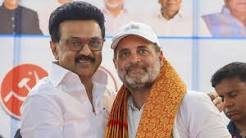
NEW DELHI: Elections in India are fought as much through images in public view as through ideas and manifesto promises. In the 2026 assembly elections, where Congress depends on its allies in states like Tamil Nadu, Rahul Gandhi’s approach to coalition politics raises questions about whether the grand old party is doing enough to project unity on the ground. At the heart of this doubt lies a simple but powerful political tool: the joint rally. In a hyper-visual electoral campaign, a shared stage is not just symbolic; it is strategic. It signals cohesion to voters, clarity to cadres and credibility to an alliance. Its absence, conversely, creates space for speculation, often used by the opposition to create doubts in the minds of voters. A visible gap in strong alliance In Tamil Nadu, where Congress is contesting as part of a long-standing alliance with the DMK led by MK Stalin, the deficit of this alliance optics is quite visible. In previous elections, Rahul Gandhi and Stalin shared stages, projected camaraderie and reinforced the alliance through visible coordination. That visual continuity was missing this time. Despite high electoral stakes, the two leaders did not appear together in a joint rally. The absence triggered both political commentary and opposition attacks. Follow complete coverage of 2026 assembly elections TOI resident editor Arun Ram points to this as a clear missed opportunity: “The DMK and Congress have failed in bringing together these two leaders … I think had they come together for at least one public rally, they would have sent out a strong message that the alliance is strong enough.” SWOT Snapshot – DMK & Congress The explanation from DMK circles, that aligning schedules would have disrupted Stalin’s campaign by dozens of stops, has done little to offset the perception cost. That cost becomes sharper when contrasted with the presence of Aam Aadmi Party chief Arvind Kejriwal, who recently shared the stage with Stalin during a roadshow in Chennai. For audience and voters, the optics were telling: a leader with limited electoral stakes in Tamil Nadu stepping in to signal unity, while Congress’s principal face remained absent from a joint platform. Tamil Nadu Assembly Elections Overview The perception risks The optics gap in Tamil Nadu is not unfolding in isolation. It comes against the backdrop of internal tensions within the alliance. A section of the state Congress leadership had earlier raised the issue of power-sharing, floating the idea of a coalition arrangement — something the DMK has firmly resisted. While the central leadership moved to contain these demands, the political signal had already been sent. In such a scenario, the ‘missing’ Rahul Gandhi takes on added implications. The joint rally, in this case, could have at least acted as a visual reassurance that differences, real or perceived, did not affect the alliance in the state. Arun Ram highlights this dynamic: ” .. given the background that we have seen a section of Congress leaders demanding a share in power … there was a bit of, at least rumours of a bit of a tension between Rahul Gandhi and MK Stalin.” The absence of a shared stage allowed those rumours to gain traction. Rival parties like the All India Anna Dravida Munnetra Kazhagam (AIADMK) and the BJP were quick to amplify these perceptions, framing the alliance as strained rather than cohesive. SWOT Snapshot – AIADMK & BJP BJP leader K Annamalai said, “Rahul Gandhi doesn’t want to campaign with MK Stalin. He wants to do a separate campaign. MK Stalin doesn’t want to campaign with Rahul Gandhi; he wants to do a separate campaign. In previous elections, the relationship between Rahul and Stalin was framed as one of deep personal camaraderie. From gifting sweets to calling each other “elder and younger brothers,” the optics were designed to trickle down a sense of unity to the grassroots cadres. This time, however, the frame was curiously empty, as both leaders operated on parallel tracks during campaigning. The ‘MIA’ Rahul Gandhi What we saw in Tamil Nadu during this assembly election is not something new. Across key states, a similar pattern of limited joint campaigning was seen from the side of Rahul Gandhi. In Bihar, Congress’s alliance with the RJD led by Tejashwi Yadav has also faced questions over coordination. Tejashwi’s high-frequency campaign, often involving multiple rallies a day, was not matched by a sustained joint presence from Rahul Gandhi. In 2025 election, reports emerged of a “postponed” joint Vote Adhikar Yatra with Tejashwi, further cementing the idea that the two leaders struggled to coordinate their presence even when the stakes were existential. The alliance with the National Conference (NC) in Jammu and Kashmir has been equally fraught with optic gaps. In the run-up to the 2024 elections and the subsequent local administration shifts in the next two years, the chemistry between Omar Abdullah and Rahul Gandhi has fluctuated wildly. The contrast within the INDIA bloc Meanwhile, Arvind Kejriwal’s decision to join the 2026 assembly campaign for Stalin and Mamata has also highlighted differences in how alliance politics is being conducted within the broader opposition. Leaders like Arvind Kejriwal have adopted a more proactive approach — campaigning across states, sharing platforms with regional allies, and reinforcing a broader anti-BJP narrative even in areas where their party has limited direct stakes. Kejriwal came to hold a road show for Stalin's campaign in Chennai. This approach has been visible not just in Tamil Nadu but also in West Bengal, where Kejriwal is expected to campaign at the invitation of Mamata Banerjee. At the ground level, alliances function through coordination between cadres of different parties. This coordination depends heavily on signals from leadership. The cost of not being seen together The Congress under Rahul Gandhi has succeeded in building alliances that are, on paper, both strategic and necessary. But elections are not fought on paper alone. They are fought on stages, in images, and through moments that signal unity to voters and confidence to cadres. A single joint rally in
Dalit groom pulled off horse, beaten during pre-wedding procession in Madhya Pradesh

DDAMOH: A 23-year-old physically handicapped Dalit groom was pulled off a horse and beaten during a pre-wedding procession in Damoh district on Tuesday evening. The wedding procession could continue only after police were deployed in the village.Police said that all four accused named in the case have been arrested and will be slapped with the National Security Act. “This is a clear case of caste discrimination. All four accused named in the complaint have been arrested. The National Security Act will be invoked against them. This will be the first time such action is being taken in a case like this. We have sent our recommendation to the DM,” said Damoh SP Shrut Kirti Somavansh. The incident took place in Bijori Pathak village when the groom, Golu Ahirwar, was taking out his ‘Rachwai’ procession, a Bundelkhandi custom where the groom goes around the village on a horse before the baraat. A group of men objected to him riding a horse and allegedly used caste-based abuses. Police said four villagers — Ghuppu Lodhi, Vishwanath Lodhi, Bichhu Lodhi and Chinnu Lodhi — stopped the procession around 5 pm and blocked the path by placing a motorcycle in front of the horse. They then pulled the groom down and assaulted him. When his family members intervened, they were also beaten. His sister Manisha was among those injured. A video of the incident has gone viral on social media. After the attack, members of the Dalit community took the injured groom to the police station and filed a complaint. Police have registered a case under relevant sections, including the SC/ST (Prevention of Atrocities) Act. Golu’s sister Manisha alleged that the accused blocked their way by parking a vehicle in the lane, rushed at them when asked to move, dragged her brother off the horse and assaulted the family, saying a “horse would not be allowed in the lane and that such a procession was not meant for people like them”. Another family member said, “They said the procession would not be allowed. When we objected, they attacked us and beat my daughter.” She added that some of her jewellery went missing during the incident. Additional police force has been deployed in the village. Courtesy : TOI Note: This news is originally published on https:/timesofindia.com/bha and is used purely for non-profit/non-commercial purposes, especially human rights
Bengal’s missing voters set Phase 1 tone
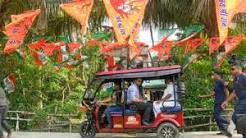
When the first vote is cast at 7 am today to decide who will be governing Bengal for the next five years, there will be an elephant in the polling booth: SIR, or the Special Intensive Revision of the voters’ roll. More than 3.6 crore voters across 152 constituencies will be exercising their franchise in the first phase of the 2026 state assembly poll; the rest of the 6.82 crore voters in the other 142 constituencies will follow them next Wednesday. But this election — more so in the seats going to vote today — will be as much about the disenfranchisement of 27 lakh voters who will not be able to vote despite having proof of voting rights. The Election Commission has found that these 27 lakh voters have some “logical discrepancy” or the other. This can mean anything, from misspelt names to surname mismatches (with parents) to monks serving in missions whose legal guardians are the heads of those missions. The 16 districts going to vote today have a voting strength that is 9.4% less than what it used to be before the SIR exercise (a significant portion, probably about half, are dead or “absent” or “shifted” voters). Nowhere is SIR’s shadow longer than in Murshidabad, which has lost 7.4 lakh voters, and Malda, which has lost 4.5 lakh. It is Murshidabad that encapsulates everything that has gone wrong with SIR, originally meant to weed out nonvoters, but which has disenfranchised people voting for years. More than 4.5 lakh of the 7.4 lakh total deletions in this district happened during the “judicial adjudication” phase (to determine “logical discrepancy”). The most drastic impact is in the Shamsherganj constituency, often described as ground zero of the crisis. Exactly 74,775 voters — representing a staggering 32% of the electorate — have been disenfranchised, sparking a legal and political battle that may rage even after the new assembly is formed. All this has taken some sheen off the electoral battles in bellwether constituencies and those involving political heavyweights. But the first phase does have these, too, in good measure: the political future of at least three such heavyweights — BJP’s Suvendu Adhikari and Dilip Ghosh and Congress’s Adhir Chowdhury — hinges on how voters vote today (though Adhikari has a second chance in the second phase, as he is contesting from Bhowanipore as well against CM Mamata Banerjee). Adhikari, who has spent the last few years shrugging off “defector” barbs, now faces a defector himself in his home seat, Nandigram. His challenger is Pabitra Kar, a former Adhikari acolyte with strong ties with Hindu organisations, who is credited with securing a 3,500-vote lead for Adhikari in the critical Boyal area in the 2021 election. CM Banerjee stationed herself there for several hours and alleged large-scale manipulation, photographs of which went viral (and still the subject of a court battle). Adhikari scraped through with a 1,956-vote margin. Kar, this time, may give his former mentor some sleepless nights till May 4, when votes will be counted. Over 280km away, Congress veteran Chowdhury is fighting his own battle for political survival in Behrampore. Chowdhury is a five-time MP but is now eyeing a path to political rehabilitation through the Bengal assembly after losing the last Lok Sabha poll. BJP won this seat in 2021, and the fight this time is likely to be intensely triangular, with Trinamool forming the third side (along with BJP and Congress). BJP veteran Ghosh faces a similar situation in his own home seat, Kharagpur Sadar, where he is returning after 10 years. It was his victory over former Congress cabinet minister Gyan Singh Sohanpal in 2016 that marked his ascendancy with the BJP’s state unit, but he was forced by his own party to forsake the region he knew so well in the 2024 Lok Sabha poll. Ghosh will be hoping that Kharagpur backs him a second time. Another political dynasty that is looking for succour is former Congress Union minister ABA Ghani Khan Choudhury’s family. The district is seeing Khan Choudhury’s niece, Mausam Benazir Noor, fighting to reclaim the family’s political legacy after switching back to Congress after a stint with Trinamool and a term in the Rajya Sabha. But this district, too, is likely to see a tripolar fight — and arithmetic can be slippery in such contests. Many of the 16 districts that go to the polls today — from Darjeeling in the Hills to East Midnapore on the Bay of Bengal’s shores — have been BJP strongholds, and the party would be betting on SIR deletions to keep it that way. Nine of these 16 districts — Cooch Behar, Alipurduar, Jalpaiguri, Darjeeling, Kalimpong, North Dinajpur, South Dinajpur, Malda and Bankura — gave BJP 38 (of a total 66), which ultimately helped it reach the 77-seat figure it had in the last assembly. But the voter anger and the consequent anti-BJP consolidation visible outside polling booths across districts may also have something to offer to Trinamool at the EVMs. How much that anger transforms into anti-BJP votes and the number of seats to which Trinamool can restrict BJP in these 16 districts can well shape the configuration of the next Bengal assembly. Hot seats Nandigram Adhikari, who has spent five years shrugging off defector barbs after switching from TMC, now faces a defector himself. Adhikari defeated CM Mamata Banerjee here in 2021 by 1,956 votes. His one-time confidant, Kar, is his TMC challenger. Identity politics continues to dominate the landscape, with demographics expected to play a critical role. The 2011 Census recorded Hindus at 65.8% and Muslims at 34% of the population here. But under SIR, 12,500 Muslim voters were removed. Sabar Institute says gross deletions in Nandigram stand at 14,462, with Muslim voters accounting for 95.5% of deletions. Key issues on the ground, say residents, is haphazard development symbolised by, among other things, a standing structure for a railway station but with no rail link to the area. Past Winners : 2011 (TMC), 2016
Poll violence in West Bengal: Crude bombs hurled in Murshidabad, several injured

MURSHIDABAD: Tension gripped Nowda in Murshidabad district during polling in the West Bengal assembly election after unidentified persons allegedly hurled a crude bomb, leaving several people injured, as reported by news agency PTI. According to initial reports, the explosion occurred amid voting activity, triggering panic among residents and voters in the area. The injured have reportedly been shifted to nearby medical facilities, though the exact number of casualties and their condition are yet to be officially confirmed. Security forces rushed to the spot soon after the incident and have begun combing operations to trace those behind the attack. Courtesy : TOI Note: This news is originally published on https:/timesofindia.com/bha and is used purely for non-profit/non-commercial purposes, especially human rights
Congress gets nod for Rahul Gandhi’s rallies in West Bengal
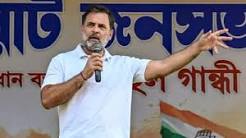
Kolkata: A day after police denied clearance for his planned April 23 appearances, Congress on Wednesday secured permission for Rahul Gandhi to hold three rallies in West Bengal on Saturday. The LoP in Lok Sabha will address rallies in Serampore, Metiaburuz and at Shaheed Minar in central Kolkata, in that order, said Congress member Amitabha Chakraborty. State Congress chief Subhankar Sarkar is contesting from Serampore. Rahul had earlier held three public meetings in Raiganj, Chanchal and Samsherganj on April 14, while his last Kolkata rally was in 2016. On Wednesday, Rahul also posted a video outlining Congress’s poll guarantees for Bengal: Rs 2,000 per month for women, health insurance up to Rs 10 lakh, free cancer treatment and dialysis at district hospitals, free education until graduation, filling of vacant govt posts within a year, and Rs 15,000 annually for farmers. Courtesy : TOI Note: This news is originally published on https:/timesofindia.com/bha and is used purely for non-profit/non-commercial purposes, especially human rights
THE UNION OF INDIA VS. MY UNDERWEAR

On the eve of International Trans Day of Visibility, March 30th 2026, the Indian Government formally Gazetted the amendments to the THE TRANSGENDER PERSONS (PROTECTION OF RIGHTS) ACT. The Indian transgender community has for ages been fighting for its rights. Since the British Raj, trans people have been labelled as criminals and condemned into poverty, homelessness, begging, and forced sex work. Only as recently as 2014 did the Supreme Court of India, with the National Legal Services Authority (NALSA) vs. the Union of India judgement, recognise transgender people as a separate third gender. In 2019, the Transgender Persons (Protection of Rights) Act adopted a broader and more inclusive recognition of trans people—explicitly including trans men, trans women (irrespective of medical transition), and genderqueer persons—by self identification. It upheld the “right to dignity,” a core value of the Indian constitution. But seven years later, the ruling nationalist government suddenly decided that they weren’t ‘protecting trans people enough.’ So they took it all away in under two weeks. On March 13, 2026, Union Minister Virendra Kumar introduced the Transgender Persons (Protection of Rights) Amendment Bill 2026 in the Lok Sabha (lower house of the Indian Parliament). Less than two weeks later, the bill cleared both houses of Parliament, despite drawing widespread criticism, and without consulting statutory bodies like the National Council for Transgender Persons. The Parliament passed it by voice vote because they didn’t even have the nerve to put it to a proper count—why would they when the entire opposition spoke against this draconian bill? Multiple members and activists resigned from their positions from the Council in retaliation. President Droupadi Murmu assented to the bill, thereby completing the rollback one day before the International Transgender Day of Visibility. THE NERVE ! So what exactly got passed? The official Gazette of India, No. 3 of 2026: The 2019 Act defined a transgender person as someone “whose gender does not match the gender assigned at birth, a broad, self-determined definition”. This amendment guts it. The new definition of “transgender person” under the amended clause (k) lists only: Persons with socio-cultural identities such as kinner, hijra, aravani, jogta, or eunuchs; persons with specific intersex variations or congenital differences in primary sexual characteristics, external genitalia, chromosomal patterns, gonadal development, or hormonal response; Any person who has been “by force, allurement, inducement, deceit or undue influence, either with or without consent, compelled to assume, adopt, or outwardly present a transgender identity.” It shall not include, nor shall ever have been so included, persons with different sexual orientations and self-perceived sexual identities. While the new definition includes intersex people who underwent forced genital mutilation as children, the government clearly rejects all self-identification, confusing sexual with gender identity, intersex people with transgender. This bill strips away the dignity of transgender individuals, characterising the individuals of the community either as (1) members of a religious caste and biological deviants, (2) unfortunate, and underprivileged by nature of being transgender, or (3) condemned sexual criminals. This separation of traditional communities from non-conforming criminals explains the broader character of the ruling government. In order to avail the government’s ‘protection’ under the new amendment, we trans people have to undergo pain, insult, exploitation, and dehumanization only to prove to the state that we fit their traditional and orthodox boxes. That we’re the ‘correct kind of transgender,’ that we’re pure and sanctioned, sanctioned by the casteist, misogynist, and transphobic traditions of orthodoxy. This is the expression of the growing Elite-Hindu Nationalism, which ties itself to all the identities that stand by, support, and bow down to the religious and cultural elite. The ‘Protection of Rights’ amendment is only for those trans people that choose to uphold traditions of deep-rooted misogyny, casteism, and cultural hegemony. As for the rest, it is an excuse for erasure. Using these identities as tokens, the government is illegalising everyone who chooses their reality. The state is after everyone who speaks their own voice. And they will check and ensure that we are the ‘correct kind’ themselves. Under the amended Section 6, a transgender identity card can now only be issued by the District Magistrate “after examining the recommendation of the authority and, if he considers either necessary or desirable, after taking the assistance of other medical experts.” Your surgery (if you get one), your hormones, your hairstyle – all of this, reported to and authorised by the government. Your body, logged in an official registry. This is not protection. This is surveillance. This is the government trying to invade our bodies. Imagine having to take off your clothes and presenting yourself in front of socially unconscious government-appointed doctors. They will judge you, sneer at you, perform all the ‘necessary examining’ that they want to, and then approve whether you are ‘considered’ transgender or not. Describing their personal experience, VJ writes: Let me be very clear about what this gazette means. I, a non-Hindu, disabled, queer, non-binary trans person, have been written out of existence. In the eyes of the Indian government, I do not exist. My identity has been legislated away. I am a trans-masculine student who, until now, hadn’t had to worry about what was in my fucking pants. Yes, there had been instances where I’d been stopped outside public bathrooms, looked up and down, told I was in the wrong place based on how I looked. But if I said “I am trans,” “I am a woman,” or “I am a boy,” no one could legally stop me. That liberty existed. That small, hard-won protection was real. It wasn’t perfect, but it was enough to breathe. I fought tooth and nail to pursue my Bachelor’s thesis on Architecture of Queer spaces, facing humiliation through every jury, in rooms where even my existence was up for debate. If educators couldn’t find it in themselves to respect my identity even when the law was on my side, what chance do any of us have now that it isn’t? What happens to my research, to all of us who
Petition in Supreme Court flags ‘erasure’ of trans men in new law

NEW DELHI: A petition in the Supreme Court challenging the Transgender Persons (Protection of Rights) Amendment Act, 2026 — likely to come before a CJI-led bench on April 27 — highlights the “complete legislative erasure of trans men and trans masculine identities and other gender-diverse identities from the definition of transgender person”. Steered by transgender rights activists Manveer Yadav and Vishwanath Maithil — who identify as transmen — the petition states the 2026 amendment law introduces sweeping changes to the 2019 law and is in “complete derogation of principles” laid by SC in its landmark 2014 ‘National Legal Services Authority v. Union of India’ case that recognised “transgender” as an umbrella term encompassing wide and diverse range of identities, including trans men and trans masculine identities, trans women, non-binary persons, genderqueer individuals, and socio-cultural groups including hijras, kinnars, aravanis, and jogtas, and held that the criterion for recognition must be the ‘Psychological Test’, not the ‘Biological Test.’ The two other petitioners are transgender rights activists and trans women Abhina Aher and Vinshi Shahi. The petitioners said the 2026 law replaces an identity-based, self-determination framework with a categorical list of externally verifiable biological markers and named trans-feminine socio-cultural communities, none of which encompasses trans men. Highlighting that the Trans Rights Act, 2019, before the amendments, defined “transgender person” to include trans men and trans women irrespective of medical intervention, persons with intersex variations, genderqueer persons, and named socio-cultural communities. Also, it guaranteed the right to self-perceived gender identity. “Together, this framework operationalised the constitutional mandate of NALSA. The 2026 amendment law systematically dismantles it,” they emphasised. The petition goes on to cite that the 2026 Amendment Act, firstly, replaces the open, identity-based definition of “transgender person” under the 2019 Act with a categorical and exhaustive list confined to: persons with named socio-cultural identities (kinner, hijra, aravani, jogta, & eunuch); persons with intersex variations defined through biological and chromosomal criteria; and persons forcibly compelled to assume a transgender identity through bodily modification.” Further, a proviso declares that the definition shall “not include, nor shall ever have been so included, persons with different sexual orientations and self-perceived sexual identities.” Besides this, the petitioners express concern as they highlight that “the right to self-perceived gender identity that is constitutionally protected, has been entirely omitted without any legitimate rationale”. “The combined effect of such an amendment is to strip trans men and trans masculine identities of all statutory recognition and protection,” they add. “Furthermore, every named socio-cultural community in the definition is, without exception, a trans-feminine community of persons assigned as male at birth. Trans men and trans masculine identities have no equivalent named community formation in India; their structural invisibility is itself a defining feature of their experience,” the petition states It is further highlighted that the “legislature’s privileging of community-visible, trans-feminine identities over self-perceived identities is not a neutral classification, it is a prejudice of visibility encoded in statute.” Raising various issues, the petitioners also draw attention to how the 2026 Amendment Act restructures the certificate regime under the Trans Rights Act 2019, “converting a facilitative, self-declaration-based process into one of administrative adjudication and compulsory State surveillance over gender transition”. “Under the 2026 Amendment Act, the district magistrate is now required to examine the recommendation of a medical board and, where considered “necessary or desirable,” to seek the assistance of other medical experts before issuing a certificate of identity. This directly reintroduces the Corbett Biological Test expressly rejected in the NALSA case and produces a chilling effect on gender expression,” the petitioners state. They further highlight a Parliamentary Standing Committee report that cautioned against precisely this kind of “medical gatekeeping” and seek the intervention of the top court to protect the rights of the community, and urge the SC to declare the right to self-perceived gender identity a fundamental right protected under the Constitution of India. “The medical institutions are mandated to furnish details of any person who has undergone gender-affirming surgery to the district magistrate and the designated authority, without consent, purpose limitation, or data protection safeguard. This violates the right to informational privacy, decisional autonomy, and bodily autonomy under Article 21; breaches doctor-patient confidentiality; conflicts with the Digital Personal Data Protection Act, 2023; and creates a state-controlled surveillance architecture over gender transition that is manifestly arbitrary and disproportionate under Article 14,” the petition states. “The protection that a change in gender shall not affect existing rights and entitlements under the Act has been omitted, removing a critical statutory safeguard and leaving transitioning persons without protection of their entitlements,” it further states. In this backdrop, the petitioners seek the intervention of the top court to protect the rights of the community and urge the SC to declare the right to self-perceived gender identity a fundamental right protected under the Constitution of India. Courtesy : TOI Note: This news is originally published on https:/timesofindia.com/bha and is used purely for non-profit/non-commercial purposes, especially human rights
Ambedkar Jayanti Controversy: Dalit Professor at CURaj Held in Police Custody for 4 Hours; Had Written in Email: ‘I Will Not Attend the Political Gathering’
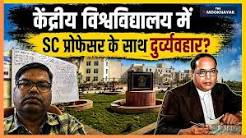
Professor States: ‘We Are Not for Sale’ Ajmer—A serious incident has come to light at the Central University of Rajasthan (CURaj), where Dr. Rakesh Kumar, an Associate Professor in the Department of Physics, was forcibly removed from his own office by the police and detained for approximately four hours. It is alleged that this action was taken without any FIR or formal complaint, solely because he had expressed his intention not to attend an event featuring the Deputy Chief Minister. Dr. Kumar has termed this a conspiracy to stifle his voice and has alleged that the university administration, in collusion with the police, subjected him to communal and discriminatory treatment. Professor Dr. Rakesh Kumar—who himself belongs to the Scheduled Caste (SC) community—was accused of conspiring to disrupt the Deputy Chief Minister’s event on April 15. However, according to his written complaint, the reality is quite different. The police allegedly barged into his office, snatched his mobile phone, threw aside his laptop bag, issued threats, and held him in custody within the university administration building for four hours. Is this the appropriate way to celebrate Ambedkar Jayanti, or is it a conspiracy to crush the voices of the SC/ST community? In a detailed written complaint, Dr. Rakesh Kumar has leveled serious allegations against ten individuals. These include Ajmer SP Harsh Vardhan Agarwal, Inspector Dayaram Chaudhary, Constables Ram Gopal, Bajrang Lal Morya, and Anil Kumar; as well as University Vice-Chancellor Prof. Anand Bhalerao, Registrar Amardeep Sharma, Dr. Pramod Kamble, Dr. Anand Kumar, and PRO Anuradha Mittal. According to the professor, on the morning of April 15 at 9:30 AM—just as he stepped off the university bus and reached his office—four police personnel barged in. They alleged that the professor was planning to disrupt the Deputy Chief Minister’s event. Dr. Rakesh Kumar immediately demanded to know which specific email contained such a statement. The police responded by saying that the email was written in English and that they were unable to read it. The professor showed his email, in which it was clearly stated: “I can’t be a part of a crowd, especially for a political gathering. Sorry!” In other words, he did not wish to be part of the crowd at a political event. Nevertheless, the police created a commotion inside his office. Inspector Dayaram Chaudhary threw aside the bag containing his expensive laptop, pulled up a chair to sit right next to him, and completely hemmed him in. He threatened to send him to jail. The professor responded that if he were indeed a criminal, they should go ahead and send him to jail—but only after first showing him a copy of the complaint or the FIR. Despite this, the police snatched away his mobile phone, denied him the opportunity to close his office door, and dragged him out in full view of the students and faculty members. Once he had been placed inside the police vehicle, Inspector Dayaram Chaudhary spoke with SP Harsh Vardhan Agarwal and Registrar Amardeep Sharma. Dr. Rakesh Kumar overheard Amardeep Sharma praising Dayaram Chaudhary. Subsequently, he was held in custody for four hours—until 1:30 PM—in a room located near the offices of the University’s Vice-Chancellor and Registrar. Upon regaining access to his mobile phone, he discovered that the media had already covered the incident. However, the University’s PRO, Anuradha Mittal, falsely told the media that the University had not sent any email to the police. Dr. Rakesh Kumar alleges that he had sent the email to only 34 individuals (32 SC/ST faculty members, the Vice-Chancellor, and the Registrar). Who, then, forwarded it to the police? He has accused Prof. Anand Bhalerao, Amardeep Sharma, Dr. Pramod Kamble, and Dr. Anand Kumar of conspiring against him. Is Raising Questions the Real Reason for the Harassment? Dr. Rakesh Kumar has long been raising questions regarding students, faculty members, and academic scandals within the university. He told *The Mooknayak* that Prof. Anand Bhalerao and Amardeep Sharma never respond to his emails. Amardeep Sharma’s emails frequently contain serious grammatical and typing errors—an issue about which Dr. Kumar has complained on multiple occasions. Recently, he raised the issue of academic scandals within the university. Prior to this, a professor in the Department of Biotechnology faced allegations of sexual harassment involving several female students (including those from SC/ST backgrounds). This matter dragged on for months, but Prof. Anand Bhalerao allegedly suppressed it because the accused faculty member was a close associate of his. Despite the allegations leveled against him, the said professor was appointed as the Dean of Student Welfare and, subsequently, as the Head of the Department. “As a symbolic gesture of protest, I refused to participate in this event. This stance was clearly articulated in my email correspondence. Consequently, the Vice-Chancellor and the Registrar conspired to stifle my voice and subject me to indirect harassment.” — Dr. Rakesh Kumar The email read: “The SC/ST community is not for sale.” On April 12, Dr. Anand Kumar, the Convener of the SC/ST Cell, sent an email stating that Ambedkar Jayanti would be celebrated on April 15, and that every SC/ST faculty member was expected to bring at least five students to the event attended by the Deputy Chief Minister. Dr. Rakesh Kumar argued that since Babasaheb was born on April 14, there was no justification for holding the commemorative event a day late. He replied to the email stating that the SC/ST community is not for sale. He questioned how they could expect him to mobilize students for a political event when they had failed to stand up for SC/ST female students in cases involving harassment allegations. He explicitly stated that he would not participate in a political event. Four other SC/ST faculty members voiced similar concerns, but neither Dr. Anand Kumar nor Dr. Pramod Kamble (the SC/ST Liaison Officer) offered any response. Dr. Rakesh Kumar alleges that this was, in fact, the real reason behind the harassment. Vice-Chancellor Prof. Anand Bhalerao and Registrar Amardeep Sharma attempted to stifle their voices by
“This Ritual Is Not for People Like You”: In Damoh, a Differently-Abled Dalit Groom Was Pulled Off His Horse During the ‘Rachwai’ Ceremony and Subjected to Such Treatment That…!

Wedding guests captured a video of this brutality, which has now gone viral on social media, becoming a source of shame for the entire society. Damoh—In Bijori Pathak village, located within the jurisdiction of the Hatta police station in Madhya Pradesh’s Damoh district, a heartbreaking and reprehensible incident has come to light. This event has exposed the deep fissures of caste-based discrimination that, despite official claims of social equality, remain a stark reality in rural India. Golu Ahirwar—a 23-year-old differently-abled Dalit groom—was subjected to such brutal physical assault during the pre-wedding ritual known as ‘Rachwai’ that it sent a wave of outrage across the entire state. The casteist thugs showed absolutely no mercy, not even sparing the groom due to his physical disability. The incident occurred on Tuesday evening as Golu, mounted on a mare, was passing through the village accompanied by his family and the wedding procession. At that moment, certain self-proclaimed strongmen of the village objected to the procession and launched an attack. According to the victim, individuals identified as Guddu Singh, Krishna, Hakam, and Paltu Lodhi not only forcibly dragged him off the mare but also beat him so severely with sticks and clubs that the festive atmosphere of the wedding was instantly transformed into one of mourning. The wedding guests managed to record this act of brutality on video; the footage has since gone viral on social media, bringing shame upon the entire society. Humiliating and inflicting violence upon an individual based on their caste during a significant social and cultural occasion like a wedding reflects the narrow-minded mentality prevalent in society; furthermore, subjecting a differently-abled person to such treatment is an act of extreme inhumanity. Recounting that heart-stopping moment, the victim’s sister, Manisha Ahirwar, stated that as the procession was moving forward, the accused deliberately blocked their path by parking their vehicle in the narrow lane. When they were requested to move the vehicle, they rushed forward aggressively, shoved Golu off the mare, and knocked him to the ground. He recounted that four individuals collectively attacked him, explicitly stating that a mare could not enter this lane, nor could a procession of “people like them” be taken out here. They further made it clear that this ritual was not meant for people of their kind. An even more shocking fact is that, despite the groom being differently-abled, the attackers showed absolutely no mercy. Golu’s mother, Vidya Ahirwar, stated that her son was dragged off the mare and brutally beaten; when her daughter attempted to intervene, she too was assaulted. Amidst the chaos of the attack, some of her daughter’s gold jewelry also went missing. Following the assault, the entire family and the wedding guests proceeded directly to the Hatta Police Station to seek justice. Confirming the incident, Station In-charge Sudhir Kumar Begi stated that during Golu Ahirwar’s *Rachwai* (pre-wedding procession), as the entourage approached the village’s shrine, Vishwanath Lodhi, Chintu Lodhi, and others raised objections to the groom riding a mare and launched an attack. The police have registered a case under relevant sections of the law, including the SC/ST Act. However, this is not the first instance of such an incident occurring in this village. Locals recall that on a previous occasion, when a *Dalit* groom’s procession was being taken out, members of the upper castes had raised objections; subsequently, social organizations had to intervene to somehow ensure the procession could proceed. The police have deployed security forces in the village, and following a medical examination, the groom’s family has departed for Budhi Semra village in the Chhatarpur district to complete the wedding rituals. Expressing deep concern over this entire episode, social activist and Bhim Army leader Sunil Astey stated that the incident of assault is extremely grave and condemnable. He asserted that this event constitutes not merely a criminal act, but a blatant violation of the rights to equality, dignity, and liberty enshrined in the Constitution. Asteya stated that humiliating an individual and resorting to violence against them on the basis of their caste during a social and cultural occasion—such as a wedding—reflects the narrow-minded mentality prevalent in society; such treatment is particularly inhumane when directed at a person with disabilities. He has urged the administration to ensure the swift arrest of all accused individuals, conduct an impartial investigation to initiate strict punitive action against the culprits, and take action under the National Security Act (NSA) against elements that seek to sow fear and unrest within society. Furthermore, he emphasized the need to formulate a “Special Protection Framework” to safeguard Dalit grooms and social gatherings, thereby preventing the recurrence of such incidents in the future. It is imperative that the rule of law be upheld and that every citizen be granted the freedom to exercise their social and cultural rights without any discrimination, as maintaining harmony, dignity, and equality within society is a shared responsibility of the administration, civil society, and all sections of the community. Geetha Sunil Pillai Courtesy: Hindi News
Babasaheb had said—’The educated have betrayed us’; the meeting between former CJI Gavai and Dhirendra Shastri has rubbed salt into the wounds of the Bahujan community!
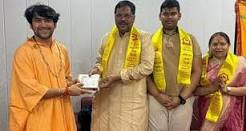
Users have termed this meeting an insult to the ideals of Babasaheb Ambedkar. Many users also recalled that historic statement by Babasaheb in which he had issued a warning regarding a ‘Hindu Rashtra’ (Hindu Nation). New Delhi—A recent meeting between former Supreme Court Chief Justice B.R. Gavai and Dhirendra Shastri, the head priest (Peethadhishwar) of Bageshwar Dham, has sparked a storm on social media. Following this meeting, outrage has erupted across the spectrum—from the Bahujan community to constitutionalists. On social media, users are condemning the former CJI for meeting with a staunch Hindu spiritual guru, despite being a Buddhist and an Ambedkarite himself. Many are also recalling Gavai’s infamous ‘shoe incident,’ when a lawyer attempted to throw a shoe at the former CJI right inside the courtroom. Recently, photographs of the meeting between former Chief Justice B.R. Gavai and Bageshwar Dham’s head priest, Dhirendra Shastri, went viral on social media. Dhirendra Shastri—popularly known as ‘Bageshwar Baba’—has openly advocated for the establishment of a ‘Hindu Rashtra’ and championed the *Manusmriti*. Consequently, when an individual who once held the country’s highest constitutional office went to meet him, it triggered widespread outrage within the Bahujan community. Public interest lawyer Prashant Bhushan posted on his X account: “I can’t believe my eyes! Former CJI Gavai with a hate-mongering charlatan! What kind of message is he sending to the judiciary? Shocking!” Dr. Babasaheb Ambedkar had issued a stern warning regarding a ‘Hindu Rashtra,’ describing it as the “greatest calamity” and a “terrible disaster” for the country. He asserted that such a state would pose a threat to democracy, liberty, equality, and fraternity, and must be prevented at all costs, as it could be detrimental to the interests of Dalits, women, and minorities. Users have characterized this meeting as an affront to the ideals and vision of Babasaheb Ambedkar. Many users also recalled that historic statement by Babasaheb in which he issued a warning regarding the concept of a ‘Hindu Rashtra’ (Hindu Nation). Journalist Nadeem Ahmed Sheikh stated, “The visit of former Chief Justice B.R. Gavai to Bageshwar Dham—and his meeting with Dhirendra Shastri—is a matter of concern. India is a pluralistic and constitutional nation; it does not seem appropriate for an individual holding a position of such dignity as a former Chief Justice to meet with a speaker who repeatedly advocates for a ‘Hindu Rashwar’ and makes scathing remarks against other religions. The judiciary must appear impartial and equal in its treatment of all; when a former Chief Justice openly visits such a platform, it raises the question: have constitutional values and secularism been confined merely to the pages of books? Faith is a personal matter, but the responsibilities of an individual who has held a constitutional office are not merely personal. India must proceed along the path of ‘Sabka Saath, Sabka Vikas’ (Support of All, Development for All), rather than engaging with platforms that espouse the language of division.” Journalist Shakeel Akhtar observes, “Until the Dalit community realizes who, from within their own ranks, is actually tightening their chains, outsiders like Rahul Gandhi will be unable to offer them much assistance. Bageshwar Dham—or Dhirendra Shastri—has faced numerous allegations of making anti-Dalit statements. His own brother, in fact, stands accused of threatening a Dalit family while brandishing a country-made pistol. In such a context, Justice Gavai’s visit to the site serves only to encourage ordinary Dalits to visit there as well. Perhaps that is precisely why Bageshwar Dham itself tweeted the news of this visit, complete with accompanying photographs.” One user wrote, “Bhim Jayanti has just passed—the very ‘Bhim’ who ensured that justice was delivered to us. And yet, thanks to that very justice—which enabled individuals to ascend to high offices—we now see such a person visiting a place steeped in superstition.” Journalist Avesh Tiwari writes, “This is former CJI B.R. Gavai, being honored by the number-one fraud, charlatan, and loudmouth, Dhirendra Shastri. I recall the time when a lawyer threw a shoe at him; back then, I completely shredded the haters who mocked him. When Gavai was elevated to the bench, it was hailed as a victory for Ambedkarism and a major achievement for Dalits. Looking at this photograph fills me with shame. I have no hesitation in stating that, to this day, Ambedkarites have failed to find honest leadership—an honest hero—for themselves. Of all those they have found, not a single one possesses a strong moral spine. This is a truly obscene image.” Ambedkarite activist Rohit Raj writes, “It was this very judge who, because of his Dalit identity, once had a shoe thrown at him. Seeing this saddens me—yes, it truly saddens me—that such a highly educated man, a former Chief Justice no less, would seek out a charlatan. What compulsion drives this? On one hand, you chant ‘Jai Bhim,’ yet on the other, you succumb to blind superstition. It is truly baffling.” One user wrote, “Babasaheb Ambedkar once said, ‘It is the educated people who have betrayed me.’ Former CJI Gavai belongs to that very category. To this day, he has not delivered a single verdict that truly upholds social justice.” **Why the Meeting with Shastri Recalled the ‘Shoe-Throwing Incident’** This meeting takes on even greater significance when we look back at the events that led to the infamous ‘shoe-throwing incident’ involving former CJI Gavai and lawyer Rakesh Kishore. The entire controversy revolved around an idol of Lord Vishnu located in Khajuraho. The head of an ancient, 7-foot-tall idol of Lord Vishnu within the temple premises had been damaged. A Public Interest Litigation (PIL) was filed in the Supreme Court demanding the restoration of this idol. On September 16, 2025, the then-CJI B.R. A bench presided over by Justice Gavai was hearing this matter; during the proceedings, Justice Gavai remarked to the petitioner: “You claim to be a devout devotee of Lord Vishnu. In that case, go now and pray directly to the Lord.” This comment was taken in great offense by advocate Rakesh Kishore. On the morning of October