
The Dalit settlement in Humayunpur North will receive a new water supply connection.

Due to the water crisis in Gorakhpur, General Manager Raghuvendra Kumar and Sub-Engineer Surya Sen Malla inspected the Dalit settlement. Local residents expressed their anger over the lack of water supply. Following this, the Jalkal Department initiated the interconnection of a new pipeline and assured the provision of water tankers as needed. Gorakhpur, Chief Correspondent. Finally, on the tenth day, Jalkal General Manager Raghuvendra Kumar, along with Sub-Engineer Surya Sen Malla, visited the Dalit settlement on Humayunpur North Main Road in Digvijaynagar Ward No. 16 to inspect the area. Local residents expressed their anger vehemently. Following the General Manager’s instructions, the Jalkal Department began the work of reconnecting the water supply pipelines in the Dalit settlements. For the past 10 days, residents of the slums on Humayunpur North Main Road have been facing a drinking water crisis in the scorching heat. Local residents have been complaining to Councilor Rishi Mohan Verma. Following the councilor’s complaint, the Jalkal department provided a water tanker, but the problem remained unresolved. A few days ago, following pressure from the councilor, the interconnection pipeline at the main intersection and the street corner was dug up and inspected, but no solution was found. Local residents and the councilor allege that water is not reaching people’s homes due to insufficient pressure. Finally, after councilor Rishi Mohan Verma and local residents applied pressure, Jalkal Manager Raghuvendra Kumar and Sub-Engineer Suryasen Mall arrived on the scene on Friday. They assured that the water supply pipeline to the Dalit settlement would be reconnected to the main pipeline. They directed the work to begin immediately. Until then, two water tankers will be provided regularly. Courtesy: Hindi News
Bike snatched in Ayodhya, ‘goonda tax’ demanded: Dalit harassment case registered on SSP’s instructions

A case of snatching a bike and demanding ‘goonda tax’ in exchange for its return has come to light in the Bikapur Kotwali area of Ayodhya district. On the orders of the Senior Superintendent of Police (SSP), the Kotwali police have registered a case against one named and several unidentified accused under serious sections, including Dalit harassment. Shiv Shankar, a resident of Vaijapur Shivgarh in Sultanpur district, stated in his complaint to the SSP that he belongs to the Scheduled Caste. His daughter, Rinku Kumari, is married to Rohit Kumar, a resident of Khajuri village in the Bikapur area. He had gifted his daughter a Bajaj Pulsar bike, financed by Bajaj Finance, as a wedding gift. According to Shiv Shankar, on March 30, 2026, his daughter and son-in-law had gone to the Community Health Center in Bikapur. During the incident, some people assaulted them, hurling casteist slurs at them, and snatched their bike. After reporting the incident to Dial 112, police arrived at the scene, apprehended the accused, and brought them to the police station. Police then stated that some installments on the bike were outstanding. The victim contacted the finance company and paid all outstanding installments on April 9, 2026, and obtained a NOC (No Objection Certificate) and a No-Dues Certificate. The company clarified that there were no outstanding dues on the vehicle and it could be returned. Despite this, it is alleged that Romesh Patel (address unknown), the bike snatcher, is demanding a “goonda tax” in exchange for returning the vehicle. The victim submitted a petition to the Bikapur police station, requesting the return of the bike, but the police initially refused to register a report. Action was taken after the matter reached the SSP. Inspector-in-Charge Amarendra Bahadur Singh stated that a case has been registered on the SSP’s instructions, and legal action is being taken. Kaushal Kumar Shukla | Bikapur (Ayodhya), Courtesy: Hindi News
Maharashtra | Quotas within quota
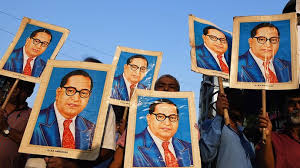
The volatile debate over SC sub-categorisation sharpens in the state. In special focus is the Buddhist Dalit cohort Before caste quotas return to the national headlines with the Census, Maharashtra is offering a sneak preview of the wars that lie ahead—with a proposed quota within a quota for Dalits. The siege is on the very birthplace of reservations in India, centred around Buddhist Dalits, the erstwhile Mahars, who exited Hinduism with Dr Babasaheb Ambedkar in 1956. So the chief question is on uneven development within Dalit communities, but a volatile subclause has been tagged: religion. The Scheduled Castes have a 13 per cent quota. In 2011, they numbered around 13.2 million out of Maharashtra’s 112.3 million population. Hindu Dalit bodies allege Buddhist Dalits, the largest sub-bloc at about 60 per cent, secure most of the benefits; the latter refute this narrative. ‘HINDU VS BUDDHIST’ This old debate will now be addressed within a formal process. In March, a one-man committee under former Patna High Court judge Anant Manohar Badar submitted its report on sub-categorisation of SC reservations. The state has appointed another committee, under chief secretary Rajesh Aggarwal, to invite suggestions and objections and conduct hearings—though the report is not public yet. A total of 59 castes are in the state’s SC list. Despite a rise in reach, the Sangh parivar has struggled to shed its Brahminical image. With disruptions in the Dalit sphere like Bhima-Koregaon behind it, Sangh affiliates have countered with inroads into Hindu Dalit groups like the Matangs and Charmakars, who form the bulk of Hindu Dalits. New ring-fencing of categories, they say, will protect their interests. This has a precedent in the state’s 30 per cent OBC quota: 11 per cent within that is set aside for Vimukta Jati (VJ) and Nomadic Tribes (NTs); the latter spectrum is further subdivided into denotified tribes or VJ (3 per cent), NT B-category (2.5 per cent), C-category (Dhangars, 3.5 per cent) and D-category (Vanjaris, 2 per cent). RESERVATIONS OVER IT Such a prospect for Dalits splits even the Mahayuti into a spectrum of opinions. Some BJP leaders, like MLC Amit Gorkhe, seek sub-quotas; others, like former BJP Rajya Sabha MP Amar Sable and ex-minister and NCP MLA Rajkumar Badole, well, have reservations. Sable demands a “fact-finding committee” to prove uneven benefits. Badole questions the haste around the Badar panel. “The new Census will yield contemporary data on the economic, educational, and political progress made by various SC casteswhy not first wait for its results,” he asks. Badole also puts his finger on the key political point: any quota within a quota would divide the sense of consolidation among Dalits, whom he calls a homogenous class insofar as having been equal victims of untouchability. “A Presidential order is needed to include a caste in the SC category. How can it be left to the discretion of states to go in for sub-categorisation?” he asks. Opposition leaders like Dr Amb-edkar’s grandson Prakash and former Congress minister Nitin Raut, too, have slammed the move. Raut questions the empirical and technical basis of the exercise, and asks how political reservations would be split. Five Lok Sabha seats and 29 assembly seats in Maharashtra are reserved for SCs. Vikram Gaikwad of the Matang Samaj Sangh, a face of the second largest Dalit group, insists quotas presently pass over “the deprived sections”. Splitting them into four sub-categories will ensure all castes will benefit, instead of a select few, goes the line. The government says the process is on, though social justice minister Sanjay Shirsat admits the Badar report needs to be made public for the public to file their objections and suggestions. Outside the policymaking sphere, the move promises to run into the main current of Dalit empowerment politics. Sociologist P.G. Jogdand, former dean, Faculty of Arts, University of Mumbai, says sub-categorisation is not in line with the constitutional scheme. “This is part of divide-and-rule politics,” he alleges. Refuting the contention that Buddhist Dalits had “cornered” quota benefits, he says the community is simply more numerous and was also the first to take to education and hence enabled to avail the opportunities. The counter is six decades old. In 1965, the B.N. Lokur committee had noted: “It has been in evidence for some time now that a lion’s share [of quota benefits] is appropriated by numerically larger and politically well-organised communities. The smaller and more backward communities have tended to get lost, though more deserving of special aid.” That was the logic behind the Supreme Court’s August 2024 permission for state-level sub-quotas. Dhaval S. Kulkarni Courtesy : India Today Note: This news is originally published on https:/indiatoday.com/bha and is used purely for non-profit/non-commercial purposes, especially human rights
Disabled Dalit groom assaulted for riding horse

The police have so far arrested four persons in connection with the incident. n a shocking incident, a disabled Dalit groom riding on a horse during his wedding was forcibly pulled off the horse, abused with racial slurs and thrashed by some the upper caste men in a village in the Damoh district of Madhya Pradesh. According to Damoh SP Shrutkirti Somvanshi, all the four arrested persons have been booked under the SC/ST Act and were produced in a court on Friday afternoon, from where they were sent to jail. The SP said that the police have also written to the Damoh Collector to take stringent action against the accused under the National Security ACT (NSA). The incident occurred two days ago in village Bijori Pathak when the disabled Dalit groom, Golu Ahirwar, was riding a horse during his wedding ceremony. He was manhandled and hurled with casteist abuses before being beaten up. Some of his family members, including women and elderly, were also assaulted. Courtesy : The Statesman Note: This news is originally published on https:/thestatesman.com/bha and is used purely for non-profit/non-commercial purposes, especially human rights
Dalit Pastors Rally for SC Status
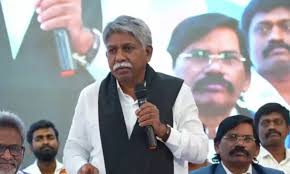
More than a 1,000 delegates from Andhra Pradesh and Telangana participated HYDERABAD: Dalit pastors, leaders of Christian organisations, and community representatives held a meeting at the YMCA auditorium to discuss strategies for securing Scheduled Caste (SC) status for Dalit Christians. Manda Krishna Madiga, founder‑president of the Madiga Reservation Porata Samithi speaking at the protest urged unity in the struggle. More than a 1,000 delegates from Andhra Pradesh and Telangana participated. Pastors and leaders delivered messages on the role Dalit Christians must play in achieving SC recognition. Gaddapati Vijay Raju, national president of the All India Christian Federation, gave an introduction on the issue, while Madiga expressed his support and called for collective action. Courtesy : Deccan Chronicle Note: This news is originally published on https:/deccanchronicle.com/bha and is used purely for non-profit/non-commercial purposes, especially human rights
South First impact: TN SC/ST Commission seeks explanation over ‘Paracheri’ tag in Virudhunagar village
The move follows a boycott call by Dalit residents of the village for the 2026 Assembly elections. They said the caste-based name continues to humiliate them. Synopsis: The Tamil Nadu Adi Dravidar and Tribal Welfare Commission has sought an explanation from the Virudhunagar district administration over the continued use of the caste-linked term “Paracheri” in official records of Vadakku Achamthavilthan village. The Commission said this violates a 2025 government order mandating the removal of caste-based names, and has asked officials to clarify the delay and action taken within a week. Acting on a South First ground report that shows the continued use of a caste-linked village name, the Tamil Nadu Adi Dravidar and Tribal Welfare Commission has sought an explanation from the Virudhunagar district administration. Commission chairman Imayam (V Annamalai) has written to the District Election Officer (District Collector), asking why the term “Paracheri” still appears in official records linked to Vadakku Achamthavilthan village in the reserved Srivilliputhur Assembly constituency. The move follows a boycott call by Dalit residents of the village for the 2026 Assembly elections. They said the caste-based name continues to humiliate them. Commission flags violation of government order In a communication dated 24 April, 2026, the Commission said the Tamil Nadu government had already issued clear directions to remove caste-based names from public records. Citing Government Order (Ms) No 313 (Municipal Administration and Water Supply Department, October 6, 2025), it said the state had instructed all local bodies and revenue authorities to remove or rename caste-based identifiers in habitations, streets, roads, water bodies and revenue villages. Despite this, the Commission said: The locality “Vadakku Achamthavilthan” (Ward No. 12, Part No. 280) in the Srivilliputhur constituency is still recorded as “Paracheri”. The same term remains in the voter list. Media reports and online circulation have brought wider attention to the issue. It added that residents boycotted the April 23, 2026 Assembly elections because the name was not changed. The Commission has asked the District Election Officer to submit a detailed explanation within one week, seeking: Reasons the caste-based name was not removed despite the government order. Steps taken, if any, to implement the renaming. Details of action against officials responsible for the delay or non-compliance. The letter also cites communications from the Municipal Administration, Rural Development, and the Revenue Administration and Disaster Management Commissionerate, showing the issue has been under consideration across departments since 2025. A name that marks caste, not place In the northern part of Achamthavilthan revenue village, more than 60 families from the Paraiyar community live in a segregated cluster. Over time, the locality came to be called “Paracheri”, a name residents say is now used both socially and in official records. It appears in voter lists, Aadhaar, PAN and bank records, while land records still carry the original village name. This split keeps the caste label in daily use. Residents say this has fixed caste identity in everyday life. “Wherever we go, the moment we mention our village name, people identify our caste,” said A. Abi, a PhD scholar from the village. For more than 15 years, residents have petitioned authorities—from the Tahsildar to the Chief Minister—to rename the locality “North Achamthavilthan”. S.V. Kumar, who leads the effort, said the effect goes beyond administrative inconvenience. “When we say our village name, others immediately correct it to ‘Paraicheri’. That moment is humiliating,” he said. RTI responses show the renaming proposal has moved through multiple levels of administration: Recommended by the Srivilliputhur RDO in March 2023 Forwarded by the district collector in July 2025 Pending with the Commissionerate of Revenue Administration and Disaster Management Election boycott Frustrated by delays, residents announced a boycott of the 2026 Assembly elections. The village has 113 voters. Election officials who met them on 4 April urged them to participate, saying action could follow after the elections. Residents refused. But on 23 April, most of them voted, hoping for change. For North Achamthavilthan residents, the demand is simple: to live without a name that marks them by caste. “No matter how far we progress, the moment we say our village name, people’s perception changes,” Abi said. Kumar added, “If you can say your village name without hesitation and I cannot, that itself shows the difference in dignity. That is why we are fighting.” Subash Chandra Bose Courtesy : South First Note: This news is originally published on https:/southfirst.com/bha and is used purely for non-profit/non-commercial purposes, especially human rights
From Rights To Red Tape: India’s Transgender Law Amendment

The move narrows legal recognition and removes self-identification, leaving community members, shelter homes and healthcare providers in uncertainty New Delhi: “Only I knew what I felt, trapped in a body I did not recognise or feel at home in,” says Ayaan, a 24-year-old transman. In 2016, his parents took him to consult a doctor in Uttar Pradesh’s Muzaffarnagar, who tried to counsel his family of his need for support, hormone-replacement therapy (HRT), and eventually surgery. For the first time, Ayaan felt heard. His family did not take the advice; they said he was mentally ill. For years, his attempts to assert his identity were met with verbal, physical and mental violence. In December 2025, he left home with nothing but a bag and an address to a Garima Greh, a shelter home for trans persons, in Delhi. There, he found a community, is being counselled, and getting HRT at the All India Institute of Medical Sciences. He does not yet have a transgender identity card. Stories of familial violence and opposition to assertion of trans identity are commonplace, and leave young persons without shelter, support and a sense of security. But now, with the enactment of the Transgender Persons (Protection of Rights) Amendment Act, 2026, this assertion is further complicated. The Supreme Court in 2014 had recognised transgender persons as a ‘third gender’, affirming their fundamental rights under the Constitution. The judgment in a case between the government of India and the National Legal Services Authority (NALSA)—known popularly as the NALSA case—gave transgender people the right to “self-identification” as male, female or third-gender and held that they would be granted reservations in educational institutions as well as public employment. India was one of the few South Asian countries to have led an active struggle towards equal rights to transgender persons and communities. Nepal, for instance, has maintained self-identification since 2007, reaffirmed as recently as 2024. The 2026 amendment reverses this, making state and medical approval a prerequisite for legal identity—a shift critics describe as a legislative U-turn. “What we are moving towards is a very narrow understanding of transness, which is sort of rooted in biology and not what it was stated to be in the NALSA judgment,” says Raghavi Shukla, a transwoman and an advocate at the Supreme Court. The definitional problem The amendment removes from the definition trans-man, trans-woman and gender queer, retrospectively applying this exclusion by stating that the definition “shall not include, nor shall ever have been so included, persons with different sexual orientations and self-perceived sexual identities”. It includes specifically persons with socio-cultural identities as kinner, hijra, aravani and jogta, or eunuch, or a person with intersex variations, and persons/children who were, with or without consent, “compelled to assume…a transgender identity” by surgical, chemical or hormonal procedure. This last provision has created other fears and insecurities, as we explain below. Further, the new amendment makes legal recognition subject to a medical board’s recommendation, before an approval from the district magistrate, adding scrutiny and bureaucracy. Several members of the National Council of Transgender Persons resigned after the amendment was passed in March 2026, and parts of the country saw protests against it. The amendment is “clearly unconstitutional” and “a breach of rights that have been recognised by court and have been traced within the framework of the Constitution”, such as the right to privacy, dignity, autonomy and self-determination, Shukla added. Even before the amendment, it was not easy to get a transgender identity card—mandatory to access government welfare schemes. The 2011 Census estimates that India had about 490,000 transgender persons. Activists say this in itself is an underestimate. Yet, government data show that about 33,000 identity cards have been issued so far, which is 7% of the estimated population. “By dismantling the principle of self identification, the Act fundamentally clashes with the judicial precedents established over the last decade,” says Katyayani Vishnupriya, female of trans experience from intersex variation, and an advocate practising at the Chhattisgarh high court. IndiaSpend reached out to the social justice ministry for comment on the new amendment. We will update this story when we receive a response. Whose welfare is it anyway? “We are stuck in uncertainty,” says Rudrani Chhetri, director of a Garima Greh in Delhi. “Because of the way this law has been framed, we do not know what will be the government’s interpretation, and how we can interpret it according to the Constitution. “Maybe under our own interpretation we can continue some services, but it is possible that later it will be challenged,” she says. “Secondly, those who are already in the Garima Greh are very hassled and have already started leaving, gradually. They have realised that suddenly things are changing. We are trying to give them courage and tell them to stay put and keep up the work.” Chhetri questions the hurried enactment of the amendment, leaving all schemes including shelter homes in uncertainty. A 2018 study by the National Human Rights Commission found that 96% of transgender persons were denied jobs despite meeting eligibility criteria. Even today, only a small proportion are part of the formal workforce, with a large number pushed into informal sectors such as begging, sex work, and daily wage labour. Under the 2019 Act, the government had promised a framework of recognition and welfare, including the right to self-perceived gender identity, protection from discrimination, and access to schemes for healthcare, housing, education, and employment. Even those promises remained unrealised. Between 2021 and 2024, only about 11% of the allocated funds were spent, as IndiaSpend reported in April 2025. Government initiatives such as SMILE have attempted to address this gap through skilling and rehabilitation. Under this scheme, Garima Greh shelter homes were set up in 2020 to provide housing and support to transgender persons. However, there are only 18 Garima Grehs in the country reflecting the narrow reach of institutional support. With the new Act, residents and staff members at Garima Greh also find themselves in an information black hole. “The work
How Ramgarh Is Changing The Story Of Transgender Communities In Jharkhand

Ramgarh in Jharkhand is emerging as a model for transgender inclusion, offering jobs, healthcare, and basic facilities. Administrative initiatives such as identity cards, dedicated OPD, and employment opportunities are enabling dignity and independence, though gaps remain. At 24, Himanshi is pursuing an MBA through distance learning, and quietly redefining what it means to be seen. She counts herself among what she calls the “0.001 per cent” of people whose families have accepted and supported them as transgender. Today, however, her identity reaches far beyond that label. She is also a government employee, and she says so with unmistakable pride. Since January, Himanshi has been working as an office attendant at the Deputy Commissioner’s office in Ramgarh district, around 50 kilometres from Ranchi. For her, the role represents more than employment; it is recognition long denied to many like her. It wasn’t the same for 23-year-old Samira, also known as Bodra. A graduate, but her family did not accept her transgender identity. She was rejected both at home and in society. Yet today, she too is a government employee. As a ward in-charge at the Ramgarh Municipal Corporation, Samira lives in a relatively normal environment—one where her transgender identity does not invite discrimination. Then there is Alia, 28, whose childhood was marked by trauma. Also a graduate, she says her struggles began within the walls of her own home. At just 11, she was sexually abused by a cousin. By the time she reached Class 10, her family had thrown her out. Today, Alia serves as support staff at Ramgarh Sadar Hospital — another transgender woman who has carved a space for herself. All three come from West Singhbhum and East Singhbhum districts of Jharkhand, regions known to have a significant transgender population. Each carry their own story of pain and social stigma. Himanshi reflects on the contradictions. “My family never rejected my identity, but I have endured society’s rejection and hostility all my life. I realised early in school that I had feminine traits. As I began expressing myself openly, the bullying, both in school and outside, became severe. People called me names. I was scared to even tell my family or teachers why this was happening to me. I was inappropriately touched and sexually abused several times, both in school and in society.” For her, societal change must begin with children. Schools, she believes, must sensitise and educate students about transgender identities and teach them to treat transgender individuals with dignity. According to her, society’s mindset remains deeply toxic and urgently needs transformation. Samira has been away from her home for five years. Her mother was happy to hear about her job, but Samira cannot return home to share that happiness. transgender government jobs IndiaIn recent years, Ramgarh has emerged as a district making meaningful strides towards transgender inclusion. Photo: Asghar Khan She says, “I was tortured at home. My father passed away early, and my mother didn’t want me to leave, but my brother and relatives harassed me constantly because of my identity. I tried many times to live like a boy, but I couldn’t. Gradually, my family stopped talking to me altogether. I was rejected everywhere—at home and outside. No one tried to understand our emotions. It’s not like we choose to become this way. Why is it so hard for people to accept that we are also part of this society?” Alia’s experience echoes a similar pattern of violence and rejection. She recounts, “When I was 11, the first person who noticed my feminine traits—my cousin—was the one who abused me. He told me not to tell anyone. I didn’t even understand what had happened. At home, everyone blamed me. My mother supported me, but after she passed away, the pressure from society forced my father to ask me to leave. Ironically, when my father fell ill later, none of those relatives helped him. I did whatever I could. If my parents were alive today, they would have been proud of my job.” These three women were employed through outsourcing in government offices only a few months ago. Alongside their day jobs, they also run a café called Trans Café. In recent years, Ramgarh has emerged as a district making meaningful strides towards transgender inclusion. After Ranchi, it is the second district in Jharkhand to build transgender-friendly toilets, with four such facilities across the city. It may also be the first district in India to establish a dedicated OPD for transgender people at the Sadar Hospital. This progress was driven by the efforts of former Deputy Commissioner of Ramgarh, Faiz Aq Ahmed Mumtaz, who took a personal interest in understanding and addressing the community’s challenges. According to the three women, the facilities introduced in Ramgarh under his leadership are unmatched anywhere else in Jharkhand. They hope this “Ramgarh model” is replicated across the state. Mumtaz explains: “A group of transgender people came to me asking for identity cards. But their problems went far beyond that. Many had no ration cards or pension cards. There were no toilets for them, and doctors often refused to examine them. Our first step was to secure their identity cards and link them to government schemes. At Sadar Hospital, we started a dedicated OPD for transgender people every Saturday afternoon so doctors could examine them properly. We also built separate toilets so they would not face difficulties in public places.” transgender identity cards IndiaUtthaan, an organisation working on transgender rights, says that the transgender population in Jharkhand is close to 30,000, yet very few facilities exist for them. Photo: Asghar Khan He says the efforts to connect community with employment and help them start a café were meant to strengthen their independence so that they would not have to depend on begging, singing, or giving ceremonial blessings for survival. It was to help them enter regular workplaces, interact with people, and become part of everyday social life. Now, there is growing demand to replicate the Ramgarh model across Jharkhand. Utthaan,
Rahul Gandhi says TMC graft & polarisation created way for BJP to enter West Bengal
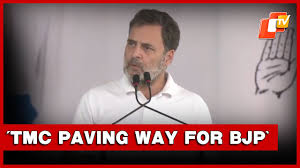
NEW DELHI: As elections in West Bengal enter the final lap, Congress neta Rahul Gandhi attacked his INDIA bloc partner, CM and Trinamool supremo Mamata Banerjee, alleging that polarisation and corruption have created a way for BJP to enter the state. “If Mamata ji had run a clean govt, and had she not polarised West Bengal, there would have been no way for BJP to make inroads into Bengal,” Rahul said on X, appealing to people to vote for Congress. “In this battle of ideologies, only Congress can defeat BJP,” he said. “BJP steals elections. SIR is their way to steal elections. There is a direct fight between Congress and BJP’s ideologies,” the leader of the opposition in Lok Sabha said in a video message. “BJP works against West Bengal’s culture, history, and Bengali language. BJP netas say ‘one nation, one language, one religion’. In this country there are many languages, religions, and ideologies. While we are trying to protect the Constitution, BJP is trying to destroy it,” he said. Courtesy : TOI Note: This news is originally published on https:/timesofindia.com/bha and is used purely for non-profit/non-commercial purposes, especially human rights
‘Bewildering contradictions’: Kiren Rijiju slams Rahul Gandhi over ‘BJP will win West Bengal remarks’

NEW DELHI: Union minister Kiren Rijiju on Friday criticised Rahul Gandhi over his comments on West Bengal politics, accusing the Congress leader of taking contradictory positions on the upcoming state election. Reacting to Rahul Gandhi’s remarks on social media, Rijiju wrote on X: “Bewildering…. on the one hand Rahul Gandhi Ji is saying only Congress can defeat BJP in West Bengal and on the other hand he’s saying, due to TMC’s polarizing politics, BJP will win West Bengal election!” The criticism came after Rahul Gandhi targeted Mamata Banerjee and her All India Trinamool Congress, despite both parties being part of the INDIA opposition bloc. In a post on X, Rahul said: “If Mamata ji had run a clean govt, and had she not polarised West Bengal, there would have been no way for BJP to make inroads into Bengal.” Appealing to voters to support Congress, he added: “In this battle of ideologies, only Congress can defeat BJP.” Rahul Gandhi also accused the Bharatiya Janata Party of undermining democratic institutions. “BJP steals elections. SIR is their way to steal elections. There is a direct fight between Congress and BJP’s ideologies,” he said in a video message. He further alleged that the BJP was working against Bengal’s identity and diversity. “BJP works against West Bengal’s culture, history, and Bengali language. BJP netas say ‘one nation, one language, one religion’. In this country there are many languages, religions, and ideologies. While we are trying to protect the Constitution, BJP is trying to destroy it,” Rahul said. The exchange highlights growing tensions within the INDIA bloc as campaigning intensifies in West Bengal, where Congress and the Trinamool Congress remain political rivals despite being part of a broader anti-BJP alliance nationally. Courtesy : TOI Note: This news is originally published on https:/timesofindia.com/bha and is used purely for non-profit/non-commercial purposes, especially human rights