
Three workers cleaning a septic tank in Delhi died tragically after inhaling toxic gas; three others, including the factory owner, have been arrested.

Three workers died from toxic gas while cleaning a septic tank in Mundka, Delhi; police arrested the factory owner and contractor, raising serious questions about administrative negligence. New Delhi: A tragic and disturbing incident occurred on Friday in the Mundka Industrial Area of the national capital, Delhi. Three workers who had entered a septic tank at a printing press factory lost their lives while cleaning it. Police took swift action and arrested three people, including the factory owner and contractor. Initial police investigations revealed that the three workers entered the tank one after the other and died after inhaling the suffocating and toxic gases present within. According to an official, at 12:03 pm, the police, Delhi Fire Service, and Delhi Disaster Management Authority (DDMA) received an emergency call about people trapped inside the factory in Mundka. The deceased have been identified as 38-year-old Arun, 32-year-old Sandeep, and 42-year-old Chand. All three were residents of the Indira Lake area of Sultanpuri. Following the rescue operation, police pulled out the bodies from the tank and sent them to Sanjay Gandhi Memorial Hospital for post-mortem to confirm the exact cause of death. Outer Delhi Deputy Commissioner of Police (DCP) Vikram Singh, giving details of the case, said that factory owner Suraj Marwah had hired a contractor named Neeraj, a resident of Nangloi, to clean the septic tank. Police have arrested Suraj Marwah, contractor Neeraj, and factory employee Jayant. A case has been registered against them under sections 106 (causing death by negligence) and 3(5) (common intention) of the Indian Penal Code (IPC). They have also been charged under Section 9 of the Prohibition of Employment as Manual Scavengers and their Rehabilitation Act, 2013, and the stringent provisions of Section 3(1)(j) of the SC/ST (Prevention of Atrocities) Act, 1989. Senior government officials say a detailed report will be prepared to ascertain the exact sequence of events and the cause of death. Officials also clarified that the Delhi State Industrial and Infrastructure Development Corporation (DSIIDC) is primarily responsible for cleaning septic tanks in the city’s industrial areas. Following this heartbreaking incident, Bezwada Wilson, national convener of the Safai Karmachari Andolan, met with the families of the victims. He expressed concern that there are approximately 30,000 sanitation workers in Delhi, of whom 10,000 work solely as septic and sewer tank cleaners. He clarified that no worker should be asked to enter the tank, even with safety equipment, and that the work should be done entirely through mechanized methods. Meanwhile, Sucheta Dey, Vice President of the All India Central Council of Trade Unions (AICCTU), claimed that even government departments are sometimes seen employing manual scavengers without any safety gear. The incident has also drawn political backlash. Delhi Congress President Devendra Yadav has termed the incident as a result of gross administrative negligence. He has demanded a thorough investigation into the matter and adequate compensation for the destitute families of the deceased. This is not the first case of deaths during sewer cleaning in the capital. Similar deaths were reported last year in Ashok Vihar, New Friends Colony, and Narela. According to official data shared by the National Commission for Safai Karamcharis (NCSK) in the Lok Sabha in March this year, 62 deaths have occurred in Delhi since 2017 due to hazardous sewer and septic tank cleaning. The Commission’s data also shows that Delhi was one of the first cities to ban the practice, yet among 22 states and two union territories, Delhi recorded the highest number of complaints related to manual scavenging in 2025, at 140. Rajan Chaudhary Courtesy: Hindi News
‘Ban the RSS’: Dalit organizations enraged by BJP leaders’ comments on Priyank Kharge, sparking violent protests in Karnataka

Dalit organizations, enraged by BJP leaders’ comments on Priyank Kharge, staged a violent protest in Kalaburagi, demanding a ban on the RSS and the removal of Mohan Bhagwat’s security. Karnataka: Kalaburagi witnessed massive protests on Thursday. The Dalit Sanghatanegala Samanvaya Samiti (DSS) and several other Dalit organizations staged a strong protest outside the Deputy Commissioner’s office. The protest was directed at recent comments made by Bharatiya Janata Party (BJP) leaders against state minister Priyank Kharge. Priyanka Kharge had raised some questions about the status and functioning of the Rashtriya Swayamsevak Sangh (RSS). The protesters say that BJP leaders should have responded rationally to the issues raised by Kharge. Instead, they launched personal attacks on the minister and are threatening him. The protesters categorically stated that the statements made against Kharge by BJP MP Ramesh Jigajinagi and former ministers K.S. Eshwarappa and C.T. Ravi were highly objectionable. They believed these leaders’ statements were completely insulting and intimidating. Dalit organizations have appealed to the state government to take this entire incident seriously. They stated that democratic values and freedom of expression must be protected at all costs. Recently, Kharge wrote a letter to RSS chief Mohan Bhagwat, seeking clarification regarding the organization’s registration and its stated objectives. The protesters defended this move, stating that these questions were being asked in the interest of public accountability and transparency, and not to target any particular individual. These organizations have called on the state government and the Congress party to extend their full support to Priyank Kharge. They reiterated their demand for a thorough investigation into the functioning of the RSS, stating that there is a severe lack of transparency in its structure. They also demanded that the organization be registered under a proper regulatory framework. Protesters formed a human chain outside the Deputy Commissioner’s office in Kalaburagi to register their protest. They raised slogans, expressing solidarity with Kharge and demanding the registration of the RSS. Participants held placards bearing strong messages, including “Ban the RSS,” “The RSS must be registered,” “Withdraw RSS chief Mohan Bhagwat’s Z-plus security,” and “We stand with Priyank Kharge.” Following the protest, the organizations submitted a memorandum addressed to Chief Minister D.K. Shivakumar through the Deputy Commissioner. The memorandum urged the state government to examine the legal status of the RSS and take appropriate steps to uphold constitutional values and social harmony. The entire protest was led by social activists Devendra Sinnur, Mallappa Hosamani, Renuka Singhe, Dinesh Doddamani, and several other members of various organizations. Rajan Chaudhary Courtesy: Hindi News
Dalit activists raise hostel shortage issue

Mangaluru: Dalit activists on Saturday expressed concern over the shortage of hostels for SC/ST students, saying the lack of accommodation has been causing hardship to students from remote areas who come to the city to pursue higher education. At the monthly SC/ST grievances redressal meeting held at the city police commissioner’s office, Dalit activist SP Anand urged the authorities to complete the hostel admission process before schools and colleges reopen. In response to the issue, an official from the social welfare department said a proposal had been submitted to the govt seeking sanction for two separate hostels for boys and girls. Anand said that govt guidelines permit the department to operate hostels in rented buildings when there is a shortage of accommodation and urged the authorities to invoke the provision until permanent facilities are created. The meeting also discussed a range of traffic, civic and law-and-order issues. DCP (Law and Order) Mithun H.N. chaired the meeting. Courtesy : TOI Note: This news is originally published on https:/timesofindia.com/bha and is used purely for non-profit/non-commercial purposes, especially human rights
Father-son duo held for torching Dalit family’s house in Pilibhit

Pilibhit: A father-son duo was arrested for allegedly setting the house of a Dalit family on fire in Piparia Mandan village under Barkhera police station limits early on Saturday. Pilibhit SP Sukirti Madhav told TOI that the accused suspected the family of abducting a 20-year-old woman from their household. The woman went missing under mysterious circumstances on Thursday evening, and police registered a missing person report the next day. Complainant Nanhe Lal (35) said he had gone to Etah district on June 26 to drop off a group of labourers when the incident took place. He alleged that Akash Pandey and his father, Bhannu Pandey, reached his house, hurled casteist slurs at his family, and set the thatched front portion of the house on fire. His wife and children escaped unhurt, but the grain and firewood stored in the house were allegedly reduced to ashes, while the main door of the pucca structure was damaged. “As locals gathered at the spot to help, the accused fled after threatening to kill the entire family,” Lal alleged. He added that the duo had accused him of abducting Bhannu Pandey’s daughter-in-law. SHO Satyandra Kumar said that a case was registered against both the accused under relevant sections of the BNS and the SC/ST Act. They were arrested and sent to jail. Additional police personnel have been deployed in the village to prevent any untoward incident. Courtesy : TOI Note: This news is originally published on https:/timesofindia.com/bha and is used purely for non-profit/non-commercial purposes, especially human rights
LoP alleges manual scavenging in Dalit Dy CM Parameshwara’s home dist
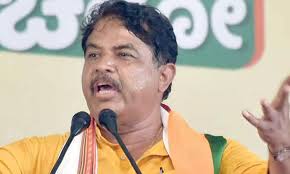
Bengaluru: Leader of the Opposition in the Karnataka Assembly R Ashoka on Saturday alleged that Dalits continued to face “grave injustices” under the Congress government, citing an example of “manual scavenging” in Deputy Chief Minister G Parameshwara’s home district of Tumakuru. The BJP leader alleged that there was diversion of welfare funds meant for Scheduled Castes and Scheduled Tribes and rising atrocities against them. Ashoka posted an undated video on his ‘X’ handle on Saturday where people in bare-minimum clothes were seen lifting and loading filth in a tractor on the Karnataka Electricity Board Engineers’ Association’s building premises. According to him, Dalits were still being forced into manual scavenging even in the home district of Parameshwara, a Dalit himself, and the government has failed to safeguard their rights. “In the very home district of Parameshwara, where slogans were once raised demanding a ‘Dalit Chief Minister’, the downtrodden communities are still being forced into the pitiable condition of manually carrying human excreta. Under the government led by Chief Minister D K Shivakumar, the rights of Dalits have absolutely no value,” he said. Alleging that four workers were made to manually clean a septic tank at the premises of the KEB Engineers’ Association, Ashoka claimed that the authorities had failed to act despite a similar incident involving a child labourer at the Koratagere bus stand. “Even after a child labourer was recently made to perform similar work at the Koratagere bus stand, neither the district administration nor the government has woken up to the issue,” he said. Ashoka further alleged that the Congress government had misused Rs 53,059.45 crore from the SCSP-TSP funds over the last three years for guarantee schemes. He also accused it of “reducing allocations” to corporations meant for Scheduled Castes and Scheduled Tribes. He also alleged a rise in atrocities against SCs and STs, with 2,277 cases recorded in 2025, and referred to the reported discovery of maggots in food served at the Jai Bhim Hostel in Chikkaballapur as another example of the government’s failure. Accusing the ruling party of “betraying the interests of marginalised communities”, Ashoka said, “The Congress, which loudly claims to stand for the welfare of Scheduled Castes and Scheduled Tribes, is in reality taking steps that undermine their interests.” He further charged that “the party has earned the ignominy of turning the state into a ‘model state’ for atrocities against Dalits,” and said Home Minister Priyank Kharge, who is also a Dalit, “has lost the moral authority to invoke the Constitution and the name of Babasaheb Ambedkar”. Courtesy : THI Note: This news is originally published on https:/thehansindia.com/bha and is used purely for non-profit/non-commercial purposes, especially human rights
lawyer Surendra Gadling completed eight years in prison : Bhima Koregaon
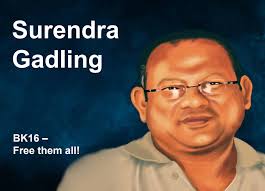
On June 6, lawyer Surendra Gadling completed eight years in prison. Arrested on this day in 2018, he was sent to the Yerawada prison in Pune, and then, in February 2020, he and other prisoners, accused in what has come to be known as the Bhima Koregaon case, were transferred to Taloja jail following the handing over of the case to the NIA. Out of the 16 accused in this case, he is the sole one still to be released. Whilst he was given bail in the Bhima Koregaon case by the Bombay High Court, he is awaiting the outcome of the plea in the Supreme Court for what has come to be known as the Surajgarh arson case. इरोनिकाल्ली, he has been held under the draconian Unlawful Activities Prevention Act (UAPA for almost a decade, considering that he is a foremost lawyer in it and other anti terror laws. He is someone whose expertise in this very field has helped secure the release of thousands of Dalits and Adivasis unfairly imprisoned as alleged Maoists. During his three decade long career before his arrest, he came to be viewed as a formidable figure in court with his ability to argue cases in TADA, POTA, UAPA, the Scheduled Caste and Scheduled Tribes (Prevention of Atrocities) Act. His legal acumen helped in the acquittal of those held under these laws. He also took up cases of fake encounters, dowry deaths and was involved in securing justice for those who protested against the barbaric Khairlanji caste murders in 2006. Among the high profile cases he had taken up, before his own arrest, were those of Dr G N Saibaba, the wheelchair bound professor, who spent about seven years in jail before acquittal. Tragically and cruelly Saibaba died just a few months after his release. Hem Mishra , the student activist, who was also arrested along with Saibaba, recalled in a social media post how Gadling is not just his lawyer but a true People’s Lawyer. He has been a tireless champion for political prisoners taking up the cases that very few dare to do so. Growing up in the humble Dalit neighbourhood of Indora in Nagpur, Gadling became influenced by the radical politics of the seventies during his college years, recalls Sudhir Dhawale, his fellow student and also co accused in the case. Both of them played an important role in the Namantar or movement to rename the Marathwada University after Bababasaheb Ambedkar and were also witness to the huge atrocities inflicted on Dalits. They drew heavily on the cultural activism fostered by the folk forms of Maharashtra where street plays and ballads have been intertwined with resistance and revolution. It is perhaps this element of performative tactics in the courtroom that made Gadling a much admired and popular lawyer. People and juniors flock to the court whenever he argues a case. I was witness to some of his passionate and humorous arguments whilst pleading for various issues related to his own case during the proceedings. But whether it was for the right to a chair, or access to medical care, Gadling’s purpose has been clear. It is to shine a light on the conditions in jail and urgent need for reform. In Pune, in the early days of the arrests, a bunch of lawyers from Punjab turned up in court to show solidarity with him. Similar shows of solidarity have come from lawyers from Delhi, Telangana, Kerala and Kolkata. When the court in Bombay did not allow visitors because of the pandemic, it was a moving sight to see a group of lawyers standing outside the building in support of their mentor. His feisty spirit and ability to deploy the cultural forms of protest that has been an intrinsic part of his journey of resistance, was demonstrated when he was released on temporary bail in 2021. The court allowed him to conduct rituals for the first anniversary of his mother’s death. He had been denied permission by the NIA Special court to attend the funeral in 2020. Donning his lawyers’s suit he headed for the Nagpur sessions court and outside he sang a song written by co accused Ramesh Gaichor, an activist of the Kabir Kala Manch. The song ingeniously weaves in the privation in prisons and denial of basic amenities. Ek duree chhe by doh seh … the area allotted to each prisoner becomes the space for satire with the comment that this is the “aish” or comforts that prisoners enjoy in popular imagination. One of the significant features of life in Taloja jail, as narrated by the Bhima Koregaon prisoners is the way they collectively demonstrated cultural activism through poetry and special song sessions at night. The various members housed in various floors of the building would take up songs and sing in unison. A poignant illustration of how though caged the spirit sings. …. A brilliant lawyer and human rights defender has spent almost a decade in jail. The trial has not even begun. The Supreme Court must act speedily to release him as urged by hundreds of civilians, legal bodies and international human rights defenders.
A Dalit family in Balrampur has been holding the Tazia for 35 years: Three generations have carried on the tradition, a unique example of communal harmony.
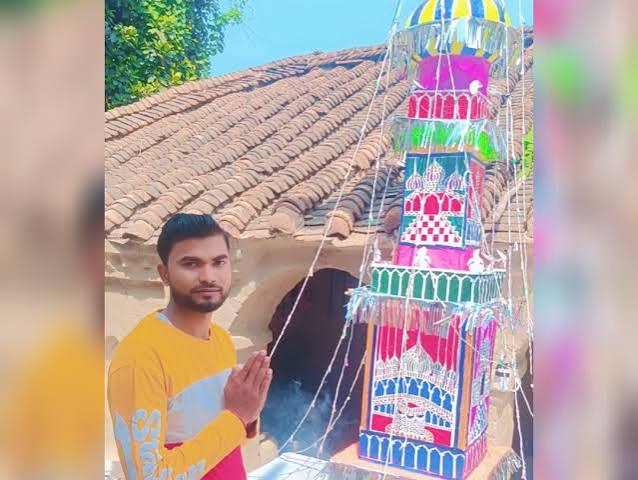
A unique example of communal harmony was witnessed during Muharram in Majra Chahtwa, Gumdi Gram Panchayat, Shriduttganj Block, Balrampur. A Dalit Hindu family has been holding the Tazia with complete faith and respect for the past 35 years. This tradition has been carried on by three generations of the family: Asharam, his son Shiv Prasad, and grandson Kamal Kanaujia. This year too, the family held the Tazia with great devotion, attracting a large number of people from the village and surrounding areas. Kamal Kanaujia explained that the family began holding the Tazia after a vow of his ancestors was fulfilled. His grandfather Asharam carried on the tradition, followed by his father Shiv Prasad, and now he himself is carrying on the responsibility. According to Asharam, the family believes that keeping the Tazia (Tajiya) maintains God’s blessings, removes troubles, and brings happiness and prosperity. Shiv Prasad also said that this tradition brings prosperity to agriculture, business progress, and family well-being. Villagers say that this tradition in Chahatwa is not merely a matter of religious faith, but a living example of social harmony, mutual trust, and Hindu-Muslim brotherhood. During Muharram, people from both communities actively participate in each other’s events, further strengthening the Ganga-Jamuni culture in the village. At a time when news of divisions in society emerges, this Dalit Hindu family in Chahatwa has been sending an important message of humanity, mutual respect, and social harmony by keeping the Tazia for three generations. Aamir Hasan Siddiqui | Shriduttganj (Balrampur), Balrampur Courtesy: Hindi News
Dalit youth dies during treatment: Violence over old rivalry in Ujramau village, special team formed

Shyamveer Pratap Singh alias Sonu (approximately 35 years old), a Dalit youth injured in an alleged assault over an old rivalry in Ujramau village, Rajepur police station area, died while undergoing treatment at Hallet Hospital in Kanpur. The village is mourning and outraged following the youth’s death. Given the seriousness of the case, the police have formed a special team to arrest the accused. According to a police complaint, the incident occurred on the night of June 18, 2026. Shyamveer Pratap Singh was at the home of Badal, a resident of the village, where he worked. It is alleged that Saurabh, a resident of the village, arrived there with two or three of his friends. An altercation ensued between them over an old rivalry. Family members allege that Shyamveer was assaulted with casteist slurs, leaving him seriously injured. The injured Shyamveer was initially taken to the Community Health Center in Rajepur. After first aid, he was referred to Dr. Ram Manohar Lohia Hospital. As his condition worsened, he was sent to Hallet Hospital in Kanpur, where he was treated for several days. He died at around 4 a.m. on June 25th. Kanpur police prepared an inquest report and conducted a post-mortem examination. Shyamveer was the third of four brothers. His untimely death has brought a great deal of grief to his family. The family is inconsolable, and there is widespread anger in the village. Rajepur police are investigating the case based on a complaint filed by the deceased’s brother, Uday Pratap Singh. Following the young man’s death, the investigation will be based on the post-mortem report, medical evidence, and other available facts. Rajepur Police Station in-charge Nagendra Singh stated that the incident has been taken seriously. A special police team has been formed to arrest the accused, and raids are being conducted at their possible hideouts. Shailendra Kumar | Rajepur (Farrukhabad), Farrukhabad Courtesy: Hindi News
AP: Human Rights organisation demands inquiry into custodial death of Dalit woman

A fact-finding team of HRF and IFTU has demanded an independent probe, alleging that police tortured Mala Gangamma to coerce a confession over her suspected role in her son’s disappearance. Human rights organisation Human Rights Forum (HRF) and the Indian Federation of Trade Unions (IFTU) have demanded an independent judicial inquiry into the death of 40-year-old Dalit woman Mala Gangamma in Andhra Pradesh’s Kurnool district, alleging that she died due to custodial torture by the Special Investigation Team (SIT) probing the disappearance of her son, Veerendra. According to the organisations, Gangamma was allegedly tortured to force a confession over her suspected role in her son’s mysterious disappearance. In a joint statement, HRF and IFTU said a three-member fact-finding team comprising HRF state vice-president UG Srinivasulu, HRF Kurnool district president K Urukundappa and IFTU district representative Narasanna visited Badinehal village, met Gangamma’s family members and local residents, and interacted with Kowthalam police before arriving at its findings. Veerendra went missing in November 2024. Gangamma later approached the Andhra Pradesh High Court, which directed the constitution of a Special Investigation Team headed by then Guntur Additional Superintendent of Police (ASP) K Supraja to investigate the case. According to the organisations, the SIT concluded that Gangamma had conspired with her partner, Malla Durgayya, to murder Veerendra, who had allegedly opposed their relationship. HRF and IFTU alleged that the SIT subjected Gangamma and Durgayya to severe custodial torture to force them to disclose the location where Veerendra’s body had been buried. Gangamma died on May 31. They claimed Gangamma died as a result of the alleged torture, while Durgayya is undergoing treatment at Kurnool Government Hospital. The organisations questioned the manner in which the investigation was conducted, alleging that the SIT relied on coercive methods. They also raised concerns over the circumstances surrounding Gangamma’s death, including her transfer to KIMS Hospital in Kurnool, the conduct of the post-mortem examination, and whether all injuries on her body were properly documented. HRF and IFTU further questioned the haste with which Gangamma’s funeral was conducted. According to them, her body was buried in her native village of Badinehal on June 1 in the presence of 20 to 30 police personnel. The organisations also disputed the police’s claim that Durgayya’s injuries were caused by a motorcycle accident, alleging that his relatives were denied access to him while he was hospitalised. While maintaining that those responsible for Veerendra’s murder should face prosecution if found guilty through due process, HRF and IFTU said custodial torture and violations of legal procedure could not be justified under any circumstances. The organisations have demanded an independent judicial or other impartial inquiry into the incident, a fresh post-mortem examination of Gangamma’s body, and the registration of criminal cases including murder charges and relevant provisions of the Scheduled Castes and Scheduled Tribes (Prevention of Atrocities) Act against police personnel found responsible. Courtesy : TNM Note: This news is originally published on https:/thenewsminute.com/bha and is used purely for non-profit/non-commercial purposes, especially human rights
Dalit Organisations Demand Suspension of ACP Reena Suvarna,Warn of Intensified Protests
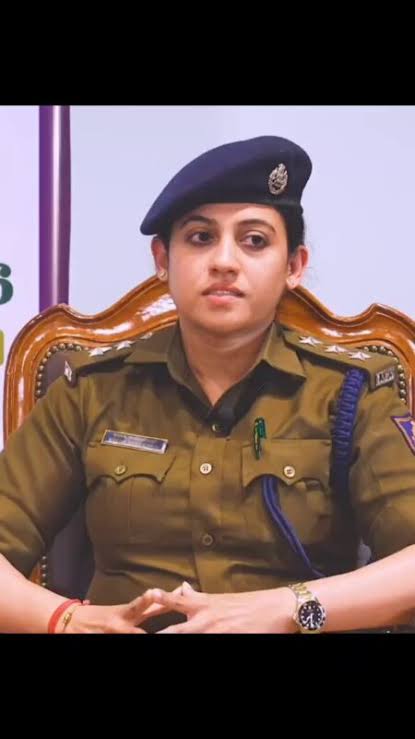
Various Dalit organisations on Friday demanded the immediate suspension of ACP Reena Suvarna,alleging serious irregularities,abuse of power and corrupt practices during her tenure. The organisations warned that they would intensify their ‘Tamate’protest if the government failed to act on their demands. Addressing a press conference,the representatives alleged that the ACP had sided with alleged rowdy elements and improperly handled cases registered under the Scheduled Castes and Scheduled Tribes (Prevention of Atrocities) Act. They claimed she extended protection to certain individuals in return for favours, allowing illegal activities, real estate dealings and other unlawful operations to continue within her jurisdiction. The organisations further alleged that her handling of a child murder case was aimed at weakening the investigation to benefit the accused. They claimed that even some junior police officials had expressed concerns over her decisions during the probe. The protestors criticised the police department for allegedly suspending junior officials instead of taking action against the ACP. They alleged that she continued to receive protection due to her links with senior officials and political figures. The organisations claimed to possess documentary evidence supporting their allegations and said the material would soon be submitted to the State Home Minister,seeking appropriate legal and departmental action. Warning of a larger agitation,the organisations said they would intensify their protests if the government failed to suspend the ACP and order an impartial inquiry into the allegations. The allegations have been made by the protesting organisations.There has been no official response from ACP Reena Suvarna or the police department at the time of publication. Sources said there are many complaints against this officer and if RTI is filed against her reply comes from the same officer against whom the RTI is filed by replying that information cannot be provided matter is under investigation a letter signed with the same officers attestation we request karnataka CM and Home Minister to order a high level probe into those complaints against this officer the activists demands. Martin Meenacherry Courtesy : Country and Politics Note: This news is originally published on https:/countryandpolitics.com/bha and is used purely for non-profit/non-commercial purposes, especially human rights