
‘Rape’ of Dalit woman: Kerala HC denies bail to Palakkad councillor
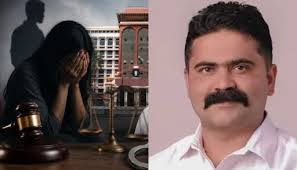
The Congress councillor was expelled from Palakkad District Congress Committee after the political controversies over the allegations against him The High Court had earlier denied an anticipatory bail plea, which had claimed that the allegations lacked merit and that there were errors in the investigation. The High Court had earlier denied an anticipatory bail plea, which had claimed that the allegations lacked merit and that there were errors in the investigation. | Photo Credit: RK Nithin The Kerala High Court on Monday (June 29, 2026) dismissed the bail plea of Prasobh Valsan, a councillor of Palakkad Corporation, in the alleged rape of a Dalit woman. The High Court had earlier denied an anticipatory bail plea, which had claimed that the allegations lacked merit and that there were errors in the investigation. However, the court had noted that the prosecution had made out a prima facie case for his arrest and denied the plea. Following this, Mr. Valsan had surrendered to the police at the Palakkad Town Station. Congress expels Palakkad councillor over sexual assault complaint Mr. Valsan was expelled from the Palakkad District Congress Committee after the political controversies over the allegations against him. The Dalit woman had alleged that Mr. Valsan had entered her house under the pretext of offering her a job and then raped her. The Hindu Bureau Courtesy : The Hindu Note: This news is originally published on https:/thehindu.com/bha and is used purely for non-profit/non-commercial purposes, especially human rights
Owaisi’s show of strength in Bijnor, attempts to balance the Muslim-Dalit equation; will SP’s tension increase?
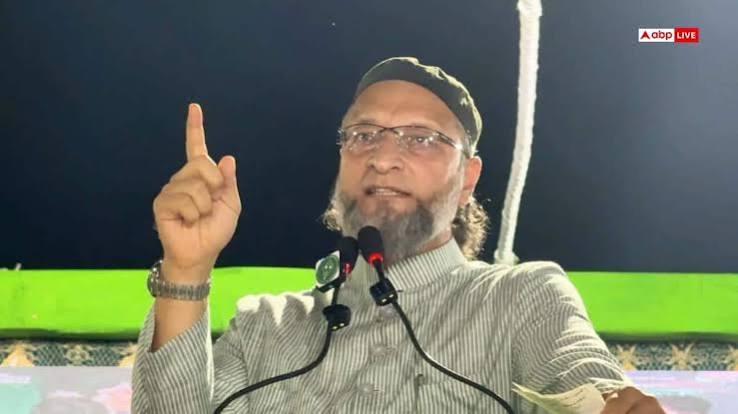
UP Politics: All India Majlis-e-Ittehadul Muslimeen (AIMIM) chief Asaduddin Owaisi will address a public meeting today in Najibabad, Bijnor, as part of the “Paigam-e-Ittehad” program. All India Majlis-e-Ittehadul Muslimeen (AIMIM) chief Asaduddin Owaisi, who is seeking political ground in Uttar Pradesh, will address a public meeting today in Najibabad, Bijnor, as part of the “Paigam-e-Ittehad” program. He will not only seek to establish his own political standing in Muslim-majority constituencies in western Uttar Pradesh, but his political activism has also raised concerns for the opposition Samajwadi Party (SP). Regarding the program, party spokesperson Shadab Chauhan stated that the current government and the main opposition party have perpetrated atrocities and discrimination against Muslims, victims, and marginalized groups. Together, they have made them political pariahs. Asaduddin Owaisi will hold a public meeting on these issues, along with other issues, primarily the problems of sugarcane farmers in this belt. Furthermore, Shadab Chauhan stated that Asaduddin Owaisi has appealed to all parties to unite to defeat the Bharatiya Janata Party and is ready to join forces with them. Why did he choose the Najibabad seat? The Najibabad seat in Bijnor district is a Muslim-majority constituency, and the Dalit-Muslim equation here could be the key to anyone’s victory. Consequently, Asaduddin Owaisi chose this location for his public meeting. Furthermore, the plight of farmers and laborers here is also concerning, and he appears to be trying to capitalize on this. Haji Tasleem is a Samajwadi Party MLA from the Najibabad seat, so Asaduddin Owaisi’s presence is a source of tension for the Samajwadi Party. To ensure this public meeting was a success, party workers have been conducting a public relations campaign for the past several days. Asaduddin Owaisi is active in Uttar Pradesh Party mobilization for the UP assembly elections has intensified. Asaduddin Owaisi previously attended a program in Bahraich. Although he did not achieve much success in previous assembly elections, the surprising performance of Owaisi’s party in the recent Bihar assembly elections has raised eyebrows among opposition parties. Written By: ABP UP Desk Courtesy : Hindi News
Dalit vote at centre of UP parties’ organisational overhaul ahead of 2027 polls
Congress, BJP, SP and BSP are reshaping their leadership structures as the battle for Scheduled Caste voters intensifies ahead of the Assembly election. As Uttar Pradesh heads towards the 2027 Assembly elections, political parties have begun fighting the first battle long before campaigning begins—through organisational restructuring. While the Congress has appointed Dalit leader R.P. Gautam as its Uttar Pradesh in-charge, the BJP has carried out a sweeping overhaul of its state unit by replacing all six regional presidents and appointing a new caste-balanced leadership team. The Samajwadi Party continues expanding its PDA network, while the Bahujan Samaj Party (BSP) has reshuffled its organisational hierarchy under Mayawati. Together, the moves underscore how every major party is recalibrating its leadership to reflect Uttar Pradesh’s intricate caste and regional equations in a state where Dalit votes could prove decisive in determining power. Why Is the 2027 UP Election More Than an Electoral Contest—A Battle for Dalit Votes? The renewed emphasis on Dalit representation follows the political message delivered by the 2024 Lok Sabha elections. The BJP’s tally in Uttar Pradesh fell from 62 seats in 2019 to 33, while the Samajwadi Party emerged as the largest party in the state with 37 seats and the Congress won six, giving the INDIA bloc a significant boost. More importantly, the BJP’s dominance in Scheduled Caste-reserved constituencies weakened as it won only eight of the state’s 17 reserved Lok Sabha seats, down from 14 in 2019. Equally significant was the BSP’s electoral setback, with Mayawati’s party once again failing to open its account in Uttar Pradesh, repeating its 2014 performance. Once the undisputed political voice of Dalits, the BSP has seen its support fragment over the past decade, with sections of Jatav voters remaining with the party while many non-Jatav Dalits shifted towards the BJP and, more recently, the SP-led INDIA alliance. The BSP’s electoral decline has intensified competition for Dalit votes, encouraging every major party to aggressively target both Jatav and non-Jatav Scheduled Castes ahead of the 2027 Assembly elections. With Scheduled Castes constituting nearly 21 per cent of Uttar Pradesh’s population and influencing electoral outcomes in well over 150 Assembly constituencies, organisational appointments have become almost as politically significant as candidate selection. Every major party is now attempting to balance caste identity, regional representation and social influence within its organisational structure. Congress Bets on a Dalit Face The latest move has come from the Congress, which appointed senior Dalit leader R.P. Gautam as its Uttar Pradesh in-charge, replacing Avinash Pande. Gautam, regarded as an experienced organisational hand, is expected to spearhead the party’s preparations for the 2027 Assembly elections while strengthening its outreach among Scheduled Castes. The appointment is widely seen as an acknowledgement that Dalit politics in Uttar Pradesh has entered a new phase following the BSP’s decline. By placing a Dalit leader in charge of its largest electoral battleground, the Congress hopes to complement its alliance strategy with the Samajwadi Party while simultaneously rebuilding its independent organisational base. BJP’s Organisational Reset If the Congress has sought to send a political message by appointing R.P. Gautam, the BJP has responded with one of its most extensive organisational overhauls in recent years. Following its disappointing performance in the 2024 Lok Sabha elections, the BJP replaced all six regional presidents of its Uttar Pradesh unit while appointing 19 vice-presidents, eight general secretaries and several new office-bearers, carefully balancing caste representation and regional aspirations. The six regional chiefs themselves reflect the BJP’s social engineering strategy. Nawab Singh Nagar (Gujjar) has been appointed for western Uttar Pradesh, Puran Lal Lodhi (Lodhi OBC) for Braj, Ram Kishore Sahu (Sahu OBC) for Kanpur-Bundelkhand, Avadhesh Dwivedi (Brahmin) for Awadh, Ashok Chaurasia (OBC) for Kashi and Vinod Rai (Bhumihar) for Gorakhpur. The revamped organisation accommodates leaders representing Dalit, OBC, upper-caste and regional communities, reflecting the BJP’s effort to broaden its social coalition after the 2024 setback. The organisational restructuring complements the BJP’s representation in government through ministers such as Baby Rani Maurya, Asim Arun, Dinesh Khatik and Gulab Devi, while continuing targeted outreach among non-Jatav Dalit communities including Pasi, Valmiki, Kori and Khatik through welfare schemes, social outreach programmes and grassroots mobilisation. SP Strengthens PDA Coalition The Samajwadi Party, meanwhile, continues to reorganise its structure around Akhilesh Yadav’s PDA (Pichhda, Dalit, Alpsankhyak) formula. The party has consciously increased the representation of Dalits and Extremely Backward Classes in district organisations, frontal units and candidate selection while expanding beyond its traditional Muslim-Yadav support base. The strategy paid dividends in the 2024 Lok Sabha elections, when the SP won seven of Uttar Pradesh’s 17 Scheduled Caste-reserved parliamentary constituencies. Since then, the party has consistently appointed office-bearers from backward and Dalit communities while making caste census, reservation and social justice central themes of its campaign for 2027. BSP Seeks to Reclaim Dalit Base Although the BSP suffered another major setback by failing to win a Lok Sabha seat in Uttar Pradesh in 2024, political observers believe writing off the party would be premature. The BSP still retains a committed cadre, strong booth-level organisation in several districts and an emotional connect among a sizeable section of its traditional Jatav support base. Recognising the need for organisational revival, BSP chief Mayawati has repeatedly reshuffled state office-bearers, zonal coordinators and district presidents while restoring her nephew Akash Anand as the party’s national coordinator. The BSP continues to strengthen its booth-level network by appointing coordinators from different Scheduled Caste sub-groups and OBC communities across western, central and eastern Uttar Pradesh. Unlike the BJP’s welfare-centric politics or the SP’s PDA narrative, the BSP continues to rely on Ambedkarite ideology and the legacy of Kanshi Ram and Mayawati. The party hopes to retain its loyal Jatav vote while reconnecting with non-Jatav Dalits who shifted towards rival parties over the last decade. The emergence of Nagina MP Chandrashekhar Azad as an independent Dalit voice has further diversified Dalit politics in Uttar Pradesh, particularly among younger voters, adding another layer to the competition for the community’s support. Even if the BSP does
Independent probe sought for custodial death of Dalit woman in AP

Mala Gangamma died on May 31 after suffering torture in the hands of the Special Investigation Team (SIT) constituted to probe the disappearance of her son, Veerendra, in November 2024. Andhra Pradesh: Human Rights Forum (HRF) and the Indian Federation of Trade Unions (IFTU) have demanded an independent enquiry over the alleged custodial death of a 40-year-old Dalit woman in Andhra Pradesh’s Kurnool district in May this year. Mala Gangamma died on May 31 after suffering torture in the hands of the Special Investigation Team (SIT) constituted to probe the disappearance of her son, Veerendra, in November 2024. The Dalit woman had approached the Andhra Pradesh High Court seeking justice. The SIT was made on the directions of the court. It was headed by then Guntur Additional Superintendent of Police (ASP) K Supraja. According to HRF and IFTU, Gangamma was allegedly tortured and forcefully confessed that she and her partner, Malla Durgayya, murdered her son, as he reportedly opposed their relationship. HRF and IFTU stated that the couple were subjected to third-degree torture, leading to Gangamma’s death, while Durgayya continues to battle for his life at the Kurnool Government Hospital. They questioned why Gangamma’s burial was conducted in the presence of 20 to 30 police personnel, and why Durgayya’s relatives were disallowed from meeting him in the hospital. Apart from an independent, impartial examination, the organisations have demanded a fresh post-mortem examination of Gangamma’s body, and the registration of criminal cases, including murder charges and relevant provisions of the Scheduled Castes and Scheduled Tribes (Prevention of Atrocities) Act, against police personnel found responsible. Courtesy : TSD Note: This news is originally published on https:/thesiasatdaily.com/bha and is used purely for non-profit/non-commercial purposes, especially human rights
Janseva Dal to contest 403 assembly seats: In Aligarh, the party stated, “We no longer want votes, but equal rights to power.”

The Janseva Dal in Aligarh has announced its intention to contest all 403 seats in Uttar Pradesh ahead of the upcoming assembly elections. The party held a public meeting at Jupiter Lodge on ITI Road on Sunday evening, June 28, 2026, targeting mainstream political parties. Party National President Vinesh Thakur (Karpoori) alleged that while the votes of the most backward, most Dalit, and working-class castes form governments, they do not receive equal rights to power and respect. Vinesh Thakur stated that since independence, the Nai, Sen, Savita, Pal, Baghel, Prajapati, Kashyap, Nishad, Mallah, Saini, Kushwaha, Kori, Khatik, Valmiki, Dhobi, Tailor, and other working-class communities have been considered merely vote banks. He explained that promises are made during elections, but these communities have consistently been neglected in ticket distribution, government positions, and political participation. The National President of the Jan Seva Dal announced that his party is preparing to contest all 403 assembly seats in Uttar Pradesh. He clarified that candidates will be fielded from among the marginalized communities. Vinesh Thakur emphasized that this community will no longer be dependent on the mercy of any party, but will gain a share of power based on its political strength. Speakers at the meeting also mentioned Karpoori Thakur’s model of social justice. They questioned the governments’ intentions in not implementing the backward and extremely backward classifications. A state-wide public awareness campaign was also announced on this occasion. The program was chaired by District President Ramnaresh Singh, who reiterated his commitment to strengthening the organization down to the booth level. A large number of workers and officials from various social organizations attended the public meeting. The Jan Seva Dal also raised slogans like “Hand-made artisans will form the government” and “It’s not a caste, it’s a community; all the most backward are together,” reflecting their political warning. Naresh Pratap Singh | Kol Courtesy: Hindi News
Dalit girl raped in Ballia, youth arrested
Ballia: Under the direction of Superintendent of Police Omveer Singh, the Revati police station has achieved success in the ongoing campaign against crime and criminals. On June 24th, based on the complaint of the plaintiff, the police registered a case under the rape, POCSO Act, and SC/ST Act. Station House Officer Anupam Jaiswal, along with Constables Shailesh Kumar and Karan Yadav, were on duty in the area. Meanwhile, Kanak Soni alias Makhan Soni, son of Surendra Soni (resident of Revati Ward No. 3, Town Police Station, Revati, Ballia), accused under sections 65(1), 351(3) IPC, 3(2)V, 3(2)VA of the SC/ST Act, and 3(2) of the POCSO Act, was arrested near the crossing near Khedan Square. Courtesy: Hindi News
SPECIAL | Rahul Gandhi weighs bigger role for Charanjit Singh Channi as Punjab Congress eyes Dalit, Sikh and Hindu vote balance ahead of 2027
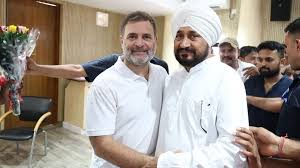
Sources familiar with the deliberations said the leadership, under Rahul Gandhi, is examining a formula that combines social representation with organisational stability. The Congress high command is learnt to be considering one of its biggest organisational exercises in Punjab since the 2022 Assembly election, with discussions indicating that former Chief Minister and Jalandhar MP Charanjit Singh Channi could be entrusted with a larger role in the state unit as part of a broader strategy to rebuild the party before the 2027 polls. According to party sources, the proposed restructuring goes far beyond a routine leadership change. The exercise is understood to be aimed at creating a carefully balanced organisational structure that gives representation to Punjab’s three most significant electoral segments, Dalits, Jat Sikhs and urban Hindu voters, while ensuring that senior leaders continue to remain politically relevant within the organisation. Sources familiar with the deliberations said the leadership, under Rahul Gandhi, is examining a formula that combines social representation with organisational stability. Alongside the appointment of a new state leadership, key election-related responsibilities, including campaign management, coordination, manifesto preparation and organisational planning, are also expected to be distributed among experienced leaders in an effort to minimise factionalism ahead of the Assembly election. Dalit vote bank at the centre of Congress calculations Political observers believe the reported move is primarily driven by Punjab’s unique social composition. Punjab has the highest proportion of the Scheduled Caste population among all Indian states, with Dalits accounting for nearly 32 per cent of the state’s population. The community plays a decisive role not only in the 34 Assembly constituencies reserved for Scheduled Castes, but also influences electoral outcomes in dozens of general seats across Doaba, Malwa and parts of Majha. Within the Congress, Channi is regarded as the party’s most recognisable Dalit Sikh leader. His tenure as Punjab’s first Dalit Chief Minister and his victory from the Jalandhar Lok Sabha constituency in the 2024 parliamentary election have strengthened perceptions within the party that he continues to enjoy considerable political acceptability among sections of Dalit voters. Party strategists are believed to feel that projecting a strong Dalit face at the organisational level could help the Congress regain a section of the traditional support base that has shifted towards rival political parties over the past several years. Balancing the Jat Sikh leadership is equally important Even as the Congress attempts to consolidate Dalit voters, the party is understood to be equally cautious about maintaining its influence among Punjab’s politically dominant Jat Sikh community. Although Jat Sikhs constitute an estimated 20 to 22 per cent of Punjab’s population, they continue to exercise significant political influence across rural constituencies, particularly in the Malwa region, which sends the largest number of MLAs to the Assembly. Party insiders believe any organisational restructuring that overlooks this influential community could create fresh internal challenges. Consequently, discussions are said to include assigning major organisational and election-management responsibilities to senior Jat Sikh leaders, allowing them to continue playing a central role in shaping the party’s campaign strategy while maintaining social equilibrium within the organisation. Urban Hindu voters also part of the strategy Another important element of the reported formula is the urban Hindu electorate. According to the 2011 Census, Hindus account for nearly 38.5 per cent of Punjab’s population. However, political strategists generally estimate that the decisive urban Hindu voting bloc constitutes around 25 to 26 per cent of the electorate and significantly influences election results in cities such as Ludhiana, Amritsar, Jalandhar, Patiala, Pathankot and several municipal centres. Congress leaders are believed to be exploring ways to ensure adequate organisational representation for leaders who enjoy influence in urban constituencies, thereby broadening the party’s appeal beyond its traditional rural support base. Lessons from the 2022 defeat The reported restructuring also reflects the Congress leadership’s assessment of the mistakes made during the 2022 Punjab Assembly election. The party had projected Channi as its chief ministerial face only a few months before polling. However, persistent factionalism, competing leadership centres, and organisational disunity overshadowed the campaign, reducing the Congress to 18 seats in the 117-member Assembly, while the Aam Aadmi Party secured a landslide victory. Many within the party now believe that social representation alone cannot deliver electoral success unless it is backed by organisational unity, clearly defined responsibilities and coordinated campaigning. 2024 Lok Sabha performance revives confidence The Congress’s improved performance in the 2024 Lok Sabha election, in which it won seven of Punjab’s 13 parliamentary seats, has reportedly prompted the central leadership to accelerate organisational restructuring well before the next Assembly polls. Party leaders are believed to view the parliamentary results as evidence that the Congress continues to retain substantial support in Punjab despite its defeat in the previous Assembly election. The leadership now appears keen to convert that momentum into a stronger organisational framework capable of sustaining a statewide campaign. Social engineering before 2027 Political analysts believe Congress is attempting to build a broader electoral coalition rather than relying on any single community. The reported strategy seeks to combine the electoral strength of Punjab’s nearly 32 per cent Dalit population, the politically influential 20-22 per cent Jat Sikh community, and the decisive urban Hindu electorate that plays a crucial role in several Assembly constituencies. If implemented successfully, such a leadership structure could allow the party to simultaneously target multiple voter segments while reducing internal friction among senior leaders. Unlike previous organisational changes that largely focused on individual appointments, the latest exercise appears to be centred on building a leadership model designed around Punjab’s electoral arithmetic and social realities. Although speculation over the proposed changes has intensified, Congress has not made any official announcement regarding the restructuring. The final shape of the Punjab unit is expected to emerge only after the party leadership completes its internal consultations. With less than a year and a half left before political activity gathers full momentum for the 2027 Assembly election, the decisions taken by the Congress in the coming weeks could play a significant role in determining whether
ASP Appointed To Probe Deaths Of Dalit Youths

The police appealed to Dalit organisations, including those led by Mandakrishna Madiga, to call off their proposed protest in view of the ongoing inquiry Maidakur DSP S. Rajendra Prasad on Sunday said an IPS officer had been appointed to inquire into the deaths of two Dalit youths, who were found dead in a canal at Brahmamgari Matham on February 5, 2026. Addressing a press conference in Maidakur, the DSP said the incident had sparked suspicion among Dalit organisations, which alleged foul play and claimed justice had not been delivered. The organisations had also proposed a ‘Chalo Kadapa’ protest to press their demands Responding to their demand for a higher-level inquiry, Kadapa SP Nachiket Vishwanath appointed Proddatur ASP Vibhu Krishna as the inquiry officer. The DSP said Dalit leaders had also raised doubts over whether the FIR had been registered in accordance with legal procedures. He added that a video recorded by a witness who accompanied the deceased had been sent to the Forensic Science Laboratory (FSL) for analysis. Meanwhile, the police appealed to Dalit organisations, including those led by Mandakrishna Madiga, to call off their proposed protest in view of the ongoing inquiry. 2 engg students drown at beach Two first-year engineering students drowned at Bhavanapadu beach in Srikakulam district on Sunday after being caught in strong sea currents. The victims were identified as S. Yeshwanth, 18, and G. Agastima, 18. According to reports, they were part of a group of students from a private engineering college who had visited the beach. While bathing, the two were swept into deep waters by strong currents and drowned. Agriculture minister K. Atchennaidu expressed shock over the incident and conveyed his condolences to the bereaved families. Describing the tragedy as heartbreaking, he directed officials to extend all possible assistance and ensure necessary support to the families of the deceased. 32 fall ill after eating roadside snacks Thirty-two persons were admitted to the Primary Health Centre at Dugguduru in Kajuluru mandal after they allegedly suffered food poisoning from eating snacks purchased from roadside vendors. Officials said the victims consumed the snacks on Friday evening and began reporting to the hospital from Saturday. More patients were admitted on Sunday, while some were discharged after treatment. Officials said around 60 others were reportedly undergoing treatment at private hospitals. Medical and health department officials rushed to the village and treated the affected persons. Kakinada district medical and health officer D.N. Naick visited the hospital and reviewed the condition of the patients. He said the patients were recovering. Courtesy : Deccan Chronicle Note: This news is originally published on https:/deccanchronicle.com/bha and is used purely for non-profit/non-commercial purposes, especially human rights
Two-day Dalit writers’ conference concludes in Jaipur

Jaipur: A two-day state-level Dalit Writers’ Conference, jointly organised by Pranjal Sahitya Akademi, Jaipur, and Rajasthan Sahitya Akademi, Udaipur, concluded Sunday at the Mata Ramabai Auditorium of the Dr Ambedkar Memorial Welfare Society. The conference featured poetry recitals by writers from across Rajasthan, who presented works centred on the vision of an egalitarian society. Courtesy : TOI Note: This news is originally published on https:/timesofindia.com/bha and is used purely for non-profit/non-commercial purposes, especially human rights
UP Elections 2027: Avinash Pandey removed, Congress prepares to balance Dalit-OBC equations by handing over the reins to Rajendra Pal Gautam

Ahead of the 2027 UP Assembly Elections, the Congress has made a major organizational reshuffle. Focusing on the Dalit and OBC vote bank, it is preparing to strengthen its hold within the “INDIA” alliance. Uttar Pradesh: Just before the Assembly elections, the Congress has begun laying out its strategic and organizational foundation in the state. The party’s entire focus is now on building a strong Dalit and OBC social alliance. The Congress is confident that this formula will not only regain lost ground in the state but also significantly strengthen its negotiating power within the opposition “INDIA” alliance. In a major move, the All India Congress Committee (AICC) on Friday removed Avinash Pandey from the post of General Secretary in-charge of Uttar Pradesh. In his place, Rajendra Pal Gautam, National President of the Scheduled Castes Department and a prominent Dalit leader, has been given this important responsibility. Just a day before this announcement, Gautam was in Lucknow, where he, along with Anil Jaihind, in-charge of the AICC’s OBC wing, celebrated Chhatrapati Shahuji Maharaj’s birth anniversary as ‘Reservation Day.’ According to senior Congress sources, Rajendra Pal Gautam’s appointment is not being seen as a simple organizational change. The party is aiming to send a major political message to Dalit voters ahead of the upcoming assembly elections. Congress also wants to establish that its ally, the Samajwadi Party (SP), is not the only option for Dalits in their fight for rights, but that the party is also a strong platform for them. According to reports from within the party, this organizational reshuffle in Uttar Pradesh will not be limited to the change of in-charges. Ahead of the elections, major changes have already been scripted for the state’s co-in-charges (secretaries) and state leadership. There is talk that the next president of the Uttar Pradesh Congress Committee (UPPCC) could be appointed to a prominent OBC leader, ensuring the party’s Dalit-OBC social engineering strategy is fully implemented. A senior Congress leader explained this strategy, stating that the party fought the 2024 Lok Sabha elections strongly on issues of social justice and protection of the Constitution, yielding positive results. If the Congress wants to carry this discourse into the 2027 assembly elections, it must demonstrate this social commitment within its organizational structure. Currently, the Uttar Pradesh Congress is headed by Ajay Rai, a prominent Bhumihar leader from eastern Uttar Pradesh. He was appointed state president in August 2023, replacing Dalit leader Brijlal Khabri. Rai had contested the previous two Lok Sabha elections against Prime Minister Narendra Modi from the Varanasi constituency, which was crucial for the party’s electoral strategy at the time. In the 2024 elections, he also succeeded in significantly reducing PM Modi’s victory margin. However, Congress strategists believe that the political demands of Lok Sabha and Assembly elections are completely different. The perception within the party has grown increasingly strong that the campaign to protect the Constitution and reservations in the last Lok Sabha elections led a significant portion of Dalit voters to the “India” alliance. Retaining this vote bank in the upcoming electoral battle is crucial for the party’s future. While Samajwadi Party leaders are publicly downplaying this Congress assessment, Congress leaders argue that this support from Dalits and backward classes will put them in a strong position during seat-sharing negotiations for the upcoming Assembly elections. It’s clear that Congress’s entire restructuring plan has been designed with the 2027 election battle in mind. Rajan Chaudhary Courtesy: Hindi News