
SP Takes Action in Anand Gautam Murder Case: Sub-Inspector and Head Constable Suspended
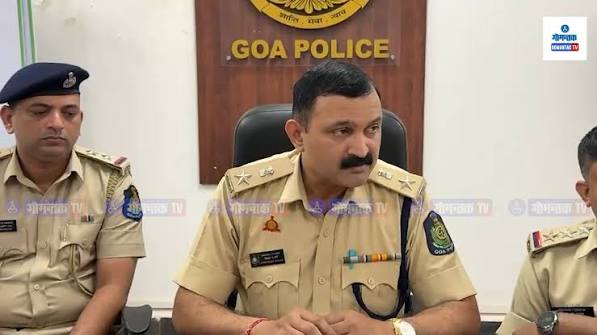
The Superintendent of Police has suspended a sub-inspector and a head constable with immediate effect for negligence in the Anand Gautam murder case, which occurred approximately 15 days ago in Sant Kabir Nagar. Both suspended officers have been attached to the police lines. They will not be able to leave headquarters without prior permission from the competent authority. This action was taken following the negligence that emerged in the brutal murder of Anand Gautam at Babhani intersection in the Bakhira area. Police investigation revealed that a girl, a relative of the deceased Anand Kumar Gautam, and the main accused, Nasir Kusmha Mafi, had been in a love affair for approximately one year. On June 6, 2026, a wedding was held near the deceased Anand Kumar Gautam’s home, where the main accused, Nasir, also attended. Upon learning of Nasir’s presence, Anand and his family assaulted the accused Nasir at the wedding itself. This incident resulted in the murder of Anand Gautam. The crowd was enraged following the incident. The crowd refused to remove the body from the scene and staged a violent protest. In response to the situation, several senior officials, including the ADG, DIG, DM, SP, ASP, and CO, arrived at the scene. Police and PAC personnel from Sant Kabir Nagar district, as well as Basti and Siddharthnagar, had to be deployed. The incident occurred in Halka No. 2 of the Kolki Chamarsan police station area, about 15 kilometers from the station. SI Rajkumar Mishra and Head Constable Manoj Kumar Yadav had been posted in this Halka for the past three years. SP Sandeep Kumar Meena stated that if Halka Inspector Rajkumar Mishra and Head Constable Manoj Kumar Yadav had performed their official duties properly, the open murder would not have occurred, and law and order problems would not have arisen. They have been suspended for gross negligence, indifference, and inaction towards their duties. Durgesh Tripathi | Hardi (Mehdawal), Sant Kabir Nagar Courtesy: Hindi News
After 40 years, Dalits in Madurai’s Theerthakadu see light in homes

Madurai East MLA S Karthikeyan visited the village on Wednesday, interacted with residents and assured them that he would raise the issue in the Assembly. MADURAI: Forty long years of struggle living without electricity has ended for Dalit residents of Theerthakadu village near Vandiyur in Madurai as Tangedco officials started installing electricity poles in the locality on Wednesday. Five families would get power supply in the Phase-I of the electrification work. The development comes months after the TNIE highlighted the plight of the village in a report titled ‘Red tape: Dalit families live in dark for 40 years in Tamil Nadu’, published on February 13, 2026. The report detailed how nearly 360 Dalit families had been deprived of electricity, drinking water, roads, drainage, and sanitation facilities due to a prolonged dispute between the Madurai corporation and the Revenue Department over the issuance of land pattas. Frustrated by the delay, residents had even announced a boycott of the recent Assembly election. Although successive governments had promised to issue pattas, only 68 of the 349 eligible families identified in 1982 received e-pattas last year from the then deputy chief minister Udhayanidhi Stalin, paving the way for infrastructure development. Of these, five families will now receive electricity connections. Speaking to the TNIE, M Mullaikodi, one of the five beneficiaries, welcomed the development but said the village’s struggle was far from over. “We are happy that electricity is finally reaching our homes, but we cannot celebrate fully when many families are still waiting even for pattas. After our long struggle for basic necessities, we urge Chief Minister C Joseph Vijay to fulfil all our demands on a war footing,” she said. Theerthakadu SC Residents Protection Welfare Association office-bearer M Thangapandian thanked the TNIE for bringing attention to the issue. He said Social Justice Minister Vanni Arasu intervened and directed the district administration to expedite the process, describing the electrification work as the first victory in the community’s long struggle. Thangapandian said the association had also approached the National Commission for Scheduled Castes (NCSC). Acting on the petition, NCSC Director S Ravivarman issued a notice to collector Nishanth Krishna on July 2, directing the district administration to take appropriate action on land rights and the provision of basic amenities for Scheduled Caste residents, and to submit an action-taken report within seven days. Meanwhile, Madurai East MLA S Karthikeyan visited the village on Wednesday, interacted with residents and assured them that he would raise the issue in the Assembly. Jeyalakshmi Ramanujam Courtesy : TNIE Note: This news is originally published on https:/thenewindianexpress.com/bha and is used purely for non-profit/non-commercial purposes, especially human rights
Deputy CM Dr G Parameshwara keen to emerge as Dalit face of the government
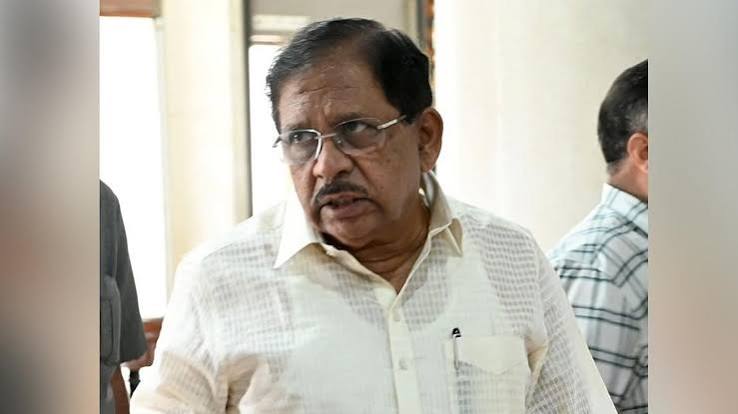
The meeting is likely to discuss 19 demands concerning land, housing, reservation in employment, special component scheme and implementation of single window policy for the grant of industrial lands. BENGALURU: Deputy Chief Minister Dr G Parameshwara might have missed out on the CM post but is keen to emerge as the Dalit face of the Congress government. With Dalit leader and former minister Dr HC Mahadevappa taking part in a Dalit protest rally held at Freedom Park, the DCM on Friday promised Dalit activists to convene a meeting at Vidhana Soudha next week to discuss their demands, including filling backlog vacancies in government. Attending the ‘Dalit Janagraha Samavesha’ organised by Karnataka Dalit Sangharsh Samiti (Ambedkarism), the DCM said he would invite Chief Minister D K Shivakumar to the meeting apart from officials and legislators. The meeting is likely to discuss 19 demands concerning land, housing, reservation in employment, special component scheme and implementation of single window policy for the grant of industrial lands. Courtesy : TNIE Note: This news is originally published on https:/thenewindianexpress.com/bha and is used purely for non-profit/non-commercial purposes, especially human rights
How did the pandemic permanently push Dalit and Adivasi workers deeper into precarity?
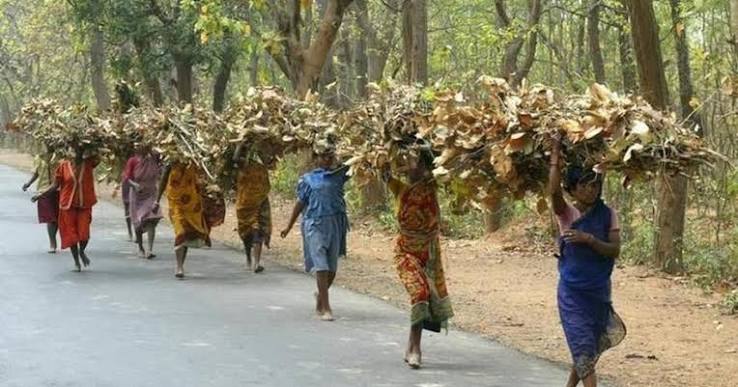
India’s GDP increased by 7.6% in 2025–26, making it the fourth largest in the world. The tale of what happened to its most marginalized workers during and after the pandemic was quietly buried somewhere in those headlines. At a press briefing after the 10th Governing Council meeting on May 24, 2025, NITI Aayog CEO B.V.R. Subrahmanyam declared that India had overtaken Japan to become the fourth-largest economy in the world, with its GDP surpassing $4 trillion. At a public gathering in Gandhinagar a few days later, Prime Minister Narendra Modi reiterated the achievement and declared that India had surpassed Japan. As of February 2026, India was referred to by the Ministry of Finance as “a global bright spot.” India’s real GDP increased by 7.6% in 2025–26, up from 7.1% in 2024–25, according to MoSPI’s Second Advance Estimates, which were published in late February 2026. Nominal GDP growth was 8.6%. The recovery narrative was complete. The growth story was intact. However, more importantly, the specific, measurable, and unresolved damage that the pandemic caused to India’s Scheduled Caste and Scheduled Tribe informal workers is what no Budget speech, no NITI Aayog press briefing, and no IMF projection are intended to show. An analysis of seven rounds of nationally representative Periodic Labour Force Survey data from 2017–18 to 2023–24, covering over 769,000 informal workers, makes this visible in numbers that the celebration of fourth-largest-economy status was never designed to accommodate. The macroeconomic recovery is real. The recovery of SC and ST workers within India’s informal employment hierarchy is not. The unequal distribution of damage The 68-day lockdown announced on March 24, 2020 did not fall on India’s workforce uniformly. The highest share of job losses immediately after the lockdown was among SC workers – the largest share of any social group. This was not coincidental. The prevalence of casual wage labour is almost three times higher among SC men and women workers compared to other category workers, and the percentage of salaried workers is lowest among STs, closely followed by SCs. When the economy shut down, the workers with no contracts, no savings, no social security, and no right to paid leave – disproportionately SC and ST – had nothing to fall back on. Six months after the lockdown, one in five persons was still out of work, average monthly per capita income was around 10% lower than pre-pandemic levels, and earnings for those who had found work were approximately half of what they had been before. Agriculture, always the employer of last resort in India, absorbed the shock. SC and ST workers who had spent years transitioning out of agricultural and casual labour – a movement that represented real, hard-won progress – reversed course during the pandemic and returned to the lowest-return forms of work available. This reversal was not merely a temporary shock. It was a structural regression. The Numbers That Viksit Bharat Does Not Count The PLFS data show that the concentration of ST workers in lower-return informal employment – the most precarious tier of the informal economy, covering casual labour, own-account work without employees, and jobs simultaneously lacking contracts, paid leave, and social security – rose from 67.2% in 2017–18 to 87.7% in 2023–24, a deterioration of 20.5%. SC concentration rose from 77.0% to 82.5% over the same period. The sharpest deterioration in both cases occurs between 2019–20 and 2021–22, precisely straddling the pandemic and its immediate aftermath. In comparison, by 2023–24, the concentration of General category workers in lower-return informal employment settled at 74.6%, a smaller increase that demonstrated a considerably greater recovery after the pandemic. Over the course of the study, the caste gap in the concentration of lower-return informal employment widened and did not appear to be reducing by 2023–24. Genuine post-pandemic difference manifests itself in the particular employment conditions of individuals who had the least cushion when the crisis struck, rather than in the overall situation. India has the fastest-growing major economy in the world, but it also has a persistent employment crisis, making the macroeconomic celebration meaningless for millions of workers who are either unemployed or stuck in low-paying, precarious work. According to the State of Working India 2023 report, intergenerational upward mobility has increased overall, though this trend is weaker for SC/ST workers compared to general castes – 75.6% of SC/ST men in casual wage work also had sons in casual wage work in 2018, compared to 86.5% in 2004. Some progress, then. But the same report noted that in 2021, 40% of SC workers were still in casual employment as compared to 13% of general caste workers, and only 22% of SC workers were in regular wage work as opposed to 32% of general caste workers. India has an elaborate architecture of minimum wage legislation. In practice, the ILO’s finding that seven in ten casual construction workers were paid below minimum wage in 2022 – two years after the Code was passed – is a measure of how comprehensively the enforcement infrastructure has failed the workers the legislation was designed to protect. And the workers most concentrated in casual employment, most exposed to minimum wage violations, and least able to enforce their legal entitlements are SC and ST workers. The Recovery Narrative as Political Choice The decline of India’s most marginalized informal workers post-pandemic has not become a national conversation for a reason. While nominal GDP increased by 8.6%, India’s real GDP growth for 2025–26 is estimated at 7.6%, higher than the 7.1% reported in 2024–25. These are aggregate headline figures. They don’t disaggregate by caste. They do not demonstrate how workers who were never in lower-return informal employment in the first place have disproportionately benefited from the rise in India’s services sector, which accounts for more than 54% of nominal GVA in 2025–26. The national income accounts were not designed to show this. However, the problem does not go away just because it is not visible. According to civil society analyses of Budget 2026–27, despite a nominal increase in SC/ST
Dr. B.R. Ambedkar’s Views on Dalits’ Struggle for Temple Entry: From Social Reform to the Quest for Human Dignity
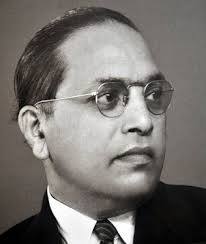
in Annihilate Caste The struggle for temple entry occupies an important place in the history of the Dalit movement in India. During the late nineteenth and early twentieth centuries, Dalits were denied entry into Hindu temples as a consequence of the practice of untouchability. Many social reformers viewed temple-entry movements as a means of removing this discrimination and integrating Dalits into Hindu society. Dr. B.R. Ambedkar, however, approached the issue from a fundamentally different perspective. For him, the demand for temple entry was never merely a religious question; it was a question of civil rights, social equality, and human dignity. His views, however, evolved over time. While he initially supported temple-entry movements as a strategy to challenge caste discrimination, he later concluded that they could not bring about the annihilation of caste or secure genuine emancipation for Dalits. This evolution reflects the broader development of his political philosophy—from reforming Hindu society to seeking liberation from the caste system altogether. Temple Entry as a Struggle for Human Rights Ambedkar’s early support for temple-entry movements was based not on religious devotion but on the principle of equality before society. He understood that exclusion from temples symbolized the larger system of caste oppression. Dalits were denied entry because they were regarded as “untouchables” and therefore considered ritually impure. Such exclusion denied them recognition as equal members of society. Ambedkar argued that if Hinduism genuinely believed in the equality of all human beings, there could be no justification for excluding any section of society from places of worship. Therefore, the struggle for temple entry was intended to expose the hypocrisy of caste Hindus who preached religious morality while simultaneously practicing social discrimination. Temple entry was thus a democratic demand aimed at asserting equal citizenship rather than a plea for religious privilege. By demanding admission into temples, Dalits challenged the legitimacy of the caste order itself. The Kalaram Temple Satyagraha The most significant expression of this strategy was the Kalaram Temple Satyagraha of 1930 in Nashik, Maharashtra. Under Ambedkar’s leadership, thousands of Dalits organized a peaceful movement demanding entry into the famous Kalaram Temple. The movement sought recognition of three fundamental principles: equal right to worship; recognition of Dalits as equal human beings; and abolition of untouchability in religious institutions. The satyagraha attracted national attention and represented one of the earliest mass movements led by Ambedkar. However, despite prolonged protests and disciplined organization, the temple authorities and orthodox Hindu society refused to admit Dalits. The failure of the movement profoundly influenced Ambedkar’s subsequent thinking. Reassessment of Temple Entry The repeated refusal of caste Hindus to accept Dalits as equals led Ambedkar to question the effectiveness of temple-entry movements. He gradually realized that the problem of caste extended far beyond access to temples. He observed that even if Dalits were permitted to enter temples, the fundamental structure of caste society would remain unchanged. They would still face discrimination in education, employment, housing, access to public resources, marriage, and political representation. Ambedkar therefore began asking a fundamental question: Would entry into temples make Dalits socially equal? His answer became increasingly clear—it would not. Temple entry could remove one visible symbol of untouchability, but it could not destroy the social and economic foundations of caste. Self-Respect over Religious Acceptance As his thinking matured, Ambedkar emphasized self-respect rather than acceptance by caste Hindus. He questioned why Dalits should seek admission into institutions where they were regarded as inferior. He argued that genuine liberation could never depend upon the goodwill of those who upheld caste hierarchy. Instead, Dalits should concentrate on building their own strength through education, organization, political participation, and economic advancement. His famous slogan—“Educate, Agitate, Organize”—captured this new direction. Rather than investing energy in seeking symbolic recognition, Ambedkar urged Dalits to acquire knowledge, develop leadership, and struggle for political power and constitutional rights. For Ambedkar, dignity could not be bestowed by temple authorities; it had to be achieved through self-assertion and social transformation. Critique of Hindu Social Order Ambedkar’s reassessment of temple-entry movements led him to a deeper critique of Hinduism itself. He argued that untouchability was not an accidental distortion of Hindu society but a logical consequence of the caste system embedded in traditional Hindu religious texts and practices. He maintained that temple entry could never eliminate caste because caste was sustained by religious doctrines, hereditary hierarchy, and notions of ritual purity and pollution. Unless these foundations were dismantled, symbolic reforms would merely conceal deeper inequalities. This conviction found its fullest expression in his celebrated work Annihilation of Caste, in which he argued that caste could not be abolished without fundamentally rejecting the religious principles that sustained it. Difference with Mahatma Gandhi Ambedkar’s position differed significantly from that of Mahatma Gandhi. Gandhi strongly supported temple-entry movements and campaigned against untouchability. However, he viewed these movements primarily as efforts to purify and reform Hindu society while preserving its religious framework. Ambedkar believed that this approach failed to confront the structural basis of caste. In his view, abolishing untouchability without abolishing caste was impossible. Temple entry might improve appearances, but it would not alter the unequal distribution of social status, economic resources, or political power. This fundamental disagreement reflected their broader differences regarding caste, social reform, and the future of Hindu society. From Temple Entry to Religious Conversion By the mid-1930s, Ambedkar had largely abandoned temple-entry campaigns. In 1935, at Yeola, he made his historic declaration: “I was born a Hindu, but I will not die a Hindu.” This statement represented a decisive break with his earlier hope of reforming Hindu society from within. Over the next two decades, Ambedkar devoted his energies to securing constitutional safeguards, political representation, educational advancement, labour rights, and social justice for the oppressed. His search for a religion based on liberty, equality, and fraternity culminated in his conversion to Navayana Buddhism in 1956, together with several hundred thousand followers. For Ambedkar, conversion was not merely a change of religious identity; it was a rejection of caste oppression and an affirmation of human
Meerut: Dalit youth assaulted in Pachpeda village: Eardrum ruptured in communal clash, hospitalized
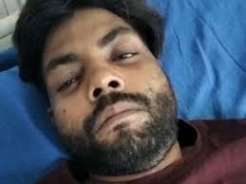
A communal clash broke out in Pachpeda village, located in the Bhavhanpur police station area of Meerut, around 11:30 pm on Friday. A Dalit youth was severely assaulted in the incident, resulting in a ruptured eardrum. The injured youth has been admitted to Pyarelal Hospital. Ajay Kumar, son of Rajiv Singh, a resident of Pachpeda, said that at around 11 pm, he went to a shop in the village to buy a fan. Finding the shop closed, he called the shopkeeper’s number, but the shopkeeper asked him to come later. According to Ajay Kumar, a short while later, he received a call from the shopkeeper, asking him to come back to pick up the fan. When he arrived, four or five people were already present. These people severely assaulted Ajay. During the assault, Ajay suffered serious injuries to his waist and ear, including a ruptured eardrum. The police station was immediately informed of the incident. Police arrived at the scene and sent Ajay to Bhavanpur Health Center. On Saturday morning, Ajay was referred from there to Pyarelal Hospital. An atmosphere of tension has prevailed in the village since the incident. Shubham Dixit | Modipuram Courtesy: Hindi News
Dalit family attacked with sticks and rods while sleeping in Tikamgarh; one person dead, several injured
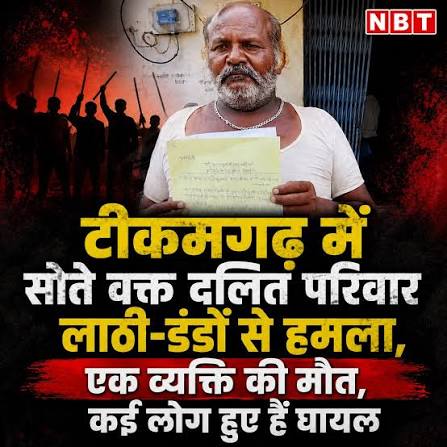
A Dalit family was attacked in Kanchanpur village, Tikamgarh. A man named Ghanshyam Prajapati was killed in the attack, and other family members were injured. Tikamgarh: A deadly attack on a Dalit family in Kanchanpur village, under the Mohangarh police station area of the district, late Wednesday night, sent shockwaves through the area. Around two dozen people attacked the family sleeping in their home with sticks, rods, and axes. One person killed The head of the family, Ghanshyam Prajapati (approximately 60 years old), died on the spot, while his wife, son, and grandson were seriously injured. All the injured have been admitted to the District Hospital, Tikamgarh, for treatment. Attack while sleeping According to reports, Ghanshyam Prajapati was sleeping with his family when some villagers, allegedly armed with weapons, arrived and suddenly attacked them. It is alleged that the attackers attacked Ghanshyam Prajapati with sticks and rods, killing him on the spot. His wife, son, and grandson were attacked with axes and sticks, leaving them seriously injured. Police Arrived at the Scene Upon receiving information about the incident, Mohangarh police arrived at the scene and the injured were immediately sent to the district hospital. Police inspected the scene and began an investigation. Preliminary investigations revealed that the deceased had been involved in a land dispute with some villagers. Furthermore, the deceased had filed a complaint with the Chief Minister’s Helpline against an alleged quack in the area. It is reported that the accused and the doctor belong to the same family. An ongoing land dispute The entire incident takes place in Mohangarh village of Tikamgarh district The accused murdered Ghanshyam Prajapati Other family members were injured in the attack Tikamgarh police are investigating the matter Police are investigating Mohangarh police station in-charge Ankit Dubey stated that the matter is being investigated and a case is being registered based on the statements of the family members. Meanwhile, Sagar Range IG Mithilesh Shukla has directed Tikamgarh police to take immediate action. In view of the tense situation in the village following the incident, additional police forces have been deployed, and the search for the accused is ongoing. Authored by: Muneshwar Kumar •Reported by: Narendra Arajaria About the author Muneshwar Kumar is the Principal Digital Content Producer (Chief Correspondent) at Navbharat Times Online. He covers Madhya Pradesh and Chhattisgarh, and also covers political news in other states. Courtesy: Hindi News
27 Dalit families, inspired by Kabir’s equality, established ‘Kabir Basti’ in Jaisalmer 65 years ago, but basic rights remain unfulfilled.
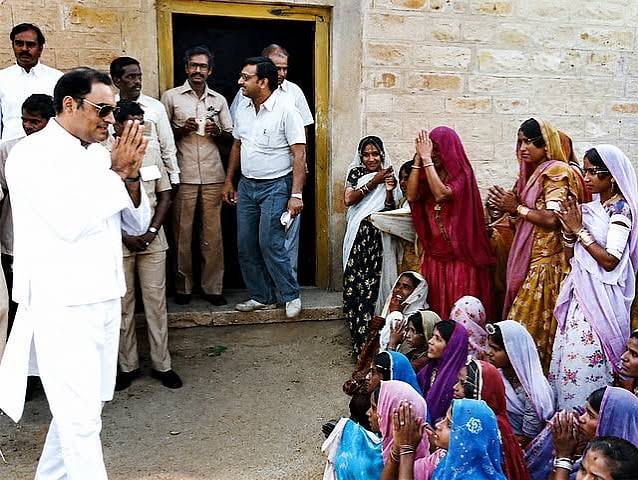
Kabir Basti holds the distinction of being not only the first Gramdani village in Jaisalmer district but also in Rajasthan. This village still boasts remarkable achievements in 100% literacy and women’s education. Many people from this settlement of approximately 200 families are employed in various government services. Jaisalmer – Kabir Basti in Jaisalmer district, Rajasthan, which embodies Saint Kabirdas’s message of labor, equality, self-reliance, and social harmony, is struggling today despite its historical identity and lacks basic amenities. This village, once known as ‘Gandhi’s Thana’ and proud to be Rajasthan’s first Gramdani village, is awaiting the revival of drinking water, roads, irrigation, and the Khadi industry. With the support of freedom fighters Manikyalal Verma, Gokul Bhai Bhatt, Siddharaj Dhadda, Ganga Singh Mohta, and local social workers Bhagwandas Maheshwari, Govardhan Kalla, Lalchand Joshi, Tarachand Jagani, and Satyadev Vyas, Dalit activists Amolkaram, Chandaram, and Khushalaram envisioned a self-sufficient, ideal village based on khadi. Toward this end, the foundation of Kabir Basti was laid on March 3, 1961, by settling 27 Meghwal families from Parewar village. At that time, the goal was to provide housing, water, agriculture, and employment to every family. Kabir Basti quickly became an important center for khadi production. The Kabir Basti Khadi Producer Cooperative Society, established here, provided employment to approximately 250 weavers and 5,000 spinners from 11 villages. Annual woolen khadi production worth approximately 30 lakh rupees and sales of 35 to 37 lakh rupees became the village’s hallmark. Pattu, Hirawal, Bardi, Chunari, and ladies’ shawls produced here were exported nationwide. But today, this glorious tradition is almost extinct, and the Khadi industry awaits revival. South Asians and Diaspora Kabir Basti’s achievements attracted national attention. On August 10, 1985, the then Prime Minister, Rajiv Gandhi, visited the village and highlighted its unique identity by calling it “Gandhi’s Thana.” Several MPs and national-level representatives had also visited the village before. This village is also notable for 100% literacy and women’s education. Many people from this settlement of approximately 200 families are employed in government services. Family The village’s biggest problem is water and infrastructure. Efforts to implement lift irrigation and khadi-based agriculture have not achieved the desired success. Drinking water is a constant problem during the summer. Villagers also report that a pipeline for industrial use passes through the area, but the village has not received the expected benefits. Heavy vehicles damaged roads, and local residents did not receive adequate compensation. Villagers have been awaiting solutions to these issues for a long time. The Incomplete Story of Development During a visit to Kabir Basti in 2020, villagers shared several long-pending demands. Their key expectations included granting Kabir Basti Gram Panchayat status, providing a permanent agricultural base by connecting it to a canal distributary, providing working capital to the Khadi Committee, a Khadi sales center in Jaisalmer city, a community health center, a modern Khadi and Village Industries Training Center, an RO plant, sewerage, playgrounds, stadiums, and tree plantation projects, expanding inhabited land, constructing ponds and canals, and expanding road and mobile network coverage. Villagers say that most of these demands remain unfulfilled. Geographical Context The village’s biggest problem is water and infrastructure. Efforts to implement lift irrigation and khadin-based agriculture have failed to achieve the desired success, and a drinking water crisis persists during the summer. Villagers allege that a pipeline for industrial use passed through the area, but the village did not receive the expected benefits. Heavy vehicles damaged roads, and local residents did not receive adequate compensation. Villagers say that Kabir Jayanti is not only an occasion to remember the saint’s couplets, but also a day to put his ideals into practice. They have appealed to the government, administration, public representatives, and society to work together to develop Kabir Basti to its full glory. Only then will this settlement named after Kabir truly be meaningful. Dr. Deepak Acharya The author is a retired officer from the post of Joint Director of the Rajasthan Information and Public Relations Department and has a deep interest in Indian culture and literature. Courtesy: Hindi News
Tamil Nadu: Two lovers fall victim to casteism, Dalit youth’s death sparks uproar; family relents on promise of government job and compensation

Serious allegations leveled against girlfriend’s family, anger calmed after administration’s firm assurances and compensation New Delhi: Peace talks finally succeeded on Wednesday in the case of a Dalit youth who committed suicide in Tarangambadi, Mayiladuthurai district, Tamil Nadu. The youth’s family agreed to take his body after authorities accepted several key demands. These demands include a government job for a family member, compensation, and strict legal action against the accused. The peace meeting was held at the Tarangambadi taluk office under the leadership of the Revenue Divisional Officer (RDO) of Sirkali. Relatives of the deceased youth and representatives of various social movements were present. The family insisted that a murder case be filed against those who assaulted 19-year-old Parthiban. However, authorities rejected this demand, stating that the investigation into the case would proceed only based on available evidence. To calm the situation, the administration has accepted several key conditions from the family. The post-mortem will now be conducted in the presence of doctors nominated by the family, and the entire process will be videographed for transparency. A copy of the post-mortem report will also be compulsorily provided to the family. Furthermore, the administration has assured the family of a compensation amount, free land as compensation, and a government job for one member. The police have also assured that all the accused involved in the earlier attack on Parthiban will be arrested soon. 19-year-old Parthiban, a resident of Puthupalayam, had been in a love affair with a 17-year-old minor girl from Sathangudi for the past two years. It is alleged that the girl’s family was strongly opposed to the relationship due to caste differences and had been continuously protesting. The matter escalated when Parthiban went to the Poraiyar police station on Monday night and filed an official complaint. In the complaint, he alleged that the girl’s family had brutally assaulted him and hurled casteist abuses at him. The very next day, on Tuesday morning, the lovers were found hanging from a noose in a shed near the girl’s home. As news of these deaths spread, tensions rose in the area. Angry relatives of Parthiban vandalized the girl’s home and launched a violent protest. They directly alleged that caste discrimination and harassment were the primary cause of both deaths. Due to this anger, the family initially refused to have the bodies autopsied, but they eventually relented after concrete assurances from officials. Rajan Chaudhary Courtesy: Hindi News
Student Assaulted and Robbed in Saharanpur: Allegations of Casteist Remarks, Family Seeks SSP’s Help

A Dalit student was assaulted, robbed, and subjected to casteist remarks in Deoband, Saharanpur. The victim’s father filed a complaint with the SSP on Thursday afternoon, demanding strict action by filing a case against the accused. The family alleges that the local police neither took timely action against the accused nor provided immediate medical attention to the injured student. Narendra Kumar, a resident of Gandhi Colony, stated in a petition to the SSP that his son, Shiva, is a Class 10 student at Guru Ram Rai Inter College. Due to his financial difficulties, he drives a battery-powered rickshaw in the evenings to support his studies. It is alleged that on the night of June 30th, between 9:30 and 10:00 pm, Shiva was returning from dropping a passenger at the railway station when some people stopped him near the station. Abused and beaten with kicks and punches According to the complaint, the youths near the railway station abused the student, used casteist slurs, and kicked and punched him. The attackers are also accused of snatching 3,000 rupees from Shiva’s pocket for school course payments and the cash earned by driving a rickshaw throughout the day. Hearing the noise, people present at the scene somehow rescued the student from the clutches of the accused. The victim’s family says that when they arrived at the scene after receiving information, the accused also misbehaved with them. Upon informing the police, they arrived, but it is alleged that the accused used casteist slurs and openly threatened them even in front of them. The complaint claims that the entire incident was captured on CCTV cameras installed nearby. The victim’s mother, Pooja, stated that her son, along with studying, earns his tuition and textbooks through manual labor. She alleged that some people near the station are involved in hooliganism and drug trafficking. Despite filing complaints at numerous places, justice has yet to be served. In a petition to the SSP, the family has demanded the registration of a case against the accused and their arrest, the removal of illegal kiosks near the railway station, action against the drug trade, and an impartial investigation of the entire matter. Tariq Siddiqui | Saharanpur Courtesy: Hindi News