
Cinema, media, and academia are highly Brahminical spaces: Somnath Waghmare.
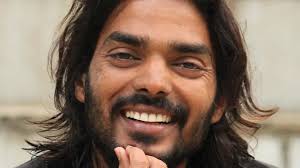
The director of Chaityabhumi on reclaiming space in cinema, media, and academia through Dalit narratives. Somnath Waghmare, a young researcher and filmmaker, is best known for his documentary Chaityabhumi (on MUBI) that explores a place called Chaityabhumi where Babasaheb Ambedkar was laid to rest in Dadar, Mumbai. The film explores the Ambedkarite movement while marking the death anniversary of Ambedkar when people gather at Chaityabhumi from all over India. The son of a mill worker, Waghmare is from Malawadi village in Maharashtra’s Sangli district. He completed his bachelor’s at a Marathi medium college in Islampur, then moved to Pune, Mumbai, Bengaluru, and back to Mumbai, where he completed his MPhil from Tata Institute of Social Sciences (TISS) and is now writing his PhD thesis. Waghmare spoke to Frontline about how cinema, media, and academia are highly Brahminical spaces; the influence of Dalit literature and US Black literature; and his appreciation of artists “who are very strong with their identity”. Excerpts: When did you first visit Chaityabhumi and how did it impact you? As a Maharashtrian Neo Buddhist, the Ambedkarite discourse is a part of my childhood memories. I remember visiting Chaityabhumi as a child; this is a part of my culture. There are few Dalit history sites that people regularly visit, like Bhima Koregaon, Chaityabhumi, Diksha Bhumi, Mahad and Mangaon in Kolhapur district, where Shahu Maharaj and Babasaheb had the first “untouchable” conference. When I studied media, I realised cinema and media and academia are highly Brahminical spaces. They are ignoring and deleting our stories. I decided to tell our stories from our own perspective. That’s the journey from childhood memory to making a film on Chaityabhumi. So, there is ignorance in the so-called mainstream media about the Ambedkar discourse. Is that the reason Chaityabhumi became a film? As a researcher I feel whenever people from non-Dalit backgrounds make films on Dalit stories, they show them as victims. Within that there’s another pattern: the saviour Brahmin heroes in those films. I wanted to break that narrative and tell the normal life of Dalits. Chaityabhumi is an interesting space where lakhs of people visit. People are aware that Ambedkar is not a god. This is a space where people are creating a counterculture against the Brahminical caste system. I wanted to tell that story. In your film we see Rahul Sonpimpale speaking about public spaces in the context of Chaityabhumi, a shared space. The camera then pans to slushy grounds and tarpaulin tents. Could you explain this juxtaposition? That scene I recorded in 2017. The film is not just about Ambedkarite culture, it’s also a critique of public space. People from the dominant caste, who are actually a minority of this country, think all public spaces in India are their own property. There is huge hatred for the December 6 gathering, also a contribution of our English media. Before 2018, reports focused on traffic jams. Then the media criminalised the Chaityabhumi gatherings. Book sales are around Rs.10 crore: This is the biggest literature festival, with almost 2,000 to 3,000 book stalls in Shivaji Park on December 6. That scene is a critique of public space politics. The iconography of Ambedkar in your film includes posters, calendars, and statues; the film is a tribute to Babasaheb. But Babasaheb himself was against the idea of worship. Could you comment on the iconisation of Babasaheb through your film? People are very aware that Ambedkar is not a god. Those who visit Chaityabhumi are also very aware. If you see Pranjali Kureel’s interview in the film, she clearly explains what this means. Buying these things is nothing but the Ambedkar discourse. Tell us more about your identity as a Dalit Buddhist filmmaker. I never hide my social identity. Savarnas never hide their identity: The oppressor doesn’t feel scared, so why should we? In India everything is dependent on your caste identity. My identity is important because if Chaityabhumi was made by a non-Dalit, what would that film be? I learnt these things from Dalit literature and Black literature and artists who have a strong sense of identity. My identity is very important to me, that’s why I’m making these films. “When you have an insider’s perspective, it comes with responsibility. It’s emotional, but it’s also a political responsibility to portray your people’s story in a dignified way.” Somnath Waghmare Director of documentary Chaityabhumi Your film portrays both emotional and political dimensions of Mahaparinirvan Diwas… When you are an insider to a film, it’s very emotional. This wasn’t a one-day shoot: I worked on this project for almost four years. I observed the extreme poverty of Indian Scheduled Castes. If you visit Shivaji Park on December 1 or 6, you will see the economic status of Scheduled Castes, whose population is around 25 to 30 crore in India. When you have an insider’s perspective, it comes with responsibility. It’s emotional, but it’s also a political responsibility to portrayyour people’s story in a dignified way. Your cultural assertion is through music, literature and public performances. Why was it important to highlight these forms of expression? The Dalit movement is now everywhere: This month people celebrate Ambedkar Jayanti as Dalit History Month in the US, Canada, Australia and the UK. Music is a very important tool for the Dalit movement. Ambedkarite singer Wamndada Kardak, who wrote 2,500 songs on Ambedkar. This is a very crowded place in the heart of Mumbai. How did you manage to navigate during filming? I got permission from the Ambedkar family and from the Buddhist Society of India. Several politicians visit. It’s difficult to enter but our team had Buddhist society pass that way. It’s a little bit easy to shoot this political gathering. How do you see this film contributing to the anti-caste movement and conversations? Because of this film I visited the US three times and went to Germany and the UK. We’ve screened the film in public spaces in India, in Delhi, Bengaluru, Mumbai and many educational institutions. We
Will SC Rights Be Upheld? — Here’s Why AJAK Rajasthan Presses Justice Balakrishnan Commission to Block New Groups in Scheduled Caste List

The letter strongly opposes the inclusion of new groups, such as Dalit Christians or Muslims, in the SC list, arguing that it could harm existing SC communities’ rights. Jaipur-The Dr. Ambedkar Anusuchit Jati Adhikari-Karmchari Association (AJAK Rajasthan) has taken a significant step to safeguard the interests of Scheduled Caste (SC) communities by submitting a detailed letter to the Justice K.G. Balakrishnan Commission. The letter expresses serious concerns over potential changes to the Scheduled Caste list under Article 341 of the Constitution and strongly opposes the inclusion of new groups, such as Dalit Christians or Muslims, which the organization believes could jeopardize the rights and benefits of existing SC communities. Representing SC employees’ communities, AJAK Rajasthan highlighted the daily struggles of caste-based discrimination and hardships faced by its members. The organization urged the Commission to protect the constitutional rights of existing SC communities and ensure that no amendments to the SC list are made for political reasons. The letter emphasizes preserving the sanctity of Article 341 and preventing religion-based restrictions on SC rights. Key Points Raised in the Letter The list of SC/ST citizens in India was prepared on the basis of historical facts of economic, educational and caste discrimination. The Constitution of India is the supreme law of India. Public servants posted in the legislature, judiciary and constitutional institutions take an oath to work according to the Constitution of India. According to Article 51 (a) of the Constitution of India, it is the constitutional duty of every citizen to obey the Constitution of India and behave accordingly. Thus contempt/violation of the Constitution of India falls under the category of punishable offence under Section 2 of the National Dishonour Act 1971. According to the law made by the Ministry of DOPT of the Government of India, the caste of any citizen in India is inherited from his/her father on the basis of birth. The caste of the father is inherited by the son/daughter on the basis of birth. The children of a Scheduled Caste/Scheduled Tribe father get the caste of their father i.e. Scheduled Caste. People belonging to Scheduled Caste are discriminated against on the basis of caste. Similarly, their children also face caste discrimination. Even if the citizens of Scheduled Caste/Scheduled Tribe change their religion, then on the basis of the caste acquired on the basis of birth, they continue to face discrimination on the basis of social, economic, educational and caste in other religions as well. Citizens get their caste from their father, so their caste remains with them till their death and there is always discrimination against them. To solve the social, economic, educational and caste discrimination, the Constitution of India has given the Scheduled Caste / Scheduled Tribe citizens the right to constitutional representation on the basis of caste in Articles 14, 15, 16, 335, 330, 332, 243D and 243T and has tried to reduce their social, economic, educational and caste discrimination. In India, representation in government services to SC/ST citizens in proportion to their population has been given by the Constitution of India on the basis of their social, economic and educational status. On the basis of Articles 15, 16 and 335 of the Constitution of India, the people of Scheduled Castes and Scheduled Tribes have got the constitutional right of representation in educational institutions and government services in proportion to their population. In Articles 15, 16 and 335, the constitutional right of representation has been given on the basis of caste. Neither in government services nor in politics, the constitutional right of representation has been given on the basis of religion. Therefore, the right to representation of Scheduled Castes cannot be restricted on the basis of religion. The Constitution of India does not impose any restriction on the citizens of SC/ST on the basis of religion even in Articles 15, 16 and 335. If the constitutional right of SC/ST citizens to government services and political representation is restricted on the basis of religion, then it would be a violation of Articles 14, 15, 16 and 335 of the Indian Constitution. Ostracized and Deprived: 70 Dalit Families in Haryana Village Pay Heavy Price for Not Supporting Upper Caste Candidate in 2024 Assembly Elections The Constitution of India provides the SC/ST citizens the constitutional right to representation in proportion to their population in Panchayats, Municipal Bodies, Legislative Assemblies and Lok Sabha. The Constitution of India, Article 243(d) provides the Scheduled Caste and Scheduled Tribe citizens the constitutional right to representation in proportion to their population in Gram Panchayats, 243T in Municipal Bodies, 332 in Legislative Assemblies and Article 330 in Lok Sabha. None of the articles providing the constitutional right to representation imposes any restriction on the basis of religion for giving representation in proportion to their population in Gram Panchayats, Municipal Bodies, Legislative Assemblies and Lok Sabha. The right to political representation has been given to socially, economically and educationally backward castes on the basis of caste and historical facts and evidence. Neither the right to representation has been given on the basis of religion nor can any restriction be imposed on it on the basis of religion. On the basis of social, educational and economic and historical facts, the Government of India has made a law for the SC/ST citizens belonging to the castes listed in the Constitution of India that the caste of any citizen is determined by the caste of his father. The father of a citizen naturally determines his caste. The SC/ST citizens have got the constitutional right to representation in government services in proportion to their population under Articles 15, 16 and 335 of the Constitution of India. They have got the constitutional right to representation on the basis of their caste in proportion to their population through Articles 2430, 243T, 330 and 332. There is no restriction on giving representation to Scheduled Caste and Scheduled Tribe citizens on the basis of religion in any of the above articles. The right to representation of Scheduled Caste and Scheduled Tribe has
Rajasthan BJP expels ex-MLA who ‘purified’ temple after Dalit Congress leader’s visit
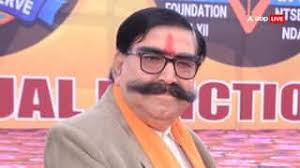
Gyandev Ahuja had carried out the ritual at a temple in Alwar after Tika Ram Jully, the leader of Opposition in the Rajasthan Assembly, visited it. The Bharatiya Janata Party on Sunday expelled former MLA Gyandev Ahuja after he conducted a “purification” ritual at a temple in Rajasthan’s Alwar following a visit by Dalit Congress leader Tika Ram Jully, The Indian Express reported. Jully, who is the leader of the Opposition in the Rajasthan Assembly, had visited the temple on the Hindu festival of Ram Navami earlier this month to attend a consecration ceremony, PTI reported. Before you scroll further… Following Jully’s visit, Ahuja performed a “purification” ritual at the temple on April 7, claiming that the Congress leader was “anti-Hindutva” and “anti-Sanatan”. Sanatana Dharma is a term some people use as a synonym for Hinduism. “This is a Lord Shri Ram temple at whose feet I have sprinkled Gangajal [water from the Ganga river],” the former MLA from Ramgarh was quoted as saying by The Indian Express. “Why Gangajal? Because some impure people came.” In response to his actions, the BJP on Sunday said that its state president Madan Rathore had “given an order to terminate the primary membership of former MLA Gyandev Ahuja after indiscipline was proved against him”. The BJP added that its state disciplinary committee had submitted a report about the incident to Rathore, The Indian Express reported. Ahuja had appeared before the committee on Sunday. Jully is the first Dalit politician in the state to become the leader of the Opposition in the Assembly. In response to Ahuja conducting the “purification” ritual, Congress leader Rahul Gandhi on April 9 had accused the BJP of “continuously insulting Dalits” and “attacking the Constitution”. “[Prime Minister Narendra] Modi ji, the country will be run by the Constitution and its ideals, not by Manusmriti, which considers Bahujans as second-class citizens,” the leader of the Opposition in the Lok Sabha had said. The Manusmriti is a Hindu scripture authored by an ascetic named Manu. The text has been widely criticised for its gender and caste-based codes. Former Chief Minister Ashok Gehlot also said that the incident showed “the ill-will of BJP towards Dalits”. “Such narrow-mindedness is not acceptable in a civilised society in the 21st century,” the Congress leader had said on X. “It cannot be condemned in the strongest words possible.” Jully too had called Ahuja’s actions as indicative of the BJP’s mentality towards Dalits, according to PTI. Ahuja, however, had said that he done nothing wrong and that his actions were against the Congress party, The Indian Express reported. “If there is even an iota of evidence that I have done something wrong, then… I am ready to shave my moustache,” The Indian Express had quoted him as saying. After his expulsion, Ahuja claimed that the BJP had been misled by Congress propaganda. Courtesy : Scroll Note: This news is originally published on https://scroll.in/na and is used purely for non-profit/non-commercial purposes, especially human rights.
SP workers booked after police stop visit to Dalit family in B’shahr

Meerut: An FIR was filed against 15–20 unidentified Samajwadi Party (SP) functionaries after a delegation led by Rajya Sabha MP Ramjilal Suman was stopped at the Aligarh-Bulandshahr border and sent back following a scuffle with police, officials said on Sunday. The delegation was on its way to Sunhera village in Bulandshahr, where a Dalit family was run over by an SUV allegedly driven by upper-caste men after they objected to rash driving. In the incident, an elderly woman died, and several others were injured. On Sunday, over 50 SP workers accompanying the delegation reached the Gabhana toll plaza, where SP Rural Tejveer Singh and a police team intervened. “The group did not seek prior permission before their visit. They were stopped to maintain law and order. Police have been deployed in the village to prevent any untoward incident,” Singh said. Police said the SP functionaries were charged under sections 191 (rioting), 121(2) (voluntarily causing grievous hurt to a public servant), and 132 (assaulting or using criminal force against a public servant while performing duty) of BNS. Further investigation is underway. Senior SP leader Haji Akhter termed the police action “an act of dictatorship,” asking, “If we are not allowed to meet the victim’s family, what are they trying to hide?” The incident that sparked the visit occurred on April 22, when Sheela Devi was killed and four others injured after being run over by an SUV outside their home. Four Thakur men have been arrested in connection with the case, and an FIR was lodged at Bulandshahr’s Kotwali Dehat police station. Courtesy: Times of India Note: This news is originally published on https://timesofindia.indiatimes.com/ and is for use by the non-military/non-commercial community, especially those in the human rights sector.
Youths stripped and beaten by mob in Aligarh: Community said they were beaten for chanting ‘Jai Bhim’, police said—a case of molestation, no caste angle!
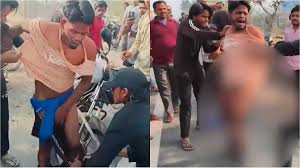
Some people from the Dalit community have alleged that the youths were targeted because of their caste. According to some reports, the victim youths had chanted “Jai Bhim”, after which the mob attacked them. Aligarh/ Uttar Pradesh- Three youths were stripped and brutally beaten by a mob in Chikavati village of Lodha police station area of Aligarh for making obscene comments to a school girl. The incident took place on April 26, a video of which is going viral on social media, showing that the youths of the Dalit community were allegedly targeted for chanting “Jai Bhim”. The viral video shows that the attackers stripped the youths naked on the road and beat them with sticks. However, the police rejected these claims and said that it was a normal dispute and there is no caste angle in it. The police say that people have beaten these youths for making obscene comments and lewd remarks at a school girl. It is alleged that three youths made obscene comments and harassed a minor girl student. The girl raised an alarm, after which the people around surrounded the three youths and stripped them and beat them with sticks. In the viral video, it can be seen that the mob surrounded the youths on the road and beat them up. The Lodha police station administration has registered an FIR in this case and legal action is being taken against the accused. Area Officer Gabhana, Sanjeev Kumar Tomar said that “the incident is limited only to making obscene comments with the girl student. No caste matter has come to light in the investigation so far.” However, some people from the local Dalit community have alleged that the youths were targeted because of their caste. According to some reports, the victims were shouting “Jai Bhim” following which the mob attacked them. The incident has sparked tension locally, with some in the Dalit community linking it to caste violence. However, the police have registered the case as a normal dispute and have not confirmed the caste angle. Courtesy : Geetha Sunil Pillai, Hindi News
From monuments to settlements: Mayawati seeks a way back to Dalit politics in UP
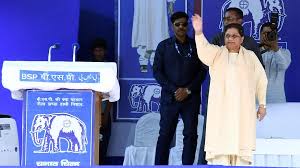
From Congress to BJP, all parties are competing to woo Dalits, but will SP-BSP be able to restore their ground hold and trust or will Hindutva get an open field? What is happening in Uttar Pradesh, is it what the Dalits of Uttar Pradesh want or are political parties expecting Dalits to transform their political aspirations into power? This question is related to the recent political events in Uttar Pradesh. The first incident is of February 20, when Rahul Gandhi was on his tour of his parliamentary constituency Rae Bareilly. Where Rahul Gandhi, while addressing the gathering, put the question before the Dalits that why does Mayawati (Behenji) not participate in the elections in her old style? She should be a part of the Indian National Development Inclusive Alliance (INDIA). Congress is organizing many programs across the state to unite the Dalit community before the assembly elections to be held in 2027. The second incident is of a seminar organised by BJP in Gomtinagar, Lucknow in February itself. BJP has organised a seminar named “Samajik Nyay” on a mission to connect with Dalit youth and intellectuals against PDA (Backward, Dalit and Tribal) by Samajwadi Party, to shape the thinking of the community and change voting behaviour. This event has been organised under the patronage of BJP state secretary Dharampal Singh. Dalit students, teachers, professors were invited to this seminar. Through this, BJP wants to draw the educated Dalit community to its side. To counter the campaign of rival parties to make inroads among Dalits, Mayawati warned her supporters that the conduct, character and face of BJP, SP and Congress have always been staunchly opposed to Dr. Ambedkar. BSP’s UP unit president Vishwanath Pal said, “Cadre camps” are being organised in assembly constituencies to tell party supporters about the tactics of BJP, SP and Congress as well as the ideals of BSP. Senior party leaders and youth have been directed to participate in the camps to make them aware of the struggle of party founder Kanshi Ram and the party chief. Mayawati’s challenges Now the question is whether this strategy of BSP will be able to bring to the ground the political memory of Dalits which started from BS-4 and came to the fore in 2007 in the form of BSP government. An old BSP worker believes that BSP does not need to change the strategy to decorate the political game but there is a need to re-look and understand the old strategy. Because even today the influence of Mayawati’s political power can change the political meaning of Uttar Pradesh. Mayawati’s work still has a deep impact on Uttar Pradesh. For example, the grand memorial in Lucknow, party office, Ambedkar memorial, parks, gardens, roads and bridges etc. Obviously, this The works are still alive in the political memory of Dalits. But how to convert this memory into political practicality? This will be a tough challenge for Mayawati. According to the Lokniti-CSDS (Centre for the Study of Developing Societies) post-poll survey (Provide the Link), the party retained only 44 percent of its traditional Jatav vote, down from 68 percent in 2014, besides retaining only 15 percent of the non-Jatav Dalit vote, compared to 30 percent a decade ago. To change this political equation once again, it is necessary that Mayawati herself addresses political meetings and strengthens her reach among the youth. An ideological change has also been seen in the BSP after Kanshi Ram. The party which has come up with ‘Tilak Tarazu Aur Talwar Inko Maaro Joote Chaar’ and ‘Haathi Nahin Ganesh Hai Brahma Vishnu Mahesh Hai’ will have to visit those localities once again to gain political trust among Dalits and backward castes which used to be inhabited during the BSP government. In their survey titled ‘Political Participation of Dalits’, Dalit women believe that one day Behenji will definitely come among us and she will rule Uttar Pradesh. Despite all this, the regional parties of Uttar Pradesh do not have any political language that can agitate the common people there. For example, during the tenure of Mulayam Singh Yadav, Mayawati and Akhilesh as Chief Ministers in Uttar Pradesh, it was almost assumed that the credit for becoming the Chief Minister of Uttar Pradesh will go to the backward castes or Dalits. The political mood of the public was also based on these wishes. After the arrival of BJP, this story started turning upside down. A Dalit worker of BSP believes that the BJP government sees Dalits and backward castes only as votes. Political paradox in UP There are two reasons for this political paradox in Uttar Pradesh. First, there has been a change in the top leadership of regional parties, be it Samajwadi Party or Bahujan Samaj Party. Now the matter has gone beyond the image of ‘neta ji’ and ‘chacha ji’ of Mulayam Singh Yadav. Now the command has come in the hands of Akhilesh ji or Bhaiya. Who, instead of speaking the political language of the rural environment, started talking about political strategy based on the wisdom of foreign education. One result of this was that Shivpal had to form a separate party. On the other hand, SP considered its caste mobilization as its vote base. Samajwadi Party does not seem to have any strategy yet to regain its lost vote base among non-Yadavs. But the SP-Congress alliance had made a significant dent in the Dalit vote bank, which takes the party beyond the old Muslim-Yadav equation. According to the post-election survey of Lokniti-CSDS, India Block has secured 56 percent of non-Jatav Dalit votes and 25 percent of Jatav votes. The SP, traditionally seen as a party of Muslims and Yadavs, actually managed to win seven out of the 17 constituencies reserved for Scheduled Castes. Whereas in the last Lok Sabha elections, it did not get any seat. But if the political assessment of SP is done independently, then due to the lack of any political base, its position does not look better in the 2027 assembly
Internal reservation: Dalit right and left groups start awareness campaigns on choice of nomenclature
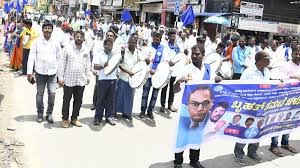
Dalit left and Dalit right groups are anxiously reaching out to their communities to ensure that their populations are enumerated accurately. File image for representation. Karnataka has been having intense discussions on the population data of castes and sub-castes after the contents of the Socio-Economic and Educational Survey (caste census) report was accepted by the State Cabinet. Simultaneously, several developments are unfolding, though more quietly, around another survey to map the Scheduled Castes (SCs) in the State and their socio-economic and education levels, which is set to get under way on May 5. In the run-up to it, Dalit ‘left’ and Dalit ‘right’ groups are anxiously reaching out to their communities to ensure that their populations are enumerated accurately. The numbers are crucial as they are set to determine the internal reservation for the caste groups within the larger reservation matrix of 24% for the SCs in Karnataka. Karnataka to hold fresh survey of Scheduled Castes within 60 days to collect empirical data for internal reservation Part of panel’s work The caste census, conducted in 2015, has pegged the total SC population in Karnataka to be 1.09 crore or about 18.2% of the total population. The survey to identify SC households and their sub-castes is part of the work of the commission headed by retired judge H.N. Nagamohan Das that has been asked by the government to recommend internal reservation. “We are urging all the castes and sub-castes in the larger Dalit right community to use the original name of their castes/sub-castes during enumeration and not use nomenclatures of Adi Karnataka (AK), Adi Dravida (AD) or Adi Andhra (AA). Teams have been formed and awareness camps are being held in all districts across Karnataka,” said D. Chandrashekaraiah, an office-bearer in the Karnataka Chalavadi Mahasabha, representing the Dalit ‘right’ group. Why the survey is being conducted The survey results will help H.N. Nagmohan Das Commission to secure empirical data and recommend internal reservation An attempt by BJP to provide internal reservation in 2022 based on recommendation of 2012 A.J. Sadashiva Commission had not fructified The Dalit left group accuse Dalit right group of cornering the reservation benefits. The Ddalit left group, based on figure arrived at by the 2012 A.J Sadashiva Commission report, claim their number to be higher than the Dalit right, which is contested. There is confusion about the usage of Adi Karnataka, Adi Dravida and Adi Andhra — pre-independence nomenclatures — coined to bring together group of castes. The caste census, conducted in 2015, has pegged the total SC population in Karnataka to be 1.09 crore or about 18.2% of the total population. The survey to identify SC households and their sub-castes is part of the work of the commission headed by retired judge H.N. Nagamohan Das that has been asked by the government to recommend internal reservation. “We are urging all the castes and sub-castes in the larger Dalit right community to use the original name of their castes/sub-castes during enumeration and not use nomenclatures of Adi Karnataka (AK), Adi Dravida (AD) or Adi Andhra (AA). Teams have been formed and awareness camps are being held in all districts across Karnataka,” said D. Chandrashekaraiah, an office-bearer in the Karnataka Chalavadi Mahasabha, representing the Dalit ‘right’ group. The issue over the slicing up of 24% reservation following the Supreme Court’s order on internal reservation comes from the fact that both Dalit ‘right’ and Dalit ‘left’ community members have AK certificates, depending on the regions. Both communities are also found to be using nomenclatures of AA, AD, and AK. The chaos of Karnataka’s caste survey Regionals variations If in Tumakuru, Ballari, Shivamogga, Davangere, Chitradurga, KGF, and Udupi, the Dalit ‘right’ identify themselves as AD and Dalit ‘left’ are identified as AK, in Chamarajanagar, Mysuru, Kodagu, Hassan, Chikkamagaluru, Mandya, Ramanagara, Kolar, Bengaluru Urban, and Bengaluru Rural districts, Dalit ‘right’ is identified as AK while Dalit ‘left’ is identified by the name Madiga. Those identifying themselves as AA are in Bengaluru Urban and Bengaluru Rural, Kolar and Chickballapur region. “Handbills and stickers are being used to create awareness on how to list themselves. In Bombay Karnataka region districts of Gadag, Haveri, Vijayapura, and Bagalkot, besides parts of Kalaburagi, people call themselves as ‘Madar’ which is serial number 21 in the notified list. However, we are asking all Dalit left communities to register themselves as ‘Madiga’, which is serial number 61 in the SC list,” said Basavaraj Kowthal of Madiga Samudaya Jagruthi Andolana. Courtesy: The Hindu Note: This news is originally published on https://www.thehindu.com and is for use by the non-military/non-commercial community, especially those in the human rights sector.
Bihar East Champaran: Massive fire in Dalit colony of Raxaul, dozens of houses destroyed

East Champaran: Dozens of houses were burnt to ashes in a massive fire in a Dalit colony in Raxaul of the district. It is being told that the fire spread so fast amid strong winds that many houses were engulfed in it in no time. Local people immediately informed the fire department about the fire. Two fire brigade vehicles reached the spot and after a lot of effort, the fire was controlled. As soon as the information about the incident was received, Raxaul police and SSB personnel also reached the spot and helped the local people in extinguishing the fire. Property worth lakhs of rupees is estimated to have been lost in this fire incident. Local resident Chandrika Malik said that preparations for weddings were going on in many houses in the colony. Clothes, jewelry and other items bought for the wedding also fell prey to the fire. He told that everyone was busy preparing for the wedding, when suddenly the fire destroyed everything. Circle Officer Shekhar Raj said that as soon as the information about the fire was received, a light employee was sent to the spot. The damage is being assessed. After which the process of providing assistance to the affected families has also been started. At present, the cause of the fire has not been ascertained. After the incident, there is an atmosphere of chaos and despair in the colony. Courtesy: Hindi News
Visibility turns a curse for Dalits when it exposes us to violence: Poet Aleena

In an interview with TNM, Aleena, a young award-winning bilingual poet from Kerala, reflects on caste, literature and her experiences of writing poetry as a Dalit Christian. On April 23, Aleena, an acclaimed young poet from Kerala, read her poems in English and Malayalam at Atta Galata in Bengaluru. The event, organised by Moonbird Creative and attended by more than 100 people, also witnessed lively discussions. Aleena, a rising star on Instagram, a platform she uses to share poetry and create anti-caste awareness also shared her lived experiences within the Dalit Christian community and the politics surrounding their survival and resistance. Aleena is the winner of the Kerala State Sahitya Akademi Kanakashree Award in 2021 for her debut poetry collection Silk Route. She writes in Malayalam and English, bringing together personal and political narratives in her poetry. Her work has sparked viral conversations around casteism, identity, and representation, or the lack thereof, in the mainstream. Speaking to TNM, Aleena discussed her foray into writing, the Dalit presence in Indian media and what she’s got lined up next. QCan you talk about your early work and what drew you to writing poetry? AAleena: I was quite the writer kid from my school days itself. So, writing was something that was with me from the beginning. Even during schooldays, I enjoyed being the writer kid. In schools, you get special attention from teachers if you are artistically inclined. Writing was the thing I latched onto.At first, I actually wanted to write fiction, but then I understood that it’s too hard for me, personally. Poetry comes a little more easily to me. It’s a more minute thing, while fiction is a bit larger. If you zoom into one thing, you get poetry, if you take a wider angle, you get fiction. So for quite a few years, I’ve been feeling like zooming in, that’s why I’m writing poetry. QHow do you see the representation of Dalit voices in contemporary literature and popular culture? AAleena: I think writing is the first artistic thing that Dalits did in modern or post-colonial India. I feel writing was and is a bit more accessible to Dalits than other forms of art, like making films or doing fine arts. You just have to learn how to write and put down your thoughts, maybe send them out to editors, publishers. Sometimes they accept it and sometimes they don’t. Then you look for other options for publishing it. But I think writing is where most of our people are. Like, in Malayalam, we have a lot of poets from the community. But there are fiction writers only in limited numbers. What we have more of are autobiographies and memoirs because the [Dalit] life itself is very much absent in popular culture, let alone their art. We rarely see our lives in popular culture. It’s still exoticised, seen as other. When someone is picking up a book by a Dalit artist or Dalit writer, they are looking for specific things that we do not get to see in Savarna literature. So, of course, we have to be represented more in terms of genres, like science fiction, fantasy, horror, and mythology. But, other than that, we have to get more into popular culture, like films, for example. What I have also felt is that writing is a one-person job, so I can do it alone. But for films and other artworks, we have to have a network. This network is lacking so much in this community. I think (Dalit) writing is there, but it’s still considered as something not marketable, or not widely read. It stays in some circles only. So that’s a problem we are facing because our society as a whole, is not quite ready to wholeheartedly accept our literature yet. I even face a lot of backlash for my poetry on Instagram. That’s because people are still not there mentally. And people can’t even ignore it, like, “let her say something, I’ll move on with my life.” No. They have to attack and say something. So it’s a bit messy. It affects our mental health, our work quality. A lot of time gets wasted. Human rights of Dalits are being violated every day, there is news of communal violence all the time. QIs that what might be stopping artists from marginalised backgrounds from pursuing their art? AAleena: I don’t feel like we quite think “how this piece is gonna be received” when we are making it. We do it because it involves a lot of pleasure when we are creating something. So nothing matters at that moment. But on putting it out there, they may begin to worry [about the response]. I started this page last year, and at first, I had like, 300 followers, only my friends and their friends. Then I wasn’t worried about anything because who’s gonna see it? I thought it would stay in our circles only, so people who don’t understand it or people who don’t quite agree with it won’t come and attack me. That’s what I thought. But it just went a little out of hand. This visibility is also a curse for a person from a marginalised community. Social media gives us the visibility that traditional media is refusing to give us, but it also exposes us to a lot of violence. QWhat prompted you to start posting content on the Internet? AAleena: It’s because I wanted to publish in English, but then I was totally lost there. I didn’t know how to do it because in the literature scene, everything happens through networks. In Malayalam, we have a lot of poets from the community. So even though they lack the kind of economical privilege or the power to make decisions, they have cultural capital. If they are saying, “oh, this poet is good,” then we are automatically seen as good. So, the growth of Dalit literature in Malayalam has actually helped a lot of young poets like me to
Will SC Rights Be Upheld? — Here’s Why AJAK Rajasthan Presses Justice Balakrishnan Commission to Block New Groups in Scheduled Caste List
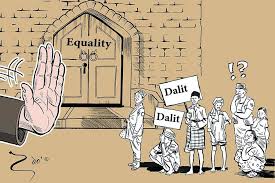
The letter strongly opposes the inclusion of new groups, such as Dalit Christians or Muslims, in the SC list, arguing that it could harm existing SC communities’ rights. Jaipur-The Dr. Ambedkar Anusuchit Jati Adhikari-Karmchari Association (AJAK Rajasthan) has taken a significant step to safeguard the interests of Scheduled Caste (SC) communities by submitting a detailed letter to the Justice K.G. Balakrishnan Commission. The letter expresses serious concerns over potential changes to the Scheduled Caste list under Article 341 of the Constitution and strongly opposes the inclusion of new groups, such as Dalit Christians or Muslims, which the organization believes could jeopardize the rights and benefits of existing SC communities. Representing SC employees’ communities, AJAK Rajasthan highlighted the daily struggles of caste-based discrimination and hardships faced by its members. The organization urged the Commission to protect the constitutional rights of existing SC communities and ensure that no amendments to the SC list are made for political reasons. The letter emphasizes preserving the sanctity of Article 341 and preventing religion-based restrictions on SC rights. Key Points Raised in the Letter The list of SC/ST citizens in India was prepared on the basis of historical facts of economic, educational and caste discrimination. The Constitution of India is the supreme law of India. Public servants posted in the legislature, judiciary and constitutional institutions take an oath to work according to the Constitution of India. According to Article 51 (a) of the Constitution of India, it is the constitutional duty of every citizen to obey the Constitution of India and behave accordingly. Thus contempt/violation of the Constitution of India falls under the category of punishable offence under Section 2 of the National Dishonour Act 1971. According to the law made by the Ministry of DOPT of the Government of India, the caste of any citizen in India is inherited from his/her father on the basis of birth. The caste of the father is inherited by the son/daughter on the basis of birth. The children of a Scheduled Caste/Scheduled Tribe father get the caste of their father i.e. Scheduled Caste. People belonging to Scheduled Caste are discriminated against on the basis of caste. Similarly, their children also face caste discrimination. Even if the citizens of Scheduled Caste/Scheduled Tribe change their religion, then on the basis of the caste acquired on the basis of birth, they continue to face discrimination on the basis of social, economic, educational and caste in other religions as well. Citizens get their caste from their father, so their caste remains with them till their death and there is always discrimination against them. To solve the social, economic, educational and caste discrimination, the Constitution of India has given the Scheduled Caste / Scheduled Tribe citizens the right to constitutional representation on the basis of caste in Articles 14, 15, 16, 335, 330, 332, 243D and 243T and has tried to reduce their social, economic, educational and caste discrimination. In India, representation in government services to SC/ST citizens in proportion to their population has been given by the Constitution of India on the basis of their social, economic and educational status. On the basis of Articles 15, 16 and 335 of the Constitution of India, the people of Scheduled Castes and Scheduled Tribes have got the constitutional right of representation in educational institutions and government services in proportion to their population. In Articles 15, 16 and 335, the constitutional right of representation has been given on the basis of caste. Neither in government services nor in politics, the constitutional right of representation has been given on the basis of religion. Therefore, the right to representation of Scheduled Castes cannot be restricted on the basis of religion. The Constitution of India does not impose any restriction on the citizens of SC/ST on the basis of religion even in Articles 15, 16 and 335. If the constitutional right of SC/ST citizens to government services and political representation is restricted on the basis of religion, then it would be a violation of Articles 14, 15, 16 and 335 of the Indian Constitution. The Constitution of India provides the SC/ST citizens the constitutional right to representation in proportion to their population in Panchayats, Municipal Bodies, Legislative Assemblies and Lok Sabha. The Constitution of India, Article 243(d) provides the Scheduled Caste and Scheduled Tribe citizens the constitutional right to representation in proportion to their population in Gram Panchayats, 243T in Municipal Bodies, 332 in Legislative Assemblies and Article 330 in Lok Sabha. None of the articles providing the constitutional right to representation imposes any restriction on the basis of religion for giving representation in proportion to their population in Gram Panchayats, Municipal Bodies, Legislative Assemblies and Lok Sabha. The right to political representation has been given to socially, economically and educationally backward castes on the basis of caste and historical facts and evidence. Neither the right to representation has been given on the basis of religion nor can any restriction be imposed on it on the basis of religion. On the basis of social, educational and economic and historical facts, the Government of India has made a law for the SC/ST citizens belonging to the castes listed in the Constitution of India that the caste of any citizen is determined by the caste of his father. The father of a citizen naturally determines his caste. The SC/ST citizens have got the constitutional right to representation in government services in proportion to their population under Articles 15, 16 and 335 of the Constitution of India. They have got the constitutional right to representation on the basis of their caste in proportion to their population through Articles 2430, 243T, 330 and 332. There is no restriction on giving representation to Scheduled Caste and Scheduled Tribe citizens on the basis of religion in any of the above articles. The right to representation of Scheduled Caste and Scheduled Tribe has been given due to historical reasons of caste discrimination. There is no discrimination on the basis of religion. It is the people