MP: Dalit Man Denied Funeral Rights, Family Protests on Road as Upper Castes Block Cremation
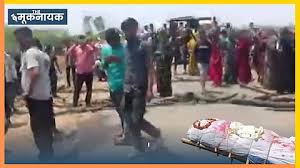
Under section Section 3(1)(zc) of the SC/ST (Prevention of Atrocities) Act, 1989, preventing an SC/ST member from performing last rites is punishable with 6 months to 5 years in jail and a fine. Bhopal: A shocking incident of caste-based discrimination has exposed the administration’s apathy and the fragile social fabric in Madhya Pradesh’s Sheopur district. On Monday, tensions flared in Leelada village under the Vijaypur assembly constituency when members of the Rawat community prevented the cremation of Jagdish Jatav, a Dalit youth, forcing his grieving family to stage a protest by placing his body on the road. The situation escalated to stone-pelting, with authorities struggling to restore order despite intervention. Jagdish Jatav, a resident of Leelada village who worked a private job in Bengaluru, died in a road accident. Five days later, his body was brought back to the village on Monday morning. When his family attempted to perform the last rites in the afternoon, members of the dominant Rawat community objected, sparking a violent confrontation. Furious over the obstruction, Jatav’s family and supporters blocked the road with his body, leading to clashes. The Jatav community claims their traditional cremation ground was acquired for a railway project, leaving them with no alternative site. Though the local patwari (revenue official) allocated government land for the funeral, the Rawat community resisted, arguing the land was near their farms. “This is government land, not privately owned. Yet, the Rawats won’t let us bury our dead,” said Suresh Jatav, a villager. In contrast, Rawat women asserted, “We won’t allow cremation near our fields. They must find another spot.” Furious over the obstruction, Jatav’s family and supporters blocked the road with his body, leading to clashes. Stones were hurled, prompting the SDM, Abhishek Mishra, and other officials to rush to the spot. Collector Arpit Verma admitted, “The situation is not fully under control. We are trying to maintain peace.” Furious over the obstruction, Jatav’s family and supporters blocked the road with his body, leading to clashes. The incident violates the SC/ST (Prevention of Atrocities) Act, 1989: Section 3(1)(zc): Preventing an SC/ST member from performing last rites is punishable with 6 months to 5 years in jail and a fine. Political Outrage Congress MLA Mukesh Malhotra demanded strict action, warning of protests if an FIR isn’t filed. State Congress chief Jitu Patwari accused the BJP-backed Rawat supporters of “hooliganism,” calling it a failure of governance. Ex-CM Kamal Nath slammed the BJP, tweeting, “Dalits face discrimination even in death under this regime.” The incident raises grave questions about constitutional rights for Dalits in MP. Denial of funeral rights blatantly violates Article 17 (abolition of untouchability) and principles of social justice. Former SC Commission member Pradeep Ahirwar (now with Congress) accused the Mohan Yadav-led BJP government of enabling caste atrocities. “Top officials infected with Manuvadi ideology are denying Dalits equality. Police inaction proves complicity,” he told The Mooknayak. Courtesy: The Mooknayak Note: This news is originally published on https://en.themooknayak.com and is for use by the non-military/non-commercial community, especially those in the human rights sector.
Tamil Nadu Dalit and transgender activist Grace Banu summoned in months-old robbery case filed by UP police

The case stems from a complaint by Devika Devendra S Manglamukhi, a member of the Uttar Pradesh Transgender Welfare Board, who alleged that she was robbed and threatened by a group of masked individuals in Lucknow in December 2024. Synopsis: Dalit and Transgender activist Grace Banu has been summoned by Lucknow police in a robbery case. Named with three others, Banu denies involvement, linking the FIR to her advocacy for horizontal reservation for trans persons. She further claimed the case is false and politically driven. Other activists also claimed the case is caste-driven and aims to silence voices pushing for equitable representation within caste categories. Tamil Nadu-based Dalit and transgender activist Grace Banu has been summoned by the Lucknow police in connection with a robbery case filed in January this year. The case stems from a complaint by Devika Devendra S Manglamukhi, a member of the Uttar Pradesh Transgender Welfare Board, who alleged that she was robbed and threatened by a group of masked individuals in Lucknow in December 2024. Grace Banu is one of four transwomen named in the first information report (FIR), alongside fellow activists Yashika, Jane Kausik, and Rithvika. The FIR accuses them of serious charges, including assault and robbery. While the FIR was registered in January, the summons to appear before the Talkatora Police Station in Lucknow was issued to Banu only recently. ‘Fabricated case to intimidate me’: Grace Banu However, Banu has strongly denied any connection to the alleged incident. Speaking to South First, she said, “I have never even been to Uttar Pradesh in my life. This case is clearly fabricated and intended to intimidate those of us advocating for horizontal reservation for trans persons.” Describing her first interaction with the police, Banu said, “I was contacted by someone claiming to be from the Lucknow police. They told me a case had been filed and that I needed to appear immediately. When I asked for the FIR, they directed me to download it from the government portal and sent a summons to me only via WhatsApp.” She further added, “When I questioned the process, they responded with veiled threats, saying if I didn’t appear, they would ‘drag me from my house’. I then consulted my lawyer and sent a formal response through the same WhatsApp number. I’ve received no reply since.” Activists claim case is politically motivated Banu believes the FIR is not only baseless but politically and socially motivated. “Devika Manglamukhi is targeting activists who are vocal about horizontal reservation. I’ve never interacted with her, yet I’ve been named in this case. This is a clear attempt to stall the growing movement for equitable representation for trans persons,” she said. She added that the other activists named in the FIR have also been outspoken on horizontal reservation — a key issue within the trans rights movement that seeks representation for trans persons across caste categories rather than under a single umbrella like OBC. Prior tensions between complainant and activists surface The case also appears to be the latest escalation in a long-standing dispute between complainant Devika Manglamukhi and activist Yashika. In January, Yashika filed a complaint with the National Commission for Scheduled Castes (NCSC), alleging that Devika was targeting trans women advocating for horizontal reservation. The Commission had subsequently issued a notice to Devika. Banu said the case cannot be separated from caste dynamics. “Yashika is an OBC trans woman. Devika comes from an upper-caste background. These caste differences have played out in how Devika has tried to dominate and silence other trans voices. This FIR is just another extension of that oppression,” Banu said. What is horizontal reservation? Explaining the principle behind horizontal reservation, Banu said the movement began in South India in 2011. “The NALSA verdict suggested trans persons be placed under the OBC category, but we argue that this is reductive. Not all trans people come from the same caste or class backgrounds. We face intersecting layers of discrimination such as caste, gender, and economic marginalization,” she said. Horizontal reservation, she explained, ensures that trans persons receive proportional representation within each existing caste category’s SC, ST, OBC, and General, rather than being grouped into a single slot. “Karnataka has already implemented this model. We are fighting for the same in Tamil Nadu. We’ve led protests, filed court cases, and run awareness campaigns. This case is clearly aimed at derailing that momentum. But let me be clear — it will not succeed,” Banu reiterated. Courtesy: The South First Note: This news is originally published on https://thesouthfirst.com and is for use by the non-military/non-commercial community, especially those in the human rights sector.
Scheduled Caste government workers’ body opposes adding Dalit Christians or Muslims to Scheduled Caste list
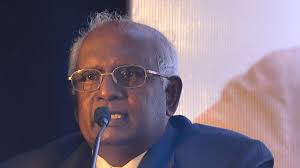
Association writes to Justice-K.G. Balakrishnan panel saying such a move made for ‘political reasons’ would dilute their rights An association of Scheduled Caste government employees based out of Rajasthan has now written to the Justice K.G. Balakrishnan-led Commission of Inquiry, expressing fears that any addition to the SC list for “political reasons” — like that of Dalit Christians and Muslims — would “dilute our rights and benefits”. The Dr. Ambedkar Anusuchit Jati Adhikari Karmchari Manch (AJAK), based in Jaipur, has written to the Chairperson of the Commission, former Chief Justice of India K.G. Balakrishnan, saying that they “strongly oppose adding new groups, like Dalit Christians or Muslim, to the SC list”. The organisation, which represents government servants – both serving and retired, requested the Commission for a meeting in this regard, saying that it hoped the Commission would stand with it to protect the interests, rights, and benefits of existing Scheduled Caste communities in the country. It said, “From time to time, the State governments and Central government have been disrespecting and violating the Constitution of India for their political gains and have been changing the list of Scheduled Castes to serve their political interests.” Shriram Choradiya, President of AJAK, Rajasthan, told The Hindu that such changes to the SC list might lead to “Manipur-like” situations in parts of the country, adding that the government’s “ulterior motive” is to divide SC people. In the letter, AJAK also referenced the addition of communities to the SC list in Uttarakhand as sub-castes, by the State government, in 2013 and 2014, arguing this is violative of Article 341, which gives only Parliament the power to modify the list. In the letter, AJAK said, “We fear that adding new groups, like Dalit Christians or Muslims, to the SC list without strict checks will harm our rights and benefits.” Mr. Choradiya added, “We understand that caste discrimination does not stop even after changing one’s religion. But that should not be a cause to keep fiddling with the SC list. If they need to be protected, then let the government come up with a new category like they did for OBCs or even EWS category.” The Justice K.G. Balakrishnan-led Commission was constituted by the Union Social Justice Ministry in October 2022. It was instructed to assess if Christians and Muslims, who have historically belonged to SC communities, could be added to the SC list. Dalit Christians and Muslims have for decades now argued that changing their religion had not put an end to caste discrimination and have been demanding SC status. The Supreme Court has been hearing this issue for over 20 years now. Currently, only communities that practice Hinduism, Buddhism, and Sikhism are permitted to be categorised as SC. Initially given two years to submit a report, the Commission’s tenure was extended in October 2024. It is now expected to submit its report on the issue by October this year. The Prime Minister Narendra Modi-led Union government has made its position on the issue clear — both to the Commission of Inquiry and to the Supreme Court. Its argument has been that it was justified to exclude Dalit Christians and Muslims from the SC list, alluding to the “foreign origins” of Islam and Christianity. Courtesy : The Hindu Bureau, The Hindu Note: This news has been originally published on https://thehindu.com/state/madhya- and has been used purely for non-profit/non-commercial purposes, especially human rights.
Daughter and son-in-law were forced to drink poison for marrying a Dalit: What did the Supreme Court say about ‘casteism’ in the famous 2003 honor killing case of Tamil Nadu?
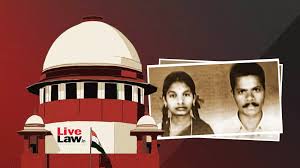
The case in which Kannagi, a young woman from the Vanniyar community and Murugesan, a Dalit, were murdered because of their inter-caste marriage is considered to be the first recorded honor killing case in Tamil Nadu. New Delhi- The Supreme Court upheld the sentence of 11 convicts in the famous 2003 honor killing case of Tamil Nadu and said that casteism, which has penetrated deep into Indian society, is the root cause of this heinous crime. This case, in which Kannagi, a young woman from the Vanniyar community and Murugesan, a Dalit, were murdered because of their inter-caste marriage, is considered to be the first recorded honor killing case in Tamil Nadu. Terming it as the “cruel reality of caste hierarchy”, a bench of Justices Sudhanshu Dhulia and Prashant Kumar Mishra, in a hearing held on 28 April 2025, said, “Such crimes, ironically called honour killings, require severe punishment. Case Details This heartbreaking crime took place on 7-8 July 2003 in Pudukorapettai village in Cuddalore district of Tamil Nadu. Kannagi (Vanniyar community) and Murugesan (Dalit community), both 20 years old, were in love with each other. Murugesan had completed his B.E. in Chemical Engineering from Chidambaram and was working in Bengaluru, while Kannagi was pursuing B.Com. Knowing Kannagi’s family’s disapproval, the two secretly got married on 5 May 2003 before the Registrar of Marriages in Cuddalore. In July 2003, when the two secretly left the village, the accused were arrested and the accused was arrested. Moved away, Kannagi’s brother Maruthupandiyan threatened Murugesan’s father Samikannu to bring Murugesan back. Maruthupandiyan falsely claimed that Murugesan had not returned the money he had borrowed from him. On 7 July, Murugesan was brought to the village, where he was stripped naked, tied to a pole and brutally beaten to reveal Kannagi’s whereabouts. This brutality took place in the presence of many people from the village, but no one tried to stop it. Murugesan eventually revealed the whereabouts of Kannagi, who was in Moongilthuraipattu village. Kannagi was brought to the village, and on the morning of 8 July, both were taken to a cashew orchard and forcibly administered the pesticide Nuvacron (monocrotophos). Kannagi’s father Duraisamy gave this poison to Maruthupandiyan, who first administered the poison to his sister and then to Murugesan. Murugesan’s stepmother Chinnapillai, who was an eyewitness to the horrific incident, confirmed this in court. Both died within minutes, and their bodies were burnt at different places. Two officers of Virudhachalam police station, Sub-Inspector K.P. Tamilmaran and Inspector M. Selamuthu, were accused of not registering an FIR immediately despite knowing about the crime. Chinnapillai tried to lodge a complaint on July 8, but was chased away from the police station with caste-related insults. The court said, “It is difficult to believe that such a heinous double murder could take place in the village and the in-charge of the police station was not aware of it.” The FIR was registered nine days later, on July 17, 2003, following media and political pressure. In the initial investigation, Sellamuthu falsely accused four Dalit members of Murugesan’s family, including his father Samikannu. The Supreme Court termed the investigation as “motivated and totally dishonest” which sought to “save the culprits and implicate the innocent”. The case was handed over to the CBI in 2004 on the direction of the Madras High Court, which filed a chargesheet against 15 accused in 2005. The trial court convicted 13 accused in 2021, awarding life imprisonment to 11 for murder and 2 under the SC/ST Act. Maruthupandian was awarded the death sentence, which was commuted to life imprisonment by the High Court in 2022. Supreme Court’s verdict and comments on casteism The Supreme Court upheld the Madras High Court’s verdict and upheld the conviction of 11 convicts. The sentence of one was limited to two years of rigorous imprisonment, while the life sentence of another accused was upheld as he was the “main architect of fabricating false evidence and implicating Dalits”. The court said, “At the root of this crime is India’s deeply ingrained caste hierarchy, and this most immoral act is termed as honour killing!” The court also commented on the witnesses being “hostile” and the delay tactics, stating, “The long and unreasonable delay… reflects the gross incompetence of the prosecution and the delay tactics of the defence.” While holding Chinnapillai’s testimony credible, the court clarified that “close relatives who are natural witnesses cannot be rejected merely on the ground that they are willing witnesses.” The Supreme Court ordered Samikannu and Chinnapillai to jointly pay a compensation of Rs 5 lakh, which will be paid by the Tamil Nadu government. This amount will be in addition to the compensation awarded by lower courts. The court said, “Such a wicked and heinous crime requires severe punishment and victim compensation.” All the convicts out on bail were directed to surrender within two weeks. Courtesy : Geetha Sunil Pillai, Hindi News
Clashes erupt in MP as upper caste encroachers stop Dalit man’s last rites on govt land The two sides were pacified by senior police and administration officials.
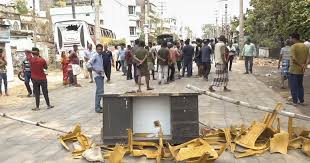
Sheopur: The last rites of a Dalit man was stopped on a plot of government land by alleged encroachers from an upper caste in Sheopur in Madhya Pradesh on Monday, resulting in stone-pelting between two groups and a road blockade, a police official said. The incident took place in Leelda village, he said. “The Dalit man had died in an accident in Bengaluru some days ago. When his kin and community members were taking the body for last rites on a plot of government land encroached by some upper caste.members, the latter stopped them. The argument led to stone-pelting from both sides, after which members of the Jatav community, to which the deceased belongs, blocked the road by placing his body there,” the official said. The two sides were pacified by senior police and administration officials, Sheopur Superintendent of Police Virendra Jain said. Jain said the Jatav community’s crematorium was acquired by the railways, after which they were performing last rites on a plot of land in the possession of another community, which had triggered a deadlock. “The Sub Divisional Magistrate (SDM) and Sub Divisional Officer of Police (SDOP) are on the spot and have normalised the situation. Both sides are being counselled,” the SP said. A protester said the land belonged to the government and authorities had allowed them to conduct last rites here after the crematorium was taken over. However, upper caste men had illegally occupied this plot, he alleged. Courtesy: Deccan Herald Note: This news is originally published on https://www.deccanherald.com and is for use by the non-military/non-commercial community, especially those in the human rights sector.
Scheduled Caste government workers’ body opposes adding Dalit Christians or Muslims to Scheduled Caste list.
Association writes to Justice-K.G. Balakrishnan panel saying such a move made for ‘political reasons’ would dilute their rights An association of Scheduled Caste government employees based out of Rajasthan has now written to the Justice K.G. Balakrishnan-led Commission of Inquiry, expressing fears that any addition to the SC list for “political reasons” — like that of Dalit Christians and Muslims — would “dilute our rights and benefits”. The Dr. Ambedkar Anusuchit Jati Adhikari Karmchari Manch (AJAK), based in Jaipur, has written to the Chairperson of the Commission, former Chief Justice of India K.G. Balakrishnan, saying that they “strongly oppose adding new groups, like Dalit Christians or Muslim, to the SC list”. The organisation, which represents government servants – both serving and retired, requested the Commission for a meeting in this regard, saying that it hoped the Commission would stand with it to protect the interests, rights, and benefits of existing Scheduled Caste communities in the country. It said, “From time to time, the State governments and Central government have been disrespecting and violating the Constitution of India for their political gains and have been changing the list of Scheduled Castes to serve their political interests.” Shriram Choradiya, President of AJAK, Rajasthan, told The Hindu that such changes to the SC list might lead to “Manipur-like” situations in parts of the country, adding that the government’s “ulterior motive” is to divide SC people. In the letter, AJAK also referenced the addition of communities to the SC list in Uttarakhand as sub-castes, by the State government, in 2013 and 2014, arguing this is violative of Article 341, which gives only Parliament the power to modify the list. In the letter, AJAK said, “We fear that adding new groups, like Dalit Christians or Muslims, to the SC list without strict checks will harm our rights and benefits.” Mr. Choradiya added, “We understand that caste discrimination does not stop even after changing one’s religion. But that should not be a cause to keep fiddling with the SC list. If they need to be protected, then let the government come up with a new category like they did for OBCs or even EWS category.” The Justice K.G. Balakrishnan-led Commission was constituted by the Union Social Justice Ministry in October 2022. It was instructed to assess if Christians and Muslims, who have historically belonged to SC communities, could be added to the SC list. Dalit Christians and Muslims have for decades now argued that changing their religion had not put an end to caste discrimination and have been demanding SC status. The Supreme Court has been hearing this issue for over 20 years now. Currently, only communities that practice Hinduism, Buddhism, and Sikhism are permitted to be categorised as SC. Initially given two years to submit a report, the Commission’s tenure was extended in October 2024. It is now expected to submit its report on the issue by October this year. The Prime Minister Narendra Modi-led Union government has made its position on the issue clear — both to the Commission of Inquiry and to the Supreme Court. Its argument has been that it was justified to exclude Dalit Christians and Muslims from the SC list, alluding to the “foreign origins” of Islam and Christianity. Courtesy: The Hindu Note: This news is originally published on https://www.thehindu.com and is for use by the non-military/non-commercial community, especially those in the human rights sector.
TN Honour Killing Case: Supreme Court Upholds Life Sentence Of Police Inspector For Fabricating Evidence Against Dalits
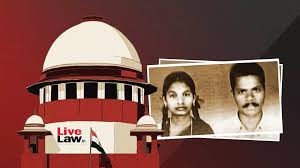
In the horrific ‘Kannagi-Murugesan’ honour killing case which took place in Tamil Nadu in 2003, the Supreme Court, while confirming the convictions of nine persons, also upheld the conviction of two police officers, who were accused of fabricating evidence. In the horrific ‘Kannagi-Murugesan’ honour killing case which took place in Tamil Nadu in 2003, the Supreme Court, while confirming the convictions of nine persons, also upheld the conviction of two police officers, who were accused of fabricating evidence. A bench comprising Justice Sudhanshu Dhulia and Justice Prashant Kumar Mishra rejected the appeals of K.P. Tamilmaran and M. Sellamuthu, who were the Sub-Inspector and Inspector, respectively, of the Virudhachalam police station at the relevant point of time. The case involved the brutal murder of an inter-caste couple S Murugesan and D Kannagi, who were poisoned by the latter’s family members. Murugesan was a graduate in Chemical Engineering and belonged to the Dalit Community. Kannagi was a commerce graduate and belonged to the Vanniyar community. The couple were secretly married on May 5, 2003. Tamilmaran was convicted for the offences under Section 217 of the Indian Penal Code and Section 4 of the Schedueld Castes and Scheduled Tribes (Prevention of Atrocities) Act. He was sentenced to two years’ rigorous imprisonment. Sellamuthu was sentenced to life imprisonment for the offences under Sections 217 and 218 IPC and Sections 3(2)(i) and 4 of SC/ST Act. Firstly, the Court noted that both officers delayed the registration of the FIR despite getting information about the double murders. When members from Murugesan’s family went to the police station to register an FIR, they were rebuffed and were given caste-based abuses. The Court stated that as per Section 154 CrPC and the dictum in the Lalita Kumari judgment, the police are duty-bound to register FIR as soon as getting information about a cognizable offence. When the murders attracted media attention and generated public outrage, almost nine days after the crime, Sellamuthu manufactured an extra-judicial confession of the first accused and registered the FIR against four Dalits (family members of Murugesan) and four Vanniyars. A-14 (K.P Tamilmaran) and A-15 (M. Sellamuthu) both had committed the offences under Section 217 IPC and Section 4 of the SC/ST Act as they neglected their duties and disobeyed the law by not registering the FIR at the first instance with the intention to save the culprits. The Court stated that A-15 was the main architect behind the FIR dated 17.07.2003, which falsely implicated the four members of Schedule Caste community. Further, it was A-15 who was in-charge of the investigation which led to the filing of the chargesheet against the innocent persons belonging to Dalit community. “There is no doubt that A-15 did this entire exercise to absolve culprits belonging to the Vanniyar community of their complicity in the crime, and he knowingly and deliberately falsely implicated some of the Dalits in an offence punishable with death. Evidence, as discussed earlier, makes it clear that A- 15 manufactured the extra-judicial confessions and evidence and thereafter, filed the chargesheet against Dalits on the basis of that evidence. Hence, the High Court rightly upheld the conviction of A-15 under Sections 217, 218 of IPC andSections 4, 3(2)(i) of the SC/ST Act and the sentence of life imprisonment. There is no doubt in our mind that A-15 is guilty of the offences as held both by the Trial Court as well as the High Court in appeal,” the Court observed. Courtesy: Live Law Note: This news is originally published on https://www.livelaw.in/ and is for use by the non-military/non-commercial community, especially those in the human rights sector.
Clash After Upper-Caste Men Stop Dalit’s Last Rites In MP’s Sheopur
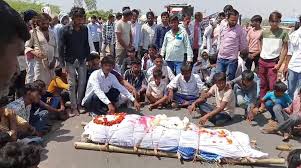
The two sides were pacified by senior police and administration officials, Sheopur superintendent of police Virendra Jain said. Sheopur (Madhya Pradesh): Last rites of a Dalit man were stopped by upper caste men in Sheopur on Monday, resulting in stone-pelting between two groups and a road blockade, a police official said. The incident took place in Leelda village, he said. “The Dalit man had died in an accident in Bengaluru some days ago. When his kin and community members were taking the body for last rites on a plot of government land encroached upon by some upper caste members, the latter stopped them. The argument led to stone-pelting from both sides, after which members of the Jatav community, blocked the road by placing his body there,” the official said. The two sides were pacified by senior police and administration officials, Sheopur superintendent of police Virendra Jain said. Jain said the Jatav community’s crematorium was acquired by the railways, after which they were performing last rites on a plot of land in the possession of another community, which had triggered a deadlock. “The sub-divisional magistrate (SDM) and sub-divisional officer of police (SDOP) are on the spot and have normalised the situation. Both sides are being counselled,” the SP said. A protester said the land belonged to the government and authorities had allowed them to conduct their last rites here after the crematorium was taken over. However, upper-caste men had illegally occupied this plot, he alleged. Courtesy: Free Press jJournal Note: This news is originally published on https://www.freepressjournal.in/ and is for use by the non-military/non-commercial community, especially those in the human rights sector.
Understanding Status of Dalit Education in India
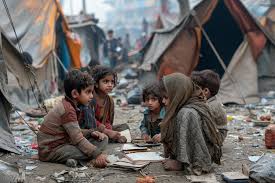
India is home to more than 200 million Dalit individuals. While the living conditions of this community deteriorates by the day, India has been a witness to some of the inhumane marginalisation of this underserved population. This essay will analyse the politics of educational accessibility for Dalit learners in India. Dalits, a term for the ‘untouchable’ community, make up approximately 16% of the Indian population has been persistently vilified till date. Through systematic patterns evident socially, economically, culturally and politically the community remains stripped off of humanity by the socially dominant. Consistent caste based violence, discrimination in schools, workplaces and in society has pushed the Dalit community to the fringes of humanity, starving for equal opportunities, skill- training and wages. In the 1950s Kaka Kalelkar and Mandal Commissions were set up in order to recognize vulnerable communities in India in need of special attention from the government to ensure upliftment and growth of such classes. The Kaka Kalelkar Committee had prepared a list of 2,399 backward castes or communities for the entire country and of which 837 had been classified as the ‘most backward’. In addition to classification, they also provided recommendations to uplift such communities. One of the many recommendations was reservation for depressed classes. It is crucial to note that the government implemented reservation without taking into account other suggestions by the committee, leaving the state of the vulnerable and backward communities unchanged (if not worse). This is to root the argument that reservation is an unhelpful tool stemming from negligence. To contextualize the argument further, it can be asserted by extension that reservation in contemporary India is a flimsy bandaid over a much deeper, historical wound. This systemic failure is a perpetuation of generational violence and marginalization of Dalits in India. In his essay Manish Kumar Rao asserts “The literacy rate among Dalits is 73.5%, which is lower than the national average of 80.9% (Census of India, 2020). This is a direct result of the aforementioned systemic failure, regardless of any political party. Poor occupational opportunities, lack of vocational training and consistent discrimination directly affects the literacy rates in Dalits, therefore creating a vicious loop of illiteracy and negligible financial independence. This circle ensures that the violated remains at the very bottom of every hierarchy, constantly stomped upon by the socially and economically dominant. The disposition of Dalits keeps them unwillingly dependent on the superstructure for livelihood creating a closely knit pattern, often rigorous to break. Rohith Vemula, a researcher and activist in University of Hyderabad, hailing from a Dalit community committed suicide in 2016. Suspended by the university and victim of “social boycott”, Vemula is one of many countless victims of campus atrocities in India. In his study, Bagesh Kumar asserts: With changing politics in the country, growing social assertion from the Dalits and Adivasis in socio-political sphere, the continuance of discriminatory practices in higher education has taken centre-stage in academia along with print, electronic and social media. Although the Education Policy, 1986 explains the principles and purpose of National System of Education ‘…to remove prejudices and complexes transmitted through the social environment and the accident of birth.’), students in the institutions of higher learning continue to experience discrimination precisely on account of their accidental birth into socially marginalized communities. School supplies While India has witnessed a general growth in economy, western education and literacy on might assume that these factors would play a role in stemming the issue of caste discrimination out, which in fact is untrue. Instead, incidents of unimaginable tactics of suppression surface news every other day facing systemic ignorance and apathy. A study conducted by the Tamil Nadu Untouchability Eradication Front revealed that approximately 30% of the schools surveyed in Tamil Nadu practiced caste based discrimination. 156 out of 441 schools showed some form of discrimination against dalit students, while some schools had more than one form. As many as 25 schools in Ramanathapuram, Cuddalore, Tenkasi and more, reported caste clashes amongst students. 15 schools had employed Dalit students to clean the toilets. Students from 33 schools said students wear wrist bands and dollar chains to explicitly show their caste identity. Surinder Jodhak in his book Caste in Contemporary India notes: Though caste prejudice is likely to be more pronounced in the private sphere and the traditional social/economic life, the so called modern institutions are also not free from it. The modern educational systems are a good example of this. Perhaps the most critical of these institutions are the local-level schools. The rural schools did not seem to directly discriminate against Dalit children. In most places they were not made to sit separately and could drink water from the common source. However, not everything was fine with these institutions. There were more than 20 per cent cases where caste distinctions were observed, overtly or subtly. Dalit teachers in the schools too felt that they were not completely accepted by their upper-caste colleagues. They therefore tended to interact more with other Dalit teachers. School supplies What undeniably ties these experiences of marginalisation faced by Dalits is a thread of Brahminical legacy of generational ostracization of the Other. Fed by religious elitism, Brahminical forces manufactured a villain out of the unidentical, born to be exiled, the server and ultimately the lesser. Despite tremendous efforts, the society has failed to recognize the Dalit community as an equal, perpetuating stagnated social position. Article 46 of the Indian Constitution calls for “Promotion of educational and economic interests of Scheduled Castes, Scheduled Tribes and other weaker sections. The State shall promote with special care the educational and economic interests of the weaker sections of the people, and, in particular, of the Scheduled Castes and the Scheduled Tribes, and shall protect them from social injustice and all forms of exploitation.” Over the past decade, the BJP government has veered away from the principles enshrined in this article. Despite constitutional obligations, there has been a noticeable absence of prioritization for SCs and STs in crucial areas such as education,
Ostracized and Deprived: 70 Dalit Families in Haryana Village Pay Heavy Price for Not Supporting Upper Caste Candidate in 2024 Assembly Elections