
BJP always anti-Dalit its supporters threatening SP leaders Akhilesh Yadav
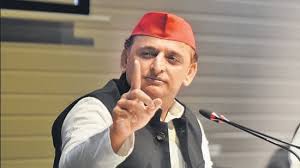
Ballia (UP), Apr 30 (PTI) Samajwadi Party chief Akhilesh Yadav on Wednesday alleged that the BJP has always been anti-Dalit and accused the ruling party’s supporters of threatening SP leaders, including MP Ramji Lal Suman and himself. “Crimes against Dalits are at their peak in Uttar Pradesh. Supporters of the ruling dispensation have been threatening us with death and throwing tyres on the roads to intimidate us. But we are not afraid,” Yadav was quoted as saying in a statement issued in Lucknow. He addressed the media in Ballia after attending a wedding ceremony at the residence of party MP Sanatan Pandey. Yadav asserted that the attacks were not just on individuals but on the Constitution of Dr B R Ambedkar and the state’s law and order. “Those threatening us are, in fact, challenging Baba Saheb’s Constitution,” he said. He further alleged that elements creating unrest and lawlessness were receiving protection from the state under BJP rule. “There is open anarchy. Members of the PDA (Pichhda, Dalit, Alpsankhyak) community are being attacked. Swords are being waved on the streets, and the PDA community is witnessing this lawlessness,” Yadav said. On the recent terrorist attack in Pahalgam that killed 26 tourists, Yadav demanded strict action by the Centre. “The government must take the toughest possible action and adopt concrete measures. The Samajwadi Party stands with the Centre on this issue,” he said. Offering condolences, Yadav urged the government to extend financial and institutional support to the victims’ families. “We demand that the families of the victims be provided with Rs 10 crore each, government jobs and that those killed be declared martyrs,” he added. Calling the attack a major security failure, Yadav questioned how terrorists could strike there. “The Pahalgam attack is unimaginable. There was a complete intelligence failure. While the government talks about ‘Amrit Kaal’, the injured were left without medical care for nearly 90 minutes,” he said. He also referred to the statements made by the victims’ families from Kanpur and Gujarat, saying the entire country has seen their pain and heard their concerns. (This story has not been edited by THE WEEK and is auto-generated from PTI) Courtesy: The Week Note: This news is originally published on https://www.theweek.in and is for use by the non-military/non-commercial community, especially those in the human rights sector.
Dalits Facing Boycott in Andhra Village Get a ‘Peace Committee’ but No FIR
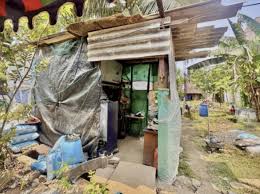
Members, allegedly from the upper caste Kapu community, imposed a social boycott against the entire Dalit community in the SC Colony of the village following the death of a Dalit youth whose family demanded justice. Visakhapatnam: Dalit residents faced a social boycott last week in a village in Andhra Pradesh, in deputy chief minister Pawan Kalyan’s Pithapuram constituency, following the accidental death of an electrical worker. Human rights groups have sharply criticised officials for allegedly prioritising a hastily formed ‘peace committee’ over registering a legally mandated case under the SC/ST (Prevention of Atrocities) Act against those who enforced the boycott. The incident occurred in Mallam village, Kakinada district. Pallapu Suresh Babu (38), a Dalit electrical worker from the village’s SC Colony, was electrocuted and died on April 16 while working at the home of Elisetti Jellababu, who belongs to the dominant Kapu caste from Mallam Pedda Veedhi (Main Street). Suresh Babu is survived by his wife and two school-age children. Following the death, Suresh Babu’s community members demanded compensation from the house owner, Jellababu. An agreement was privately reached the next day for Rs 2.70 lakh. However, tensions rose when only Rs 70,000 was allegedly paid, because Jellababu, despite belonging to the politically and numerically dominant Kapu community, was not wealthy. “When only Rs 70,000 was paid as compensation, the issue flared up. The victim’s family and members of the Dalit community immediately protested near the village’s Ambedkar statue, demanding justice,” Namadi Sridhar, General Secretary of the Human Rights Forum (HRF), told The Wire. “We believe it was precisely this act of Dalits daring to demand justice publicly that led to the social boycott,” he said. On April 18 and 19, members allegedly from the Kapu community imposed a social boycott against the entire Dalit community in the SC Colony. An HRF fact-finding team visiting on April 22 reported that traders were pressured not to sell essentials to Dalits, and transport was denied. “We go to work to make paper plates daily. Ever since the youth from our colony died, they told us not to come to work. Our people demanded justice, so they are punishing us like this,” one Dalit woman told a news channel. Another elderly Dalit man, Chandra Rao, recounted to a news channel, “We belong to the Dalit caste. As usual, we went to have tea at 5 in the morning at a Kapu hotel… They told us, ‘Chandrarao, our elders told us not to give you people tea or tiffins, so you can leave.’ When they said that, I left.” Official response draws flak Local officials formed a ‘peace committee’ with members from both communities, ostensibly to prevent clashes. Many condemned this, arguing it prioritised a superficial truce over legal accountability. “In such situations, it is indeed necessary for officials to maintain law and order. Forming a peace committee as a precaution is also appropriate,” Sridhar said. “However, the first step should have been to register a case under the SC/ST (Prevention of Atrocities) Act against those who instigated and carried out the social boycott… Instead, to cover up the crime committed out of dominant caste arrogance, they hastily formed a peace committee.” Sridhar suggested the boycott was punitive. “The victim’s family protested for justice near the Ambedkar statue, which angered the Kapu community. Fearing that allowing Dalits to seek justice through public protest might set a precedent, the Kapus decided to ‘teach them a lesson,’ resulting in a social boycott,” he told The Wire. Social activist Thota Rambabu, also part of the fact-finding team, told The Wire that officials “deliberately bypassed the crucial, unavoidable, and legal step of registering a case.” He questioned using peace committees to resolve a crime. “Doesn’t ‘imposing an economic or social boycott or threatening to boycott a person, family, or group belonging to Scheduled Castes or Scheduled Tribes’ fall under the purview of the SC/ST (Prevention of Atrocities) Act?” he asked. “Does reaching a compromise, announcing compensation, arranging apologies, and forming a peace committee negate the crime? Does it make the crime unpunishable? Does it erase the humiliation suffered by the Dalits?” Rambabu added, warning that this approach appeared “solely aimed at protecting the accused” and could make Mallam a “model” for circumventing justice. Pattern of discrimination Sridhar said Dalit residents reported longstanding discrimination. “Even now, Dalits cannot get a haircut or shave in the village. They must travel to Pithapuram town or Kakinada,” he told The Wire. “When young people mentioned this… even the elderly residents with white hair confirmed they faced the same discrimination since their youth.” A fact-finding team of the Human Rights Forum at Mallam village. This boycott follows previous violence. Activist Raajamani, who conducted a fact-finding in Mallam after a 2022 incident, shared details with The Wire. “Attacking, beating, and abusing SCs/STs is nothing new in Mallam,” Raajamani said, recounting events from April 14, 2022, when Dalits celebrating Ambedkar Jayanti were hurled abuses at. “When a Dalit youth posted photos of the celebration on Instagram, Karedla Tarun, a Kapu youth, responded with abusive comments,” she said. According to Raajamani, elders intervened, and Tarun performed a ‘Palabhishekam’ (milk ablution) on the Ambedkar statue on April 18, 2022. This act allegedly bred resentment. Weeks later, on April 29, 2022, during the Onumulamma Jatara (festival) in the village, violence erupted. “Five SC youths went to watch the Jatara. When they arrived, Kapu youths shouted, ‘Why did you come here?’, and beat an SC youth named Datla Arjun until he bled,” Raajamani recounted. She alleged that later that night, a Kapu mob attacked the Dalit colony (Mala Peta). “While they were hurling obscenities at women and tearing Dalit women’s blouses, a Dalit teacher named Kaditi Krishnarao objected. They dragged Krishnarao away and grievously injured him. He collapsed from severe bleeding. They also brutally beat Randa Ramasathyanarayana, his wife, and Datla Arjun’s mother.” Raajamani stated that while the injured were hospitalised, police under the then-YSR Congress Party government filed only a “nominal FIR.” “While that case remains pending,
Dalit woman raped in front of 4-year-old child in UP
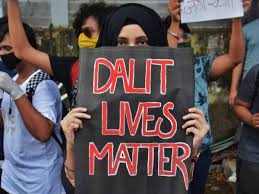
The woman and her child were returning home when the men approached her and offered Rs 20,000 as financial help. A 40-year-old Dalit woman was allegedly raped by two upper caste men in front of her four-year-old son in Uttar Pradesh’s Mainpuri district. The Dalit family was suffering from financial hardship. According to her complaint, the crime took place on April 17. She and her son were returning home when the two accused approached her and offered Rs 20,000 as financial help. They convinced her to ride with them on the bike to receive the loan amount, and she agreed. However, the two men took her to an isolated place. She alleges in her police complaint that one of them held a gun to her son’s forehead and threatened to blow his head off if she resisted. Her horror did not end here. After raping her, they started harassing her with frequent phone calls. She finally gathered the courage to tell her husband, who filed a complaint. Speaking to the Times of India, Mainpuri SHO Anuj Kumar confirmed an FIR has been registered. “One of the accused has been identified as Ramji Yadav. He belongs to the same village. We have initiated an FIR under the SC/ST Act. The Dalit woman has been sent for medical tests. Investigations are on,” the police officer was quoted by TOI. Courtesy: Siasat Note: This news is originally published on https://www.siasat.com/ and is for use by the non-military/non-commercial community, especially those in the human rights sector.
President Murmu appoints Justice BR Gavai as next CJI; second dalit to hold the post
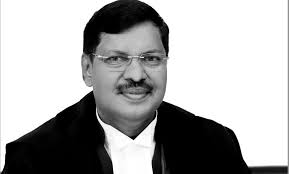
Justice Gavai will serve as the 52nd CJI for a period of about six months, as he is due to retire on November 23, 2025, after attaining 65 years of age. NEW DELHI: President of India Droupadi Murmu on Tuesday appointed Justice Bhushan Ramkrishna Gavai as the next Chief Justice of India (CJI), with effect from May 14, 2025. He will be the 52nd CJI. The incumbent CJI, Justice Sanjiv Khanna, is slated to retire on May 13. Union Law Minister Arjun Ram Meghwal made this announcement by posting it on X (formerly known as Twitter). “In exercise of the powers conferred by the Constitution of India, the President is pleased to appoint Shri Justice Bhushan Ramkrishna Gavai, Judge of the Supreme Court of India, as the Chief Justice of India with effect from 14th May, 2025,” Meghwal posted on X. When Justice Gavai takes charge as the 52nd CJI on May 14, he will also be the second CJI belonging to the Scheduled Caste (SC) community after Justice K.G. Balakrishnan, who was elevated to the country’s top judicial post in 2007 and retired as CJI in 2010. Justice Gavai will retire on November 23, 2025. Justice Gavai has authored around 300 judgments—including Constitution Bench judgments—on various issues upholding the rule of law and equality, and safeguarding the fundamental rights, human rights, and legal rights of citizens. On April 16, the incumbent CJI, Justice Khanna, wrote a letter to the Centre, nominating the second senior-most judge, Justice Gavai, as his successor. Justice Gavai will serve as the 52nd CJI for a period of about six months, as he is due to retire on November 23, 2025, after attaining 65 years of age. Justice Gavai was elevated as a Judge of the Supreme Court on May 24, 2019. Born on November 24, 1960, at Amravati, Justice Gavai joined the Bar in 1985. He practiced independently at the Bombay High Court from 1987 to 1990 and focused on Constitutional Law and Administrative Law. He was the Standing Counsel for the Municipal Corporation of Nagpur, Amravati Municipal Corporation, and Amravati University. Justice Gavai was elevated as an Additional Judge of the High Court on November 14, 2003. He became a permanent Judge of the Bombay High Court on November 12, 2005. Justice Gavai worked as Assistant Government Pleader and Additional Public Prosecutor in the High Court of Judicature at Bombay, Nagpur Bench, from August 1992 to July 1993. He was appointed as Government Pleader and Public Prosecutor for the Nagpur Bench on January 17, 2000. In the last six years, he has been a part of around 700 benches dealing with matters pertaining to a variety of subjects, including constitutional and administrative law, civil law, criminal law, commercial disputes, arbitration law, electricity law, education matters, environmental law, etc. Justice Gavai has attended various international conferences in Ulaanbaatar (Mongolia), New York (U.S.A.), Cardiff (U.K.), and Nairobi (Kenya). He has also delivered lectures on many issues, including constitutional and environmental issues, at various universities and organizations, including Columbia University and Harvard University. Courtesy : Suchitra Kalyan Mohanty, TNIE Note: This news is originally published on https://thenewindianexpress.com and is for use by the non-military/non-commercial community, especially those in the human rights sector.
Dalit settlements no longer colonies: Stalin
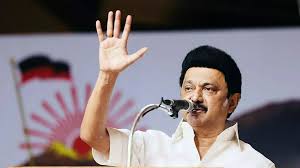
Chennai: Chief minister M K Stalin on Tuesday announced that the word ‘colony’ will be removed from all govt records and public usage. He described it as a symbol of discrimination against the indigenous people of the land and a term now associated with untouchability. Colonies refer to segregated residential areas in villages inhabited by dalits. The announcement came during Stalin’s speech during the debate on demand for grants for the home department in the assembly. He said the govt decided to act because the word was now being used in a derogatory sense. Stalin further stated that Sept 6 will be observed as ‘Police Day’ in Tamil Nadu. Responding to opposition criticism of the law-and-order situation in the state, Stalin issued a sharp rebuttal. “This is not Manipur, this is not Kashmir. There are no deaths like the UP Kumbh Mela. This is Tamil Nadu. Don’t forget that,” he said. Stalin said Tamil Nadu’s overall growth was rooted in its peaceful atmosphere, crediting the police force for maintaining law and order. He said while ministers and officials contribute to progress, the state’s development is built on the foundation of peace. “A peaceful state supports industrial growth, education, empowerment of women and youth, sports, and increased production,” Stalin said, commending the police for helping the state avoid major riots, violence, and unrest. He urged the police force not only to reduce crime but also to work towards preventing it. “Preventing crime is not the responsibility of the police alone. It requires the cooperation of the public,” he said. Calling on citizens to respect the law and practise self-discipline, Stalin said the public must avoid negligence and take active steps to prevent crime. He reminded police officers to treat people with respect and avoid letting personal biases affect their conduct. “Police and public must function as partners to maintain peace,” he said. Stalin went on to list several achievements of his govt, including the elimination of dropouts in middle schools and a 9.69% growth rate projected for 2024–25. Comparing govt’s challenges to a person trapped from all sides, the chief minister said, “Like a man with a snake above, foxes below, a moat if he jumps, and a wall if he runs, the state govt has achieved progress by overcoming Union govt on one side, governor on another and financial crunch on another side. “This is not the achievement of one person named Stalin. This is the result of the efforts of my cabinet and officials,” he said. “This is not a party’s govt. It is a govt based on a philosophy.” He ended his speech by saying, “Whatever achievement was witnessed so far is only Part-I of the Dravidian model govt. Version 2.0 is loading for 2026. We will create more records then,” he said. Courtesy : TOI Note: This news is originally published on https://timesofindia.com and is for use by the non-military/non-commercial community, especially those in the human rights sector.
President Appoints Justice BR Gavai As Next Chief Justice Of India;Second Dalit To Be CJI
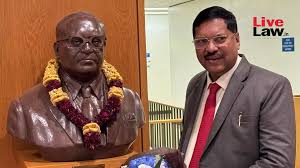
Justice Gavai paying homage to the statue of Dr BR Ambedkar at Columbia Law School The President of India has appointed Justice BR Gavai as the next Chief Justice of India with effect from May 14, 2025. The incumbent Chief Justice of India, Justice Sanjiv Khanna, will retire on May 13. “In exercise of the powers conferred by the Constitution of India is pleased to appoint Shri Justice Bhushan Ramkrishna Gavai, Judge of the Supreme Court of India as the Chief Justice of India with effect from 14th May, 2025,” Union Law Minister Arjun Ram Meghwal posted on X. Upon succession as the 52nd CJI, Justice Gavai would also be the second CJI belonging to the Scheduled Caste community after Justice KG Balakrishnan retired as the CJI in 2010. Justice Gavai will retire on November 23, 2025. Courtesy: Live Law Note: This news is originally published on https://www.livelaw.in and is for use by the non-military/non-commercial community, especially those in the human rights sector.
How CBI charged Dalit IAS officer repeatedly in coal block scam when he wasn’t even in allocation dept

5 yrs after approving CBI request to prosecute KC Samria in 4 cases, DoPT backtracked on 5 others after learning KC Samria wasn’t in the coal allocation section when companies applied. New Delhi: A 1993-batch officer convicted in three coal block allocation cases for not checking whether the companies applying for mining leases had completed their forms, was not with the department checking those applications at the time, official records accessed by ThePrint show. The Central Bureau of Investigation (CBI) took up the coal allocation scam probe following an August 2014 Supreme Court ruling declaring all coal block allotments between 1993 and 2010 illegal and arbitrary, apart from those through competitive bidding. As part of its investigation, the CBI accused three senior bureaucrats of conspiring with the applicant companies to cause monetary losses to the exchequer by not allotting the coal blocks through bidding. One of them, K.C. Samria, was a deputy secretary-rank officer with the coal ministry in 2006-2007. The CA-I department processed the applications involving the “illegal” coal block allotments before he joined, later forwarding the applications to the power and coal ministries and the governments of states where the coal blocks lay for reviews and inputs. Afterwards, the applications reached the screening committee’s desk. Records show Samria got the additional charge of the CA-I section on 16 March, 2007. The CA-I section, CBI found, received incomplete applications between 6 November, 2006, and 12 January, 2007, and checked them before Samria’s joining. Still, the Department of Personnel and Training (DoPT) approved the CBI request to prosecute Samria in four cases. The agency made its request to the DoPT in compliance with the Prevention of Corruption Act, 1988, under which a department must sanction the prosecution of a government officer or minister. Five years later, however, the same DoPT declined the CBI request to prosecute Samria in five other cases on learning that the officer was not posted with the coal ministry’s CA-I when the companies applied for the coal blocks. Meanwhile, the trial court ordered Samria’s trial in one more case, apart from the four cases given sanctions previously. Five orders since then have declined CBI permission to prosecute Samria, saying the officer was not looking after the checks in the CA-I section. The DoPT reached this conclusion on the advice of the coal ministry, to whom Samria then reported. Trial court orders After considering on-record materials, the coal ministry refused to approve Samria’s trial. So, the trial court could not initiate legal proceedings against him in the five cases despite the CBI chargesheets naming him. While denying the CBI request, the DoPT ignored the advice of the Central Vigilance Commission (CVC). On perusal of the CBI report and other records, the CVC had agreed with the recommendation to prosecute Samria in all five cases. But, due to the weightage it gave to the findings of the coal ministry, the DoPT did not pay heed to the CVC. “And whereas, the competent authority (coal ministry), after duly and carefully examining the investigation report of CBI, the comments of the Ministry of Coal, the advice of CVC, and facts and circumstances of the case and no criminal misconduct has been established against Samria,” noted the DoPT orders in all the five cases. When the coal ministry realised Samria was not the CA-I section officer-in-charge during the irregularities and rejected the CBI request, the trial court had already convicted him in two cases. Those were related to coal blocks allocated to M/s Kamal Sponge Steel and Power Limited (KSSPL) and M/s Vikash Metal and Power Limited (VMPL). The court pronounced the judgment in the KSSPL case on 19 May, 2017, and the VMPL decision on 30 November, 2018. In both cases, it convicted Samria for not checking the eligibility of the applicant companies. After his counsel relayed to the trial court that Samria was not looking after the department that checked the applications, it said that Samria should have still checked them after taking over his position. The other case the trial court heard against Samria, without a formal sanction to prosecute the official, is the illegal allocation of coal blocks to M/s JLD. Adjudication on this case is pending. Similarly, a trial against Samria is pending in the M/s Visa Power Limited case. His acquittal has come in only one case involving M/s Navabharat Power Private Limited. In his appeal before Delhi High Court—filed soon after the two judgments convicted him—Samria defended himself, saying he was not with the CA-I department when the companies applied for consideration for the coal block allotments. Following his appeal, the DoPT also learnt that Samria was not in the CA-I branch during the commission of the alleged crime. Speaking to ThePrint, Samria’s lawyer, Rahul Tyagi, said, “Prosecution of Samria for alleged omissions of a period when he was not Director CA-1 is another example of the non-application of mind during the investigation and the predetermined decision to prosecute IAS officers of the MoC (Ministry of Coal).” For Samria’s convictions, he blamed the media hype, saying a calm and forensic examination of facts and applicable laws could not take place initially. “Now that hype has died, and evidence has come out, Mr Samria no longer faces prosecution on the same facts for which he initially was convicted, as the government (Centre) refused to grant sanction for prosecution against him,” he explained. “It is so sad that an honest Dalit officer, the youngest of his batch, has suffered like this. Everyone expected him to reach the highest levels of administration at a very young age, but his entire career is now in shambles due to these meaningless and misconceived prosecutions. There can be no compensation or restitution for the injustice caused to him,” Tyagi added. CBI requests denied In April 2020, DoPT rejected the CBI’s 11 December, 2018, request to clear Samria’s prosecution in the case involving M/s Vandana Vidhyut Limited, noting that Samria took charge of the CA-I section on 16 March 2007.
Dalit History Month Is Not a Token
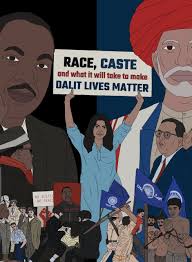
Especially for artists, this month is a tactical intervention. A crack in the Brahminical fabric of Indian memory. It’s not a request for inclusion; it’s a declaration of rupture. There are many definitions of history. But for me, as an artist, dreamer, and an unapologetic Ambedkarite, history has often been a crime scene — a place of distortion, manipulation, and theft. What they taught us in school was not our past. It was the propaganda of the powerful. It was mythology stitched together to keep us docile, grateful, and forgetful. I was made to memorize the names of those who enslaved us, sing anthems of unity that demeaned our diversity, and admire writers who never saw us. The textbooks were not written for me. They were written against me. The authors were not my people. They didn’t speak my language, share my pain, or reflect my reality. And when they did write about us, about the Dalits, the Adivasis, the Bahujans, they did it with a gaze. We were either invisible or exoticized. Either deviant or dehumanized. Never complex, never dignified, never in charge of our own narratives. I was orphaned by history and then forced to worship the people who burned my house down. I was told our ancestors were “illiterate, savage, filthy.” But who built India’s temples and skyscrapers? Who cleaned its streets? Who carried the dead and bore the burden of the living? Who taught resistance without ever being taught? Who created Indigenous knowledge? Who carved the first stones and painted the first walls? Our histories of struggle, of survival, of brilliance were not lost. They were looted. So we reclaimed the pen, the brush, the chisel, and the camera. We began writing ourselves into existence in songs, in sculptures, in artworks, in oral traditions, and on the streets. Not to beg for space, but to seize it. Even make it. Not to decorate the margins, but to burn them. And in this fire, we found each other. Dalit History Month, founded a decade ago by anti-caste activists including Thenmozhi Soundararajan and Christina Dhanuja and celebrated each April, is not a token. It is a tactical intervention. A crack in the Brahminical fabric of Indian memory. It’s not a request for inclusion; it’s a declaration of rupture. One month cannot compensate for centuries of epistemicide, the deliberate erasure of our knowledge, our voices, our ancestors. But it can become a spark. A beginning. A ritual of remembrance and resistance. Siddhesh Gautam, “Race, Caste and What it will take to make Dalit Lives Matter” (2021), featuring illustrations of Dr. B. R. Ambedkar and Jyotiba Phule We do not celebrate for spectacle. We do not mourn for pity. We organize because our liberation is not negotiable. Dalit History Month is a creative battle cry for dignity, for representation, for justice. It is not limited to Dr. B. R. “Babasaheb” Ambedkar, though he remains a guiding star and radical architect of liberty, equality, and fraternity. It is also a time to honor those who were rarely named in state archives but always remembered in our homes. We remember Savitribai Phule, who was stoned for teaching girls but never stopped walking to school. We remember Ramabai Ambedkar, who lived through poverty and grief so her partner could write the Constitution of an independent India. We remember Jyotiba Phule, who opened schools for Dalit students in the mid-1800s when the state refused to educate us. And Shahuji Maharaj, the king who waged a war of policy against caste in the early 1900s by reserving jobs and education for the oppressed at a time when even talking about caste was dangerous. Siddhesh Gautam, illustration of Savitribai and Fatima, walking hand in hand on the streets of Pune (2025) We remember Fatima Sheikh, who taught side by side with Savitribai, even when her own community disowned her. Babytai Kamble, the writer who broke the silence of Dalit womanhood with her raw, unflinching words. We remember Jhalkari Bai, the brave Dalit woman soldier who entered battle disguised as Rani Laxmibai in 1858 and fought the British army. Uda Devi, who climbed a tree and shot down British officers during the 1857 rebellion, her body eventually riddled with bullets and her name omitted from textbooks. Siddhesh Gautam, “Dharti Aaba: Birsa Munda” (2022), featuring Birsa Munda leading Ulgulan, a socio-cultural-intellectual and political movement that was later followed by the Mass Armed Rebellion against British colonialism as well as Hindu feudal and caste-based landlordism We remember Birsa Munda, the young Adivasi leader who led the Ulgulan, the great rebellion, not just against the British but against dominant-caste landlords who exploited his people. His bones still echo in the forests of Jharkhand. We remember the poets Kabir and Ravidas, whose verses shattered the silence of caste and whispered equality into generations of dreamers. And we also remember the present. Grace Banu, who hacked her way through both transphobia and caste discrimination to become a voice in tech and policy. Rohith Vemula, who took his own life in 2016, an institutional murder in a university space that reminded us that Brahminism doesn’t disappear with English education or a university seat, it mutates. This month is also for the unnamed, the countless victims of manual scavenging, caste lynchings, sexual violence, and systemic neglect. It is for every broken back and burning pyre. For the sweepers who were told their hands were dirty but whose touch was always divine. It is a collective mourning and a collective sharpening of our expressive tools. We do not only want history. We want revolution. And we are not waiting for permission. Because we’ve seen what happens when we wait — for justice that never came, for representation that always excluded, for savarnas to change, for institutions to reflect, for governments to care. Siddhesh Gautam, “Bezwada Wilson: STOP KILLING US” (2022), featuring the Stop Killing Us campaign launched in Delhi by the Safai Karamchari Andolan on May 09, 2022, a national awareness drive to underscore
Dalit settlements no longer colonies: Stalin
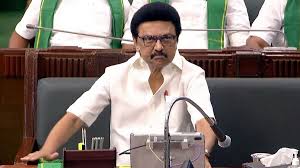
Chennai: Chief minister M K Stalin on Tuesday announced that the word ‘colony’ will be removed from all govt records and public usage. He described it as a symbol of discrimination against the indigenous people of the land and a term now associated with untouchability. Colonies refer to segregated residential areas in villages inhabited by dalits. The announcement came during Stalin’s speech during the debate on demand for grants for the home department in the assembly. He said the govt decided to act because the word was now being used in a derogatory sense. Stalin further stated that Sept 6 will be observed as ‘Police Day’ in Tamil Nadu. Responding to opposition criticism of the law-and-order situation in the state, Stalin issued a sharp rebuttal. “This is not Manipur, this is not Kashmir. There are no deaths like the UP Kumbh Mela. This is Tamil Nadu. Don’t forget that,” he said. Stalin said Tamil Nadu’s overall growth was rooted in its peaceful atmosphere, crediting the police force for maintaining law and order. He said while ministers and officials contribute to progress, the state’s development is built on the foundation of peace. “A peaceful state supports industrial growth, education, empowerment of women and youth, sports, and increased production,” Stalin said, commending the police for helping the state avoid major riots, violence, and unrest. He urged the police force not only to reduce crime but also to work towards preventing it. “Preventing crime is not the responsibility of the police alone. It requires the cooperation of the public,” he said. Calling on citizens to respect the law and practise self-discipline, Stalin said the public must avoid negligence and take active steps to prevent crime. He reminded police officers to treat people with respect and avoid letting personal biases affect their conduct. “Police and public must function as partners to maintain peace,” he said. Stalin went on to list several achievements of his govt, including the elimination of dropouts in middle schools and a 9.69% growth rate projected for 2024–25. Comparing govt’s challenges to a person trapped from all sides, the chief minister said, “Like a man with a snake above, foxes below, a moat if he jumps, and a wall if he runs, the state govt has achieved progress by overcoming Union govt on one side, governor on another and financial crunch on another side. “This is not the achievement of one person named Stalin. This is the result of the efforts of my cabinet and officials,” he said. “This is not a party’s govt. It is a govt based on a philosophy.” He ended his speech by saying, “Whatever achievement was witnessed so far is only Part-I of the Dravidian model govt. Version 2.0 is loading for 2026. We will create more records then,” he said. Courtesy: Times of India Note: This news is originally published on https://timesofindia.indiatimes.com and is for use by the non-military/non-commercial community, especially those in the human rights sector.
16-Year-Dalit Minor Girl Gang Raped In UP: Cops

He said that the father of the girl gave an application on April 27 alleging that Shailendra Saroj alias Zahid of the same village, his friend Sheru alias Nazar Ahmed and an unknown person gang-raped his daughter and threatened to kill her. Kaushambi, UP: A case of alleged gang-rape of a Dalit minor girl has come to light in the Kaushambi district of Uttar Pradesh, and the police have registered a case against three youths on the complaint of the victim’s father, police said on Tuesday. Additional Superintendent of Police Rajesh Singh said that on April 24, information was received that the 16-year-old girl had gone to a relative’s house after she was upset over something, and a missing report was registered. He said that the father of the girl gave an application on April 27 alleging that Shailendra Saroj alias Zahid of the same village, his friend Sheru alias Nazar Ahmed and an unknown person gang-raped his daughter and threatened to kill her. Mr Singh said that a case has been registered under relevant sections of the BNS, POCSO Act and Scheduled Castes and the Scheduled Tribes (Prevention of Atrocities) Act. Two teams have been formed to arrest the accused in the case and they will be arrested soon, the additional SP said. Courtesy: NDTV Note: This news is originally published on https://www.ndtv.com and is for use by the non-military/non-commercial community, especially those in the human rights sector.