
Dalit labourer found hanging from tree in UP’s Saharanpur, family alleges murder
Rajesh, a 35-year-old father of three, was found dead in the fields he worked in; police launch probe after family rejects suicide theory The body of a 35-year-old Dalit labourer was found hanging from a tree in a field here, police said Thursday, adding that his family has alleged that he had been murdered. Speaking to PTI, Superintendent of Police (Rural) Sagar Jain said the deceased, identified as Rajesh, a resident of Jarauda Jat village, worked as a daily wage labourer for a local farmer. “According to preliminary information, Rajesh had gone around 2 am to operate a tubewell in the fields where he was working,” Jain said. “Later in the morning, villagers heading to their fields spotted his body hanging from a tree and immediately informed the police,” Jain added. Police teams, along with a forensic unit and the deceased’s family, reached the spot shortly after receiving the call, he said. The body was taken into custody and sent for post-mortem examination to ascertain the exact cause of death, he said. “The family members have alleged that Rajesh was murdered and his body was hanged to make it appear as a suicide,” Jain said. “We have registered the case and further investigation is underway.” Rajesh is survived by his wife, two sons, and a daughter, according to the police. Courtesy: Telegraph India Note: This news is originally published on https://www.telegraphindia.com and is for use by the non-military/non-commercial community, especially those in the human rights sector.
Dalit Journalist Beaten at PVR for Reviewing ‘Phule’ Film — Entire Attack Caught on Camera!
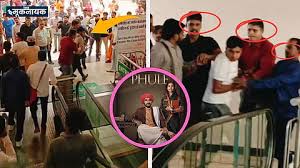
Dalit journalist Sanjay Ambedkar alleges assault by PVR staff while interviewing audience members about Phule film; FIR filed, video sparks outrage online. Prayagraj, UP (formerly Allahabad)— A Dalit journalist, Sanjay Ambedkar, was allegedly assaulted by PVR staff while attempting to take audience reviews of the film Phule in Prayagraj. The incident, captured on video, has gone viral on social media, sparking outrage and demands for strict action against those involved. Ambedkar, who runs a YouTube channel called Bheemraj Dastak, had visited PVR Cinemas to talk to viewers exiting the theatre after watching Phule. Despite the film being screened, he noted there were no posters or promotional materials for it inside the premises. When he tried to speak to moviegoers, PVR employees and bouncers allegedly confronted and attacked him. Recounting the incident to The Mooknayak, Sanjay said, “I came to take reviews of the film Phule. While I was speaking with some viewers, I was suddenly stopped. I continued my work, but soon the situation escalated, and they began assaulting us.” Sanjay explained that he and his colleague, Ravi Kumar, were both present. “They caught hold of Ravi first, and when I intervened and asked them to stop, they started beating me too. We were dragged to the third floor, mistreated, and assaulted. Somehow, I managed to escape and informed the authorities. Ravi was held hostage inside and was released after half an hour.” He also claimed the entire incident was recorded on camera, identifying the attackers as PVR staff and bouncers. “We’ve filed an official complaint, and an FIR has been registered. The investigation is underway,” he said. Expressing his concern, Sanjay added, “Journalists across the country are being targeted. In Fatehpur, journalist Dilip Saini was stabbed to death, Mukesh Chandrakar was killed, and Raghvendra Bajpai was shot dead in Sitapur. Journalists are not safe under the Yogi government. Is taking a movie review now a crime?” In response to the viral video, the official X (formerly Twitter) handle of DCP Prayagraj City confirmed: “Based on the complaint received, an FIR has been registered at Civil Lines Police Station under relevant sections. Legal proceedings are underway.” Police have registered the case based on a complaint filed by Ravi Kumar. The FIR names unknown PVR employees and includes charges under the Bharatiya Nyaya Sanhita (BNS) 2023 Sections 115(2), 352, 351(2), 351(3), 309(4), and under the Scheduled Castes and Scheduled Tribes (Prevention of Atrocities) Act, 1989 (Amendment 2015), Sections 3(2)(v), 3(1)(d), and 3(1)(dh). It’s worth noting that the Phule film has already been surrounded by controversy, with several Brahmin groups calling for a boycott and opposing its screening. The backlash led to certain edits and modifications in the film. Courtesy: The Mooknayak Note: This news is originally published on https://en.themooknayak.com and is for use by the non-military/non-commercial community, especially those in the human rights sector.
Caste slurs and media trials: Kerala rapper Vedan faces vilification after drug case arrest
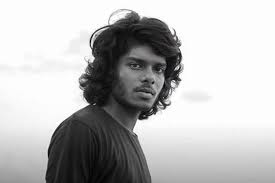
Hirandas Murali, popularly known as rapper Vedan, a 30-year-old Dalit artist from Thrissur, Kerala, has found himself at the center of a storm following his arrests by the Kerala Police and the Forest Department. On April 28, 2025, Vedan and eight others were detained by the Excise Department in Kochi for possessing approximately 6 grams of hybrid cannabis. A day later, on April 29, forest officials arrested him for wearing a tiger tooth pendant, confirmed as genuine through a lab test in Hyderabad. The pendant, which Vedan claims was a gift from a fan, has led to charges under wildlife protection laws, potentially carrying a seven-year sentence. He was remanded to the custody of the Forest Department for two days and shifted to the Malayatoor Divisional Forest Office for questioning. The arrests have sparked widespread controversy, with many media outlets and social media platforms accused of demonising Vedan, focusing not on the legal issues but on his identity as a Dalit artist whose music challenges caste oppression and systemic inequality. Vedan, who rose to prominence with his 2020 track “Voice of the Voiceless,” uses his rap to address subaltern politics, caste discrimination, Islamophobia, and social justice, themes that resonate with marginalised communities but unsettle Kerala’s mainstream cultural elite. Critics argue that the intense scrutiny and character assassination he faces stem from his caste identity and the disruptive nature of his art, which has penetrated a Malayali cultural sphere historically inaccessible to lower castes. Media and public backlash: a casteist vendetta? Following the arrests, several media outlets and social media handles launched what activists describe as a coordinated campaign to vilify Vedan. Social media posts and news reports emphasised his alleged criminality, often sidelining the broader context of his artistic contributions. A post on X by @junjunjitweets highlighted Vedan’s prior legal troubles, including a 2022 cannabis possession case and 2021 MeToo allegations, framing him as a habitual offender and questioning claims of caste-based victimisation. Such narratives, activists argue, obscure the systemic biases at play. Dalit thinker K.K. Baburaj condemned the response as reflective of deep-seated caste prejudice. He posed a provocative question: “If the marginalised don’t use alcohol and marijuana, will the public conscience not hunt them down?” Baburaj pointed to the hypocrisy in Kerala’s social fabric, noting that marginalised groups face relentless scrutiny regardless of their actions. He highlighted the broader pattern of discrimination: “Pentecostals are among the most devout Christians, often abstaining from drugs and even television. Yet, they face persistent ridicule and criticism from both elite Christians and the broader public. Similarly, the Muslim community, which exhibits the lowest rates of drug use, endures daily accusations, including baseless claims like ‘narcotic jihad.’ Many sincere individuals believe that society accepts Muslims living devout, drug-free lives.” Baburaj argued that Vedan’s persecution reflects the elite’s discomfort with marginalised communities achieving progress: “The issue lies in the marginalised perpetuating the anxieties and fears of the elite. Any progress they achieve often provokes a sense of retribution among the elite.” He further criticised those who use cultural purity to justify targeting Vedan, warning, “He alone can choose whether to surrender to addiction and perish. However, those who champion cultural purity in his name conceal the truth that Hitlerism itself embodied cultural purity.” In a Facebook post, Baburah expressed hope for Vedan’s resilience: “Vedan declared, ‘May this chaos and commotion soon subside.’ Even if detained by Kerala’s ethnic police or the criminal forest department, he will undoubtedly rise to sing and speak once more. The vibrant culture ignited by Vedan and Khalid Rahman should continue to thrive in this spirit of resilience.” Supporters rally: highlighting double standards Veteran Dalit leader K. Ambujakshan also came to Vedan’s defense, emphasising the disparity in how legal violations are treated based on caste and class. In a Facebook post, he contrasted Vedan’s situation with that of prominent Malayalam film industry figures who faced minimal repercussions for possessing prohibited items like tiger skins or elephant tusks. Ambujakshan wrote: “Vedan holds no elephant’s tusk in his hand, no intermediaries shield the corporate wealth that burdens the nation, no affluent Western followers arrive with materials through privileged channels to offset a spiritual journey. The crowds drawn to his music are the nation’s ordinary people, especially its youth. If negligence has caused shortcomings, they can be addressed through compassionate action, but it is unjust to silence an artist who inspires hope. Vedan’s lyrics dismantle the walls of inequality, envisioning a world of fairness. I stand with those who cherish Vedan’s rap, igniting minds and hearts. With Vedan.” Geevarghese Mar Koorilos, former Metropolitan of the Jacobite Church Niranam Diocese, added a religious perspective, praising Vedan’s art as a rebellion against systemic oppression. In a post featuring Vedan’s image, he stated: “In a society where caste divides not only humans but also animals and their remains, I stand with the Vedan’s ‘black’ politics and his artistic revolt against ‘white gods.’ Let this revolution persist. However, I unequivocally oppose drug addiction.” Mar Koorilos’s support underscores the intersection of caste and cultural resistance in Vedan’s work, while distancing himself from drug use. Sanskrit scholar and professor T.S. Syam Kumar exposed the hypocrisy of Kerala’s upper-caste elite, who historically celebrated intoxicants in cultural and literary contexts but now condemn marginalised artists like Vedan. He noted: “In Vedic traditions, Indra, the deity of rituals who consumes Soma and Sura, is central to the sacrificial practices of Aryan Brahmanism. In Valmiki’s Ramayana, Sita prays to Ganga for a thousand jugs of liquor upon her return from exile. While some Malayalis recite these verses in the evening to combat intoxication, the elite historically viewed intoxicants as essential for literary and cultural creation.” Kumar argued that the same elites who once glorified intoxication now marginalise Dalit artists, restricting their access to mainstream platforms. Tribal activist Gomathi echoed this sentiment on Facebook, redirecting attention to Vedan’s art: “With Vedan, as the focus shifts from cannabis to tiger teeth, the true essence emerges. The heart of the matter lies in Vedan’s song—its
Minor Dalit girl gangraped: Kidnapped and raped in Kanpur, brutally beaten for protesting, one accused arrested

A sensational case of gangrape of a minor has come to light in Kaushambi district of UP. Police has registered a case under serious sections of gangrape, POCSO, SC-ST on the complaint of the father of the victim girl in this case. Kaushambi (Kuldeep Dwivedi): A sensational case of gangrape of a minor has come to light in Kaushambi district of UP. Police has registered a case under serious sections of gangrape, POCSO, SC-ST on the complaint of the father of the victim girl in this case. The main accused of the incident has been arrested by the police team. The remaining two persons are being searched. If he is guilty, he will also be sent to jail. Police had registered a case on the complaint of the victim’s father The incident is from Kokhraj police station area. According to the complaint given by the victim’s father in the police station, his minor daughter was lured and kidnapped by a neighbour Shailendra alias Zahid. When his daughter returned, she told that the accused took her to Kanpur and along with two other people raped her in a mango orchard one after the other. The police have arrested the main accused by registering a case on the complaint of the father. Statement of Additional SP In this case, Additional SP Rajesh Kumar Singh said that a person from Kokhraj police station area had brought his daughter. He told that our girl had gone somewhere. She has returned, we do not want any action on this. On which a case of trafficking was registered in Kokhraj police station area on 24 April 2025. After this, he came again on the 27th and told that there were three people with our girl. Who raped her one after the other. On which an FIR was immediately registered. The investigation proceedings were taken forward. Also, the main accused of the incident has been arrested. The remaining two persons, if found guilty, will also be sent to jail. Courtesy : Purnima Singh,, Hindi News
The hand pump became impure… Muslims stopped a Dalit from drinking water, then beat him up after making him fall! Police started investigation
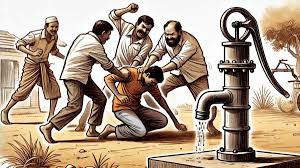
Hamirpur News: Drinking water from a government hand pump proved costly for a Dalit youth who came from a neighboring district in Hamirpur district. When he touched the hand pump to quench his thirst, the village bullies pushed him to the ground. He was also humiliated by beating him in public. On the basis of the complaint of the incident, the police has started investigating the whole matter today. Case of beating a Dalit for touching a government hand pump The village bullies humiliated the youth by calling him untouchable The police has now started investigating the whole matter Pankaj Mishra, Hamirpur: In Hamirpur district of Uttar Pradesh, a thirsty Dalit was beaten up badly for touching a government hand pump. He was also humiliated by calling him untouchable. On the basis of the complaint of the incident, the police has started investigating the whole matter. Police has started investigating the matter. Amit son of Chhotelal Anurag, a resident of Subhash Nagar of Kabrai town of neighbouring Mahoba district, has his maternal home in Chhani village of Binwar police station area of Hamirpur district. He was going to his maternal uncle’s house in Chhani by motorcycle. Then he felt thirsty due to heat. To quench his thirst, he stopped the motorcycle on the way outside Bibhuni village. He started operating the government hand pump to drink water. Meanwhile, Jal Muhammad son of Sayyadin, Saddam, Aziz Hasan son of Hussain Muhammad and Mushtaq son of Basir Muhammad of the same village abused him and forbade him from drinking water from the hand pump. Ignoring the bullies, he started drinking water from the hand pump and the bullies got angry. The bullies said that this hand pump has now become impure. The bullies pushed him off the hand pump and beat him up. The villagers present there were also terrified when he was beaten mercilessly after being thrown on the ground. After this incident, the humiliated Amit reached Binwar police station and gave a written complaint about the matter. He told the police that he was beaten up for drinking water from a government handpump. He was insulted by calling him untouchable. Police investigating the incident Binwar police station in-charge Dharmendra Kumar told on Wednesday that Amit Kumar, a resident of Kabrai Mahoba, has filed a complaint in the police station and accused four people of village Vibhuni of treating him as untouchable and pushing him and beating him while drinking water from a government handpump. On the basis of the complaint, the incident is being investigated. He told that action will be taken in this matter after investigation. About the author Aishwarya Kumar Rai Aishwarya Kumar Rai works as Principal Digital Content Producer in Navbharat Times Online. Hometown Gorakhpur of eastern Uttar Pradesh, where he received education from birth to school. After graduation from Delhi University, he did PG-Diploma in Journalism from Indian Institute of Mass Communication (IIMC). Professional journey started with the country’s only trilingual agency UNI-Varta. Then further journey with NBT. Delhi and Lucknow are our workplaces. Courtesy: Aishwarya Kumar Rai, NBT, Hindi News
Bakhraur murder case: BSP enraged over Dalit girl’s murder, warns of agitation if justice is not given
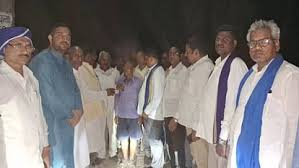
Bihar BSP: Bahujan Samaj Party’s central state in-charge Anil Kumar said, Gopalganj has become a stronghold of crime. Serious questions are being raised on the administration and the government. If justice is not given, the Bahujan Samaj Party will launch a big agitation. After the brutal murder of a Dalit girl in Bakhraur village under Barauli block of Gopalganj district, Bahujan Samaj Party’s central state in-charge Anil Kumar met the victim’s family late on Tuesday night. Party’s central in-charge Umashankar Gautam, central state in-charge Advocate Suresh Rao, state president Shankar Mahato were also present with him. Anil Kumar expressed deep concern over this inhuman incident and called it an administrative failure and a deliberate conspiracy. Addressing a press conference organized at the Circuit House, Anil Kumar said that in the last few days, dozens of such incidents have happened with the Dalit, exploited and deprived class which show that Gopalganj is now becoming a district of murder and rape. Anil Kumar said that questions arise on the working style of the police captain here. The FIR not being registered for five days shows that the administration in Bihar has become inactive and anti-Dalit. He asked in a sharp tone, “Is dictatorship or Talibani rule prevailing in Bihar?” He also accused Chief Minister Nitish Kumar of mental instability and said that now his remaining in the post is a betrayal to the people of the state. The BSP leader said that atrocities on Dalits in Uttar Pradesh had completely stopped during the rule of sister Mayawati. He clarified that if law and order can improve with leadership like Behenji, then it is possible in Bihar too. Provided the government’s intention is right. Anil Kumar also took a dig at three ministers of the Bihar government that they did not even come to meet the victim’s family. He warned that if the victim’s family does not get immediate justice and action is not taken against the culprits, then the Bahujan Samaj Party will launch a massive movement within the ambit of the Constitution and will work to oust the double engine government from power. He also demanded the suspension of the guilty officers on the inaction of the police administration. On this occasion, State Vice President Kishore Kunal Vivek, State General Secretary Abhimanyu Kushwaha, Sachin Singh, Sajid Hussain, Buxar District President Subhash Gautam, Janardan Ram, Mithlesh Kumar, Shiv Bahadur Patel, Anil Kumar etc. were present. Courtesy : Arvind Kumar, Hindi News
Caste census will uplift Dalit, backward and Pasmanda classes: Danish Azad Ansari

Lucknow, 30 April. A meeting of the Union Cabinet was held in Delhi on Wednesday under the chairmanship of Prime Minister Narendra Modi. Many important decisions were taken in the meeting. The Modi government at the Center has also decided to conduct caste census in this meeting. Yogi government minister Danish Azad Ansari expressed happiness over this decision of the government. Danish Azad Ansari, while talking to the news agency, said that Prime Minister Narendra Modi’s decision to conduct caste census is historic. This decision will prove to be very meaningful in the reconstruction of the nation. This census will open new paths for the upliftment of backward society, Dalit society and Pasmanda class and new schemes will be made. Prime Minister Modi has always kept the development and upliftment of the country paramount. This historic decision has been taken with the spirit of serving the country, which the whole country welcomes. He further said that we have full faith that after this census, our resolve for a developed India 2047 will not only get further strengthened, but our country will move forward rapidly on the path of this resolve. Let us tell you that the Modi cabinet approved the caste census on Wednesday. Giving information about the government’s decision, Ashwini Vaishnav said that the Congress governments opposed the caste census. There has been no caste census since 1947. Instead of caste census, Congress conducted caste survey, many states in the UPA government have conducted caste survey from political point of view. He further said that in 2010, the then Prime Minister Dr. Manmohan Singh had assured in the Lok Sabha that the caste census would be considered in the cabinet. Thereafter, a cabinet group was also formed, in which most of the political parties recommended caste based census. Despite this, the Congress government considered it appropriate to conduct a survey instead of caste census, which is known as CECC. Despite all this, the parties of the Congress and Indy alliance used the subject of caste census only for their political benefit. Vaishnav further said that this type of survey has spread confusion in the society. Keeping all these situations in mind and ensuring that our social fabric does not come under the pressure of politics, the caste census should be included in the original census instead of a survey. This will strengthen the society economically and socially and the country will also progress uninterrupted. The Cabinet Committee on Political Affairs led by PM Modi has decided that caste census will be included in the upcoming census. Courtesy: Hindi News
MP: 17-year-old Dalit girl in Bhopal alleges that Zoya Bhabhi got me raped by Shahrukh
Bhopal. After the disclosure of the ‘Farhan Gang’ in Bhopal, the capital of Madhya Pradesh, which traps Hindu girls and makes them victims of lust, now another similar case has come to light. A 17-year-old Dalit girl has filed a complaint against some people including a woman and alleged that all of them together got her raped repeatedly by a boy named Shahrukh. Police have registered a case under various sections of BNS, SC-ST Act and POCSO Act at Kolar Road Police Station. The victim told the police that she is 17 years old. She lives near Bhopal. Being from a poor family, she could study only till 8th class. She has four siblings. The victim is the youngest in the house. She has three elder brothers elder to her. A young man named Javed had been living in the neighbourhood of the victim’s house for many years. They used to talk as neighbours. She used to call him Bhaiya and trusted him. The victim told that a day before Valentine’s Day this year, Javed took her to his house to meet a woman named Zoya. The victim reached Zoya’s house where her husband Faizan was also present. Zoya and her husband asked the victim about her name, address etc. and after some time a boy named Shahrukh reached there. Zoya told the victim that he is her brother and lives in Jahangirabad. Shahrukh took the mobile number from the victim here. The conversation continued for a few days. Shahrukh started wooing her. The victim objected to this and told this to Javed. Javed took Shahrukh’s side and encouraged the victim to maintain the friendship. Shahrukh started pressuring the victim for a meeting. On 16 February 2025, at around 4 pm, Javed took the victim to Zoya’s house. Shahrukh was already present there. Leaving the victim there, everyone went out of the house. Shahrukh said that he loves her and wants to marry her. For this, first a relationship has to be made. The victim said that despite her repeated refusals, Shahrukh raped her. When Zoya, her husband Faiza and Javed returned after about an hour, the victim told them the whole thing. But they said that marrying Shahrukh would lead to a good life for her. So she should not tell this to anyone. After this, Shahrukh started making her a victim of lust again and again by threatening to defame her. He used to call her to Zoya’s house. As soon as he left, Zoya and her husband would leave the house and Shahrukh would rape her. He did bad things to her 4-5 times. Fed up, the victim told the whole thing to her family members. After which they reached the police station. Courtesy : Hindi News
Dalit History Month | From Philosophy to Praxis—Tracing Kanshi Ram’s Journey
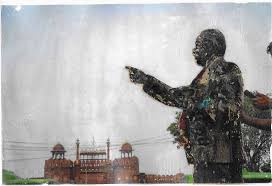
Kanshi Ram played a key role in institutionalising the Phule-Ambedkarite epistemic movement Baba saheb ka dusra naam, Kanshi Ram-Kanshi Ram—this slogan is widely recognised in the Dalit-Bahujan movement. Kanshi Ram’s followers affectionately refer to him as Bahujan Nayak, Manyavar and Saheb. In the post-Ambedkar era, he created political consciousness among the Dalit-Bahujans. His movement was not only socio-political but also epistemic in nature, focusing on epistemic justice to promote social justice in India. According to him, social justice cannot be realised without epistemic justice. Miranda Fricker, a famous British philosopher, coined the term epistemic injustice to get epistemic justice knowledge resources distributed and fairly. Kanshi Ram institutionalised the epistemic movement of Ambedkar through various institutions and organisations. His Bahujan movement, based on the ideas of social equality of Phule and Ambedkar, is not only a socio-political movement but also represents a new and profound epistemological intervention in Indian politics, through challenging the caste system and by establishing counter-knowledge systems from the Dalit-Bahujan perspective. It also restores the value, validity, and dignity of Dalit-Bahujan epistemology. Kanshi Ram critically analyses that the caste system is not only maintained through socio-political and economic domination, but also epistemological injustice, and can only be dismantled by establishing a counter-epistemology. By founding various organisations, he built democratic and inclusive knowledge systems, representing a unique attempt in Indian politics to institutionalise direct knowledge justice. His movement established the voices of Dalit-Bahujans in Indian politics by creating alternative ways of knowing through various institutions and challenging the systems that suppress the voices of these communities, thereby establishing a Dalit-Bahujan epistemology that has proven to be very important in Indian politics today. An Epistemic Movement that led to Social Transformation Following the Bahujan epistemic revolution of Kanshi Ram, Dalit-Bahujans gained the tools, mechanisms, language, organisations and institutions to represent and govern themselves. They have historically been victims of epistemic injustice due to the entrenched caste system for hundreds of years, which is the reason their voices, experiences, and knowledge are still excluded from the mainstream of society due to systematic exclusion. Kanshi Ram wanted political power through epistemic justice, which is why he established different organisations to create awareness among the Dalit-Bahujans, and that laid the foundation stone for alternative knowledge systems to combat caste-based discrimination and hierarchy, aiming to create a just and equitable society through political power. He often stated that political power is ‘Guru Killi’—a Punjabi term, reflecting his roots in Punjab. Through this Guru Killi, he believed, all social and economic liberation could be achieved. Kanshi Ram emphasised that the politics of a society with weak social roots could never succeed. He urged Dalit-Bahujans to focus on strengthening their social roots for successful political endeavours. Epistemic Justice through Organisations and Institutions Kanshi Ram founded several institutions and organisations to create alternative knowledge systems for knowledge justice. He established the Backwards and Minority Communities Employees Federation (BAMCEF) in 1978 and Dalit Shoshit Samaj Sangharsh Samiti (DS4) in 1981 to raise awareness among the Bahujan community and prepare them for politics. He also founded the Buddhist Research Centre (BRC) to explore the cultural heritage and history of the Bahujan communities. These organisations worked to decolonise knowledge and ensure that Dalit-Bahujan history and culture were recognised and institutionalised by mainstreaming them. These institutions published several books, pamphlets, and journals that critiqued caste oppression and educated Dalit-Bahujans about their historical, social, and political rights. BAMCEF was a non-religious and non-political organisation comprising of government employees. He regularly reminded them that government officials should work for the betterment of society through T3—time, talent, and treasure. His core belief was that, for epistemic justice, Bahujan officials should not only live for themselves but also work collectively as knowledge producers for marginalised communities. He advocated that educated Bahujans should serve their society alongside their work through the ‘Pay Back to Society’ concept. He encouraged government employees to act as epistemic agents, and for them, he created a platform like BAMCEF that became a focal stage for the epistemic movement. By establishing DS4, he aimed to politically and ideologically awaken the general masses of Dalit-Bahujan and also organise them to ensure they became active agents in knowledge production and political representation rather than passive subjects of history. It served as a bridge between BAMCEF and the later formation of the Bahujan Samaj Party (BSP). After BAMCEF and DS4, he established the BSP not only for political change but also for ideological reform in Indian politics, aiming to implement these changes through law when the government gained power. The BSP was founded with the intent to express Bahujan subjectivity through the government. Kanshi Ram founded the BSP on April 14, 1984, coinciding with Ambedkar Jayanti, and sought to transform knowledge justice into social justice through electoral politics. Through these organisations, Kanshi Ram rewrote and revived the erased history of Dalit-Bahujans and expanded and established narratives within the Bahujan community that were suppressed by the caste system. He redefined Dalit-Bahujan ideology, identity, and culture, establishing it as an agency of resistance instead of victimhood. He mobilised Dalit-Bahujan through the literature, media, and anti-caste cinema further to redefine their ideology, identity, and culture. These tools emerged as alternatives for Dalit-Bahujan knowledge production. Through this platform, Dalit-Bahujans began to lead themselves rather than being directed by upper-caste privileged individuals. His movement also started Bahujan festivals, programs and cultural traditions to counter-hegemonic discourse. As a result, Bahujans began to express their issues and counter the upper-caste narrative in the political system. He launched magazines and newspapers in several languages, such as Oppressed India and Bahujan Sangathak. Through these magazines, he totally transformed the political grammar of Dalit-Bahujan. By creating a new political vocabulary (e.g., “Bahujan,” “Chamcha Yug”) he empowered and made enable Dalit-Bahujan to create bahuajn discourse. their experiences and political demands. The most significant aspect of Kanshi Ram’s movement was his epistemic contributions, which led to the emergence of Dalit-Bahujan literature in the post-Ambedkar era. This literature helped as a counter-narrative discourse by establishing the Dalit-Bahujan perspective and
Meet Justice Bhushan R Gavai: India’s next chief justice and 2nd Dalit to hold the post.
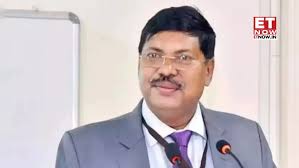
Meet Justice Bhushan R. Gavai: President Droupadi Murmu has officially appointed Justice Bhushan Ramkrishna Gavai as the 52nd Chief Justice of India (CJI). He will assume office on May 14, 2025, following the retirement of the current CJI, Justice Sanjiv Khanna, whose tenure ends on May 13. Justice Gavai, the most senior judge in the Supreme Court after Justice Khanna, will have a six-month tenure, retiring on November 23, 2025, upon reaching the mandatory retirement age of 65. Justice Khanna had recommended Justice Gavai’s name to the Union Law Ministry, in keeping with the convention of seniority in the appointment of CJIs. A legal journey rooted in Maharashtra Born on November 24, 1960, in Amravati, Maharashtra, Justice Gavai began his legal career in 1985. He trained under Bar. Raja S. Bhonsale, a respected former Advocate General and High Court judge, before starting independent practice in 1987. Initially practicing at the Bombay High Court, he later shifted focus to the Nagpur Bench, specializing in Constitutional and Administrative Law. He also served as standing counsel for major public institutions like the Nagpur and Amravati Municipal Corporations and Amravati University. Climbing the judicial ladder Justice Gavai’s judicial career began in 2003 when he was appointed as an Additional Judge of the Bombay High Court, and he was confirmed as a Permanent Judge in 2005. In May 2019, he was elevated to the Supreme Court of India. Over the years, he has been part of several Constitution Benches that have delivered significant judgments. Key judgments and constitutional bench involvement Justice Gavai was a member of the five-judge bench that unanimously upheld the abrogation of Article 370, which revoked the special status of Jammu and Kashmir. This ruling was one of the most critical constitutional decisions in recent Indian legal history. He also played a pivotal role in the bench that struck down the Electoral Bonds Scheme, a controversial method of political funding. Additionally, he was part of the bench that, by a 4:1 majority, upheld the 2016 demonetization move by the central government involving the withdrawal of Rs 500 and Rs 1,000 currency notes. A historic appointment Justice Gavai’s appointment is also historically significant. He will be only the second Dalit to hold the position of Chief Justice of India after Justice K.G. Balakrishnan. His elevation is seen as a moment of representation in the higher judiciary, reaffirming India’s commitment to diversity and inclusion. Courtesy: MSN Note: This news is originally published on https://www.msn.com/ and is for use by the non-military/non-commercial community, especially those in the human rights sector.