
Ballia: Case filed against BJP leader for threatening to kill SC research scholar
BJP leader Alok Singh accused of abusing and threatening to kill a SC research scholar of Lucknow University over phone, case filed on basis of viral audio clip. Ballia (Uttar Pradesh): A Bharatiya Janata Party (BJP) leader, believed to be close to former Prime Minister Chandrashekhar’s son and Rajya Sabha MP Neeraj Shekhar, has been accused of abusing and threatening to kill a SC research scholar of Lucknow University. Police informed on Tuesday that a case has been registered in this matter. According to police, an FIR was lodged at Ubhaon police station late Monday night on the complaint given by Deepak Kanaujia, a resident of Turtipar village. Deepak Kanaujia, who is a research scholar at Lucknow University, alleged in his complaint that BJP leader Alok Singh called him on May 21 and used caste-related abusive language and threatened to kill him. According to the complaint, during the conversation, Alok Singh said, “Record this, I am not afraid of the administration or law and order of Uttar Pradesh.” Arun Kant Tiwari, BJP’s Bilthara Road area president, confirmed that Alok Singh is associated with the party and is also a close relative of Neeraj Shekhar. Deepak Kanojia also alleged that Alok Singh has had a long-standing political dispute with his family. He said that his father, Kamlesh Kanojia, was under stress due to constant harassment and due to this he died of a heart attack on October 31, 2023. Deepak feared that Alok Singh may now harm his mother, who is living alone in the village. Superintendent of Police Omvir Singh said that an audio clip related to the threat had recently gone viral on social media. In this case, a preliminary investigation was conducted by Rasra Circle Officer Alok Gupta, on the basis of which a case has been registered against the accused Alok Singh under sections 352 (intentional assault) and 351 (3) (criminal intimidation) of the Indian Penal Code (BNS) and sections of the SC / ST (Prevention of Atrocities) Act. Courtesy: Rajan Chaudhary, Hindi News
Dalit woman attacked in Karnataka, customer hurled casteist abuses – CCTV footage viral

An argument over a 500 rupee note in Kundapur, Karnataka, turned into casteist remarks and violence; police register case. Karnataka: A case of casteist attack and abuse on a Dalit woman has come to light in Mavinakatte area of Kundapur taluk in Udupi district. It is alleged that the victim Lakshmi, who works in a medical shop, was attacked by customer Yasmin and casteist slurs were used. Yasmin got angry on suggestion of digital payment, incident captured in CCTV According to a report by News Karnataka, a woman named Yasmin wanted to buy medicine by paying a 500 rupee note. When Lakshmi told that there was no change in the shop and she suggested PhonePe or digital payment, Yasmin lost her temper. The argument escalated to a scuffle and casteist abuses. The entire incident was recorded in the CCTV camera installed in the shop, the footage of which has now gone viral on social media, seeing which people are angry. Victim admitted to hospital, SP visits Lakshmi, injured in the attack, has been admitted to Kundapur Taluk Hospital. As soon as the incident was reported, Udupi District Superintendent of Police Hariram Shankar reached the hospital and met the victim and went to the shop to inquire about the matter. Speaking to the media, the SP said that the matter is being taken seriously and strict legal action will be taken on the basis of evidence. A case has been registered at Kundapur Rural Police Station and investigation is underway. Dalit organizations demand strict action This incident has increased tension at the local level. Dalit organizations and social workers have demanded strict action against the accused under sections of the Indian Penal Code including Section 3 of the SC/ST (Prevention of Atrocities) Act. The police is investigating the CCTV footage and statements of eyewitnesses are being recorded. Frontline workers need respect and social reform This case not only exposes the truth of caste discrimination, but also shows the kind of abuse frontline workers face in their everyday lives. Social activists have demanded speedy justice and social reform in such cases. The administration has assured that the case will be investigated impartially and the culprits will be punished according to the law. Courtesy: Rajan Chaudhary, Hindi News
Dalit woman judge sought leave, Jharkhand High Court made ‘adverse remarks’ in ACR — Supreme Court issued notice!

Allegation of adverse remarks being recorded after filing a petition in the Supreme Court against denial of child care leave. New Delhi: The Supreme Court on Wednesday issued a notice to the Jharkhand High Court. This notice has been issued on the latest application filed by a Dalit woman judge, in which she has alleged that adverse remarks were made in her Annual Confidential Report (ACR) after filing a petition in the apex court against not getting childcare leave. A bench of Justice Prashant Kumar Mishra and Justice Manmohan recorded the argument of senior advocate A.K. Sinha, who appeared on behalf of the Jharkhand High Court. He told the court that as per the suggestion given by the Supreme Court on June 6, the High Court has now decided to grant 92 days of childcare leave to the woman judge. However, the counsel appearing for the judge raised serious concerns before the bench and said that the adverse remarks were made in the ACR only after the petition was filed on May 23. The judge’s counsel said, “One more thing is very disturbing. Some remarks have been made in my ACR now, which have been made after the filing of this petition. I am an officer from the Scheduled Caste category and I have disposed of a large number of cases.” He also said that the judge concerned is “one of the best performing officers.” The counsel questioned the timing of the ACR remarks and said, “Please look at the timing…” To this, the Supreme Court directed the Jharkhand High Court administration to file a reply to the allegations levelled by the judge that adverse remarks were made in his ACR after the petition was filed. Courtesy : Rajan Chaudhary, Hindi News
Dalit child did not get prasad in the bhandaar in Unnao, was beaten up with casteist abuses!
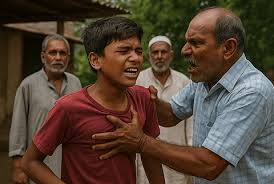
A case of alleged caste discrimination and assault on a Dalit teenager who had gone to take prasad in a bhandaar in Bangarmau area of Unnao district of Uttar Pradesh has come to light. On the complaint of the victim’s family, the police have registered a case under the SC-ST Act and other sections. Unnao (Uttar Pradesh): A case of assault on a Dalit teenager who had gone to take prasad in a bhandaar in Mohaddinpur village of Bangarmau Kotwali area of Unnao district, using casteist abuses, has come to light. The incident took place on the last Tuesday of the month of Jyeshtha, when a bhandaar was organized in the village by Radhelal and Pyarelal, sons of Hiralal. According to the report published by the magazine, the victim Sumit (son Pradeep) had gone to take prasad in the bhandaar, but it is alleged that he was not given prasad. At the same time, the victim’s father Pradeep alleged that while beating the child, he was told, “This bhandaar is not for you.” Not only this, he was also prevented from entering the temple. When Pradeep reached to talk to the organizers about this incident, he was also abused and casteist words were used against him. Pradeep has also recorded a video of this entire incident, which has been handed over to the police as evidence. What did Bangarmau police say? Bangarmau Kotwali in-charge inspector Chandrakant Singh informed that an FIR has been registered against Radhelal and Pyarelal on the complaint of the victim Pradeep son of Babulal. A case has been registered against them under the SC-ST Act and the relevant sections of the Indian Justice Code (BNS). The police have arrested both the accused and the legal process is going on. Courtesy: Rajan Chaudhary, Hindi News
Dalit minor girl sexually abused for over two years by 14 people, seven arrested

A case of prolonged sexual abuse came to light in Anantapur, Andhra Pradesh, after six people, and a minor, were arrested in connection with a reported gangrape of a Dalit minor girl. The 15-year-old was sexually abused for more than two years by 14 people, sources said. Six individuals were arrested, and a juvenile was detained, in connection with an alleged serial gang-rape of a Dalit minor girl in Puttaparthi area of Andhra Pradesh’s Anantapur district. According to the police, the six accused were remanded to judicial custody for the alleged sexual abuse of a 15-year-old girl over a period of two years. District Superintendent of Police V Ratna, at a press meet on Monday, revealed the details of the crime, saying that the case came to light in the Edgurallapalli village under Ramagiri mandal of Puttaparthi area of the district. She said all six accused were arrested on June 9 after a case was registered, based on a complaint filed by the survivor. According to the officer, the arrested were identified as Achampalli Vardhan (21), Talari Murali (25), Badagorla Nandavardhan Raj, alias Nanda (23), Arencheru Nagaraju, alias Haryana Cheruvu Nagaraju (51), Boya Sanjeev (40), Budida Rajanna (49). In the complaint filed by the survivor, the seven accused, along with seven others, allegedly took turns over a period of two years and sexually assaulted her. The investigation is underway to apprehend all persons involved in the case. The seven others named in the complaint are said to be on the run, the police said. The case is registered under various relevant sections of Bharatiya Nyaya Sanhita – 2023 (BNS), Protection of Children from Sexual Offences Act – 2012 and Information Technology Act, 2000. Meanwhile, Andhra Pradesh Chief Minister Nara Chandrababu Naidu expressed anguish over the gangrape and another murder of a woman in the state. He called for swift action in the cases and stressed anguish that the accused must be punished without delay. “Officials must complete investigations quickly, file charge sheets and ensure the trials are concluded at the earliest. Strong evidence must be gathered with utmost care to ensure the harshest possible punishment to all the accused,” he said. However, YSR Congress Party president and former chief minister Jagan Mohan Reddy alleged that the accused in the case were linked with the ruling Telugu Desam Party. In a long post on X, Jagan accused the Naidu government of being apathetic towards crime. “As an indicator of Govt’s insensitivity, the state has witnessed 188 rapes and 15 rape-murders in one year. Even recently, an Intermediate tribal student of Anantpur Dist. was found murdered and her body dumped in woods with signs of a brutal attack,” the post read. In the post, Jagan also questioned the TDP-led government’s attitude and action towards women, calling it “disgraceful” and “preposterous”. “Is this the safety they promised? Is this the dignity they protected?” he said in conclusion. Courtesy : Apoorva Jayachandran, India Today Note: This news is originally published on https:/indiatoday.com/ and is for use by the non-military/non-commercial community, especially those in the human rights sector.
“When has there been no heat?” Dalit lives in climate crisis
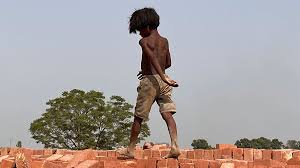
India has been grappling with intense heat waves in recent years and is witnessing a burgeoning literature dealing with heat stress. Out of 28 states in India, 23 have made their Heat Action Plans to manage heat stress in their respective jurisdiction. From media reports to academic studies, one aspect that is always at the centre is the vulnerable groups who are at risk of heat waves and are divided mainly based on two conditions- gender and poverty. These are the two overriding categories under which the identity of caste is subsumed in the discourse of heat stress vulnerability. I find the ongoing discourse to be caste blind: on one side, there is a reluctant acknowledgement in some places that people from the marginalised castes are at risk, while on the other side, questions such as who these marginalised caste people are, what are their experiences of suffering, and how their vulnerability is exacerbated by heat stress and climate change remain largely unexplored. “When has there been no heat? When have there not been high temperatures? High temperatures have always been there. There might be a difference of a degree or two. This year the high temperature is 46, last time it might have been 45. High temperature is a fact every year and bring immense pain every time. Only someone who has worked at the brick kilns or is currently working can really understand what this pain feels like.” This is how Ram Kumar, a Dalit brick kiln worker from Rajasthan, described his plight of facing the brunt of extreme heat stress. In the Hindu caste order, Dalits have historically been relegated to ritually polluted occupations, which not only are considered polluted by others but are also insidious to the well-being and health of Dalits. One such example is that of the Brick kiln industry, which employs more than 10 million migrant labourers who are predominantly from Dalit and Adivasi communities. Various estimates suggest that more than 50% of labourers at Brick Kilns come from Dalit communities. Working at Brick Kiln requires working under the heat stress at every stage of the work, from the procurement of the clay, its tempering and moulding, drying of the constructed bricks, firing (which exposes the worker to even more heat), to loading and unloading of the bricks. Under these circumstances, what Ram said about heat becomes more relevant to reflect on. The Dalit labourers at Brick Kilns have always suffered the afflictions of heat waves and are the worst affected by them; however, a discussion on occupational heat exposure of informal labourers has only started recently under the name of climate change. In another conversation, a Dalit migrant worker from Bihar shared, “We have no option but to suffer; the dwelling stays very hot inside throughout the day and night- we are forced to sleep outside.” This quote highlights the poor infrastructure of his dwelling and the lack of adequate cooling mechanisms. For people like him, the shade of a tree is the only respite during heat waves. During frequent visits to brick kilns in western Uttar Pradesh, I always encounter labourers taking shelter under the trees during the afternoon, while their small children play around them in the nearby fields. Generally, moulders at the brick kilns are provided with solar panels to meet their electricity consumption; however, these panels can only help them to charge their phones and light one bulb at night to work. From March to June, when there are frequent heat waves, moulders shift their timings to early morning and late night and live in a continuous sleep deficit. Shifting work timing is one of the few aspects under their control, as the production of bricks is based on the piece rate wage system, which, despite being exploitative, offers them some freedom to choose the timing of work. However, the substandard living conditions of kiln workers, marked by a lack of sufficient potable water, basic sanitation, and adequate shelter, remain entirely beyond their control. For instance, the roof of their 5-feet-high dwelling is made up of tin, which is considered a heat-trapping material, and therefore, in times of heat waves, the tin roof leads to an increased temperature inside the hut day and night, forcing them to take shelter under the open sky. Many other factors, including child labour, characterise the brick kiln industry. On my routine visits to brick kilns, I also encounter numerous small children, aged between 5 and 14, playing with mud bricks. They do a variety of labour owing to the piece wage rate system, which incentivises child labour, ranging from moulding to loading and unloading bricks. Except for very rare kids, most children’s fate at the brick kilns is the same. With their birth, their fate is predestined to work at the kilns- inheriting a life of toil not by choice, but by caste. All the children I interviewed had been helping their parents with moulding since their early years. Many of them bore visible injuries and rashes — mosquito bites from sleeping outside their hutments. As Ramesh explained, “the dwelling releases hot gas at night, making it difficult to sleep indoors.” In addition to this, several children had sustained injuries from heavy bricks falling on their hands and feet while working. Most of the time, Kilns are situated at rural-urban peripheries, which are far from the local schools, and because of the absence of transport and money, the children assist their parents to finish their targets. Because of their Dalit identity, many times they are subjected to caste slurs that are normalised in the guise of jokes by the local employees. French sociologist Edgar Morin brought the concept of polycrisis, which refers to a set of interwoven and overlapping crises involving complex inter-solidarity of problems, antagonisms, crises, uncontrollable processes, and the general crisis of the planet. The life of Brick Kiln workers is an example of this polycrisis, which is exacerbated by anthropogenic climate change and where debt bondage, piece rate
40-year-old Dalit manual scavenger falls into manhole in Tamil Nadu; dies
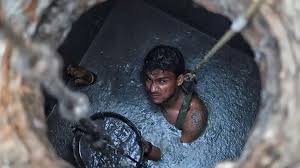
In January this year, the Supreme Court banned manual scavenging in all major cities, including Hyderabad, and warned criminal action against officers or contractors still engaging in it. A 40-year-old Dalit manual scavenger died on Sunday, June 8, after he accidentally slipped into a manhole while trying to clean a sewage in Tamil Nadu’s Thoothukudi district. The incident occurred behind the Tiruchendur Government Hospital. The deceased has been identified as Sudalaimani, who hailed from Tirunelveli district. Sudalaimani worked as a contract worker. On Sunday, he along with other sanitation workers, was deployed by the Tiruchendur municipality to clear a blockade in an underground drainage system located behind the hospital. While trying to enter the manhole, Sudalaimani slipped and fell inside. Although he was pulled up by the fire and rescue team and rushed to the government hospital, doctors pronounced him dead on arrival. A case under section 194 (accidental death) was registered. However, there is mention of death due to manual scavenging, The News Minute reported. Manual scavenging in India The Manmohan Singh-led UPA government introduced the Prohibition of Employment as Manual Scavengers and Their Rehabilitation Act, 2013, banning all forms of manual scavenging, including the handling of human excreta, in India. It is a cognizable and non-bailable offence. Lakdikapul Gated CommunitySt JosephsGermanten Hospital However, under Section 2(g) of the Act, a manual scavenger is defined as a person who manually cleans, carries, disposes of, or handles human excreta from insanitary latrines, open drains, or pits connected to such latrines, as well as from railway tracks or similar locations. Importantly, this definition does not cover those working in sewers or septic tanks and further states that workers who use protective equipment are not considered manual scavengers. In 2014, the Supreme Court ordered compensation of Rs 10 lakh to families of those who died while cleaning sewers and septic tanks. In January this year, the top court banned manual scavenging in all major cities – Chennai, Hyderabad, Delhi, Bengaluru, Kolkata and Mumbai – and warned criminal action against officers or contractors still engaging in it. Courtesy : TSD Note: This news is originally published on https:/thesiasatdaily.com/ and is for use by the non-military/non-commercial community, especially those in the human rights sector.
40-year-old Dalit manual scavenger falls into manhole in Tamil Nadu; dies
In January this year, the Supreme Court banned manual scavenging in all major cities, including Hyderabad, and warned criminal action against officers or contractors still engaging in it. A 40-year-old Dalit manual scavenger died on Sunday, June 8, after he accidentally slipped into a manhole while trying to clean a sewage in Tamil Nadu’s Thoothukudi district. The incident occurred behind the Tiruchendur Government Hospital. The deceased has been identified as Sudalaimani, who hailed from Tirunelveli district. Sudalaimani worked as a contract worker. On Sunday, he along with other sanitation workers, was deployed by the Tiruchendur municipality to clear a blockade in an underground drainage system located behind the hospital. While trying to enter the manhole, Sudalaimani slipped and fell inside. Although he was pulled up by the fire and rescue team and rushed to the government hospital, doctors pronounced him dead on arrival. A case under section 194 (accidental death) was registered. However, there is mention of death due to manual scavenging, The News Minute reported. Manual scavenging in India The Manmohan Singh-led UPA government introduced the Prohibition of Employment as Manual Scavengers and Their Rehabilitation Act, 2013, banning all forms of manual scavenging, including the handling of human excreta, in India. It is a cognizable and non-bailable offence. Lakdikapul Gated CommunitySt JosephsGermanten Hospital However, under Section 2(g) of the Act, a manual scavenger is defined as a person who manually cleans, carries, disposes of, or handles human excreta from insanitary latrines, open drains, or pits connected to such latrines, as well as from railway tracks or similar locations. Importantly, this definition does not cover those working in sewers or septic tanks and further states that workers who use protective equipment are not considered manual scavengers. In 2014, the Supreme Court ordered compensation of Rs 10 lakh to families of those who died while cleaning sewers and septic tanks. In January this year, the top court banned manual scavenging in all major cities – Chennai, Hyderabad, Delhi, Bengaluru, Kolkata and Mumbai – and warned criminal action against officers or contractors still engaging in it. Courtesy : TSD Note: This news is originally published on https:/thesiasatdaily.com/ and is for use by the non-military/non-commercial community, especially those in the human rights sector.
Dalit youth shot dead after dispute over ration distribution in Chhatarpur

Bhopal: A dalit youth was shot dead while his brother got injured after a routine ration distribution turned violent in Chhatarpur district of Madhya Pradesh. The incident took place at Bilhari village under Naugaon police station area on Sunday. Pankaj Prajapati, 19, was killed, and his brother Ashish was injured after gunfire erupted during a scuffle at the local ration shop. The incident triggered outrage in the region. The violence broke out around 10 am at the Gram Panchayat’s ration shop, which is being run from the house of local resident and advocate Praveen Pateria. Video footage of that incident surfaced on Monday. Eyewitnesses told police that Pankaj and Ashish Prajapati from Kumhartoli village got into an argument with Pateria over the non-distribution of ration for the past three months. The altercation intensified when the two brothers returned to the shop with their family members. It is alleged that Praveen Pateria, along with Naveen Pateria and Ramsevak Arajaria, began hurling abuses. The situation went out of control when Praveen climbed onto the roof and opened fire. One bullet struck Pankaj in the thigh, and although he was referred to Gwalior for treatment, he succumbed to his injuries en route. Ashish sustained an injury and was released after receiving primary care. Two videos of the incident went viral on Monday — one capturing the altercation, and the other showing Praveen firing a gun from the rooftop. The victim’s family gathered at the Naugaon hospital and refused to allow a postmortem, citing inaction by the police. They later blocked the road outside the tehsil office in protest. During the demonstration, a man attempted self-immolation by dousing himself in petrol, but was stopped in time by the police. Initially, police filed a case against only one accused, which intensified the villagers’ anger. After nearly five hours of protest, the police registered a case against all three — Praveen, Naveen, and Ramsevak — under charges including murder and relevant sections of the SC/ST (Prevention of Atrocities) Act, Arms Act, and the Bharatiya Nyaya Sanhita (BNS). The FIR includes charges under Sections 115(2), 109(1), 296 of the BNS, and Sections 3(1)(d), 3(1)(dh), 3(2)(v), 3(2)(va) of the SC/ST Act, along with Sections 25-27 of the Arms Act. Courtesy : TOI Note: This news is originally published on https:/timesofindia.com/ and is for use by the non-military/non-commercial community, especially those in the human rights sector.
Dalit youth shot dead at MP ration centre: Rahul Gandhi slams BJP govt, demands justice
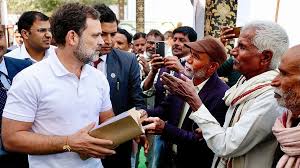
Chhatarpur, Jun 10: In a deeply disturbing incident that has sparked outrage, a 19-year-old Dalit youth, Pankaj Prajapati, was allegedly shot dead during a scuffle at a government-run ration distribution centre in Bilhari village, Chhatarpur district of Madhya Pradesh on Sunday. The youth, who had reportedly gone to collect his entitled ration, was caught in a heated argument with the local ration distributor, Ramsevak Arjaria. The verbal spat soon escalated as others joined in, and amid the chaos, Pankaj sustained a gunshot wound and collapsed on the spot. Though he was immediately rushed to a nearby hospital, doctors declared him brought dead. As the investigation unfolds, police have booked three individuals in connection with the incident — including local BJP worker Praveen Pateria, his brother Naveen Pateria, and the ration distributor, Ramsevak Arjaria. They have been charged under Sections 115(2), 109(1), and 296(5) of the Bharatiya Nyaya Sanhita (BNS). The exact identity of the shooter, however, remains unclear as the probe is still underway. Reacting sharply to the incident, Congress leader and newly appointed Lok Sabha Leader of the Opposition Rahul Gandhi took to social media platform X (formerly Twitter), holding the BJP-led Madhya Pradesh government responsible and accusing them of enabling caste-based violence. “Pankaj Prajapati was shot dead in broad daylight simply because he was a Dalit and had the courage to demand his rightful share,” said Gandhi in a scathing post. He used the occasion to highlight what he described as “11 years of humiliation, violence, and systemic discrimination” under the leadership of Prime Minister Narendra Modi. Demanding immediate arrest and strict punishment of the culprits, Rahul Gandhi extended his solidarity to the bereaved family, stating, “I stand with the Prajapati family and every Bahujan in this country. This is not just about one life — it is a fight for dignity, equality, and justice. And we will win this fight at any cost.” The tragic death of the young Dalit man has reignited conversations around caste-based discrimination and violence, particularly in rural parts of Madhya Pradesh. Authorities continue to investigate the matter even as pressure mounts from civil society and political circles for swift and impartial justice. Courtesy : Daijiworld Note: This news is originally published on https:/daijiworld.com/ and is for use by the non-military/non-commercial community, especially those in the human rights sector.