
Ambedkar Nagar News: BJP Mandal Vice President along with his friend beat up a Dalit girl, case filed
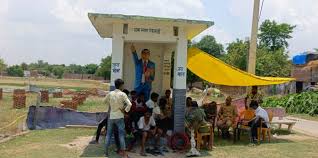
Baskhari (Ambedkar Nagar). The officials of BJP organization, who talk about women’s rights, are busy tarnishing the image of the party. The latest case is from a village in Hanswar. Here, a Dalit girl returning from the field with her younger brother was beaten up by BJP’s Hanswar Mandal Vice President along with his friend. The girl got injured due to the beating. Advertisement: 0:13 This is being told to be the third case of Dalit harassment against the Mandal Vice President. Sandhya, who lives behind Hanswar market, had gone to the field with her younger brother on the evening of June 6. She was returning from the field in the evening. It is alleged that Anoop Yadav, resident of Takiya and BJP Mandal Vice President Sumit Tiwari, resident of Babhanhiya, started quarreling with the girl. They abused her, and when she protested, they beat her up. Due to this, the girl got injured. She was also threatened with death if she complained to anyone. Inspector in-charge Virendra Bahadur Singh said that both the accused were taken into custody and challaned for disturbing peace. The injured girl is being medically examined. Courtesy : Hindi News
Dalit society got the benefit of schemes: Sudesh
Kaithal. Sudesh Kataria, Chief Media Advisor to the Union Minister of Power, Housing and Urban Development, attacked the Congress and opposition political parties and termed them anti-Dalit. He clarified that from independence till the year 2014, especially the Congress used Dalits as a ladder to power. In 2014, when Manohar Lal took over the reins of the state as Chief Minister, he changed the tradition of nepotism and regionalism and took steps towards Antyodaya upliftment. Dalit society got the most benefit from this. Sudesh Kataria was addressing a public meeting organized under ‘Hamara Samvidhan-Hamara Swabhiman’ organized in Kaithal on Sunday. He said that the Congress always insulted the Constitution maker Baba Bhimrao Ambedkar. On the other hand, BJP not only respected Baba Saheb, but also uplifted Dalits in every field by following his ideals. During the tenure of former Chief Minister Manohar Lal, changing the politics of clans, regionalism and nepotism, steps were taken towards Antyodaya upliftment. Dalits and the deprived benefited the most from this. The Dalit society which was deprived of the benefits of the schemes, got the benefits of the schemes through the portal sitting at home. Dalits got the biggest benefit of Mission Merit: Sudesh Kataria said that Manohar Lal, who became the Chief Minister in 2014, took steps towards system change. He started Mission Merit. The biggest benefit of Mission Merit was received by the deprived, exploited and Dalit society, who were deprived of getting jobs despite being qualified. Because nepotism, familyism and regionalism dominated in the previous governments. But Manohar Lal took such a step to change the system, which other states are also following today. Now this mission is being taken forward by Chief Minister Naib Singh Saini. Courtesy : Hindi News
Mob Ties Three Minor Dalit Boys to Flagpole in Karnataka’s Gadag and Beat Mercilessly
The victims were accused of sending ‘obscene messages’ to a girl from an upper-caste community, which the attackers used as a pretext for the public assault BENGALURU – A horrific incident of caste-based violence has come to light in Harogeri village, Karnataka’s Gadag district, where three minor Dalit boys were brutally assaulted by a mob of around 50-60 upper-caste Hindus. The boys were accused of sending “obscene messages” to a girl from an upper-caste community, which the attackers used as a pretext for the public assault. The incident occurred on May 28, but videos emerged on Sunday (June 7), showing the boys being tied to a gram panchayat flagpole and beaten black and blue with sticks, slippers, and ropes. Eight people have been arrested so far, with police efforts ongoing to trace the remaining accused. A case has been registered under the SC/ST (Prevention of Atrocities) Act and the Bharatiya Nyaya Sanhita (BNS). In addition, a separate case under the Protection of Children from Sexual Offences (POCSO) Act has been registered against 30 individuals in connection with the incident, Naragund police inspector B. Manjunath said. One of the boys attempted suicide by consuming poison, allegedly due to shame and trauma, and is currently in critical condition at KIMS Hospital in Hubballi. Local sources allege that initial attempts were made to suppress the case, with pressure from community leaders to reach a compromise. The police registered the case and began arrests only after the disturbing videos went viral. Activists are demanding immediate arrest of all accused, strict enforcement of SC/ST atrocity laws, and comprehensive rehabilitation for the victims and their families. The incident has sparked widespread outrage on social media and raised serious concerns about caste-based violence, law enforcement delays, and the persistence of untouchability in rural Karnataka. A parent of one of the boys poignantly said, “Untouchability is still very much alive in our village; this incident is just another example of the discrimination we face every day.” Courtesy : Clarion Note: This news is originally published on https:/clarion.com/ and is for use by the non-military/non-commercial community, especially those in the human rights sector.
Footpath, trees near Dalit Prerna Sthal won’t be harmed for e-way widening: Noida
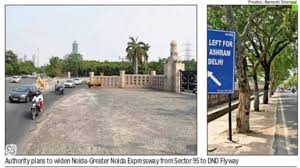
Noida: Noida Authority clarified on Sunday that the footpath and trees along a 600-metre long and 5.5-metre wide stretch near Dalit Prerna Sthal will not be damaged during an upcoming project. This comes a day after TOI reported that Authority plans to widen Noida Expressway from Sector 95 to DND Flyway loop by adding the 600-metre long and 5.5m wide stretch. Noida Authority is yet to issue a tender to hire a contractor for this project. In a press note issued on Saturday, the Authority initially said that a consultant hired to explore options for widening the expressway recommended removing a one-metre-wide roadside track, a 1.4-metre-wide footpath and a 3.1-metre-wide paved tiled surface to expand the carriageway by 5.5 metres. Noida’s clarification came after concerns were raised on social media platform X, with users questioning the widening of the road and expressing fears about possible damage to greenery and pedestrian pathways. Noida Authority deputy general manager (Civil) Vijay Rawal said that while some trees stand on the left side of the expressway and a footpath runs between the expressway and the Sthal, both will remain intact. “The trees and footpath will not be harmed. On the left side of the footpath, there are tiles which will be removed to make way for the project,” Rawal explained. There are nearly 40-50 fully grown trees along the way. The footpath is also used by a number of visitors to Dalit Prerna Sthal who come to see the memorial and also to observe the birthday celebrations of Dr BR Ambedkar, Kanshi Ram, Mayawati and other Dalit stalwarts. Nearly 1,000 people visit Dalit Prerna Sthal on a normal day, while the numbers increase to 10,000 on the birthday celebrations of stalwarts. “What is the need for this widening and how many trees will be cut? If the pavement is damaged, how will commuters and visitors to the Sthal navigate?” asked Brajesh Sharma, a resident of Sector 78, in an X post. Another commuter said that the traffic pressure has immensely increased, leading to a choke point near the DND Flyway loop during peak hours. “The road widening is important, but that should not be conducted by harming the trees,” he said. Nearly five lakh vehicles use the Noida Expressway daily, with around two lakh entering the city via the DND Flyway and another one lakh each from Kalindi Kunj, Chilla Border and Noida’s internal sectors. Courtesy : TOI Note: This news is originally published on https:/timesofindia.com/ and is for use by the non-military/non-commercial community, especially those in the human rights sector.
Religious Leaders Fought Fiercely to Win Dr. Ambedkar’s Conversion — Who Almost Succeeded?
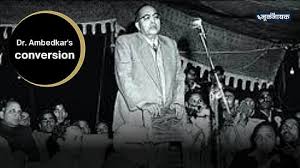
Discover the historic moment when Dr. B.R. Ambedkar declared his decision to renounce Hinduism and explore the untold stories behind his spiritual journey and social reform. The book A Part Apart: The Life and Thought of B.R. Ambedkar gives us insight into when Dr. B.R. Ambedkar’s direct inclination toward religious conversion began. By weaving together facts from various such works, the book Dharmaantaran: Ambedkar Ki Dhamma Yatra — compiled by Dr. Ratan Lal and published by Rajkamal Prakashan — brings forth many untold stories about Ambedkar’s path toward Buddhism. By mid-1935, rumors had spread that Babasaheb Dr. Ambedkar was preparing to retire from public life. However, any thoughts he had about withdrawing were soon swept aside by a major decision. In August 1935, Ambedkar wrote to Bombay Province’s Home Secretary Henry Knight, saying he would formally end the Kalaram Temple Satyagraha by publicly announcing his renunciation of Hinduism. Two months later, Knight reminded Ambedkar of this letter. On October 11, 1935, Ambedkar confirmed in a reply that he had not forgotten. Meanwhile, preparations were underway for a historic mass gathering of his followers at Yeola. Letters written by Ambedkar to Bhaurao Gaikwad reveal that the plan to organize the Yeola Conference had been in motion since 1932. Finally, on October 13, 1935, that historic day arrived when Ambedkar made his monumental announcement at Yeola. Describing the unbearable suffering of the untouchable community, Ambedkar declared his intention to leave Hinduism in these powerful words: “Unfortunately, I was born with the stigma of an untouchable Hindu. This was beyond my control. But to shake off this degrading status and improve my condition — that is within my power, and I will certainly do it. No one should have any doubts about this. Today, I declare to you that I will not die as a Hindu. After renouncing Hinduism, which religion the untouchables choose will be entirely up to them. They only need to ensure that they accept a religion that grants them equality.” Ambedkar’s announcement set off an explosive reaction across political platforms, organizations, and among individuals. The media covered the development extensively. Newspapers like The People, Indian Witness, Janmabhoomi, Prajamittra, Jam-e-Jamshed, Navakal, The Congress Socialist, Sanghashakti, Satyashodhak Ratnagiri, Loksatta, Kesari, and Subodh Patrika criticized the move in their own ways. On the other hand, publications like Lokmanya, Gyanprakash, Vihar, Sevak, Rashtraveer, Deen Mitra, and Vividh Vrutta published articles in support of the conversion. The reformist Brahmin playwright Anant Hari Gadre, editor of the magazine Nirbhid, also extended his support to Ambedkar. As news of the conversion announcement spread worldwide, leaders and representatives of Christianity, Islam, and Sikhism began approaching Ambedkar, eager to invite him into their respective faiths. Pandit Shrutbandhu Shastri of the Arya Samaj even offered his daughter’s hand in marriage to Ambedkar’s son — although he never brought his daughter to Rajgriha to formalize the proposal. Sardar Dilip Singh Thobia, vice-president of the Golden Temple in Amritsar, sent a telegram to Babasaheb, urging him to accept Sikhism, which was rooted in equality and monotheism. Dharamananda Kosambi visited Ambedkar at his residence in Rajgriha, where they engaged in deep discussions about Buddhism. Kosambi sensed that although Ambedkar was not yet bound to any one faith, his inclinations leaned toward Buddhism. Aga Khan, speaking to his followers, emphasized that if untouchable Hindus wanted to leave their religion, it was their duty to welcome them into Islam and aid their holistic development. However, Aga Khan’s followers did not actively pursue this initiative. According to volume 6 of Babasaheb Dr. Ambedkar: Jeevan Aur Chintan by Khairemude (published by Samyak Prakashan in 2017), the general secretary of the Mahabodhi Society, Banaras, sent Ambedkar a telegram stating, “If you have indeed decided to convert, please consider adopting Buddhism. Across the entire Asian continent, Buddhists stand united without caste divisions. If you choose this path, our dhamma missionaries will be sent to assist you.” Khalid Gauba, a former Hindu Arya Samaji, also sent Ambedkar a telegram, urging him to accept Islam, promising that “you and your community will be granted full rights.” Meanwhile, orthodox Hindus in Nashik were relieved at Ambedkar’s announcement, believing that untouchables would no longer disrupt their chariot festivals, which could now proceed smoothly. Some Hindu leaders even proposed initiatives like feet-washing ceremonies, thread ceremonies (janeu), inter-caste marriages, and community feasts to reconcile with untouchables. But Ambedkar showed no interest in these gestures. It is also notable that at the time, prominent Hindu leader Madan Mohan Malaviya strongly opposed inter-caste marriages and community feasts. Ambedkar clearly understood that caste existed across all religions in India. His thinking was firm: “By converting to Islam, we will not become nawabs overnight; by adopting Sikhism, we will not immediately become sardars; and by becoming Christians, we will not escape the stigma of sin. No matter which religion we adopt, we will have to struggle for our self-respect and a bright future.” Ambedkar was resolute. He said, “Even if the Hindus were to place their god himself beside me, I would still not remain in Hinduism. Whether or not touchable Hindus do anything for the untouchables, one thing is certain: I will renounce Hinduism.” Courtesy : Rajan Chaudhary, The Mooknayak Note: This news is originally published on https:/themooknayak.com/ and is for use by the non-military/non-commercial community, especially those in the human rights sector.
Why Dr. B.R. Ambedkar Rejected Islam and Christianity Before Embracing Buddhism
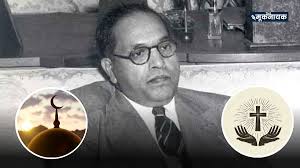
After announcing his decision to leave Hinduism, Dr. B.R. Ambedkar was courted by leaders of all major religions. But his deep study and experience led him to reject both Islam and Christianity before ultimately embracing Buddhism. Following Dr. B.R. Ambedkar’s historic declaration to renounce Hinduism, religious leaders from across India eagerly approached him, each hoping that Ambedkar would embrace their faith. However, Babasaheb listened patiently to each of them, critically examining their arguments. He also undertook extensive research—reading books, letters, and studying the social dynamics of the time—to decide which religion he would adopt after leaving Hinduism. While Ambedkar’s dissatisfaction with Hinduism’s caste system and its social injustices is widely known, the reasons he rejected Islam and Christianity are equally compelling and deserve closer examination. Why Ambedkar Rejected Islam In the early 1920s, Ambedkar had a relatively positive view of Islam. He believed the religion had the potential to embrace all, irrespective of caste or background. But by 1929, his perspective began to shift. The turning point came with the opposition Muslim leaders showed to the Sarda Bill—introduced by Arya Samaj member Har Bilas Sarda—which sought to fix the minimum age for marriage at 14 for girls and 18 for boys. Muslim members of the Central Legislative Assembly strongly opposed the bill, arguing it was against Islamic tenets. Despite the bill becoming law as the Child Marriage Restraint Act of 1929, Muslim leaders launched a protest movement inspired by the broader Civil Disobedience Movement. In a letter published in Janata on December 24, 1932, Ambedkar, writing from London, expressed how this incident was his first major shock regarding Muslim leaders’ attitude toward social reform. Later, during the Third Round Table Conference, he further observed their regressive stance. Hindu conservatives had also approached Muslim leaders for support in opposing temple entry bills, and to Ambedkar’s dismay, many Muslim representatives responded positively. This, he noted, aligned them more with reactionary Hindu elements than with reformers like Turkey’s Kemal Pasha. As a result, Ambedkar advised Dalits to be extremely cautious about converting to Islam. Ambedkar also experienced caste prejudice among Muslims firsthand. In his essay Waiting for a Visa, he recalled an incident that revealed, “A person who is an untouchable for a Hindu is also an untouchable for a Muslim.” Why Ambedkar Rejected Christianity Ambedkar acknowledged the contributions of Christian missionaries in the fields of education and healthcare and initially had a favorable view of Christianity. However, he ultimately refrained from recommending it to the Dalits for conversion. His primary concern was that conversion to Christianity did not significantly change the social status of Dalits. “Though one may become a Christian, in the eyes of the average Hindu, he remains an untouchable,” he wrote. Caste-based discrimination remained entrenched among Indian Christians as well. Those from the “touchable” castes were usually the better-educated and occupied higher social positions, while Dalit Christians continued to face exclusion and marginalization—even within the Church. There was little sense of solidarity between upper-caste and Dalit Christians, and regional Christians often identified more closely with local Hindus than with Christians from other regions. Moreover, Ambedkar noted that Indian Christians, being relatively small in number and dependent on missions for their basic needs, had limited influence in public life. This lack of political clout also made Christianity a less practical choice for social transformation. A Thoughtful and Strategic Decision By the early 1940s, Ambedkar was unwavering in his resolve to leave Hinduism. But none of the alternative religions appeared to meet all his criteria. His reasons for rejecting Hinduism were rooted in deeply felt experiences of oppression, but his choice of a new religion was guided by strategic and practical considerations. He was committed to separating the Dalits from the Hindu fold, but not at the cost of losing political representation, such as legislative reservations. In a country becoming increasingly communalized, Ambedkar also worried about the societal consequences if a large section of Dalits converted to Islam. His determination to convert was firm, but he was also deliberate, choosing to take time before making a final decision. Dalit Marathi writers such as Shankarrao Kharat and Vasant Moon later wrote in their autobiographies about how Ambedkar’s awareness campaigns had left a deep imprint on the Dalit psyche. This long-term impact culminated two decades later, when nearly 500,000 people embraced Buddhism alongside Ambedkar in Nagpur in 1956. Courtesy : Rajan Chaudhary, The Mooknayak Note: This news is originally published on https:/themooknayak.com/ and is for use by the non-military/non-commercial community, especially those in the human rights sector.
INTERVIEW | Congress can’t claim credit for caste census: BJP spokesperson Dr Guru Prakash Paswan
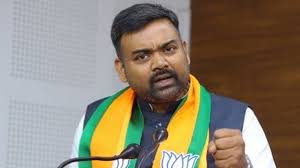
Speaking to Rajesh Kumar Thakur, Dr Paswan stated, “The caste census is a natural extension of the empowerment agenda pursued by the NDA government under Prime Minister Modi.” Dr Guru Prakash Paswan, a prominent Dalit leader from Bihar, national spokesperson of the BJP, and one of the party’s most articulate young voices, strongly criticised the Congress for attempting to take undue credit for caste enumerations. “The Congress has neither the moral nor political right to claim credit for the caste census. Neither the Congress nor its allies in Bihar, such as the RJD, have ever genuinely prioritised proportional representation for Dalits, OBCs, or other marginalised communities in their political frameworks. These are parties that engage in politics purely for the sake of politics,” he remarked. Speaking to Rajesh Kumar Thakur, Dr Paswan stated, “The caste census is a natural extension of the empowerment agenda pursued by the NDA government under Prime Minister Modi. It is disingenuous of the Congress to now attempt to claim credit for this initiative, made by Prime Minister Narendra Modi—Bharat’s real champion of Dalits, poor people, and OBCs.” How do you view the Opposition’s claims regarding the caste census, particularly as they now appear to be taking full credit for it following the Centre’s announcement? The Congress party’s history of disrespecting Dalits is etched in bold letters in Indian political history. Their mistreatment of iconic figures like Babasaheb Ambedkar and Babu Jagjivan Ram is well documented. Their duplicity is plain for all to see. In contrast, Prime Minister Narendra Modi, who himself hails from a backwards community, has consistently championed the cause of the marginalised. Under his leadership, India has seen the rise of the first woman tribal President, increased representation of Dalits, tribals, and OBCs in the cabinet, and numerous policies for their upliftment. The caste census is a natural extension of the empowerment agenda pursued by the NDA government under Prime Minister Modi. It is disingenuous of the Congress to now attempt to claim credit for this initiative, made by Prime Minister Narendra Modi—Bharat’s real champion of Dalits, poor people, and OBCs. The Congress party has mobilised all its wings nationwide to inform the public of its efforts in pursuing the caste census, claiming it compelled the Modi government to act. How do you respond to this narrative? The public knows how to distinguish between the real and the fake. Congress thrives on propaganda, while the BJP under PM Modi focuses on real empowerment of backward communities. Our track record speaks for itself—every resolution made by the Modi government is followed through. Congress, on the other hand, has a history of saying one thing and doing another. We will take PM Modi’s message directly to the people and let them see the truth. Do you believe the Opposition will gain electoral mileage from the caste enumeration decision in the upcoming assembly elections in Bihar and other states? The NDA government, led by PM Modi at the Centre and CM Nitish Kumar in Bihar, stands on strong ground. We are confident of a comprehensive victory in Bihar with the support and blessings of all communities. Our governance model in the state has delivered development, peace, and empowerment for everyone. The people of Bihar clearly see that the Opposition’s stance on caste enumeration is purely politically motivated. Parties like Congress and RJD, which have failed to provide proportional representation to Dalits even within their own organisations, are in no position to talk about justice or empowerment. Their agenda is political, not developmental. Why did your government delay the decision on caste enumeration? Was it driven by concerns over losing support from OBC and Dalit communities, or were there other considerations? There was no delay, at least none that I can recall. We fully back and support the policy decision made by the NDA government. It reflects our commitment to inclusive governance and data-driven policymaking. Is the decision to include caste enumeration in the national decadal census linked to preparations for a future delimitation exercise? This is a subject best left to the wisdom and discretion of the NDA government led by PM Modi. Any such linkage, if there is one, would be guided by constitutional principles and national interest. Do you believe the findings of the caste enumeration will lead to positive and transformative impacts on policy formulation for development? Absolutely. The data will be a valuable tool in designing and implementing targeted developmental policies. It will help reduce caste-based disparities, promote social cohesion, and ensure that the benefits of government initiatives reach every segment of society more effectively. The BJP had previously opposed caste enumeration, citing concerns about exacerbating social divisions. However, the decision was made shortly after a meeting between the RSS Chief and Prime Minister Modi. Do you think the RSS played any role in this change of stance? I am not privy to internal deliberations or private meetings, so I cannot comment on that. However, I can say with full confidence that both the RSS and BJP are firmly committed to the ideals of social harmony and national unity. Every step we take is aligned with these values. Courtesy : Rajesh Kumar Thakur, TNIE Note: This news is originally published on https:/thenewindianexpress.com/ and is for use by the non-military/non-commercial community, especially those in the human rights sector.
‘Where Is Humanity?’: Khan Sir Reacts To Muzaffarpur Rape Case Of Minor Dalit Girl
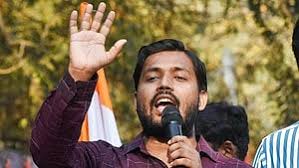
His remarks came after the tragic death of an 11-year-old Dalit girl, who was reportedly sexually assaulted and then denied timely medical care, ultimately succumbing to her injuries. Patna: Responding stronly to Muzaffarpur rape case, popular educator and YouTuber Khan Sir on Saturday questioned the very fabric of humanity in today’s society. His remarks came after the tragic death of an 11-year-old Dalit girl, who was reportedly sexually assaulted and then denied timely medical care, ultimately succumbing to her injuries. Speaking to IANS, Khan Sir said, “This is not just a case of crime, this is a question of our collective humanity.” Describing the inhumanity of the incident, he said, “Arif Mohammad Khan (Bihar Governor), who came to meet me, was very shaken. He told us, ‘How can a human being be so devoid of empathy that a child – a 11-year-old girl – comes out limping after being raped, and even then, the system fails to respond?’ She was taken away in an ambulance, and even then, she was shuttled between hospitals without proper treatment.” “Where are we going as a society? The pain of another should feel like our own – this is the essence of humanity. If we lose this, then what is the difference between humans and animals?” he told IANS. “Why do some lawyers take up the cases of such criminals—rapists, acid attackers, and murderers? I know many responsible lawyers who refuse to fight for someone they know is guilty. It’s time more people follow this principle. The unity and conscience of the legal community can make a real difference.” He also wished the nation on Bakra Eid, expressing his deep respect for Bihar Governor Arif Mohammad Khan, who visited his classroom on the occasion. “It’s our good fortune that someone as intellectual and compassionate as Arif Mohammad Khan is serving as our Governor,” he said. Sharing an anecdote from the visit, Khan Sir recalled how the Governor insisted on visiting the classroom and was moved by the inclusive atmosphere. “We have reserved front-row benches for a person with disability. They study free of cost, and we make sure they get the best experience. When the Governor saw this, he was impressed and even expressed interest in taking a class here someday.” Calling it a proud moment, Khan Sir added, “He said, ‘Tell me a topic and I will come to teach your students.’ It’s a great honour, and we are looking forward to that day.” When asked about his personal life, as he was recently married, he said, “Everything is normal, just like any other couple.” Khan Sir further responded to the Bihar government’s action of suspending the Medical Superintendent of Sri Krishna Medical College and Hospital in Muzaffarpur, where the girl was allegedly denied timely treatment. “The suspension is a start, but it’s not enough. There should be a clear protocol for critical cases. If someone is shot or raped, you don’t delay treatment for paperwork. She died in the ambulance, waiting for admission. This is not just negligence – it’s criminal apathy.” He proposed systemic reforms in hospital operations. “In big hospitals, there is always a separate corridor for emergencies. Why don’t we have one in Bihar’s biggest government hospital? There should be a direct route for super-critical cases. A building alone doesn’t make a hospital – it’s the system and intent inside that matter.” “In smaller towns or villages, you can understand some lack of infrastructure. But in Muzaffarpur? This is unacceptable. It brings shame to the entire district, the entire state.” Khan Sir concluded with a plea: “We need to look within. These brutal crimes are becoming frequent. The time for silence is over. We have to stand up – as citizens, as educators, as humans. Because if we don’t, we fail not just the victim, but the idea of humanity itself.” (Except for the headline, this article has not been edited by FPJ’s editorial team and is auto-generated from an agency feed.) Courtesy : TFPJ Note: This news is originally published on https://thefreepressjournal.com/ and is for use by the non-military/non-commercial community, especially those in the human rights sector.
Congress attacks BJP over rising atrocities on Dalits, weaker sections in Gujarat
New Delhi (PTI) The Congress on Saturday launched an offensive against the BJP governments at the Centre and Gujarat, claiming an increase in atrocities on Dalits and weaker sections in the state. Congress leader Jignesh Mevani alleged that the BJP-RSS do not believe in the Constitution of Babasaheb Ambedkar but believe in the values of ‘Manusmriti’. Mevani claimed this mindset has led to a rise in atrocities against the oppressed and weaker sections of society, citing instances such as Rohith Vemula’s suicide, the family of a rape victim in Hathras not allowed to see her after her death, and Dalit youths brutally beaten at Una in Gujarat. He also cited Home Minister Amit Shah saying in Parliament that “it has become a fashion nowadays to chant Ambedkar-Ambedkar…” The Congress leader told reporters that several incidents of Dalit atrocities have been reported from Gujarat, including a 19-year-old man who was killed in Amreli and an elderly Dalit man who was burnt alive in Patan. Mevani also alleged that Dalit boys going to lodge a complaint against atrocities in Surendranagar district were shot with AK-47. He further highlighted the horrific case of gang-rape of a Dalit girl for 11 days in Santrampur, alleging that three BJP leaders were involved in the case. Citing the low conviction rate in cases of atrocities on Dalits, Mevani said at the national level, this figure is 30-35 per cent, but in Gujarat it is only 3-5 per cent, which meant 95 per cent of the culprits go scot free. The Congress leader also criticised Gujarat Chief Minister Bhupendra Patel for attending a programme organised by the accused instead of meeting the victim after the kidnapping and torture of a Dalit youth in Gondal, Rajkot. He also claimed that Dalit, OBC and Adivasi students were being discriminated against by the Gujarat Public Service Commission as part of a conspiracy, alleging that they were deliberately given less marks in interviews. The Congress is preparing for a big demonstration in August-September against the atrocities on Dalits, Adivasis and weaker sections in Gujarat, he said. PTI SKC ARI This report is auto-generated from PTI news service. ThePrint holds no responsibility for its content. Courtesy : The Print Note: This news is originally published on https://theprint.com/ and is for use by the non-military/non-commercial community, especially those in the human rights sector.
Dalit Girl Gangraped By 13, Pregnant
The pregnancy came to light on Thursday when parents who were getting her treated for her frequent illnesses, were told by one of the RMPs that she was six months pregnant ANANTAPUR: The pregnancy of a Class 9 Dalit girl revealed how she was raped by her boyfriend and 12 of his friends, at Edugurralapalli in Ramagiri mandal of Satya Sai district. The pregnancy came to light on Thursday when parents who were getting her treated for her frequent illnesses, were told by one of the RMPs that she was six months pregnant. The incident came to the notice of the Ramagiri police who questioned the girl in the presence of her parents where she revealed that 13 youths had molested her over time. Police identified the boyfriend as Abhishek from the same village who faked his love for her. He took her to a secluded sport and raped her. Later, he disclosed the act to one of his close friends who also lured her to a secluded place and forcibly raped her. He also recorded the act on his cellphone which he shared with his friends. In all, apart from Abhishek 12 youths raped her by threatening to make her video viral. However, the video went viral with names of the accused. On Thursday some community elders forced the parents of all the accused and the victim to settle the issue monetarily. With social media blaming that the accused parents were with the Telugu Desam and allegedly misusing the power, Satya Sai superintendent of police P.V. Rathna along with Dharmavaram division police identified the victim’s family and registered a case on Friday. Ramagiri inspector Sridhar said they shifted the minor girl to Dharmavaram government hospital. Cases under Pocso and SC/ST atrocities Acts were registered against all the accused — Abhishek, Pratheek, Mahesh, Vardhan, Giri, Rajesh, Jukku, Anji, Murali, Hemanth, Karthik, Nanda, H. Nagaraju and two elders of the village for tyring to suppress the issue. YSRC incharge T. Prakash Reddy accused that children of TD followers were behind the heinous acts while MLA Paritala Sunitha was allegedly guarding the accused instead of providing justice. Sunitha denied the allegations and said that she had already instructed police to take serious action against all the accused. Courtesy : Deccan Chronicle Note: This news is originally published on https://deccanchronicle.com/ and is for use by the non-military/non-commercial community, especially those in the human rights sector.