
CM Revanth has deep regard for artistes and Dalits: SC Welfare Minister
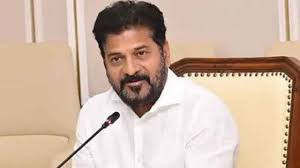
The Minister said the Chief Minister has consistently stood by Dalits, recalling the historic decision on SC categorisation and the recognition extended to artistes Chief Minister A. Revanth Reddy’s personal presence at poet Andesri’s funeral reflected the government’s deep respect for artistes and Dalits, stated Minister for SC, ST and Disabled Welfare Adluri Lakshman Kumar at a preparatory meeting for the condolence programme of Andesri, author of the Telangana State Anthem. “No Chief Minister in the past has accorded such honour to poets and artistes,” he said, adding that the meeting would be organised with dignity befitting the State and in a manner that embodies the spirit of Telangana. The Minister said the Chief Minister has consistently stood by Dalits, recalling the historic decision on SC categorisation and the recognition extended to artistes. He met poets, artistes, Dalit organisations, people’s associations and employees’ unions to plan the programme. Mr. Lakshman Kumar said Andesri’s literary contributions captured the spirit, pride and cultural essence of Telangana, and would continue to guide future generations. The condolence programme will revolve around three themes — Dalit unity, Telangana spirit and honouring artists. The Hindu Bureau Courtesy : The Hindu Note: This news is originally published on https:/thehindu.com/bha and is used purely for non-profit/non-commercial purposes, especially human rights
Stricter measures demanded against untouchability, caste discrimination

The Shoshan Mukti Manch today staged a massive protest outside the premises of Deputy Commissioner’s office against atrocities on the Dalit community, especially rising cases of rapes and murders. The manch demanded that the state government should opt stricter measures to stop untouchability, caste-based discrimination and oppression of Dalits as well as crime against them. Through the Deputy Commissioner, the manch submitted a memorandum to the Chief Minister demanding an end to social evils, while highlighting the issues and demands of the Dalit community. During the protest, Jagat Ram, state co-convener of the manch, alleged that the state was witnessing a significant rise in incidents of untouchability, caste-based discrimination, assaults on Scheduled Castes/Scheduled Tribes, rapes and murders over the past few months. He said in Rohru, a 12-year-old Dalit boy identified as Sikander, was subjected to such an extreme harassment that he was compelled to die by suicide. Also, in one of the schools in Rohru, a Dalit student was stripped naked by a teacher, and beaten and tortured with a stinging nettle. Similarly, in Kullu district’s Sainj Valley, a woman was brutally gang-raped and murdered, he said. During the Kullu Dussehra festival, a government officer was assaulted and humiliated, an incident that brought shame to the entire state, he said. “Cases of physical violence and rape of women by politically influential individuals and their families are on the rise. In Hamirpur, an attempt was made to rape a woman. She was attacked violently, leading to her death in the hospital,” he said. Jagat Ram further stated that the policies of liberalisation, privatisation and globalisation adopted by the state government were rapidly affecting both the nation and the state. “These policies are resulting in attacks on the rights of the common people and withdrawal of their essential facilities, creating widespread public anger. To divert attention from real issues and retain power, the ruling side is inciting divisions among people on the basis of caste and religion,” he claimed. Article_Author Tribune News Service Courtesy : The Tribune Note: This news is originally published on https:/thetribune.com/bha and is used purely for non-profit/non-commercial purposes, especially human rights
TMC accuses BJP of being ‘anti-tribal anti-dalit’ alleges rise in crimes against STs
Kolkata, (PTI) Stepping up its attack on the BJP governments at the Centre and in states, the Trinamool Congress (TMC) on Saturday accused the party of being “anti-tribal” and “anti-Dalit”, alleging that crimes against Scheduled Tribes (STs) had risen sharply in saffron party-ruled states. In a post on its official X handle, the party claimed crimes against adivasis had shot up by a staggering 90 per cent from 6,827 cases in 2014 to 12,960 cases in 2023. “In just one year, between 2022 and 2023, crimes against STs skyrocketed by 28.8 per cent, with the crime rate surging from 9.6 to 12.4,” the party said. The party asked, “Where are Tribals the most unsafe? Not Bengal. But Manipur and Madhya Pradesh, both proudly governed by BJP,” alleging that BJP-ruled states accounted for the “worst atrocities” against tribal communities. “In Madhya Pradesh’s Sidhi, a BJP leader was caught on camera commiting atrocities on a tribal youth. In Bengal, BJP’s own LoP @SuvenduWB has proudly declared that respected Tribal leaders like Debnath Hansda and Birbaha Hansda are ‘infants’ who belong under his boots,” the TMC said in the post. “After this mountain of hate, humiliation and violence, how does the BJP dare to lecture Bengal?” the party asked, alleging that the double-engine government used adivasi lives as “political props”. In another post, the TMC accused BJP leaders like Amit Malviya of launching “an anti-Bengali campaign”, branding him as an outsider. “So now @BJP4India wants to decide who is ‘Bengali’ and who is not? Your UP-born @amitmalviya is the same man who insulted and questioned the Bengali language, claiming “there is, in fact, no language called Bengali”. Accusing Malviya of repeatedly painting Bengalis as infiltrators and Bangladeshis, the TMC described BJP as a party parachuting outsiders into Bengal politics and appointing outsiders like Bhupendra Yadav and Biplab Deb as “election in-charge”. “When it suits BJP, outsiders are leaders. When it doesn’t, even Bengalis are ousiders,” the post said. The TMC said Bengal does not need BJP’s certificate to decide who belongs here as “your hate-driven narrative won’t work here.” (This story has not been edited by THE WEEK and is auto-generated from PTI) Courtesy : The Week Note: This news is originally published on https:/theweek.com/bha and is used purely for non-profit/non-commercial purposes, especially human rights
Man gets 10yrs in jail for raping, holding Dalit girl captive for 45 Days
Agra: A 36-year-old man has been sentenced to 10 years of rigorous imprisonment for raping and holding a 15-year-old Dalit girl, a Class 9 student, captive for 45 days in Aligarh district in 2017. The court of additional district and sessions judge (Posco) Anil Kumar also imposed a fine of Rs 50,000 on the convict. Of this, Rs 25,000 has been directed to be given to the girl as compensation, special prosecution officer (SPO) Lalit Singh Pundir said on Saturday. The prosecution said the incident took place on Aug 16, 2017. The girl’s mother reported that her daughter had gone missing after leaving home to buy milk. She was abducted by two men who took her away in an e-rickshaw and handed her over to the convict, a daily-wage labourer from the girl’s locality. In her statement, the girl said, “The man offered her a cold drink that rendered her unconscious. She later woke up in a room in Ghaziabad, where she was held captive for one and a half months, repeatedly raped and beaten. The man also used casteist slurs and threatened to kill her if she reported the matter to the police. She eventually escaped one day when he was away at work”. The girl was taken for a medical examination and the man was sent to jail. A chargesheet was filed under IPC sections 376 (rape), 363 (kidnapping) and 366 (kidnapping or abducting a woman for illicit intercourse), along with relevant provisions of the Pocso Act and the SC/ST (Prevention of Atrocities) Act. The court found the evidence against the man compelling and convicted him on Friday. Two other accused were given a clean chit during the investigation, the SPO said. Courtesy : TOI Note: This news is originally published on https:/timesofindia.com/bha and is used purely for non-profit/non-commercial purposes, especially human rights
Case of assault on Dalit wedding party in Badaun: Victim says, “The miscreants got enraged after seeing the Ambedkar statue in the car, police suppressed it.”
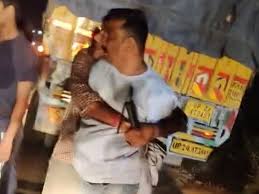
A case of assault on Dalit wedding party members has come to light in the Faizganj Behat police station area of Badaun. It is alleged that some miscreants attacked the wedding party members after seeing the vehicle carrying the Ambedkar statue. The victim’s side has accused the police of inaction, while the police are denying receiving a complaint. A video related to this incident has also surfaced. This incident occurred on the night of November 12th. In the Faizganj Behat police station area of Bisauli tehsil, wedding party members were allegedly assaulted, pistols were brandished, and assaulted. The police are accused of suppressing the matter for two days. The incident came to light when a video surfaced. Dharampal Singh, a resident of Mewali village in the Ughaiti police station area, stated in his complaint to the police that he was traveling by car to attend his relative’s wedding procession. On the way, two men overtook his car, stopped him, and misbehaved with him. Dharampal Singh alleges that the vehicle had a statue of Dr. Ambedkar, and upon seeing this, the attackers used casteist slurs and even attacked with a knife. The victim’s side says they filed a complaint with the police, but the police suppressed it. Meanwhile, the police still claim they have not received any complaint related to this matter. They say appropriate action will be taken upon receipt. Courtesy: Hindi News
Dalits and Muslims in Bihar
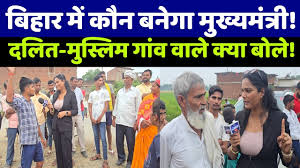
In the 2025 Bihar Assembly elections, the mandate has defied all established traditions and electoral conventions, creating new equations that have created a new chemistry within Bihar’s social structure. This indicates that when the public decides on its own alliances and coalitions, it pushes aside traditional beliefs. This Bihar mandate is shocking in many ways because it has shattered the very assumptions of Bihar’s electoral mathematics, based on which political parties calculate their victory and defeat. For example, in Muslim-dominated areas, this time’s mandate has shattered the Muslim-Yadav alliance, while also completely altering the election results in seats reserved for Scheduled Castes and Scheduled Tribes. Although in Bihar’s past history, the ruling NDA won 206 seats in the 2010 elections, far exceeding the current 202 seats, the social equations were not resolved the way they have been in this election. This time, the public has sent a clear message that it will not accept any other equations in place of good governance and public welfare. In the 2010 elections, Nitish Kumar’s party, the Janata Dal (United), contested 141 seats and won 115. The BJP contested a total of 102 seats and won 91. This time, the BJP and the JDU contested an equal number of seats, winning 101 each, with the BJP winning 89 and the JDU winning 85. However, these seats represented participation from all sections of society. JDU fielded four candidates from the Muslim community, all of whom won, while NDA ally Chirag Paswan’s LJP fielded one Muslim candidate. The Seemanchal region of Bihar is considered a stronghold of Muslim votes, comprising the four districts of Kishanganj, Katihar, Araria, and Purnia. These four districts have 24 seats. It was believed that the Muslim vote bank in Seemanchal would remain unspoiled, but a split occurred, and five candidates from Asiduddin Owaisi’s Ittehad-e-Muslimeen party won from this region. The same number of candidates from this party were victorious in the 2020 elections. The Muslim vote was divided between the opposition Grand Alliance and Ittehad-e-Muslimeen, resulting in the NDA’s greatest victory, with the largest number of its candidates winning from Seemanchal. In Seemanchal, where there was a buzz about consolidation of Muslim votes, Hindu votes consolidated in favor of the NDA without any caste discrimination, resulting in the highest number of victories for this alliance’s candidates. Of the 24 seats in Seemanchal, the NDA secured 14, with the BJP winning seven, the JDU five, and Chirag Paswan’s LJP two. In the opposition Grand Alliance, the Congress secured four, the RJD only one, and Asiduddin Owaisi’s party won five. While it was believed that the Seemanchal region would be more favorable for Lalu Yadav’s RJD party because of the Muslim majority here and the Muslim-Yadav equation being active, the opposite happened. Due to the division of Muslim votes, all four JD(U) Muslim candidates won. Kishanganj district has the highest Muslim voter turnout at over 67 percent, while Katihar has 45 percent, Araria 43 percent, and Purnia 39 percent. The Congress Party’s performance in Seemanchal is considered very poor, although it won four seats. This is despite the region’s Muslims’ goodwill toward Rahul Gandhi. Thus, the NDA’s improved performance in Seemanchal this time compared to 2020, demonstrating that the Grand Alliance’s perceived Muslim bias has not affected it. Similarly, the state’s reserved seats for Dalits have been in a similar state. Of the 40 reserved seats in Bihar, only two are reserved for Scheduled Tribes or Adivasis, while the remaining 38 are for Scheduled Castes. By capturing 34 of these 40 seats, the NDA demonstrated that the opposition Grand Alliance’s caste census strategy failed to work, and that the proponents of social justice, Lalu Prasad Yadav’s party, have only marginalized the Scheduled Castes. Although Lalu Prasad Yadav’s party, the RJD, received the highest number of votes in these 40 seats, with over 22 percent, it failed to win any seats. The Grand Alliance won only four out of 38 seats and one tribal seat. In the previous elections in 2020, the NDA won 21 reserved seats and one tribal seat, while the Grand Alliance won 17 reserved seats and one tribal seat. Given the Grand Alliance’s poor performance in the reserved seats, it can be said that Rahul Gandhi’s Save the Constitution campaign was very weak in these areas. Thus, the NDA defeated the Grand Alliance on all fronts and created new electoral equations while strengthening its concept of public welfare. Aditya Chopra Courtesy: Hindi News
The man who made Dalit voices rise
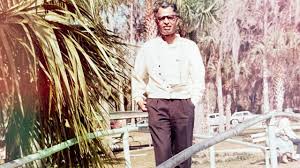
Dr M N Wankhede, on his 100th birth centenary, is remembered for mapping the Dalit vidrohi canon and urging writers to speak out, linking India’s caste struggle with global movements for justice The Ambedkarite thinker, fierce essayist, and mentor of the Dalit rebellious canon is, of course, known in academic circles, but not in the national or regional consciousness. It is to him that the arc of Marathi Dalit writing (and its translations) can be traced. From Baburao Bagul’s Sood (whose foreword he wrote) through Daya Pawar’s Baluta, Laxman Mane’s Upara, Baby Kamble’s Jina Amucha, and Urmila Pawar’s Aaydaan, the genre found its most forceful voice in memoir and autobiography — work that today stands translated in several foreign languages and remains a matter of pride in Maharashtra. Behind this lineage stood Wankhede, who wrote, spoke, and organised around the need for rebellious literature that would name oppression and speak in its own cadence. His years were few, but his impact was decisive: through his essays, speeches, institution-building, travel and study abroad, and his work at Aurangabad’s (now Sambhajinagar) Milind College, he shaped the very definition of rebellion in letters. Dr Wankhede (second row, third from left) and other students travelling to UK with Babasaheb AmbedkarDr Wankhede (second row, third from left) and other students travelling to UK with Babasaheb Ambedkar A new Marathi volume titled Krantdarshi Dr M N Wankhede — which includes the scholar’s select English quotes — edited by senior litterateur Yashwant Manohar, brings together some 60 scholars from across Maharashtra. Manohar excerpts from Wankhede’s speeches, public interviews, and English writings. He, in fact, calls Dr Wankhede “Maharashtra’s Sartre”, whose influence, he notes, has never faded. The collection situates the aesthetics of Dalit literature within a global frame, where Wankhede’s thought carries the existentialism of total revolution, anchored in Dr Ambedkar’s foundational sadvivekvaad — the reasoned humanism that defined his worldview. The volume highlights Wankhede’s profound grasp of Dr Ambedkar’s teachings and his eloquent insistence that Dalits must write fearlessly from their own lived experience. He challenged inherited heroes of history and myth, urging Dalit writers to create their own protagonists — shaped by their time and struggle. For him, the Dalit quest was inseparable from the human one. PM Jawaharlal Nehru and Dr Wankhede (right) in Aurangabad to inaugurate Marathwada UniversityPM Jawaharlal Nehru and Dr Wankhede (right) in Aurangabad to inaugurate Marathwada University Dr Wankhede went to the UK on an Indian government scholarship, and later became a Fulbright scholar in the US, completing his PhD at the University of Florida on “Walt Whitman and Tantrism: A Comparative Study.” There, he witnessed the African American civil rights movement firsthand, profoundly shaping his understanding of social justice and equality. As a scholar of English literature, deeply influenced by Martin Luther King Jr, Langston Hughes, Walt Whitman, and James Baldwin, he urged Dalit youth to pursue education as a tool for transformation. He felt fortunate to have been chosen by Dr Ambedkar to head the English department at Milind College, the institution Ambedkar founded, hoping others would follow this dnyānmārga, enabling them to tell their stories in their own idioms. Returning to Sambhajinagar, he brought insights from the Black Panther movement in the US, transforming Milind College into a crucible of cultural resurgence. Dr Wankhede (seated on the left in the foreground) with former Prime Minister Indira Gandhi Dr Wankhede (seated on the left in the foreground) with former Prime Minister Indira Gandhi As Arjun Dangle, Dalit Panther leader, wrote in the new volume — and reiterated at the Mumbai centenary gathering — “revisiting Dr Wankhede is vital today”, as the values sustaining our welfare state are under threat. In his time, Wankhede urged writers to practise vidroh (rebellion) against the caste establishment. That call resonates till date. Dangle notes that certain figures in history remind us of the need for counter-revolution; Wankhede is one such defining figure. Many writers of the Dalit vidrohi canon remember Dr Wankhede with deep gratitude, acknowledging that much of their own writing owes its inspiration to him. Many hail from Marathwada, especially Milind College, where Wankhede was either their guru or contemporary; a vatvriksha whose canopy sheltered writers, translators, and theatre-cinema-art creators. The volume showcases the Dalit intelligentsia across generations and geographies, including ideologue-thinker Janardan Waghmare (Latur), Hindi translator Aruna Lokhande (Sambhajinagar), educationist Chetana Sonkamble (Kolhapur), and poet-writer Vandana Mahajan from Mumbai. Literary critic and editor of Phule-Ambedkari Vangmaykosh, Dr Mahendra Bhaware, situates Wankhede at the heart of Maharashtra’s cultural renaissance — a force that introduced the revolutionary intensity of African American writing. Tapping into the moral and aesthetic upheaval after the 1956 mass conversion to Buddhism, Wankhede urged Dalits to question all entrenched powers — god and religion included. He institutionalised his ideas through journals such as Asmita, Asmitadarsh, Milind Magazine, and Milind Manuscript Fortnightly, building platforms for new voices. Dalit theatre also took shape under his patronage: he directed Yugyatra, the first Dalit play, performed in Ambedkar’s presence at Sambhajinagar and again before a massive audience at Nagpur’s Dhammadeeksha in 1956. Wankhede’s engagement with Marathi and Indian literary discourse was balanced: never an extremist, he was always open to new ideas. In the preface to Sood, he initially described Dalit literature as Dalit expression fuelled by anger against perpetrators, but later adopted a more nuanced diverse construct. How many public intellectuals are willing to revisit and correct their own definitions? Dr Mangesh Bansod, professor at the University of Mumbai’s Academy of Theatre Arts and an active member of the centenary celebrations, notes that Wankhede was a towering figure who refused to let narrowness or hatred shape the canon he built. He remained in dialogue with scholars of all persuasions, and his engagement with non-Dalit thinkers reflected the intellectual openness highlighted in the Krantdarshi volume through reflections by samavichari such as R G Jadhav, M P Rege, and V L Kulkarni. Renowned reformist writer-critic M B Chitnis — who shared Wankhede’s belief that Dalit literature must be intellectually rigorous yet
Mirzapur News: Government serious about oppression and exploitation of Dalit community
Jigna. Dr. Lalaji Prasad Nirmal, Chairman of the Natural Disaster Management Inquiry Committee, who holds the rank of Minister of State, addressed a gathering in Bihasra Bazaar on Saturday, stating that the Chief Minister has implemented numerous public welfare schemes for the development and upliftment of the community. Advertisement: 0:02 He stated that the government is serious about oppression and exploitation of Dalit community. He said that it is best for the community to remain with the BJP. The Chairman stated that he has donated money from his own funds for the construction of a road in Bihasra. The meeting was conducted by Lalji Verma. Deepak Verma, Vinay Kumar Singh, Ajay Jaiswal, Lal Saheb, Raj Mishra, Indrajit Verma, Shyam Babu Verma, Sanjay Sonkar, Sunil Verma, etc. were present. Dalits are free from fear, land encroachments are no longer prevalent under Yogi’s rule: Dr. Nirmal Vindhyachal. The BJP government is empowering Dalits socially, economically, and politically. Dalits are completely free from fear under Yogi’s rule. Their lands are no longer being illegally encroached upon. Dr. Lalji Prasad Nirmal, Member of the Legislative Council/Chairman of the Natural Disaster Management Inquiry Committee, Uttar Pradesh, stated this in a press conference held at the Ashtabhuja Dak Bungalow auditorium on Saturday. He stated that the Chief Minister has accomplished significant work for Dalits. As a result of this strictness, no gangster or mafia dares to encroach upon the land of Dalits or those from the marginalized communities. Now, Dalit and backward class employees recruited through outsourcing in the state will receive the benefits of reservation. Dr. Nirmal stated that the Chief Minister will inaugurate the world-class Dr. Bhimrao Ambedkar Memorial and Cultural Center being built in Lucknow on April 14, 2026, on the occasion of Baba Saheb’s birthday. Courtesy: Hindi News
World News | NY Consul General Meets Dalit Chamber of Commerce to Strengthen Business Ties
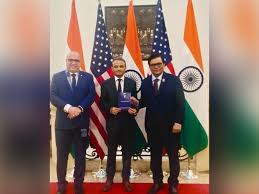
Get latest articles and stories on World at LatestLY. India’s Consul General in New York, Binaya Pradhan met a delegation from the Dalit Indian Chamber of Commerce and Industry and discussed strengthening of business opportunities for entrepreneurs of DICCI. New York [US], November 16 (ANI): India’s Consul General in New York, Binaya Pradhan met a delegation from the Dalit Indian Chamber of Commerce and Industry and discussed strengthening of business opportunities for entrepreneurs of DICCI. In a post on X, the Consulate stated, “Consul General Binaya Pradhan met a Dalit Indian Chamber of Commerce and Industry delegation led by Milind Kamble and Mr. Sanjiv Dangi. The discussion focused on strengthening business opportunities for entrepreneurs of DICCI in the US-India economic cooperation.” Earlier on Saturday, External Affairs Minister S Jaishankar chaired the Consul Generals Conference and appreciated the Embassy and Consulates for strengthening India-US ties. He reviewed bilateral ties with the US. In a post on X, he said, “Chaired a Consul Generals Conference in New York today, attended by Embassy of India in Washington DC, Consulate General of India in New York, Consulate General of India in Los Angeles, Consulate General of India in Seattle, Consulate General of India in San Francisco, Consulate General of India in Atlanta, Consulate General of India in Houston, Consulate General of India in Chicago and Consulate General of India in Boston. Reviewed our bilateral ties and support for diaspora activities. Appreciate the commitment and efforts of our Embassy and Consulates to strengthening the India-US partnership.” The Consulate General of India in New York said in a post on X, “Team CGI New York was honoured to welcome External Affairs Minister S Jaishankar. His vision, guidance and leadership strengthen our commitment to work for the India-USA partnership.” Earlier on Friday, Jaishankar met United Nations Secretary-General Antonio Guterres in New York on Thursday and discussed the current global order, regional flashpoints and the role of multilateralism. In a post on X, Jaishankar said he valued Guterres’ assessment of global developments and thanked him for his “clear and consistent support” for India’s growth. “Good to meet with UNSG @antonioguterres in New York today. Valued his assessment of the current global order and its implications for multilateralism. Also appreciated his perspectives on various regional hotspots. Thank him for clear and consistent support for India’s growth and development. Look forward to welcoming him in India,” he wrote. (ANI) (The above story is verified and authored by ANI staff, ANI is South Asia’s leading multimedia news agency with over 100 bureaus in India, South Asia and across the globe. ANI brings the latest news on Politics and Current Affairs in India & around the World, Sports, Health, Fitness, Entertainment, & News. The views appearing in the above post do not reflect the opinions of LatestLY) Courtesy : LatestLY Note: This news is originally published on https:/latestly.com/bha and is used purely for non-profit/non-commercial purposes, especially human rights
MP: BTP MLA writes to CM, demanding an investigation into the expenditure of ₹1.25 lakh crore from the Tribal Sub-Plan Fund.

The MLA has requested the Chief Minister to prepare a department-wise review report of the expenditure of the TSP Fund over the past three years, to clarify whether the funds have been used in accordance with the intended objectives. Bhopal. Serious questions have been raised regarding the use of the Tribal Sub-Plan (TSP) funds, created for the development of tribal-dominated areas. Kamleshwar Dodiyar, MLA of the Bharat Adivasi Party from the Sailana constituency in Ratlam district, has sent a letter to Chief Minister Dr. Mohan Yadav demanding a high-level investigation and department-wise review of the expenditure incurred under the TSP Fund over the past three years. 1.25 lakh crore spent in three years, but where is the benefit? MLA Dodiyar stated in his letter that the state government has spent approximately ₹1.25 lakh crore under the TSP Fund over the past three financial years. However, the worrying fact is that this amount was primarily spent not through the Tribal Affairs Department but was used by 42 other state departments for their own projects. According to him, out of a total provision of ₹148 lakh crore, actual utilization of ₹125 lakh crore was recorded. Of these, the Energy, Agriculture, and Rural Development departments spent the most. In contrast, expenditure by the Employment, Industry, Tourism, and New Energy departments was negligible, raising questions about the scheme’s objectives. Serious Allegations Regarding Fund Transfer Dodiyar also mentioned in his application that the Water Resources Department transferred ₹355 crore from the TSP to other general items, which is contrary to the spirit of the Tribal Sub-Plan. He stated that when departments use TSP funds for their regular schemes, it raises concerns about how much of the actual benefit has reached the tribal community. Implementation deviates from the original spirit of the scheme MLA Kamleshwar Dodiyar stated clearly that the primary objective of the TSP fund is to develop basic amenities such as education, health, roads, irrigation, electricity, drinking water, employment, and social security in tribal-dominated areas. This fund was specifically created for areas where infrastructure remains weak and people lack easy access to basic entitlements. However, he expressed concern that when this amount is spent on general schemes of various departments, the intended development work in tribal areas remains incomplete. This not only undermines the original objective of the scheme but also adversely impacts the socio-economic empowerment of these communities. Demand for Department-Wise Review and Audit The MLA urged the Chief Minister to prepare a department-wise review report of the expenditure of the TSP fund over the last three years to clarify whether the funds have been used in accordance with the intended objectives. He also demanded that financial audits be conducted against departments that have arbitrarily diverted funds to other items, ensuring transparency in the entire process. The MLA also demanded that departments or officials whose negligence has adversely affected the development of tribal areas be held accountable. He believes that without strict action, the proper utilization of TSP funds cannot be ensured, and its true beneficiaries, the tribal communities, are being deprived. MLA Dodiyar suggested that in future, TSP funds be allocated and spent only through the Tribal Affairs Department, so that the funds can truly be utilized in accordance with the needs of tribal areas. He said that if TSP funds continue to be used for general schemes of other departments, the development of tribal areas will remain limited to paper only. MLA Dodiyar requested Chief Minister Dr. Mohan Yadav to take immediate cognizance of this serious issue and issue necessary instructions. He also said, “An investigation should be conducted into the misuse of TSP funds and I should be informed promptly of the action taken.” Ankit Pachauri Courtesy: Hindi News