
Chhattisgarh: This unique museum in Naya Raipur tells the saga of bravery of unsung tribal heroes.
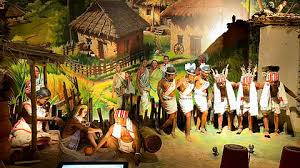
History from 1774 to 1939 comes alive in 16 galleries; the sword of Martyr Veer Narayan Singh and the ‘Adi Vani’ app are the main attractions. Raipur: Whenever the country’s freedom struggle is mentioned, images of great heroes like Bhagat Singh, Chandrashekhar Azad, and Netaji Subhash Chandra Bose come to mind. Their stories inspire millions. However, the contribution of revolutionaries from the tribal community in this struggle was no less, although very few people know about them. To recognize these unsung heroes and make their stories accessible to the public, a very special museum has been created in Naya Raipur, Chhattisgarh. The ‘Shaheed Veer Narayan Singh Memorial and Tribal Freedom Fighter Museum’ is not just a building, but a living document of history. PM Modi inaugurated Located in Sector 24 of Naya Raipur, this sprawling museum spans 9.75 acres. It was inaugurated by Prime Minister Narendra Modi on November 1 of this year. The total cost of this project, designed by the Tribal Welfare Department, was ₹53.13 crore. The museum aims to provide visitors with a holistic experience of the lives and struggles of tribal revolutionaries. Displays include life-size statues depicting key moments of the freedom struggle, historical documents containing execution orders, and weapons used by the rebels. A testimony to the struggle from 1774 to 1939 The museum is divided into 16 galleries, where hundreds of statues narrate the untold stories of the atrocities and resistance faced by tribal communities between 1774 and 1939. Sonmani Bora, Principal Secretary of the Tribal Development Department, said, “The digital experiences here, including the sword used by martyr Veer Narayan Singh against the British, his memorial, and a digital view of the famous Maa Danteshwari Temple in Dantewada, make this museum an unforgettable experience for visitors.” A Wonderful Confluence of Art and Culture The main entrance of the museum is decorated with traditional wood carvings from the Surguja region. The names of 200 tribal freedom fighters are also inscribed, giving visitors a sense of pride even before they enter. A life-size statue of Birsa Munda is installed in the courtyard. It is noteworthy that Birsa Munda’s birth anniversary (November 15) is celebrated nationwide as ‘Tribal Pride Day’. More than a dozen digital screens have been installed in the reception hall, playing animated video stories. Additionally, there is a mini-theater where short films based on the life stories of tribal leaders like Veer Narayan Singh, Gend Singh, Gundadhur, and Ramadhin Gond are shown. A glimpse of various tribes While the reception area is brightly lit, the galleries are dimmed to bring the statues to life. The exhibits showcase the culture, beliefs, arts, and skills of Particularly Backward Tribes (PVTGs) such as the Kamar, Baiga, Abujhmariya, Pahari Korwa, and Birhor. Their sculptures, paintings, and everyday objects are also on display. From the Pages of History: Captain Blunt and Veer Narayan Singh Recalling an interesting historical incident, TRTI Assistant Director Anil Virulkar told the Indian Express, “The museum also features the story of Captain Blunt of the East India Company. When he tried to invade Bastar in 1795, the local tribes—Gond, Koya, Dorla, and Madia—attacked him with their traditional weapons and forced him to retreat.” Another gallery tells the story of Veer Narayan Singh’s rebellion, who raised his voice against the British when they refused to give grain from their warehouses to tribal people struggling with hunger and poverty. Mahatma Gandhi’s visit to Dhamtari is also mentioned here. Connecting through Technology Special arrangements have been made to connect history with modern technology. TRTI Director Hina Netam said, “We have developed an app called ‘Adi Vani’, which offers translations in Gondi and Halbi languages. Additionally, we have created short films and videos in local languages such as Chhattisgarhi, Gondi, and Halbi, which will be shown on the museum’s immersive dome and other digital platforms.” This museum is certainly an enlightening pilgrimage for those who want to understand the incomparable contribution of tribal society to India’s freedom struggle. Rajan Chaudhary Courtesy: Hindi News
Badaun: Dalit wedding party members attacked with pistols and sticks; police accused of mishandling a serious case as “breach of peace.”
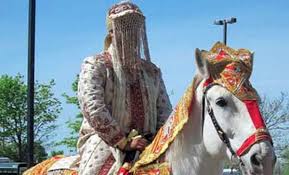
Viral video shows the accused with pistols and sticks, misbehaving with a statue of Ambedkar; police accused of suppressing the SC/ST Act. Badaun: Police performance in Uttar Pradesh’s Badaun district is once again under scrutiny. The police have been accused of “covering up” the serious case of misbehavior and assault on Dalit wedding party members in the Faizganj Behat police station area. The victims claim the accused were armed and used casteist slurs, yet instead of registering a case under the SC/ST Act, the police merely charged them under sections of breach of peace. What is the whole matter? The incident is reported to have occurred late on November 12th. Dharampal Singh, a resident of Mewali village in the Ughaiti police station area, was traveling by car with his family and relatives to attend a wedding. It is alleged that two unidentified individuals overtook his car on the road and forced it to stop. Dharampal Singh stated in his complaint that his car had a statue of Baba Saheb Dr. Bhimrao Ambedkar. Upon seeing this, the accused began using casteist slurs and attempted to attack him with a knife. Hooliganism Caught on Video According to a Dainik Bhaskar report, a video of the incident has also surfaced, exposing the police’s claims. It can be clearly seen in the video that one of the attackers is holding a transparent police-style baton, while the other is seen holding a pistol. Questions about the police’s role It is alleged that the police kept the case on hold for two days. Only when the video of the incident went viral on social media on the night of November 13th and higher officials took cognizance did the local police take action. The police quickly arrested one accused, Neetu, but he was also charged only with breach of peace (Section 151). The other accused remains at large. Weapons not recovered, serious charges missing Surprisingly, despite the weapon visible in the video, the police have not yet recovered either the transparent stick or the pistol. The victim alleges that they filed a complaint under the SC/ST Act, which the police ignored. In this case, Station House Officer Rajkumar Singh confirmed that action has been taken against one accused for breach of peace. However, the police’s intentions are being questioned for ignoring serious charges. Rajan Chaudhary Courtesy: Hindi News
Krishnagiri man gets double life term for killing son, mother over intercaste marriage

Dhandapani, a caste Hindu had opposed his son D Subash’s marriage to dalit girl S Anusuya from Ariyalur district three years ago. KRISHNAGIRI: A 53-year-old man was sentenced to two life sentences by a Krishnagiri court on Friday for ‘honour’ killings. The Krishnagiri Principal and sessions court sentenced 53-year-old P Dhandapani, a native of Arunapathy village near Uthangarai taluk for the murder of his son and mother over his son’s intercaste marriage with a dalit girl. “In 2023, while Subash was working in a textile company he came into contact with Anusuya and the couple got married in March 2023. However, Dhandapani had opposed the union, while Dhandapani’s mother P Kannammal (65) had supported her grandson’s choice,” say police. In April 2023, Dhandapani invited the couple to his home in Arunapathy in the guise of reconciliation. But the next day Dhandapani hacked Subash to death while he was asleep. Kannammal, who attempted to rescue her grandson, was also hacked to death. While Anusuya tried to escape, she was also hacked and left for dead. Anusuya was later rescued and rushed to the Krishnagiri government hospital and later transferred to the Dharmapuri Medical College hospital where she survived after treatment. The Uthangarai police arrested Dhandapani under IPC 307, 302 and SC/ST POA Act. The trial of the case was being conducted in the Krishnagiri Principal and Sessions Court. On Friday, judge VR Latha sentenced Dhandapani to two life imprisonments for murder and another 10 year for the attempted murder of Anusuya. Further, he has been fined Rs 8,000 and the judge ordered the Krishnagiri District administration to pay Rs 2 lakh to Anusuya in accordance with SC/ST Prevention of Atrocities Act. In a press meet at the CPI(M) party headquarters in Krishnagiri, Anusuya told media personnel, “The Tamil Nadu Untouchability Eradication Front and the CPI(M) had played a key role in helping me overcome the loss and seeking justice. The judgement brings hope to victims of honour killing. As a victim I feel a separate law for honour killing must be enacted in Tamil Nadu. This judgement is a lesson to people who place caste above all else”. Anusuya also expressed her thanks to TNUEF and CPI(M) for their aid in nine surgeries and education, helping her to complete her B.Ed course. P Suganthi, state general secretary of TNUEF, was also present at the press meet. Courtesy : TNIE Note: This news is originally published on https:/thenewindianexpress.com/bha and is used purely for non-profit/non-commercial purposes, especially human rights
The Forgotten Assam Freedom Fighter Who Fought Untouchability, Marched With Gandhi, Opened Schools For Dalits And Challenged British Rule

Krishna Nath Sharma, a forgotten Assamese freedom fighter, challenged caste barriers long before it was fashionable. In 1934, he opened his namghar to Dalits alongside Gandhi, enduring a decade of social boycott. From fighting Assam’s opium crisis to supporting the Dandi March and opening schools for Dalit children, his life was a relentless struggle for dignity, equality, and justice. Every so often, history surprises us with a character whose bravery is so understated, so disarmingly gentle, that it almost slips through the cracks of our noisy national memory. Assam, with its floodplains, fierce revolutions, tea gardens and unhurried rivers, has produced several such rebels—people who fought with conviction instead of microphones, with defiance rather than spectacle. Among them stands a man who, despite having walked beside Mahatma Gandhi, challenged caste superstition head-on, opened his sacred space to those the world refused to touch, and still somehow remained a footnote. His name was Krishna Nath Sharma, fondly known across his community as Krishna Mama, and his story begins in a simple prayer house tucked away in Jorhat. Picture this: it is 18 April 1934 in Sabaibandha, a quiet neighbourhood in Upper Assam. A namghar—a traditional Assamese prayer hall—breathes gently in the morning air. It is much like any other, except for one extraordinary detail. Mahatma Gandhi is standing at its entrance, ready to walk inside. Beside him stands the owner, Sharma, a man from a conservative Brahmin family, fully aware that what he is about to do will turn his own community against him. Yet his eyes are fixed ahead. Because for him, the opening of this prayer house to Dalits—sweepers, manual scavengers, ordinary people denied dignity—wasn’t merely symbolic. It was a necessary rebellion against a cruel social order. What followed next was a decade of isolation for his family, a lifetime of activism for him, and the opening of a chapter that deserves a place in every history classroom. This is the story of the man who walked the Dandi March, fought opium addiction, opened schools for Dalit children, challenged untouchability, and still died before seeing the freedom he fought for. The Namghar That Became a Battlefield of Beliefs The Sabaibandha namghar might look unassuming to a passing visitor today, but in 1934 it became a site of remarkable dissent. Gandhi had been travelling across India campaigning against untouchability, and Sharma—who had already begun pushing back against caste barriers in Assam—invited him to inaugurate his prayer house Gandhi accepted. And that decision ruffled more feathers than any of them could imagine. When Dalits stepped inside the namghar that day, they crossed not just a doorway, but a century-old threshold of exclusion. Gandhi lauded Sharma’s courage publicly, telling local media (credit: contemporary press reports): “Valiant soldiers like Krishnanath Sharma never care to face any odds. The temple entry movement will lead the rest of India to remove social evils.” But while Gandhi praised him, Sharma’s own community punished him. Ostracised is too mild a word—his family was shunned into social invisibility. At weddings, guests would walk out if he entered. When his wife, Swarnalata Devi, stepped into a temple, women fled as though her presence would contaminate stone. Yet they persevered. Fun fact: Assam had seen efforts toward egalitarian worship before, courtesy of the neo-Vaishnavite movement of Srimanta Sankardev. But never before had a mainstream Brahmin family taken such a bold stand in the early 20th century—making Sharma’s defiance quietly revolutionary. Meet Krishna Mama: Scholar, Lawyer, Rebel in Cotton Khadi Born in 1887, Krishna Nath Sharma was academically gifted. He completed degrees in science and law—an unusual combination in those days—and launched a successful legal career in 1917. But the courtroom couldn’t hold him for long. Gandhi’s arrival on the national stage changed the rhythm of his life. Soon enough, Sharma abandoned his practice, embraced the Gandhian ethos, and joined the freedom movement. His nickname Krishna Mama originated much earlier, during his student years. Friends found his calm maturity and independent thinking far beyond his age. The name stuck, and soon he became “Mama” not just to friends but to entire communities who admired his guidance. His First Fight: Crushing Assam’s Deadly Opium Addiction Before Sharma battled caste prejudice, he fought a quieter war—against the opium crisis devouring Assamese society. Opium, introduced by East India Company soldiers in the 18th century, had become a widespread menace by the early 1900s. Sharma partnered with Kuladhar Chaliha and Rohini Kumar Chaudhuri, two prominent Assamese freedom fighters, gathering data, interviewing addicts, and documenting the scale of the damage. His conviction was crystal clear: “To save a nation from a ruinous habit, no effort should be spared. The only way is total prohibition.” And astonishingly, he succeeded. Through relentless advocacy, public meetings, and political pressure, he helped shape the movement that pushed Assam towards opium prohibition. Fun fact: Assam was one of the earliest regions in India to enforce large-scale opium restrictions—thanks largely to grassroots activists like Sharma. The Gandhi Connection: From Temple Doors to the Dandi Salt Wind Sharma’s activism stretched far beyond his town. When Gandhi began his anti-untouchability drive in 1933—opening temples like the one in Selu, near Wardha—Sharma recognised it as a moment for Assam to step forward. He invited the Mahatma to his namghar. But that wasn’t their only intersection. Sharma also walked with Gandhi during the historic Dandi March. He became deeply involved in promoting khadi, sometimes cycling through villages with bundles of homespun cloth under his arm, urging people to discard British textiles. And even when British officials repeatedly arrested him, he remained unflinching. The 1942 Garlanding Incident: A Moment So Daring It Feels Almost Cinematic One of Sharma’s most remarkable confrontations with colonial authority occurred on 2 October 1942—‘Soldier’s Day’. His mission was bold: persuade Indian soldiers to support the Quit India movement. According to historian Anil Kumar Sharma (credit: Quit India Movement in Assam), Sharma led a massive procession into Jorhat with a garland in his hand. When armed American military personnel blocked them, he
A 150-year-old evil tradition was broken after 150 years! A Dalit groom rode a horse for the first time in Rewari, with the wedding procession escorted by police.
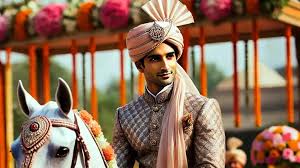
A 150-year-old evil tradition was broken in Khedi Dalu Singh village in Haryana’s Rewari district when a Scheduled Caste groom rode a horse for the first time. However, the family had sought security from the police and administration as a precaution, fearing untoward incidents. The procession proceeded peacefully under the presence of a police force. In Khedi Dalu Singh village, located in the Bawal area of Rewari, Haryana, a Scheduled Caste man’s wedding procession rode a horse for the first time in 150 years. The procession departed on Thursday, November 13th. Police forces from three police stations were deployed, supervised by the DSP. The procession departed from the village for Ateli. According to reports, a horse-riding procession for a young man had never been carried out in this village in history. This evil practice had been prevalent for years. The groom’s family feared an untoward incident. Due to this, they requested police protection. The family expressed gratitude to the police and administration. Ankit, the groom, who works in the Animal Husbandry Department, explained that this evil practice had been prevalent since the village was formed. He said that many people had tried before, but were unsuccessful. Fearing something untoward, the family filed a complaint with the Human Rights Commission, Rewari police, and the administration. The family appealed for protection from the Rewari police, administration, and the National Human Rights Commission. Following this, the wedding procession proceeded peacefully in the presence of police from three police stations and the duty magistrate. Following the incident, the family expressed gratitude to the police and administration. There was no tension in the village. Bawal DSP Surendra Sheoran stated that there was no tension in the village. He stated that police were present as a precaution, and the wedding procession proceeded peacefully. Meanwhile, Nepal Singh, the Sarpanch representative of Khedi Dalu Singh village, stated that there was no tension in the village, nor did anyone protest. He added that everyone in the village wants peace. The family had filed a complaint with the police administration, which led to precautionary measures being taken, and the horse-riding ceremony passed off peacefully. In many areas of Haryana, disputes have previously arisen over Scheduled Caste grooms riding horses, so as a precaution, the horse-riding ceremony was conducted under police protection. Authored by: Manoj Kumar Courtesy: Hindi News
Dalit leader murdered in Sangli, Maharashtra; accused attacked with knife and rod during birthday celebration

Uttam Mohite, president of the Dalit Mahasangh in Sangli, Maharashtra, was stabbed and killed with a knife and rod while celebrating his birthday. One of the attackers also died during the scuffle. Police have registered a murder case and launched an investigation. Digital Desk, New Delhi. Uttam Mohite, president of the Dalit Mahasangh in Sangli, Maharashtra, was stabbed and killed with a knife and rod while celebrating his birthday at his home. According to police, Mohite had a fight with the accused, Ganesh More, before the attack. In fact, the founder of the Dalit Mahasangh in Sangli, Maharashtra, was celebrating his birthday on Tuesday night. Mohite was celebrating his birthday at his home near the Garpir Dargah Chowk area. He was murdered during the celebration. One attacker also died One attacker also died during the incident. According to police, one of the attackers, Shahrukh Rafiq Shaikh (26), was seriously injured during the scuffle. During the scuffle, one of the attackers, Shaikh, sustained a serious knife injury to his thigh, possibly accidentally. He died at a hospital on Wednesday morning. Attack with knives and rods After the guests had left and preparations were complete, some men armed with knives, iron rods, and sticks began abusing Mohite. Fearing for his life, Mohite fled inside his house while being chased by the attackers. The attackers stabbed Mohite multiple times in the stomach and chest and hit him on the head and hands with iron rods and sticks. Mohite was rushed to Sangli Civil Hospital by his nephew, where doctors declared him dead. A police officer said on Wednesday that Mohite and one of the accused, Ganesh More, had a brief altercation during the birthday celebration. Before leaving the venue, More allegedly warned Mohite that he “won’t spare him.” Murder case filed against 8 people Based on a complaint by Mohite’s wife, Jyoti, police have filed a murder case against Indiranagar residents Ganesh More, Satish Lokhande, Shahrukh Shaikh (deceased), Banya alias Yash Londhe, Ajay Ghadge, Jitendra Londhe, Yogesh Shinde, and Sameer Dhole. (With inputs from news agency PTI) BY SHUBHAM TIWARI EDITED BY: SHUBHAM TIWARI Courtesy: Hindi News
BSP Plans Muslim-Dalit Outreach in Western UP, Mayawati to Address Noida Rally on December 6

Two months after holding a major rally in Lucknow that stirred political activity across Uttar Pradesh, the Bahujan Samaj Party (BSP) is now focusing on specific regions and voter groups where it hopes to regain lost ground. The party is planning to begin its Muslim Dalit outreach in western UP, with a public meeting likely to be held in Noida on December 6. Party sources said BSP chief Mayawati will attend the event as the main speaker. Senior party leaders visited the Rashtriya Dalit Prerna Sthal in Noida on Wednesday to review preparations. While officials avoided sharing details, they confirmed that planning for the event is underway. According to insiders, the gathering is designed to reconnect with Dalit and Muslim voters, two communities that have historically formed a crucial support base for the BSP. Party workers and supporters from eight divisions of western Uttar Pradesh are expected to attend. Mayawati is likely to give them directions on how to win back voters the BSP lost after 2012, when its political decline in the state began. The Dalit and Muslim bhaichara (brotherhood) committees, formed to strengthen ties between the two communities, are expected to play a key role in this campaign. Western UP has long been significant for the BSP because it has a strong presence of Jatav Dalits, the party’s core supporters, and a large Muslim population. The success of the BSP SP alliance in the 2019 Lok Sabha elections also reflected this. Out of the 10 seats BSP won in that election, four were in western UP, including Nagina, Saharanpur, Amroha, and Bijnor, all constituencies with a strong Muslim Dalit voter mix. The date of the upcoming event, December 6, marks the death anniversary of Dr. B.R. Ambedkar, which the BSP observes nationwide as one of its three key annual events. The other two are Ambedkar’s birth anniversary on April 14 and the death anniversary of BSP founder Kanshiram on October 9. Starting from December 6, the party is expected to hold a series of public meetings in different parts of Uttar Pradesh to assess its electoral prospects and strengthen its grassroots network. Courtesy : TOP Note: This news is originally published on https:/theobserverpost.com/bha and is used purely for non-profit/non-commercial purposes, especially human rights
Hinduism is bad, Muslimism is good… and then the miscreants abducted a Dalit girl from outside her school…
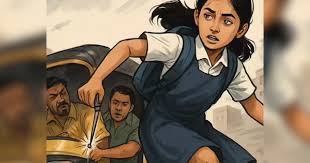
Hardoi News: In Hardoi, Uttar Pradesh, boys from another community kidnapped a Dalit girl from outside her school as part of a well-planned conspiracy. It is being reported that they had been harassing her previously. Read the full story. Ashish Dwivedi/Hardoi: A daylight kidnapping in Hardoi, Uttar Pradesh, caused a sensation. A 14-year-old Dalit girl was abducted from outside her school by four young men in a car. The police acted swiftly and rescued the girl safely from the clutches of the kidnappers and seized their car. However, the kidnappers escaped and police teams are searching for them. Edited By: Preeti Chauhan Courtesy: Hindi News
The pandemic of caste: Homebound exposes casteism and communalism amid COVID-19 lockdowns
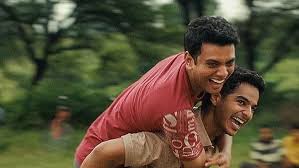
Neeraj Ghaywan’s ‘Homebound’ must be appreciated for its representation of how caste supremacy constantly suppresses Dalit and Muslim identities in the public sphere. It was March 24, 2020. Prime Minister Narendra Modi had driven the entire nation into a sudden, harsh and complete lockdown for 21 days in the wake of the COVID-19 pandemic. The country subsequently witnessed gut-wrenching visuals of clueless, poor informal sector contract workers and interstate migrant workers setting out on foot towards bus terminuses. The event may have now faded from popular public imagination in 2025 with the growing institutional talks of Vikshit Bharat of PM Modi. But to only surprise us, director Neeraj Ghaywan evokes those images with his film Homebound. The politics of naming has truly justified the title of the film. Homebound is loosely based on a field report by senior journalist Basharat Peer, published in The New York Times in 2020. Fraternity in times of hostility The first scene of the film is set in a railway station named Mapur, crammed with job aspirants for a railway police recruitment examination. A Dalit youth, Chandan (Vishal Jethwa), and Mohammed Shoaib (Ishaan Khatter) arrive at the station only to be devastated by the number of candidates waiting to catch the train for very limited vacancies. Chandan and Shoib grew up together in the village that truly epitomises the constitutional vision of fraternity, while they lived similar lives of social deprivations. Throughout the first half of Homebound, Shoaib and Chandan try hard for economic mobility. It’s when Shoib gets a private sector job as a spot boy that he immediately starts experiencing communalism from his dominant caste Hindu bosses. Though Chandan isn’t in a private sector job, Ghaywan shows how casteist brutalism against Dalits is unbounded. A desperate Chandan goes to the railway office to enquire about the recruitment results and ends up facing the casteist taunting by a railway clerk. The story of private sector discriminations is less known due to dominant caste gatekeeping. Ghaywan busts the myth that casteism isn’t rampant in the public sector. Caste and religion, the twin forces of brutalism Homebound must be appreciated for its representation of how the cruelty of caste supremacy constantly suppresses Dalit and Muslim identities in the public sphere. A good example is how Chandan is shown to repeatedly tick the general category box on job applications to escape caste-based stereotypes and degradation. Ghaywan exposes the incessant delays in public sector recruitments due to the ruling elites’ non-committal attitudes. Another critical example of casteism in the public sector workplace is how dominant caste parents force Chandan’s mother out of her job as a school cook. What comes as a soothing interlude for progressive audiences is a supporting character’s Buddhist wedding, where pictures of Buddha and Dr BR Ambedkar are spotlighted. The pandemic of caste Homebound’s second half is teary, as both Chandan and Shoaib unite at a garment factory in Surat. Their lives take a 120-degree turn when the COVID-19 pandemic hits. Garment factories suddenly close down due to strict lockdown protocols. Both friends are quickly faced with deep uncertainties and decide to go back to their villages. While they’re crammed on a truck’s rooftop, Chandan contracts COVID-19. Despite having opportunities to do so, Shoib doesn’t abandon Chandan. Exposing India’s stark social realities, they get off the truck and walk on the empty highway in search of a hospital. Ghaywan reveals how healthcare facilities in India are unequally spread and mostly centred near urban areas. Towards the end, Chandan lies dying on Shoib’s lap on the highway. Shoib discovers a small photograph of Ambedkar in Chandan’s wallet and his job application with the Scheduled Caste (SC) checkbox ticked. This, to me, is the most powerful visual in Homebound. It proclaims how Ambedkar creates hopes among India’s most oppressed. After Shazia Iqbal’s Dhadak 2, Ghaywan’s Homebound has created renewed anticipations from Bollywood producers and directors, as they have finally started telling the audience the most politely kept secret of India—caste hierarchy. The severe cuts imposed on both films by the Central Board of Film Certification (CBFC) show the shrinking space for freedom of speech in a right-wing political landscape. Nonetheless, Homebound lays bare how socioeconomic marginalities are associated with caste and religion. Needless to say, the film deserves to be India’s entry for the Academy Awards. However, Bollywood needs to nurture more Dalit actors and directors to tell such stories in gripping ways. Subhajit Naskar is a political scientist and teaches at the Department of International Relations at Jadavpur University. Views expressed here are the author’s own. Written by:Subhajit Naskar Courtesy : TNM Note: This news is originally published on https:/thenewsminute.com/bha and is used purely for non-profit/non-commercial purposes, especially human rights
Wardha University: Dalit and backward class students suspended for chanting “Sorry Savarkar,” administration says disrespecting “great men”

Following the Left Unity victory in the JNU Students’ Union elections, ten students who chanted slogans at Mahatma Gandhi International Hindi University have been suspended from the hostel. According to the administration, these students chanted “Sorry-sorry Savarkar, RSS’s little monkey, run Narendra run Narendra,” while the students said they chanted “Bal Narendra-Bal Narendra.” New Delhi: Mahatma Gandhi International Hindi University is once again embroiled in controversy. Ten students have been suspended from the hostel for chanting derogatory slogans against Prime Minister Narendra Modi and Vinayak Damodar Savarkar. All of these students belong to Dalit and backward classes. According to the university, these slogans “degraded the dignity of great men.” The matter began when, following the defeat of the ABVP (Akhil Bharatiya Vidyarthi Parishad) and the victory of the Left alliance in the JNU student union elections on November 6, some students of Wardha University protested on campus, chanting “Sorry, sorry Savarkar” and “Run Narendra.” Chandan Saroj, a PhD student at the university and associated with the AISF (All India Students Federation), says, “The slogan ‘Sorry, sorry Savarkar’ proved unbearable for the ABVP, which believes in Savarkar’s principles.” The very next day, the ABVP surrounded the university’s administrative building, alleging that a “great man” like Savarkar had been insulted. On November 7, the administration issued show-cause notices to six students (Kaushal Kumar, Karanveer Singh, Brijesh Sonkar, Rakesh Ahirwar, Ashwini Sonkar, and Dhananjay Singh). These students included four Scheduled Caste (SC) and two Other Backward Class (OBC) students. The notice states, “It has come to the notice of the university administration that on the night of November 6, 2025, you unauthorizedly and without informing the administration, gathered students in the university hostel premises, took out a procession, and raised slogans, including slogans derogatory to the dignity of great men. Your actions have affected the academic and peaceful environment of the university and created an atmosphere of unnecessary tension on the campus.” The notice sought an explanation from these students within three days. In a conversation with The Wire Hindi, Dhananjay, associated with the Congress student wing, NSUI, said, “We did not take out a procession. We were just out for a walk. There must have been ten or fifteen of us.” During this, we raised slogans like Inquilab Zindabad, Bhagat Singh Zindabad, Jai Bhim.’ In response to the notice, the students wrote to the Proctor on November 10, ‘With regard to the points mentioned by you, we wish to clarify that we have neither insulted any great man, nor raised any derogatory slogans, nor organised any gathering; the word ‘gathering’ is wrong because we were just a few people walking around.’ But the university administration was not satisfied with this response, and on November 11th, it suspended these six students, along with four others (Dharmendra Kumar, Manish Chaudhary, Satyendra Rai, and Abhijeet Kumar), from their hostel for 14 days. All ten students belong to Dalit and backward communities. The order, issued by Proctor Rakesh Kumar Mishra, states, “These students will be completely prohibited from entering the hostel premises during the period of their suspension.” Even before this order, the university administration had filed an NCR (non-cognizable report) against the six students at the Ramnagar police station on November 10th and demanded police action. The report shows that on November 6th, the university’s Board of Proctors met and reviewed the CCTV footage. The report states, “In the video, some students were heard shouting slogans such as ‘Sorry-Sorry Savarkar, RSS’s little monkey, run Narendra-run Narendra.’” The university has told the police that the students had “insulted and damaged the reputation” of “respectable individuals” by raising slogans against them. However, the suspended students told The Wire Hindi that they did not shout “Bhaag Narendra, Bhaag Narendra,” but “Bal Narendra, Bal Narendra.” To hear ABVP’s side, we contacted Vedika Mishra, the organization’s university unit secretary, but she declined to comment. Speaking to The Wire Hindi, the university’s Registrar, Kader Nawaz Khan, said, “We had to go to the police. The students forced us to. Look at the language of the slogans. Secondly, by shouting slogans until midnight, they spoiled the atmosphere of the hostel. They had not obtained any permission to hold such a rally. An attempt is being made to spoil the atmosphere here.” This action has been taken to stop this very thing.’ When asked whether the slogan ‘Sorry, Sorry Savarkar’ was sufficient for such action, the Registrar said, ‘You must have read the slogan that followed it.’ Does the university administration have any objection to ‘Bhaag Narendra, Bhaag Narendra’? On this issue, the Registrar said, ‘It’s not a matter of liking it or not. It’s a matter of spoiling the academic environment of the university.’ Chandan Saroj says, ‘A repressive atmosphere has developed in the university where no slogan other than ‘Jai Shri Ram’ is tolerated. If a student chants “Jai Bhim,” “Lal Salaam,” or “Jai Samvidhan,” they immediately become the target of the administration. He further adds, “The RSS holds regular shakhas on the Wardha University campus.” While the Registrar claims, “No student organization, regardless of its ideology, can hold rallies, processions, etc. without permission.” When asked whether the RSS holds shakhas on the university campus, the Registrar said, “I will have to verify. I will have to check the records.” When we asked if the university administration was unaware of the RSS shakhas being held on campus, the Registrar said, “I am not saying that… I am not saying whether (the administration) is aware or not. I will have to check the records.” Students explained that the university is located near Nagpur, and the Sangh Parivar’s ideology is dominant in this area. As a result, many students are facing pressure and action. Courtesy: Hindi News