
Dalit youth assaulted, forced to strip at gunpoint in UP
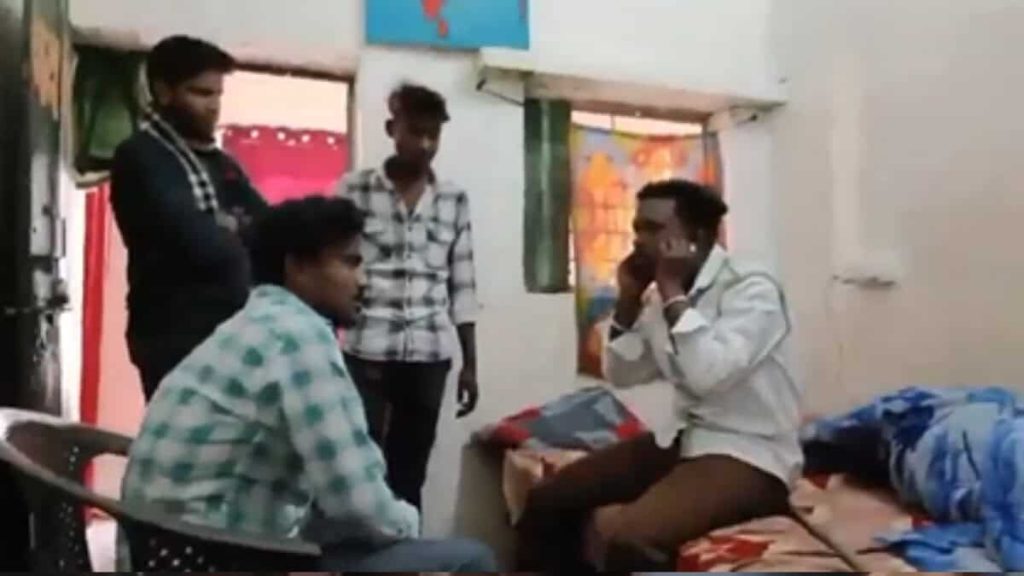
Jhansi police arrested three accused under the SC/ST Act. Jhansi: Police arrested three in Uttar Pradesh‘s Jhansi for brutally assaulting a Dalit youth with slippers, sticks, and even forced him to strip on gunpoint, all while they recorded the assault on camera. The incident took place on November 22, while the video surfaced on December 5, which shows four men assaulting the youth repeatedly while he pleads with them. The victim was reportedly standing near Goswami Restaurant in Rajgarh when three men, Nishant Saxena, Sukrit, and Kanishk, approached him. They had asked him to join them and together left the place on a scooter. However, instead of taking him to the shop for the cigarette as told, they took him to a house where two more individuals, identified as Bhanu Pal and Ravindra, were there. In the complaint, the victim alleged that at least six individuals assaulted him. They attacked him with punches, kicks, and sticks, while hurling casteist slurs and forcing him to strip. The video captures the attackers instructing the victim to touch their friend’s feet, all while they sat by, watched, and recorded the entire assault. Memory Khan Seminar One of the men in the video stated, “Do you know who I am? I am the king of Rajgarh.” The victim proceeds to hold his ears and apologise, when the accused takes out a pistol to threaten him to remove his clothes. At one point, the victim folded his hands and said, “I swear on my daughter I will not make a mistake again.” As the video went viral, Jhansi police, taking cognisance of the case, reported that three accused have been booked under the SC/ST Act, while the main accused, Nishant Saxena, remains absconding. The incident occurred in a village under the Premnagar police station. Courtesy : TSD Note: This news is originally published on https:/thesiasatdaily.com/bha and is used purely for non-profit/non-commercial purposes, especially human rights
The views of Ambedkar that the ‘Champions of Dalits’ don’t want the public to know
Politicians across the world often prefer to keep the masses ignorant, as it allows them to easily manipulate people. When a leader, like Ambedkar or Patel, emerges from among the common people, their followers frequently begin to idolize him or her. While such admiration is not inherently wrong, the unfortunate reality is that the political successors of these leaders often distort and misuse the legacy of the icon to advance their own agendas. This tendency is clearly visible in our country as well, and in this article, we will examine how the Congress party, leftists, and their allies have deliberately kept people unaware of many of Ambedkar’s actual views, simply because those views do not align with their political narrative. Ambedkar on Abrahamic Religions The Congress, Communists, and certain Dalit (SC – Scheduled Caste) leaders never miss an opportunity to proclaim that Ambedkar despised Hindu Dharma and that he burned the Manusmriti. They portray Manusmriti as the most sacred Hindu Grantha. In truth, it is merely one among many Hindu Granthas and by no means the holiest one. It is beyond the scope of this article to analyze the Manusmriti in detail, but it is sufficient to note here that several misconceptions surround this text. What these leaders conveniently ignore, however, is that Ambedkar was equally outspoken in his criticism of the Abrahamic religions. To illustrate this, I will quote passages from his book Pakistan or The Partition of India, which clearly demonstrate that although Ambedkar was critical of certain social evils within Hindu Dharma, he was by no means an admirer of Islam — contrary to what many of today’s so-called Ambedkarites would have the public believe. In the chapter titled “Social Stagnation,” Ambedkar openly discusses various social ills that plagued Muslim society, such as purdah, talaq, child marriage, and the caste system, without softening his words in any way. Pages 226-227: Take the position of women. It is insisted by Muslims that the legal rights given to Muslim women, ensure them a greater measure of independence than allowed to other Eastern women… the Muslim woman is the most helpless person in the world … her fate is ‘once married, always married’. She cannot escape the marriage tie; however irksome it may be. While she cannot repudiate the marriage, the husband can always do it without having to show any cause. Utter the word ‘Talaq’ and observe continence for three weeks and the woman is cast away. Pages 230-232: The Mohamedans observe not only caste but also untouchability. There can thus be no manner of doubt that the Muslim Society in India is afflicted by the same social evils as afflict the Hindu Society. Indeed, the Muslims have all the social evils of the Hindus and something more. That something more is the compulsory system of purdah for Muslim women. In page 233 he says, “The existence of these evils among the Muslims is distressing enough. But far more distressing is the fact that there is no organised movement of social reforms among the Musalmans of India on a scale sufficient to bring about their eradication … The Hindus have their social evils … and a few of them are actively agitating for their removal. The Muslims on the other hand, do not realise that they are evils and consequently do not agitate for their removal. Indeed, they oppose any change in the existing practices.” Ambedkar’s refusal to convert to Christianity or Islam, despite being offered large-scale inducements by both Christian missionaries and the Nizam of Hyderabad, clearly demonstrates his opposition to the Abrahamic religions. He firmly believed that anyone who converted to either of these faiths would, in effect, cease to be a Bharatiya. Instead, he supported conversion to one of the various Indic religions and encouraged his followers to do the same, stating, “I advise my Dalit brothers to convert to Buddhism and avoid conversion to non-Indic religions.” Ambedkar viewed the Abrahamic religions as a threat to national integration, and this should conclusively settle any doubts regarding his stance on these religions. His views on the RSS and Veer Savarkar Ambedkar not only attended an RSS programme in Pune in 1949 but was also impressed—and pleasantly surprised—by the RSS tradition of not inquiring about a fellow member’s caste. He therefore regarded the RSS as a genuinely nationalistic and non-casteist organization. Furthermore, he appreciated the social reform efforts undertaken by Veer Savarkar and believed that the eradication of the caste system to unite Hindus was essential for the community’s progress. In this regard, he echoed Savarkar’s position (though the topic of Savarkar’s views on Hindutva is a discussion for another day). Savarkar, too, maintained that the caste system was merely a social practice and not synonymous with or intrinsic to Hindu Dharma. Ambedkar wrote a letter to Savarkar when the latter was presiding over a Mahar conference in Ratnagiri and said “I, however, wish to take this opportunity of conveying to you my appreciation of the work you are doing in the field of social reform. If the Untouchables are to be part of the Hindu society, then it is not enough to remove untouchability; for that matter you should destroy ‘Chaturvarna’. I am glad that you are one of the very few leaders who have realised this.” (Source: Veer Savarkar by Dhananjay Keer). Some of his other thoughts Ambedkar urged his fellow SCs to pursue education, as he firmly believed that education was the only path through which the community could overcome poverty and social disadvantage. He was convinced that reservations, something every community now seeks to obtain, should be abolished after a decade. In essence, he had envisioned a time-bound reservation policy, meant as a temporary measure to uplift the underprivileged. Unfortunately, selfish politicians have continued this policy for more than seven decades simply because it serves their vote-bank interests. Ambedkar wanted his people to progress based on merit, not perpetual dependence on reservations. He was also opposed to Article 370, which granted special status
Ambedkar incorporated various Western texts to develop a unique sense of labour in India
BR Ambedkar valued the Fourteenth Amendment to the US Constitution, which was ratified in 1868. This amendment granted equality to African Americans after the Civil War. In the classic story titled Jenvha mi Jaat Chorli by Marathi writer Baburao Bagul, the central character — Kashinath, a Dalit protagonist — challenges the systemic caste structure by affirming his faith in the Constitution of India. Published in 1963 as part of Bagul’s award-winning collection of short stories of the same name, the story reaffirms Dalits’ faith in their beloved Babasaheb Ambedkar and in the Constitution of India, which he served as the chairperson of the drafting committee and is widely regarded as its chief architect. However, history has been unkind to Ambedkar, whose thinking and actions went far beyond his banal fencing around reservation or Dalit issues alone. We take a look at some of the lesser-known aspects of Ambedkar’s thoughts, including his initiation of new discourses of manuski (humanity and compassion), his pursuit of civic rights through pragmatic law, and his foregrounding of the Indian principles of constitutional morality. The manoos (person) behind Dalit literature Ambedkar played a pivotal role in shaping Dalit literature, drawing inspiration from philosopher John Dewey’s ideas. He emphasised the role of education, social systems, and, primarily, the individual in confronting the systemic inertia that stabilises in favour of dominant classes. This idea became the driving force behind the architecture of Dalit literature, which began with autobiographies, poetry, and short stories, primarily challenging Victorian modernity and traditional methods long regarded as literary standards. Dalit literature comes from the rejection of, and resistance to, the injustices of the caste system. Consider this poem titled Empty Advice by poet Pralhad Chendwankar. This country, which demands. A pot of blood For a swallow of water— How can I call it mine? Though it gives the world The empty advice of peace. Chendwankar’s poem reflects the Dalit struggle for dignity and human rights in India, particularly through the lens of the Constitution. Marathi author Sharankumar Limbale notes in his book Dalit Sahityache Soundarya Shastra. that Ambedkar’s ideas helped awaken the Dalit community’s conscience. This achievement focuses on reclaiming humanism and placing people at the centre. Because of this emphasis on manuski, one of Ambedkar’s beloved words, Dalit literature is unique. It promotes inclusivity and speaks for everyone, not just for Dalits. Dalit literature prompts readers to reevaluate their assumptions and encourages them to delve deeper. It challenges them to move beyond traditional views and engage with the complexities of Dalit society. Engendering the politics of labour The distinctions between labour and work have been recognised since Aristotle, influenced by factors such as space, time, and personal experiences. Labour is often associated with physical effort and subservience, while philosophers such as Karl Marx and Hannah Arendt address this differentiation. In contrast, classical liberals, such as John Locke and Adam Smith, primarily focus on labour without acknowledging work as a distinct concept. Ambedkar (1891-1956), aware of his identity as an untouchable, approached labour and work in the Indian context, incorporating discussions on gender, caste, class, and culture, informed by his education in Deweyan pragmatism and Fabian socialism. Drawing from various texts, including Rousseau’s Social Contract, Marx’s Communist Manifesto, Pope Leo XIII’s Rerum Novarum, and John Stuart Mill’s On Liberty, he developed a unique sense of labour. Ambedkar’s perspective was evident when he contested the 1936 elections for the Bombay Legislative Council as a candidate of the Independent Labour Party (ILP), which he founded. In his party manifesto and campaign speeches, he presented a synthesis of labour, work, and action. His election symbol—a human figure, in contrast to other parties’ materialistic symbols—reflects his ideal of manuski and his view of labour as a form of qualified humanism. Later, in his interventions as a Labour member in the Viceroy’s Executive Council, Ambedkar emerged as an organic intellectual, prioritising principles over rigid traditions and continually undergoing pragmatic transformation. The interplay of law, Labour, and societal morals, along with their tangible and intangible impacts, significantly influenced Ambedkar’s socio-political movement. Ambedkar’s legal acumen Ambedkar’s pivotal role in drafting the Constitution of India needs no discussion today, and rightly, he is called the father of the Indian Constitution. His writings deeply inspire the masses, especially the Bahujan strata of society, and he stands as a symbol of excellence for them to emulate. Increasingly, he is gaining recognition for his work, which is drawing international attention for his championing of human rights and challenging patriarchal narratives of his times and inspiring an array of movements not only in India but across the world. His work provides a framework for social activism against injustices related to gender, race, and ethnicity. Known as the “poor man’s barrister,” Ambedkar valued the Fourteenth Amendment to the US Constitution, which was ratified in 1868. This amendment granted equality to African Americans after the Civil War (1861-1865). It clarifies the phrase “due process of law” when read with the Fifth Amendment. While drafting the Constitution of India, particularly clause 9 of the Advisory Committee on Minorities and Fundamental Rights, this phrase was included: “… Nor shall any State deprive any person of life, liberty, and property without due process of law.” Legal and constitutional expert BN Rau’s meeting with US Supreme Court Justice Felix Frankfurter raised concerns about the separation of powers among the executive, legislature, and judiciary. This separation could lead to the misuse of due process, as mentioned by him during this meeting, in the context of the Lochner vs New York (1905) case. This led to a tussle between the executive and judiciary, as seen in President Franklin D Roosevelt in 1937, whose statements sparked frictions between the two branches of the state. Ambedkar, in his debates in the Constituent Assembly, presented himself as a strong advocate of judicial independence, harmonious working between the executive and judiciary, and caution against executive overreach. (These very principles later came to be held as the basic structure of the constitution). However, he recognised the importance
How ‘Jai Bhim’ Was Born at a 1938 Marathwada Parishad
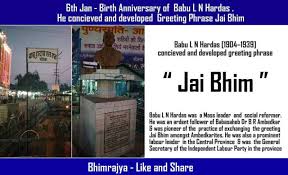
The slogan emerged at the Makranpur Parishad as a unifying Dalit greeting in Ambedkar’s presence. Jai Bhim: These two words have come to symbolise the awakening and empowerment of the Dalit community in independent India, but not many people know how they originated. The phrase was first used at the Makranpur Parishad, a conference held in Makranpur hamlet in Kannad teshil of today’s Chhatrapati Sambhajinagar district in Maharashtra. It also captures the great respect that Dr Bhimrao Ramji Ambedkar is held in. On December 6, 1956, Ambedkar, the primary drafter of the Indian Constitution, passed away. On December 30, 1938, the first Makranpur Parishad was established by Bhausaheb More, the first president of the Scheduled Castes Federation of Marathwada. According to Bhausaheb’s son, Assistant Commissioner of Police Pravin More, Dr Ambedkar spoke at the conference and urged the populace to oppose the princely state of Hyderabad, which at the time ruled over a large portion of central Maharashtra. “When Bhausaheb stood up to speak, he said every community has its own deity, and they greet each other using the name of that deity. Dr Ambedkar showed us the path of progress, and he is like God to us. So henceforth, we should say ‘Jai Bhim’ while meeting each other. The people responded enthusiastically. A resolution accepting ‘Jai Bhim’ as the community’s slogan was also passed,” More told PTI. “My father came in contact with Dr Babasaheb Ambedkar in his early years. Bhausaheb was aware of the atrocities the Nizam state committed on Dalits. He told Ambedkar about these atrocities, including the pressure to convert. Dr Ambedkar was strongly against these atrocities, and he decided to attend the 1938 conference,” he said. Ambedkar was permitted to travel through Hyderabad state but was prohibited from making remarks there due to his opposition to the princely states. Hyderabad and British India were separated by the Shivna River. According to ACP More, Makranpur was selected as the inaugural conference’s location since it was located in British territory, but on the banks of Shivna. The brick stage where Dr Ambedkar spoke at the conference is still in place. In order to sustain Ambedkar’s ideas, the conference is held annually on December 30. This tradition was maintained even in 1972, when Maharashtra went through one of the worst droughts in its history. “My grandmother pledged her jewellery for the conference expenses. People from Khandesh, Vidarbha and Marathwada attended it. Despite a ban imposed by the Nizam’s police, Ambedkar’s followers crossed the river to attend the event,” said ACP More. “This is the 87th year of Makranpur Parishad. We have deliberately retained the venue as it helps spread Ambedkar’s thought in rural areas,” he added. Curated by: Snehal Srivastava Courtesy : Outlook India Note: This news is originally published on https:/outlookindia.com/bha and is used purely for non-profit/non-commercial purposes, especially human rights
Traffic diversion near Noida’ Dalit Prerna Sthal for Ambedkar’s death anniversary
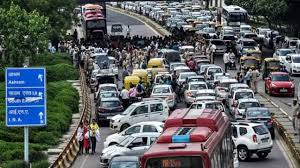
Noida: The traffic police have issued an advisory for traffic diversion near Rashtriya Dalit Prerna Sthal on Saturday, on the death anniversary of DR BR Ambedkar. Pravin Ranjan Singh, deputy commissioner of police (traffic), said that on Dec 6, the movement of goods carriers – light, medium, and heavy – will be banned on Noida Expressway. These vehicles will be diverted to the Eastern Peripheral Expressway. In case the traffic pressure increases on Noida Expressway, the Noida/Greater Noida – Delhi traffic will be diverted to Kalindi Kunj and also the sector’s internal road – Sector 37, Sector 18, Sector 16, and then Chilla Border. Delhi-bound traffic at the Bird Feeding Point would be diverted towards Sector 18. Vehicles coming from Noida Elevated Road for Dalit Prerna Sthal will also be diverted to the left near Car Market in Sector 28. Commuters can take a U-turn and drive below the metro line on Captain Vijayant Thapar Marg, then reach Sector 15 and Chilla Border, said an official. However, vehicles involved in emergency services like ambulances and fire tenders will be allowed during the restricted hours. Lakhmi Singh, BSP Gautam Budh Nagar President, said that BSP’s national convenor Akash Anand is likely to attend the programme in Noida, while BSP chief Mayawati will attend a programme in Lucknow on the day. “Thousands of people from Noida, Greater Noida, Delhi, Faridabad, Ghaziabad, Meerut, etc., are expected to visit Noida’s Dalit Prerna Sthal on that day. It is good that the traffic police are making an elaborate arrangement,” he said A day ago, Mayawati, in an X post, urged people in western UP to gather at Dalit Prerna Sthal to pay respect to Baba Saheb, while party workers and their followers across UP were asked to reach Lucknow’s Dr Bhimrao Ambedkar Samajik Parivartan Sthal to offer their floral tributes. Courtesy : TOI Note: This news is originally published on https:/limesofindia.com/bha and is used purely for non-profit/non-commercial purposes, especially human rights
Hatred against Love in Annihilate Caste
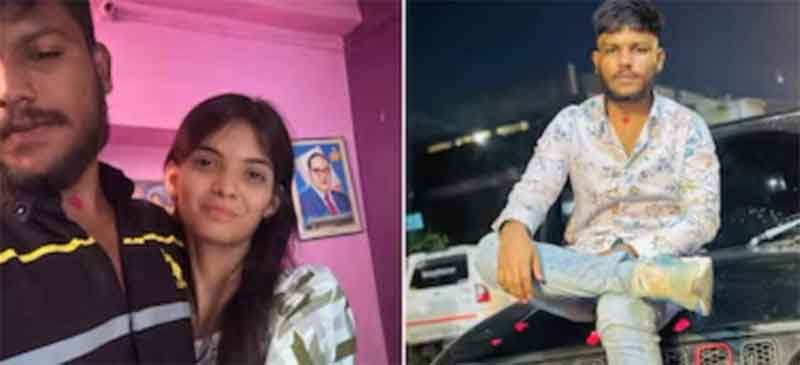
The murder of Saksham Tete, a Dalit, described as ‘jaibhim wallah’ by the family of his girl friend Anchal Mamidwar in Nanded should not surprise any one as the bitter and brutal fact is that we are a highly caste conscious society and any one venturing beyond his or her caste line must be prepared for the repercussion that Saksham faced. So, there is not one single caste or region or identity to be blamed for it. Fact of the matter is we all are proud of our ‘castes’ and any one cross the ‘redline’ actually become unwanted and unaccepted. Baba Saheb Ambedkar had spoken about annihilation of caste but that would mean annihilation of the primitive brahmanical values where ‘jaatis’ have become the sole ‘identity’ and there is no other way to appreciate a person’s achievements except when he or she belong to your jaatis. Every jaati i.e. caste, has an inherent supremacist attitude towards other and that is why Dr Ambedkar explained it as ‘graded inequality’. He does not stop with mere this term. It is important to move further and understand the psychology of the caste supermacism. Dr Ambedkar says, it is asecnding order of reverence and discending order of contempt. Saksham Tete was a Buddhist youth who fell in love with Anchal Mamidwar. In Maharashtra, a Buddhist in Dalit community is predominantly Mahar while Anchal belonged to an SBC or simply special backward Community. The particular jaati of Anchal, it seems was from Padmashali community, whose occupation actually is weaving. According to Anchal, her family was against Saksham because he was ‘jaibhimwallah’. She also said that Saksham was ready to ‘convert’ to ‘Hinduism’. The worst part of this story is that Saksham and Anchal’s relations were well known in the family and they pretended to have accepted their relationship but that was a strategy of the family to get closer to him and one final day they murdered Saksham. The things did not end there, Anchal showed her defiance and married to the corpse of Saksham, put a ‘sindoor’ and demanded that per parents and brothers be hanged to death. Anchal’s act are a defiance but definitely in the height of emotion who has lost her love. Her life is bigger and she must ensure that Saksham get justice but it is also for the elders to ensure that she is empowered economically and get a chance to live her life as per her choice. She has left her parental family now and staying at Saksham’s house and that would be a challenge. Many young girls have done that but the socio cultural economic crisis they face is tremendous. It is a fact that self arranged marriages or so called inter caste or inter religious marriages are not accepted by the Indian society. Whatever the self proclaimed progressive suggests but the bitter fact is inter faith couples face problems not only with the outside acceptence but also among themsleves due to cultural clashes. In the last two decade, Indian middle classes have grown into believing the ‘power’ of ‘traditional values’ and greatness of their caste resulting in unuacceptability of person outside their domain of jaatis. The so called inter caste, inter religious marriages are impossible now. It will only be posssible if we become a society of individuals where none is bothered about who you marry, what you eat and where you dine but that thing is now difficult. Your food habits, your sexuality and jaatis are important aspect today being flaunted everywhere. The gap is increasing. Friendship grows when you learn to appreciate others but we are fast becoming homesick and caste supermacist with strong love and hatred against other. In such cases, our minds dont work rationally and totally function as per the prejudices injected into our minds since childhood. Our political process today has shown that there is no unity among people in terms of their identities and each one of us want to keep a separate identity to make personal gains. So whether the community get something or not, in the name of it, some will gain and they will continue to speak up against individuals who cross the red line. That is the reason why very few speak against such violence. Political parties have rarely spoken against it as it threaten their identity politics. They will only use it when such incidents actually help them in their political games. Unfortunately, not every incident become political to be raised by the political parties. Also important is that annihilation of caste as envisaged by Baba Saheb Ambedkar has been rejected by majority of the Dalit Bahujan communities part of the brahmanical system. The unity among these communities merely politics of their space and nothing beyond. This fact must be kept in minds that communities are not interested to speak about any reforms. They want their share in power and elsewhere. Except that, there is no interest in reforms or looking from with in. The anti caste violence or patriarchical impositon is not just work of the brahmins or Savaranas but OBC community too come out as biggest gate keepers of brahmanical patriarchy. The cases of violence against Dalits from Maharashtra, Telangana, Tamilnadu, Uttar Pradesh, Bihar etc is concern that political unity is possible but jaatis dont want to cross their ‘identity’ line which they consider as ‘sacrocant’ and any crossing of that line is a challenge to caste patriarchy. What should individuals do. Well, young boys and girls should understand very well that the administrative or political set up can not protect them if they cross their line. Sadly, it is a dark reality in our part of the world. They become isolated. The individuals too depend on community and therefore think well before entering into any alliance. You must be prepared to leave your community and migrate to cities. You dont know who will turn out to be your dushman, enemy. It will increase as long as there will glorification of
Dalit Youth Assaulted, Forced to Strip at Gunpoint in Jhansi; Attackers Filmed Abuse
A Dalit youth in Jhansi was assaulted by a group of men who lured him away on the pretext of offering him a cigarette. The men beat him with slippers, fists, kicks and sticks, pointed a pistol at him and forced him to strip. They also made him touch one of their friend’s feet and recorded the entire assault on video. The incident took place on November 22 in a village under the Premnagar police station. The video surfaced today. Police have now registered a case and arrested three of the accused. The victim said he was standing near Goswami Restaurant in Rajgarh when Nishant Saxena, Sukrit and Kanishk approached him. “They told me to come with them for a cigarette. All four of us went on one scooter,” he said. But instead of taking him to a shop, they took him to Nishant Saxena’s house where two others, Bhanu Pal and Ravindra, were already present. “They all beat me with kicks, punches and sticks. Ravindra recorded the video. They also hurled caste abuses at me and threatened me,” he added. In the nearly five minute long video, the attackers can be heard repeatedly threatening and humiliating the youth. At one point Nishant asks him, “Do you remember what you said?” The victim tries to explain and holds his feet saying, “Brother, I admit my mistake.” The men push him onto a chair and threaten to take him to the police station. The youth folds his hands and pleads, “I don’t want to go anywhere. Please brother, let me go.” The assault becomes more violent. One of the accused slaps him hard and says, “Do you know who I am? I am the king of Rajgarh.” The victim holds his ears and apologizes. When he says he did not call anyone, the attacker picks up a slipper and hits him repeatedly. Nishant then points a pistol at him and orders him to take off his clothes. Terrified, the victim says, “Brother, I swear on your life, let me go.” He is then kicked in the chest, hit with sticks and forced to touch the attacker’s feet. “I swear on my daughter I will not make a mistake again,” the victim says with folded hands. CO Sadar Ramveer Singh said police registered a case under sections of the Bharatiya Nyaya Sanhita along with the SC ST Act after the video came to light. “We have arrested Sukrit, Anand Nayak and Kanishk Ahirwar. The main accused, Nishant Saxena, is absconding and efforts are on to arrest him. The reason behind the assault is still not clear,” he said. Courtesy : TOP Note: This news is originally published on https:/lheobserverpost.com/bha and is used purely for non-profit/non-commercial purposes, especially human rights
Dalit Politics Heats Up in Bihar Assembly as RJD, Congress Shift Focus After Poll Defeat

RJD stirs controversy in House as Congress high command reviews Dalit outreach strategy. Patna: A heated exchange unfolded in the Bihar Assembly on Thursday during a discussion on the Governor’s address, after the Rashtriya Janata Dal (RJD) diverted the debate toward Dalit issues. The move sparked loud protests from the ruling NDA, leading to sharp political confrontation inside the House.Patna real estate RJD MLA Kumar Sarvjeet triggered the flashpoint with two controversial remarks. He alleged that Dalit areas in Gaya district still lacked basic infrastructure. He also claimed that Anugrah Narayan Magadh Medical College Hospital resembled a Dalit colony because development had been ignored there. His remarks drew immediate objections from NDA leaders, who demanded he withdraw his statements. Speaker Prem Kumar intervened and cited available data on development projects at the medical college. The argument intensified when senior JD(U) leader and former minister Ratnesh Sada hit back, declaring that Dalits would “never forgive” Sarvjeet for how they were treated during the RJD regime. Grand Alliance Returns to Dalit Agenda The confrontation in the Assembly comes days after the Congress held a review meeting in Delhi over its poor performance in the 2025 Bihar Assembly elections. The party leadership reportedly resolved to shift its political strategy and focus on Dalits, Muslims, and Bhumihars instead of EBCs and OBCs.Bihar tourism guide The Congress has since appointed Rajesh Ram, a Dalit leader, as the party’s state president — the fourth Dalit to hold this post in Bihar. The party is considering increasing Dalit representation in key organizational roles at the state level. Why the Sudden Political Outreach to Dalits? Six Key Factors Data from the recent election highlights why RJD and Congress are aggressively attempting to rebuild trust among Dalit voters: Bihar Assembly has 40 reserved seats (38 SC, 2 ST) NDA won 35 of these seats; Grand Alliance secured only 5 NDA won 34 of 38 SC seats and 1 of 2 ST seats NDA grabbed 87% of reserved seats — double its 2020 performance NDA fielded 40 Dalit candidates and won 35 seats Grand Alliance fielded 40 Dalit candidates but won just 5 seats Dalit Vote Shift Toward NDA According to Pollsmap survey and Lokniti data, the Dalit vote consolidated behind the NDA in 2025. Nearly two-thirds of Dalit voters supported the alliance, a sharp contrast to 2020 when Dalit votes were fragmented. Among the Paswan/Dusadh community — a key Dalit bloc — 62 percent voted for the NDA. In 2020, when the LJP(R) contested separately, votes were split between alliances. Leadership Advantage for NDA Experts say NDA benefited from having two prominent Dalit leaders — LJP(R) chief Chirag Paswan and HAM leader Jitan Ram Manjhi. Their presence gave the ruling coalition a decisive edge. A senior journalist notes that in closely fought contests, small vote shares matter significantly. “Chirag Paswan turned out to be a key factor. Last time, he damaged JD(U)’s prospects on nearly 30 seats. This time, he helped them win,” he said. The Grand Alliance, meanwhile, lacks a Dalit leader who can influence votes at this scale — a gap now pushing both RJD and Congress to aggressively reclaim lost ground. As Bihar politics pivots toward caste alignments once again, the Dalit vote has emerged as the most crucial battleground ahead of the next major political contest Courtesy : Patna Press Note: This news is originally published on https:/patnapress.com/bha and is used purely for non-profit/non-commercial purposes, especially human rights
Yogi extends fin aid to Dalit family

Gorakhpur: Chief minister Yogi Adityanath underscored his commitment to supporting the distressed, as he reached out to a Dalit family on Wednesday. During his visit to Gorakhpur’s southern region, the CM met the family of Ram Nevas, a resident of Madariya under Gola tehsil, who passed away recently. The CM assured full support to the family, struggling financially after the death of its sole breadwinner. Before proceeding to pay tribute to Mahant Ramdas at Madariya Siddhapeeth, Yogi met the bereaved family at the helipad, offering both comfort and substantial relief. He handed over a cheque of Rs4,12,500 — the first instalment of the Rs8.25 lakh assistance sanctioned under the SC/ST Act. The CM also said that Ram Nevas’s wife will receive Rs30,000 under the National Family Benefit Scheme, along with a monthly pension of Rs1,000 under the Destitute Women Pension Scheme. He directed officials to extend the Mukhyamantri Bal Seva Yojana benefits to the deceased’s youngest daughter. Since the family is landless, Yogi instructed officers to allot land under the state lease scheme and ensure their inclusion in the Pradhan Mantri Awas Yojana. Orders were also issued for the construction of a toilet under Swachh Bharat Mission, issuance of an Antyodaya ration card, and coverage under Ayushman Bharat. The family members, overwhelmed by the CM’s gesture, expressed heartfelt gratitude. “Maharaj ji, you are our only support,” said the widow, folding her hands in emotion. Courtesy : TOI Note: This news is originally published on https:/limesofindia.com/bha and is used purely for non-profit/non-commercial purposes, especially human rights
Bengaluru: Dalit youth dies of ‘third-degree’ torture in custody? Marks found on body, 4 suspended, including inspector
Four suspended, including Viveknagar police station inspector; mother alleges he was beaten in custody; CID to investigate. Bengaluru: The police department has taken major action in the case of a 22-year-old Dalit youth who died in police custody after being allegedly tortured and subsequently admitted to a drug rehabilitation center in Karnataka’s capital, Bengaluru. An official announced on Wednesday that four policemen have been suspended due to allegations of negligence. What is the whole matter? The deceased has been identified as Darshan PG, a resident of Viveknagar, who died under suspicious circumstances on November 26th. Taking action on Tuesday, the department suspended an inspector, a constable, and two other officers attached to the Viveknagar police station with immediate effect. A senior police official confirmed that the entire matter is now being investigated by the CID. Mother Makes Serious Allegations The mother of the deceased, Darshan, has leveled serious allegations against the police. In her complaint, she stated that on November 12th, the police detained her son. She alleged that Darshan had gotten into a fight with neighbors and caused a commotion while under the influence of alcohol. Since Darshan was addicted to alcohol, his mother requested that he be sent to a rehabilitation home instead of jail. According to a police officer, on November 16th, at the mother’s request, Darshan was sent to a de-addiction center on the outskirts of Bengaluru instead of jail. The mother alleges that the police took 7,500 rupees from her and admitted Darshan directly to the center. Subsequently, whenever the mother attempted to meet or speak with her son, she was stopped. Center officials assured her that Darshan was perfectly fine. Injuries found on the body The situation changed when, on November 26th, the family was informed that Darshan had died due to respiratory problems. However, the family members say that there were clear signs of injury on the body. The mother suspects that her son was severely tortured while in police custody, which later led to his death at the rehabilitation center. Legal Action and Sections A senior police officer stated that a case has been registered at the Madannayakanahalli police station based on the mother’s complaint. Four police officers and the owner of the private de-addiction center have been charged under sections 103, 127, and 3 of the Indian Penal Code (IPC), as well as relevant sections of the SC/ST Act. At present, the investigation has been transferred to the CID. The CID team is now closely examining the entire sequence of events, from the arrest to the death at the de-addiction center. Rajan Chaudhary Courtesy: Hindi News