
Dalit Christian prof dismissed from SRM University after targeted attacks

The university has given her a month to submit an appeal to the vice chancellor, the appellate authority in this matter. Chennai: A Dalit Christian assistant professor at Chennai’s SRM University was dismissed for sharing anti-war views when Operation Sindoor was executed. Lora Santhakumar was dismissed from service after the university’s internal inquiry confirmed she committed “grave misconduct.” In May, students had allegedly exposed Lora’s identity after she posted a WhatsApp status calling for peace during the tumultuous times. Add as a preferred source on Google “King According to The News Minute, the termination order accused her of tagging herself as an assistant professor at the University and sharing “unethical remarks” on the internet against the army. “Therefore, she is unfit to continue her job in the institution and is dismissed from service with immediate effect,” the order accessed by TNM said. The inquiry held at the Kattankulathur SRM campus from July 15 to September 26, and was headed by the Director of Student Affairs at SRMIST, Dr Nisha Ashokan. Memory Khan Seminar The committee submitted its final report to the university registrar on October 30. Her suspension was prompted after her WhatsApp status, along with her phone number and photo were leaked to right-wing social media accounts, resulting in targeted cyber-bullying, harassment, and intimidating phone calls, including death threats. Those handles had taken parts of her status and circulated on social media platforms, accusing her of speaking negatively of the Indian army. She was publicly denounced as an anti-national. So much so that she was forced to move out of her home in Chennai. Lora headed back to her hometown, Kallakurichi, in Tamil Nadu, to shield herself from the incessant harassment. What did she post? On May 7, Lora used her WhatsApp status to strongly criticise calls for war during the India–Pakistan conflict. She shared several posts throughout the morning, including quotes and facts, urging people to remember the human cost of fighting. She also warned others not to trust or share fake social media profiles posing as Indian Army officers. She posted a total of 12 anti-war messages according to the committee report, out of which two were publicly shared. One of her messages detailed the real-life consequences of war, listing everything from economic shutdowns to loss of life. Another criticised the killing of civilians in a strike, calling the act cowardice instead of bravery. The committee charged her with 5 reasons, with an additional charge memo issued against her on June 16. The charge memo claimed she posted unethical remarks against India’s armed forces, lacked patriotism, and acted against national interests. “Your act amounts to action against the interests of the nation and also disrupts the cordial atmosphere and smooth functioning of the institution and invites legal implications harmful for the reputation of the institution and it amounts to major misconduct.” She was further accused of “criminal” antisocial activities, which the committee called major misconduct. Denying all charges, Lora had maintained that her comments were never intended to demean the armed forces and that they were, in reality, misinterpreted and shared with the wrong perspective. Lora denied harming the university’s reputation. She explained that she never said she was a professor in her posts. She pointed out that the WhatsApp number she used was her personal number and had no link to the university. She also clarified that the comments were not posted on public social media, but only on her temporary, personal WhatsApp status. However, the inquiry committee found that all five of her charges were proven and gave the same allegations for all of them. The order stated, “When the presenting officer conducted the chief examination of Ms S Lora, she confirmed posting in her personal capacity and denied charges 1, 2, 3, 4 and 5, which were read out to her by the presenting officer. “Hence, this charge is proof of her posting on social media in her personal capacity. It is not proved by the delinquent employee that she has not officially tagged SRMIST in her capacity as assistant professor. Therefore, it is deemed that the entire charge against her is proved.” The university has given her a month to submit an appeal to the vice chancellor, the appellate authority in this matter. “When I was placed under suspension, they did not tell me why I was being suspended and the claims made in the charge memo and the screenshots of my messages have no time stamp. There are also no details of where it was taken. All the accusations are wrong and illegal,” Lora was quoted by TNM. She added that the law officer Ravi’s actions were absent from the report. “The entire inquiry happened under his control, and he was the one who was dictating the terms. I have initiated criminal action against those who targeted me online and none of it has been recorded in this inquiry report,” she stated. Moreover, she has also reportedly filed a petition with the Tamil Nadu chief minister’s cell. Courtesy : TSD Note: This news is originally published on https:/lhesiasatdaily.com/bha and is used purely for non-profit/non-commercial purposes, especially human rights
Prime accused in Dalit youth kidnap case surrenders in Vijayawada

Vijayawada: In a significant development in the kidnapping case of Dalit youth Mudunuri Satyavardhan, prime accused Komma Koteshwar Rao surrendered before Patamata police on Monday. He had been absconding since the case came to light in Feb, 2025. The case is linked to the high-profile Gannavaram TDP office attack case, in which Satyavardhan, initially shown as the complainant, later told the SC/ST Special Court that he had been coerced by the police to sign a complaint during the previous regime. Appearing before the magistrate earlier this year, he submitted an affidavit stating he had no role in the office attack, was not present at the scene, and was not subjected to any caste-based abuse, contradicting the FIR narrative. The police investigation revealed that former Gannavaram MLA Vallabhaneni Vamsi and his associates allegedly kidnapped and threatened Satyavardhan to force him to give a false statement in court that he was not a witness. Cases for kidnapping, extortion, and SC/ST Act violations were registered against Vamsi based on Satyavardhan’s later complaint. Following this, a separate case was registered alleging that former Vamsi and his associates kidnapped and intimidated Satyavardhan to force him to retract statements linked to the TDP office attack. Vamsi, named as A1 in the kidnapping case, was arrested in Feb 2025 and later secured bail in May. Police have stated that Koteshwar Rao, listed as A2, played a key role in abducting Satyavardhan, transporting him to Hyderabad, and later bringing him back to Vijayawada. Two other accused, Telaprolu Ramu and Vajra Kumar recently surrendered before a local court, while another suspect, Yerramsetti Ramanjaneyulu, has already been arrested. With several accused evading arrest, non-bailable warrants were issued in recent weeks. Courtesy : TOI Note: This news is originally published on https:/limesofindia.com/bha and is used purely for non-profit/non-commercial purposes, especially human rights
Dalits denied barber services: Dalit community in Jaypura alleges barber boycott; Police intervenes but barbers remain uncooperative

Jamshedpur: Members of the Scheduled Caste (SC) community in Jaypura village, located in the Baharagora block of East Singhbhum district, alleged that local barbers have stopped providing services to them. According to residents, for the past four weeks all six barber shops in the village have refused to serve dalit customers. “Despite police intervention, they are not serving us,” said Madadev Baitha (38), a resident of the village. Jaypura had a population of 347 across 54 households according to the 2011 Census. Locals claim the population has grown significantly in the last 15 years. “There are around 30 Dalit families in the village,” Baitha said. Another resident alleged that barbers have begun charging inflated rates to deter Dalit customers. “When our children go for a haircut, they charge Rs 300. Even for shaving, they ask for Rs 100,” said Rakhahari Mukhi (50). Community members first reported the issue to Barsol thana police on Nov 8 and have followed up several times since. “Police threatened the barbers with legal action, but nothing has changed,” Mukhi added. Villagers said the police station in-charge summoned all barbers on Sunday and instructed them to comply or face action. “Today (Monday), all barber shops in the village are closed,” said Sagar Kalindi, a Dalit resident. Police station in-charge Abhishek Kumar denied that this is a case of social boycott. “There is confusion over the money they are charging. Some people believe the fees were raised deliberately to avoid them,” he said. Mahadalit Samaj leader Vimal Baitha, who submitted a representation to Barsol police, insisted it is a clear case of social boycott. Dalit representatives accused the police of downplaying the issue. Courtesy : TOI Note: This news is originally published on https:/limesofindia.com/bha and is used purely for non-profit/non-commercial purposes, especially human rights
Dalit minor girl raped by autorickshaw driver in Andhra

An autorickshaw driver raped a minor Dalit girl in Andhra Pradesh after he took her to his house under the pretext of helping her in relocating. The man is absconding Amaravati: A minor Dalit girl was allegedly raped by an autorickshaw driver after he took her to his house under the pretext of helping her in relocating, police said on Tuesday. The incident occurred on December 3 when the girl was shifting from one hostel to another and sought assistance from the driver whom she had earlier met. The driver was identified as Sai Kumar. “Kumar lured the minor Dalit girl home under the guise of helping her and then raped her,” a police official said. The girl reported the incident to the police with the help of her friends. Police said Kumar is absconding and has switched off his mobile phone, prompting police to launch a manhunt Meanwhile, a case has been registered under the relevant BNS sections along with provisions of the Protection of Children from Sexual Offences (POCSO) Act, 2012. Courtesy : Telangana Today Note: This news is originally published on https:/lelanganatoday.com/bha and is used purely for non-profit/non-commercial purposes, especially human rights
Karnataka: Sexual harassment by guide, caste-based harassment breaks patience after complaint! Dalit PhD student at RCU…
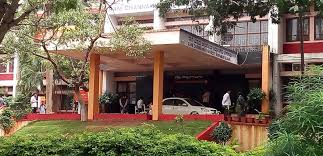
After the victim consumed sleeping pills, a syndicate meeting was held to protect the university’s image from being tarnished, and it decided to issue the student’s certificate. Belagavi – Rani Channamma University (RCU) in Belagavi, Karnataka, subjected a Dalit PhD scholar to sexual harassment and caste discrimination. The university violated the scholar’s privacy by revealing her identity. Furthermore, the university withheld her degree, leading the 34-year-old researcher in the history department to attempt suicide by consuming more than 19 sleeping pills on the night of November 30th. The victim had accused her guide of sexual harassment, but months of mental and caste-based harassment by the Vice Chancellor and Registrar following her complaint broke her down. The scholar, who is hospitalized, is now in stable condition, but following the controversy, the university announced on Thursday that she would be issued her degree. The victim began her PhD in the History Department of RCU in November 2021. She submitted her thesis in March 2025, and the PhD notification was issued after the viva voce in May 2025. Despite completing all academic formalities, she was not awarded her degree at the recent convocation attended by Governor Thaawarchand Gehlot. The family claims this was deliberate because the scholar had accused her guide, Professor KLN Murthy, of sexual harassment. In July 2025, the Internal Complaints Committee submitted its report, finding the allegations prima facie true. The Syndicate ordered an investigation and suspended Murthy in the preliminary report. However, the scholar later withdrew the complaint, citing mental instability. Subsequently, Registrar Santosh Kamgouda issued a show-cause notice, threatening to withhold her degree. The scholar considered this a threat. VC Professor Accusing CM Thyagaraja and the Registrar of caste discrimination, it was said that 26 other scholars (from different castes) were awarded degrees, but the Dalit scholar was targeted. The scholar consumed 19 sleeping pills at her home in Chikkodi on Sunday evening. The family immediately rushed her to the Belagavi Institute of Medical Sciences (BIMS), where her condition stabilized after emergency treatment. A case was registered at the Chikkodi police station. The victim’s husband said, “I have two children. If anything happens to my wife, I will commit suicide on the university campus.” University’s excuse: 3,000 rupees fee not paid The university claimed that the degree was not withheld, but rather that the certificate was lost due to non-payment of the 3,000 rupees convocation fee. However, journalists showed proof of online payment, which baffled the VC and Registrar. On Thursday, an emergency syndicate meeting was held, where it was decided that the degree would be issued on humanitarian grounds to avoid tarnishing the university’s image. VC Thyagaraj told reporters, “The Syndicate has resolved to issue the certificate to protect the university’s reputation.” He also ordered Murthy’s compulsory retirement on charges of mental harassment. However, no clarification was given on the caste-based allegations and denied them. Officials were unable to provide a satisfactory answer to questions about revealing the scholar’s identity in the sexual complaint. The Registrar described the show-cause notice as “mere clarification.” The incident sparked anger among student organizations in Belagavi. Karnataka Chief Minister Siddaramaiah and Deputy Chief Minister DK Shivakumar discussed the issue. Geetha Sunil Pillai Courtesy: Hindi News
In Khandwa, bus agent Salman, posing as “Sanjay,” trapped a Dalit woman, accused of blackmailing and raping her using an edited photo.

Blackmailing by editing photos: Extorted 2.5 lakh rupees and also had her brother-in-law raped, and the accused also had an evil eye on his minor daughter. Madhya Pradesh: A very serious and shocking case has come to light from Khandwa district. A 30-year-old married woman has made sensational allegations of rape and blackmail after holding her captive for several months. The victim alleges that the accused edited her photos to make them obscene and subjected her to constant physical and mental abuse by threatening to make them viral on social media. Furthermore, the accused is also accused of forcing the woman to convert to Islam. Police have taken action and arrested the accused, Salman, and a case has been registered against him under serious sections including rape, the Religious Freedom Act, and the SC-ST Act. He befriended her by changing his name and then began blackmailing her. According to a report in Dainik Bhaskar, the victim told the police in her complaint that she traveled to and from the city daily by bus. During this time, the bus agent became acquainted with her. The accused cleverly concealed his real name, “Salman,” and befriended her by introducing himself as “Sanjay.” It is alleged that Salman later stole photos from the woman’s social media account and edited them to make them objectionable. Using these photos, he began threatening her and pressuring her to meet him. Allegations of blackmailing, rape, and rape by brother-in-law According to the complaint, Salman repeatedly raped the woman by threatening to leak the photos. Fearing for her reputation, the victim tried to silence him by offering him money several times, but the accused’s harassment did not stop. The woman also made the serious allegation that Salman intimidated her and even got her raped by her brother-in-law, Shahrukh. Evil Eye on Daughter and Pressure to Convert The victim told the police that Salman had been constantly pressuring her to change her religion. He would often come to her house without permission and threaten her. The woman’s patience broke when the accused also attempted to molest her minor daughter. Fearing for her daughter’s safety, the woman gathered courage and filed a police complaint. Took a Loan and Paid 2.5 Lakh Rupees The woman’s husband says they remained silent until now due to fear of social stigma. They later realized that the accused was continuously demanding money through blackmail. The family said they took a loan and gave approximately 2.5 lakh rupees to the accused, but despite this, his threats and demands did not subside. Police Action: Accused Arrested Given the seriousness of the case, the police took immediate action. CSP Abhinav Barange confirmed that the accused, Salman, son of Salim and a resident of Singot, has been arrested. Police have registered a case against the accused under sections of the rape charges, the Madhya Pradesh Religious Freedom Act, 2021, and the SC-ST Act. Police officials say that Salman is currently the main accused in the FIR and the case is being thoroughly investigated. Rajan Chaudhary Courtesy: Hindi News
Nanded Police Arrest Five in Caste-Related Killing of Dalit Man, Including Partner’s Family

After her partner Saksham Tate was murdered, Aanchal Mamidwar applied vermilion on her forehead and turmeric to his body to symbolise their ‘immortal’ union. New Delhi: After a 20-year-old man hailing from a Dalit community was threatened and killed allegedly by the relatives of his partner on caste grounds in Nanded, Maharashtra, police have arrested five people in connection with the case, including the woman’s parents and her two brothers, per media reports. Police in Nanded’s Itwara invoked provisions of the Bharatiya Nyaya Sanhita pertaining to murder, rioting and criminal conspiracy in addition to sections of the Scheduled Castes and Scheduled Tribes (Prevention of Atrocities) Act and the Arms Act against the accused, the Indian Express reported. After Saksham Tate was killed on November 27, his partner, 21-year-old Aanchal Mamidwar, accused her family of opposing their relationship and planned marriage because they were from different castes. At Tate’s funeral the next day, Aanchal applied vermilion on her forehead and turmeric to his body to symbolise their ‘immortal’ union. She also reportedly called for her accused relatives to be hanged. “We were in love for the past three years but my father opposed our relationship over caste differences. My family often threatened to kill Saksham,” IE quoted Aanchal as saying. Further, she mentioned that she would henceforth stay at Tate’s home. Speaking to PTI, a police officer alleged that Aanchal’s brother Himesh Mamidwar shot Tate in the ribs and hit him with a tile on his head which led to his death. The authorities subsequently arrested Himesh, his brother Sahil Mamidwar and their father Gajanan Mamidwar, the officer said. Mamidwar’s mother Jayashri, another accused in the case, is also in custody, BBC Marathi cited the police as saying. “My father and my brother have killed my Saksham … However, they have lost by killing him, while Saksham has won by dying. Because our love is still alive,” the broadcaster quoted Aanchal as saying. According to IE, the accused told the police that they did not want Aanchal to marry Tate because of his involvement in criminal cases. PTI reported that Tate and Himesh were both history‑sheeters and had been close friends in the past. Aanchal also told mediapersons that she was coerced by her family into filing false complaints of rape and harassment against Tate before she turned 18 but that she withdrew the case when she became an adult. The Wire Staff Courtesy : The Wire Note: This news is originally published on https:/lhewire.com/bha and is used purely for non-profit/non-commercial purposes, especially human rights
A year gone, but Noida’s Dalit Prerna Sthal makeover is still incomplete
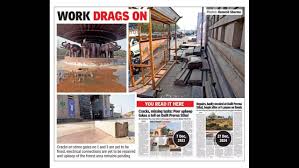
Noida: A year after renovation work began at the Dalit Prerna Sthal, after a long delay, 20% of the work remains incomplete. In Dec 2023, TOI reported about the poor condition of the park, with cracked stone statues, garbage in the main dome, broken fountains and unkept green areas. A year later, in Dec 2024, the renovation work resumed after Smarak Samiti, which manages the site, sanctioned Rs 3 crore to UP Nirman Nigam, the agency tasked with restoration. A year on, while the central dome has been renovated, 60-acre lawns manicured and stone surfaces polished, the park still awaits a full makeover as cracks on stone gates no 1 and 3 are yet to be fixed, electrical connections are yet to be repaired and upkeep of the forest area remains pending. Ahead of Ambedkar Jayanti on Dec 6, when thousands of visitors are expected at the city landmark, the Noida Authority has taken over some electrical and civil work near the main facade. However, a large part of the work, which includes repairing underground wires, is still pending, due to which one part of the park remains in darkness and the fountains are also defunct. Anand Mohan, director of the horticulture department, told TOI that the CEO has instructed officials to make a management plan for the forest area of the park’s campus. “While that is under process, we have taken up cleanliness work at the venue ahead of the Ambedkar Jayanti on Dec 6.” Authority officials have also taken up the temporary work of fixing the lighting at the park so that the venue is not in darkness on the Ambedkar Jayanti, the Authority’s deputy general manager told TOI. Meanwhile, Bijender Singh, manager-in-charge of the park, told TOI that the renovation of the central plaza, which houses the statues of Dr BR Ambedkar, Kanshi Ram and Mayawati, has been completed with ceiling repair and polishing, as well as the sandstone sculptures. He, however, added that there is still work pending at gates no 1 and 3, where cracks have emerged on the sandstone gates and it couldn’t be done earlier due to some technical issues. “The swelling of the Yamuna river nearby often leads to the ground shifting, which leads to the cracks. A team from IIT Roorkee tested the soil here and will be submitting a report on recommendations to fix the cracks and a solution for the broken sandstone gate,” he said. The park’s 60-acre lawn area is now being maintained by a third-party contractor under the Smarak Samiti, while the remaining forest area is being taken care of by the Noida Authority. Singh informed that the UP govt has sanctioned Rs 5 crore to the Smarak Samiti board for the electrical work. “It’s a massive work, the underground wiring beneath the sandstone structures and the damage due to power theft from the boundary areas has to be fixed. The tender process for this is still underway,” said Singh. The park typically registers a footfall of 2,000-3,000 on weekends and generates around Rs 6 lakh monthly in ticket revenue. On Friday, several workers were seen carrying out repair work at the venue ahead of the Ambedkar Jayanti on Saturday, during which thousands of people are expected to commemorate here. Courtesy : TOI Note: This news is originally published on https:/limesofindia.com/bha and is used purely for non-profit/non-commercial purposes, especially human rights
Remembering Baba Saheb Ambedkar on Mahaparinirvan Diwas and Dalit Experiences in Indian Academia
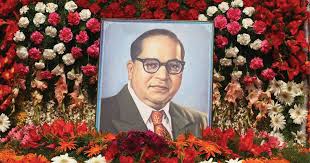
Scholars from Dalit backgrounds may occupy the same lecture halls, but their voices seldom command the same authority or space. Their presence is acknowledged superficially, tolerated, scrutinised, but rarely embraced or trusted fully. On this Mahaparinirvan Diwas, these words echo through our hearts with profound emotion and unshakeable conviction. They are not mere words; they are a testament to the unbreakable bond between a visionary and the millions he liberated. For generations scarred by marginalisation, exclusion, and fierce resistance, Babasaheb is far more than a historical figure, he is the bedrock of our dignity, the master builder of our dreams, and the eternal flame igniting our path toward true humanity. To reflect on Babasaheb today is to feel the weight of gratitude that wells up from the depths of our souls. Our freedom to speak without fear, to educate ourselves without barriers, to walk with our heads held high, to confront injustice head-on, and to dream of a world remade in equality, all these gifts trace back to the courageous path he blazed. His victories were never solitary; they were the collective rising of a people long crushed under oppression. His struggles burned with a fire that refused to dim, not for personal glory, but for the voiceless millions stripped of agency, respect, and basic human worth. In his relentless fight, we found our own strength, our own voice. His legacy endures not as a distant echo from history, but as a powerful, pulsating force alive in our veins. It is the unquenchable fire that warms our spirits in the coldest moments of despair. It is the radiant light that pierces through darkness, guiding us forward. It is the indomitable courage that arms us against the injustices that still linger in our world today. The Long Journey of Equality: Walking the Path He Opened : Babasaheb’s life was nothing short of a revolutionary upheaval. He exposed caste not as a mere social irregularity, but as a deep-seated moral abomination, one that systematically steals dignity from the oppressed while conferring illegitimate superiority on the oppressors. With unwavering clarity, he proclaimed that education is liberation’s most potent weapon. Intellect belongs not to a privileged few but to every human being as an inalienable right. Dignity is never granted from above; it must be seized with fierce determination. For communities that were treated as less than human for centuries, Babasaheb’s rise from pain to great leadership is one of the most inspiring stories of equality today. His life shows that no chain can hold us if we keep fighting. For many from oppressed families, he feels like a close friend. In childhood, when classmates stayed away or did not share food because of caste, his story gave us power to keep going. When society’s contempt tried to crush our spirits, his words became our shield, lifting us to stand taller. When waves of humiliation threatened to drown us, his profound writings became the anchor that held us steady. We do not just remember him in ceremonies. We live his teachings every day. We do not just speak about him. We follow his path. We do not only respect him. We carry his spirit in every fight for justice. The Academia’s Promise and Its Silences Universities proudly declare themselves as enlightened realms of neutrality, progress, and pure objectivity. But for those who carry the scars of caste oppression, these institutions often betray a painful truth: they mirror society’s entrenched hierarchies in disguised forms. The physical campus may appear modern and inclusive, but the invisible hierarchies sting with familiar pain. The vocabulary has changed, yet the exclusionary intent remains intact. Discrimination hides in sophistication, inflicting wounds that cut just as deeply. Scholars from Dalit backgrounds repeatedly confront the same age-old exclusions, now cloaked in academic jargon. The system practices prejudice, It vows equality on paper but fiercely guards inherited hierarchies in practice. This stark contradiction reveals itself most clearly in the politics of knowledge production: whose insights are granted credibility, whose voices are truly heard, and whose lived experiences are dismissed as mere caste-bound anecdotes. Hierarchy in New Forms: The University and the Logic of “Part / Apart” One of the most poignant revelations in higher education is the invisible line drawn between those who are fully “part” of the institution and those kept perpetually “apart.” Some are welcomed wholeheartedly as insiders. Others are granted entry but never true belonging. This silent yet suffocating divide plays out in daily interactions: who receives invitations to exclusive intellectual networks, whose ideas are met with genuine respect, whose critiques are deemed valid and profound, who is afforded patient listening, and who faces hasty dismissal. Here, exclusion transcends physical barriers; it is a profound intellectual apartheid. Scholars from Dalit backgrounds may occupy the same lecture halls, but their voices seldom command the same authority or space. Their presence is acknowledged superficially, tolerated, scrutinised, but rarely embraced or trusted fully. And yet, in the face of this marginalisation, these scholars rise with extraordinary resilience.Their very entry into forbidden spaces shakes the foundations of old power structures. Their bold arguments disturb the complacent authority of the dominant.Their innovative scholarship directly confronts and erodes the unearned prestige long held by privileged castes. By boldly occupying arenas designed to exclude them, they tear down the walls of “apartness,” asserting that true academia must belong to all who dare to think. The Violence of Disbelief: Testimonial Injustice as Everyday Reality Among the cruelest weapons in academic discrimination is testimonial injustice.the deliberate withholding of credibility not because of flawed ideas, but simply because of who dares to voice them.This form of violence does not roar; it whispers poisonously. It does not wound visibly; it slowly erodes confidence from within. It does not bar the door outright; it undermines from the shadows. For scholars from Dalit backgrounds, this injustice strikes repeatedly and predictably.Their passionately researched work is casually dismissed as “too emotional,” even as dominant-caste narratives are exalted as impeccably “scholarly.” Their meticulously constructed theoretical
SRM Uni dismisses Dalit Christian professor targeted by right-wing for anti-war views

Lora Shanthakumar, a Dalit Christian assistant professor, was previously suspended on May 8, after her WhatsApp status warning against the dangers of war, phone number and photo were leaked to right-wing social media handles — leading to targeted online abuse, intimidating phone calls and death threats. Lora Shanthakumar, an assistant professor at Chennai’s SRM University, has been dismissed for expressing anti-war views at the time Operation Sindoor was carried out. SRM’s internal inquiry ‘confirmed’ that she has committed ‘grave misconduct’. Lora, who worked at the university’s Career Development Centre (CDC), was allegedly doxxed by students in May, after she posted a WhatsApp status calling for peace. The termination order accessed by TNM accused her of posting “unethical remarks” on social media against the armed forces and of tagging herself as an assistant professor of SRMIST. “Therefore, she is unfit to continue her job in the institution and is dismissed from service with immediate effect,” the order said. The internal inquiry committee was headed by the Director of Student Affairs at SRMIST, Dr Nisha Ashokan. Deputy Director of Student Affairs, Dr Prince Kalyanasundaram, was the committee’s presenting officer. The inquiry was held at the Kattankulathur SRM campus between July 15 and September 26. The committee submitted its report to the university registrar on October 30. Lora, a Dalit Christian, was first suspended on May 8, after her WhatsApp status, phone number and photo were leaked to right-wing social media handles, leading to targeted online abuse, intimidating phone calls and death threats. She was branded an anti-national and accused of speaking against the Indian Army. Further, she was forced to vacate her home in Chennai and move back to Kallakurichi, where she’s from, to protect herself. The committee’s report Lora shared a series of WhatsApp status messages on May 7, voicing strong opposition to the calls for war during the India–Pakistan conflict. Starting early that morning, she posted quotes, warnings and fact-checks, including a message urging people to recognise the human cost of conflict alongside a George Orwell quote about war propaganda. She also flagged fake social media accounts posing as Indian Army officers and asked others not to amplify them. In total, Lora posted 12 anti-war messages, though only two were circulated publicly. One listed the real-life consequences of war, from economic shutdowns to loss of lives and another criticised the killing of civilians in a strike, calling it cowardice rather than bravery. During the internal inquiry, Lora was charged on 5 counts and a charge memo was issued against her on June 16. The charge memo accused her of posting unethical remarks against India’s armed forces on social media platforms. She was also accused of acting against national interests and lacking patriotism. “Your act amounts to action against the interests of the nation and also disrupts the cordial atmosphere and smooth functioning of the institution and invites legal implications harmful for the reputation of the institution and it amounts to major misconduct.” Further, she was accused of involvement in antisocial activities which are “criminal”, which the committee considered a “major misconduct”. Lora had denied all charges and made it clear that her comments were not against the nation and that they had been misconstrued and misinterpreted. Denying the charge that she had brought disrepute on the university, she clarified that she had not identified herself as a professor of the university in her posts. She stated that the WhatsApp number on which she had posted the status was personal and not linked to the university in any way. She also noted that the remarks in question were not posted on social media but as a personal WhatsApp status that was temporary in nature. The inquiry committee, in its findings, claimed that all five charges were proven and gave identical findings for all the charges. “When the presenting officer conducted the chief examination of Ms S Lora, she confirmed posting in her personal capacity and denied charges 1, 2, 3, 4 and 5, which were read out to her by the presenting officer,” the order said. “Hence, this charge is proof of her posting on social media in her personal capacity. It is not proved by the delinquent employee that she has not officially tagged SRMIST in her capacity as assistant professor. Therefore it is deemed that the entire charge against her is proved.” read the order. The termination order further said that on perusal of all the records and evidence produced during the enquiry proceedings, the enquiry officer has proved all the charges framed against Lora. SRM university has given Lora 30 days to make an appeal to the vice chancellor, who is the appellate authority in this case. Reacting to the development, Lora told TNM that the inquiry was an eyewash and she has been made a scapegoat here. “Until now the university management has not been able to tell me where they saw my WhatsApp status messages posted in the capacity of an assistant professor? When I was placed under suspension, they did not tell me why I was being suspended and the claims made in the charge memo and the screenshots of my messages have no time stamp. There are also no details of where it was taken. The entire accusations are wrong and illegal,” she said. Lora added that the actions of the law officer Ravi, who was also present when she was being questioned by the committee, are absent in the report. “The entire inquiry happened under his control and he was the one who was dictating the terms. I have initiated criminal action against those who targeted me online and none of it has been recorded in this inquiry report,” she added. Meanwhile, sources told TNM that the Maraimalai Nagar police have summoned the registrar Dr S Ponnuswamy of SRM University after Lora filed a petition with the Tamil Nadu Chief Minister’s cell. Written by:Shabbir Ahmed, Edited by:Bharathy Singaravel Courtesy : TNM Note: This news is originally published on https:/lhenewsminute.com/bha and is used