
Tamil Nadu: Was the murder of two Dalit youths due to a feud over an ‘intercaste marriage’? The National Commission for SC/ST visited the scene.
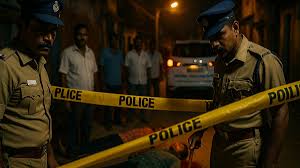
Families allege honor killing, demand CB-CID investigation; the Commission inspected the scene. Dharmapuri: The National Commission for SC/ST has begun its investigation into the deaths of two Scheduled Caste (SC) youths near Palacode in Tamil Nadu’s Dharmapuri district. On Wednesday, a team from the Commission visited the area to ascertain the facts surrounding the incident and met with the families of the victims. Families allege murder, demand CB-CID investigation. The Commission’s team included Director Dr. S. Ravi Verma and Senior Investigator S. Lister. Officials met with the families of the deceased youths to hear their side of the story. During the conversation, the grieving families made serious allegations, stating that this was not a normal road accident but a premeditated murder. The families claim that the youths were targeted because of their inter-caste relationships. They have also demanded that the CB-CID investigate the entire matter before the Commission members. Officials Inspect the Site After meeting with the families, the Commission team directly went to the accident site near Chikarthanahalli, where the bodies of the youths were found. The committee members thoroughly inspected the site. Revenue Divisional Officer (RDO) R. Gayatri and senior Dharmapuri police officials were also present with the Commission during the investigation. What is the whole matter? The incident occurred last Wednesday. Two youths—N. Sunil Kumar (19) and R. Murugan (20), residents of Sonampatti village near Palacode, were traveling on a moped towards Palacode. Sunil worked in a private company, while Murugan was a third-year polytechnic student. According to the police report, their moped went out of control and fell into a culvert near Chikarthanahalli, killing both of them. Bodies Accepted After Three Days Following the incident, the families of the deceased refused to accept the bodies, alleging foul play. They even staged protests. However, after a three-day standoff and the completion of the post-mortem, they accepted the bodies from Dharmapuri Medical College Hospital. Police Investigation and Post-mortem Report Meanwhile, the police are maintaining their investigation. They say that both the evidence collected at the scene and the post-mortem report point to it being a ‘road accident.’ The investigation has determined the cause of death to be injuries sustained in the accident. Currently, all eyes are on the case following the Commission’s intervention. Rajan Chaudhary Courtesy: Hindi News
National SC/ST commission probes death of two Dalit youngsters near TN’s Palacode
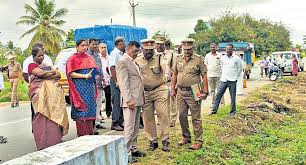
The committee members also visited the accident spot near Chikarthanahalli and inspected the area. Revenue divisional officer R Gayathri and Dharmapuri police officials were also present. DHARMAPURI: The National Commission of SC/ST conducted an inquiry into the death of two SC youths near Palacode on Wednesday. The committee members, including the director Dr S Ravivarma and senior investigator S Lister, met the family of the deceased youth, who claimed they could have been killed due to their inter-caste relationships, and sought a CB-CID investigation into their death. The committee members also visited the accident spot near Chikarthanahalli and inspected the area. Revenue divisional officer R Gayathri and Dharmapuri police officials were also present. Last Wednesday, two youngsters, N Sunilkumar (19), an employee of a private company, and R Murugan (20), a third-year polytechnic student, both from Sonnampatti village near Palacode, died in a road accident near Chikarthanahalli. The duo was on their moped and was en route to Palacode when they stumbled, fell into a culvert and died. However, their families refused to accept the bodies and staged a protest alleging foul play. Subsequently, three days later, they collected the bodies from the Dharmapuri Medical College Hospital following autopsy. With evidence collected from the accident scene and post-mortem reports attributing the cause of death to accident, police said, their investigation also pointed to the two youngsters dying from a road accident. Courtesy : TNIE Note: This news is originally published on https:/lhenewindianexpress.com/bha and is used purely for non-profit/non-commercial purposes, especially human rights
Betrayal of Bahujans, Government has no… Rahul Gandhi launches scathing attack on the government over delay in caste census
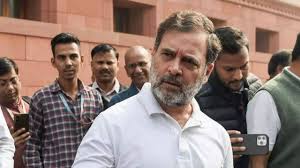
Rahul Gandhi accused the Modi government in the Lok Sabha of having no concrete plan for the caste census. He said this is a betrayal of the Bahujans. The government stated that the census will be conducted in two phases and the population count will be completed in February 2027. New Delhi: Citing the government’s response to his written question, Congress leader Rahul Gandhi claimed that the Modi government has no concrete framework or plan for the caste census. He also said this is a blatant betrayal of the country’s Bahujans. Former Congress President Rahul Gandhi posted on X, “I asked the government a question about the caste census in Parliament. Their response is shocking. No concrete framework, no time-bound plan, no discussion in Parliament, and no dialogue with the public.” He claimed, “There is no desire to learn from the strategies of successful caste censuses conducted by other states. This caste census by the Modi government is a blatant betrayal of the country’s Bahujans.” Rahul Gandhi had asked a written question in the Lok Sabha on Wednesday, “What are the details and likely timelines of the key procedural steps for preparing for the decennial census, including preparation of questions and scheduling? Does the government propose to publish draft census questions and seek input from the public or public representatives on these questions? Is the government considering past experiences, including caste surveys conducted in different states, and if so, what are the details?” What does the government say? In response, Minister of State for Home Affairs Nityanath Rai stated that the census would be conducted in two phases. He stated that the first phase would include house listing and housing enumeration, followed by the second phase of population enumeration. The minister had said, “The population census will be conducted in February 2027, with the reference date being midnight of March 1, 2027, except in the Union Territory of Ladakh, and the Union Territories of Jammu and Kashmir, and the snow-covered remote areas of Himachal Pradesh and Uttarakhand, where the census will be conducted in September 2026, with the reference date being midnight of October 1, 2026.” Rai had said, “The census has a history of over 150 years. Experiences gained from previous censuses are taken into account for the next census. Suggestions are also sought from relevant stakeholders before each census.” Edited by: Ashok Upadhyay About the Author Ashok Upadhyay is a Senior Digital Content Producer at Navbharat Times Online. He has 10 years of experience in journalism. He began his journalism career with Navbharat Times Hindi newspaper in 2014. He specializes in reporting on politics, sports, and the crime beat. He has also worked on the Central Desk at Amar Ujala Dehradun. Courtesy: Hindi News
Dalit Women And Gender Justice: The Lasting Impact Of Periyar In Tamil Nadu
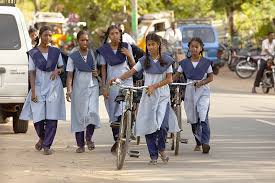
Today, Periyar’s legacy continues to influence Tamil Nadu’s social landscape, driving higher female enrollment in education, empowering first-generation learners, and shaping the voices of Dalit women leaders in movements for social justice. Understanding Periyar’s impact is essential for anyone exploring the intersections of caste, gender, and education in contemporary Tamil society. When N. Aathirai first realised something was wrong in her home in Tiruchirappalli, she did not yet know the word “patriarchy”. She was only a child, but the imbalance was clear. “I just saw the difference in how men and women were treated,” says the 25-year-old psychologist. Years later, living with her in-laws, she understood it more sharply while watching her mother, a history graduate who became a housewife, repeatedly dismissed in her own home. “So much of it came from women having no autonomy,” she says. Her first real attempt to make sense of it came in college, when she picked up Pen Yen Adimai Aan? The title alone startled her, pushing her to confront questions she had only sensed growing up. After graduation, she worked with Pa. Ranjith’s Neelam Social, where conversations on caste and Periyar deepened her thinking. His emphasis on self-respect resonated the most. “Women are taught to value ourselves only in relation to men, how we adjust, how we behave,” she says. “Reading Periyar helped me understand why we were treated the way we were.” Lawyer Mathivadhani, now 29, arrived at these ideas from the opposite direction, through immersion rather than discovery. “My father was a Dravida Kazhakam state spokesperson, so I grew up in the Dravidian movement from the age of three,” she says. Her father handed her Pen Yen Adimai Aanen? at fourteen, insisting she would understand the meaning as she grew older. When he died the next year, the family refused orthodox rituals and honoured him according to Dravidar Kazhagam customs. “That taught me to stand by my principles.” Many of Periyar’s century-old positions now feel embedded in everyday life. Inter-caste marriage is more accepted, dowry is publicly challenged, and women’s education has expanded dramatically. Tamil Nadu’s high female school enrolment and the rise of first-generation women learners reflect Periyar’s insistence that educating a woman transforms society. According to the School Education Department, 74 per cent of Class 12 students enrolled in colleges in the 2023–24 academic year, an increase driven by the Pudhumai Penn scheme for girls and the Tamil Pudhalvan scheme for boys introduced in 2024. Over five academic years from 2017–18 to 2021–22, Tamil Nadu consistently maintained the highest Gross Enrollment Ratio (GER) in higher education, reaching 47 per cent, compared with the all-India average of 28.4 per cent. Mathivadhani shares the example of A. Rajeshwari, a student at the Government Tribal Residential Higher Secondary School in Karumandurai. She cleared the JEE (Advanced) 2025, securing a place at one of the Indian Institutes of Technology (IITs), becoming the first person from her tribal village to do so. “Where else do you hear of such examples?” Mathivadhani asks. She credits Periyar’s ideology and his insistence on educating women for paving the way. Scholar V. Geetha argues that understanding Periyar requires returning to the late 1920s, when the Madras Presidency was alive with debates on women’s rights—from the Devadasi Abolition Bill to raising the age of consent, and the uproar over Katherine Mayo’s Mother India. Periyar entered this turbulent landscape and pushed each debate further. On the Devadasi question, he amplified anti-Brahminical criticism but went further, attacking the very ideal of chastity. By elevating chastity as the defining marker of womanhood, he argued, society bound women to unhappy marriages and curtailed their emotional and sexual autonomy. Former Devadasis, some defending their artistic traditions, others condemning the system, were central to the debate. Periyar’s description of chastity as “a form of slavery” provoked argument for years. His rejection of early marriage emerged from the same concern for autonomy. Witnesses in the Madras Presidency demanded higher marriage ages than elsewhere in India, and Periyar pressed further: marriage, he insisted, must be a choice, not a woman’s destiny. By the 1940s, he was urging women to postpone marriage entirely and enter public life. Here he differed even from Phule and Ambedkar, seeing patriarchy not only as an extension of caste and property but as embedded in intimate relationships. He was equally blunt about compulsory motherhood, dismissing childbirth as a sacred duty. After visiting the Soviet Union in 1931, he praised communal kitchens and childcare centres as models for a more equal family structure. These ideas reshaped how women in the Self-Respect Movement saw themselves. Activist Neelavati famously declared women “the oldest working class”, highlighting the labour performed at home, in factories, fields, and along coasts. Yet translating these ideals into daily life was challenging. Inter-caste couples had little legal protection and relied on movement support. Still, it was through these struggles, Geetha notes, that Periyar’s ideas were tested, interpreted, and expanded by women such as Neelavati and Annapurni. Education was central to this transformation. R. Ovia, founder of the cultural organisation Puthiya Kural, explains Periyar’s approach on two levels: immediate access to schooling, and a deeper liberation from the mindset shaped by religious structures, particularly Hindu traditions. “Education should root women in rationalism and self-respect,” she says. She also emphasises that Periyar’s ideas are dynamic. “They always allow space for growth.” Ovia highlights another critical dimension: it is mostly Dalit men and women who have owned, defended, and expanded Periyar’s ideas, translating them from text to practice. Leaders like Annai Meenambal Sivaraj and Annai Sathyavani Muthu brought Dalit voices into Periyarist movements, nurturing women as leaders. Today, Dalit women are prominent in the Dravidar Kazhagam and other Periyarist platforms. “Only when Dalit women—and equally Dalit men—consider Periyar’s movement as their own can they build a truly effective, rights-based platform,” she says. She stresses that Periyar’s ideas are inseparable. “Women’s liberation, caste abolition, atheism—they are all linked. You cannot pick one part and ignore the rest. To approach Periyar as a women’s liberationist
‘He couldn’t walk’, Bengaluru Dalit woman says police torture killed son

The Vivek Nagar Police took Darshan into custody after he was involved in an altercation with his neighbours in Sonnenahalli on 12 November. Synopsis: On 26 November, the mother was informed that Darshan had died at the Nelamangala government hospital. The rehab centre authorities admitted him to the hospital after he had complained of difficulty in breathing. The Criminal Investigation Department of the Karnataka police are investigating a case of alleged custodial torture that led to the death of a 22-year-old Dalit man. The death came just under a month after three police personnel attached to the Varthur Police Station in eastern Bengaluru were suspended for assaulting a domestic worker and her husband in a theft case. The Vivek Nagar Police took the man, Darshan, into custody after he was involved in an altercation with his neighbours in Sonnenahalli on 12 November. Darshan’s mother, Adilakshmi, alleged that the police did not allow her to visit him despite repeated requests. Three days later, the police admitted him to the Unity Rehabilitation Centre at Adakamaranahalli, after reportedly taking ₹2,500 from his mother. Adilakshmi said the police ignored her offer to admit him to the rehab centre. Darshan was reportedly an alcohol addict. The mother said Darshan was assaulted in police custody. “My son was tortured and beaten in custody and later admitted to the rehab. Due to the torture, my son was unable to walk. Police forced me to pay ₹2,500 for his admission to the rehab,” Adilakshmi told reporters on Friday, 28 November. She accused Assistant Sub-Inspector Pawan and two other policemen of assaulting her son inside the station. On 26 November, the mother was informed that Darshan had died at the Nelamangala government hospital. The rehab centre authorities admitted him to the hospital after he had complained of difficulty in breathing, she was told. Police said no case was registered against Darshan. However, they added that the man had gotten into a fight with the personnel at the station. Bengaluru District Superintendent of Police CK Baba said that based on preliminary findings, the Madanayakanahalli police registered an FIR under BNS 103(1) (murder), BNS 127(3), and Section 3(2)(v) of the SC/ST (Prevention of Atrocities) Act. The FIR named a police inspector and three policemen attached to the Viveknagar police station, and the rehab centre owners. The case has now been transferred to the Criminal Investigation Department (CID) for further investigation. “Was told he was recovering” Adilakshmi’s said two officers assaulted Darshan while detaining him outside their residence on 12 November. After he was taken into custody, she repeatedly requested the police to let her see him. On 15 November, the Viveknagar police arranged for his admission to a rehabilitation centre in Adakamaranahalli and reportedly demanded ₹2,500 from her, even though she had insisted that she could take him to a rehab centre herself. When she went to the police station to hand over the money, she again requested to meet her son. She was allowed to see him only from a distance. “He was shaking. His hands and legs were trembling. He could not even walk. He begged me to take him out of there,” Adilakshmi said in her complaint. For several days after his admission to the rehab centre, she repeatedly called the facility to check on her son. Each time, she was told that Darshan was recovering. However, on 26 November, the family received a call informing them that Darshan had died due to breathing problems. When Adilakshmi and her relatives rushed to the rehab centre, they were told that his body had been shifted to the Nelamangala government hospital. “When we saw him, there were injuries on his chest. Both his hands were swollen and his back was bruised. His feet were swollen too,” she stated in her complaint. Naveen, the supervisor of the rehab centre, told the media that the Viveknagar police called them to admit Darshan . “At the time of admission, there were injury marks on him, and we have taken photographs of them. After he complained of breathing difficulties, he was first taken to a nearby private hospital and from there to the government hospital,” he claimed. The People’s Union for Civil Liberties and Association of Prisoners’ Families for Justice, met the inspector of Viveknagar police station on Sunday, 30 November, and enquired details regarding the custodial death. They filed an RTI application seeking CCTV footages from the station. Anisha Reddy (Edited by Majnu Babu). Courtesy : TSP Note: This news is originally published on https:/thesouthpost.com/bha and is used purely for non-profit/non-commercial purposes, especially human rights
‘You Belong To Filthy Caste’: Parents Allege English Teacher Of Using Casteist Slurs Against Dalit Students In AP
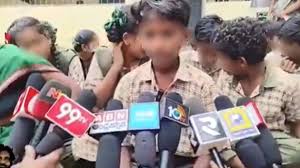
An English teacher at Yandapalli High School in Kakinada district, Andhra Pradesh, is accused of using casteist slurs against Dalit students. Parents and students protested after Headmaster Suresh Bhushan reportedly failed to act on initial complaints. The accused, Srinubabu, allegedly used derogatory language, leading to public outcry. Kakinada: A shocking and disturbing incident has come to light from Andhra Pradesh’s Kakinada district. Parents and students have accused the English teacher at Yandapalli High School of using casteist slurs and derogatory language against students from the Dalit community, reported NDTV. “You belong to a filthy caste… Do you think SCs are some kind of special people?” parents said, quoting the children. The protest took place in front of the high school in U Kottapalli Mandal. The accused teacher has been identified as Srinubabu. Reportedly, he has been consistently humiliating and harassing students from the Dalit community. No Response From Headmaster The affected students and parents had first lodged a complaint with headmaster Bhushan regarding Srinubabu’s behaviour. However, the lack of a proper response from the administration led the affected parties to escalate the matter, culminating in a protest against the alleged institutional indifference and harassment. Courtesy : TFPJ Note: This news is originally published on https:/thefreepressjournal.com/bha and is used purely for non-profit/non-commercial purposes, especially human rights
Honor killing in a Hindu-Buddhist love story: Father and brothers killed lover, girl marries corpse!
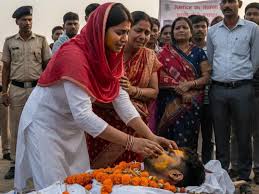
Anchal has now decided to live with Saksham’s family and has promised to spend her life with his mother. She has demanded the hanging of her father and brothers. Nanded – A tragic story of inter-caste love has emerged in Nanded district, Maharashtra, where a young woman, Anchal Mamidwar, symbolically “married” her 20-year-old lover, Saksham Tate, after killing him. This incident exposes the harsh reality of caste discrimination, where a Hindu family opposed her relationship with a young man from the Buddhist community and brutally murdered him. Anchal has demanded the hanging of her father and brothers. According to police investigations, Anchal and Saksham had been in a love relationship for the past three years. They met through Anchal’s brothers, and Anchal frequently visited Saksham’s home. But trouble began when Aanchal’s family learned of their love. Aanchal’s family belongs to the Hindu community, while Saksham belonged to the Dalit-Buddhist community. The family opposed the relationship, apparently due to caste differences, and repeatedly threatened to kill Saksham. On Thursday evening, Saksham was standing with his friends in the Junaganj area when Aanchal’s brother, Himesh Mamidwar, shot him. The bullet grazed Saksham’s ribs. Himesh then struck Saksham on the head with a tile, killing him instantly. Aanchal’s father, Gajanan Mamidwar (45), brother Sahil Mamidwar (25), and three others were also involved in the incident. On Friday evening, preparations for Saksham’s funeral were underway when Aanchal arrived. Deeply grief-stricken, Aanchal performed symbolic marriage rituals with Saksham’s body. She applied turmeric, kumkum (vermilion) to the body, and applied vermillion to her forehead, declaring herself a widow. Anchal said, “Our love has become immortal. This proves that love has no caste.” She claimed that they were about to get married soon, but a family conspiracy took everything away. Anchal has now decided to live with Saksham’s family and promised to spend her life with his mother. Videos of Anchal have gone viral on social media, where she is seen crying and saying, “My father and brothers killed Saksham. I want justice. They should be hanged.” Anchal alleged that the family had been plotting Saksham’s murder for weeks. 6 arrested for murder, SC/ST (Prevention of Atrocities) Act, and Arms Act Police arrested all six accused immediately after the incident, including Anchal’s father Gajanan, brothers Himesh and Sahil, three other adults, and a minor. The minor has been sent to a juvenile correction home. A case has been registered under sections of the Indian Penal Code (IPC), the SC/ST (Prevention of Atrocities) Act, and the Arms Act. Police have initiated the process of recovering the weapon and recording Aanchal’s full statement. Additional security forces have been deployed in the area to prevent caste tensions, and further investigations are underway. This incident raises questions about inter-caste marriages and the growing problem of honor killings in India. Aanchal’s courage not only demonstrates the depth of her love but also teaches society to break free from caste prejudices. Geetha Sunil Pillai Courtesy: Hindi News
MP: Following the suspicious death of a Dalit youth in Narmadapuram, a protest was held by placing his body on the highway. Family members allege murder!

After an hour of tension, officials assured an investigation, after which the family removed the body from the road. The last rites were performed in Makhannagar at around 6 p.m. Bhopal. A tense situation erupted in Makhannagar, Narmadapuram district, Madhya Pradesh, on Sunday afternoon when family members and community members blocked the Narmadapuram-Pipariya State Highway by placing the body in front of the Makhannagar police station to protest the death of Jitendra Ahirwar, a 28-year-old Scheduled Caste youth. The family members, calling the death a conspiracy, insisted on registering an FIR for murder. The protest, which lasted for over an hour, caused a long traffic jam on the highway. Angry family members and community members began gathering outside the police station around 3 p.m. As soon as the body was brought to the station in an ambulance, the family members placed it on the road and began sitting on it. During this time, slogans were raised against the police administration. People alleged that Jitendra’s death was not due to a bike slip, but due to a physical assault, and that the police were trying to hush up the matter. The family alleged that Rakesh Sinha and Nihal Khan, with whom Jitendra worked, brought him in injured and fabricated the story that the bike had slipped. The family says that the assault caused serious head injuries, leading to his death 15 days later. A large police force was deployed. Seeing the situation worsening, the police increased their force. Sohagpur SDOP Sanju Chauhan, police station in-charge Anup Kumar Uike, and other officers arrived at the scene. The officers tried to pacify the family, stating that legal action would only be possible after the postmortem report. However, the family insisted on filing an FIR immediately. After an hour of tension, the officers assured an investigation, after which the family removed the body from the road. The funeral took place in Makhan Nagar at around 6 p.m. Head injury due to bike slip SDOP Sanju Chauhan stated that the accident occurred on November 14th. Jitendra, Rakesh, and Nihal were returning from Shukkarwada to Makhannagar when the bike skidded, resulting in a severe head injury for Jitendra. He was first referred to Makhannagar, then Narmadapuram, and later Bhopal, where he died on Sunday. He stated that after the postmortem report is received, all aspects will be investigated and legal action will be taken. There was a dispute a day before, hence the suspicion deepens Manish Ahirwar, the deceased’s younger brother, stated that a dispute had occurred at home with Rakesh and Nihal on November 13th, a day before the accident. The same people brought him home injured the next day. Manish said, “Only my brother suffered a head injury when the bike skidded, not a scratch on his body. Rakesh and Nihal also did not suffer any injuries. This clearly indicates that the case is suspicious.” The family members suspected that he was assaulted after the dispute and that the accident was staged. Assurance of Investigation Clearing the blockade in the presence of hundreds of people proved challenging for the police. Finally, officials clarified that if the postmortem examination reveals the nature of the injuries to be suspicious, a case will be filed under sections of murder or assault. Currently, the police are investigating the case as a case of unnatural death (incest). Ankit Pachauri Courtesy: Hindi News
Tamil Nadu: Dalit youth who spoke out against encroachment of Panchami land was fatally attacked; NCSC Director visited the hospital to inquire about his condition.

Fight to save 190 acres of land: Petitioner beaten by miscreants, enraged by High Court order; NCSC orders strict action Madurai: National Commission for Scheduled Castes (NCSC) Director S. Ravivarman visited the Government Rajaji Hospital (GRH) in Madurai on Monday. He met the Dalit youth who was allegedly brutally beaten by miscreants. The victim’s only fault was that he had approached the court to remove illegal encroachment on Panchami land in Melur taluk. What is the whole matter? The petitioner, S. Muthuraja, filed a case in the Madurai Bench of the Madras High Court. He told the court that approximately 190 acres of Panchami land in the Keeranur Panchayat of Melur had been illegally occupied by members of an influential community. Muthuraja is an earth mover by profession. Hearing the case, the court delivered a historic verdict on November 7th, ordering the administration to remove the encroachment and restore the land. However, just 10 days after the court’s order, the petitioner had to pay a heavy price. Attack with Sharp Weapons Recalling the incident, Muthuraja, who is hospitalized, said, “I learned a few months ago that members of the dominant community were using 190 acres of protected Panchami land for farming and other activities. When the court ruled against them on November 7th, they became furious and began threatening to kill me.” He further explained that on November 18th, members of the dominant community surrounded him. The attackers first hurled caste-related slurs at him and then attacked him with sharp weapons. Muthuraja suffered serious injuries to his hand, nearly severing it. Fortunately, locals intervened and rescued him and rushed him to the hospital. Compensation and Security Assurance NCSC Director S. Ravivarman, who arrived at the hospital on Monday, inquired about Muthuraja’s condition from doctors and officials. He issued strict instructions to officials to ensure the victim’s safety, compensation, and rehabilitation. Ravivarman said, “The compensation for the victim will be announced within the next few days. If the victim suffers any physical disability (incapacitation) even after surgery or medical treatment, they will also be provided additional compensation.” Police Action Taking the matter seriously, the Melur police have registered a case against nine members of the Unruly community under the SC/ST (Prevention of Atrocities) Act. Police have arrested four attackers, while searches are ongoing to find other suspects. Rajan Chaudhary Courtesy: Hindi News
Tamil Nadu: Preventing a Dalit cook from cooking proved costly; court sentences six to two years in prison
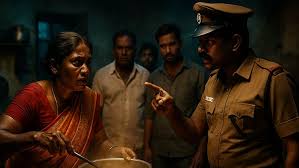
Tirupur News: A Tamil Nadu court has delivered a harsh verdict in a case of caste discrimination. The court convicted six people for preventing a Dalit woman from cooking in a government school. The court sentenced all the accused to two years in prison. This incident occurred in Tirupur district, Tamil Nadu. This verdict is being considered a major example for social justice. The entire case dates back to 2018 This controversy arose in 2018. The Special SC/ST Act Court heard the case. The court sentenced six people, including P. Palanisamy Gounder, N. Sakthivel, and R. Shanmugam, who were found guilty of caste discrimination and other crimes. The court took a tough stand against the accused. The cook was discriminated against The prosecution presented the entire incident to the court. This case is from the Government Higher Secondary School in Thirumalai Goundampalayam. A woman named P. Pappal worked as a cook there, preparing mid-day meals for the children. Parents of children attending this school in Tamil Nadu protested. The six accused objected to the children being given food prepared by a Dalit woman. Punishment after protests There was considerable uproar against this discrimination. The Tamil Nadu Untouchability Eradication Front spoke out in support of the cook. Members of the organization protested the woman’s treatment. They also protested against the cook’s transfer and the discrimination. Now, the court has delivered justice in this case and sent the culprits to jail. Courtesy: Hindi News