
Punjabi Dalit fiction is reaching an English audience at last. The book is called Gangrene

Dalit literature in India is usually tied to the Ambedkar-Phule revolutionary legacy and raw Marathi autobiographies. Now a new translation of Punjabi-Dalit stories shows caste as Punjab lives it. Navdeep Singh and Akshaya Kumar with a copy of Gangrene: Punjabi Dalit Short Stories, published last month by Penguin | Photo: Sakshi Mehra | ThePrint Navdeep Singh and Akshaya Kumar translated “Gangrene: Punjabi Dalit Short Stories” to bring nuanced Punjabi Dalit fiction to a national audience. Unlike more explicit Marathi Dalit literature, these stories explore subtle, diffused caste discrimination, identity struggles, and the enduring presence of caste in Punjab, even within Dalit communities, seeking wider recognition for this important literary tradition. *AI-generated summary. Check context in original text. Chandigarh and Jalandhar: During a visit to Panjab University, Navdeep Singh kept looking at the blue book in his hands as if it might disappear. The title is Gangrene: Punjabi Dalit Short Stories, a collection published by Penguin. The assistant professor at MR Government College in Fazilka has his name on the cover, along with that of Panjab University professor Akshaya Kumar. Yet, he is still unable to celebrate it. There is a disconnect between his academic world and his Mazhabi Dalit Sikh community in Firozpur’s Panjawa village. He has dedicated the book to his parents, but the question that haunts him is this: will the book mean anything to his community of mostly farm labourers? “I can’t fully grasp it. My parents don’t understand how big this is, and I don’t think I can quite explain it either. Maybe the next book I’m working on with Prof Akshaya will bring a sense of happiness and pride,” said the 28-year-old teacher of English literature, smiling anxiously as he sat in Kumar’s allotted quarter in Chandigarh. Gangrene brings fiction by writers such as Attarjit, Prem Gorkhi, Mohan Lal Phillauria, and Bhagwant Rasulpuri to a pan-India audience. Their stories explore what it means to be Dalit in a state where nearly a third of the population belongs to the community, but the literature has barely had any reach even within Punjab. We wanted to translate the works of Punjabi Dalit writers and bring them to a national audience. Even within the Punjabi Dalit literary landscape, these stories often struggle to find space. Yet the body of work is rich and robust, deserving a wider audience -Prof Akshaya Kumar Dalit writing in India is usually associated with Maharashtra — the raw, explosive autobiographies born from extreme deprivation and the Ambedkar-Phule revolutionary legacy. But Punjabi Dalit writing emerged from a very different terrain, influenced by agricultural abundance, the egalitarian ethos of Sikhism, Marxist thought, Dera culture, and the pre-independence Ad Dharmi socioreligious movement of the ‘untouchables’. In Punjab, the dominant social tension is not the typical “Brahmin versus Dalit” divide seen elsewhere in North India, but a conflict over land and power between dominant Jatts— classified as OBC nationally but General locally— and Dalits. “Punjab may lack the raw, in-your-face brutality seen elsewhere, but discrimination here is postponed and diffused, taking many forms,” said Kumar, who belongs to the Bania community and has lived in Chandigarh for 30 years. The subtle ways in which discrimination manifests in the state has lent itself particularly well to layered, sharply observed fiction rather than autobiographical outbursts. Here, oppression whispers through averted glances at communal wells, stolen wages, or the unequal flow of diaspora remittances. Since the 1970s, Punjabi Dalit writers have written about caste as it is lived, from exploitation in the village to alienation in the city. Attarjit’s Bathlu Chamiar is about a leatherworker in a village. Mohan Lal Phillauria’s Mochi da Put follows a man with a government job who tries to hide that he is a cobbler’s son. In Bhagwant Rasulpuri’s Roots, a man converts to Buddhism to escape caste but it doesn’t work as well as he had hoped. In contrast to portrayals by non-Dalits, such as Gurdial Singh’s 1964 novel Marhi da Deeva, which depicted Dalits as passive victims, these modern stories are infused with Ambedkarite consciousness and agency. They are also rooted in much older traditions of caste defiance—from the 17th-century warrior-poet Bhai Jaita, born into the Mazhabi community, whose epic Sri Gur Katha provided an account of the birth of the Khalsa to Giani Ditt Singh’s 19th-century polemics against caste hypocrisy. “Unlike Marathi Dalit literature, which mostly began in the 20th century as a response to extreme hardship, Punjabi Dalit writing has a much longer history,” said Rajkumar Hans, a historian and expert on Dalit studies, Punjabi literature, and Sikh history. “Punjabi Dalit stories and poems capture both subtle everyday oppression and broader social change, showing how the community has navigated inequality across generations.” No escaping caste? On the second floor of Bhagwant Rasulpuri’s spacious home in Jalandhar, rows of Punjabi books fill every wall. His wife and daughter are writers too, he says. Rasulpuri is one of Punjab’s most prominent Dalit literary voices. His day job is editing the Sunday edition of the daily Nawan Zamana, but he also runs Kahani Dhara, a quarterly Punjabi literary magazine he founded over a decade ago. It is in his writing, though, that he is most completely himself. Rasulpuri has written six short story collections and one novel over the course of 30 years, but it is relatively recently that wider recognition has come his way. His collection Delivery Man won a 2025 Dhahan Prize for Punjabi fiction, which took him to Surrey in Canada. The stories explore loneliness, displacement and gender struggles, including one in which a divorced female professor finds comfort with a delivery man. In 2017, one of his earlier stories was adapted into the acclaimed Punjabi film Chamm, about a Dalit slaughterhouse worker caught between his community’s leather-working traditions and the dominance of Jat landowners. The film also shows how some Dalits in the trade refuse to kill injured animals for money on ethical grounds. A persistent question runs through much of his work: can a person ever truly escape
SC status demanded for Dalit Christians

Anantapur: Former Union Minister and senior Congress leader Chinta Mohan called for unity among Dalit communities and demanded Scheduled Caste (SC) status for Dalit Christians, while criticising several policies of Central and State governments. Addressing a press conference on Saturday, he alleged that recent judicial interpretations and policy decisions have adversely affected Dalit Christians by denying them reservation benefits in education and employment. He stated that the Congress party would include the issue in its election manifesto and promised to push for a constitutional amendment to restore SC status if the party comes to power in 2029. Mohan also criticised the choice of Amaravati as the state capital and referred to earlier proposals supporting Tirupati as a potential capital. Courtesy : THI Note: This news is originally published on https:/thehansindia.com/bha and is used purely for non-profit/non-commercial purposes, especially human rights
Anil Kapoor and the rise of angry Dalit-Bahujan hero

Bollywood shows Dalit-Bahujan characters as helpless victims. Recent film ‘Subedaar’ is an act of resistance. Anil Kapoor’s film *Subedaar* is a significant shift in Indian cinema, portraying a Dalit-Bahujan protagonist as a powerful, angry mainstream action hero. Traditionally, Dalit characters have been depicted as helpless or needing saviors. *Subedaar* breaks this mold by showing a marginalized character actively fighting feudal oppression and caste discrimination, signaling a democratizing trend in Bollywood narratives. Recall the visceral frustration of Inspector Vijay Khanna in Zanjeer or Samar Pratap Singh in Shool. These iconic figures were fearless, determined to dismantle the local mafia through an indiscriminate use of righteous violence. It was a powerful fist of fury that the audience admired as it was meant to dislodge the corrupt-criminal authority of the villain. In both Amitabh Bachchan’s Zanjeer (1973) and Manoj Bajpayee’s Shool (1999), India’s semi-urban sites were presented as caste-neutral. At the very least, they relegated the socially vulnerable castes to a poor, helpless mass devoid of agency. To contest such depressing terrain, the macho heroic figures would overtly demonstrate their social elite identity, and often perform to retain the hegemonic domination of the ruling elites over cultural and political spheres. Ironically, very few filmmakers have explored the possibility of presenting a similar hero marching from a Dalit-Bahujan social background. Historically, Dalit characters in Indian cinema fall into one of three tropes: the helpless victim of feudal atrocity (Damul, 1985), the violated body (Bandit Queen, 1994), or the individual incapable of achieving justice without a savarna saviour (Article 15, 2019). While films such as Manjhi (2015) and Newton (2017) have introduced more nuanced Dalit protagonists, they often lack the heroic agency or the mainstream charisma of a traditional Bollywood action star. Anil Kapoor’s recent film, Subedaar, in this context, is a significant alteration. It elevated the idea of social subalternity by imagining that a downtrodden character can perform like a mainstream hero and emerge victorious. Director Suresh Triveni’s film is thus a robust act of resistance against the conventional norms associated with popular cinema’s macho hero. While it retains the grit and tension of the classic action genre, it distinguishes itself creatively through a lens of dense social realism, capturing the entrenched caste and communal entanglements. Subedaar offers a subtle subaltern protagonist, embedded in the caste-driven oppressive structure, but ready to dismantle it through his gutsy style and heroic anger. Caste identities in the film are coded in cultural symbols, tonalities, and expressions that the audience has to dissect. Distinct from earlier films that portrayed Dalit characters with stereotypical notions, this film invites the audience to apply its intelligence. In the landscape of feudal oppression Set against the rugged ravines of Chambal, the narrative unfolds in a mofussil town gripped by a sand mafia led by Babli Didi (Mona Singh) and her psychopathic brother Prince (Aditya Rawal). Their characters personify rabid feudal-caste arrogance, exploiting the marginalised poor with impunity. While this trope is a staple of popular masala genre (from Sholay to China Gate) as well as parallel cinema (Damul, Paar, Mirch Masala), Subedaar revisits the formula with nuanced cultural symbolism, offering a refreshing socio-political twist. Kapoor portrays the titular Subedar Arjun Maurya, a restrained but angry retired soldier who joins his daughter after the death of his wife. Maurya and his daughter Shyama (Radhika Madan) are harassed and humiliated by two distinct sets of villains, showcasing how the criminal mafia and feudal order of the town make the life of poor inhabitants precarious. Maurya faces overt abuses, harassment, and mocking by mafia leader Prince, while his daughter faces sexual violence for asserting her individuality. Such brutal context legitimises the emergence of an angry hero. The father-daughter duo refuses to play a submissive role, fearlessly challenges the goons, and after a bloody struggle, defeats the feudal lords. At the outset, the film appears to be a regular action flick. But its portrayal of feudal arrogance, subtle anecdotes about caste-based inequalities, and veiled reference to the practice of untouchability, suggest that the director is critically reflecting upon the social demography of the region. He is making a political statement. For example, a pivotal subplot involves a second-hand Jeep that is severely damaged by the goons. The vehicle is a gift from Maruya’s deceased wife, intended to provide him a dignified presence in the city. In the context of the self-respect movement, the ownership of a vehicle by a Dalit man is a potent symbol of mobility and the reclamation of public space, often disliked by the conservative social elites. In scattered episodes, the audience sees the mocking and damage done to the Jeep by the villains, because they see Maurya as unworthy of owning one. The Dalit-Bahujan subplot The choice of the surname “Maurya” is crucial. In the political milieu of North India, Maurya is a popular Dalit-Bahujan identity often associated with a burgeoning defiance of Dalits against elite domination. In the web series Mirzapur (2018), Inspector RS Maurya (Amit Sial) is a complex Dalit character who cunningly hobnobs with powerful elites while facing caste-based discrimination. In Subedaar, while the protagonist’s social identity is never explicitly mentioned, it is etched into the film using silent symbols and anecdotes to suggest his secluded caste location and powerlessness. A telling scene involves Prince beating a vulnerable woman and then washing his hands. It represents a ritualistic performance of “purity” versus “pollution” by Brahmanical elites. Furthermore, Prince’s act of urinating on Maurya’s Jeep mirrors real-world caste atrocities. In another sequence, we see an abandoned and depleted Dalit village that gives shelter to the fugitive protagonists, endorsing the director’s intent to portray social realities. A mainstream Dalit hero Subedaar investigates caste and gender as intersecting axes of oppression. By defying the conventional portrayal of marginalised groups as powerless victims, the film grants them the agency to defeat their oppressors through their angry power and physical strength. The father-daughter duo performs like popular heroes as they are pushed to the brink by systemic corruption and harassment. Maurya, like any
Cow dung slurry poured over Dalit man for ‘preparing’ beef in Odisha

A clip captured a police officer observing the incident without intervening. Kalahandi: Self-proclaimed cow vigilantes in Odisha’s Kalahandi district humiliated a Dalit man by parading him with a garland of shoes and pouring cow dung slurry on him for allegedly preparing beef. A video of the incident surfaced on Thursday, April 9, from Bhawanipatna town, where the cow vigilantes were seen publicly humiliating the man. Videos circulating online showed the unidentified victim sitting on the ground with a garland made of shoes around his neck and a large amount of meat placed in front of him that he allegedly prepared. As the villagers took his videos, a person approached the victim and placed a steel bowl over his head, drawing laughter from the crowd. Another person sprinkled white dust on his face when a resident carrying a bucket of cow dung slurry poured it over the victim. The clip also captured a police officer observing the incident without intervening. The Odisha Police did not immediately respond to a request for comment. Odisha Indian National Congress leader Amiya Pandav shared the video on social media, accusing Hindutva group Bajrang Dal of attacking the Dalit man. Courtesy : The Siasat Daily Note: This news is originally published on https:/thesiasatdaily.com/bha and is used purely for non-profit/non-commercial purposes, especially human rights
Row erupts at Telangana University over ‘Urban Naxal’ allegations against Dalit professor , student

Hyderabad: A controversy has broken out at Satavahana University in Telangana after a Dalit woman professor and a student were allegedly labelled as “Urban Naxals.” The allegation drew criticism from academics and rights groups. Seeking immediate intervention, the Telangana Save Education Committee called the allegations baseless and detrimental to the academic environment. In a statement, the committee identified Surepalli Sujatha, Head of the Sociology Department and Principal of the Arts College, and Karike Mahesh, an Economics student, as those targeted. According to the committee, a group of students submitted complaints to local authorities, including the district Collector and a Member of Parliament, while also circulating allegations in print and on social media linking the two to Maoist organizations, as reported by The observer Post. Senior members of the committee condemned the allegations and stated that any move against the professor, despite her qualifications and responsibilities, would be unjustified and that any actions risked sending a negative message to marginalised communities within educational institutions. The committee also expressed concern that the controversy could affect the university’s academic atmosphere, as it caters to students from rural, Dalit and Adivasi backgrounds. It also criticised the Vice-Chancellor for not responding to the situation and called for steps to safeguard institutional autonomy and academic freedom. Courtesy : Vartha Bharati Note: This news is originally published on https:/varthabharati.com/bha and is used purely for non-profit/non-commercial purposes, especially human rights
Dhar: ‘Aditya’ Revealed to be Abdul; Aadhaar Card Exposes ‘Love Jihad’ Plot—Accused Was Exploiting Woman Under Pretext of Marriage

Dhar: A case involving the concealment of identity to establish a relationship with—and subsequently rape—a Dalit woman has come to light in Dhamnod, located in the Dhar district. The accused’s true identity was exposed through his Aadhaar card. After the truth was revealed, the accused pressured the woman to convert her religion and threatened to kill her if she refused to comply. A case of ‘Love Jihad’ has surfaced in Dhar, a tribal-dominated district in Madhya Pradesh. The accused had befriended a young woman from the Dalit community at a mobile phone shop. Subsequently, posing under a Hindu name, he gave the woman false assurances of marriage, took her to a hotel, and raped her. However, while at the hotel, the woman spotted a photocopy of the accused’s Aadhaar card in his pocket, which listed his name as Abdul Hadi Pathan and his father’s name as Hussain Pathan. When his true identity was exposed, the accused threatened the woman and pressured her to undergo religious conversion. Meanwhile, the victim, accompanied by her family, reached the police station, where the police have registered a case against the accused under various sections of the law and have initiated an investigation. A police team was also dispatched to Khargone in search of the accused, but he has not yet been arrested. **The Story Began at a Mobile Shop** At the Dhamnod police station, the victim informed the police that approximately two years ago, she had met a young man named Aditya Thakur at a mobile shop located near the Maheshwar bus stand. The accused concealed his true identity and befriended the woman. During their conversations, the woman had disclosed to the accused that she belonged to the Balai community. Despite this, the accused continued to hide his identity and maintained the pretense of being in love with her. **How Was the Case Exposed?** According to the complaint, on December 10, 2025, the accused took the woman to the Deepak Hotel & Lodge, located at Maheshwar Phata in Dhamnod, where he raped her against her will. When she resisted, the accused claimed that both of them were Hindus and would soon get married. Subsequently, using the false promise of marriage as a pretext, he continued to sexually exploit the woman repeatedly. Subsequently, the accused intimidated and coerced her into accompanying him to the Mahakali Hotel and Lodge, where he raped her once again. During this incident, the young woman discovered a photocopy of an Aadhaar card in his pocket, which exposed his true identity. ‘Convert to Islam, and I will marry you’ When the young woman confronted him regarding his deception, the accused retorted threateningly, “So what if I am a Muslim? You simply change your religion and become a Muslim; I will then marry you.” When she resisted, the accused further threatened to kill her. Case Registered Against the Accused Acting on the victim’s complaint, the Dhamnod police have registered a case against the accused, Abdul Hadi Pathan, under sections pertaining to fraud, forcible rape, criminal intimidation (threats to life), the SC/ST Act, and the Freedom of Religion Act. Station In-charge Praveen Thackeray stated that the victim had approached the police station to lodge her complaint. Her statement has been officially recorded in the presence of a female police officer. It was revealed that the accused had befriended the young woman by concealing his true identity and using a false name. A formal case has been registered, and appropriate legal action is currently underway. Courtesy: Hindi News
Dalit Family Assaulted Over Land Dispute: Several Named Individuals and 100 Unknown Persons Accused of Illegal Encroachment
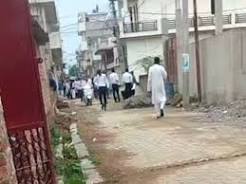
A case involving intimidation and physical assault over a land dispute came to light on Wednesday morning within the jurisdiction of the Para Police Station. A Dalit family has accused several named individuals—along with approximately 100 unidentified persons—of attempting illegal encroachment, using caste-based slurs, and issuing death threats. The victim has demanded that action be taken in this matter under the SC/ST Act. According to reports, the complaint was lodged by Mayawati Gautam (wife of the late Fekka), a member of the Scheduled Caste community residing near the Kamakhya Temple in Para village, within the Para region. She alleges that on the morning of April 8, 2026, at approximately 9:00 AM, Jitendra Lodhi, Bhupendra Lodhi, Manni Lodhi, Rajvardhan, Kuldeep (alias Kala Yadav), Shiva Thakur, Vishal Chaurasia, and Ankit Singh arrived at her property—accompanied by about 100 unidentified associates—with the intent of forcibly seizing the land. According to the victim, all the accused arrived at the scene in 4–5 vehicles, disguised as lawyers, and proceeded to attempt to take possession of the land. When the family objected to this, the accused allegedly used caste-based slurs and assaulted Mayawati Gautam, her widowed daughter, and her son with sticks and clubs, causing them injuries. It is further alleged that the attackers threatened to kill the entire family. Mayawati Gautam stated that the dispute regarding the land in question is currently sub judice (pending) in court, and a stay order is in effect, directing that the *status quo* be maintained. Despite this, the accused attempted to encroach upon the land in blatant defiance of the court’s order. The victim has demanded that a case be registered against all the named and unidentified accused persons—covering charges of illegal encroachment, assault, criminal intimidation, and violations under the SC/ST Act—and has called for strict punitive action. She has also appealed for measures to ensure the safety and security of her family. In response to this matter, Inspector Suresh Singh of the Para Police Station stated that he was not yet aware of the details of the case. He gave an assurance that once a formal complaint is received, an investigation will be conducted, and necessary legal action will be initiated. Courtesy: Hindi News
Attempt to Encroach on Land Under Court Stay: Dalit Woman and Family Attacked in Para; Casteist Abuses Hurled

In the Para police station area of Lucknow, an attempt was made to forcibly encroach upon a plot of land, despite a standing court order to the contrary. When this attempt was resisted, a Dalit woman and her family were attacked. The incident occurred on Wednesday morning, around 9:00 AM, near the Kamakhya Temple in the village of Para. Mayawati Gautam, a member of a Scheduled Caste community, has alleged that several named accused individuals—along with approximately 100 unidentified persons—arrived at her land in multiple vehicles, disguised as lawyers. According to the victim, the accused had arrived with a premeditated plan and immediately began attempting to take possession of the land. When Mayawati Gautam objected to their actions, the accused began verbally abusing her, using derogatory casteist slurs. As the altercation escalated, the accused assaulted Mayawati Gautam, her widowed daughter, and her younger son, beating them with sticks and clubs. All members of the family sustained serious injuries in this attack. Mayawati Gautam has further alleged that as the attackers were leaving the scene, they issued death threats to the entire family. The land at the center of this dispute is currently the subject of a pending legal case in court. A “status quo” order—mandating that the existing state of affairs regarding the property be maintained—is currently in force. The attempt to encroach upon the land, in blatant disregard of the court’s directive, is being viewed as a serious criminal offense. Several individuals have been named as accused in this case. Additionally, the involvement of approximately 100 unidentified persons is also under suspicion. The Assistant Commissioner of Police (ACP) for Kakori stated that an investigation into the matter is underway and that appropriate legal action will be taken. Yuvraj Gautam | Banthra (Sarojininagar), Lucknow Courtesy: Hindi News
Dalit Widow in Mulnapur Accuses Lekhpal: Case of Encroachment on Disputed Land; Appeals to DM for Justice
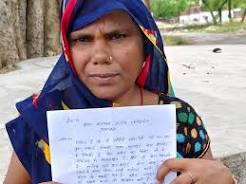
In Mulnapur village—located in Utraon, Handia (Prayagraj)—a Dalit widow has leveled serious allegations against a *Lekhpal* (revenue official). The woman claims that the *Lekhpal*, acting in collusion with the opposing party, is facilitating the encroachment upon her disputed land. According to the aggrieved woman, Geeta Devi, there is a plot of land situated near her home, the ownership of which is currently sub judice (pending) in court. It is alleged that, through the connivance of the *Lekhpal* and the *Kanungo* (senior revenue official), the opposing party is making persistent attempts to seize control of this disputed land. Geeta Devi further stated that the opposing party—who belong to the Yadav community—are subjecting her to verbal abuse and physical assault. When contacted regarding this matter, *Lekhpal* Mithilesh Pandey stated that an investigation into the case is currently underway. He added that once the investigation is complete, the land will be remeasured, and the matter will be resolved. In light of these events, the aggrieved woman has written letters to the District Magistrate (DM) and the Police Commissioner, appealing to them for justice. Brijesh Kumar Gautam | Baudai (Phulpur), Prayagraj (Allahabad) Courtesy: Hindi News
Dalit Youth Attacked with Bottle; Struck on Head: Police Accused in Sultanpur of Releasing Accused from Custody
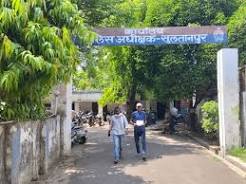
In the Sultanpur district of Uttar Pradesh, a Dalit youth has been attacked due to an old feud. The victim’s family alleges that the police released the accused from custody without taking any action, leaving them now living in fear. The incident took place in the village of Kasamau, within the jurisdiction of the Goshainganj police station in Sultanpur. A resident, Brajesh Kumar, has written a letter to the Superintendent of Police, pleading for justice. According to Brajesh, the incident occurred on April 1st when he went to his tube well. It is alleged that Arbaz, a local resident, verbally abused him over an old grudge and struck him on the head with a broken glass bottle. Brajesh lost consciousness as a result of the attack. The police have registered a case in this matter under various sections of the law, including the SC/ST Act. The victim alleges that while the police did bring the accused, Arbaz, to the police station, he was released that very evening without any concrete action being taken against him. The victim, Brajesh, and his family are now terrified. They state that the accused is continuously issuing death threats against them. Brajesh has demanded that the Superintendent of Police of Sultanpur immediately arrest the accused, send him to jail, and provide them with legal protection. Courtesy: Hindi News