
Noida traffic advisory: Traffic diversions announced in Noida for Ambedkar Jayanti Event at Dalit Prerna Sthal
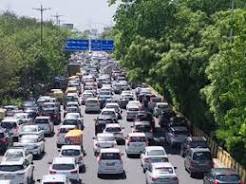
The traffic police in Gautam Buddh Nagar have issued a detailed traffic advisory ahead of a major public event scheduled on April 14, 2026, at Dalit Prerna Sthal in Sector 95, Noida. The programme is being organised to mark the birth anniversary of Dr. Bhimrao Ambedkar, and is expected to draw a significant number of visitors, prompting authorities to implement temporary traffic diversions and parking arrangements across key routes in the city. According to the advisory posted by the official handle of Noida Traffic Police (@Noidatraffic) on X, traffic congestion is anticipated particularly along the Noida–Greater Noida Expressway and adjoining sectors, which serve as major access points to the event location. For commuters travelling from Greater Noida towards Noida via the Noida–Greater Noida Expressway, diversions will be enforced in case of increased traffic pressure near Dalit Prerna Sthal. Vehicles will be rerouted from the Mahamaya Flyover towards Sector 37. From there, commuters can continue their journey via Atta Peer Chowk, Rajnigandha Chowk, and Sector 15 Golchakkar to reach their destinations. In another contingency plan for the same route, if congestion intensifies near Gate No. 04 of the Dalit Prerna Sthal, traffic will be diverted from the Film City Flyover towards Sector 18. Vehicles will then be able to proceed through Rajnigandha Chowk, Sector 15 Golchakkar, or use the Sector 18 underpass and elevated road network for onward travel. Traffic movement from Noida towards Greater Noida will also be affected. In the event of congestion near the DND Flyway or Film City Flyover, vehicles will be redirected from the Sector 14A Flyover towards Sector 15 Golchakkar. From this point, commuters can take the route via Rajnigandha Chowk, Atta Peer Chowk, and Sector 37 to continue towards their destination. In addition to traffic diversions, authorities have outlined specific parking arrangements for attendees arriving from different directions. Light vehicles coming from Pari Chowk, Sector 37, and Greater Noida West will be accommodated inside Gate No. 01 of the Dalit Prerna Sthal premises. Vehicles approaching from Delhi will be directed to use the designated multi-level parking facility within Film City. For travelers coming from the Kalindi Kunj end, provision of parking space has been made at the underground parking adjacent to the Sector 95 nala (Ganda Nala), near the Dalit Prerna Sthal. This has been done to ease vehicular management and prevent crowding on the roads. Further, the notice states that ambulances, fire engines, and other emergency vehicles will not be hindered by the traffic diversion and will have free access to all points during the period. The traffic police will manage traffic at important intersections and help commuters where required. It is requested that the citizens follow the traffic management plan and use alternate routes to reduce traffic. In case of any problem or help, they can call the traffic helpline number at 9971009001. Given the massive attendance expected for Ambedkar Jayanti, it becomes essential that citizens follow the notice strictly. Courtesy : TOI Note: This news is originally published on https:/timesofindia.com/bha and is used purely for non-profit/non-commercial purposes, especially human rights
Beyond the Ghetto: Ambedkar, the Double Stage and the Decasting of Thought
in Life/Philosophy Dr. Babasaheb Ambedkar with Mr. Wallace Stevens at Columbia University after receiving Doctor of Laws (LLD) on June 5, 1952. Courtesy: Wikimedia Commons The Paradox of Recognition On Ambedkar’s birth anniversary, he will be praised. The headlines will call him a “Dalit leader,” the “architect of the Constitution,” a “social reformer,” the “voice of the oppressed.” Memorial lectures will be delivered. Statues will be garlanded. Political leaders across the spectrum will compete to claim his legacy. All of this is true. And all of it is a confinement. The language of praise, as it is currently structured, performs a subtle but systematic reduction. To call Ambedkar a “Dalit leader” is not incorrect, but it is incomplete. It suggests that his thought is for Dalits, about caste, relevant only to those who share his identity or his specific political project. It implies that his intellectual corpus belongs to a community, a moment, a struggle, not to the universal history of ideas. Consider the contrast. Karl Marx is not reduced to a “workers’ leader” and left there. Michel Foucault is not confined to “prison reform.” Antonio Gramsci is not dismissed as merely a “communist activist.” These thinkers are read not because of the specific struggles they engaged, but because their concepts travel—because they speak to the human condition, because they illuminate structures of power that transcend any single context. A student of political theory in Japan reads Marx. A sociologist in Brazil reads Foucault. A philosopher in South Africa reads Gramsci. No one asks whether they have the “right” identity to engage these thinkers. Ambedkar deserves the same. He is not merely a leader of a community; he is a political philosopher of the first rank. His analysis of graded inequality is a contribution to the sociology of stratification. His critique of majoritarianism is a contribution to democratic theory. His insistence on the interlocking of liberty, equality, and fraternity is a contribution to the philosophy of rights. His turn to conversion as a political act is a contribution to the study of religion and power. And yet, he is not taught alongside Marx in political theory. He is not read alongside Weber in sociology. He is not cited alongside Rawls in philosophy. He is confined to “Dalit Studies,” to “South Asian Studies,” to the margins of the academy where his thought can be safely contained, acknowledged as important for those who study “caste,” but not required for those who study “society,” “power,” or “justice.” This is the paradox of recognition: Ambedkar is honoured, but he is not heard. He is celebrated, but he is not read. He is present everywhere as a symbol, and nowhere as a thinker. The Double Stage of Ambedkar Reception What I call the “double stage” is a concept that resonates with, though it is not reducible to, existing distinctions between the visible and its constitutive outside—whether in Foucauldian analyses of power or Marxian accounts of structure. The term captures a specific operation of power: an official public scene that renders certain phenomena visible, speakable, and governable coexists with a social obscene that is strategically placed off-stage yet constitutively supports the scene. The scene provides legitimacy; the obscene provides substance. In my earlier work on caste’s persistence in modern India, I have argued that caste operates through precisely this split. An official constitutional scene disavows hierarchy while a social obscene reproduces it through endogamy, social capital, informal networks, and episodic violence. The scene allows the obscene to flourish precisely by refusing to see it. The reception of Ambedkar follows the same logic. On the official scene, Ambedkar is publicly honoured. His portrait hangs in Parliament. His statue stands in courthouses. His birth anniversary is commemorated by the state. He is invoked by politicians across the ideological spectrum—from the Left to the Right, from Dalit parties to Savarna-dominated formations. He is credited as the “architect of the Constitution,” the “father of social justice,” the “champion of the oppressed.” This is the scene of recognition. It is real, it is visible, and it is partial. In the social obscene, beneath this official scene, Ambedkar’s thought is engaged very differently across different social locations. The fragmentation of his reception is not accidental; it is structural. It follows the logic of caste itself. The central claim is this: Ambedkar circulates because he is fragmented. The radical whole is threatening; the fragmented parts are useful. The academy, the media, the political class, they all have a stake in keeping him in pieces. A whole Ambedkar would demand annihilation. Fragmented Ambedkar can be managed, cited, contained. The pattern is unmistakable: the more powerful the group, the more partial the engagement. Dalits have no choice but to read Ambedkar whole, his thought is their only intellectual resource, their only weapon. Savarnas have the privilege of reading him in fragments, taking what is useful, setting aside what is threatening, keeping his radical edge at a safe distance. This is the double stage of Ambedkar reception. The same logic that structures caste society structures the circulation of anti-caste thought. Consider the Savarna sociologist who teaches a course on social stratification. They assign Ambedkar’s analysis of graded inequality, the concept that caste organizes groups in a descending scale where each is both oppressed by those above and oppressor of those below. Students learn this concept. They find it useful. But the course moves on. It never returns to Ambedkar’s central claim: that graded inequality cannot be reformed; it must be annihilated. The fragment taken up is the analytical tool. The fragment left behind is the political demand. Consider the Savarna political theorist who teaches a course on democracy. They assign Ambedkar’s warning that political democracy without social democracy is a facade. Students learn this critique. They appreciate its force. But the course focuses on institutional design, electoral systems, and constitutional rights. It does not ask what social democracy would require, the redistribution of land, the transformation of kinship, the destruction of endogamy. The fragment taken
Hyderabad: MRPS chief questions denial of SC status to Dalit Christians
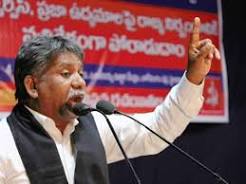
MRPS chief Manda Krishna Madiga questions why Dalit Christians are denied SC status, urges repeal of 1950 Presidential Order and calls for equal rights. Hyderabad: The founder-president of the Madiga Reservation Porata Samithi (MRPS), Manda Krishna Madiga, has strongly questioned why restrictions on reservation benefits apply only to Dalits who convert to Christianity, while other communities do not face similar limitations. Speaking at a meeting by MRPS on Monday, April 13, at the Somajiguda Press Club, Madiga raised concerns over what he termed as continued discrimination against Dalits. He said that historically, Dalits were denied entry into temples, and now they are being discouraged from adopting another religion, asking how long such discrimination would persist. Madiga questioned whether Dalits have the same freedom as other communities to choose a religion of their own choice. Citing Articles 14, 15, and 25 of the Indian Constitution, he emphasised that freedom of religion is a fundamental right. He criticised the 1950 Presidential Order that denies Scheduled Caste (SC) status to Dalits who convert to Christianity, and urged the President to revoke it. He also appealed to Prime Minister Narendra Modi to take the initiative on the issue. Disappointed with SC decision: MRPS chief The MRPS leader expressed disappointment over the recent decision of the Supreme Court of India, which upheld the denial of SC status to Dalit Christians. He opined that key historical figures, including former Prime Minister Jawaharlal Nehru and former President Rajendra Prasad, played a role in shaping policies that disadvantaged Dalits. Madiga stated that Dalits turned to Christianity because they were historically excluded from Hindu temples, and missionaries provided them access to education and healthcare. He termed any attempt to restrict their religious choice as a grave injustice. He further demanded that Dalit Christians be granted SC status on par with Dalits who converted to Sikhism or Buddhism, and vowed to continue the movement until equality is achieved. Madiga also called for reforms within Hindu religious institutions, suggesting that non-Brahmins should be appointed as chief priests in temples across the country, inspired by social reformer Ramanujacharya. Courtesy : TSD Note: This news is originally published on https:/thesiasatdaily.com/bha and is used purely for non-profit/non-commercial purposes, especially human rights
PM Balen Shah Backtracks on Decision to Apologize to Nepal’s Dalits for the First Time! Breaks Promise, Quietly Withdraws Decision

Nepal Dalit Apology: The government’s decision to backtrack on its plan to apologize to Dalits has sparked dissent within Ravi Lamichhane’s party. Santosh Pariyar, a prominent Dalit leader within the RSP, has emotionally distanced himself from both the party and his official roles. He stated, “An apology consisting merely of words—without concrete policies or legal documentation—holds no meaning.” Nepal Government Backtracks on Proposal to Apologize to Dalits! Kathmandu: Nepal’s Balen Shah administration has quietly backtracked on its proposal to issue an apology to the Dalit community. The government has surreptitiously all but abandoned the initiative to apologize to Dalits. Just last month, the Balen Shah government had announced that it intended to introduce a proposal wherein “an apology would be tendered to the Dalits, who have been persecuted for centuries.” According to *The Kathmandu Post*, any further discussion regarding the government’s proposed apology is now rendered futile, as the initiative has been quietly shelved. The newspaper wrote, “The government led by the Rastriya Swatantra Party (RSP) has shamelessly broken its promise and has effectively sidestepped the issue through an emotional speech delivered by Ravi Lamichhane.” Raising pertinent questions, the newspaper asked: How—and why—did the Balen administration withdraw its own decision to issue a formal apology to the Dalits? The publication noted that while some argue that Ravi Lamichhane did indeed apologize to the Dalits in Parliament on April 2—promising the nation that, unlike in times past, no individual or caste group would henceforth face discrimination—there remains a significant distinction between an apology offered by an individual and one issued officially by the government. What exactly had the Balen Shah government promised? In fact, when a new government led by Balen Shah was formed in Nepal in March 2026, he announced in his 100-point common minimum program that the government would issue a formal state apology to the Dalit community for historical discrimination within 15 days. This was hailed as a revolutionary step. True to this promise, on April 2, Home Minister and RSP Chairman Rabi Lamichhane delivered an emotional speech in Parliament, apologizing for the injustices inflicted upon Dalits. However, Nepali experts and newspapers argue that this was merely a “political speech,” not an official “state apology.” This is because a formal state apology requires a Cabinet decision, followed by the President’s seal of approval, and finally, it must be published in the Government Gazette. The government failed to complete any of these legal procedures. An apology was merely tendered in Parliament—a gesture deemed incomplete. No legal motion was passed to formalize this. According to *The Kathmandu Post*, even after the 15-day deadline had elapsed, the government failed to present any written documentation. It is alleged that the government backtracked on this initiative under pressure from conservative factions within the ruling coalition and from established political parties. **Dissent Within the National Independent Party** The government’s decision to renege on its promise to apologize to Dalits has sparked dissent within Rabi Lamichhane’s party. Santosh Pariyar, a prominent Dalit leader within the RSP, has emotionally distanced himself from both the party and his official roles. He stated, “An apology consisting merely of words—without a concrete policy or legal documentation—is utterly meaningless.” The party, however, maintains that it *did* issue an apology. Speaking in Parliament, Rabi Lamichhane declared, “I apologize—not in my capacity as Home Minister, but as a citizen of this country—to all those Dalits who have been subjected to humiliation.” Yet, Dalit activists have denounced this as an act of betrayal and deception. According to reports, the government had been advised by various quarters that issuing an apology to Dalits at the official state level would imply an admission of guilt regarding past atrocities—a move that could potentially trigger demands for financial compensation. Furthermore, the government feared that once ‘historical injustice’ was officially acknowledged, the Dalit community could put forward significant legal claims for job reservations and land rights. Curated by: Abhijat Shekhar Azad About the Author Abhijat Shekhar Azad is an International Affairs and Defense Journalist at Navbharat Times Online. He possesses approximately 17 years of experience across various news channels and digital journalism platforms. Courtesy: Hindi News
Outrage Follows Death of Dalit Student at Kerala Dental College; Faculty Accused of Humiliation
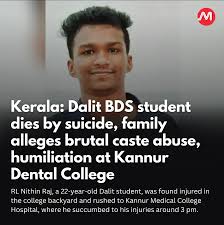
There is widespread outrage following the death of a Dalit student at a dental college in Kerala. The family has accused the college faculty of humiliating the student over his caste and the fact that his parents are daily-wage laborers. The police are investigating the matter. Student Dies at Kannur Dental College Kannur: Intense public anger has erupted following the death of a 22-year-old Dalit student at the Kannur Dental College in Kerala. It is alleged that college faculty members repeatedly humiliated and tormented the student regarding his caste and his parents’ status as daily-wage laborers. Nithin Dies After Falling from Building The student has been identified as Nithin Raj R.L., a native of Uzhamalakkal village in Thiruvananthapuram. He was a first-year student pursuing a Bachelor of Dental Surgery (BDS) degree at Kannur Dental College. The student died on Friday after falling from a building located within the college campus. Case Registered Against Two Faculty Members The student’s family has expressed suspicion that there may be a conspiracy behind Nithin’s death. The Kannur police had initially registered a case of unnatural death. However, on Sunday, the police added charges of abetment to suicide under Section 108 of the Bharatiya Nyaya Sanhita (BNS), as well as relevant sections of the SC/ST Act. A case has been registered against two faculty members in connection with this incident. Nithin Had Taken a Loan via an Online App According to *The Indian Express*, a special investigation team led by Kannur Assistant Commissioner of Police Hariprasad has been constituted to probe this case. The police stated that preliminary investigations have revealed that Nithin had taken a loan through an online application; when he failed to repay the loan, agents from the lending company began making threatening calls to him. The police also claimed that these agents had contacted faculty members of the college regarding this matter. The Cyber Police have registered another case based on the alleged threats issued by the agents of the loan app. **Audio Clip of Nitin Surfaces** Meanwhile, the management of the self-financing college has also taken action following allegations regarding the humiliation of the student. On Sunday, the management suspended a Department Head and an Associate Professor and ordered an inquiry into the allegations. This action was taken after an audio clip—purportedly featuring Nitin—surfaced on Sunday. **’Teacher Publicly Humiliated Me’** In this audio clip, Nitin can allegedly be heard stating that a teacher publicly humiliated him. Nitin says, “My answer sheets were distributed among all the students in the classroom, and some spelling errors were pointed out. Yesterday, when I was in his class, he mocked my mother. After stepping out of the staff room, he called me a fool. The staff room is a place where we are collectively targeted and attacked. The teacher told me that if I dared to speak up, my hands and feet would be chopped off.” In response, Nitin reportedly challenged him to do exactly that. **’Nitin Was Humiliated in the Classroom’** Nitin’s sister, Nikita, revealed that her brother was repeatedly humiliated over his complexion, caste, and his parents’ profession. Nikita stated, “He told me that the Department Head used to humiliate him by calling him a ‘mad dog.’ He was also subjected to humiliation within the classroom. Whenever the Department Head humiliated Nitin in class, he would do so in a manner that made the other students laugh.” Other students had also previously lodged complaints against the Department Head, but no action was ever taken against him. “Nitin spoke to us just two hours before he fell from the building. We suspect a conspiracy and want to know exactly what happened to him.” He did not fall from his own college building, but rather from the medical college building located within the same campus. **Widespread Protests Across the State** Nitin had enrolled in this self-financing dental college in September of last year. Principal Vinod Moni has not responded to requests for comment. Following the student’s death, widespread protests have erupted across the state. The State Human Rights Commission has sought a report on this incident from the Kannur City Police Commissioner. Union Minister Suresh Gopi also met with the family following the student’s demise. **Demand for a High-Level Inquiry into the Student’s Death** Congress Working Committee member Ramesh Chennithala has demanded a high-level inquiry into the death of Nitin Raj. In a statement, he asserted that the police must take seriously the allegation that Nitin faced humiliation on the basis of caste and skin color. Any action taken against faculty members should not be limited merely to suspension. He remarked that in Kerala—which prides itself on being a bastion of progressive and renaissance movements—discrimination based on caste is shocking. Over the past decade of LDF rule, attacks against SC/ST communities have witnessed a manifold increase. Authored by: NBT Desk Courtesy: Hindi News
Ex-IAS officer P Sivakami releases Dalit Women’s Manifesto 2026; Calls for land rights, economic autonomy in TN
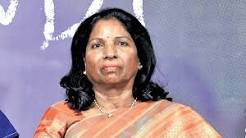
Addressing safety and justice, the manifesto calls for the formation of a dedicated Dalit Women’s Protection Wing in every district under women IPS officers. CHENNAI: Releasing the ‘Dalit Women’s Manifesto 2026’ ahead of the state Assembly election, former IAS officer and convenor of the All India Forum for Women’s Intellect P Sivakami called for a rights-based framework to ensure economic sovereignty, social justice and political representation of the marginalised. The manifesto places emphasis on land rights, proposing the establishment of a High-Powered Land Recovery Commission within 100 days to retrieve encroached panchami lands. These land parcels, it states, will be redistributed to landless Dalit women and utilised through collective farming models, including through the formation of farmer-producer organisations exclusively led by women. Housing security also features prominently, with priority allocation of concrete houses or apartments for homeless women in Dalit settlements. In the economic sphere, the document proposes the creation of an “Iyothee Thass Women’s Bank” to offer collateral-free and zero-interest loans for micro-enterprises. It also envisages the transformation of Dalit habitations into agro-industrial hubs and 25% reservation for Dalit women in industrial land allotment by agencies such as Sipcot and Sidco. Addressing safety and justice, the manifesto calls for the formation of a dedicated Dalit Women’s Protection Wing in every district under women IPS officers. It also seeks fast-track courts to dispose of cases under the SC/ST (Prevention of Atrocities) Act within six months and a fully funded legal aid mechanism allowing survivors to choose their advocates. Notably, it recommends that compensation for survivors of atrocities include guaranteed access to agricultural lands and sustainable livelihoods. On the education front, the manifesto proposes 100% government-funded international scholarships for Dalit women and digital skill vouchers covering emerging fields such as artificial intelligence (AI) and data science. S Kumaresan Courtesy : TNIE Note: This news is originally published on https:/thenewindianexpress.com/bha and is used purely for non-profit/non-commercial purposes, especially human rights
Custodial death row: Dalit man dies in police custody after alleged poisoning in Madhya Pradesh
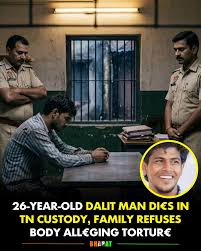
Chhatarpur, Madhya Pradesh: A 22-year-old Dalit man, Ram Vishal Ahirwar, died under mysterious circumstances inside Chandla police station this week, sparking serious concerns over custodial safety, police accountability, and possible negligence. Ram Vishal, a resident of Naharpur village, had gone to the police station along with his wife Leela to resolve a long-standing domestic dispute. The couple, married for two years and parents to a three-month-old baby, had been living separately due to frequent fights. According to police, both families were called for a reconciliation meeting. During the discussions, Ram Vishal’s condition suddenly deteriorated. He started vomiting, and officers later recovered a suspicious substance, believed to be poison, from his pocket. The exact time and manner in which he consumed the poison remain unclear. He was immediately rushed to a local hospital and then referred to the district hospital, where he was declared dead on arrival. His wife Leela gave a heart-wrenching account of his final moments. “He was writhing in pain and repeatedly begged for water, but no one gave him even a drop,” she said. “He died in my lap on the way to the hospital. After that, I blacked out.” The family has strongly alleged custodial violence. Ram Vishal’s mother, Mulia Ahirwar, claimed that police brutally beat her son inside the station. “We could hear his screams from outside. When I tried to reach him, they pushed me away,” she alleged. The family believes the police are trying to cover up a custodial assault by calling it a suicide or self-poisoning. Police officials have defended their actions, stating that giving water to a person suspected of consuming poison can be medically dangerous. However, this explanation has only intensified public outrage and questions about whether basic first-aid protocols were followed. In response to the incident, Superintendent of Police Agam Jain promptly suspended the Chandla station in-charge, Sandeep Dixit, and ordered a judicial inquiry. Additional SP Aditya Patle also visited the district hospital to review the situation. Ram Vishal reportedly had a history of alcohol abuse and had previously assaulted his wife, which led Leela to return to her parental home. The domestic issue had brought the couple to the police station for mediation. The tragic death has left behind a grieving young widow, a three-month-old infant without a father, and mounting scrutiny on the police force regarding human rights and accountability in custody. The judicial inquiry is expected to establish the exact sequence of events and fix responsibility. Courtesy : MM Note: This news is originally published on https:/muslimmirror.com/bha and is used purely for non-profit/non-commercial purposes, especially human rights
Kerala: Dalit BDS student dies by suicide, family alleges caste discrimination by faculty members; probe launched
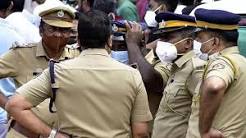
The 22-year-old student’s family has alleged that he was subjected to emotional and verbal harassment by the faculty members over his caste identity, complexion and financial background. The Kerala police have launched a probe against faculty members of Kannur Dental College after a Dalit student at the institute died by suspected suicide on Friday, with his family alleging he was subjected to caste abuse, threats and emotional harassment. The deceased has been identified as Nithin Raj RL, a native of Uzhamalackal, Puthukulangara, Thiruvananthapuram and a first-year BDS student of the college located in Kannur’s Anjarakandy. According to police, Raj was found critically injured near the medical college block after falling from the building on the afternoon of April 10. Though he was rushed to the medical college and given treatment, he later succumbed to his injuries. Following the incident, the college initiated an internal inquiry and on Saturday suspended Dental Anatomy Department Head MK Ram and Associate Professor KT Sangeetha Nambiar. Raj’s family has claimed that the 22-year-old was subjected to emotional and verbal harassment over his caste identity, complexion and financial background by the faculty members. According to a PTI report, Raj’s sister Nikitha claimed that he was once called a “rotten dog” by a faculty member in the classroom in front of other students. “He used to tell us about such discrimination and harassment regularly. He was once called to the staff room where he was severely harassed,” she was quoted as saying by the PTI. She said Raj had filed a complaint with the college principal, but no action was taken. “Once, when the harassment became unbearable, he reacted, after which the verbal abuse intensified,” Nikitha added. Raj’s father Rajan, told reporters that the faculty members allegedly threatened to harm his son academically. “He worked hard without any support to secure admission on a merit seat in the dental college. But he was harassed by faculty over his caste and complexion. They also threatened to harm him academically,” Rajan said. He said that they have lodged a complaint against the faculty members with the police and are expecting a fair probe into the death of his son. The case has been registered at the Chakkarakkal police station. In an audio clip, purportedly of Nithin, that surfaced after his death, he is heard detailing the harassment and targeted humiliation from the faculty members at the institution. “I tolerated the insults as far as I could. They insulted my mother and her surgery. My answer sheet was circulated among students, highlighting my spelling mistakes,” Nithin is heard saying in the clip, circulating on social media. The Chakkarakkal police has confirmed that Raj had sent an audio message to his friends alleging harassment by faculty members, including threats of physical assault and academic repercussions. They said a detailed probe is underway into the incident, with digital evidence being collected. Also, statements by Raj’s classmates, college authorities and family members will be recorded soon, police added. The body of Raj was brought to his residence in Thiruvananthapuram on Sunday and buried on the land owned by the family. Several political leaders condemned the death and demanded a detailed probe into the incident. Congress leader Ramesh Chennithala called for a high-level inquiry into Raj’s death. He said the government should take seriously the allegations by the student’s parents and relatives that caste-and-complexion-based harassment led to the death and take urgent steps to bring those responsible to justice. Chennithala said the issue should not be closed by merely suspending two teachers and noted that the parents had firmly alleged severe caste discrimination. Leader of the Opposition in the outgoing Kerala Assembly VD Satheesan visited Raj’s house and demanded a thorough probe. “Teachers are expected to guide students. How did such people become teachers? There should be a detailed probe,” he said. He added that strict intervention was needed to ensure such incidents are not repeated in the state. CPI(M) Rajya Sabha MP A A Rahim also visited the family and described the incident as painful. Rahim said Raj was the hope of his family, which had supported his education despite hardship. “CPI(M) will stand with the family until justice is delivered. Such an incident should not have happened in a society like Kerala,” he said. He also compared the incident with the death of Rohith Vemula at the University of Hyderabad. “The family has told us that Raj faced repeated caste discrimination and was deeply affected by it. A detailed probe must be conducted and justice ensured. The action taken should set an example so that such incidents are not repeated in Kerala,” Rahim said. Meanwhile, the Kerala State Human Rights Commission on Sunday directed the police to conduct a detailed probe into the death of the student and submit a report within a week. The Commission took a case on its own based on media reports. Commission Judicial member K Baijunath issued directions to the Kannur City Police Commissioner to investigate the allegations surrounding the incident and file a report within the stipulated time, according to a statement. (Assistance for those having suicidal thoughts is available on TN’s health helpline 104 and Sneha’s suicide prevention helpline 044-24640050) Courtesy : TNIE Note: This news is originally published on https:/thenewindianexpress.com/bha and is used purely for non-profit/non-commercial purposes, especially human rights
He was called a slum dog: Family alleges caste discrimination after Kerala student’s suicide
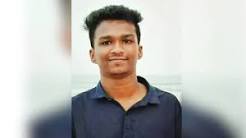
Kerala often prides itself on high literacy, a students death due to caste abuse has exposed deep-seated structural casteism within its educational and social institutions. The death of Nithin Raj RL, a 22-year-old student at Anjarakandy Dental College in Kannur, has sparked widespread outrage. Nithin, a first-year BDS student from Thiruvananthapuram, died on April 10, 2026, after falling from the college building. While initially reported as a suicide, the case has been reframed by his family and peers as a “caste killing” driven by systemic harassment. Nithin Raj, a bright and promising student from Uzhamalackal, Thiruvananthapuram, secured his seat at the dental college strictly through academic merit. As a member of the Dalit community coming from a modest background—his father works as a painting laborer—Nithin represented the aspirations of his family. However, despite his achievements, he was reportedly targeted for harassment and systemic discrimination almost immediately after joining the institution leading to his death. Courtesy : TNIE Note: This news is originally published on https:/thenewindianexpress.com/bha and is used purely for non-profit/non-commercial purposes, especially human rights
Telangana Dalit professor branded as ‘urban naxal’ by propaganda machine

The ‘Save Education Committee,’ which is a forum of eminent academicians, has demanded an end to harassment of Professor Surepalli Sujatha, HOD, Sociology in Satavahana University Hyderabad: Brand a person as an urban naxal, spread the propaganda and socially isolate the person, only to finally take a hit when the person is in a vulnerable position. This seems to be the strategy being adopted by the ideological opponents of a Dalit professor and activist, who was stripped of her position as the principal of the Arts College in Satavahana University in Telangana’s Karimnagar. Professor Surepalli Sujatha has been a prominent face in the people’s movements in Telangana for over a decade and a half now. She has been known for her activism and social work for the cause of the downtrodden sections. A sociology professor, she grew up in academia at a time when universities were gasping for freedom on campuses. Today, her freedom is being curtailed in a changing political scenario where people like her are being branded as ‘urban naxals,’ a term which is an off-dictionary term that stands in contradiction to the traditional naxalite movements in India. Her brush with the propaganda brigade happened at a time when the Centre had been going all-out to eliminate Maoists from the face of India. It came in the form of a contract professor at Satahavana University in Karimnagar, where she has been working as the Head of the Sociology Department. Sujatha tells Siasat.com that it all started with her filing a complaint against Dr Penchala Srinivas, a former contract professor in Botany, for calling the female students in the middle of the night in 2019. She says that a disciplinary inquiry was conducted, and he was removed from service back then. She remembers that when she once took her students on a study tour to Bhadradri-Kothagudem district, propaganda spread that she introduced them to Maoist leaders, a rumour she vehemently rejects. MS Admissions Admissions 2026-27 “This allegation was thoroughly investigated by both the police authorities (under Sri Kamal Hasan Reddy) and the university, and was found to be completely untrue,” she claims. She accuses the contract professor of being the man behind the rumours, also pointing out that he is an ardent right-wing person who belongs to the Munnuru Kapu community and supports Union Minister of State for Home Affairs Bandi Sanjay’s Hindutva ideology. Bandi Sanjay represents the Karimnagar Lok Sabha constituency. She tells Siasat.com that ever since the study tour incident in 2019, she has been targeted frequently, with a section constantly hounding her on social media and on the campus- looking for her to make just one mistake. Call for peace became a headache for Dalit professor That perception changed following her Facebook post during Operation Sindoor in May 2025. In it, she suggested that war has never been a solution and that peace must prevail. However, her use of the word “blood” in reference to “sindoor” drew sharp backlash on social media, with many users attacking her over the remark. Subsequently, a group of Akhil Bharatiya Vidyarthi Parishad (ABVP) members, along with some outsiders, barged onto the campus, hurled abuses at her and attempted to assault her. She narrowly escaped. She later issued an apology, stating that she regretted if her comments had hurt anyone’s sentiments, while maintaining her stand that peace should take precedence over war. She has kept a low profile since. Not just her, her student Mahesh, also a Dalit, is also a target. He completed his Master’s in Sociology and is pursuing a Master’s in Economics at the university. His association with the now-banned Telangana Vidyarthi Vedika (TVV) student organisation was seen as the cause of the target. When she lost her role as the principal, she was informed that it was because her term had ended. However, the propaganda machine continued to work tirelessly. It has been so rigorous that the newly appointed vice-chancellor Professor Umesh Kumar is also under its influence. “The contract faculty who was removed was reinstated as a part-time faculty member by the new vice-chancellor. He continued his propaganda,” she tells Siasat.com. She claims that she is constantly monitored through CCTV cameras on the campus, and if a student speaks to her, the student faces consequences. She also filed a complaint with the local police and the National Commission for Scheduled Castes (NCSC) earlier this month. She has been waiting for some action. Academicians demand Dalit professor be reinstated The ‘Save Education Committee,’ which is a forum of eminent academicians, has demanded an end to the harassment of Surepalli Sujatha. “Despite possessing all the necessary qualifications and experience, the removal of a Dalit woman professor, who is also serving as the Dean and holding additional responsibilities as the Principal of the Arts College, is an act of vindictiveness,” the Committee stated in a press release on Thursday, April 9. “It is not appropriate for the Vice-Chancellor, who is responsible for safeguarding university autonomy, academic freedom, and freedom of expression, to remain silent on this issue. “At a time when commercialisation, excessive centralisation, and communalisation of education are increasing, the university administration has the responsibility to ensure that such incidents- especially the harassment of a professor from marginalised sections, particularly a woman professor must not recur,” the Committee demanded. They urged the Vice-Chancellor to put an end to such baseless allegations, harassment, and vindictive actions and to protect the autonomy and academic environment. Ironically, Surepalli Sujatha is facing this at a time when the state government has just recently formed a cabinet sub-committee to work out the modalities of the Rohith Vemula Bill to prevent caste-based discrimination in university campuses. When asked how it was possible for the ideologically-motivated targeting usually done in the central universities to happen in a state government-run university like Satavahana University, Sujatha said that even she has been waiting for an answer to the same question. Posted by Vivek Bhoomi Courtesy : TSD Note: This news is originally published on https:/thesiasatdaily.com/bha and