
‘The Trans Act has made my life hell’: How India’s trans community is navigating daily life since the change
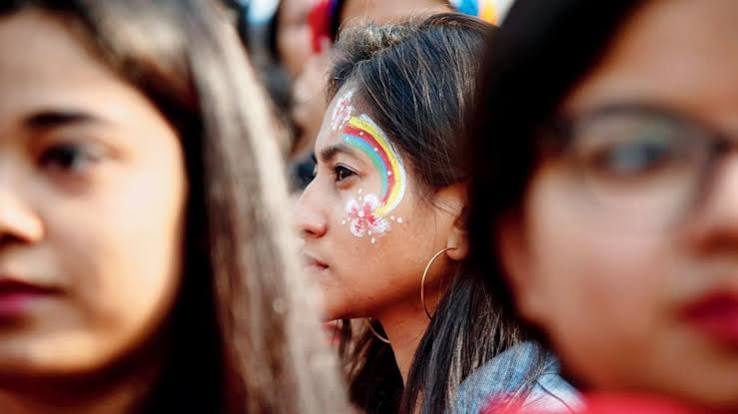
This month-end will mark six months since the Transgender (Protection of Rights) Amendment Bill 2026 became an Act. We trace the trail of devastation it has wrought by making gender-affirming care a humiliation ritual for many Back in July, Anaya Bangar, daughter of cricketer Sanjay Bangar, made a video talking about the toll it had taken on her to legally transition to a woman after the Transgender (Protection of Rights) Amendment Act, 2026, came into force. “I was asked to undress and have my whole body assessed in a room full of doctors that included men and… an invasive gynecological exam was also performed. I remember lying there thinking, ‘Why do I have to prove that body, to be recognised as who I am on paper?’” she asks. Her video came at a time when most of the country — and even a section of the trans community — had no idea how things were going to change with the amendment. “I am sharing this because not all of us know what this process can involve, and I hope we can all agree that legal recognition should respect people’s dignity,” Bangar says in the clip. Despite this paper’s sustained reportage on the Act, the protests against it, and the emotional and psychological toll it has taken on queer folk, even we had to brace ourselves while hearing the stories that have emerged from the trans community. Under the guise of making the process more structured, what has unfolded is multiple stories of trans persons being told to run from pillar to post for their documentation, arguing in one government office after another with babus who are too scared to give approvals, leaving them no choice but to stand in front of a medical panel that has little to no context of the trans experience. ‘I do not exist on paper’ Vibhu’s life is stuck in red tape as he starts the process for legal recognition as a trans man again Vibhu is 25 years old and works in United Kingdom as diversity, equity, and inclusion (DEI) advisor. He underwent gender-affirming surgery on June 15. The process is designed to humiliate and force you to give up, he says. “I started planning to get my surgery done in India in January-February, and then the Act came into effect.” Amid stress over the cost of the surgery, and rising airfares, his doctor in India told him that his surgeries had been suspended. “I panicked. I had been saving up for all this. Then a day later, the doctor texted back saying they are doing it. That was really a horrible day,” he adds. Vibhu’s Transgender (TG) card is now invalid. He wants to be recognised as a man on paper. If cisgender persons think they have it rough at government offices, Vibhu’a account should be eye-opener: “The staff is not trained, so all they say is ‘I don’t know, go to the next guy’, or ‘Yaha nahi, waha daliye [don’t submit the papers here, please go there]’. Most of the employees at the Aadhaar office felt they could announce to other people sitting there that I am trans. Not that I am ashamed of it; I am fine screaming to the world, but a government employee should not be.” “They [government staff] would say ‘Naam aur gender change karna toh hume nahi aata hai [We don’t know how to change your name and gender]’. You cannot change your name and gender at the same time, so you will just have to come back again.. And the way they give you all this information is also in a voice laced with stigma,” he adds. ‘They wouldn’t let me have surgery till my mom spoke up’ Sarvagya, who underwent a hysterectomy on September 7, after weeks of bureaucracy and humiliation Twenty-six-year-old Sarvagya hails from a small town in Rajasthan. He began his hormone therapy in 2022 and was due to transition surgically early this year, but the Trans Act delayed his plans. “I got my gender identity dysphoria certificate and then started my hormone replacement therapy in June 2022. It took me two years to gather Rs 1.5 lakh for the mastectomy [top surgery], which I did in 2024. At the time, it was very easy and seamless. All I had to tell the doctor was ‘This is my issue, and this is what I want to do’. My maternal family was against it, so I did the surgery on my own with the support of two friends,” he recalls. “Next, I was due for a hysterectomy [removal of the uterus]. I had planned to do this last year, but could not save up enough,” he adds. Then, the amendment came into effect in March, and Sarvagya was in a panic. “In August, I was facing some gastric issues, and an ultrasound followed by The PET-CT revealed a massive 30 cm tumour emerging from left ovary and had grown through my abdomen and pelvis, occupying almost the entire space.. I asked the doctor if they could do a hysterectomy while removing the tumour, but then my primary surgeon got a call from the medical staff of the hospital, stating that they cannot perform the surgery without some clearances,” he says. “Then it hit me. I asked my surgeon, ‘Is this regarding the Trans Act?’ A few hours later, they confirmed that it was,” he adds. What followed was a humiliation ritual similar to Bangar’s ordeal. “They made me sit in front of a medical board, which consisted of 10 doctors. Despite the fact that I hold a transgender card from 2023 that I got from the government, despite legally transitioning in 2024, and holding every document. They said they would remove the tumour, but not the uterus,” he recalls. By then, Sarvagya had won the support of his family, and brought his mother to testify before the medical board. “They told my mother that if she agreed to this, her child would be
Allegations of demolition of a Dalit woman’s hut and throwing away of her belongings: Despite numerous complaints, no action was taken, now a petition has been filed at the Tehsil Day.
Strongers have vandalized and encroached upon a Dalit woman’s land. Despite numerous complaints, the administration took no action. Following this, the woman submitted a written complaint at the Tehsil Day, demanding action. Anita, a resident of Dhurpur in Simaria village, under the Thathiya police station area, submitted a written petition to officials at the Tirwa Tehsil Day on Saturday. The woman alleges that plot numbers 1376 and 1378 are registered with the Gram Panchayat. Anita stated that the powerful, in collusion with revenue department officials and employees, demolished her hut and kiosk and threw her belongings onto the road. The woman also alleges that the powerful have registered the land in plot number 1377, but with the help of the revenue department, she is being treated unfairly. The woman submitted several petitions to the police and revenue department for action, but no action has been taken. On Saturday, under the leadership of Blue Revolution Bahujan Ekta Organization’s State Secretary Arvind Jatav and District President Karan Kumar, they submitted a written complaint at the Tehsil Day. Regional accountant Ramdas stated that legal action was taken in the presence of a joint team of the Naib Tehsildar and police. Tirwa Sub-District Magistrate Vaishali stated that the matter will be investigated and action will be taken. Bhairav Dutt | Umarda (Kannauj), Kannauj Courtesy: Hindi News
Bihar Family Performs Daughter’s Funeral After Inter-caste Marriage
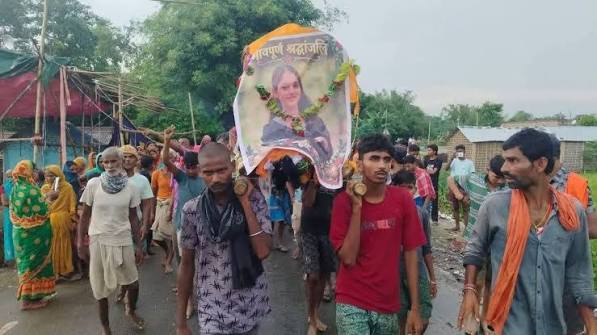
Brahmin girl marries a dailt boy in the Chapay village of Bihar Purnia: Riya Goswami, 18, from Bihar’s Purnia district, wanted to marry a boy of her choice. She had little idea that the family with whom she had spent eighteen years would perform her last rites for marriage outside her caste. “I, too, wanted to marry someone I lived with. But parents often intimidate their children by threatening to kill them if they marry outside their caste. That is why we are forced to take such a step,” said Riya. She entered into an inter-caste marriage with Milan Paswan, 23, evoking resistance from her family, which performed the girl’s last rites. “Parents fight for the sake of caste and society, but they fail to consider their own daughter,” rues Riya. Brahmin Girl Marries Dalit Boy Riya, the Brahmin girl, married Milan from the Paswan community in the Chapay village in the Gangeli Panchayat under the Maranga police station area of Purnia. According to Riya, she and Milan married at the Purnia court on September 9. A few days later, without informing her family, Riya left for her in-laws’ home with the boy and after searching for her, her family filed a complaint with the police. The police subsequently recovered the girl and had her statement recorded in court under Section 183 of the Bharatiya Nagarik Suraksha Sanhita. According to her family, Riya stated in the court that she wished to go with Milan. Family Carries Out Funeral Procession After the marriage of Riya with Milan, villagers convened a Panchayat meeting in the Chapay village, where members of the boy’s side were asked to return the girl. Her family explained that Milan used to visit their home and was a good friend of Riya’s brother. As the boy would visit the family, love developed between the two following which they decided to marry. Following the marriage, the family fashioned an effigy of the daughter, decorated a funeral bier, took out a procession, and performed her last rites. A large number of villagers were present during the proceedings. Riya’s parents also announced throughout the village that their daughter was now dead. “My daughter has left. For us, she is dead now. Her last rites have been performed. We are Brahmins. In our community, accepting water from that household is forbidden. If someone in our society does something like this, this is the inevitable consequence. If we don’t do this, we would have to leave the village. Tell me, how would we live here then?,” asked Raja Ram Goswami, the girl’s grandfather. The girl’s father, Manoj Goswami, stated that on the night of September 9, around midnight, his daughter left home with Milan—who lives about 100 meters away—and contracted a court marriage. He said that they would no longer have any ties with the girl. Subsequent rituals, including the “Nakhabal” (hair and nail trimming), “Dashvi” (tenth-day ritual), and “Terahvi” (thirteenth-day ritual), would be performed in accordance with traditional customs, the family said. Girl Gets Emotional Following the marriage, Riya remains miffed with her parents. “If parents simply asked their children if they liked someone, why would we take such a step? That is why I no longer have any relationship with my parents; my in-laws are my family now, I have no one else in the world,” she said. As she spoke, tears welled up in Riya’s eyes. “I am pursuing a BA degree, and I do not believe in the caste system; casteism does not exist. I am very happy today.” Not Afraid Of Society When asked if he feared society, Milan said, “Society won’t run my household or earn a living to feed me. So, I don’t care what people think.” Milan’s father, Dilip Paswan, said, “The villagers were pressuring us, but both the boy and the girl insisted they wanted to be together. They said they would die if they couldn’t get married. So, we agreed. Now, we will treat Riya as both a daughter-in-law and a daughter.” Courtesy : ETV Bharat Note: This news is originally published on https:/etvbharat.com/bha and is used purely for non-profit/non-commercial purposes, especially human rights
Over 120 Erravalli Dalit farmers receive revenue department notices

The Telangana revenue department has served notices to over 120 Dalit farmers in Erravalli following a land survey after Chief Minister A Revanth Reddy announced plans to take back the lands. Farmers have sought protection of their holdings and livelihoodGeographic Reference Siddipet: After Chief Minister A Revanth Reddy announced in the State Assembly that he would take back the lands in Erravalli and distribute them to other farmers, the revenue department served notices on over 120 Dalit farmers of Erravalli, leaving them in a state of shock. After carrying out surveys of lands in Survey No. 325 for three consecutive days until Saturday, the revenue department served notices on 120 farmers. The revenue department asked them to appear before the authorities with all the documents in their possession regarding the ownership of their lands. Sources in the revenue department said notices would be served on all farmers holding lands in the survey number. The 388 acres and 5 guntas of land were distributed to Dalit farmers in Erravalli and neighbouring villages some 60 years ago. Since then, the farmers had been in possession of the land. However, former Chief Minister K Chandrashekhar Rao had changed their lives considerably by helping them cultivate the fallow lands after 2014. He built a lake close to the lands and helped the farmers get a drip irrigation system and other facilities. Gajwel RDO Chandrakala directed the farmers to appear before the authorities on September 21. The farmers demanded that the government keep their lands intact, as they were their only source of livelihood. Meanwhile, farmers of Sivaru Venkatapur, a neighbouring village to Erravalli, alleged that some 180 acres of land in the survey number belonged to them. They demanded that the government earmark the lands properly, following the old revenue records. Courtesy : Telangana Today Note: This news is originally published on https:/telanganatoday.com/bha and is used purely for non-profit/non-commercial purposes, especially human rights
After 12 years, a Dalit student claimed the post of president at JNU’s Kaveri Hostel, sparking uproar; election cancelled – learn the full story
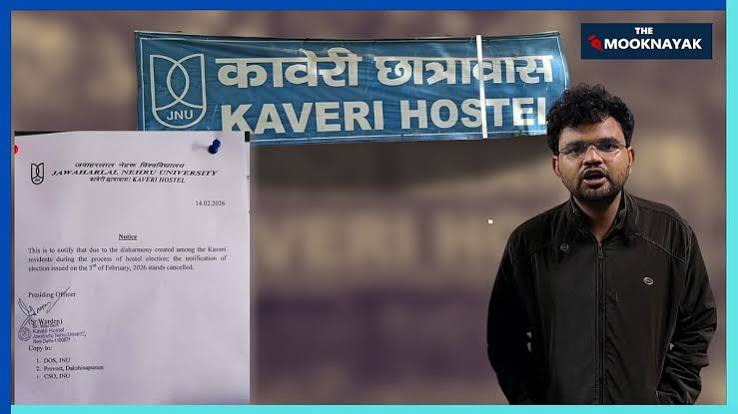
Students say that those with a casteist and Manuwadi mindset could not tolerate the candidacy of a Dalit candidate, so they hacked the democratic system and disrupted it. New Delhi – A major controversy has erupted over the student union elections at Jawaharlal Nehru University’s (JNU) Kaveri Hostel. The hostel election process has been cancelled, following allegations of casteism and violence surrounding a Dalit candidate’s candidacy for the post of president. This is the same Kaveri Hostel where hateful casteist slogans like “Chamar, Dalit, leave India” and “Brahmin, Baniya, Zindabad” were recently painted on the walls, drawing widespread condemnation. Kaveri Hostel houses a total of 308 students, including PG, UG, and PhD students. Every year, the Student Union (Students’ Body) is elected to address issues related to student welfare, such as improved infrastructure, quality food, cleanliness, mess facilities, and other student interests. This year, after 12 years, a Dalit student contested for the position of president. For all these years, there have been no SC community representatives on the hostel committee. There have been students from the tribal community, but they are considered to be staunchly RSS-oriented. Ajay Kumar Rao, a PhD student in Hindi literature, a candidate for president from the Progressive Panel, shared his experience with The Mooknayak. He said that elections are held every year to improve hostel infrastructure, protect students’ interests, and address welfare issues. The hostel election process is completely democratic and transparent. The Election Committee presents the names of nominated candidates for various positions (such as president, member, etc.) to the General Body Meeting (GBM). At this meeting, students’ support is sought against each candidate’s name. Students show their support by raising their hands. The candidates who receive the most hands, or a majority, are elected to the respective position. This process is based on consensus and direct democracy, allowing all resident students to participate. This method is common at the hostel level in campuses like JNU, where decisions are made by raising hands instead of using ballot papers, ensuring a speedy, fair, and universal participation. This method clearly expresses the collective will of the students, and in the event of any dispute, a decision is immediately reached within the GBM. This year, the election process began as follows: the election notification was issued on February 3rd. The body conducting the elections is the Election Committee, which consists of six students with neutral and open ideologies. The election committee was elected at the hostel’s General Body Meeting (GBM), in which Talha Ansari was elected. The election of the remaining five students, Vijay Jaiswal, Anubhav Tripathi, Priyanshu Chaturvedi, Ritul Joshi, and Animesh Kumar, was not democratic because they adhere to the RSS ideology, and an investigation is underway against some of them by the Proctor. Ajay Kumar Rao alleges that the election of the remaining members, except for Talha Ansari, was not conducted democratically and by consensus. The opposition, enraged by the idea of a Dalit student becoming president, created a ruckus. A scuffle and fight broke out between the students. Ajay’s glasses were broken during the altercation, and some others suffered minor injuries. The students complained to the warden, following which the election process was cancelled. Bahujan students say that those with a casteist and Manuwadi mindset could not tolerate the candidacy of a Dalit candidate, so they hacked the democratic system and disrupted it. Citing incidents of caste discrimination occurring on campuses across the country, Ajay said that Kaveri Hostel is no exception. South Asians and Expatriates The two major student organizations active in the hostel are the ABVP and the Progressive Panel. The Progressive Panel is a joint alliance of students from the Congress, Left, and Ambedkarite ideologies, seeking a system based on the principles of social inclusion, equity, and equality. Meanwhile, students with opposing ideologies are stuck in the age-old narrow-minded notions of superiority and inferiority. Non-vegetarian food is available in the hostel mess five days a week, but there have been debates and protests over not preparing non-vegetarian food on festivals. Religious events like Ram Navami and processions on campus are events that violate constitutional values and the principles of equality in an academic campus. This incident exposes the deep roots of casteism on a supposedly progressive campus like JNU, where attempts to suppress the voices of Dalit students continue. Ajay Kumar and his colleagues have appealed for the restoration of democratic processes. Geetha Sunil Pillai Courtesy: Hindi News
Dalit student at IIT Bombay commits suicide; father says a professor used to make ‘casteist’ comments about his son
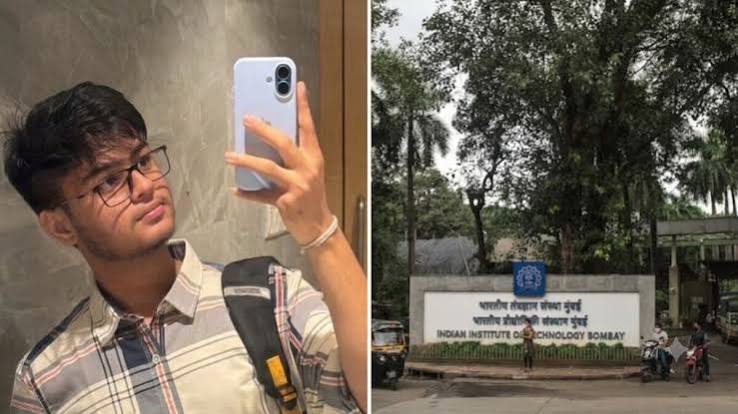
DCP Dattatreya Nalawade of Mumbai Police stated that a case has been registered under sections of abetment to suicide, the SC/ST Act, and other relevant sections, and an investigation is underway against all individuals named by the family. Mumbai – Following the suicide of a second-year student at the Indian Institute of Technology (IIT) Bombay’s Powai campus on Friday evening, his family has leveled serious allegations of caste discrimination and institutional harassment. The deceased student has been identified as Sahil Ravindra Wakode (22), a resident of Maharashtra’s Yavatmal district and a second-year B.Tech student in the Department of Energy Science and Engineering at IIT Bombay. Sahil belonged to the Scheduled Caste community, and his classmates describe him as a very hardworking student who had achieved an 8.5 CGPA in his first year. An FIR has been registered at the Powai police station in this case, which has been charged under the SC/ST Act following allegations from family members, and the investigation has now been transferred to the Mumbai Police Crime Branch. This is reported to be the third suicide case reported on the IIT Bombay campus this year. Sahil was found hanging from a ceiling fan in his room in Hostel No. 4 on Friday evening. When his roommates received no response, they informed the administration, which then called the police. No suicide note was recovered from the scene, and the police initially reported the case as an accidental death. According to the IIT Bombay administration, Sahil was caught using a mobile phone in the examination hall on the day of the incident and attempted to find answers by uploading the question paper to ChatGPT. The institute also clarified that no disciplinary action was initiated against the student following the incident. The institute stated that Sahil was assured that the incident would not impact his academic future. The institute has pledged support to Sahil’s friends, classmates, teachers, and others affected by the incident. It also stated that the circumstances surrounding his death are being investigated. According to students, Sahil was asked to leave the hall after an alleged confrontation during an exam and was reprimanded by a professor in the corridor. About an hour after this alleged confrontation, Sahil hanged himself in his hostel room, and his body was recovered around 6 p.m. Sahil’s mother, Sonali Wakode, spoke to the media on Saturday, directly alleging that her son had been subjected to caste-based harassment and torture. She also alleged that he had been assaulted and demanded justice. Sahil’s father, Ravindra Wakode (47), alleged that for the past few months, Professor Suryanarayan Dulla of the Department of Energy Sciences had been making caste-based remarks and mentally harassing his son. The father demanded the professor’s immediate arrest and a Crime Branch investigation into the matter. However, all these allegations are still under investigation and have not been independently verified. The father also claimed that the professor threatened to implicate Sahil in a false case. Following the family’s complaint, a case has been registered at the Powai police station under Section 108 (abetment to suicide) of the Indian Penal Code (IPC) as well as relevant sections of the Scheduled Castes and Scheduled Tribes (Prevention of Atrocities) Act. DCP Dattatreya Nalawade of Mumbai Police stated that the case has been registered under sections of abetment to suicide and other relevant sections, and an investigation is underway against all the individuals named by the family. The family initially refused to accept Sahil’s body, but later accepted it when the case was handed over to the Crime Branch on Saturday night. An ACP-rank officer will now lead the investigation. Protests on Campus As news of the death spread, a large number of students gathered, surrounded the office of Director Shirish Kedare, and demanded the resignation of both the Director and Professor Dulla. The students also blocked the main gate of the institute, prompting police to arrive. By late evening, approximately 400 students had gathered, and by midnight, the number had grown to over a thousand. A third-year electrical student said during the protest that this was the third such incident at IIT Bombay this year and the second in the last two months. Students are demanding accountability and transparency from the administration. Another student described the incident as shocking, saying, “It feels like one of us has been left behind. The situation is still management versus students, but first, we should remember the soul that left us.” Union Minister of State Raksha Khadse, reacting to the incident, said that the government will conduct a thorough investigation and ensure appropriate action. The Darshan Solanki Case Recalls This is not the first time allegations of caste discrimination have surfaced at IIT Bombay. In February 2023, first-year B.Tech student Darshan Solanki jumped to his death from the seventh floor of his hostel, and his family had also alleged caste discrimination. According to Solanki’s mother’s statement, recorded in the police chargesheet, Darshan had told his mother that his fellow students’ behavior had changed when they learned about his caste. This incident marks the third student suicide at IIT Bombay in six months, raising serious questions about student mental health at higher education institutions nationwide. Between October 2022 and October 2025, 154,046 college students aged 18-25 called the Tele-Manas helpline, of which approximately 4%, or 5,642, were related to suicide-related concerns. The Supreme Court has also underscored the severity of this crisis, with 13,044 student suicides recorded in 2022 alone, representing 7.6% of the total suicides that year. Geetha Sunil Pillai Courtesy: Hindi News
Mamata-Rahul alliance would send big message: Saayoni
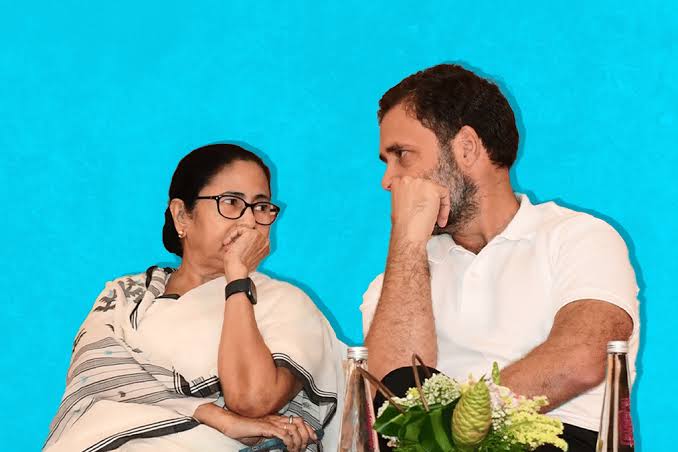
Kolkata: A formal alliance between Mamata Banerjee-led TMC and Congress under Lok Sabha Leader of Opposition Rahul Gandhi would send a “big message” and demonstrate that the two parties’ understanding was genuine, said Saayoni Ghosh, who was among 20 rebel TMC MPs who distanced themselves from Mamata Banerjee’s faction and later merged with little-known Nationalist Citizens Party of India (NCPI) in June. Speaking to reporters outside Kolkata airport, Ghosh said she hoped Congress would unite with TMC under Gandhi’s stewardship. She said such an alliance should go beyond a formal arrangement and reflect genuine political coordination between the two parties. “I hope that under Rahul ji, Congress unites with TMC. If this happens, it will send a big message that this alliance is an alliance in the true sense, not just for the sake of saying it,” Ghosh said. Ghosh’s remarks come amid heightened political activity in Bengal before Nandigram byelection, scheduled for Oct 6. The byelection has triggered a political dispute after Congress candidate Milan Pradhan was arrested in an old murder case. Asked about Pradhan’s arrest, Ghosh said she was aware cases were pending against the Congress candidate. She described the issue as a matter between the two parties and said political developments often acquire significance before elections. “Regarding the Congress politician who became a candidate — as far as I knew until yesterday, there were some pending cases against him. This is politics, and in politics, one has to consider what decisions might be taken or actions initiated prior to an election,” she said. Ghosh also said political parties had the option of approaching Election Commission or seeking legal remedies. “In a democracy — whether it is Congress, Trinamool Congress or BJP — everyone is free to exercise their democratic rights,” she said. Courtesy : TOI Note: This news is originally published on https:/timesofindia.com/bha and is used purely for non-profit/non-commercial purposes, especially human rights
J&K Congress stages protest against picture linking Rahul, Akhilesh with terrorism
JAMMU: J&K Congress Saturday staged an anti-BJP protest in Jammu for allegedly linking Rahul Gandhi and Samajwadi Party chief Akhilesh Yadav with terrorism. The protest was led by state Congress president Tariq Hamid Karra. A picture has been circulating on social media for past few days depicting Rahul Gandhi and Akhilesh Yadav on top with a caption “Yeh Jati Poochtey Hai“, in the middle Thackrey brothers (Udhav and Raj) with caption “Yeh Bhasha Poonchtey Hai“ and last and third frame showing some terrorists with caption “Yeh Dharam Poochtey Hai”. Referring to the social media post, Karra said, “It was aimed at creating an impression that Gandhi, Yadav and the Congress were linked with terrorism. “Congress and Gandhi family do not need certificates of patriotism from BJP, whose mentors have the legacy of being the sycophants of the British and supporters of two-nation theory which led to the Partition of the country,” he said. Karra also referred to alleged links between BJP figures and individuals whom he described as associated with terrorism, like Ilyas Khan and Talib Hussain, who were arrested by security forces in Jammu and Kashmir. Courtesy : TOI Note: This news is originally published on https:/timesofindia.com/bha and is used purely for non-profit/non-commercial purposes, especially human rights
System threatened by students as they ask questions: Rahul

INDORE: Congress MP Rahul Gandhi on Saturday said the “system” created by top BJP politicians and certain businessmen controlling every aspect of governance in the country is threatened by students. Addressing youth at a ‘Chhatron ki Goonj’ in Indore, he said, “The system is threatened by students as they ask questions. That is why the system does not want students. The system wants ‘andh bhakts’.” He described students as embodiments of curiosity, love, humility, courage, tolerance and honesty, while characterising blind followers as “delusional, hateful, arrogant, cowardly, patriarchal and dishonest”. Rahul also targeted NSA Ajit Doval, accusing him of enabling “surveillance of citizens’ communication data to help govt exert control over the population”. Courtesy : TOI Note: This news is originally published on https:/timesofindia.com/bha and is used purely for non-profit/non-commercial purposes, especially human rights
Parliament passes Transgender Persons Amendment Bill, 2026 with Rajya Sabha approving it today
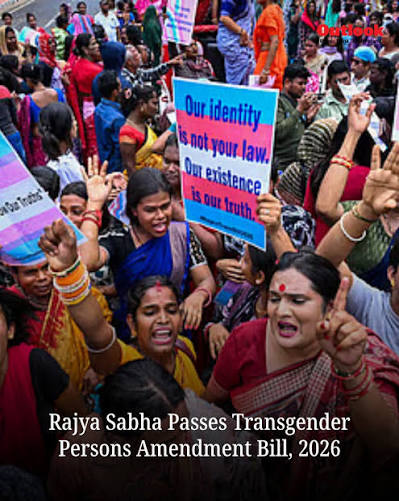
Parliament has passed the Transgender Persons (Protection of Rights) Amendment Bill, 2026, with the Rajya Sabha approving it today. The bill was passed by the Lok Sabha yesterday by a voice vote amid an Opposition-led walkout. The bill seeks to redefine the category of transgender, removes the provision of self-perceived gender identity and excludes several socio-cultural identities as well as transmasculine individuals from its ambit. It also further defines transgender persons within a biological framework, based on intersex variations and differences in sexual development. Replying to the discussion on the Bill in the Rajya Sabha, Social Justice and Empowerment Minister Dr Virendra Kumar said the government is compassionate towards the well-being of the transgender community. He said the Bill has provisions to empower the transgenders and give them dignity. The Minister said that the NDA government has taken several initiatives to bring transgender people to the mainstream and stop discrimination against them. Starting the discussion in the Upper House, Congress MP Renuka Chowdhury said this bill dilutes the privacy of an individual provided under the Constitution. Opposing the Bill, Ms Chowdhury said self-identification cannot be taken away through bureaucratic certification. Criticizing the government, she said that the proposed bill undermines the fundamental rights and dignity of transgender persons. Calling such a move wrong and illegal, she argued that forcing transgender persons to provide their identity through official certificates is against the spirit of equality and dignity guaranteed by the constitution. She also questioned the government’s approach for not properly consulting with the transgender community before bringing the Bill. She also referred to the Supreme Court’s landmark NALSA judgement of 2014, which recognized the right of transgender persons to self-identify their gender. Ms Chowdhury said the proposed Bill violates the principles laid down in that judgement and fails to respect an already established legal framework. DMK MP Tiruchi Shiva also opposed the Bill, saying that even if the Bill is passed in Parliament with a majority, it will be struck down by the Supreme Court. He further added that the Bill violates Articles 14, 15, 19 and 21 of the Constitution and it deprives the community of the right to freedom, dignity and self-determination. Supporting the Bill, BJP MP Medha Vishram Kulkarni said, ” This Bill ensures justice, dignity, protection from criminalisation and legal safeguards for transgender persons. She also thanked Prime Minister Narendra Modi for bringing this bill with certain amendments in order to ensure that the benefits reach the deserving people in a proper manner. She said there is a need for a law that brings justice to real transgender individuals and punishes fake ones. Mrs Kulkarni said the benefits should be extended to those who are transgender by birth. She said that the amendment to extend punishment will bring down the rate of crime and forced identities. TMC’s Saket Gokhale said that 31% of Transgender people in India have attempted suicide because of the discrimination that they are facing. He alleged that now the government is going to start discriminating against them as though social discrimination were not enough. He called it unacceptable. Mr Gokhale expressed concern that gender is going to be decided by the Chief Medical Officer and a District Magistrate, and the bill does not prescribe any qualifications for the Chief Medical Officer. Sanjay Singh of AAP said the Bill is a big let-down for the transgender community. He accused the government of not doing anything for the community. RJD’s Manoj Kr Jha said that prejudices against transgender people should stop, and they should be able to live with dignity. He added that self-determination of gender should not be taken away. CPI(M)’s John Brittas said it is a black-letter day and the Bill is taking India a century back. He pleaded with the government to either withdraw the Bill or refer it to a Select Committee. Jaya Bachchan of the Samajwadi Party also questioned the government over the legislation. She sought to know what the urgency was in bringing the Bill, without examining it with the depth and care that it deserved. Courtesy : NOA Note: This news is originally published on https:/newsonair.com/bha and is used purely for non-profit/non-commercial purposes, especially human rights