
AIISCA Condemns Alleged Police Brutality Against Dalit Students At IIT Bombay, Demands Action Against Officials
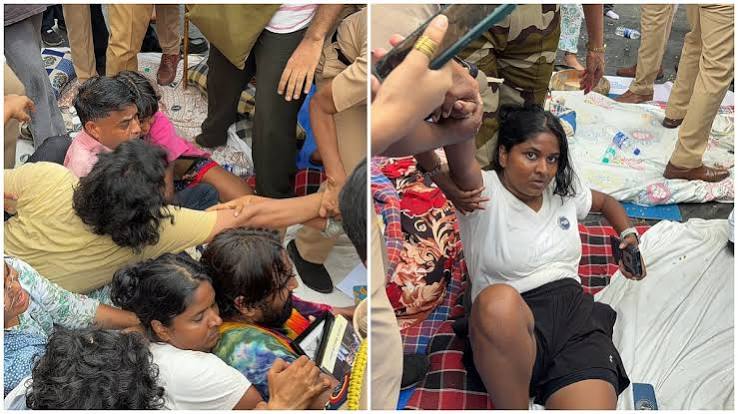
The All India Independent Scheduled Castes Association has demanded an independent inquiry into alleged police brutality and detentions during an October 18 protest at IIT Bombay seeking justice for Sahil Wakode. President Rahul Sonpimple urged Scheduled Castes commissions to intervene and sought accountability from police and institute authorities. Mumbai: The All India Independent Scheduled Castes Association (AIISCA) has condemned the alleged police brutality, assault and forcible detention of Dalit students and Ambedkarite activists during a protest at IIT Bombay on October 18, demanding an independent inquiry into the police action and accountability from the institute’s administration. “We strongly condemn the alleged police brutality, forcible detentions and assault of Ambedkarite activists and students during the peaceful protest at IIT Bombay demanding justice for Sahil Wakode,” said Rahul Sonpimple, national president of AIISCA. AIISCA demands independent police inquiry Sonpimple demanded the intervention of the Maharashtra State Commission for Scheduled Castes and the National Commission for Scheduled Castes, calling for an impartial inquiry into the conduct of the Mumbai Police and the role of the institute’s administration. “We demand that the commissions take immediate cognisance of the use of force against Dalit students and activists. The alleged desecration of Dr BR Ambedkar’s poster must also be investigated, and those responsible must be held accountable,” he said. AIISCA has sought accountability from the Deputy Commissioners of Police overseeing the Powai and Saki Naka jurisdictions, demanding an investigation into the circumstances surrounding the detentions, the alleged use of force and the orders under which the police acted. Action sought against IIT Bombay officials Sonpimple also demanded the resignation and arrest of IIT Bombay invigilator Suryanarayana Doolla, alleging that his conduct contributed to the circumstances surrounding Wakode’s death. He called for an impartial investigation and said criminal proceedings under the Scheduled Castes and the Scheduled Tribes (Prevention of Atrocities) Act and other applicable laws, including provisions relating to abetment of suicide, should be initiated if supported by evidence. The association has also sought the removal of IIT Bombay Director Sireesh Kedare, alleging that the institute’s administration failed to protect protesting students and permitted police entry onto the campus to detain demonstrators. Protest rights and accountability emphasised “Peaceful protest is a democratic right, not a crime. Students and activists demanding justice must not be subjected to violence, intimidation or arbitrary detention,” Sonpimple said. He urged the Maharashtra government, the statutory commissions, the Mumbai Police leadership and IIT Bombay’s administration to act on the demands and ensure that the allegations of police brutality are independently investigated. Sonpimple also called for the investigation into Wakode’s death to proceed transparently and without further delay, saying Dalit students must be able to seek justice and accountability without fear of repression. Shreya Jachak Courtesy : TFPJ Note: This news is originally published on https:/thefreepressjournal.com/bha and is used purely for non-profit/non-commercial purposes, especially human rights
Ambedkar Nagar News: Bodies of Dalit couple found under suspicious circumstances, suspicion of murder
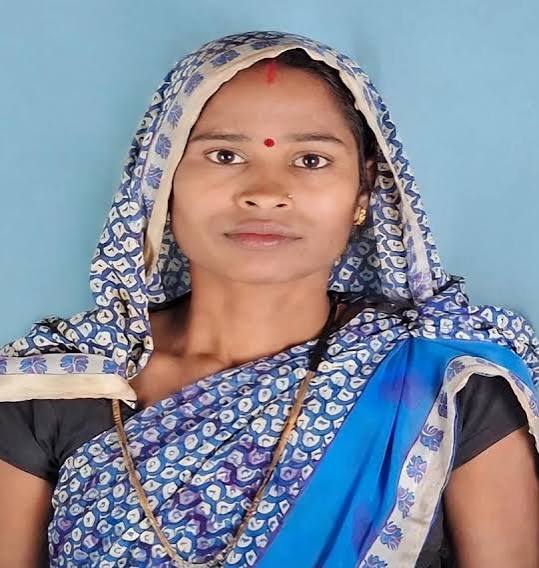
Jalalpur. The bodies of a Dalit couple, Vishnu Lal and Draupadi, were found on the side of a road in Ajanpara village in the Malipur area on Monday morning under suspicious circumstances. The woman had severe injuries on her neck, back, and legs, while Vishnu had no visible injuries. Villagers who were out defecating saw the bodies and informed the family and the police. CO Jalalpur Anup Kumar Singh, a forensic team, and a dog squad investigated the scene. Police suspect the deaths were caused by a wild animal attack, while the forest department denies any animal attack. Meanwhile, family members and villagers suspect murder. Meanwhile, rumors of an illicit relationship are also rife. Vishnu Lal (45), a resident of Ajanpara village in the Malipur area, had gone to irrigate a paddy field with his wife, Draupadi (39), at around 9 pm on Sunday night. They returned after turning on the water and went back to the field at around 1 am. After this, the two did not return home all night. Around 6 a.m., a villager who went out to defecate found their bodies lying on the side of a road about 50 meters from the field. Upon receiving the information, the deceased Vishnu Lal’s father, Ramkewal, along with other family members and villagers, rushed to the scene. According to Ramkewal, Vishnu Lal’s body was free of any visible injuries. Draupadi had severe bleeding injuries on the back of her neck. Furthermore, the woman’s leg had been eaten by a wild animal. Family members and villagers suspect murder, but no complaint has been filed. Meanwhile, some people are also hushedly discussing the possibility of an illicit relationship. CO Anup Kumar Singh, Station House Officer Tanuj Pal, the forensic team, and the dog squad investigated the scene. Following the police’s suspicion of a wild animal attack, Ranger Mudit Singh, under the direction of DFO Jagdamba Prasad, conducted the investigation with his team. Jackal footprints were found some distance from the scene, samples of which have been taken and sent for testing. The couple’s death is initially suspected to have been caused by a wild animal attack. The post-mortem report is awaited, based on which further action will be taken. – Anoop Kumar Singh, CO Jalalpur Judging by the visible wounds on the bodies, it does not appear that an animal attack was the cause of death. After death, the woman’s leg was devoured by a small animal. Jackal footprints were found some distance from the scene, which appear to be a few days old. No footprints were found at the scene. Courtesy: Hindi News
‘Silent revolution’ sweeping India under Rahul Gandhi: Telangana Minister Uttam Kumar Reddy
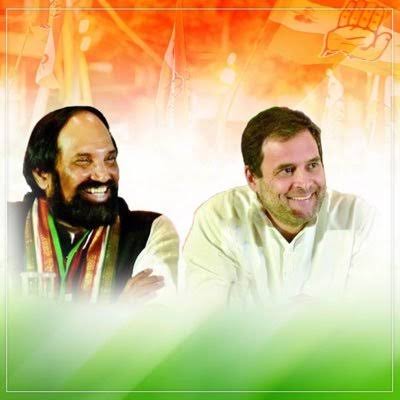
The programme has been held annually since 1990 to commemorate former Prime Minister Rajiv Gandhi’s message of communal harmony and national integration. HYDERABAD: A “silent revolution” is sweeping the country under Rahul Gandhi’s leadership, with people increasingly seeking an alternative to the BJP, said Irrigation and Civil Supplies Minister N Uttam Kumar Reddy on Monday. Addressing the annual Rajiv Gandhi Sadbhavana Yatra Commemoration Day and Rajiv Sadbhavana Award function at the historic Charminar, he said growing public support for Rahul Gandhi and the Congress reflected a wider desire for political change at the national level. The programme has been held annually since 1990 to commemorate former Prime Minister Rajiv Gandhi’s message of communal harmony and national integration. Uttam said Rahul Gandhi had provided effective leadership to the Congress through challenging as well as favourable political circumstances. He urged ministers, MPs, MLCs and MLAs to give greater priority to key party programmes and maintain close coordination between the government and the organisation. He also called for greater recognition of grassroots workers who had endured years of hardship under the previous BRS regime, saying their perseverance and sacrifices had played a crucial role in the Congress returning to power in Telangana. Recalling Rajiv Gandhi’s association with Hyderabad through the Sadbhavana Yatra, he congratulated former PCC president V Hanumantha Rao and the Rajiv Sadbhavana Award Committee for sustaining the tradition for more than three decades. He said he had regularly attended the programme irrespective of the position he held. AICC secretary in charge of Telangana Sachin M Sawant said Rajiv Gandhi’s vision of a modern, self-reliant India rested on unity, mutual respect and placing national interest above political considerations. Courtesy : TNIE Note: This news is originally published on https:/thenewindianexpress.com/bha and is used purely for non-profit/non-commercial purposes, especially human rights
Manipur violence: Protesters place bodies outside CM’s bungalow after militant attack
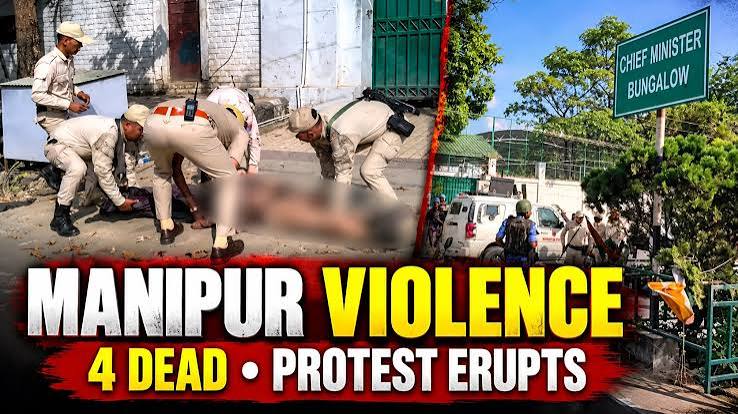
NEW DELHI: Protesters on Monday placed the bodies of two persons outside Manipur chief minister Y Khemchand Singh’s bungalow in Imphal after they were killed by suspected militants near the border of Imphal East and Kangpokpi districts.Angry locals brought the bodies to Imphal to protest the violence that has plagued the state since May 2023. They placed the bodies outside the main gate of the chief minister’s residence in Babupara. It was not immediately known whether the CM was present at the residence during the protest. Police fired several rounds of tear gas shells to disperse the protesters, following which the bodies were taken to the Jawaharlal Nehru Institute of Medical Sciences (JNIMS). One of the injured, identified as Ksh Deven, was stated to be in serious condition, officials said. According to police officials, four others were also injured after suspected militants opened fire on a group of firewood collectors. Three persons are still missing following the incident, which took place at Khongbal Sunurok Uyok in Kangpokpi, a few metres from Nongshum village in Imphal East, they said. The deceased were identified as Arubam Ronil (35) and Lairenlakpam Inaobi (51). They were among 16 people who had gone to the hills near their village around 7 am to collect firewood when they were ambushed, officials said. Earlier on Sunday, at least 15 houses belonging to the Kuki community were torched in a hill village in Manipur’s Kamjong district, forcing several civilians to flee to forest areas and a nearby Army camp. According to news agency PTI, a Kuki civilian was killed and four others sustained bullet injuries when suspected militants attacked the village. In a separate incident at Kamjong district headquarters on Saturday night, three Tangkhul Naga civilians sustained bullet injuries when rival armed groups belonging to another community attacked the village. Courtesy : TOI Note: This news is originally published on https:/timesofindia.com/bha and is used purely for non-profit/non-commercial purposes, especially human rights
Congress files complaint over poster portraying Rahul Gandhi as Ravan
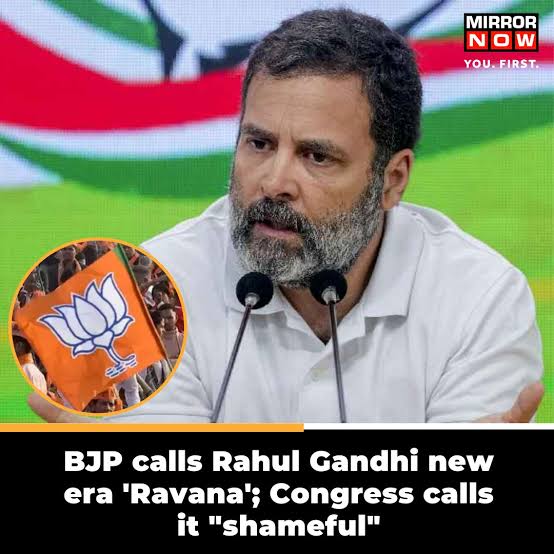
Lucknow: Congress has lodged a police complaint in Lucknow against an objectionable poster targeting Rahul Gandhi. The party has demanded legal action against those behind the poster. The posters titled “Sanatan Bharat Ke Virodhi Ravan” surfaced at prominent locations in Lucknow ahead of Dussehra. The posters depict Rahul Gandhi and many politicians as Ravan, with their faces portrayed as the demon king’s ten heads. The posters were reportedly attributed to Sanatan Raksha Sangathan and also featured Samajwadi Party chief Akhilesh Yadav. Congress has lodged a complaint at Khala bazaar police station against an objectionable poster targeting party leader Rahul Gandhi, seeking legal action against those responsible. Asif Rinku, chairperson of the Uttar Pradesh Congress Law and Human Rights Department, Shailendra Tiwari and Tauheed Ahmad Nazmi, along with other advocates, lodged a complaint at the Bazaar Khala police station on Monday. Congress said political opposition could not be used as a pretext for acts that violate democratic values and the dignity of political leaders. Reiterating its commitment to the Constitution and the rule of law, the party said such incidents should be dealt with due legal process. Courtesy : TOI Note: This news is originally published on https:/timesofindia.com/bha and is used purely for non-profit/non-commercial purposes, especially human rights
Rahul Gandhi questions investment in Uttarakhand after investors’ summit, says it exists only on paper
Dehradun: Questioning “investment” in Uttarakhand after state govt’s much-publicised investors’ summit, LoP Rahul Gandhi while citing a media report, has termed it as a “big fraud” by the Dhami govt. He alleged that the “investments existed only on paper and employment in slogans, and the state’s youth got nothing but paper leaks during BJP rule”. Meanwhile, refuting the Congress leader’s allegations, govt authorities on Monday said that “all figures related to investment in the state are public and details of each project are available on govt websites”. They added that “encouraging local entrepreneurs and creating a favorable environment for them is the govt’s priority”. State govt also filed a case at Rajpur police station against social media handles and unidentified persons that were purportedly circulating videos questioning the summit’s grounding figures. Gandhi wrote on X that the Global Investors’ Summit was widely publicised as having garnered “1,779 MoUs worth Rs 3.5 lakh crore”, and around Rs 100 cr of public money was spent on roadshows for the event. A recent media investigation, he said, revealed that even flour mills, fertiliser-seed shops and small clinics were counted as “investors,” adding that a school run through CSR and donations was described as an “investor” of Rs 24.4 cr. He said, “Some of the people mentioned as investors did not even know they’re on the list. Also, Rs 35,279 crore — that is, 35% of the investment — belongs to ‘govt power companies’ which would have in any case invested in the state.” Gandhi further added that one investor credited with an investment of Rs 1,200 cr had reported no earnings for four years and listed no employees in its records. “Roadshows in Dubai and London were said to have attracted investments worth Rs 27,975 cr, yet not a single company from either city features on the list of investors that have actually invested on the ground,” Gandhi said. He further wrote: “Just seven days before the summit, on Dec 1, 2023, the definition of ‘investment’ itself was loosened. This is what is called: first change the rules, then present the figures. CM should make public the full list of 3,300 ‘investors’”. Meanwhile, reacting to the allegations, industries secretary, Vinay Shankar Pandey said, “Grounding of investments worth more than Rs 1.01 lakh cr has been completed so far and preparations are being made for the next grounding of investments worth about Rs 24,000 cr. Details related to this have also been made available on the single window system.” On small local investors figuring in the list, he said, “If a local person starts a small business by investing Rs 10,000 from his hard-earned money and two people get employment from it, then this too is an important contribution to the state’s economy and employment generation.” The secretary further said that “questioning the inclusion of a flour mill, mobile shop or other small business in the investment category is not correct since Uttarakhand is a small state where investment opportunities are restricted due to its geography.” “The geographical conditions of Uttarakhand are different from those of other states. About 70% of the state’s area is forest-covered, and the possibilities for setting up heavy industries are only limited to areas like Dehradun, Haridwar, Udham Singh Nagar and some parts of Nainital.” He asked the media and people to directly inspect the projects, interact with entrepreneurs and assess the work done on the ground on the basis of facts. Meanwhile, in a complaint to police by industries directorate on Sun, additional director Mrityunjay Singh alleged that false and misleading facts regarding investment in the state were being continuously circulated from certain social media account and other mediums. It added that “this could create a situation of confusion and distrust among investors and adversely affect the state’s industrial environment.” Courtesy : TOI Note: This news is originally published on https:/timesofindia.com/bha and is used purely for non-profit/non-commercial purposes, especially human rights
2 transgenders held for creating nuisance at Knp stn

Kanpur: The Railway Protection Force (RPF) on Sunday arrested two transgender persons at Kanpur Central railway station for allegedly misbehaving with passengers and engaging in unauthorised activities, officials said. The accused were identified as Tania and Khushhal. RPF in-charge SN Patidar said the two were found allegedly misbehaving with passengers near the foot overbridge stairs at the Delhi end of Platforms 6 and 7 during a routine patrol. Despite being warned, they allegedly continued their activities and failed to produce valid authorisation documents. They were subsequently arrested, he said. Cases were registered against them under Sections 145 and 147 of the Railways Act. Courtesy : TOI Note: This news is originally published on https:/timesofindia.com/bha and is used purely for non-profit/non-commercial purposes, especially human rights
Marichjhapi massacre of Dalit refugees becomes Durga Puja theme in Kolkata pandal
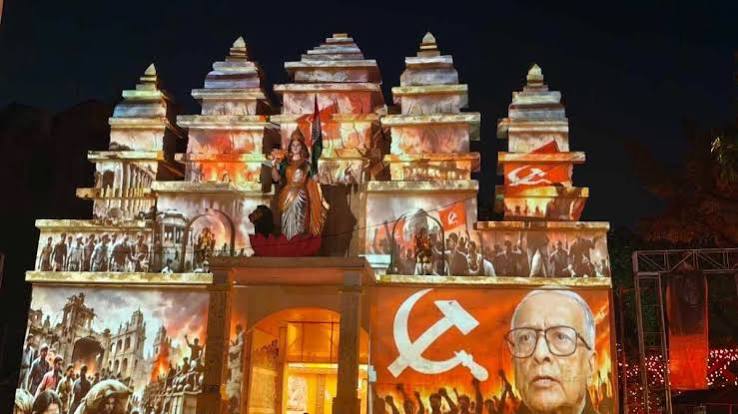
The Kamardanga Sarbojanin Durgotsav Samiti members told ThePrint they are trying to pull the Marichjhapi massacre out of oblivion. The forgotten massacre of Dalit refugees on a faraway island in the Sundarbans during 1978-79 has become a Durga Puja pandal theme at Kamardanga Sarbojanin Durgotsav Samiti in Kolkata’s Entally area. It is part of the broader theme of ‘Bam Bodh’ (eradication of the Left) that the organising committee has worked on for this puja. “This year, we are organising Durga puja with the dream of establishing Sanatan Hindu Rashtra,” Suraj Kumar Singh, president of the 107-year-old Kamardanga Sadharan Durgotsav Samity, told ThePrint. He added that it is “important for the new generation to know the historical struggles of Bengali Hindus”, before and after India’s independence. “The biggest massacre of Bengali Dalits in independent India was done by the same political party that claims to stand up for their rights.” A forgotten massacre In 1978, around a lakh Dalit refugees from erstwhile East Pakistan (now Bangladesh) had assembled at a tiny island named Marichjhapi in the Sunderbans. They hoped to turn it into a village of their own. These refugees had come to Marichjhapi from the Dandakaranya region, spread across the states of Madhya Pradesh, Orissa, Maharashtra and Andhra Pradesh, where the government of India had sent them to be part of the Dandakaranya rehabilitation plan for Hindu refugees from East Pakistan in early 1956. Unable to adjust to their new surroundings, a band of women and men made their way to Marichjhapi island in the Sundarbans, the topography of which they were accustomed to. In the span of a few months, the refugees converted a shrub-filled, uninhabited island into a thriving village of their own with no help from the state or the central government. They built huts, a school, a bidi factory, a boat-manufacturing yard, even as the Left Front government wanted them to leave the island. The government designated it as a reserve forest and accused the refugees of violating the forest acts by destroying the existing and potential forest wealth and also creating ecological imbalance. “On January 26, 1979, India’s Republic Day, then Left Front chief minister Jyoti Basu announced an economic blockade of Marichjhapi. Thirty police launches surrounded the island; the refugees were tear-gassed, their huts, fisheries and tube-wells destroyed. Those who tried to cross the river in makeshift boats were shot at,” a report in The Wire said. The refugees, the report added, armed with carpentry tools and makeshift bows and arrows, were no match for the government’s armed forces. A conservative estimate put the death toll at several hundred men, women and children, who either starved to death or were shot, their bodies thrown into the Raimangal River. “Marichjhapi became out of bounds to visiting journalists, opposition politicians and even a Parliamentary Committee, who came to investigate police atrocities, faced harassment at the hands of the Forest Department officials,” the report said. Author and senior advocate of the Calcutta High Court Joydeep Sen told ThePrint the actual number of Dalit refugees killed by the police in Marichjhapi was much higher. “It was not in the hundreds but in thousands that the police, under express orders of the Left Front government, killed in Marichjhapi. That history was suppressed even during the Trinamool Congress regime under Mamata Banerjee,” Sen said. The Wire report said that when the Trinamool Congress was aspiring to power in Bengal, large hoardings about Marichjhapi had come up in Kolkata in 2009 promising justice to the survivors. “However, the lesson from the massacre seems to have been consigned to oblivion and the cycle of political violence continues in the state through different semblances,” the report said. The Kamardanga Sarbojanin Durgotsav Samiti members told ThePrint they are now trying to pull the Marichjhapi massacre out of that oblivion. ‘Left Front’s many misdeeds’ Suraj Kumar Singh said that he has not allowed Left parties to set up book stalls near his pandal this year. “Members of the Left parties, who publicly state that they do not believe in gods and are anti-religion, use the occasion of Durga puja to set up book stalls near pandals where they sell Marxist literature. I won’t allow it near my pandal,” Singh said. Instead, Singh and committee members of the Kamardanga Sarbojanin Durgotsav Samiti are using large 3D canvases in the pandal premises to tell the story of “many misdeeds of the Left regime from 1977 to 2011” through a four-and-a-half-minute documentary. “Leftists in West Bengal pulled out 17 Hindu monks of the Anandamargi sect from taxis, thrashed them, and burned them alive near Bijon Setu in the Ballygunge area, hacked to death members of the Sain family and made the matriarch of the family eat rice soaked in the blood of her slain relatives, and gangraped three female health officials who had gone to inspect lapses in a government-funded rural immunisation programme,” Singh alleged. He added the Left can not be allowed to take the moral high ground when their own political history is soaked in the blood of innocents. In the audio-visual presentation at the pandal, Abanindranath Tagore’s painting of Bharat Mata finds a prominent display. “This is the time to reclaim our narrative of a Sanatan Hindu Rashtra,” Singh said. “If you look closely at Tagore’s painting, Durga is Bharat Mata and Bharat Mata is Durga,” he said. Deep Halder (Edited by Ratan Priya) Courtesy : The Print Note: This news is originally published on https:/theprint.com/bha and is used purely for non-profit/non-commercial purposes, especially human rights
From Brahmins to Dalits to Adivasis, everyone has the same ancestors; BHU professor’s DNA research makes a major claim on castes.
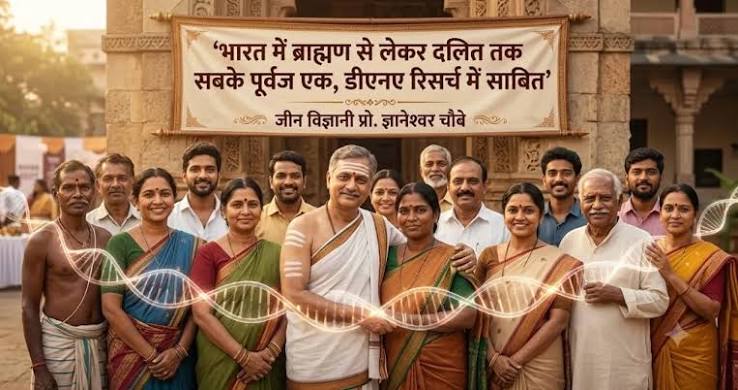
Professor Choubey stated that it is clear that the caste system that has developed here is local and not imposed from outside. The caste system in India is frequently debated. Furthermore, there have been discussions about the Aryan and Dravidian theories. Concerns have often been raised about caste dominance and a sense of superiority. Meanwhile, research led by Professor Gyaneshwar Choubey of Banaras Hindu University has made significant claims. According to him, although Indian society is divided into various castes, everyone has the same ancestors. He claims that people of all castes, including Brahmins, Kshatriyas, and Dalits, share the same ancestors. He has spent more than 10 years on this research. Recently, his research on the people of Northeast India has been published, rekindling discussions about his research. He told NDTV that the racial divisions in India, such as North and South, or Aryan and Dravidian, are incorrect. He said that the Aryan and Dravidian theory is completely misleading. He explained that through the Y chromosome, we have discovered that our ancestors were the same. He explained that we are studying the Y chromosome, which determines paternity. The father’s gene is passed on through the Y chromosome. Professor Gyaneshwar Choubey reported that a tribal and a Kshatriya have a common ancestry dating back 1,500 years. A similar connection was found with the Patels of Gujarat. Professor Choubey said that it is clear that the caste system that has developed here is local and not imposed from outside. He said that when some people gained socio-economic power, they decided on their caste, while others remained tribal. Thus, from Brahmins, Dalits, backward classes, and even tribal communities, everyone has the same ancestry. The professor said that they have now begun research on the Indian psyche. He stated that the “ANI” (Ancestral North Indian) and “ASI” (Ancestral South Indian) theories promoted by Harvard University never actually existed in India. Everyone in India, from Brahmins to Dalits, has a common ancestor. This has been proven through DNA research. Written by: Dr. Surya Prakash Courtesy: Hindi News
Dalit hamlet attacked, houses set on fire after 20-year-old youth’s murder in Bihar
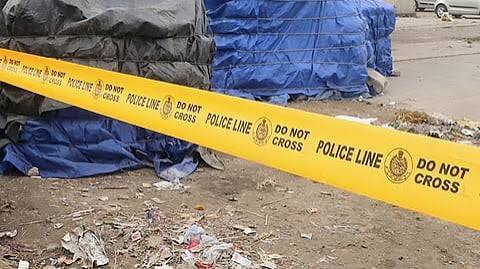
The SSP described the situation at the village as tense but under control. We are keeping a close vigil on the situation after the youth’s murder. The deceased and the suspects belonged to two different castes. PATNA: Tension is running high at a village in Bihar’s Muzaffarpur district following the murder of a 20-year-old youth late on Saturday. The deceased, Navneet Kumar, a resident of Mohammadpur Khaje village under Karja police station limits, was attacked with a knife when he had gone to a local fair with his friend, Subhash Kumar. As the body of the deceased reached his native village after post-mortem, local residents attacked a neaby Dalit hamlet as one of the suspects belonged to the village. The attackers not only thrashed the inhabitants but also set several houses on fire. The suspects involved in Navneet’s killing were stated to be residents of Partapur village. Residents alleged that the attackers also opened fire in the air to terrorise them. Police, however, did not confirm the firing during the attack at Partapur village. Ganesh Ram, a resident of Partapur village, said that the deceased Navneet had an altercation with the son of Gajendra Ram, who is involved in an illicit liquor trade. “More than 50 people attacked the Dalit hamlet in retaliation of the murder,” he said. He confirmed that at least six houses belonging to Scheduled Caste were set on fire by the attackers. Inhabitants somehow managed to escape to save their lives, he told the police. According to Ganesh Ram, fire tenders rushed to the village to douse the flames. By the time, fire tenders reached the village, houses were badly damaged, he revealed. Senior SP, Kantesh Kumar Mishra, SP, rural, Rajesh Singh Prabhakar and City SP, Mohibullah Ansari later took stock of the situation. “Additional armed police force has been deployed at the village to ward off any untoward incident,” SSP Mishra said. The SSP described the situation at the village as tense but under control. “We are keeping a close vigil on the situation after the youth’s murder. The deceased and the suspects belonged to two different castes,” he added. He warned of stern action against those violating the law. “Local police station house officer has been asked to initiate action against the offenders,” he told the media. A police team led by SDPO, Saraiya, Abhijit Kaur is camping at the village. Ramashankar Courtesy : TNIE Note: This news is originally published on https:/thenewindianexpress.com/bha and is used purely for non-profit/non-commercial purposes, especially human rights