
No conclusion in a month, no mobile unlocked? Bhim Army Chief questions Mumbai Crime Branch’s investigation in Sahil Wakode case
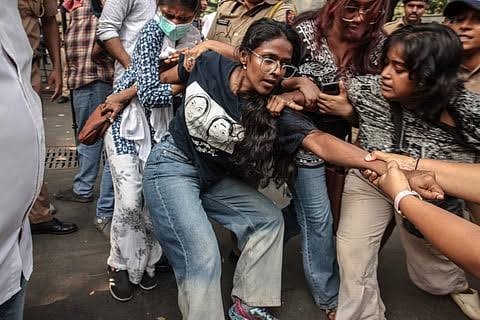
Demands CBI probe from Amit Shah, also questions IIT-B administration’s statements Mumbai/New Delhi – Nagina MP and Bhim Army Chief Chandrashekhar Azad has written a strongly worded letter to Union Home Minister Amit Shah, demanding a CBI investigation into the suspicious death of IIT-Bombay student Sahil Wakode. In the letter, he also demanded an investigation into the alleged police brutality against students demanding justice following his death. Sahil died on September 18th. More than a month later, no conclusive results have emerged in the case, and the controversy has deepened after protesters were brutally assaulted during a demonstration called by the All India Independent Scheduled Castes Association (AIISCA) on October 18th. In his letter, Chandrashekhar Azad described Sahil’s death as “extremely serious and worrying.” He wrote that Sahil’s parents have been continuously fighting for justice since the incident, and their resorting to a hunger strike shows the pain they are going through to learn the truth about their son’s death. The letter also raises questions about the IIT-Bombay administration. According to Azad, the administration’s “irresponsible statements” have created confusion in the case. He also wrote that despite more than a month having passed, the Mumbai Crime Branch’s investigation has not reached any conclusive conclusions, and Sahil’s mobile phone has not yet been unlocked. According to the letter, this situation raises serious concerns about the progress of the investigation and the preservation of crucial evidence. He also raised serious questions about the allegations of excessive force being used against Sahil, deviating from the prescribed procedure. Azad made the following demands to the Home Minister: The investigation into Sahil’s suspicious death should be immediately handed over to the CBI. An impartial investigation should be conducted into the mobile phone, examination hall records, relevant documents of the institute, and the circumstances before and after the incident. An investigation should be conducted into the police behavior toward the protesting students on October 18th. The studies and academic future of the protesting students should not be adversely affected. The letter stated that no family should be forced to struggle for long to learn the truth about the death of a loved one. Azad also appealed for “respectful and sensitive” treatment of students demanding justice. October 18th: Action taken against ‘Justice Corner’ Since Sahil’s death, a protest site called ‘Justice Corner’ had been operating outside the student campus, where a sit-in had been ongoing for three weeks. On October 18th, this site was removed. Protesters and supporting organizations allege that the Mumbai Police forcibly removed the site and detained those protesting. Among those detained were AIISCA founder Rahul Sonpimple, secretary Deepali Salve, and several other activists and students. Sahil’s parents, Ravindra Wakode and Sonali Wakode, were also detained. They were on a hunger strike demanding justice for their son. Student organizations and social activists are deeply angered by this treatment of students peacefully demanding justice and a grieving family. Regarding the police brutality, Deepali said, “The Mumbai Police should understand that we are Dalit Panthers and the children of Dr. Babasaheb Ambedkar. We know our history and are carrying forward his legacy. We will not remain silent on the police brutality against student activists or the brutal tearing of Babasaheb’s portrait.” The All India Lawyers Association for Justice (AILAJ) has expressed solidarity with Sahil’s family and the IIT-B students’ demand for an independent investigation. The organization strongly condemned police brutality, the detention of Sahil’s grieving parents, and peaceful protesters. AILAJ reiterated its demands to “Stop Institutional Killings” and “Implement the Rohit Act.” Laptops, Medicines, and Keys Confiscated After Protest After the protest site was removed, approximately 22 to 25 protesters moved into “Justice Corner 2.0” inside the Nandan Nilekani Main Building, near the offices of the Director and Chief Security Officer (CSO). They demanded the removal of Director Shirish Kedare and the appointment of an administrative representative for negotiations. The protesters allege that repeated emails sent to the institute received no response. The removal of the protest site has presented a new crisis for the students. They allege that their personal belongings, including laptops, chargers, hostel keys, medicines, shoes, and wallets, were confiscated and have not yet been returned. According to a Mumbai Mirror report, a student stated that his laptop has been confiscated for two days, even though an exam is scheduled for Wednesday at 11 a.m. Students claim the laptop contains documents and study materials necessary for the exam. The key crisis is also serious. It is alleged that three protesters’ hostel keys were left in their unreturned bags, preventing them from accessing their rooms. One student stated that they had to go to their rooms to shower and change, but they didn’t even have slippers. The most concerning issue is medication. One student alleges that their keys have been withheld for three days, preventing them from accessing their medications and medical records. According to the student, they take medication for severe depression, anxiety, and post-traumatic stress disorder (PTSD). The lack of medication has caused them severe anxiety and vomiting when trying to eat. They stated that they were advised to go to the hospital to show their medical records, which is impossible without the keys. Emails to the Chief Medical Officer also received no response. The students were allegedly taken to several locations in an attempt to get their belongings back. They were first sent to the main building, then to the main gate, and then to the Powai police station, where the police stated that the items were missing. When contacted, the CSO was initially told it was confidential, then told that the items were on campus but would not be returned without informing the police. The students submitted a list of missing items, but were allegedly made to wait from 3 to 3:30 p.m., yet they were unable to find them. A security guard reportedly told them that the items were locked in a storeroom. The students refused to sign the receipt without inspecting the items, so as not to
Odisha: 2 tribal rights activists arrested, HRF condemns
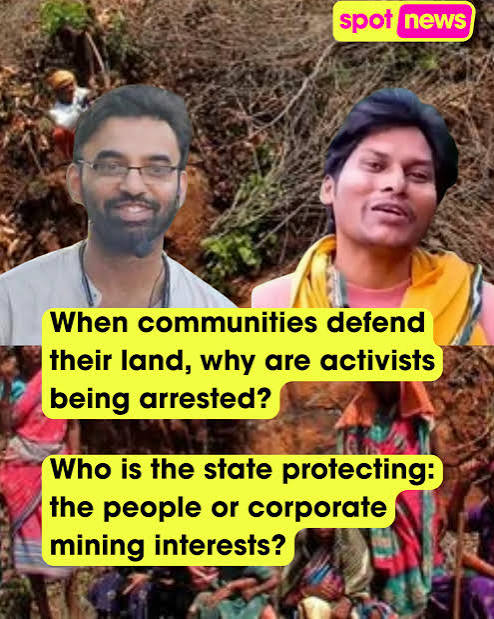
Police in Odisha have arrested Dr Randall Sequeira, a doctor who has worked with Adivasi communities in remote parts of the state, and Laxman Naik, a Dalit leader, in a case linked to a clash in April. Odisha: Odisha police have arrested a doctor who works with Adivasi communities and a Dalit leader of an anti-mining platform. Police say the two incited villagers to attack security personnel during a mining protest six months ago. Rights groups call the arrests an attempt to crush resistance to bauxite mining. Police in Odisha have arrested Dr Randall Sequeira, a doctor who has worked with Adivasi communities in remote parts of the state, and Laxman Naik, a Dalit leader, in a case linked to a clash in Rayagada district in April. Rights organisations have condemned the arrests as an attempt to silence the movement against bauxite mining in the Sijimali and Kutrumali hills. According to Press Trust of India (PTI), the two were picked up from their homes in Kalahandi district on the night of Friday, October 16. They have been charged with attempt to murder and rioting and booked under the Arms Act, a senior police officer said. Police say duo incited villagers South Western Range Deputy Inspector General (DIG) Akhileshvar Singh rejected the allegation that the arrests were aimed at foiling protests. Police claim Sequeira and Naik instigated tribal residents to attack security personnel in Kantamal village during a protest against mining activities in April. Neither was named in the First Information Report (FIR), but another officer told PTI their alleged involvement emerged during subsequent investigation. Singh told PTI on Tuesday, October 20, that the two were not innocent. “Dr Randall Sequeira was not providing medical services to the people but was engaged in instigating tribals against the state government,” he said, adding that Naik was also “misleading people”. He said many doctors work in Kalahandi and Rayagada districts, but only Sequeira has been arrested. Asked about alleged torture in custody, the DIG said the two had made no such allegations before the magistrate. Civil society groups condemn arrests The Concerned Citizens Committee, Odisha, condemned the arrests and alleged they were meant to foil the tribals’ fight for their rights over water, forest and land, or “Jal, Jangal and Jameen”. The group said Naik is a leading Dalit activist of the Maa Mati Mali Surakhya Manch and the Samajwadi Jan Parishad. It said Sequeira works with Adivasi communities in Kalahandi and Rayagada. The group alleged that state repression has been going on against tribal and Dalit communities protecting their land, forest and water, and that anti-mining activists backing people’s movements are being arrested. It urged democratic and progressive organisations to demand withdrawal of all criminal cases against those fighting for the people. HRF demands immediate release In a statement issued on Monday, October 19, the Human Rights Forum (HRF) demanded the immediate release of both men and withdrawal of the cases against them. The statement was signed by S Jeevan Kumar and VS Krishna, members of the HRF Andhra Pradesh and Telangana Coordination Committee. HRF said Sequeira is a member of the Medico Friend Circle who has spent years providing healthcare to Adivasis in remote areas. It said the two were detained at night “without basic legal safeguards” and are now booked under grave charges that also include dacoity. The forum said invoking such provisions against people linked to an anti-mining movement raises serious questions about the use of criminal law to silence dissent. The forum called Sequeira’s arrest particularly disturbing and said it sends a message to those who stand in solidarity with Adivasis and Dalits and document their difficulties that they too risk the coercive power of the State. HRF said the arrests are part of a wider pattern of repression of the movement opposing the leasing of the Sijimali and Kutrumali hills to Vedanta Ltd and the Adani Group’s Mundra Aluminium Ltd for bauxite mining. It said scores of Adivasis, Dalits and others in the movement have faced repeated arrests, serious charges and prolonged incarceration. The forum cited Lada Sikaka, an Adivasi leader implicated in around 15 cases, and Lingaraj Azad, who it said has been implicated in multiple cases despite not being named in the original FIRs. It said Hiramal Nayak was arrested again after spending six months in jail. HRF said filing fresh cases and making further arrests after activists secure bail turns criminal proceedings into an instrument of prolonged punishment, exhausting local people and disrupting their organisation. It said the constitutional protections for Adivasis cannot be subordinated to the commercial priorities of mining companies. The forum also demanded the release of all other activists and villagers jailed for taking part in the struggle and an end to what it called the criminalisation of the anti-bauxite movement. Courtesy : TSD Note: This news is originally published on https:/thesiasatdaily.com/bha and is used purely for non-profit/non-commercial purposes, especially human rights
Rahul Gandhi too likely to meet families of drug victims
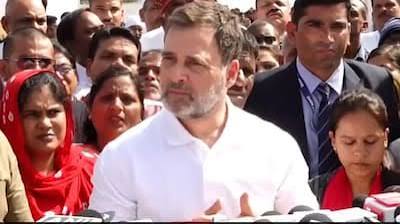
Encouraged by what it sees as the success of its five-day campaign highlighting public safety concerns amid rising gangster-related violence and extortion, the Punjab Congress is now turning its attention to the state’s drug crisis. The party is drawing up a detailed outreach programme that could see Leader of Opposition in the Lok Sabha Rahul Gandhi criss-cross Punjab to meet families affected by drug abuse. While Rahul’s dates have not been finalised, senior party leaders said the proposed visit could coincide with the next phase of the Congress campaign targeting both the AAP government in Punjab and the BJP-led Centre over their handling of the drug menace. Party insiders said apart from gangster-related violence, the widespread abuse of synthetic drugs had emerged as a major public concern in feedback gathered through surveys conducted by the party high command across the state. Over the past week, AICC general secretary and Punjab affairs in-charge Sachin Pilot and PPCC chief Pargat Singh met the families of nearly 22 victims of gangster-related violence. A report on the feedback gathered during the campaign is being sent to the party high command. The Congress is now looking to extend its outreach to families who have lost their loved ones to drug abuse, seeking to bring the issue to the centre of Punjab’s political discourse. The move is aimed at highlighting the human cost of the drug menace while questioning the state government’s response to the crisis. Meanwhile, PPCC chief Pargat Singh has questioned Union Home Minster Amit Shah over the growing drug trade across the country, the illegal sale of pharmaceutical drugs and the destruction of the younger generation due to substance abuse. Article_Author Rajmeet Singh Courtesy : The Tribune Note: This news is originally published on https:/thetribune.com/bha and is used purely for non-profit/non-commercial purposes, especially human rights
I believe in Shiva-Shakti… Rahul Gandhi attacks RSS on Vijayadashami, raises questions about women’s rights and the Constitution
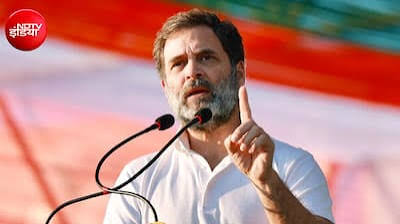
Congress MP Rahul Gandhi launched a scathing attack on the RSS on the occasion of Vijayadashami, calling it a male-dominated and anti-constitutional organization. He alleged that the RSS considers women to be the property of men. New Delhi: Leader of the Opposition in the Lok Sabha and Congress MP Rahul Gandhi has once again targeted the Rashtriya Swayamsevak Sangh (RSS). Rahul Gandhi has described the RSS as a male-dominated and anti-constitutional organization. In a post on the social media platform, Rahul Gandhi wrote that the RSS is a male-dominated, anti-constitutional organization that believes women are the property of men. He said that I believe in Shiva-Shakti, which is why I enjoy fighting them so much. The most beautiful thing is that many women from their organization are with me. The Leader of the Opposition also wished the countrymen a happy Vijayadashami. In his post, he wrote, “Heartiest wishes to all of you on Vijayadashami. May this festival, which marks the victory of truth and justice over arrogance, injustice, and oppression, bring happiness, peace, and prosperity to your lives.” Earlier, BJP MP Praveen Khandelwal raised questions about Rahul Gandhi’s Vietnam trip. He alleged that Rahul Gandhi often spends most of his time traveling abroad. He comes to India, creates controversy over an issue, and then leaves again. Demand for Public Disclosure of Expenses and Meetings for Foreign Travel Praveen Khandelwal stated that the public lacks clear information about the purpose of Rahul Gandhi’s foreign trips and the meetings he attends. He demanded that Rahul Gandhi make public the details of his foreign trips over the past two to three years. He also asked who Rahul Gandhi meets during these trips and who pays for his expenses. Khandelwal’s Question on Rahul Gandhi’s Foreign Travels He stated that Rahul Gandhi is the Leader of the Opposition in the Lok Sabha and a public figure. Therefore, the public has the right to know the purpose and expenses of his foreign trips. Reacting to Congress President Mallikarjun Kharge’s statements, Khandelwal said he felt Kharge hadn’t sufficiently examined the Congress party’s history before making his allegations. The actions Kharge is blaming others for are actions Congress itself has already committed during its tenure. Edited by: Ashok Upadhyay About the Author Ashok Upadhyay is a senior digital content producer at Navbharat Times Online. He has 10 years of experience in journalism. He began his journalism career with the Navbharat Times Hindi newspaper in 2014. Courtesy: Hindi News
‘Doing a real disservice’: Annamalai backs CJP leaders, questions their continued custody
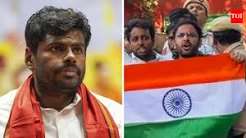
NEW DELHI: Former Tamil Nadu BJP president K Annamalai on Tuesday expressed Cockroach Janata Party and questioned Delhi Police’s handling of the case against its leaders Saurav Das and Ashutosh Ranka. While talking to reporters, Annamalai said that continued judicial custody of CJP leaders raises concerns about the rule of law. “I’m a little bit concerned in our country. I have a feeling they (Delhi Police) have taken the law into their hands, and the judge gets recused… I may not agree with many of the CJP’s modes of protest. I may not agree with some of the antics of CJP. That’s a different argument. But I completely support CJP in terms of the questions they want to raise. “It is for the government to answer. But to arrest them for a violation and again to drag them in terms of how they spend their time in jail, that is only going to make the leaders of CJP stronger. I’m afraid of saying that the Delhi police are doing a real disservice,” he added. He also said that Lok Sabha leader of opposition Rahul Gandhi has every right to question the SIR process, but institutional damage should not be caused. “Rahul Gandhi has every right to question the SIR process, but institutional damage should not be caused,” he further said. Earlier on Monday, a Delhi court extended the CJP leaders’ judicial custody by two days for allegedly entering Jantar Mantar, which is no longer a designated protest venue, and obstructing police personnel on duty. Along with other CJP workers, they waved the national flag at the site and raised slogans against Chief Election Commissioner Gyanesh Kumar before being detained and placed under preventive custody. According to their lawyer, their bail sureties were rejected due to a reported mismatch in documents. They will now be produced before the court on Wednesday. Meanwhile, CJP founder Abhijeet Dipke questioned Prime Minister Narendra Modi’s leadership and praised Das and Ranka for remaining defiant despite spending five days in judicial custody. “You must be feeling very strong keeping a 26-year-old Saurav Das in jail. You must be feeling very strong beating children on the streets. You must be feeling very strong putting up barricades across Delhi and dragging students on the streets,” he said. Dipke claimed that Das and Ranka had gone to Jantar Mantar to wave the national flag but were sent to judicial custody. He also alleged that their court hearings had been repeatedly postponed. “Is this strength? Hiding behind the police, hiding behind the courts, is this Narendra Modi’s strength?” he asked. Courtesy : TOI Note: This news is originally published on https:/timesofindia.com/bha and is used purely for non-profit/non-commercial purposes, especially human rights
From counting to reaching: Enhancing transgender welfare in India
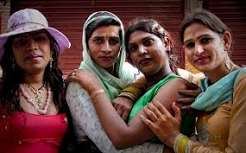
The 2011 Census gave those wishing to identify as transgender the option to choose “Other” as their gender category. In this post, Neethu Naik contends that as the country moves towards another census, the challenge is to count transgender persons more accurately, and to ensure that those counted can actually reach the institutions created for them. In 2011, India’s Census recorded 487,803 people under the category “Other”. It was the first national enumeration to provide an “Other” gender category alongside female and male. Yet, this number was never a dedicated count of transgender persons. The government has explicitly acknowledged that the category included people who wished to record their sex as “Other”, while some transgender persons may have identified themselves as female or male (Ministry of Social Justice and Empowerment, 2019). Fifteen years later, this raises questions that go beyond enumeration: What do we actually know about India’s transgender population? Has there been a systematic effort to understand its changing size, geographical distribution, socioeconomic conditions, and welfare needs since 2011? If the demographic profile has changed, can welfare architecture that was designed around a 15-year-old and methodologically limited benchmark adequately capture present needs? These questions are particularly pertinent as India moves towards another Census. Since 2011, the State has developed considerably more elaborate welfare architecture. The Transgender Persons (Protection of Rights) Act, 2019 and Rules of 2020 (Ministry of Social Justice and Empowerment, 2020) established a formal legal framework; the National Portal for Transgender Persons created an online certification mechanism; and the Support for Marginalized Individuals for Livelihood and Enterprise (SMILE) scheme brought together rehabilitation, healthcare, shelter, skill development, and economic linkages for transgender persons (Department of Social Justice and Empowerment, 2020). But how far has this architecture actually reached? From demographic visibility to administrative visibility The National Portal for Transgender Persons was introduced to provide a relatively accessible mechanism for obtaining a transgender certificate and identity card. Certification is significant because it is not merely an instrument of identity recognition; it has become an administrative gateway to several welfare interventions under SMILE and to the Ayushman Bharat TG Plus health package. The state-wise certification data provide an interesting picture of this emerging administrative geography. My compilation of the data available on the National Portal records 48,579 applications and 40,618 certificates issued across the states and Union Territories for which figures were available (Table 1). There is wide geographical variation, ranging from Maharashtra recording 6,924 applications and 5,817 certificates on the one hand, and Sikkim recording 42 applications and 39 certificates on the other hand. These figures are influenced by factors such as awareness, digital access, documentation, administrative support, and willingness to seek certification. Hence, these may not represent true differences in demographic prevalence. Table 1. State/UT-wise applications received, and transgender certificates issued through the National Portal for Transgender Persons, September 2026 State/UT Applications received Certificates issued Pending Maharashtra 6,924 5,817 240 Karnataka 6,038 5,316 186 Odisha 3,957 3,654 86 Andhra Pradesh 3,907 3,516 68 Telangana 3,370 2,800 381 West Bengal 2,813 2,279 177 Uttar Pradesh 2,749 2,055 279 Gujarat 2,540 2,280 32 Kerala 2,262 1,863 36 Delhi 2,065 1,527 161 Tamil Nadu 1,787 1,236 126 Madhya Pradesh 1,456 1,191 92 Chhattisgarh 1,294 1,179 32 Bihar 1,217 1,039 40 Haryana 1,045 771 70 Manipur 1,006 937 24 Rajasthan 942 731 64 Assam 686 508 39 Jharkhan 668 545 63 Punjab 507 370 27 Jammu & Kashmir 347 271 19 Puducherry 346 284 5 Uttarakhand 225 129 26 Tripura 197 164 15 Himachal Pradesh 117 69 5 Chandigarh 72 48 6 Sikkim 42 39 0 Meghalaya 0 0 0 Goa 0 0 0 Arunachal Pradesh 0 0 0 Nagaland 0 0 0 A & N Islands 0 0 0 Mizoram 0 0 0 Daman & Diu 0 0 0 Lakshadweep 0 0 0 Ladakh 0 0 0 Total 48,579 40,618 2,299 Source: Author’s compilation based on data displayed on the National Portal for Transgender Persons; accessed in September 2026. Nevertheless, the variation raises an important issue: the first step towards entering the welfare system – becoming administratively visible – is itself geographically uneven. This is significant because the legal framework is explicitly based on self-perceived gender identity. The 2020 Rules provide for certification through an affidavit and do not require medical or physical examination. The National Portal further states that neighbourhood verification to establish whether an applicant is transgender is unnecessary. The intention is therefore to reduce the burden of proving identity. Yet the individual must still negotiate a bureaucratic process involving applications, documents, and digital interfaces. The portal provides alternatives where certain documents are unavailable, but this does not eliminate the wider barriers of digital literacy, awareness, family support, and confidence in approaching State institutions. This creates a paradox; a system designed around self-identification can still be difficult to access for those who are socially least equipped to navigate the State. What lies beyond certification? Certification is important, but it is only the beginning of the welfare journey. SMILE is designed as an integrated intervention. Its transgender component includes medical facilities, counselling, education, skill development, livelihood and economic linkages, shelter, and rehabilitation. Healthcare illustrates the significance of this linkage. Ayushman Bharat TG Plus provides annual health coverage of up to Rs. 5 lakh per eligible beneficiary, and includes hormone therapy, gender-affirming procedures, sex-reassignment surgery, and post-operative care. However, the transgender certificate is a mandatory requirement for accessing the package. Thus, access is not a single event; it is a chain encompassing awareness, application, certification, eligibility, and service access. The livelihood component raises an even broader question. The government has introduced skill-development and entrepreneurship interventions under SMILE, including a programme intended to train 1,800 transgender persons through entrepreneurship development. But how many people move from training to sustained employment? How many obtain independent livelihoods? How many enter formal workplaces? These are arguably more meaningful indicators of social and economic inclusion than the number who have merely participated in a programme. Significantly, the Ministry invited an evaluation study in 2024 to
Dalit Man Allegedly Abused With Caste Slurs, Locked Inside Kali Temple in Ballia Over Prayers
Two men have been booked for allegedly assaulting a Dalit man over his stay at a Kali temple and offering prayers there in Uttar Pradesh’s Ballia district, police said on Monday, October 19. A case was registered late Sunday night at Rasra police station against Vishal Singh and Ankit Singh under relevant provisions of the Bharatiya Nyaya Sanhita (BNS) and the Scheduled Castes and Scheduled Tribes (Prevention of Atrocities) Act. The case was registered following a complaint by Nageena Ram, a resident of Sardaspur village. Dalit Man Allegedly Abused With Caste Slurs According to the complaint, Ram lives at the village’s Kali temple and offers prayers there. The two accused allegedly abused him with caste-based slurs and assaulted him on Sunday evening, October 18, over the issue. The complaint further alleged that when people working in a nearby field arrived at the spot, the accused locked Ram inside the temple premises. They later allegedly went to his house and threatened to kill him, the complaint stated. Police Investigation Under Way Rasra police station in-charge Sushil Kumar confirmed that a case had been registered and said an investigation was under way. “Necessary legal action would be taken in the matter,” Kumar said. Courtesy : TOP Note: This news is originally published on https:/theobserverpost.com/bha and is used purely for non-profit/non-commercial purposes, especially human rights
Mahoba: Man harassed by bullies puts up house-for-sale posters, accused arrested
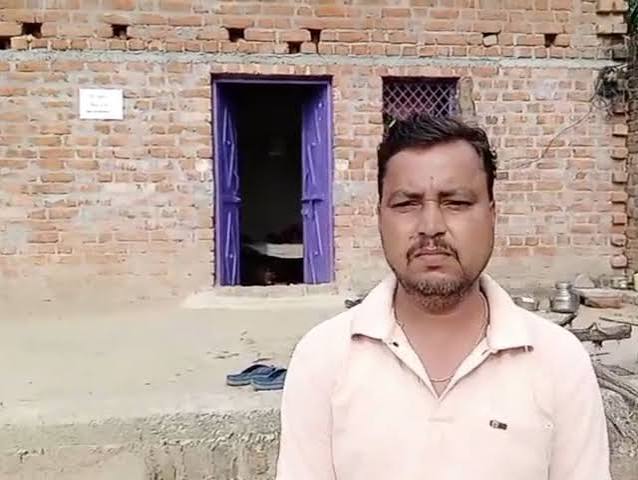
In Mahoba, a Dalit family, harassed by bullies, put up house-for-sale posters outside their home. Police have taken action and arrested the accused. In Bamrara village, in the Charkhari area of Mahoba, Uttar Pradesh, a Dalit family, harassed by bullies, put up house-for-sale posters outside their home. The victim, Ramkishan Anuragi, alleged that despite having paid off the loan, the accused demanded two lakh rupees and threatened to kidnap his daughter. After the incident gained attention, the police filed a case and arrested the accused. The victim expressed satisfaction with the police action. This matter became a topic of discussion throughout the region, prompting the police to take strict action. According to reports, Ramkishan Anuragi alleged that last year he had borrowed 65,000 rupees from Narendra Rajput, a resident of his village. The victim claimed that he had repaid 35,000 rupees, including principal and interest. Despite this, he was still being demanded another two lakh rupees. Ramkishan alleged that when he refused to pay the money, he was subjected to casteist abuse, threatened with death, and threatened with the kidnapping of his daughter. The victim had stated that he would file a complaint with the Charkhari police station. Alleging a lack of action, the family put up posters outside their home stating, “House for Sale.” Police Action After the matter went viral on social media, the police swung into action. Based on the victim’s complaint, they registered a case, arrested the accused, Narendra, and initiated necessary legal action. CO Charkhari Deepak Dubey stated that the matter involved a monetary dispute between the two parties. The victim has removed the posters after expressing satisfaction with the police action. Currently, the victim has expressed satisfaction with the police action to the media. Written By: Imran Khan, Mahoba Courtesy: Hindi News
Farmer, Dalit groups to hold anti-SIR protests across Karnataka on October 23

On SIR, the leaders alleged that nomadic communities, Dalits, Adivasis and religious minorities had been disproportionately affected by deletions from electoral rolls. Bengaluru: Farmer and Dalit organisations have called for people’s marches and protests across Karnataka on October 23, demanding the scrapping of the Special Intensive Revision (SIR) of electoral rolls, the removal of Chief Election Commissioner Gyanesh Kumar and a judicial inquiry into the allegations against him. “It is the responsibility of citizens to bring down a government that beats children and farmers, but this must be done peacefully and democratically through the right to vote guaranteed by the Constitution,” said actor Prakash Raj addressing a press meet in Bengaluru on Monday. “We will turn the entire country into Jantar Mantar on October 23. No amount of police or military deployment can suppress the people’s movement,” he said. Condemning the Special Intensive Revision (SIR) process, the functioning of the Election Commission and police action against protesters, Prakash Raj said peaceful demonstrators in Delhi had been subjected to force. Journalists had been assaulted and their cameras snatched, he alleged, describing it as an attack on democracy and press freedom. State Raitha Sangha president Badagalapura Nagendra said the Centre was neglecting farmers’ interests and failing to fulfil assurances given after the historic agitation against the farm laws. “Centre’s indifference was a major reason for the crisis surrounding the ongoing sugarcane growers’ protest in Karnataka,” he said. Dalit Sangharsha Samiti activist Guruprasad Keragodu demanded the removal of Chief Election Commissioner Gyanesh Kumar and a judicial inquiry into his functioning. He also called for democratisation of the process of appointing election commissioners, complete scrapping of SIR and a fresh, people-friendly revision of electoral rolls under a new Election Commission. He further demanded that all elections held after SIR be cancelled and fresh elections conducted, that protesters be allowed to demonstrate at Jantar Mantar, and that cases registered against young protesters be withdrawn. On SIR, the leaders alleged that nomadic communities, Dalits, Adivasis and religious minorities had been disproportionately affected by deletions from threatened the constitutional principles of equality and representation, and called on Dalit organisations to treat the issue as a struggle for the community’s survival. Courtesy : DH Note: This news is originally published on https:/deccanherald.com/bha and is used purely for non-profit/non-commercial purposes, especially human rights
Behenji has formulated a special plan for Akash Anand, now set to make a splash in Bahujan politics.
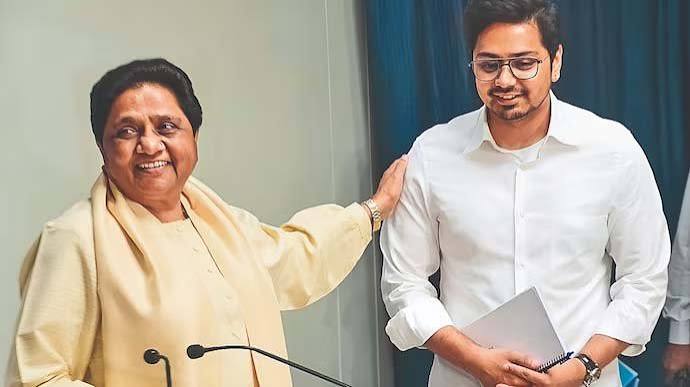
The BSP supremo has formulated a comprehensive political plan for Akash Anand. His aunt and BSP supremo Mayawati, who was displeased with him for months, is now showering her nephew Akash Anand with love and rapidly advancing him in politics. Lucknow. Akash Anand will soon be showing his mettle in the electoral arenas of various districts in Uttar Pradesh, including Uttarakhand and Punjab. The BSP supremo has formulated a comprehensive political plan for Akash Anand. His aunt and BSP supremo Mayawati, who was displeased with Akash Anand for months, is now lavishing love on him and rapidly advancing him in politics. In her post, Behenji praised Akash Anand, saying that he is demonstrating great understanding and maturity as the BSP’s national convener and has been working diligently and swiftly in fulfilling his responsibilities. Behenji has announced that Akash Anand will address public meetings in Bulandshahr, Uttar Pradesh on October 28, 2026, in Saharanpur on November 2, in Ayodhya on November 20, in Agra on November 22, and in Kanpur on November 29. On the occasion of Constitution Day on November 26, Akash Anand will be the chief guest at the ‘Vichar Sangrah Sammelan’ organized by the BSP in Punjab State. On the occasion of Baba Saheb Dr. Ambedkar’s Mahaparinirvan Diwas on December 6, Akash will address a public meeting in Haridwar, Uttarakhand. However, in her ex-post, Behenji once again targeted Ashok Siddharth. She wrote that Mr. Akash Anand is less responsible for the unpleasant events that have occurred recently, and his relative, Mr. Ashok Siddharth, is more responsible. It’s clear that after all the ups and downs, Akash Anand has made a strong comeback in the BSP. Now, he will be responsible for instilling enthusiasm among party workers in the electoral states. Raj Kumar Raj Kumar has been active in the media since 2020. He holds the position of Deputy Editor at Dalit Dastak. He monitors the political and social activities of the country and Uttar Pradesh. Courtesy: Hindi News