
Dalit woman alleges caste-related abuse and death threats for demanding her son’s wages
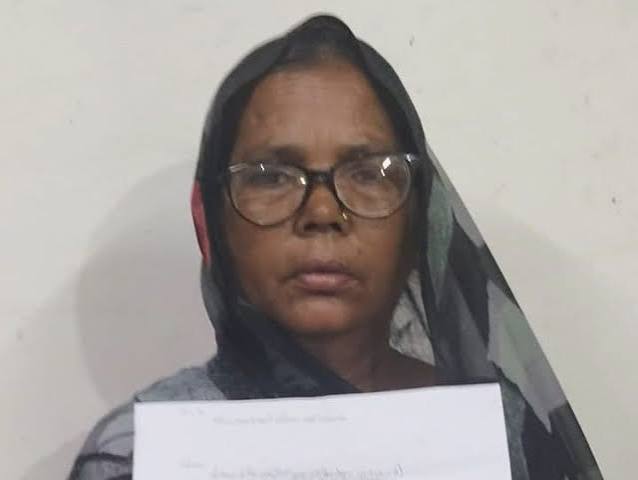
A Dalit woman in the village of Poore Khirodhar, under the Patti police station area, has alleged that she received caste-related abuse and death threats for demanding her son’s wages. The woman has filed a complaint with the Patti police. According to the complainant, Murti Devi, her son, Shivam, alias Chikki, worked as a daily wage laborer for a man in the village. When Shivam went to demand his wages, he was refused payment. It is alleged that during this time, Shivam was subjected to caste-related abuse, abuse, and threats of assault and death. Murti Devi has demanded that the police take cognizance of the matter, register a case against the accused, and take necessary legal action. She has also requested that the police ensure the safety of her and her son’s lives and property. In this regard, Station House Officer (SI) Vijay Yadav stated that he has received the application. The matter is being investigated, and further action will be taken based on the investigation. Amar Jeet Sharma | Patti, Pratapgarh Courtesy: Hindi News
“A joyous Dalit is the ultimate threat”: In conversation with Christina Dhanuja, author of Dalit Women and the Fullness of Life

In an interview with Ashikha N for Maktoob, writer and caste-equity strategist Christina Dhanuja discusses her book Dalit Women and the Fullness of Life, challenging reductive representations of Dalit women, the politics of joy and fullness, and the need to centre Dalit authored knowledge in conversations around caste, feminism, and social justice. What does it mean to imagine a full life for Dalit women in a society that has so often reduced their lives to stories of violence, labour, survival and resilience? Christina Dhanuja’s debut book, Dalit Women and the Fullness of Life, takes up this question by turning attention towards the less discussed dimensions of Dalit women’s lives. The book emerges from Dhanuja’s long engagement with questions of caste, gender, faith and justice, including her work as co-founder of the #DalitHistoryMonth project and as a founding member of the Global Campaign for Dalit Women. The book explores resilience, memory and liberation, while imagining what fullness means for Dalit women in a caste-bound world. Blending memoir with political and social analysis, the book explores Dalit women’s desires, contradictions, vulnerabilities, ambitions and joys and not merely as victims to systemic violence. Across ten chapters–-Identity, Movements, Work, Community, Sisterhood, Body, Desire, Trauma, Faith and Joy, the book moves from the political and collective to the intimate and interior. Dhanuja examines caste, gender, work, relationships, the body, faith and desire, gradually building towards her central idea of “fullness”: the right of Dalit women not only to dignity and survival, but to rest, pleasure, love, fragility, freedom and joy. In doing so, the book challenges the impulse to see Dalit women either as victims of oppression or symbols of resilience, making space instead for them to be seen, in Dhanuja’s words, as “wholesome human beings” entitled to the “full spectrum of possibilities that life has to offer.” In an interview with Ashikha N for Maktoob, writer and caste-equity strategist Christina Dhanuja discusses her book Dalit Women and the Fullness of Life, challenging reductive representations of Dalit women, the politics of joy and fullness, and the need to centre Dalit authored knowledge in conversations around caste, feminism, and social justice. Ashikha N: The title of the book itself is striking. What does “fullness of life” mean to you, and why did that phrase become the organizing principle of the book? Christina Dhanuja: Fullness of Life, in the way I see it, and in the way the book articulates it, is essentially the opportunity for Dalit women, at systemic, collective, and individual levels, to experience the full spectrum of possibilities that life has to offer. That needs far more than just symbolic inclusion and tokenistic representation. It is not enough that Dalit women be ‘included’ and ‘represented’ for the sake of having diversity. It is not okay for Dalit women to have only their most urgent priorities met; that is food, clothing, and shelter. Fullness demands a complete reimagination of the social, political, emotional, spiritual, and material realities under which Dalit women live and are expected to endure. It demands a revision of public and academic discourses, which, in turn, determine a host of other things: from policies to organizational dynamics to healthcare practices to how we run movements. Ashikha: The book blends memoir with social analysis. How did you decide on the structure of the book? Did you ever struggle with deciding how much of yourself to reveal? Dhanuja: My political writing has always stemmed from the personal, and, in some instances, the two are quite indistinguishable. At this point, it is more of a habit than a consciously structured process. And I pretty much wrote about everything I wanted to write about. There were a few passages that I edited out, but it was to protect the people I was writing about rather than hide parts of my story. Deciding on the structure of the book was also a pretty straightforward process. I’ve been ruminating on the theme of fullness for a few years now, and I wanted to explore that as a framework for an anti-caste, feminist praxis. So, to talk about the Political (Identity, Movements), the Professional (Work), the Social (Community, Sisterhood), and the Personal (Body, Desire, Trauma, Faith, and Joy) came easily. Ashikha: What were the most difficult narratives to challenge while writing the book? Dhanuja:There are very specific narratives I try to dismantle in each chapter, but generally speaking, this book required that I first peel away layers of existing—and limiting—popular and academic discourses before I could centre Dalit women’s rights to fullness. For example, in the Sisterhood chapter, I had to first critique the hyperfocus on Dalit–savarna relationships before I could discuss sisterhood among and between Dalit women. In the Identity chapter, I had to re-establish what intersectionality is, in the way Crenshaw intended it, and then see how we can apply it to caste contexts. I attribute much of this additional labour to the damage caused by academics, intellectuals, and writers—especially those writing from savarna locations—whose ‘expert views’ have ended up pigeonholing Dalit women Ashikha: What do you think society loses when Dalit women are only seen as symbols of oppression or resilience? Dhanuja: I think it is not just society in general but South Asian society in particular that has somehow ruined what it means to be human. Caste is our biggest fault line. Although my book centers Dalit women and their right to fullness, it also analyses how caste is extremely life-negating for all of us. Take joy, for example. Why should something as simple as joy be rationed based on one’s caste and gender? Or consider how ‘caste minds’ are sustained through so-called preferences in food and love and everything else. Caste societies have already lost so much, with or without Dalit women.. Ashikha: One of the book’s most powerful interventions is the insistence that Dalit women deserve to be understood beyond suffering. Why do you think joy remains such a radical subject when discussing Dalit lives? Dhanuja: I wonder if Dalit joy is
‘Each word she said cost my daughter her life’: TN Dalit mother on teen’s suicide

Speaking to TNM, the family of 16-year-old Dalit girl P Nishanthi solely blamed the allegedly casteist treatment she received from Vimala Devi, a government school headmistress, for her death. “I felt very hurt that she asked about my daughter’s character. I continued standing there with my hands folded, requesting them to somehow admit her,” P Thavamani (40) told TNM, recounting the incidents of the day before her 16-year-old daughter P Nishanthi died by suicide. Thavamani had taken Nishanthi to meet Vimala Devi, headmistress of the Government Model Higher Secondary School in Usilampatti, Madurai, on August 24 to apply for admission to class 11. Instead, Vimala Devi allegedly humiliated the girl for leaving her previous school, and her ‘character’ was scrutinised. “Seeing my folded hands, my daughter tapped my hand to ask me to lower it,” Thavamani continued. This triggered a sharp reaction from Vimala Devi, who allegedly asked, “Can’t you fold your hands in front of me? Are you that arrogant?” “She repeatedly shouted at my daughter, calling her arrogant and questioning what she had done at the previous school. Unable to tolerate the berating, my daughter started crying. [Vimala devi] then told her, ‘Get out. Leave the school.’ Those words affected my daughter deeply. She immediately ran out,” Thavamani recounted. Nishanthi’s family alleged that the incident caused her deep distress. Speaking to TNM four days after her death, the family solely blamed the allegedly casteist treatment she received from Vimala Devi for her death. Police have registered a case of abetment of suicide based on her mother’s complaint, naming headmistress Vimala Devi. The headmistress has denied the allegations, including any casteist remarks. ‘Character’ questioned Nishanthi hailed from Usilampatti in Tamil Nadu’s Madurai district and belonged to the Hindu Paraiyar community, which is classified under Scheduled Castes (SC). She was the second of three children born to Thavamani, a tailor in a garments factory, and Palaniswamy, a daily wage labourer. “She was very attached to us and was highly inclined towards studies. She would not even waste time enjoying festivals,” her family remembered. After completing class 10 from a government school in Thottappanayakkanur, she joined the Government Kallar Higher Secondary School (GKHSS) in Poochipatti for class 11 in June this year. Nishanthi had joined the Biology-Mathematics stream with ambitions of becoming a nurse, her sister Nikila told TNM. But when she struggled with some of the subjects, she wished to join the Commerce stream. However, the school refused to let her change the stream. “My daughter went to school unwillingly for some time. After that, she stopped going to school and stayed at home. She kept saying, ‘I don’t like it. I don’t want to go. Please put me in another school’,” Thavamani said. On August 24, Thavamani took Nishanthi to the Government Model Higher Secondary School in Usilampatti, where they met the headmistress Vimala Devi, who belongs to the Hindu Kallar community, which is classified as Other Backward Class. According to Thavamani, the headmistress questioned them over why they had come there after Nishanthi had already joined another school. “She asked, ‘What mistake did you commit there? You come here after having joined another school and we have to admit you? Don’t we have any other job?’” Vimala Devi then allegedly tried to contact the Government Kallar Higher Secondary School that Nishanthi had previously joined, in order to know about her ‘conduct’. When there was no response, she called the Thottappanayakkanur school where Nishanthi studied class 10. “She put the call on speaker phone. The teacher from Thottappanayakkanur said my daughter was a good student,” Thavamani said. Vimala Devi then allegedly asked, “How is her character?” This question about her daughter’s character hurt her deeply, Thavamani said. That was when she requested the headmistress with folded hands to admit her daughter to the school, prompting Nishanthi to gesture to her to not fold her hands. ‘She was emotionally drained’ After Vimala Devi asked her to “get out” of the school, Nishanthi walked for around five kilometres towards Nallamalpatti. When Thavamani found her, she brought her home in an autorickshaw. “When we got home, she lay down. I asked her to eat, but she refused. I don’t know whether she slept properly that night. She was emotionally exhausted,” Thavamani told TNM. The next day, August 25, Thavamani left for work, telling Nishanthi that she would return later to take her to the Kallar school to get her transfer certificate (TC). “I rarely get leave so I managed to get a 10 minute break to go get the TC,” she said. There, she was asked to wait for some more time. “I told the teacher, Manikkyan, that my daughter stopped going to school because he said she couldn’t be reassigned to the Commerce stream and told her to go to another school. He replied that they have to discipline students, and asked if that is reason enough to stop coming to school,” Thavamani alleged. “After some argument, we finally received the TC,” she said. She then returned to work, while Nishanthi went home, where she was alone. When Thavamani reached home that evening, she couldn’t initially find Nishanthi. “I searched the house, only to find her dead,” she said, breaking into tears. “While I was away, my daughter must have been thinking about everything that had happened. There was nobody at home to talk to her. I had gone to work, while she kept thinking about everything, and it caused her tremendous mental distress,” Thavamani said. ‘Each word headmistress said cost my daughter’s life’ For Thavamani, there is grief over losing her daughter, as well as anger over how Nishanthi was treated. She alleged that the headmistress Vimala Devi is solely responsible for her daughter’s death, and demanded legal action against her. “The headmistress is well educated and is in a higher position, administering a school. Wouldn’t she know how to speak to a common person like us?” she asked, adding, “Each word she said cost my daughter her life.
A Dalit woman returning home for Rakshabandhan in Firozabad died under suspicious circumstances; murder alleged.
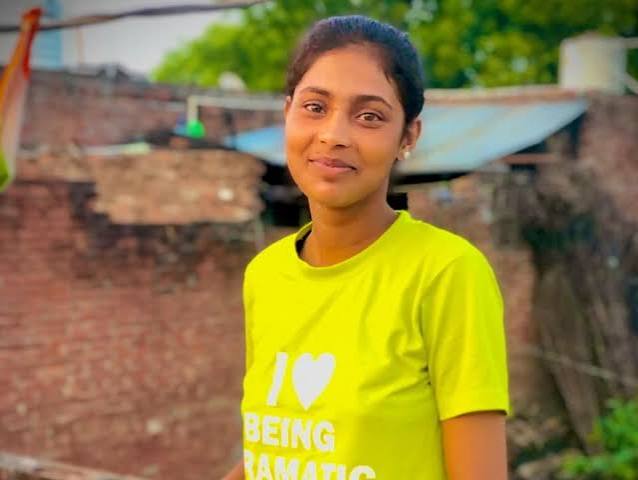
Firozabad (UP), A Dalit woman returning to her village from Gurugram to celebrate Rakshabandhan died under suspicious circumstances. The woman’s body was found in the Shikohabad police station area. Family members suspect murder, police said on Friday. Police said a case has been registered and an investigation has been initiated based on a complaint from the woman’s father. Shikohabad Station House Officer (SHO) Anuj Kumar Singh said Aarti (21), daughter of Rakesh Singh, a resident of Kutukpur village in the Nasirpur police station area, worked as a nurse at a hospital in Gurugram, Haryana. According to family members, she left her village on Wednesday night, August 26, to celebrate Rakshabandhan. During a phone call at around 8 p.m., she told them she was returning with a young man from Vijendra Colony in Shikohabad. Her mobile phone then went off. Meanwhile, police received information about the discovery of a young woman’s body in the Shikohabad area on Thursday. The Inspector-in-Charge arrived at the scene with police force. The body was identified based on documents found near it and the family was informed. The police sent the body for post-mortem and registered a case based on the father’s complaint. Several people are being questioned in connection with the case. The deceased’s elder sister, Lalita, also alleged that upon arriving in Shikohabad, Aarti had told them that since it was night, she was staying with her friend near Pratappur intersection. Police were informed of the incident in the morning, but her friend has been untraceable since then. The family has also expressed doubts about her friend’s role. Courtesy : Hindi News
Three LPG cylinders, free bus travel for women, transgenders – what CM Vijay announced in TN assembly

NEW DELHI: Tamil Nadu chief minister C Joseph Vijay on Monday announced a set of welfare measures in the state Assembly, including three free cooking gas cylinders a year for eligible beneficiaries and an expansion of the fare-free bus travel scheme for women. Under the cooking gas scheme, the amount for the three cylinders will be credited directly to the bank accounts of eligible beneficiaries. Vijay announced the launch of the Vetri Payanam scheme, expanding the existing fare-free bus travel programme for women across the state. Under the scheme, women will be allowed to travel free of charge on Express, LSS and Deluxe government buses operating in metropolitan and urban areas. For inter-district travel, the benefit will cover ordinary-fare government buses in mofussil and hilly areas. The scheme will come into effect from October 2, marking the birth anniversary of Mahatma Gandhi. Vijay said there would be no income ceiling or restriction on the number of trips under the programme. Transgender persons will also be eligible for free travel. “No riders like income ceiling or number of trips for women to avail fare-free bus travel,” Vijay added. Vijay had earlier outlined several welfare measures in his election manifesto, including six free LPG cylinders a year for every family, up to 200 units of free electricity, a monthly assistance of Rs 2,500 for women below the age of 60, and family health coverage of up to Rs 25 lakh. Courtesy : TOI Note: This news is originally published on https:/timesofindia.com/bha and is used purely for non-profit/non-commercial purposes, especially human rights
Free LPGs, expanded free travel for women, transgender persons; Parandur Airport scrapped: TN Vijay

Tamil Nadu Chief Minister C. Joseph Vijay announced that three LPG cylinders would be provided free of cost every year to 1.34 crore families in the State. He also announced the expansion of the free bus travel scheme for women and transgender persons, which is currently limited to ordinary buses. Under the new ‘Vettri Payanam Thittam’, they will be allowed to travel free of cost on mofussil buses operating between districts, as well as express and deluxe buses operated by the MTC in Chennai and by transport corporations in Madurai, Coimbatore, Tiruchy and other cities. The scheme will come into effect on October 2. Making the announcements under Rule 110 in the Assembly, Vijay also said the proposed second airport at Parandur had been dropped and the government was exploring alternative sites for the project. Courtesy : TNIE Note: This news is originally published on https:/thenewindianexpress.com/bha and is used purely for non-profit/non-commercial purposes, especially human rights
Four Sirwar cops suspended after Dalit woman’s rape and murder

Raichur: Four personnel attached to Sirwar police station have been suspended for alleged dereliction of duty in connection with the rape and murder of a Dalit woman from Hokrani village in Sirwar taluk. Raichur SP Arunangshu Giri issued suspension orders against sub-inspectors Bheemareddy and Veeresh, and constables Devaraj and Nagaraj, following allegations that they failed to respond appropriately after the woman was reported missing. According to the SP, the victim’s parents informed the police on the evening of Aug 19 that she had gone missing. However, when family members approached the police station to lodge a complaint, the personnel allegedly failed to act promptly and did not visit the village for spot verification. The alleged negligence sparked protests on Aug 22 by the victim’s relatives and members of Dalit organisations. They submitted a complaint to Ballari IGP Dr Harsha PS, the Raichur deputy commissioner and the SP, demanding strict action against the police personnel accused of failing in their duty. Following the allegations and the public outcry, the SP ordered the suspension of the four personnel pending further inquiry into the matter. Courtesy : TOI Note: This news is originally published on https:/timesofindia.com/bha and is used purely for non-profit/non-commercial purposes, especially human rights
Parliament monsoon session yet to be prorogued, BJP, Congress face off over women’s bill

NEW DELHI: BJP on Sunday sought to play back to Rahul Gandhi his pitch for women’s empowerment, by questioning his strident opposition to govt’s push for an early implementation of quota for them in Lok Sabha and assemblies. “He does not want to give rights to women. His words don’t match his actions,” Maharashtra CM Devendra Fadnavis said. BJP’s framing its attack on Rahul around the women’s quota coupled with the fact that monsoon session is yet to be prorogued gave another indication of the possibility of govt summoning the two Houses at short notice to take up its Constitution amendment bill for implementation of quota from 2029 with a nearly 50% rise in Lok Sabha seats. “What explains the abnormal delay now? Is the Union home minister still in search of his super-tainted 2/3rd majority to get the constitutional amendment bill on delimitation passed in a special session,” Congress’s Jairam Ramesh asked. Congress, too, was mindful of the possibility of a short upcoming session and claimed that BJP is still searching for “super tainted” majority in Lok Sabha, in what was a swipe at govt’s alleged attempts to split opposition parties to reach the two-thirds majority in the House needed for the bill’s passage. Ramesh said the gap between Parliament’s adjournment and its prorogation is generally two to four days. But the monsoon session, which ended on Aug 13, has not been prorogued yet. When a session is prorogued, govt has to go through the protocol for calling a new session that conventionally requires a gap of 15 to 20 days. Stepping up BJP’s attack on Rahul Gandhi, Fadnavis said he spoke about women’s empowerment from a public platform but has opposed the most revolutionary step to give women their due. BJP’s Smriti Irani said Rahul should positively respond to PM Modi’s appeal to political parties to support the implementation of women’s quota. On the Vande Mataram row, she said Congress should allow rendition of the song’s full version. While speculation has swirled over the revival of the bill to amend women’s quota law, which was defeated in April, govt has officially remained non-committal over any such move except acknowledging that it had sought Rahul’s view. The LoP in Lok Sabha reiterated his stand against it. Congress and its allies have said Lok Sabha’s strength should be frozen at its existing number and the quota should be executed within it. Courtesy : TOI Note: This news is originally published on https:/timesofindia.com/bha and is used purely for non-profit/non-commercial purposes, especially human rights
‘You don’t belong to anyone else, but yourself’: Rahul Gandhi’s message to young women
NEW DELHI: The fourth event of Lok Sabha leader of opposition Rahul Gandhi’s ‘Chhatron Ki Goonj’ programme kicked off in Pune on Saturday. The Congress leader is set to address a large women’s rally at the AISSMS College Ground in Pune, Maharashtra. In his address, he invoked a verse from the Manusmriti and contrasted it with his call for the empowerment and autonomy of women. Referring to the verse, he highlighted the notion that, “A woman in her childhood belongs to her father, after marriage belongs to her husband and in her old age belongs to her son.” Rejecting this idea, he asserted that a woman belongs to no one but herself. While acknowledging that the relationships in a woman’s life are important, he stressed that they do not determine her identity or ownership, which, he said, rests exclusively with her. However, the event follows a political storm and clashes between student organisations. The programme was preceded by a midnight clash between the NSUI and ABVP at the COEP Technological University hostel. It happened after ABVP claimed that female students were being forced to attend the event. Meanwhile, Congress leaders countered the claims, saying two female students, who had earlier expressed their support for the event, were threatened and confined inside the hostel. BJP has also accused Congress of paying influencers and manufacturing crowds for the event. Meanwhile, Congress has alleged that the ruling establishment was attempting to disrupt Rahul Gandhi’s student outreach. NSUI-ABVP clash erupts at COEP hostel Tensions escalated on Friday night when NSUI and ABVP members clashed at the COEP hostel campus ahead of the LoP’s interaction. Police resorted to a lathi charge to control the situation, while several injured activists were taken to Sancheti Hospital. According to police sources cited in the material, the Shivajinagar Police registered cases against 50 to 60 people, including six named NSUI and Youth Congress activists, following a complaint by an ABVP member. The confrontation reportedly centred on student participation in LoP Rahul Gandhi’s programme. NSUI activists said they were responding to distress calls from female students, while ABVP alleged that Congress-linked workers were forcibly encouraging hostellers to register for the event. Congress alleges female students were intimidated Congress leaders accused ABVP workers of entering the girls’ hostel and intimidating students who had expressed support for the event. Congress spokesperson Atul Londhe alleged that a female student was cornered and forced to apologise on camera. NSUI state president Sagar Salunke claimed that students had called the organisation for help and alleged that CCTV cameras had been switched off before NSUI members arrived. Salunke also alleged that students, including orphaned students, had been pressured to record videos praising the college administration. The case registered by police followed a complaint from 21-year-old student Malhar Nilesh Patil, who alleged that a student’s video statement had been recorded under pressure at the hostel. Pawan Khera alleges conspiracy to disrupt event Congress leader Pawan Khera alleged that there had been a conspiracy to disrupt LoP’s Pune programme, claiming that the response among young people had rattled those in power. Khera linked the controversy to the issues female students were expected to raise with Rahul, including alleged diversion of scholarship funds. He accused ABVP workers of intimidating students and said the incident reflected an attempt to keep women away from public decision-making. He also invoked Pune’s history as the city where Savitribai Phule pioneered women’s education, arguing that the theme of the event was particularly relevant to the city. BJP calls event ‘Paise Ki Goonj’ The BJP launched a separate attack on the programme, accusing the Congress of paying influencers to mobilise attendance and promote Rahul Gandhi’s event on social media. BJP Maharashtra spokesperson Navnath Ban alleged that influencers were being offered Rs 30,000 to Rs 35,000 each, along with travel expenses, and claimed that the overall expenditure could reach Rs 9 crore to Rs 10 crore if around 3,000 people were paid. Ban dubbed the programme ‘Paise Ki Goonj’ instead of ‘Chhatron Ki Goonj’ and demanded an investigation into the source of the alleged funds. BJP leader Keshav Upadhyay separately accused Rahul Gandhi of using student issues as a political platform. Congress hits back, says BJP ‘rattled’ by youth response The Congress rejected the BJP’s allegations and accused it of trying to create obstacles to LoP Rahul Gandhi’s programme because of his growing support among young people. Maharashtra Congress spokesperson Sachin Sawant claimed that the BJP was particularly apprehensive about Rahul’s appeal among Gen Z and alleged that authorities and ABVP members had attempted to disrupt the programme. NCP (SP) leader Mahesh Tapase also criticised the BJP, saying there was no reason to oppose a programme focused on issues affecting students and young people. What is ‘Chhatron Ki Goonj’ about? Rahul’s Pune interaction with female students is centred on student and youth concerns, with issues such as paper leaks, unemployment and the education system expected to feature in the programme. The Congress has sought to position the initiative as a platform for students to directly raise their concerns, while the BJP has characterised it as a political campaign by the Leader of the Opposition. The Pune event, therefore, has begun against the backdrop of an escalating political battle over who controls the narrative around student and youth concerns. Courtesy : TOI Note: This news is originally published on https:/timesofindia.com/bha and is used purely for non-profit/non-commercial purposes, especially human rights
Dalit girl murdered and her body thrown into a well in Karnataka; father suspects rape
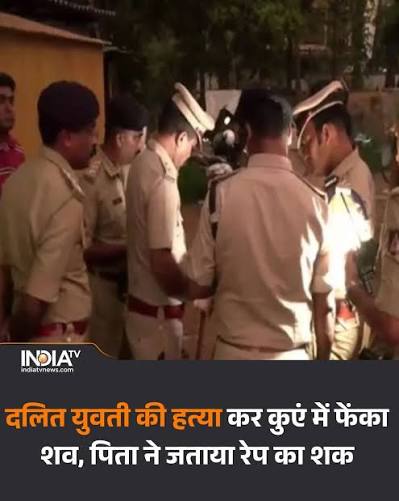
Raichur. The body of a Dalit girl was recovered from a well in Hokrani village, Sirwar taluk, Raichur, Karnataka, last Thursday. It is suspected that she was raped and then murdered. Police have arrested three accused in the case, while one remains at large. The body of the young woman, who had gone to defecate in the open, was found the next day on the steps of a village well. According to the complaint filed by the young woman’s father, the woman was raped and murdered. Gundya and Mahantesh, 22, Veeresh, 23, and Mundaragi Basavaraj are accused of the crime. A case has been registered against them. Circle Police Inspector M. Shashikant stated that three of the men have been detained and sent to judicial custody. The deceased has been identified as a 22-year-old woman from Hokrani village. According to the family, the young woman had gone to relieve herself last Wednesday evening but did not return. After an extensive search, the family found her body in a well on Thursday morning. Police were informed. Upon receiving the news, Sirwar police arrived at the scene and began investigating. Police say they suspect the attackers killed her and threw her body into the well. A case has been registered at the police station. Last month, in July, a shocking murder case emerged from Dharwad, Karnataka. A 45-year-old anesthesiologist was murdered in his apartment. His 8-year-old son was also stabbed and found injured at the scene. The doctor was identified as Dr. Kiran Honnwar, an anesthesiologist at Chirayu Hospital. Dharwad police arrested the doctor’s wife in connection with the case. Police reported that Dr. Priyanka, an ophthalmologist, was also taken into custody. Following the incident, his injured son was admitted to a private hospital. Digvijay Courtesy: Hindi News