
UP: Man arrested for repeatedly raping a Dalit woman by making obscene videos and blackmailing her

Sigra Police take major action: Manoj Maurya, accused of repeatedly raping a Dalit woman by blackmailing her with obscene videos, arrested; case registered under SC/ST Act. Varanasi/UP: Sigra police on Tuesday arrested 28-year-old Manoj Maurya for repeatedly raping and blackmailing a 22-year-old Dalit woman. The accused faces serious charges, including making obscene videos and threatening her with dire consequences. Police have registered a case in this matter under sections of the Indian Penal Code (IPC) as well as the SC/ST Act. Sigra Police Station in-charge Shivanand Mishra said on Tuesday that this significant arrest was made based on a tip-off. In fact, the accused Manoj had come under police radar since the victim’s complaint. In her complaint to the police, the woman stated that the accused had physical relations with her and deceitfully recorded an obscene video. According to the victim, the accused was continuously physically and mentally abusing her, threatening to make the video viral on the internet. Furthermore, he used casteist slurs against the victim and her family members. He also threatened to kill the rape victim and her entire family. Police officials stated that immediate action was taken due to the sensitivity of the case. After an FIR was registered under relevant sections of the BNS and SC/ST Acts, police teams immediately began action. Police raided several locations and finally arrested the accused, Manoj Maurya, a resident of Manduadih. Rajan Chaudhary Courtesy: Hindi News
TM Impact: Dalit woman cook receives pending salary, theft complaint withdrawn; both parties reach agreement

On published a report based on Sheetal’s complaint. The report highlighted Sheetal’s allegations against the cafe owner and a serving female constable of the Delhi Police. Sheetal made several allegations, including withholding of salary, caste-based harassment, and alleged use of police influence. New Delhi: The case of a Dalit woman cook in the Moti Nagar area of the capital, who was not paid her pending salary after complaining about the poor quality of food at a restaurant, and the cafe owner filing a police case against her, accusing her of theft, has been resolved. After published a report on the complaint and allegations made by Dalit woman cook Sheetal Singh, swift action was taken in the matter. According to Sheetal, a written agreement was reached between the two parties in the presence of police at the Moti Nagar police station on the evening of September 14. The cafe paid her pending salary, while the cafe owner gave written consent to withdraw the theft complaint against Sheetal. Sheetal has also withdrawn her complaint. Sheetal informed The Mooknayak of the entire incident. According to her, both parties have now agreed in writing that they will not pursue any further legal action or complaints against each other. This immediate resolution was possible only because of The Mooknayak’s prompt reporting and support. Sheetal stated that the immediate resolution of the matter was possible after the report was published and the incident was made public. She expressed gratitude to The Mooknayak, saying that the report helped her voice her concerns. Reported being called to the police station in the morning, but events changed after the report was published. Previously, Sheetal had told The Mooknayak that she was receiving repeated phone calls asking her to come to the police station in connection with a theft case. She claimed that she was demanding her pending salary, and that theft charges were filed against her. The Mooknayak had published a report based on Sheetal’s complaint in this same case. The report highlighted Sheetal’s allegations against the cafe owner and a serving female constable of the Delhi Police. Sheetal had made several allegations, including withholding of salary, caste-based harassment, and alleged use of influence by her police position. After the report was published, Sheetal stated that the case was closed with the consent of both parties in the presence of an SI at the Moti Nagar police station. According to Sheetal, the police took written statements from both parties. These statements stated that the outstanding amount of ₹17,741 had been paid and the dispute had been resolved. Sheetal told The Mooknayak that the cafe owner had agreed in writing to withdraw the theft complaint and settle the matter through a compromise. Following this settlement at the police station, both parties agreed not to file any further complaints or take any legal action against each other. Sheetal stated that she believes no proceedings are pending from either side. While providing details of the incident, Sheetal also mentioned that during the proceedings, a person from the local Dalit community had also reached the police station to intervene. According to Sheetal, when asked for CCTV footage from the cafe to verify the claims of theft and alleged cash payments, the management stated that the cameras were not working. Sheetal’s original complaint alleged that she worked at the cafe for a monthly salary of ₹22,000, withheld wages, caste discrimination, and alleged intimidation. The complaint also stated that after she demanded her salary, the cafe owner filed a complaint against her for stealing pulses, oil, and coffee pouches. Following the settlement, Sheetal told The Mooknayak that the immediate resolution of the case was possible after the publication of the report and the publicity of the matter. She expressed gratitude to The Mooknayak, saying that the report helped her voice her voice. Sheetal also said that her experience made her realize that workers from the Scheduled Caste community, even those with weaker economic backgrounds, can face pressure and police complaints for demanding their wages. What was the whole controversy? Sheetal Singh, a Scheduled Caste woman cook working at Vidhi Cafe in Moti Nagar, Delhi, made serious allegations against the cafe’s owner, Vijay Singh, and Divya, a female constable with the Delhi Police. According to Sheetal, she was hired as the head cook at a monthly salary of ₹22,000 and had objected to the alleged use of spoiled/stale food and palm oil in the cafe. She alleged that after her caste was revealed, her treatment changed, and she was forced to perform tasks such as sweeping, deep cleaning, and washing dirty utensils late into the night, in addition to cooking. Sheetal also alleged that her ₹22,000 salary was withheld, and when she quit her job to demand her dues, a complaint was filed against her for stealing pulses, oil, and coffee sachets, even though she was challenging her claim of alleged cash payment. She accused female constable Divya of being associated with the cafe and using her police position to threaten her. Sheetal demanded action, security, and payment of her pending salary from the police and administration. After the incident was published in The Mooknayak, according to Sheetal, the police brokered a settlement between the two parties at the Moti Nagar police station. She stated that the pending salary of ₹17,741 was paid, the cafe management confirmed in writing that they had withdrawn the theft complaint, and both parties gave written undertakings not to take any further legal action against each other. Sheetal also stated that she had previously received repeated calls to come to the police station regarding the theft, but after the news was published, the dispute was resolved that same day in the presence of the SI. She also raised questions about the CCTV footage, stating that when she asked for CCTV footage to verify the alleged theft and cash payments, the management claimed the cameras were out of order. All these allegations and events are based on Sheetal’s statement and the
‘Police Kicked Her in Abdomen’: Pregnant Dalit Woman Dies in Firozabad, 6 Personnel Suspended

A 28-year-old pregnant Dalit woman died after she was allegedly kicked in the abdomen by a police officer who had gone to her home in Firozabad to arrest her husband in a theft case, according to her family. Six police personnel, including two sub-inspectors, have been suspended following the woman’s death. Woman Allegedly Kicked During Police Visit According to the family, Sub Inspector Dharmpal Singh arrived at the home of Anjali and her husband Gaurav in Labhaua village under the Shikohabad police station area at around 11:45 pm on Sunday. The family alleged that Anjali pleaded with the police not to take her husband. They claimed that Singh kicked her in the abdomen, causing her to fall. Police took Gaurav, 32, into custody. The family said Anjali’s condition then deteriorated. She was taken to a hospital in Shikohabad, where she delivered a baby boy on Monday morning. Her condition reportedly worsened after the delivery and she was later shifted to a private hospital in Firozabad, where doctors declared her dead. The newborn was also reported to be in critical condition and was referred to a hospital in Agra for treatment. Six Police Personnel Suspended Following Anjali’s death, villagers gathered outside the police station and protested over the alleged police action. The family said Gaurav was released after police were informed about his wife’s death. Additional Superintendent of Police (City) Ravi Shankar Prasad said Firozabad Superintendent of Police Aditya Langhe suspended six personnel with immediate effect for negligence. Those suspended are Sub Inspectors Dharmpal Singh and Satyapal Singh, Head Constables Mohan Singh and Arvind Kumar, and Constables Bhavtosh Kumar and Kuldeep Kumar. Anjali’s post-mortem examination was conducted late Monday night. Her last rites were also performed the same night amid heavy police deployment. Political Leaders Demand Probe Samajwadi Party national general secretary and Rajya Sabha MP Ramjilal Suman visited Anjali’s family on Tuesday. He later spoke to the ADG Agra Zone and demanded an impartial investigation and strict action against those found responsible. Suman also reached the Shikohabad police station with party workers and staged a sit in. He alleged that police had detained two youths on suspicion of theft, including Anjali’s husband. Azad Samaj Party chief Chandrashekhar Azad also questioned the incident in a social media post and called for a fair investigation and action against the police personnel found responsible. Courtesy : TOP Note: This news is originally published on https:/theobserverpost.com/bha and is used purely for non-profit/non-commercial purposes, especially human rights
Man gets life term for crushing 2 Dalit women with car & trying to abduct girl

Bulandshahr: A special SC/ST court in UP’s Bulandshahr has sentenced a man to life imprisonment for the deaths of two Dalit women — in their 50s — who were deliberately run over by a car during a wedding in 2019. The court also imposed a Rs 51,000 fine on the convict. According to prosecution, the incident took place on June 25 when a marriage ceremony was underway and the bride’s kin were standing by the roadside. The accused, Nakul Thakur, arrived in a car with co-accused Omendra alias Oga. Thakur first tried to abduct a girl, a Dalit, from the venue and then used abusive and casteist remarks when she resisted. The accused also threatened the girl’s kin when they objected. He then drove away only to return with the vehicle at high speed. They mowed down some of the ‘baraatis’ waiting outside as a result of which two women were crushed to death. Two men were also critically hurt. The incident sparked angry protests in the area, following which police registered an FIR against Thakur and Omendra. Special public prosecutor Vipul Raghav told the court that the case was registered on June 25, 2019, on the complaint of Dharmendra Singh of Chandpur village. Police arrested the accused and after completing the investigation, filed the charge-sheet on Aug 28, that year. The case was heard before the special SC/ST Act court. During the proceedings, prosecution presented evidence and witnesses to establish the gruesome crime. Main accused Thakur died during trial on Feb 17, 2024. On Thursday, special judge Om Prakash Verma held co-accused Omendra guilty and sentenced him to life in prison. Courtesy : TOI Note: This news is originally published on https:/timesofindia.com/bha and is used purely for non-profit/non-commercial purposes, especially human rights
Telangana Congress leaders urge Governor to protect self-respect of Dalits, women
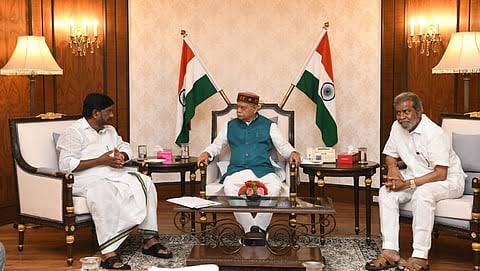
The ministers also said that September 8, 2026, was a dark day in history. BRS MLCs Tata Madhu and Naveen Reddy targeted Assembly Speaker Gaddam Prasad Kumar, hurting the entire Dalit community. HYDERABAD: A delegation of Congress leaders, led by Deputy Chief Minister Mallu Bhatti Vikramarka, on Wednesday called on Governor Shiv Pratap Shukla and submitted a memorandum, requesting him to protect the self-respect of Dalits and women. The delegation, which also comprised other ministers, met the Governor in the wake of “purification” of roads near KCR’s Erravalli farmhouse. They sought the intervention of the Governor in protecting the dignity, safety and self-respect of Dalits and women. The ministers also said that September 8, 2026, was a dark day in history. It was the day when BRS MLCs Tata Madhu and Naveen Reddy targeted and humiliated Assembly Speaker Gaddam Prasad Kumar, hurting the entire Dalit community. “BRS MLA T Harish Rao first removed his shirt, followed by several others, and threw it at police officers, before pressing forward, touching and coming unacceptably close to women police personnel on duty,” they informed the Governor, while alleging that several BRS leaders, led by party’s working president KT Rama Rao, assaulted police personnel, including women officers. Courtesy : TNIE Note: This news is originally published on https:/thenewindianexpress.com/bha and is used purely for non-profit/non-commercial purposes, especially human rights
Dalit sanitation worker attempts suicide after alleged caste discrimination at workplace Vartha Bharati

Madurai: A 37-year-old Dalit sanitation worker in Kambur panchayat near Melur allegedly attempted suicide days after raising complaints of caste discrimination at her workplace, including allegations that Dalit workers were made to use separate disposable cups and that she was asked to carry the panchayat secretary’s footwear. The woman, identified as Sasikala, was found vomiting outside her house at around 11 am on Sunday. According to police sources cited by The Observer Post, a neighbour took her to the Melur Government Hospital, where doctors found that she had consumed pesticide. She was admitted for treatment and is reportedly in critical condition. Sasikala has been working as a sanitation worker in Kambur village for around eight years. She had recently approached Madurai district collector Nishant Krishna, seeking action over alleged caste-based discrimination and threats at her workplace. Her husband, T Prakash, alleged that panchayat secretary Roopa subjected Dalit sanitation workers to discriminatory treatment. “Dalit workers were not allowed to use the common metal tumblers for tea. They were asked to use separate disposable cups,” Prakash alleged. He claimed that the practice continued despite objections from the workers and alleged that sanitation duties were also assigned on the basis of caste. Prakash further alleged that Sasikala was made to carry the secretary’s slippers on some occasions because she belonged to the Dalit community. He also alleged that the family came under pressure after Sasikala raised complaints regarding the functioning of the panchayat. “Associates of Roopa are frequently giving us death threats and asking my wife to withdraw the police complaint,” Prakash alleged. In her representation to the district collector, Sasikala said she had previously approached local authorities and the police regarding the alleged discriminatory treatment. She also claimed that she and another sanitation worker who supported her were subsequently threatened and targeted. Sasikala sought an inquiry into the allegations and action against the panchayat secretary. The allegations have now been followed by a police case. A senior police officer was quoted by The Observer Post as saying that Kottampatti Police registered a case on September 4 under Sections 296(b) and 351(2) of the Bharatiya Nyaya Sanhita (BNS), relating to obscene acts and criminal intimidation, along with relevant provisions of the Scheduled Castes and Scheduled Tribes (Prevention of Atrocities) Act. Melur DSP Sivakumar is investigating the case. (Assistance for overcoming suicidal thoughts is available on the state’s health helpline 104, Tele-MANAS 14416.) Courtesy : Vartha Bharati Note: This news is originally published on https:/varthabharati.com/bha and is used purely for non-profit/non-commercial purposes, especially human rights
Dalit sanitation worker tries to end life over alleged two-tumbler system
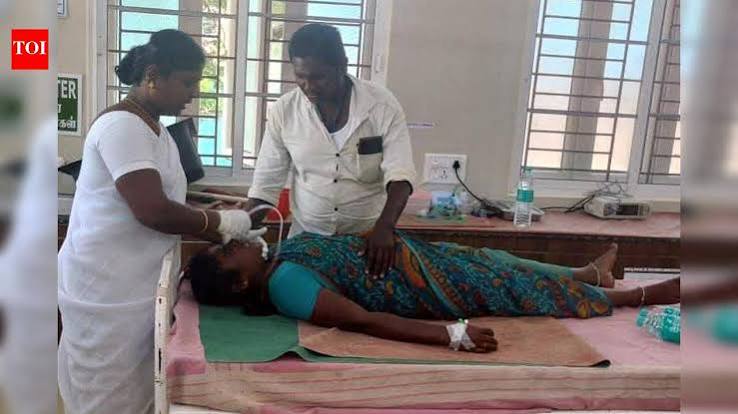
Madurai: A 37-year-old dalit sanitation worker of Kambur panchayat near Melur attempted suicide on Sunday, days after alleging that she was forced to use separate disposable cups at work and made to carry the panchayat secretary’s footwear by hand because of her caste. Sasikala, a resident of Kambur, had been working as a sanitation worker in the village for the past eight years. She had earlier petitioned Madurai district collector Nishant Krishna seeking action over the alleged caste discrimination and threats. Police sources said Sasikala was found vomiting outside her house around 11am on Sunday. A neighbour who noticed her condition rushed her to Melur Government Hospital, where doctors found that she had consumed pesticide. She was admitted for treatment and remains under critical care. Her husband T Prakash alleged that panchayat secretary Roopa, who belongs to the Kallar community, had subjected dalit sanitation workers to discriminatory treatment. “Dalit workers were not allowed to use the common metal tumblers for tea. They were asked to use separate disposable cups,” Prakash told TOI. He alleged that the practice continued despite workers objecting to it. He also accused the secretary of assigning work based on caste and making derogatory remarks. “On some occasions, my wife was made to carry Roopa’s slippers in her hand because she belongs to the dalit community,” he said. Prakash further alleged that Sasikala faced pressure after raising complaints over the functioning of the panchayat. “Associates of Roopa are frequently giving us death threats and asking my wife to withdraw the police complaint,” he said. In her representation to the collector, Sasikala said complaints had earlier been submitted to local authorities and police. She alleged that she and another worker who supported her were subsequently threatened and targeted. She sought an inquiry into the allegations and action against the panchayat secretary. A senior police officer said Kottampatti police registered a case on Friday, Sept 4, under Sections 296(b) and 351(2) of the Bharatiya Nyaya Sanhita, dealing with obscene acts and criminal intimidation, respectively, along with relevant provisions of the SC/ST (Prevention of Atrocities) Act. Melur DSP Sivakumar has taken up the investigation. (Assistance for those having suicidal thoughts is available on TN’s health helpline 104 and Sneha’s suicide prevention helpline 044-24640050) Courtesy : TOI Note: This news is originally published on https:/timesofindia.com/bha and is used purely for non-profit/non-commercial purposes, especially human rights
‘You don’t belong to anyone else, but yourself’: Rahul Gandhi’s message to young women
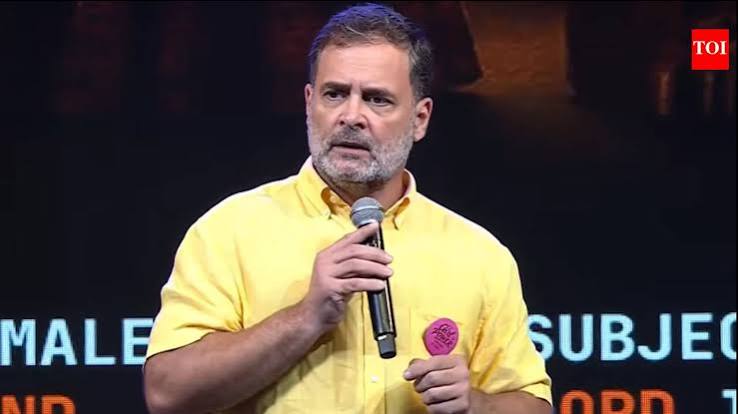
NEW DELHI: Congress leader Rahul Gandhi on Friday described India’s 70 crore women as the country’s “biggest asset”, saying they are more forward-looking than men and have a crucial role in shaping the nation’s future. He also invoked the idea of women’s autonomy and said that a woman should have the exclusive ownership of her own life. Speaking at the fourth event of ‘Chhatron Ki Goonj’ at the AISSMS College Ground in Pune, Maharashtra, he invoked a verse from the Manusmriti and contrasted it with his call for the empowerment and autonomy of women. Rejecting the idea of women being liable to other men, he asserted that a woman’s exclusive ownership belongs to herself. While acknowledging that the relationships in a woman’s life are important, he stressed that they do not determine her identity or ownership. Speaking on the central theme of the evening, “break the cage”, Rahul Gandhi called on the audience to recognise the individuality that sets each person apart and to resist the pressures that seek to confine them to predetermined identities or expectations. He said the most important message he wanted people to take away from the evening was a simple but powerful one: “Every single one of you is unique in this universe.” Elaborating on the idea, Rahul Gandhi stressed that individuality is not merely about being different from others, but about recognising one’s own worth and identity. “You are unique. You are special. You are an individual,” he told the audience. He emphasised that every person has a distinct way of looking at the world, a different set of aspirations and the ability to imagine a life beyond the boundaries imposed on them. Rahul further connected this sense of individuality to the freedom to dream and choose one’s own path. “And you have your own dream, your own vision for your life,” he said. The emphasis, he suggested, was not simply on having dreams, but on having the freedom to define those dreams for oneself rather than allowing society, circumstances or established notions of what one ‘should’ be to determine them. Through the theme of “break the cage”, the LoP framed personal freedom as the ability to step outside these limitations and acknowledge that no individual should be reduced to a role, label or identity prescribed by others. His message was that recognising one’s uniqueness is the first step towards claiming the freedom to shape one’s own future, pursue one’s aspirations and live according to one’s own vision of life. Rahul Gandhi attacks Manusmriti Rahul Gandhi launched a sharp attack on the Manusmriti over its treatment of women, criticising the text’s prescription that women should remain under the authority of male relatives throughout their lives. He contrasted the idea with his call for women’s autonomy, arguing that a woman’s identity and freedom should not be defined by her relationship with her father, husband or sons. Quoting from the Manusmriti, Rahul Gandhi said, “I (would) like to quote here the Manusmriti, which says clearly that in childhood a female must be subject to her father, in youth she belongs to her husband and, when her lord is dead, she belongs to her sons. A woman must never be independent.” Calling the words unacceptable, Rahul Gandhi added, “These words are a shame. These words should not have been spoken.” He said the country should instead recognise women as individuals with their own aspirations and agency, describing India’s 70 crore women as its “biggest strength” because of their “70 crore unique journeys, unique imagination, unique dreams”. His remarks framed the debate around women’s independence as a broader question of individual freedom, with Rahul arguing that women should have the right to define their own identities and determine the course of their lives rather than be treated as belonging to male relatives. Event follows political storm, clashes The event follows a political storm and clashes between student organisations. The programme was preceded by a midnight clash between the NSUI and ABVP at the COEP Technological University hostel. It happened after ABVP claimed that female students were being forced to attend the event. Meanwhile, Congress leaders countered the claims, saying two female students, who had earlier expressed their support for the event, were threatened and confined inside the hostel. BJP has also accused Congress of paying influencers and manufacturing crowds for the event. Meanwhile, Congress has alleged that the ruling establishment was attempting to disrupt Rahul Gandhi’s student outreach. NSUI-ABVP clash erupts at COEP hostel Tensions escalated on Friday night when NSUI and ABVP members clashed at the COEP hostel campus ahead of the LoP’s interaction. Police resorted to a lathi charge to control the situation, while several injured activists were taken to Sancheti Hospital. According to police sources cited in the material, the Shivajinagar Police registered cases against 50 to 60 people, including six named NSUI and Youth Congress activists, following a complaint by an ABVP member. The confrontation reportedly centred on student participation in LoP Rahul Gandhi’s programme. NSUI activists said they were responding to distress calls from female students, while ABVP alleged that Congress-linked workers were forcibly encouraging hostellers to register for the event. Congress alleges female students were intimidated Congress leaders accused ABVP workers of entering the girls’ hostel and intimidating students who had expressed support for the event. Congress spokesperson Atul Londhe alleged that a female student was cornered and forced to apologise on camera. NSUI state president Sagar Salunke claimed that students had called the organisation for help and alleged that CCTV cameras had been switched off before NSUI members arrived. Salunke also alleged that students, including orphaned students, had been pressured to record videos praising the college administration. The case registered by police followed a complaint from 21-year-old student Malhar Nilesh Patil, who alleged that a student’s video statement had been recorded under pressure at the hostel. Pawan Khera alleges conspiracy to disrupt event Congress leader Pawan Khera alleged that there had been a conspiracy to disrupt LoP’s Pune programme, claiming
Dalit woman panchayat president alleges caste discrimination, seeks action against officials in TN

Malarvizhi further alleged that her cheque-signing authority had been taken away, and that cheques for payments relating to works she undertook were being withheld. VILLUPURAM: Kodungal village panchayat president G Malarvizhi on Monday attempted to self-immolate at Villupuram Collectorate following administration inaction on her petition alleging caste discrimination. After police prevented her from self-immolating, she was allowed to submit her petition. Her petition sought action by the Villupuram collector against the panchayat vice-president, her relative, and certain local officials over alleged caste discrimination, intimidation, interference in her official duties, and attempt to strip her of her administrative powers. Malarvizhi told TNIE, “I belong to the Scheduled Caste community. Because of that, I was denied a chair at the panchayat office and prevented from hoisting the national flag during official occasions. I was also prevented from participating in panchayat-related activities for nearly four-and-a-half years.” She alleged that panchayat vice-president Muniyammal and her brother Kathavarayan, both caste Hindus, had kept the ward members under their influence and repeatedly threatened her with a no-confidence motion. “If I attempted to take decisions independently, the ward members would support a no-confidence motion and prevent me from functioning,” she added. She had brought the issue to the notice of the previous Block Development Officer (BDO) and the present BDO. However, they advised her to adjust with Kathavarayan instead of taking action on her complaints, she alleged. Malarvizhi further alleged that her cheque-signing authority had been taken away, and that cheques for payments relating to works she undertook were being withheld. She had also approached the Superintendent of Police’s office with a complaint, a few months back. Following discussions, she claimed, the persons concerned had assured her that such incidents would not recur. However, she alleged that the BDO, Kathavarayan, panchayat clerk Ramachandran, vice-president Muniyammal, and ward member Suresh subsequently pressured her to agree to an alleged commission of more than Rs 10 lakh in connection with 100-day employment scheme works. She claimed they ridiculed her and told her she could not do anything if she refused to cooperate. Malarvizhi urged the Collector to inquire into her allegations, take action against those responsible, release the pending payments for completed works, and restore her cheque-signing authority. Krithika Srinivasan Courtesy : TNIE Note: This news is originally published on https:/thenewindianexpress.com/bha and is used purely for non-profit/non-commercial purposes, especially human rights
From silence to testimony: Dalit women’s words as counter-history

Dalit women’s autobiographical writing in India is emerging as a formidable archive of political resistance, functioning less as personal memoir and more as collective testimony to centuries of caste, gender and class oppression, according to a comprehensive analysis by Professor Garima Srivastava. In an unpublished paper titled “The Great Call of the Voiceless: Dalit Women’s Autobiographies”, Srivastava examines narratives across Tamil, Bengali, Marathi and Hindi literatures, arguing that these texts are not merely literary exercises but radical acts of reclaiming identity from the margins of Indian society, where entrenched power structures have historically silenced Dalit voices while mainstream publishing circulated unchallenged and educational curricula deliberately excluded non-Brahminical perspectives. Srivastava, who is with the School of Language, Literature and Culture Studies, Jawaharlal Nehru University, contends that Dalit literature as a whole constitutes a literature of resistance, born from accumulated discontent and an effort to move from untouchability to visibility. She emphasizes that Dalit women have faced multi-layered exploitation, trampled upon in the name of patriarchy, gender and caste by upper-caste men and women alike, and even by Dalit men. The lack of education and basic facilities long denied them the ability to think and decide in their own favour, yet their autobiographies now demand analysis through a feminist lens that seeks to replace male-centered consciousness with an alternative history written from the periphery. Drawing on the Latin American concept of testimonio, Srivastava cites scholar John Beverly to argue that these texts function as first-person narratives where the protagonist bears witness to collective suffering, bringing readers close to the oppressed with an authenticity that statistics alone cannot convey. The paper asserts that Dalit autobiographies cannot be understood as individual life stories alone; rather, they are community narratives that document torture, labour exploitation and sexual violence while attempting to reconstruct the self against fragmentation and destruction. The analysis traces this literary emergence to the women’s movements of the 1980s, when small booklets and translations began reaching audiences outside large publishing houses. Yet Srivastava notes that educational institutions have systematically excluded Dalit literature from syllabi, studying caste only through sociological lenses while avoiding Ambedkarite or Satyashodhak viewpoints. She warns that generalized feminist slogans claiming all women are Dalits often marginalize the specific institutional question of caste, blurring the distinct oppression faced by Dalit women and overlooking the interrelationship between social structure and contemporary change. Among Tamil narratives, the paper highlights Veeramma’s dictated autobiography “Life of an Untouchable,” where she describes how members of her Paraya community prostrated themselves before upper castes and how her childhood marriage to an older man felt like kidnapping by those who made her a woman. Veeramma transforms her personal account into community testimony by addressing an imaginary interlocutor, contrasting past wages of one and a half rupees with government-mandated rates today, declaring that in this Kali Yuga the government itself takes care of people like her. Bama Faustina Mary’s “Karukku,” the first Tamil Dalit autobiography to gain wide readership, moves deliberately from I to we, comparing her sharpened words to a thorny leaf that makes oppressors feel the sting. A Christian Dalit, Bama exposes caste discrimination within the church and the nexus between state power and upper-caste violence, including police atrocities where Dalit women were left behind to face daily sexual assault while men fled to the jungles. In Bengal, Baby Haldar’s “Aalo Andhari” traces her journey from child marriage at twelve and domestic servitude in Delhi to literary recognition, inspired by Prabodh Kumar, grandson of Premchand, who encouraged her to read and write. Srivastava highlights Baby’s transformation from a woman terrified of train conductors questioning her presence in a particular bogie to someone who fearlessly produces her ticket, and her refusal to adopt her husband’s surname, questioning why girls must change their identity after marriage when boys do not. Kalyani Thakur’s “Ami Keno Chandal Likhi” makes the political personal by adding Chandal to her surname in 2003, documenting how she was denied a chair in government offices, made to sit in corners without fans while colleagues were troubled by her very existence, and forced to bring mats from home to sit in school verandahs outside the classroom. The Marathi autobiographies form what the paper calls a golden age of Dalit testimony. Shantabai Dhanaji Dani’s “Raatra Din Amha” recounts childhood hunger so severe that her mother beat her for begging a neighbour for bread, then cried and fed her late at night. In college, Dani was served food thrown from a distance into her plate and barred from the girls’ bathroom, confined behind a bamboo barricade. Mukta Sarvagond’s “Mitaleli Kavade” details how Dalit labourers cleaned wedding grounds with their bare hands and received kheer that had been placed on piles of human excreta as remuneration for four months of work. Baby Kamble’s “Jin Amuchya,” written secretly on scraps of paper hidden from her husband, exposes domestic violence within the Mahar community, where she notes that if Mahars are the other for Brahmins, Mahar women are the other for Mahar men. Kumud Pawade’s “Antahsphot” chronicles her forbidden pursuit of Sanskrit, facing professors who asked what sin caused them to learn the language from a Dalit woman, while Urmila Pawar’s “Aaydan” describes how her illiterate mother, a bamboo weaver, confronted a teacher who beat Urmila for refusing to clean cow dung, threatening him until he retreated and transforming her daughter’s sense of possibility. Pawar later critiques the patriarchy within Dalit movements themselves, noting that women were denied chairs and leadership roles even in meetings organized for them. Mallika Amar Sheikh’s autobiography breaks silence on the private brutality of public revolutionaries, describing her husband Namdev Dhasal, founder of the Dalit Panthers, as a violent drunkard who sidelined her while party workers applauded male dominance. In Hindi, Kaushalya Baisantri’s “Dohra Abhishap” explicitly addresses the double curse of being born both Dalit and female, while Sushila Takbhaure’s “Shikanje Ka Dard” frames caste oppression as a claw that crushes Dalit women into cages. Kaushal Panwar’s “Bavandaron Ke Beech” recalls a teacher who slapped her